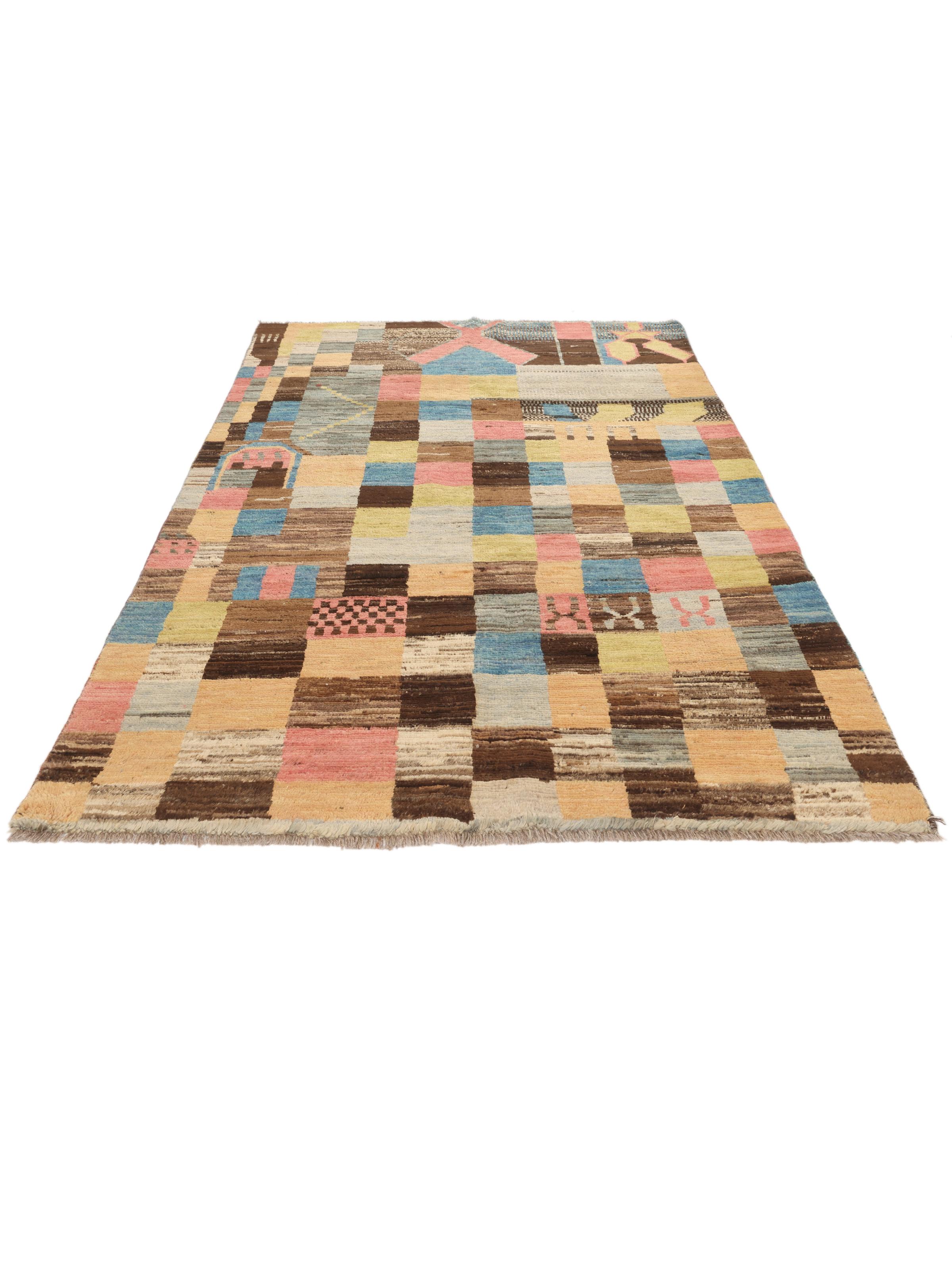
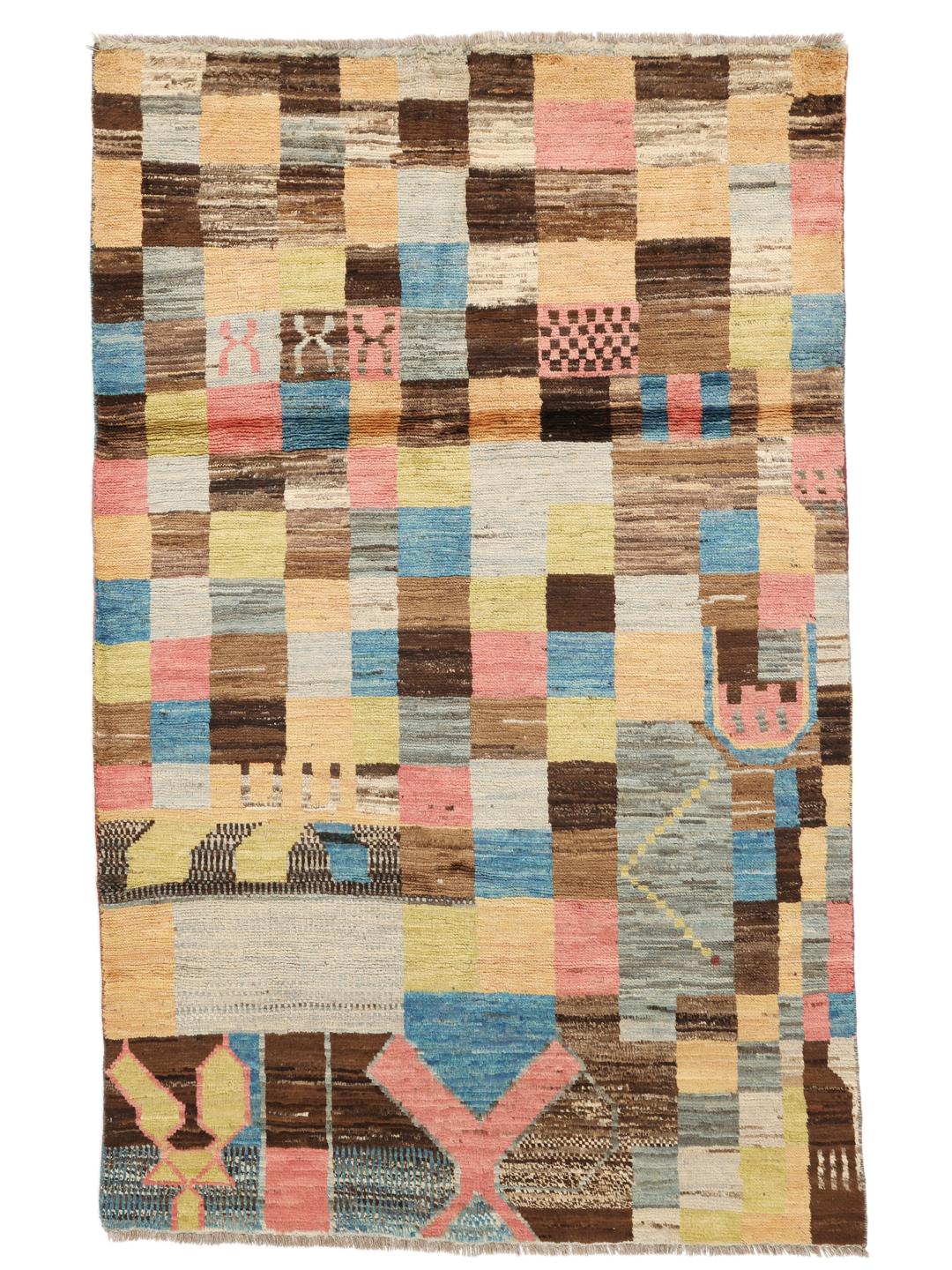
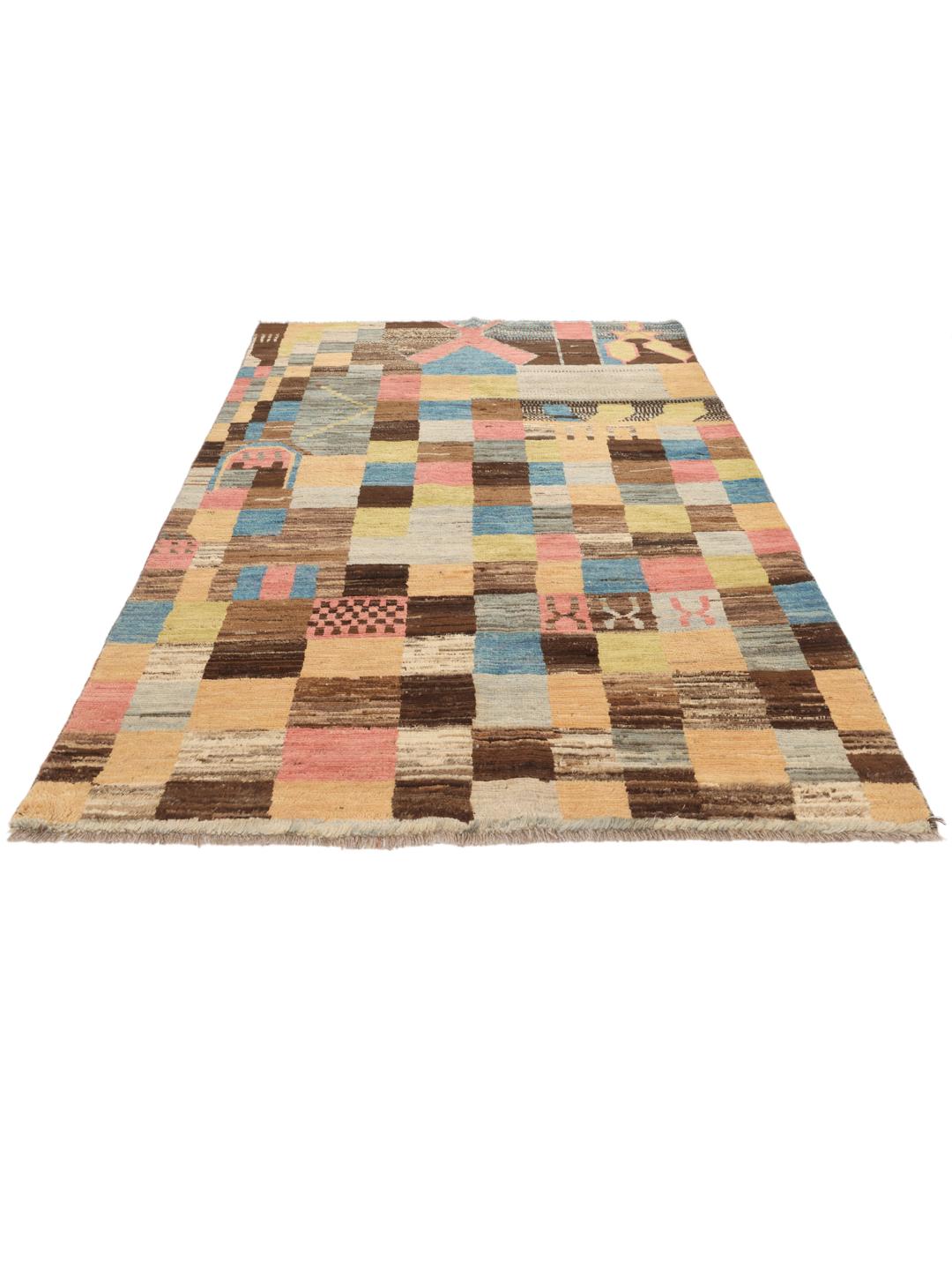
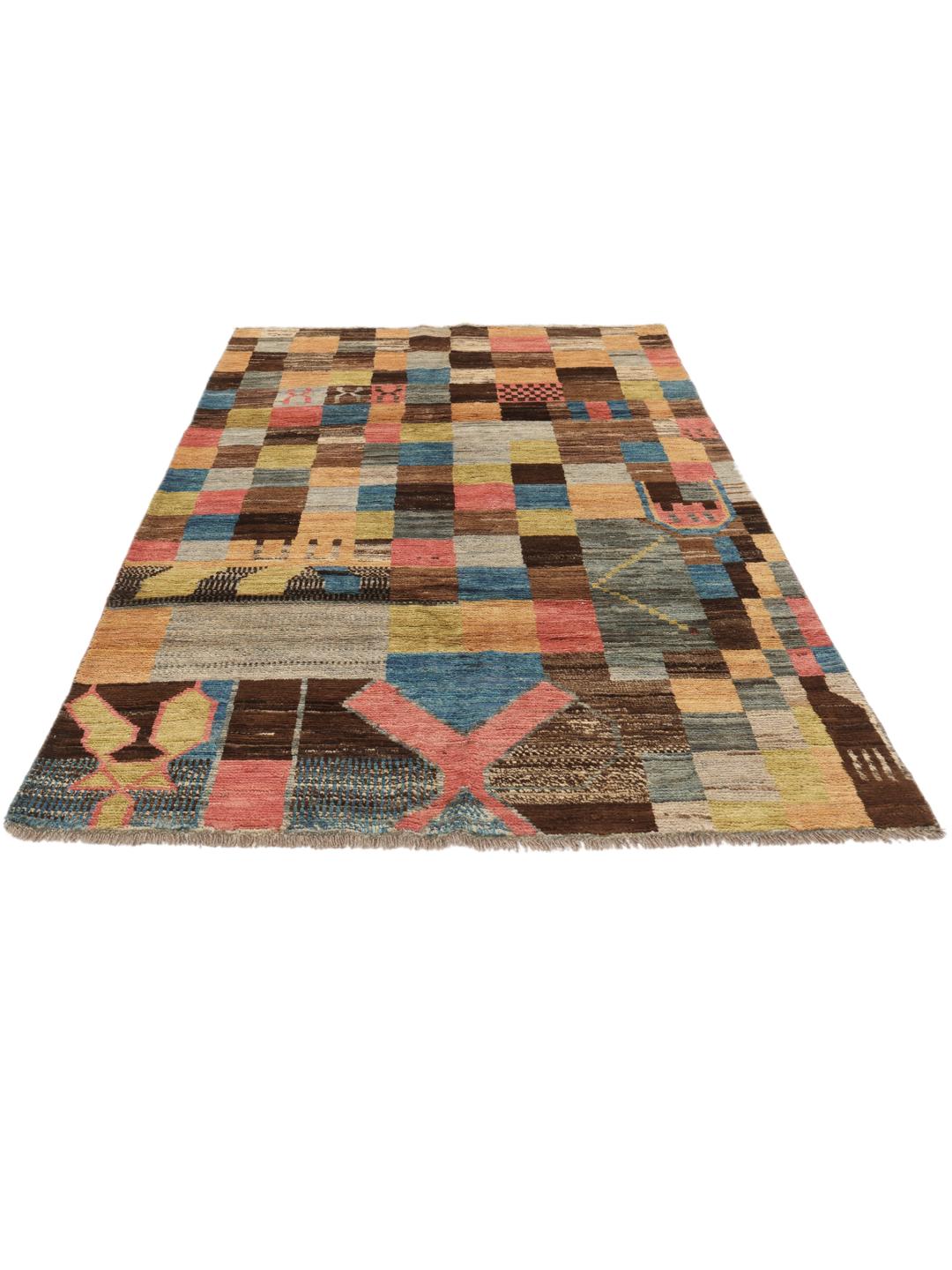
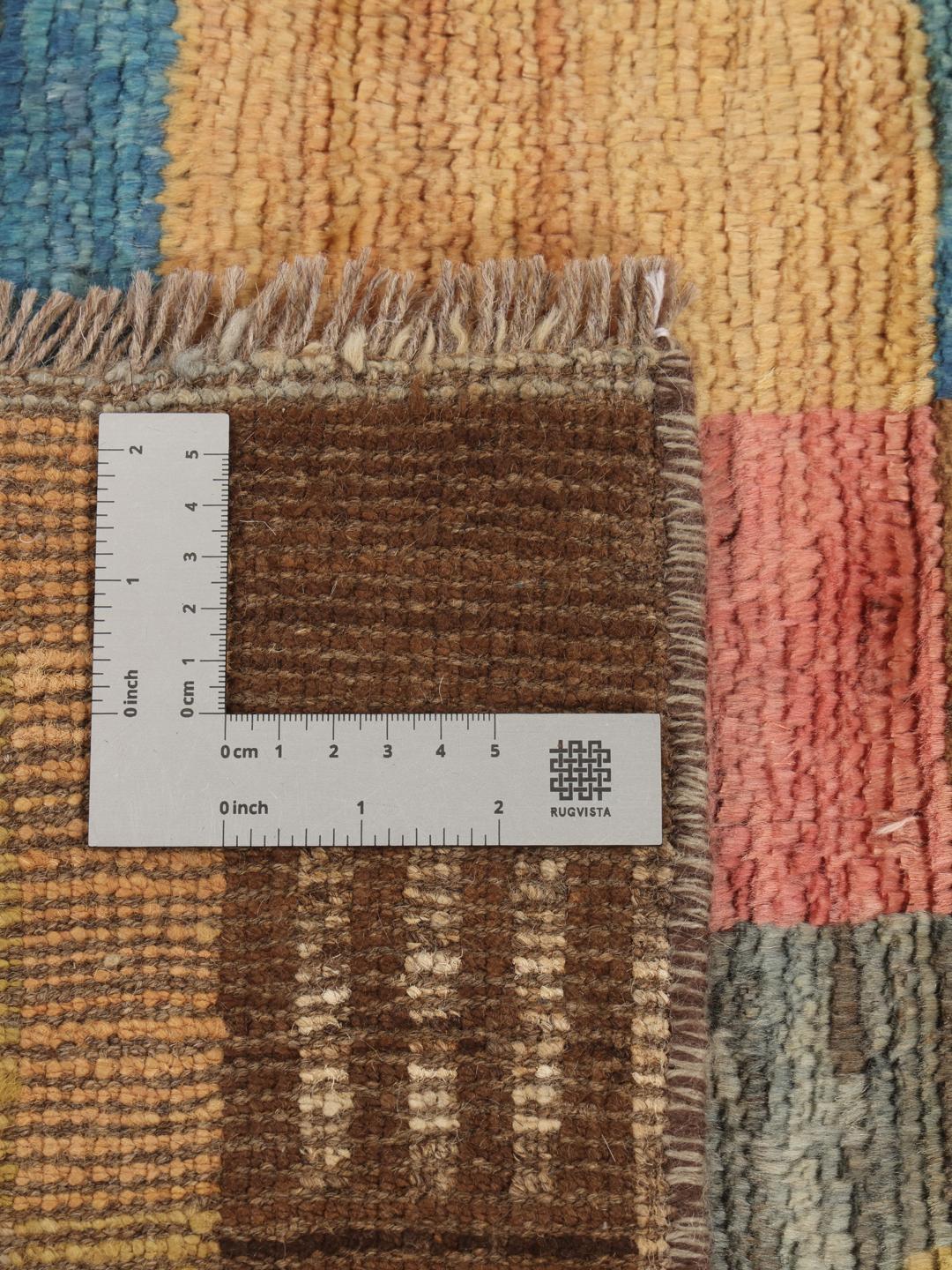
The Berber-inspired tradition, while historically rooted in the Atlas Mountains of North Africa, has evolved through the migration of weaving techniques across the globe. Today, artisans in the Middle East have embraced these styles, interpreting the classic, free-form geometric language through their own regional lens and local wool quality.
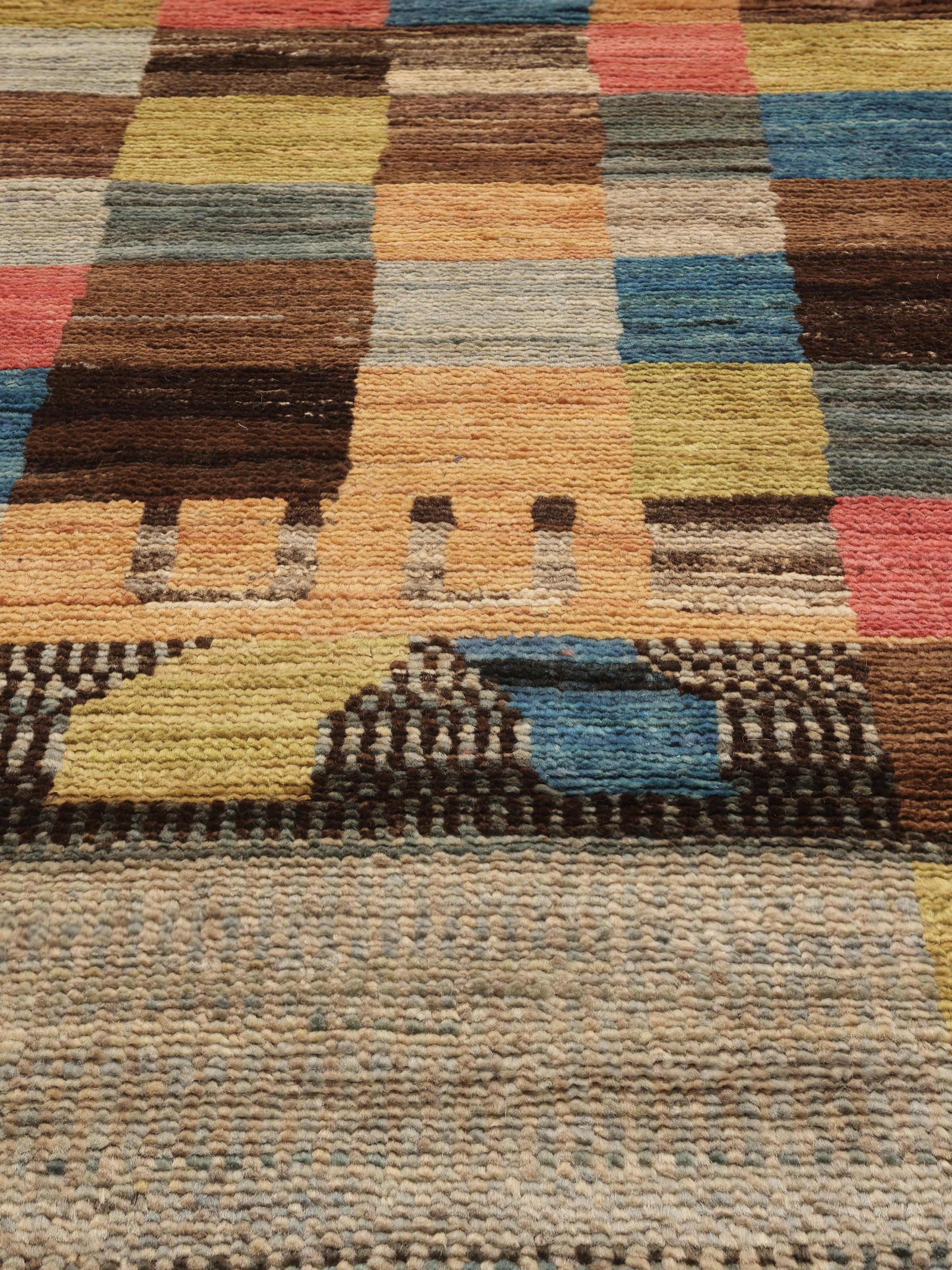
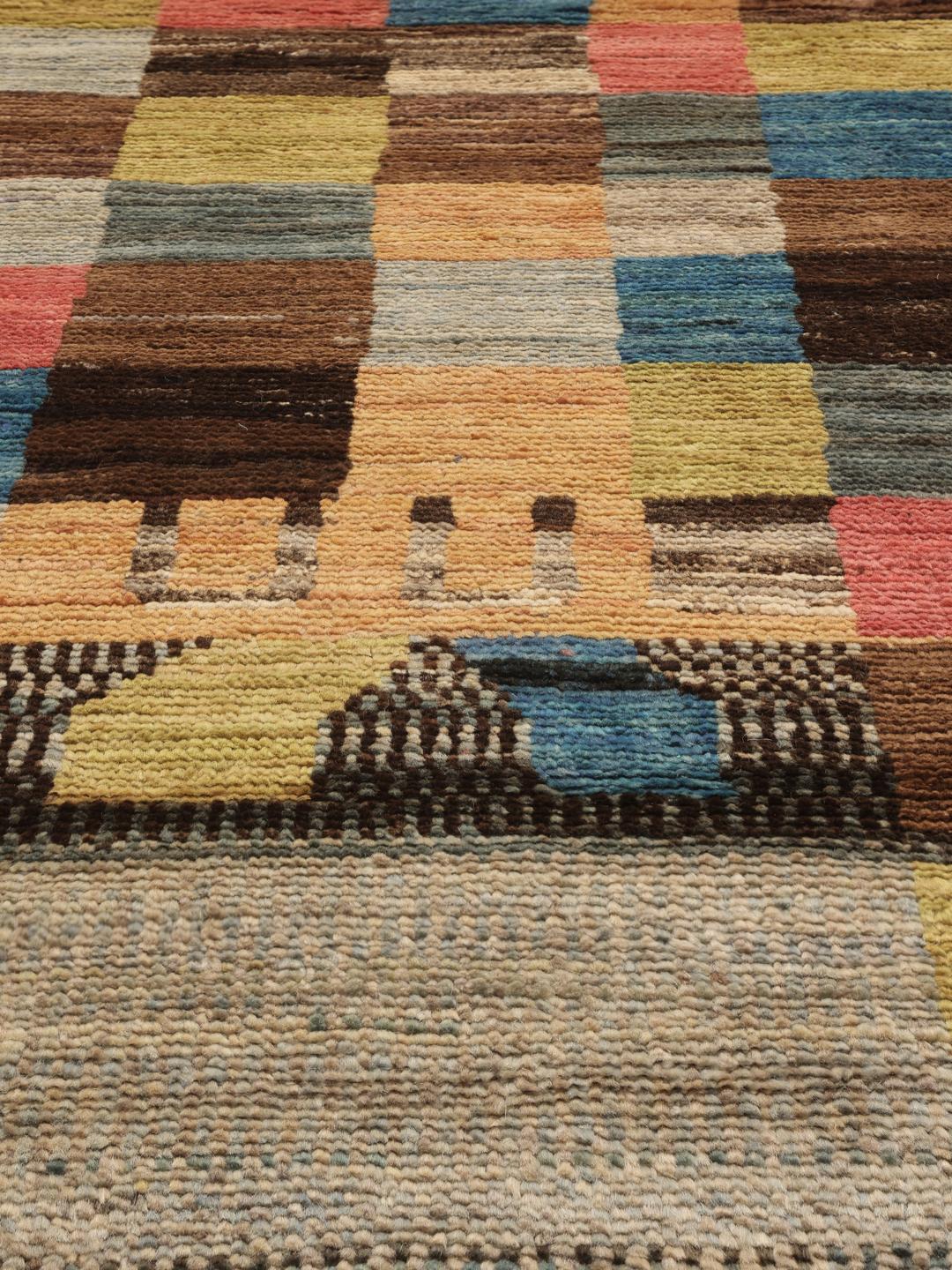
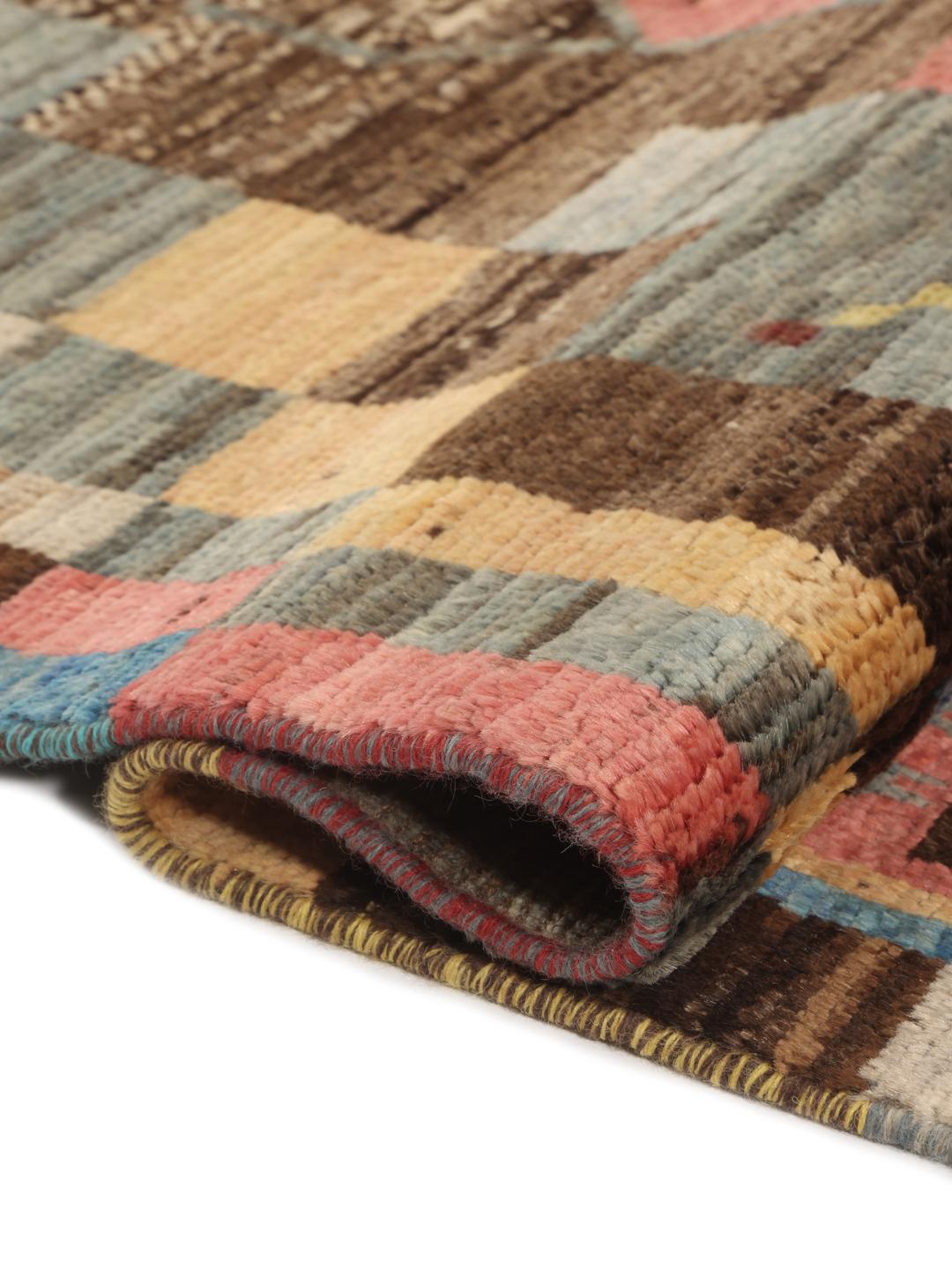
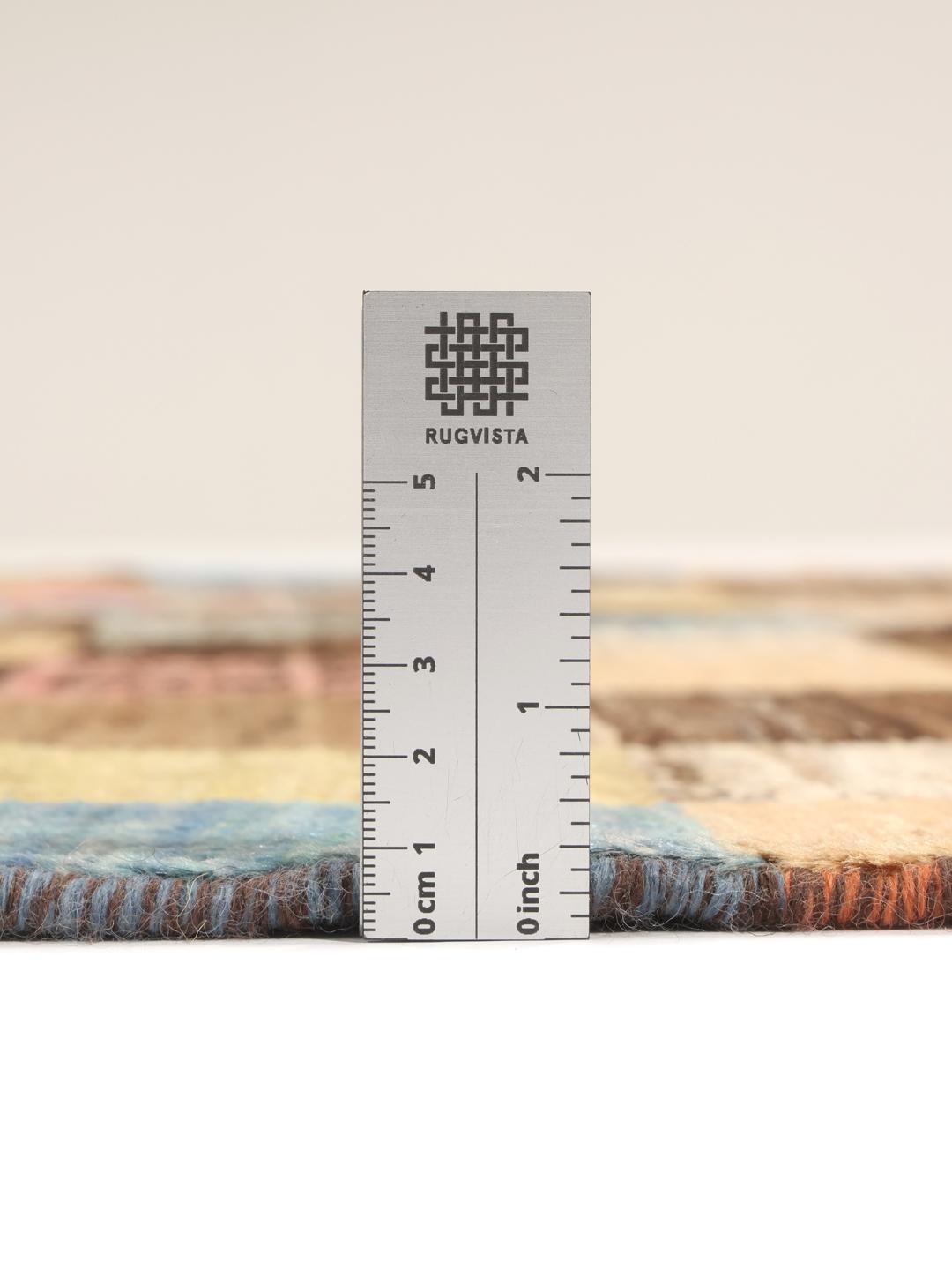
The craft relies on time-honoured techniques that prioritise the integrity of the material. By using high-quality wool, weavers create a pile that is naturally resilient and soft. The term hand-knotted refers to the practice of tying individual tufts of wool onto the warp and weft, a process that determines the rug's durability and the sharpness of its design.
Design-wise, these pieces are defined by their departure from rigid, formal symmetry. Instead, they often feature playful, abstract motifs and organic blocks of colour that reflect the weaver's mood and environment. This specific rug's patchwork aesthetic is a testament to this tradition of creative freedom, where borders and patterns are fluid rather than strictly defined.
Collecting a rug from this tradition is an investment in cultural heritage. It represents a bridge between ancient methods and contemporary living, offering a piece that is not just a floor covering, but a narrative of skill and human history. Owning such a piece is a way to preserve these crafts for the future.