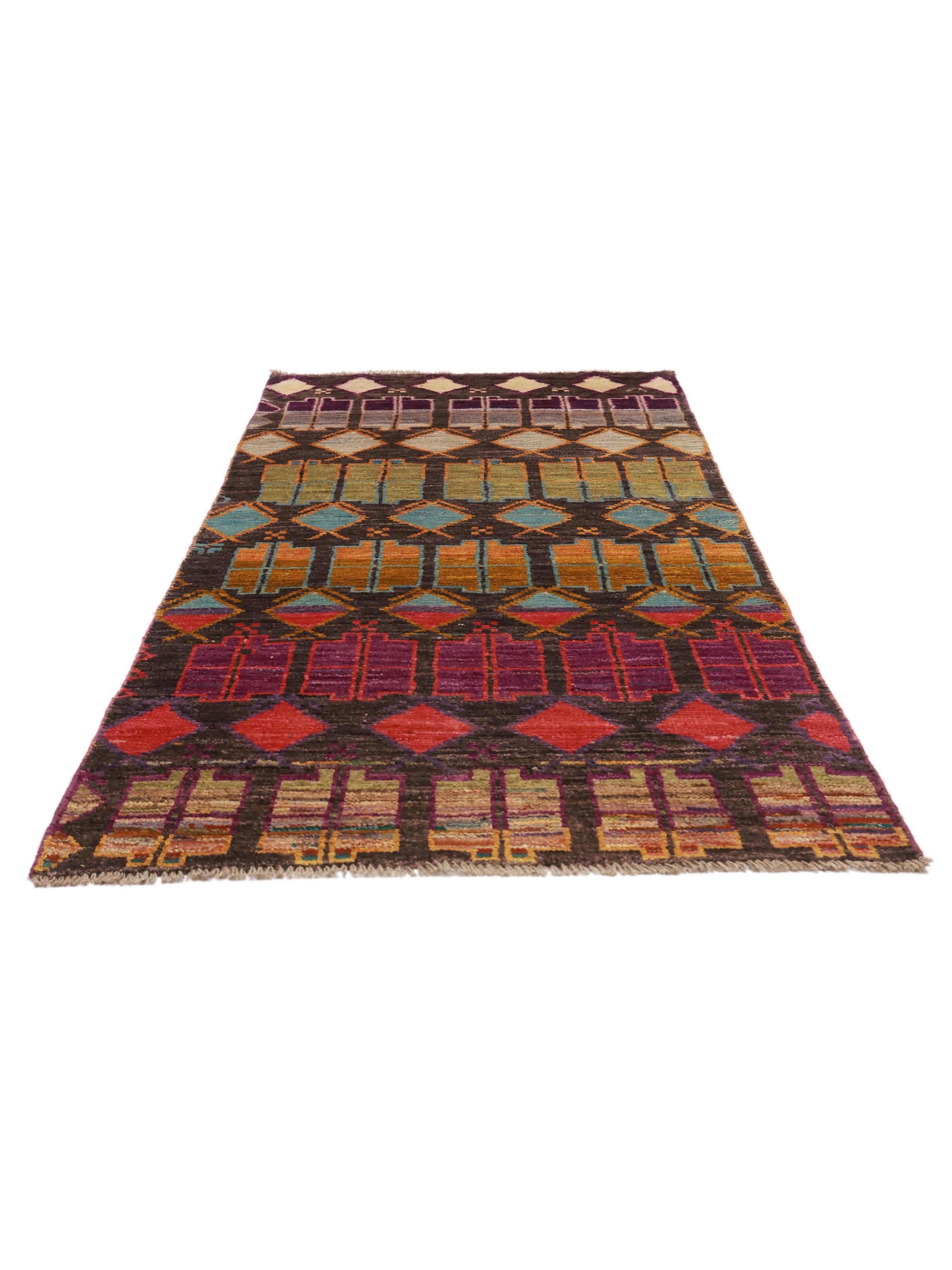
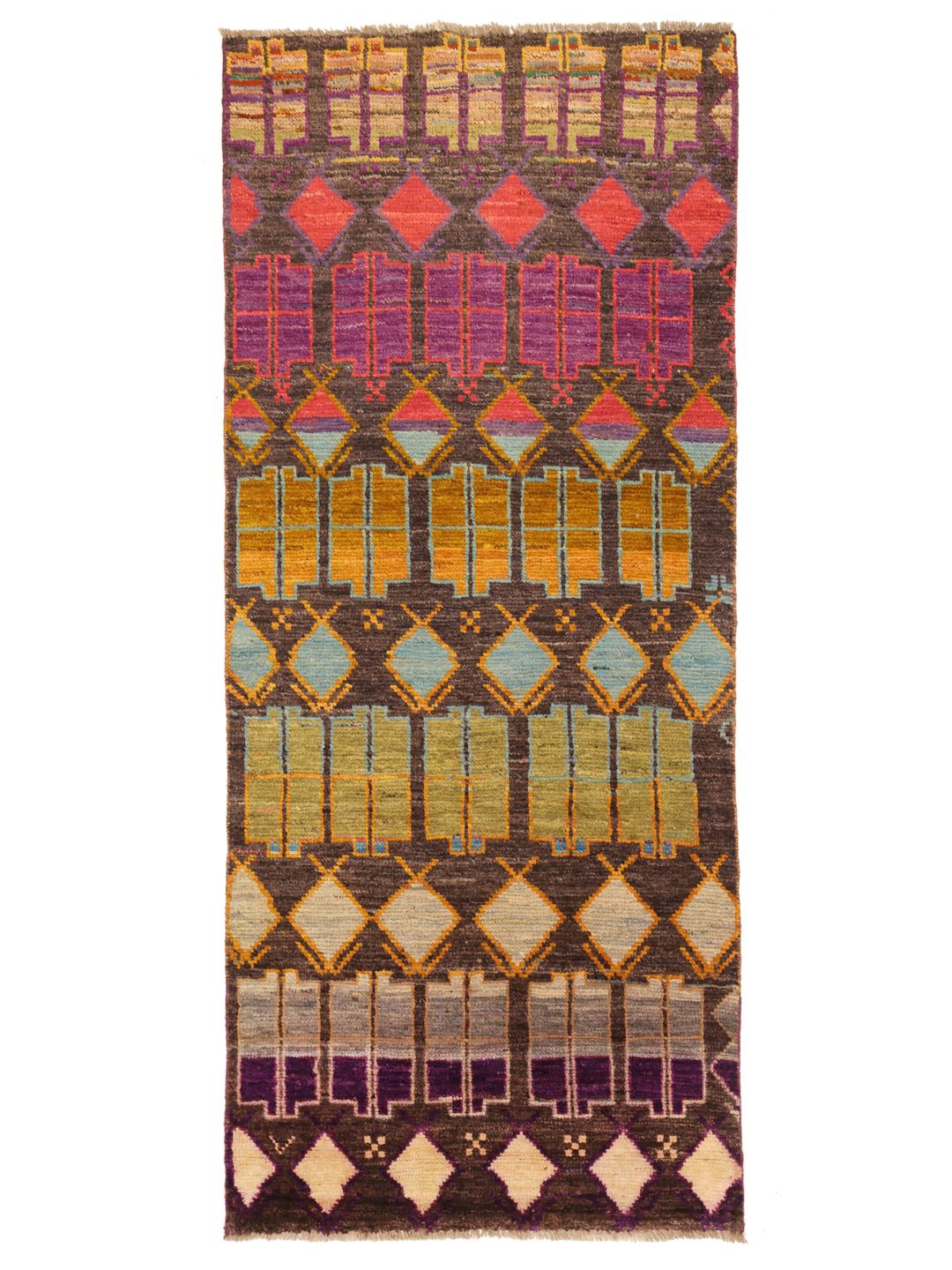
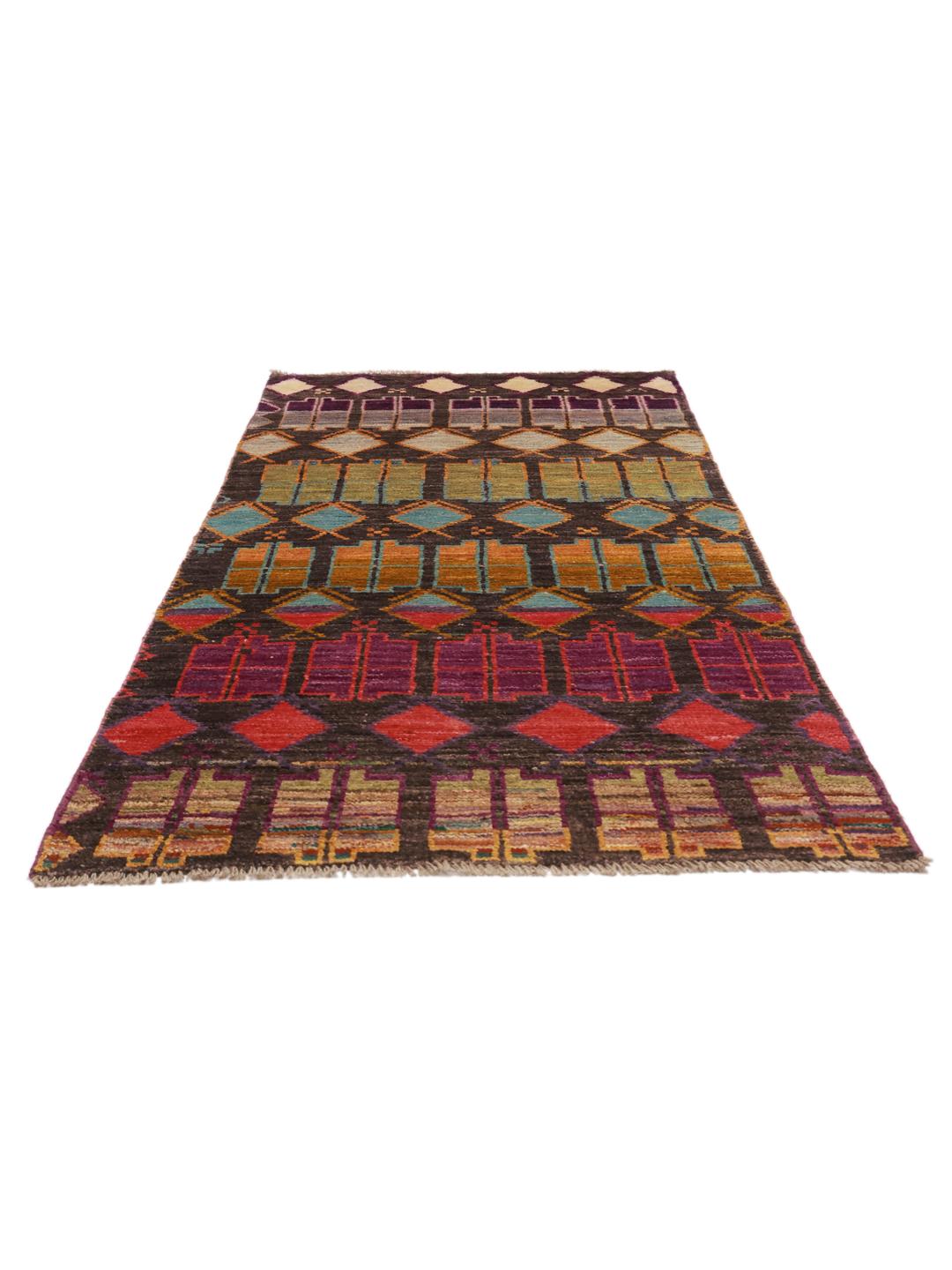
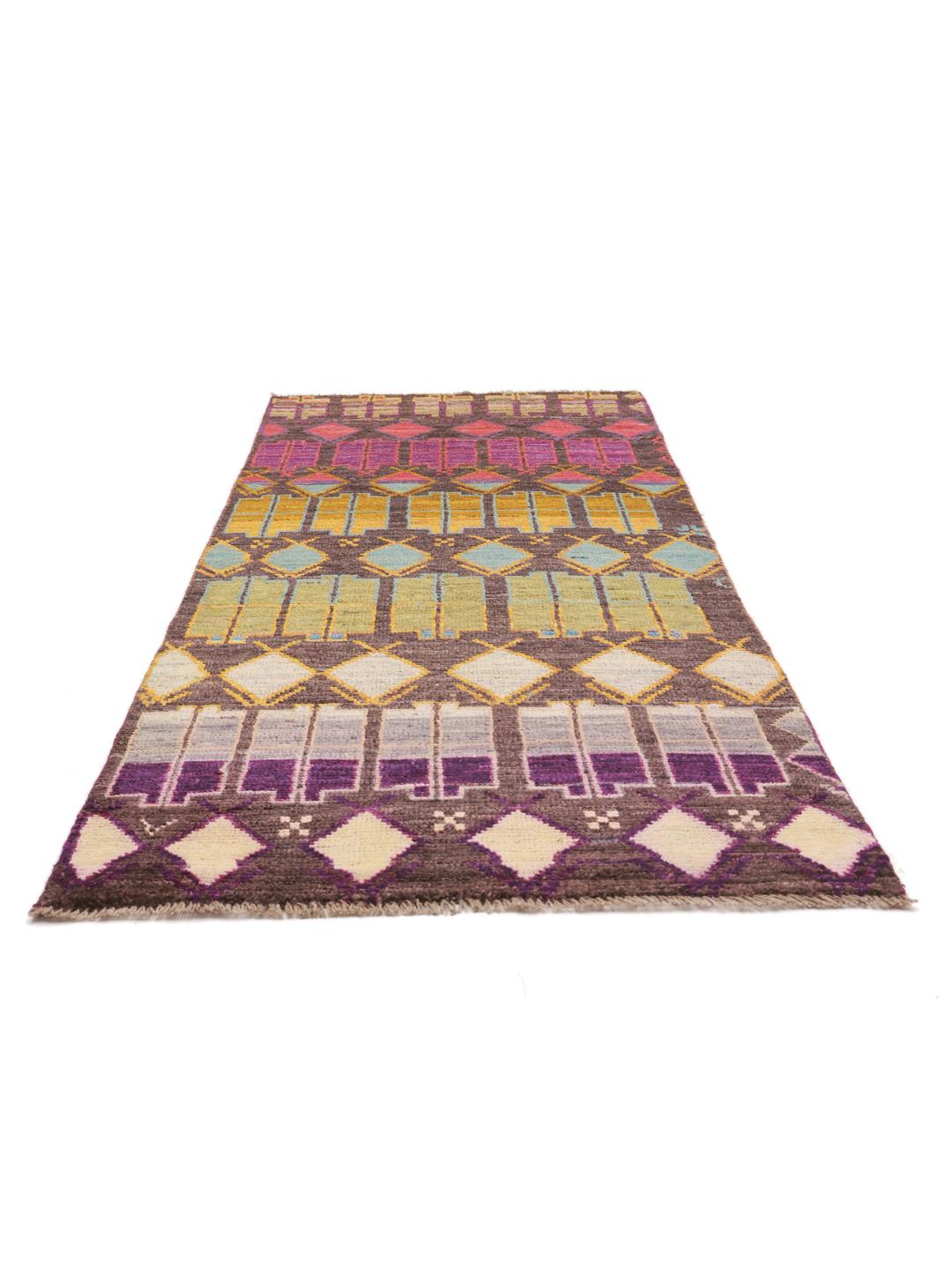
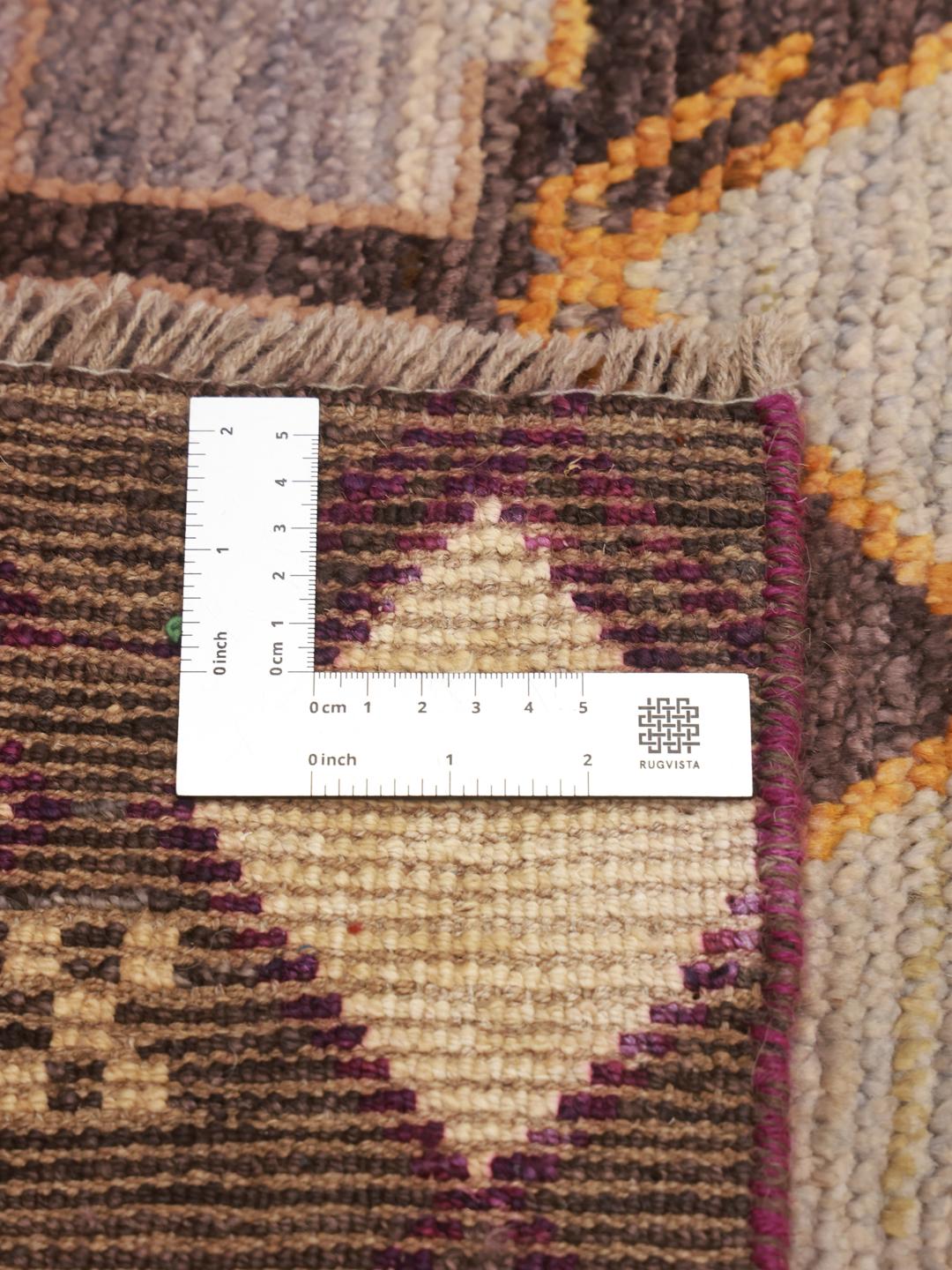
Berber-inspired rugs trace their roots back to the nomadic traditions of North Africa, where tribes wove textiles for functional use as blankets, rugs, and wall hangings. While the style originated in the Atlas Mountains, the tradition of weaving these distinctive, heavily patterned textiles has been adopted and adapted by artisans across various regions, including Afghanistan. This migration of craft has led to a fascinating evolution where local Afghan weaving techniques meet the iconic, expressive aesthetics of the Berber style.
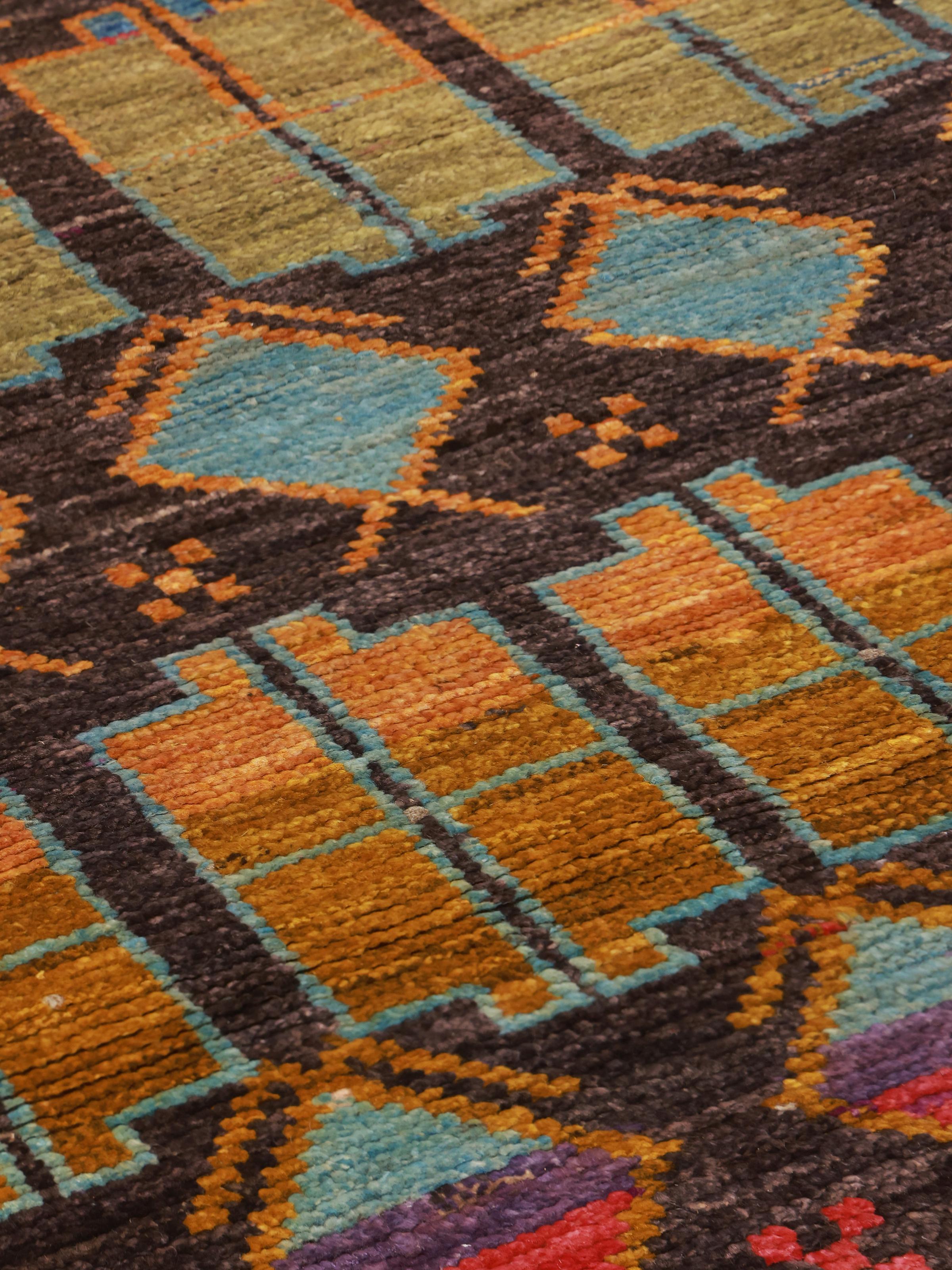
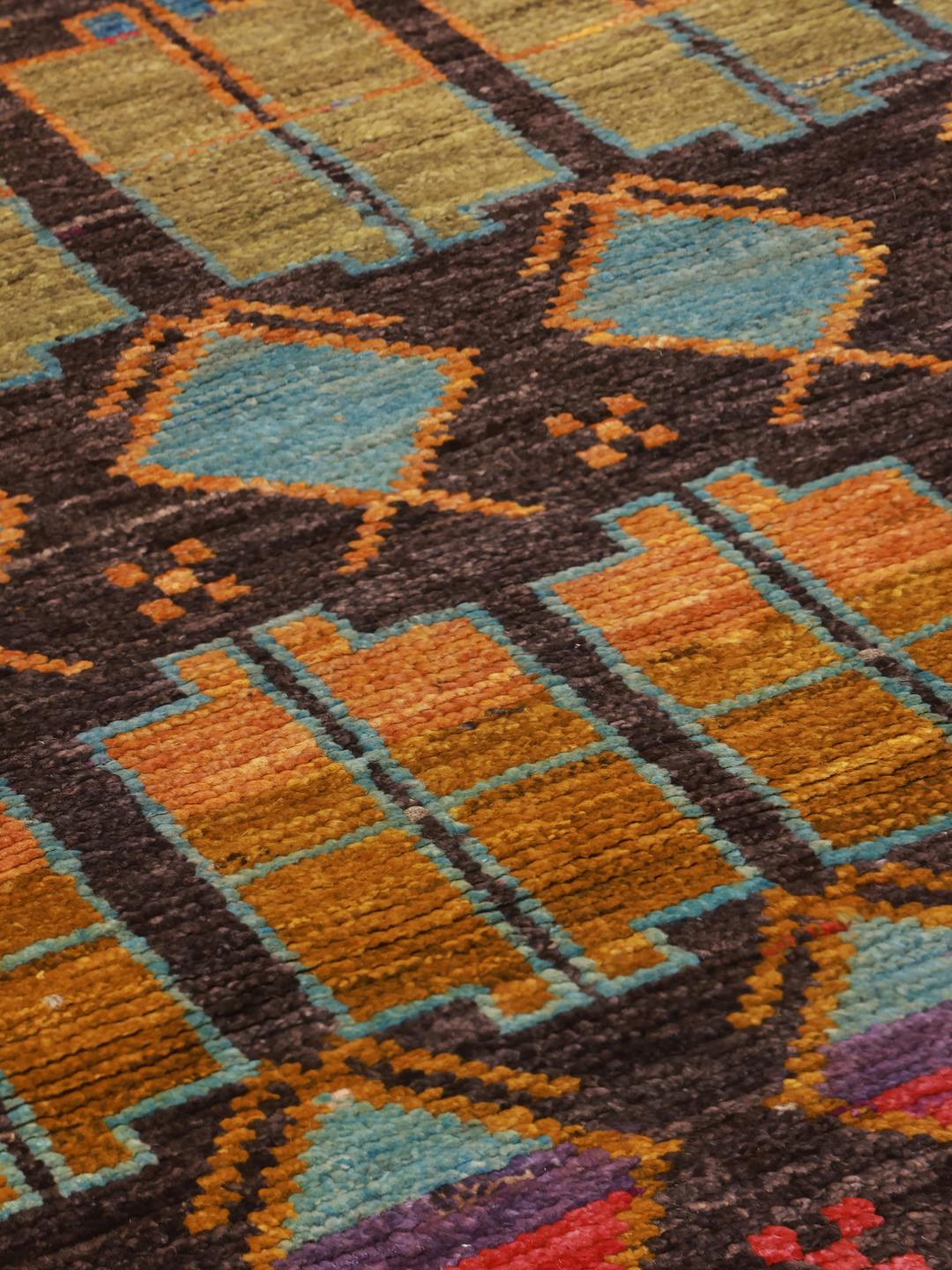
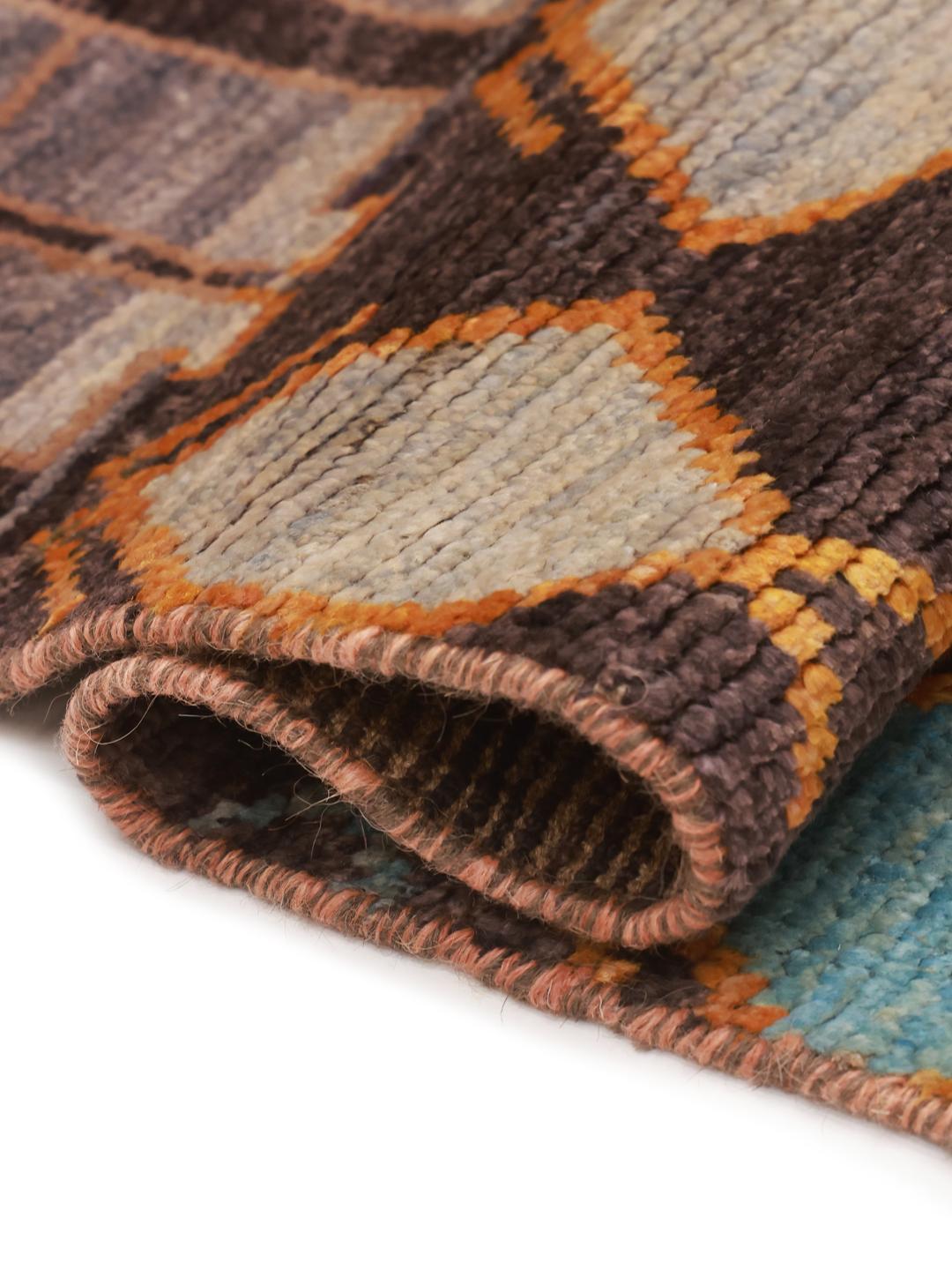
The term hand-knotted refers to the precise method of looping strands of Wool around the warp threads of the foundation to create the pile. This is a time-honoured technique that allows for intricate pattern definition and a thick, durable surface. Unlike machine-made alternatives, the hand-knotted process produces a rug with a natural variation in tension and texture, which is a hallmark of authentic, high-quality artisanal work.
Signature design elements of this style often include bold geometric shapes such as diamonds, zig-zags, and rectangular blocks. These motifs are frequently symbolic, rooted in the history of the weavers who used these patterns to document their environment or personal stories. The use of vibrant, contrasting colours against a dark or neutral field is a classic choice, designed to make the geometric forms pop and draw the eye across the expanse of the rug.
Owning a hand-knotted piece like this is an act of supporting a long-standing cultural heritage. These rugs are highly valued for their individuality and the human narrative behind every knot. Collectors and homeowners alike appreciate them not just as floor coverings, but as durable, meaningful objects that carry the skill and spirit of the artisan into a modern living space.