Berber-style rugs are deeply rooted in the nomadic and village traditions of the Middle East and Central Asia. While often associated with North African heritage, the term has evolved to describe a specific aesthetic and construction style found across various regions, including Afghanistan. These rugs are celebrated for their expressive, often geometric designs that reflect the surroundings, stories, and creativity of the weavers.
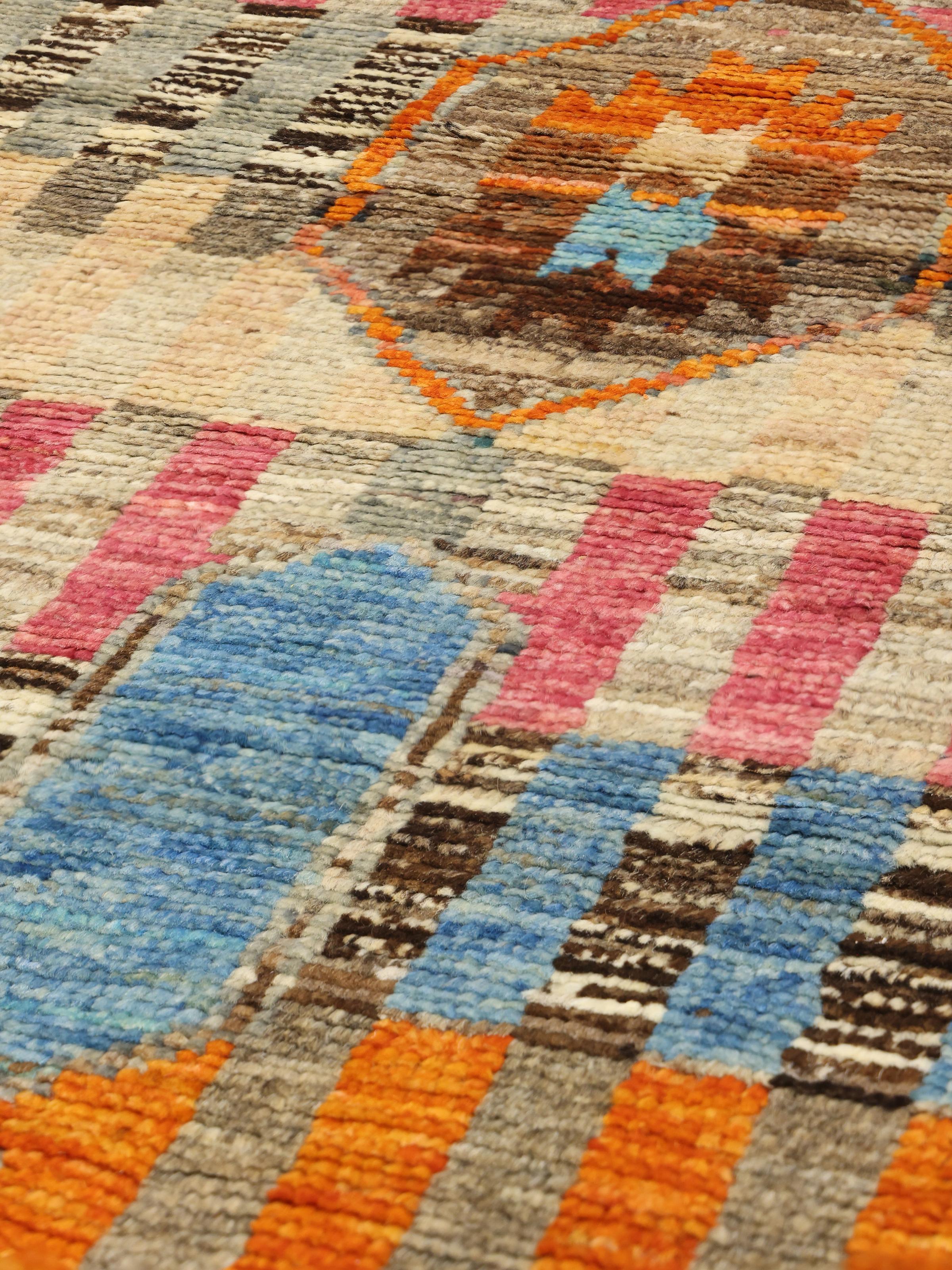
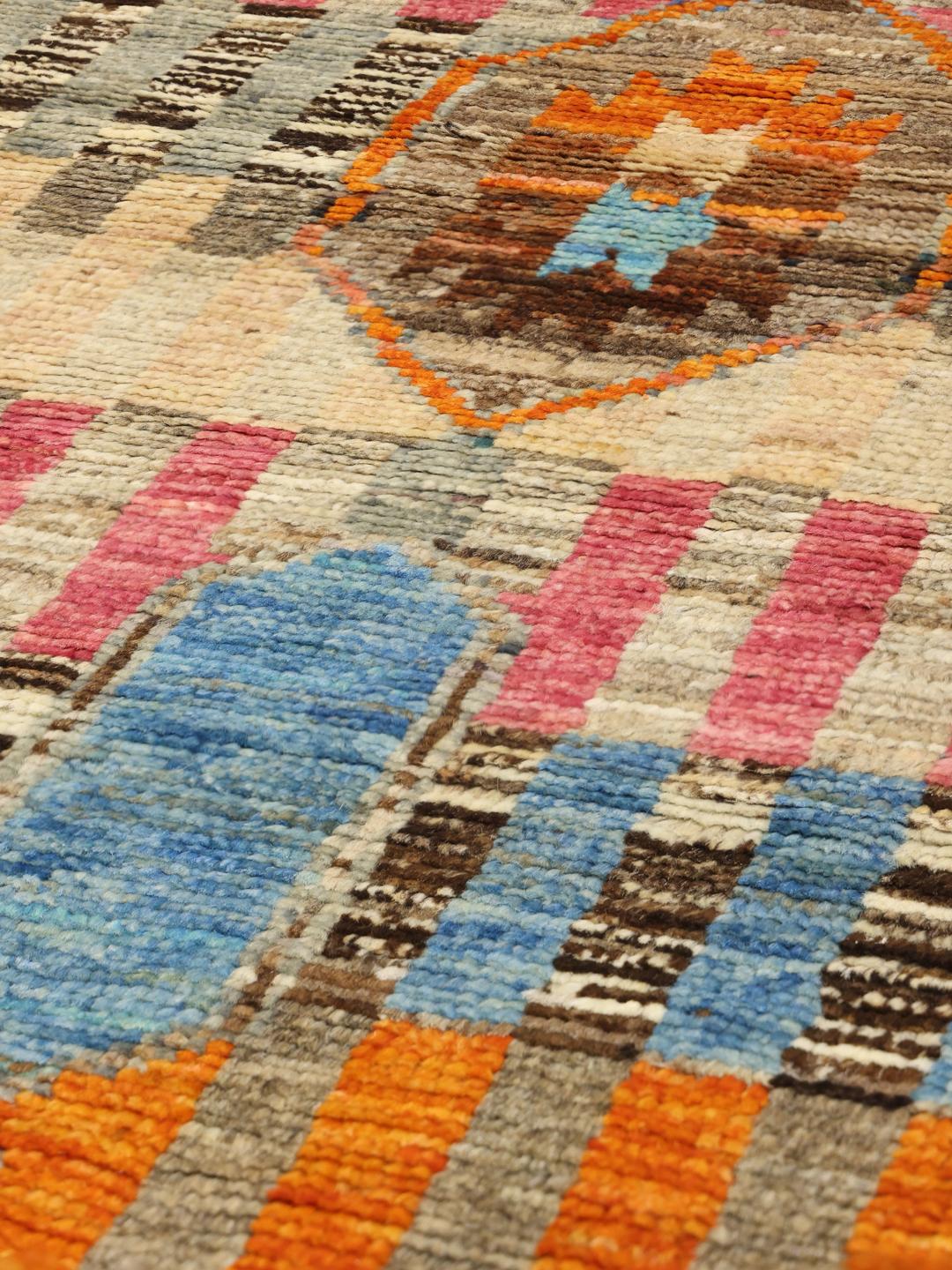
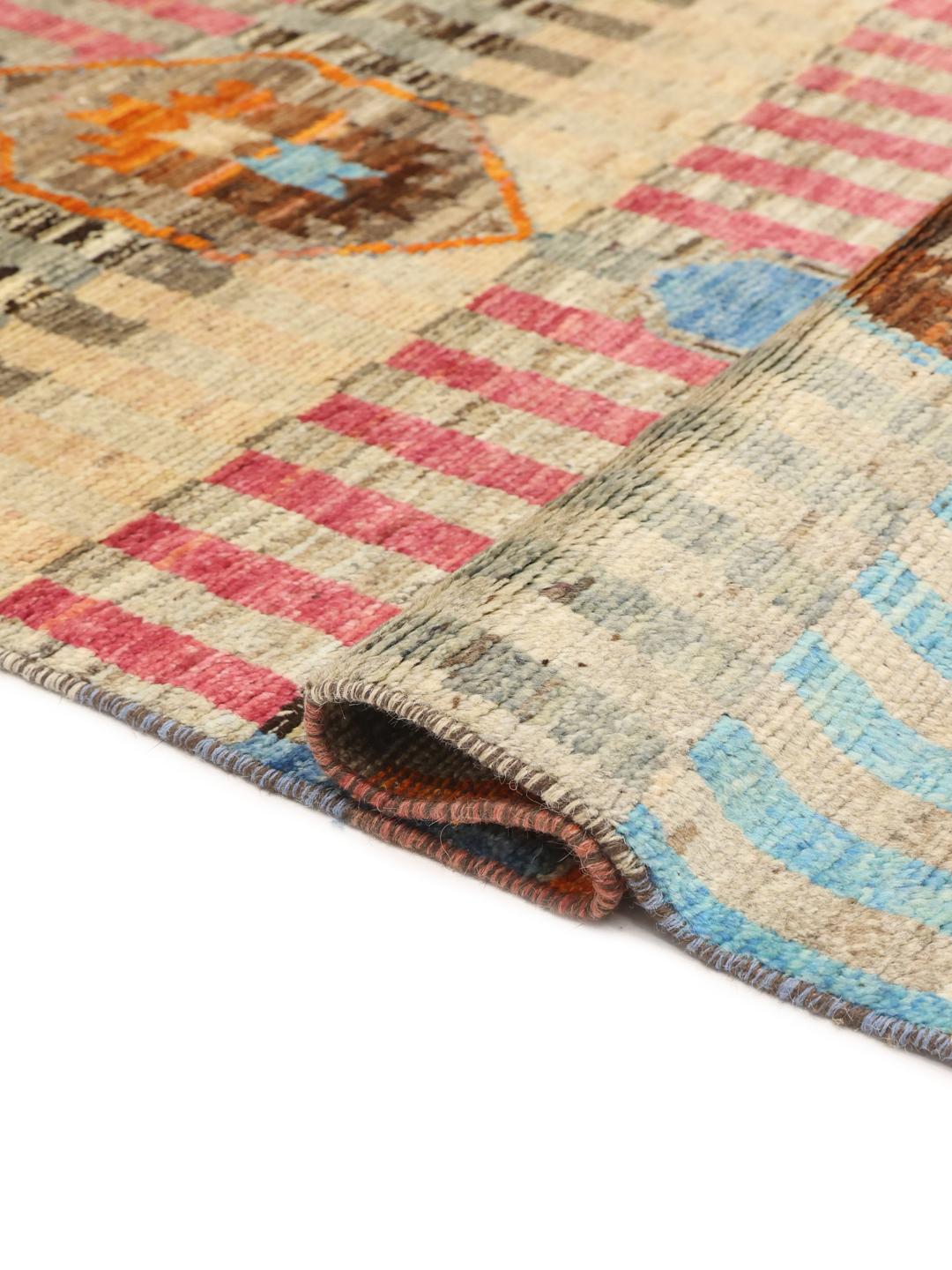
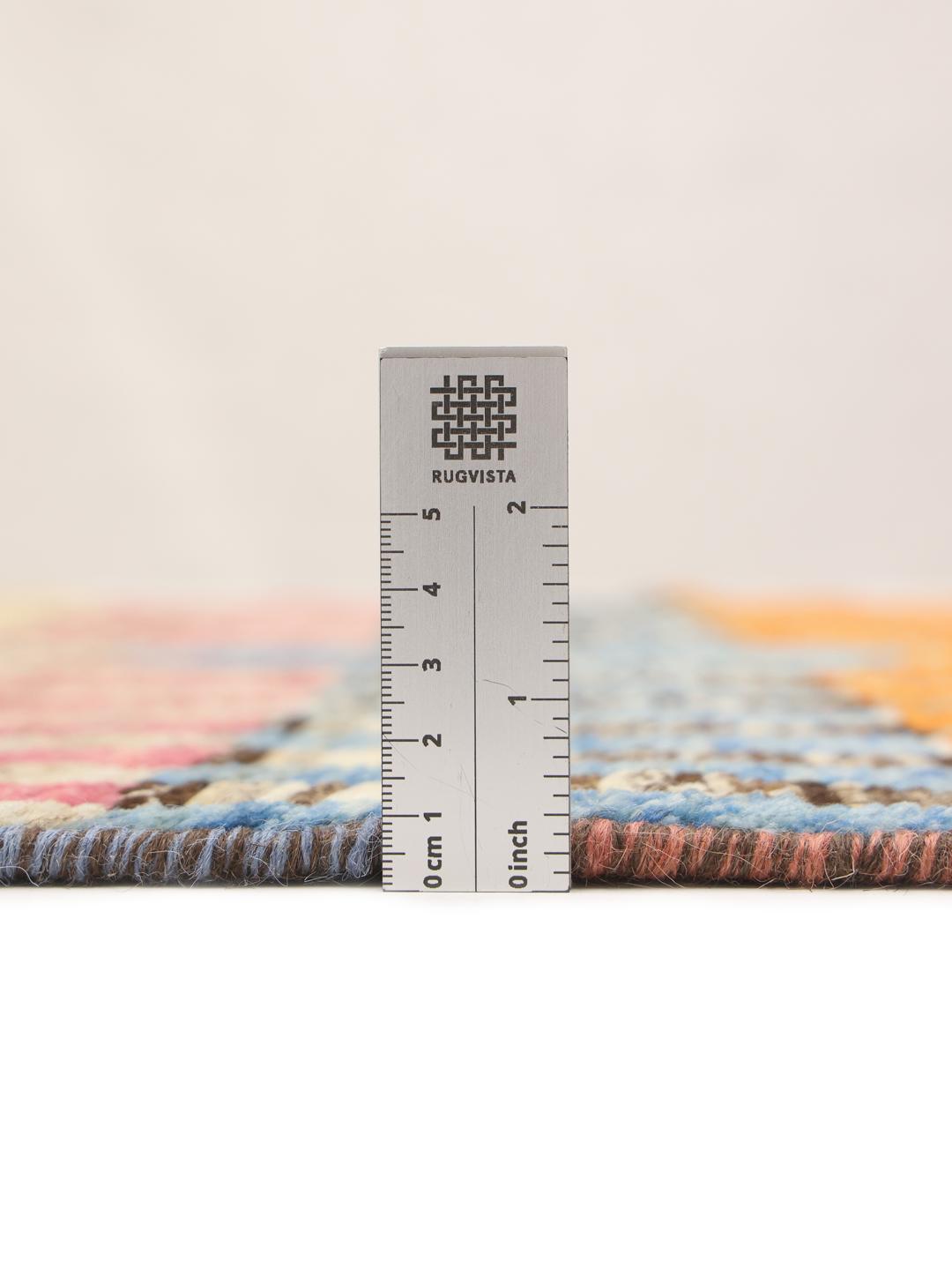
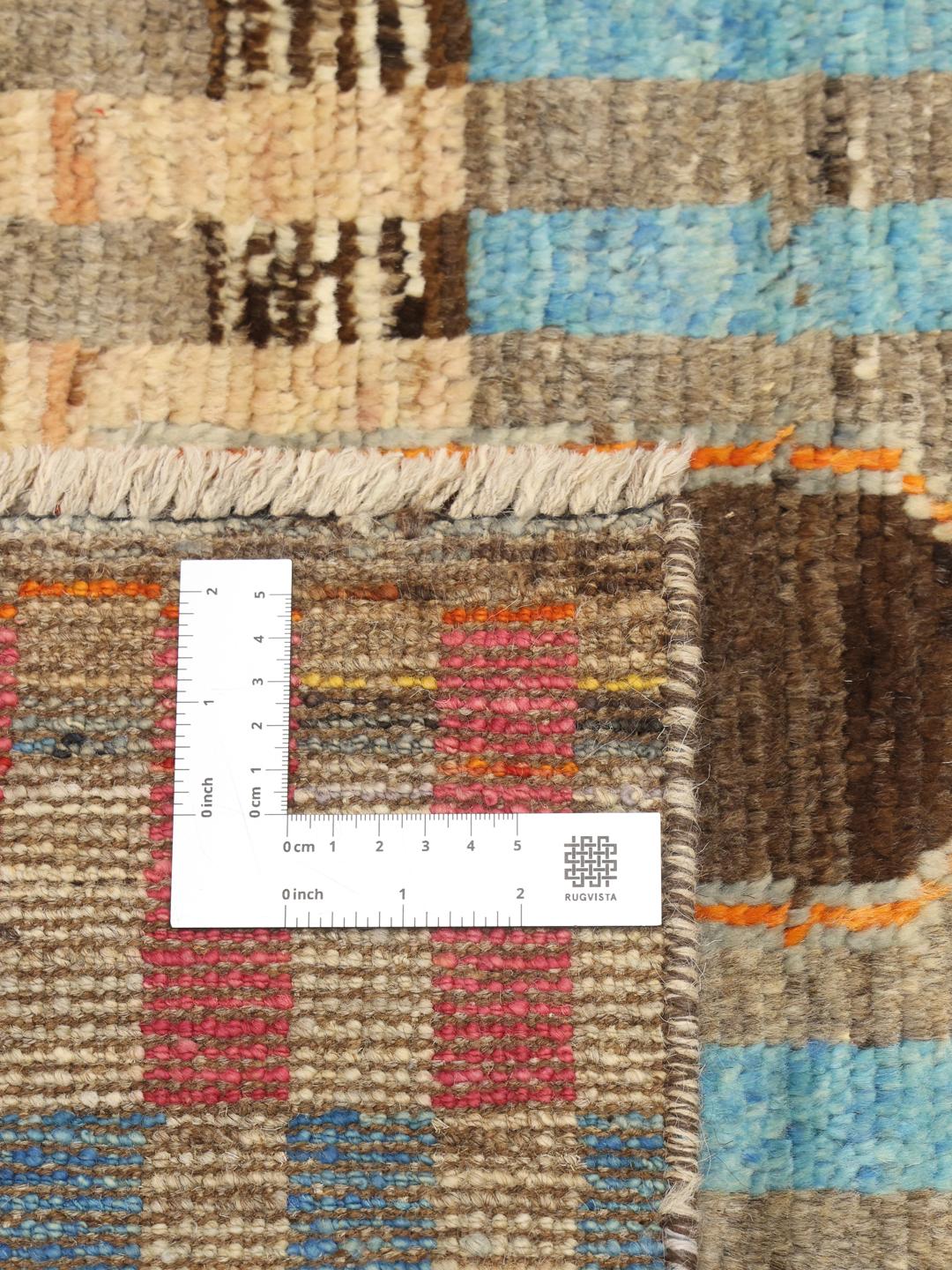
The art of hand-knotting is a sophisticated craft that demands patience and a deep understanding of textile geometry. Each knot is tied individually onto the warp, a process that builds the rug up row by row. This method is fundamental to the rug's quality, as it allows for intricate details and a dense pile that is far more durable than rugs made with faster, machine-based techniques.
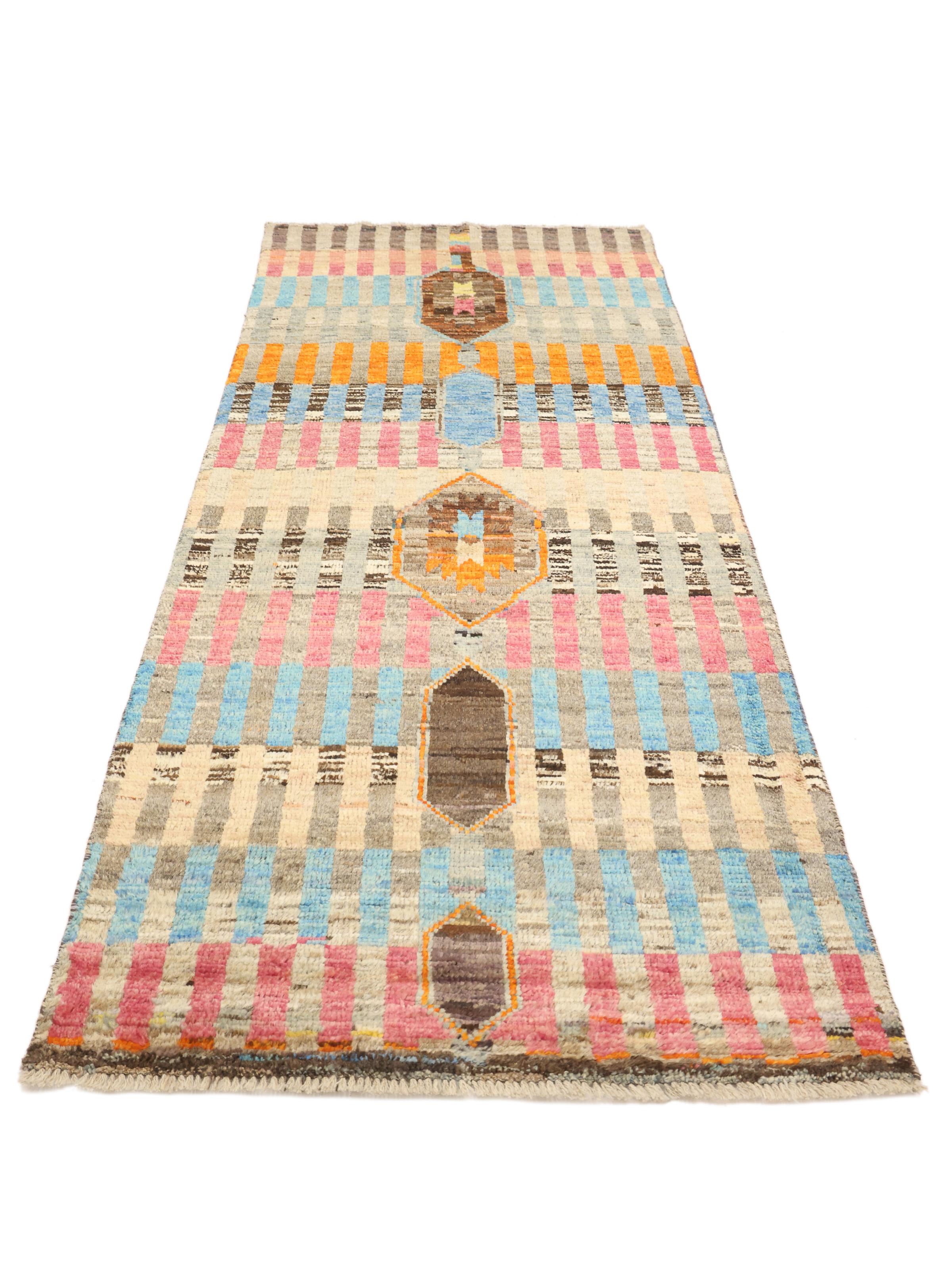
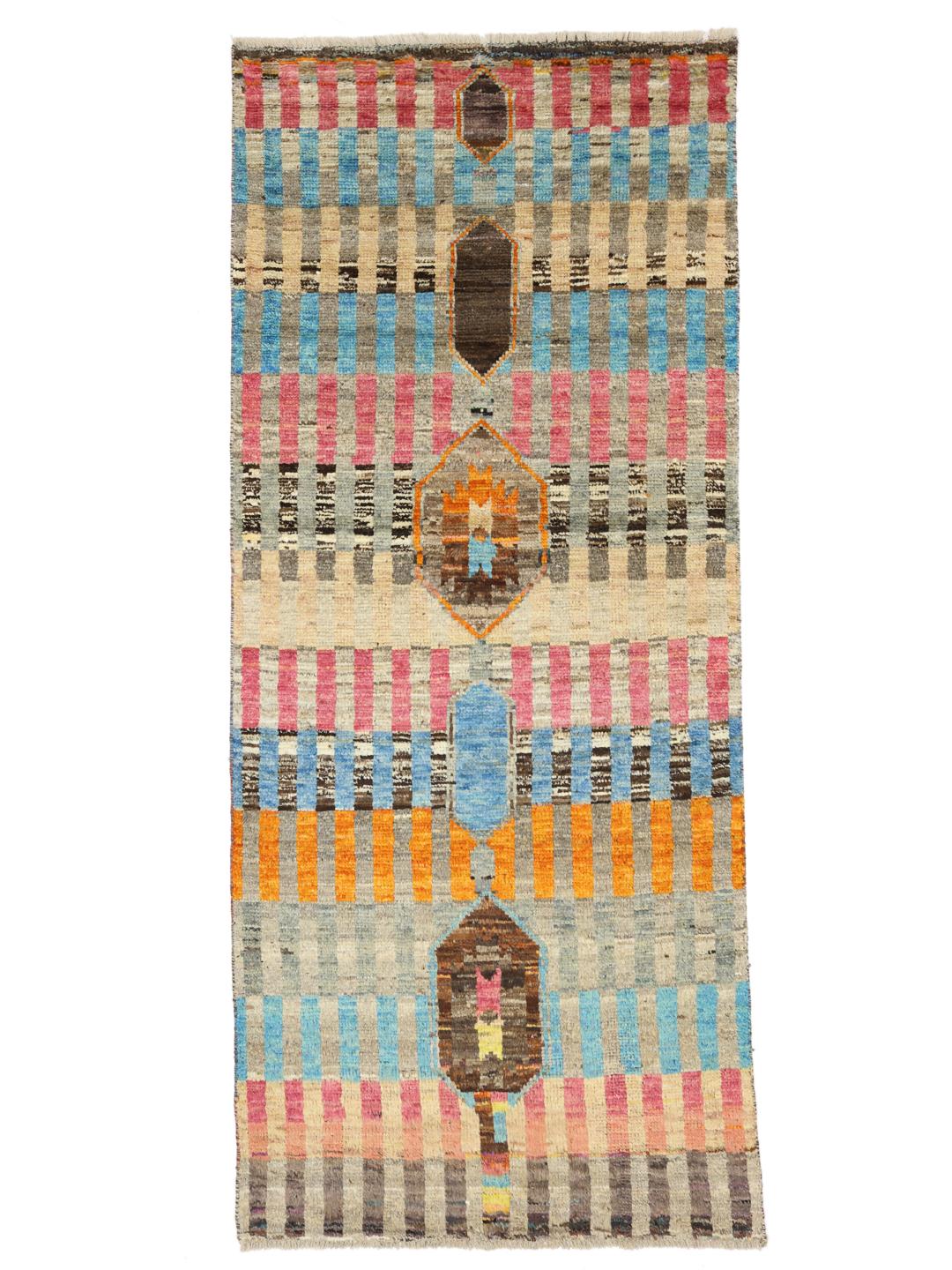
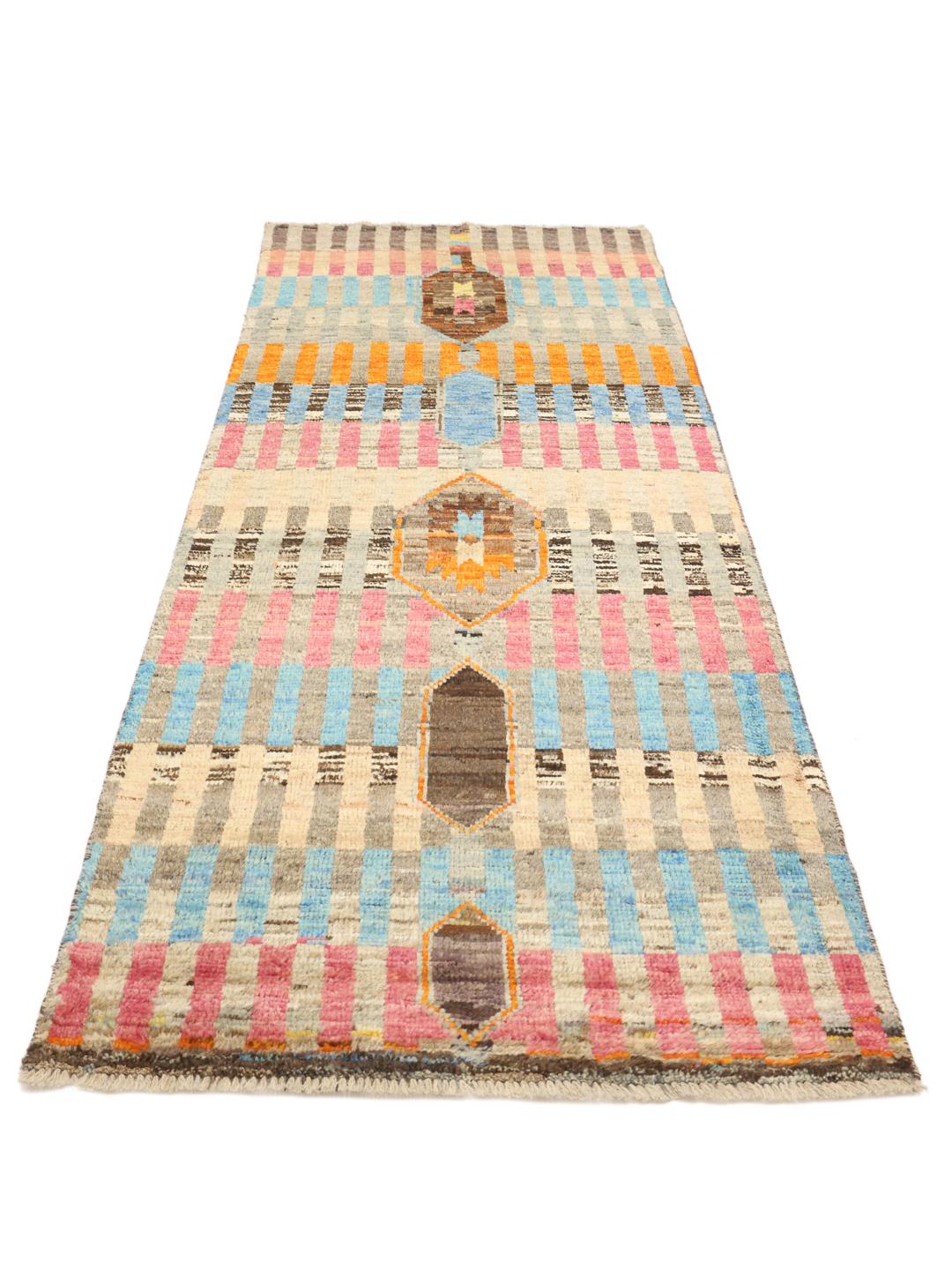
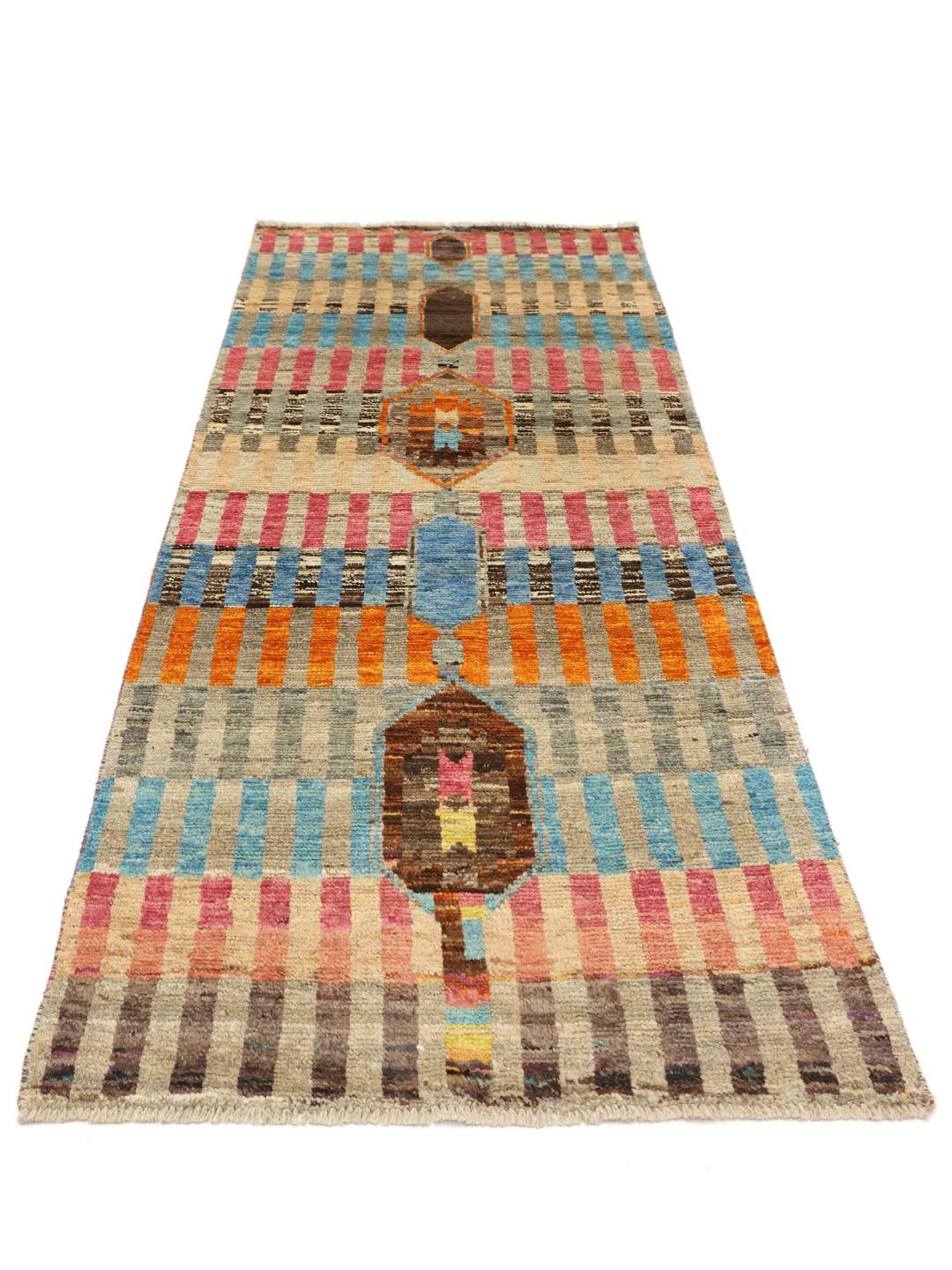
The signature design elements of this tradition often include bold, repeating motifs and a rich use of colour that deviates from more formal, court-style patterns. In this specific runner, the use of bright blues, pinks, and oranges against a neutral background creates a contemporary look that remains tied to ancient weaving traditions. The geometric medallions are typical of the region, serving as focal points that balance the rhythmic stripes of the field.
Collectors value these rugs not only for their visual impact but for the cultural history they represent. Owning a piece from this tradition is an investment in human skill and a connection to a long-standing heritage of textile production. These rugs are more than just floor coverings; they are artefacts of a living tradition, meant to be used, enjoyed, and passed down through generations.