The Berber weaving tradition originates from the nomadic tribes of North Africa, where rugs were originally crafted for warmth and practical protection against the elements. Over time, these expressive weaving techniques have spread and evolved, inspiring weavers across different regions, including Afghanistan, to adapt the style with their own local wool and cultural design sensibilities.
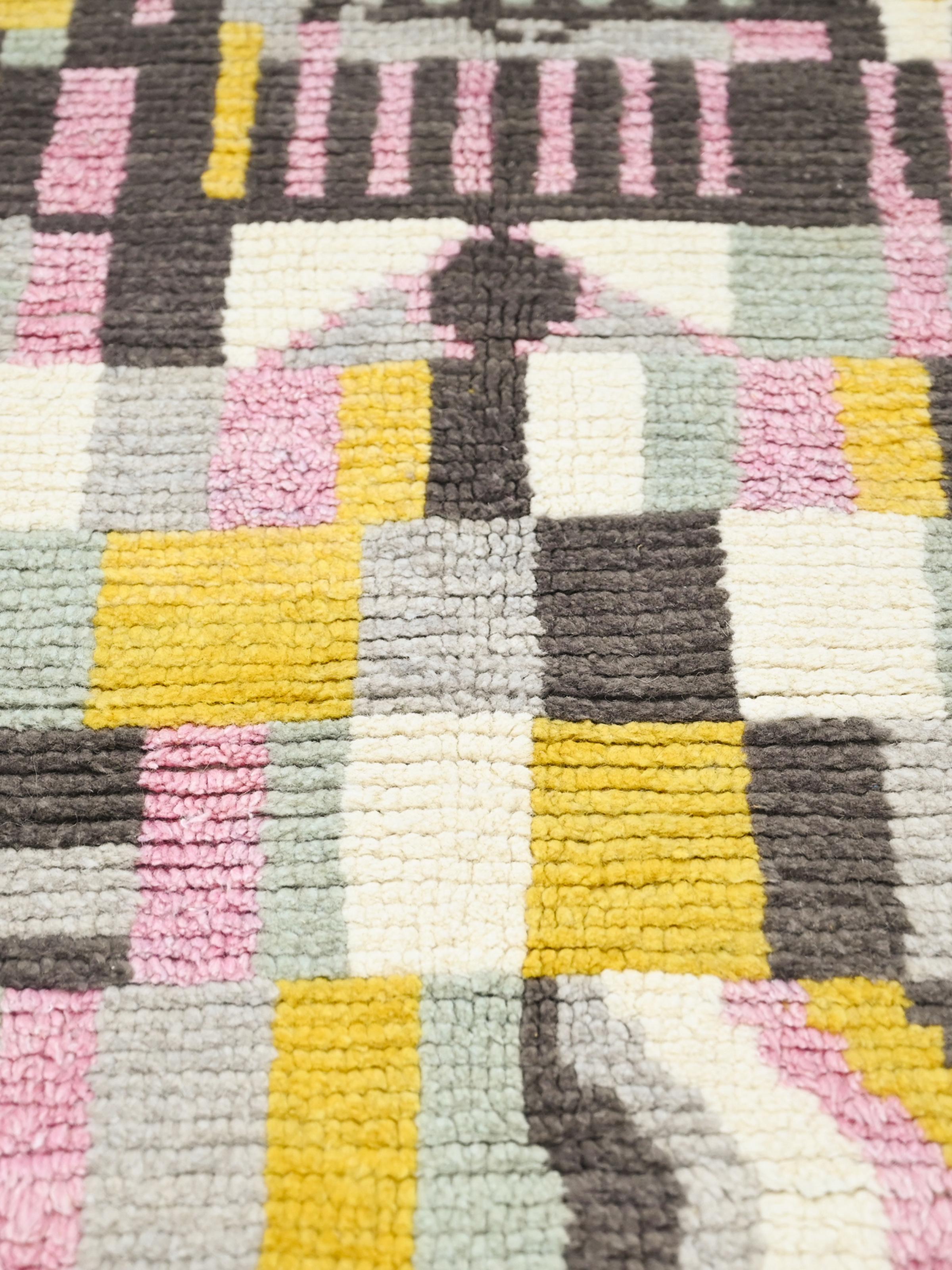
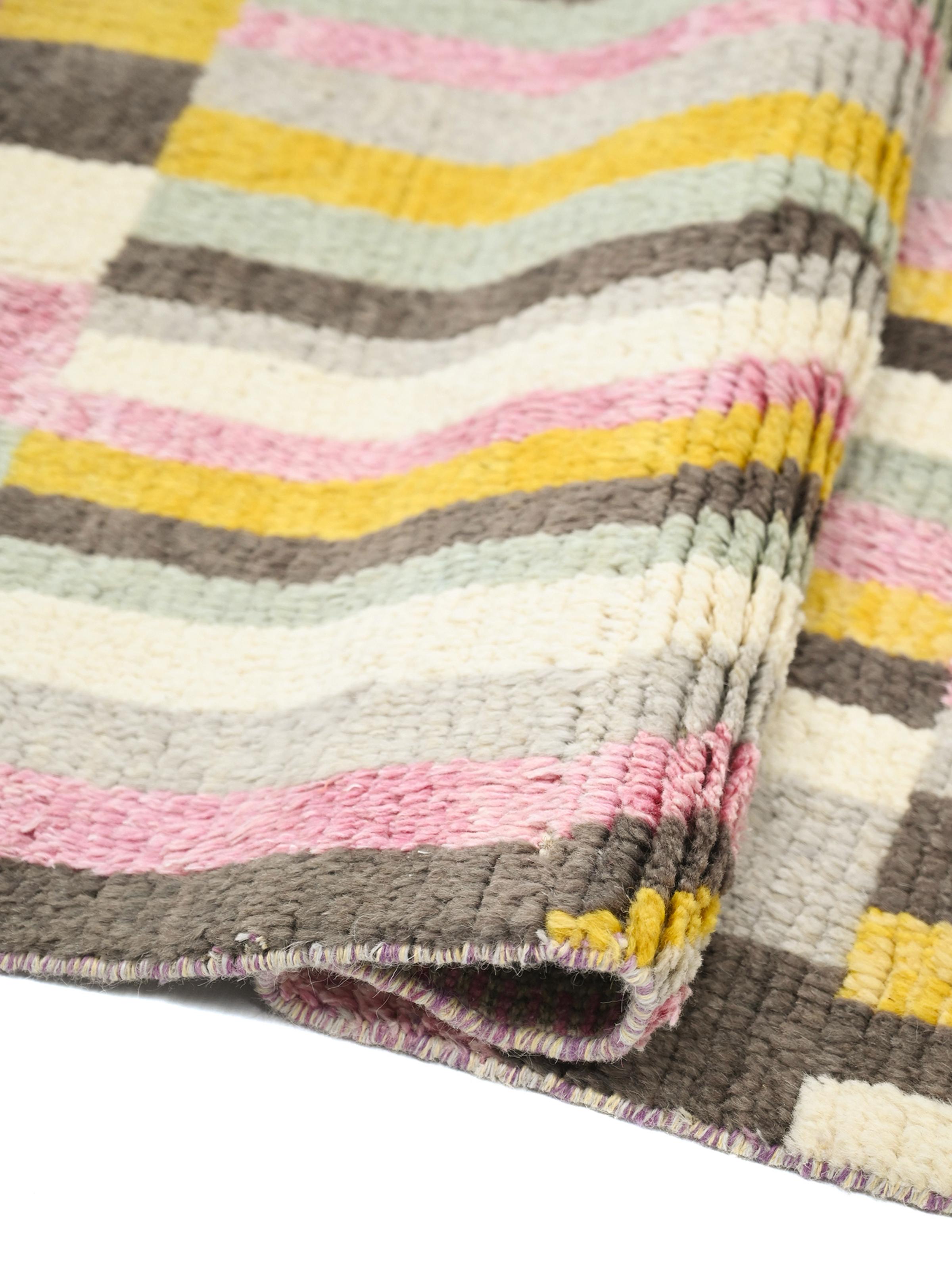
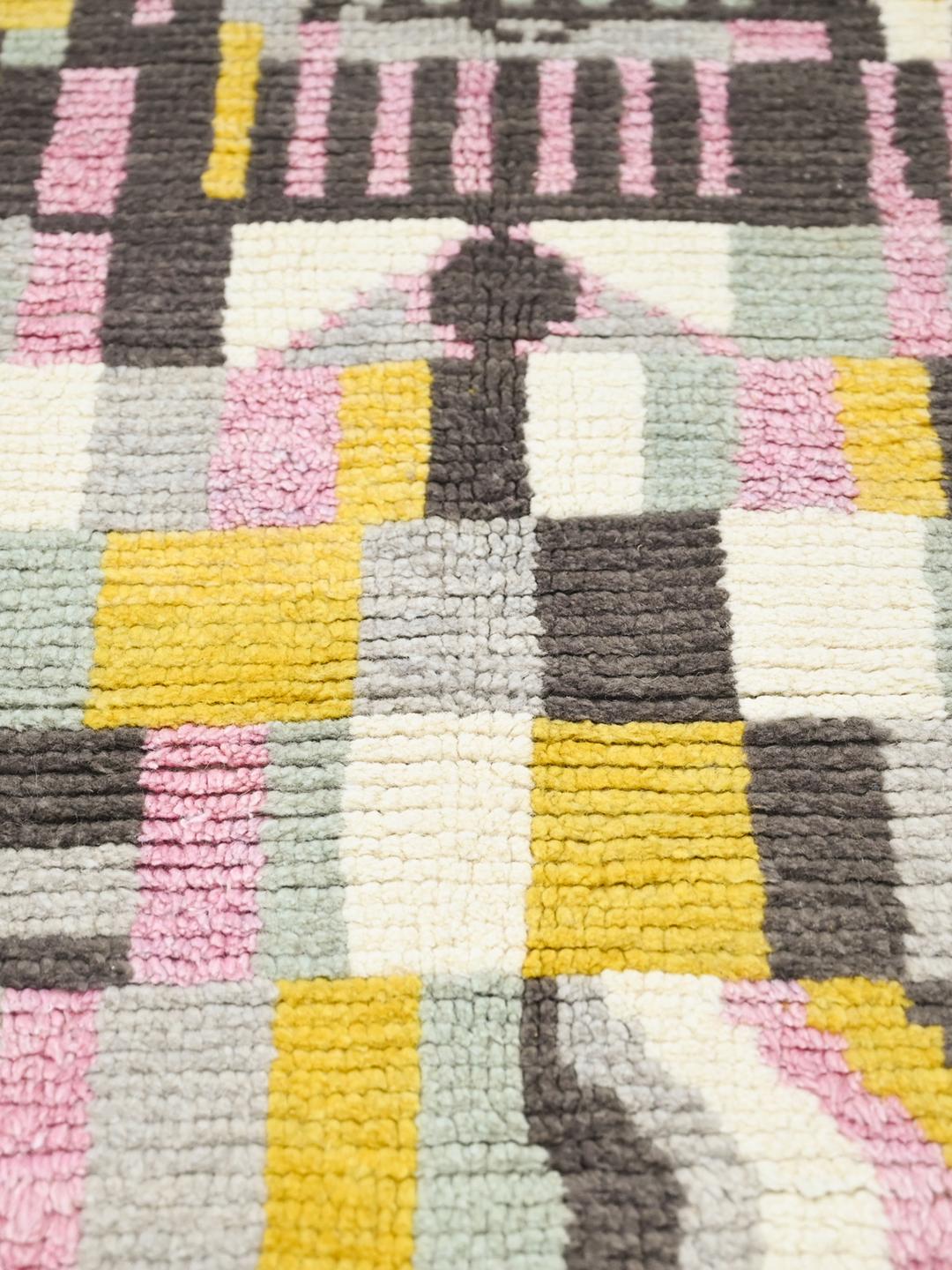
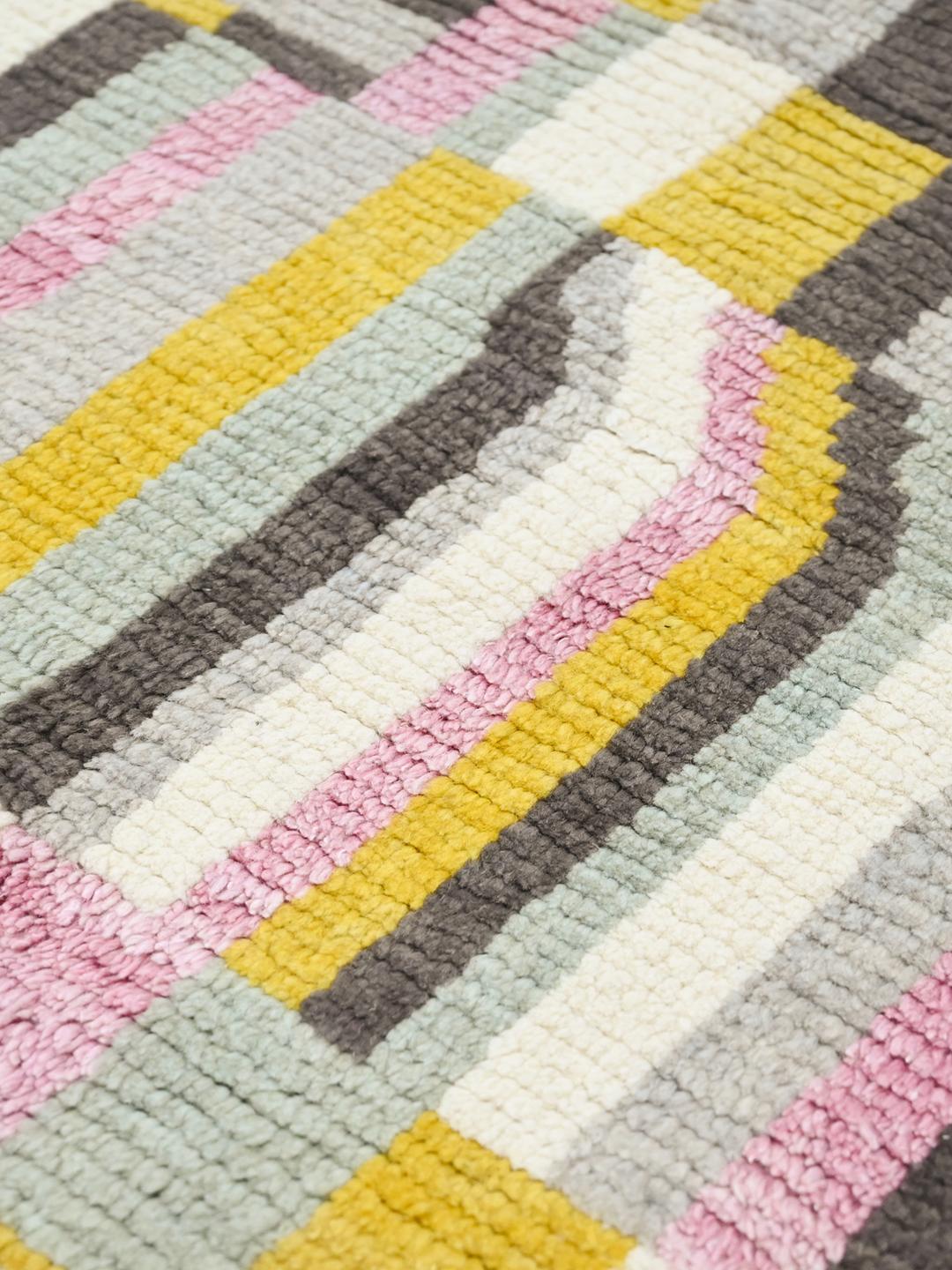
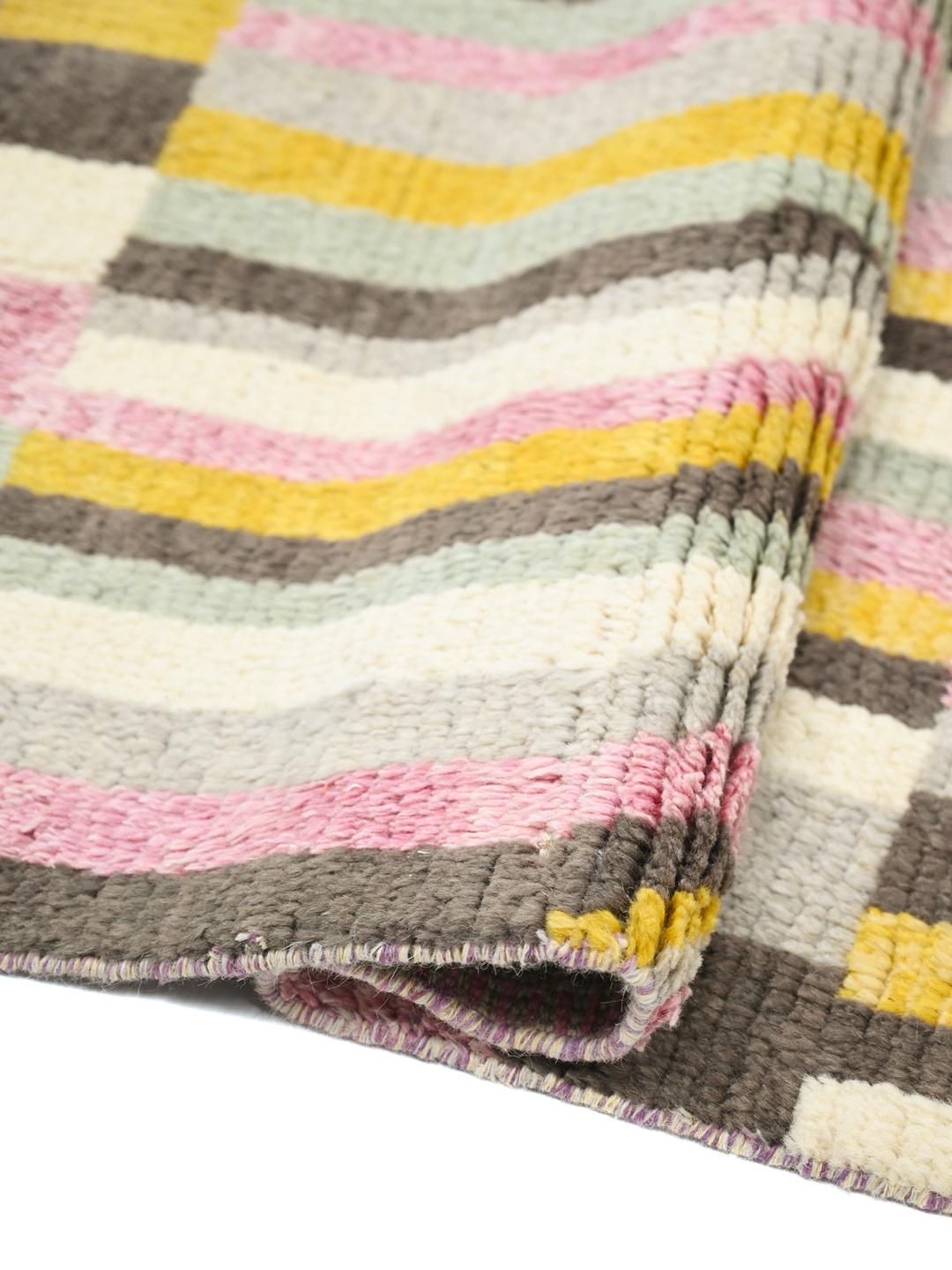
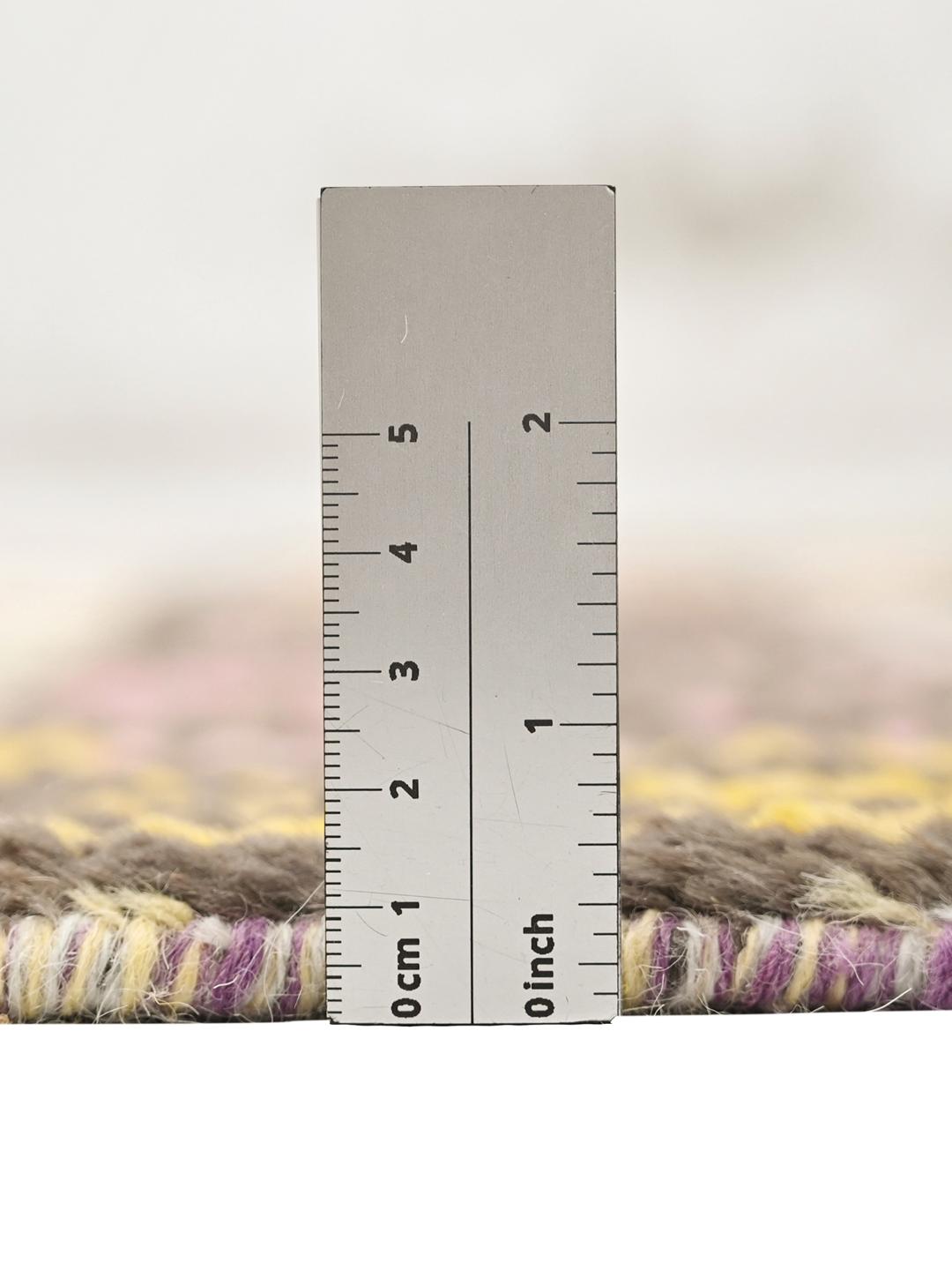
The term Berber in contemporary weaving refers to the characteristic thick, plush pile and the expressive, free-form geometric patterns that define this style. By utilising hand-spinning techniques for the wool, weavers create a textured, slightly irregular yarn that gives the finished pile its distinctively organic look and rich tactile depth.
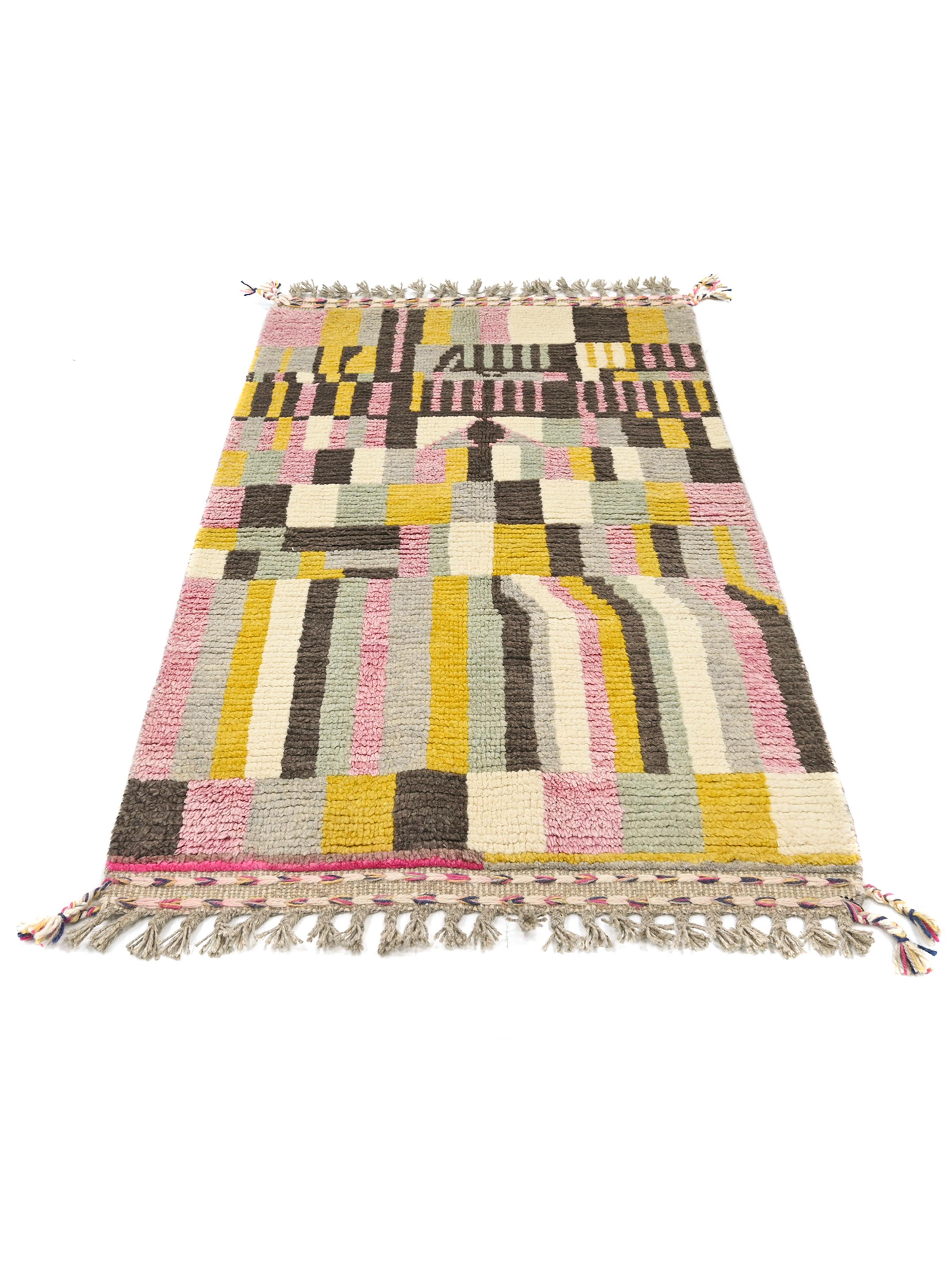
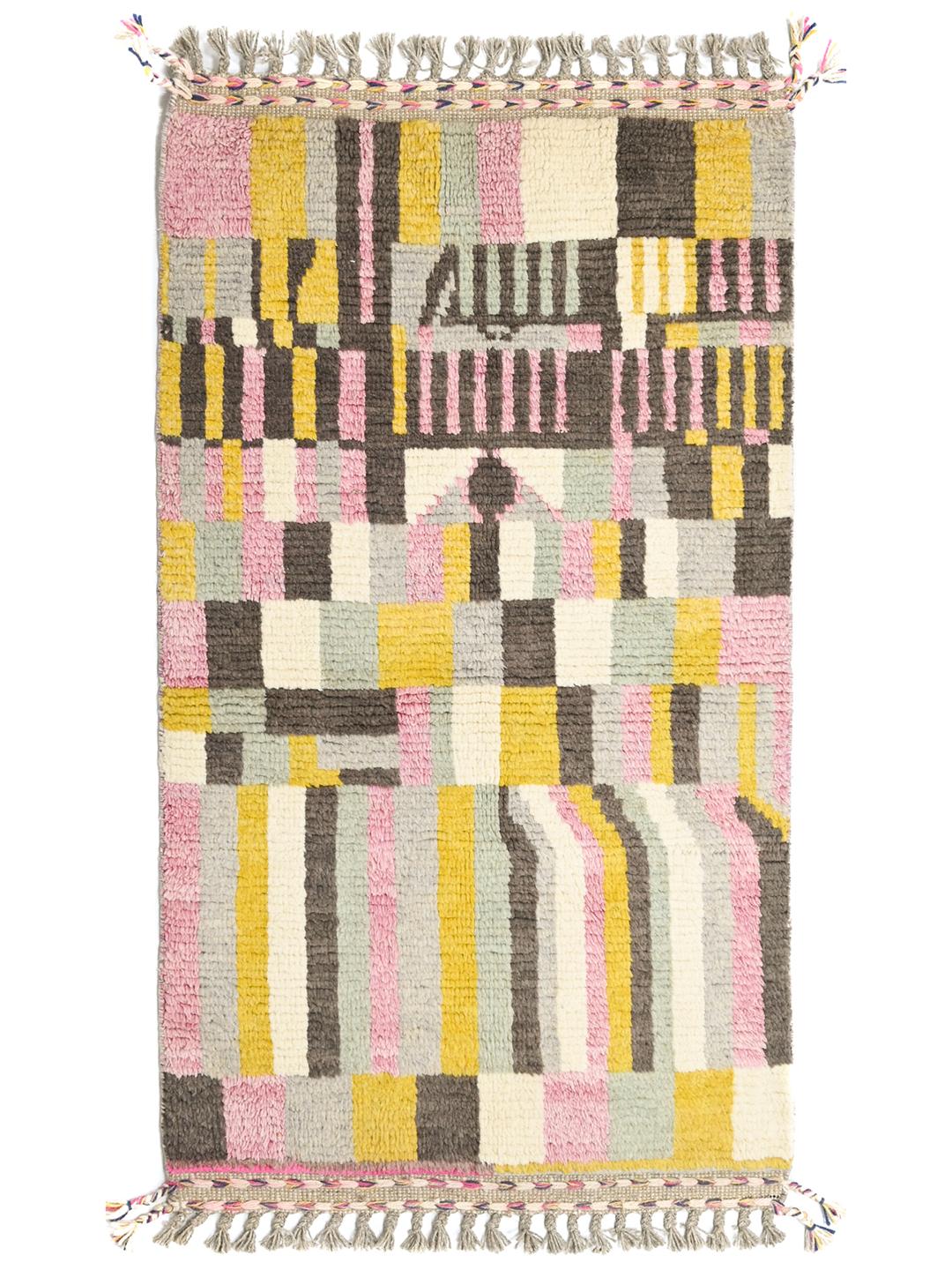
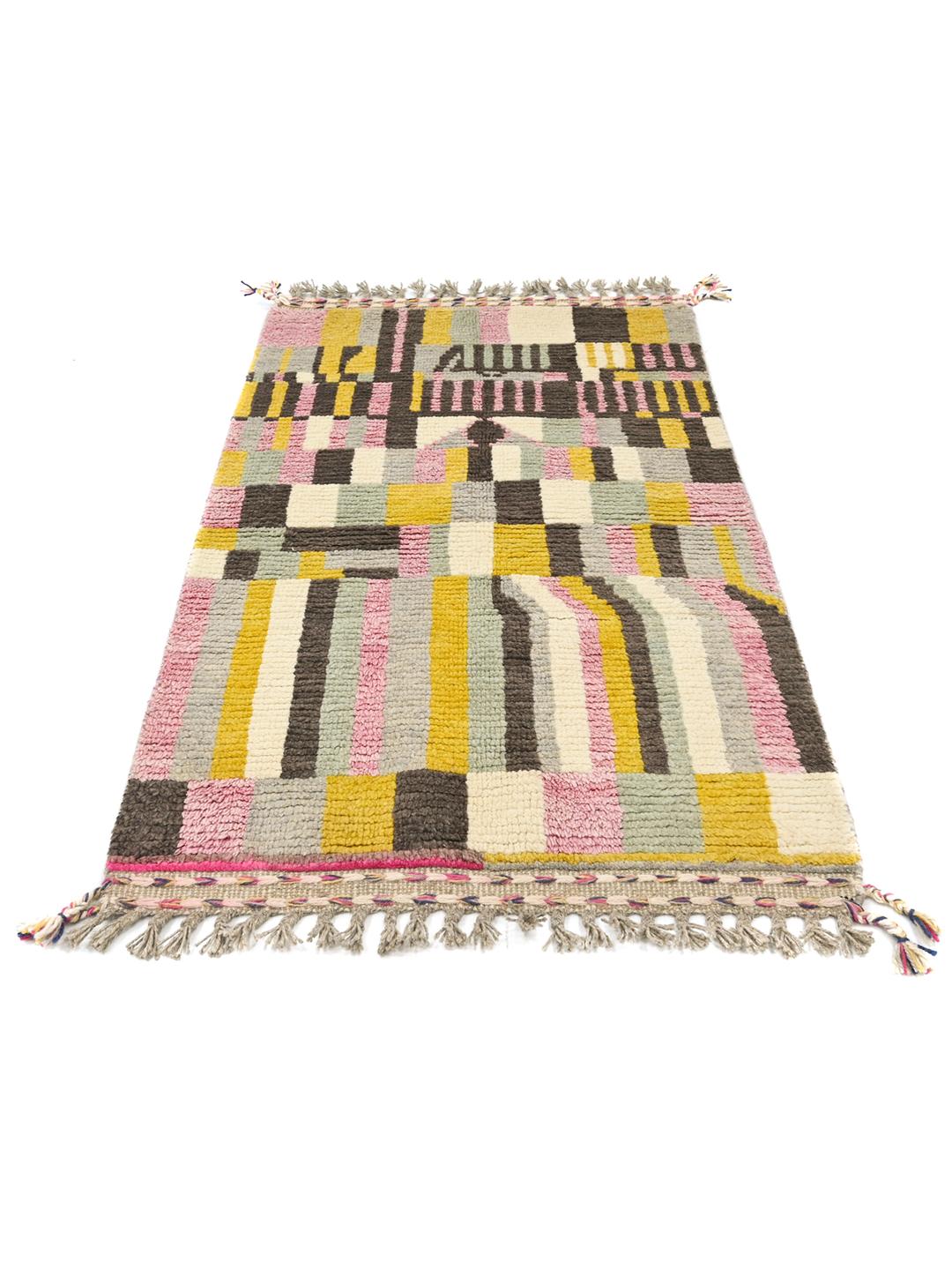
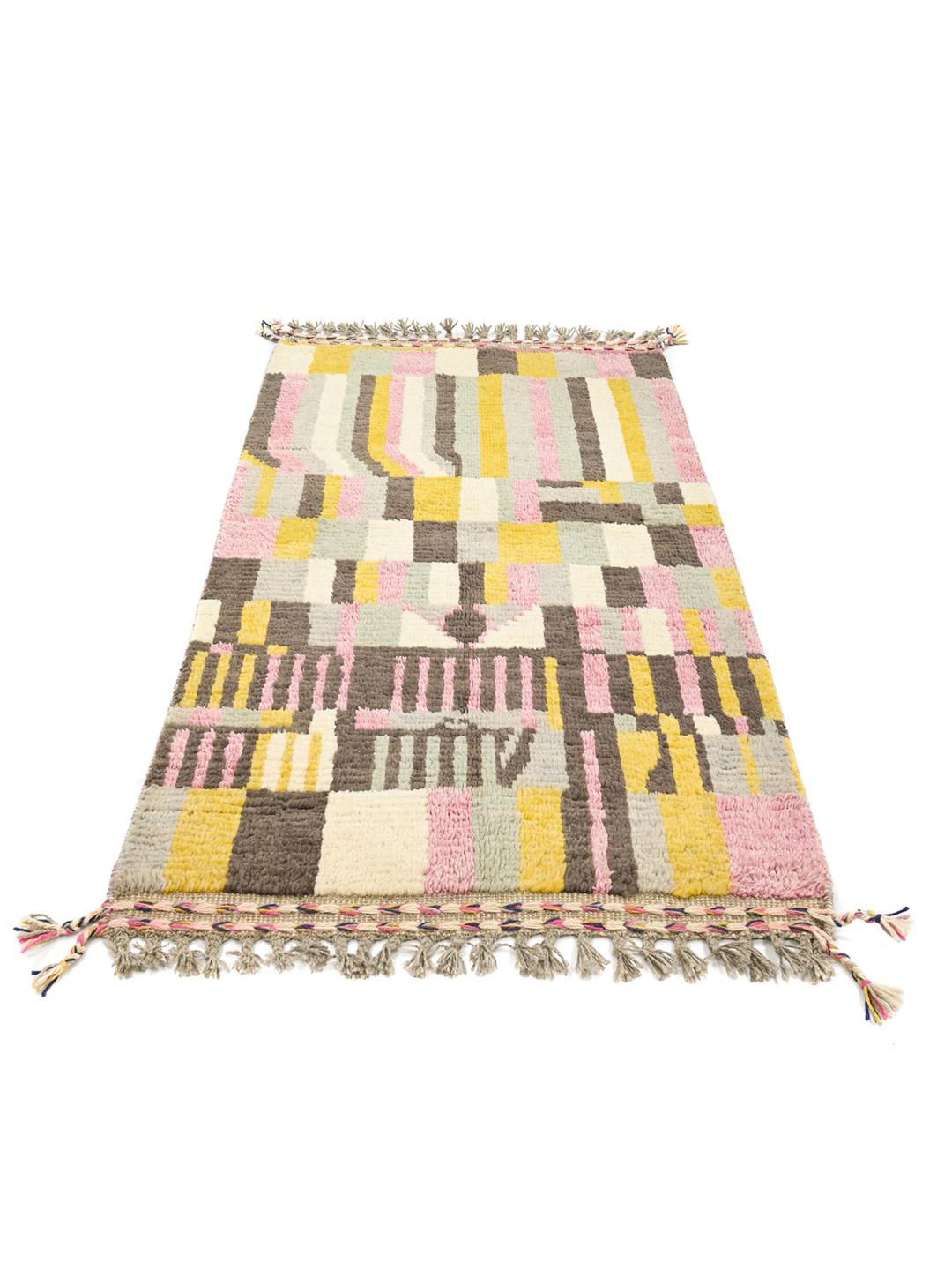
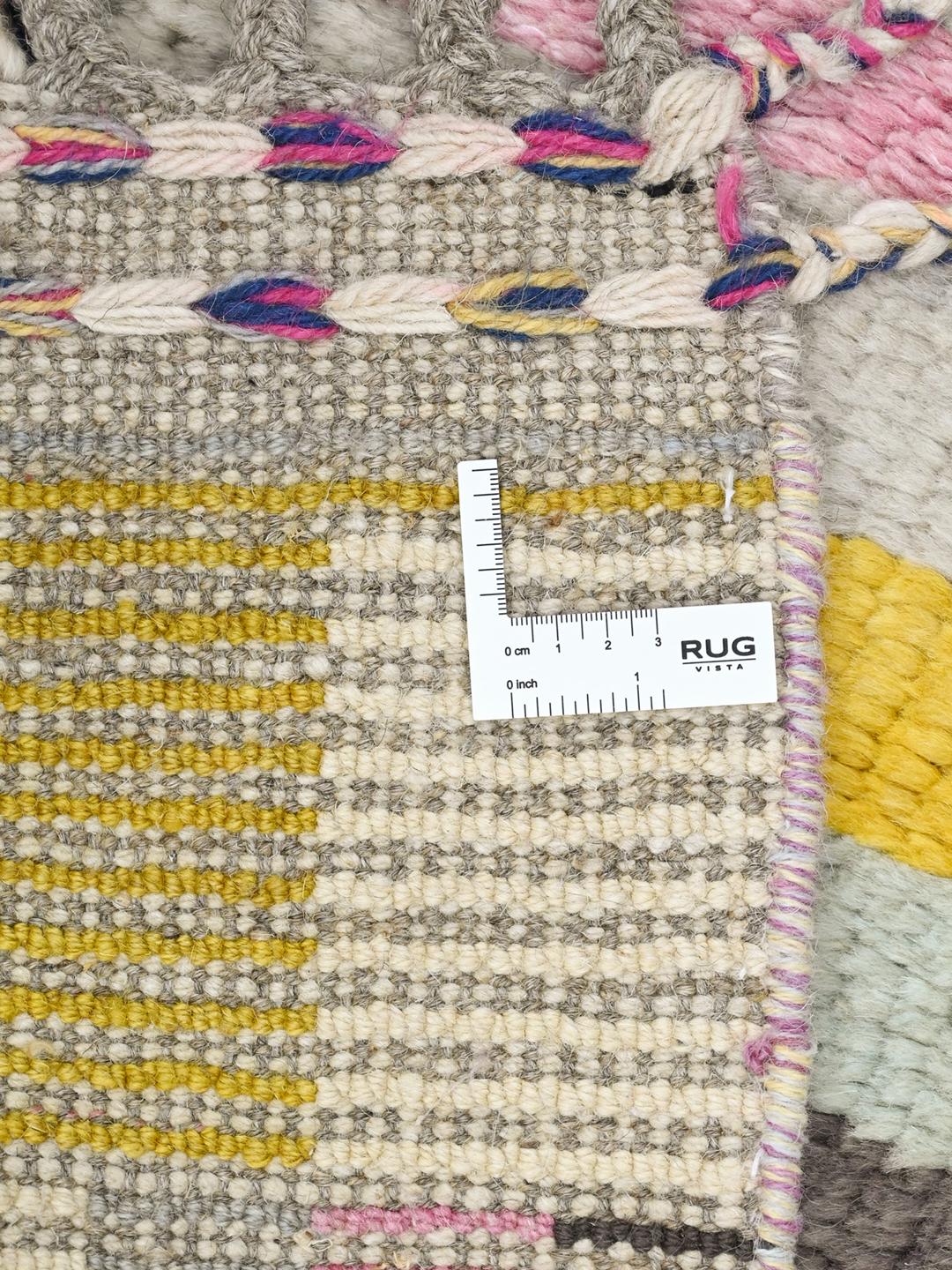
This particular piece showcases a vibrant, modern interpretation of the traditional Berber style, featuring a playful mix of colourful stripes, blocks, and geometric shapes. While classic Berber rugs often rely on simple cream and black tones, this colourful variation introduces a joyful palette of pinks, yellows, and soft greys, bordered by beautifully braided fringes that frame the design.
Highly valued by collectors and interior enthusiasts alike, these rugs represent a bridge between ancient tribal customs and modern abstract art. Owning a hand-knotted piece from this tradition means acquiring a functional slice of cultural expression that brings both character and a sense of story to contemporary interiors.