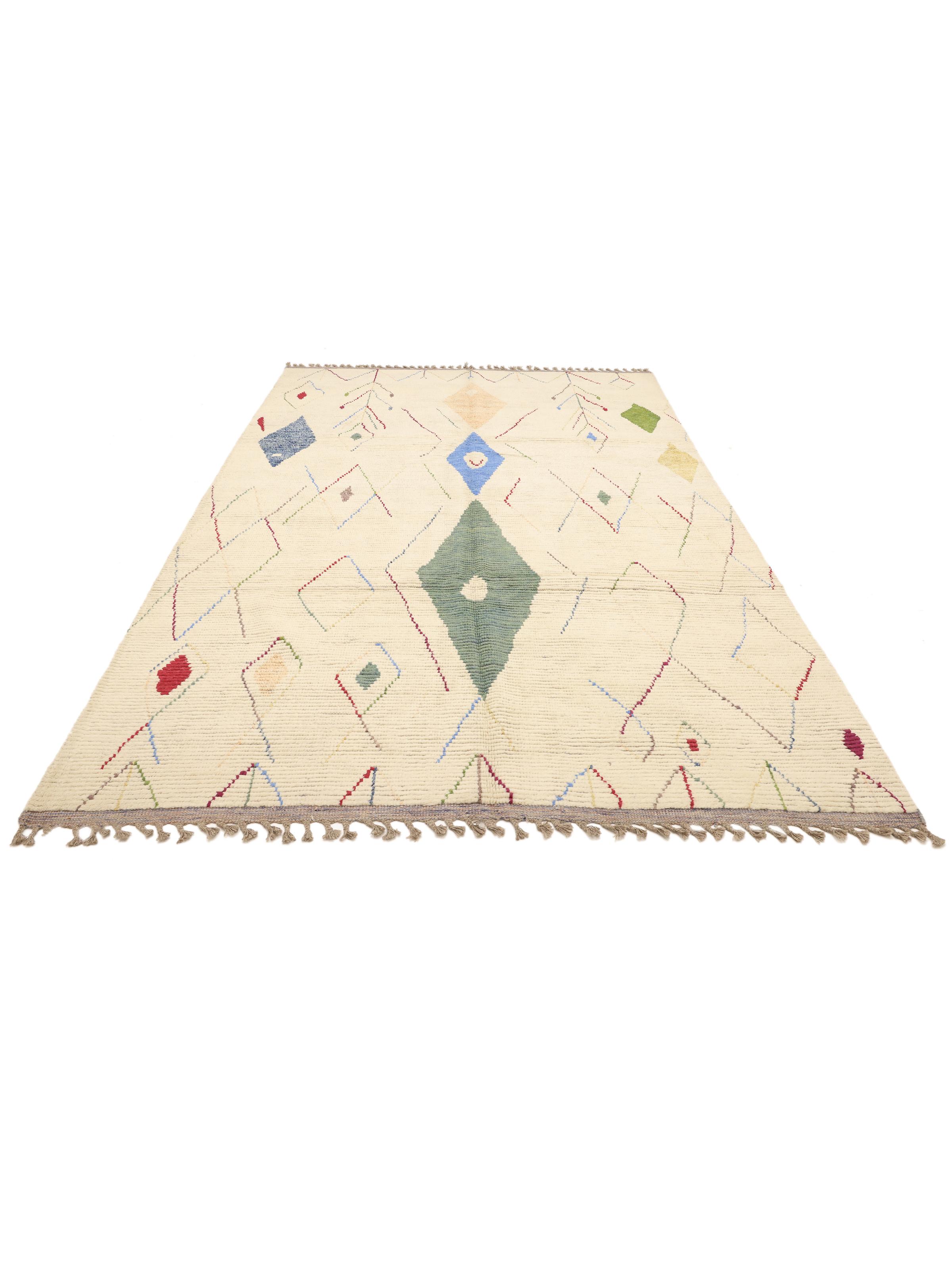
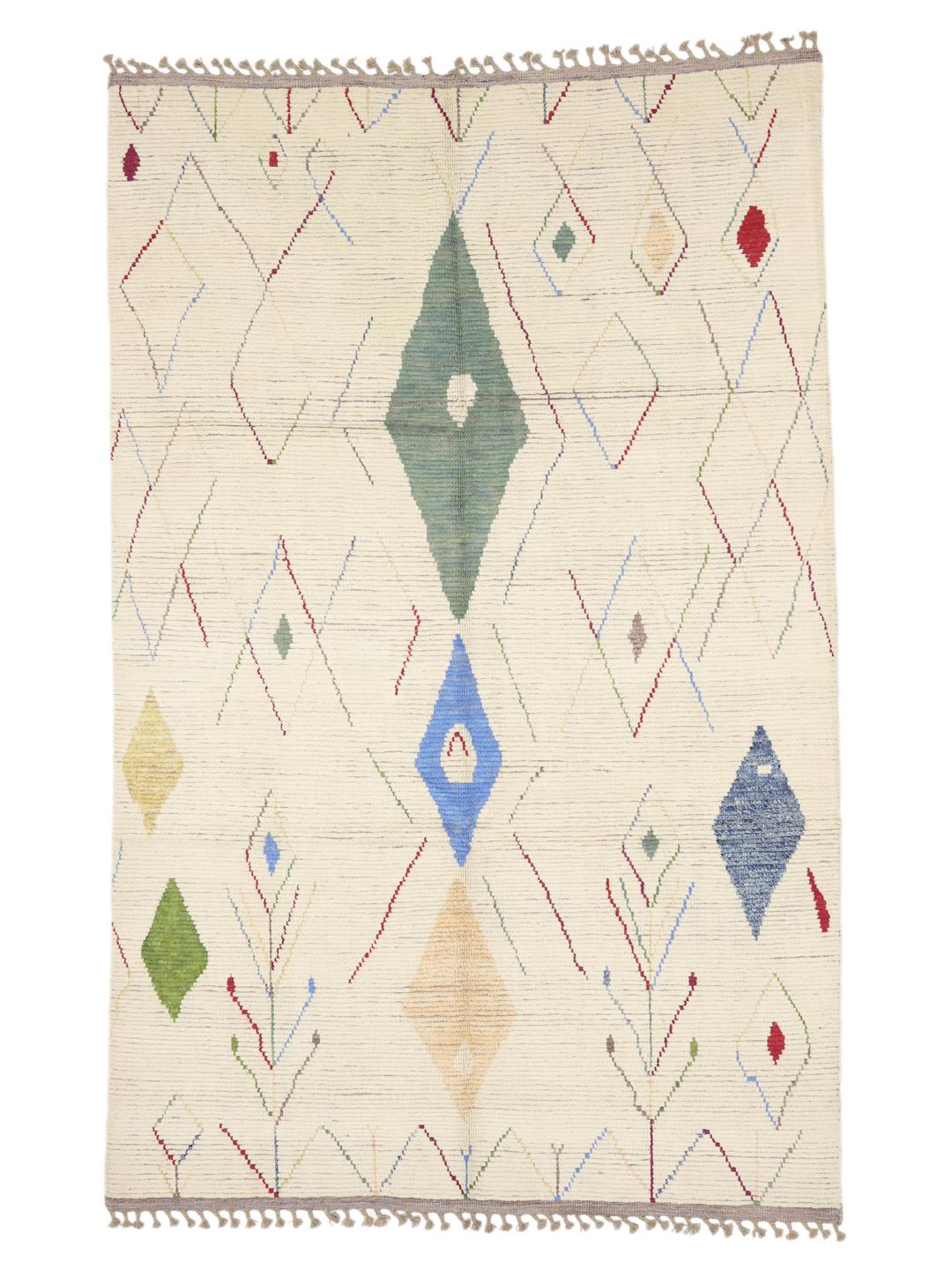
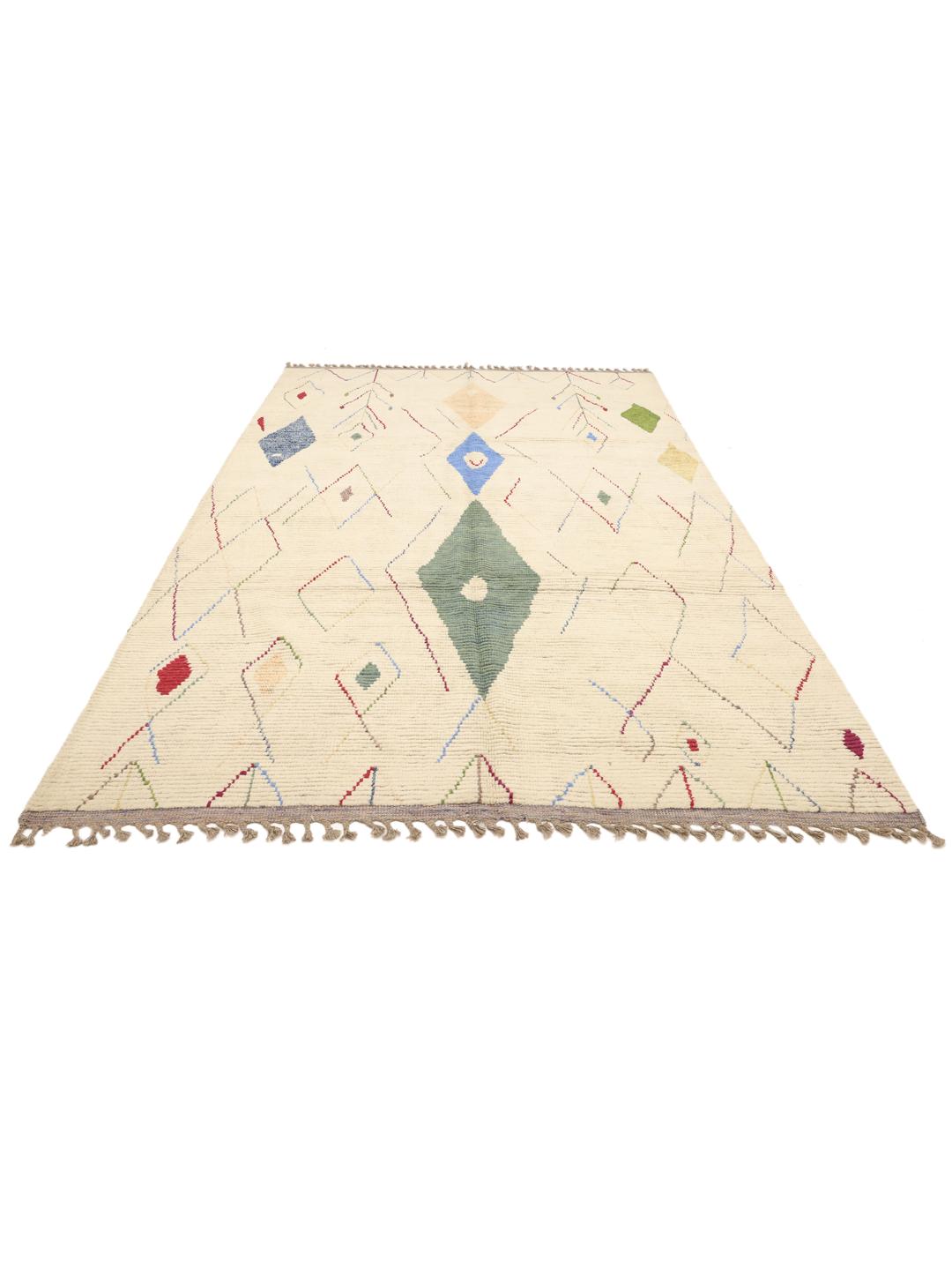
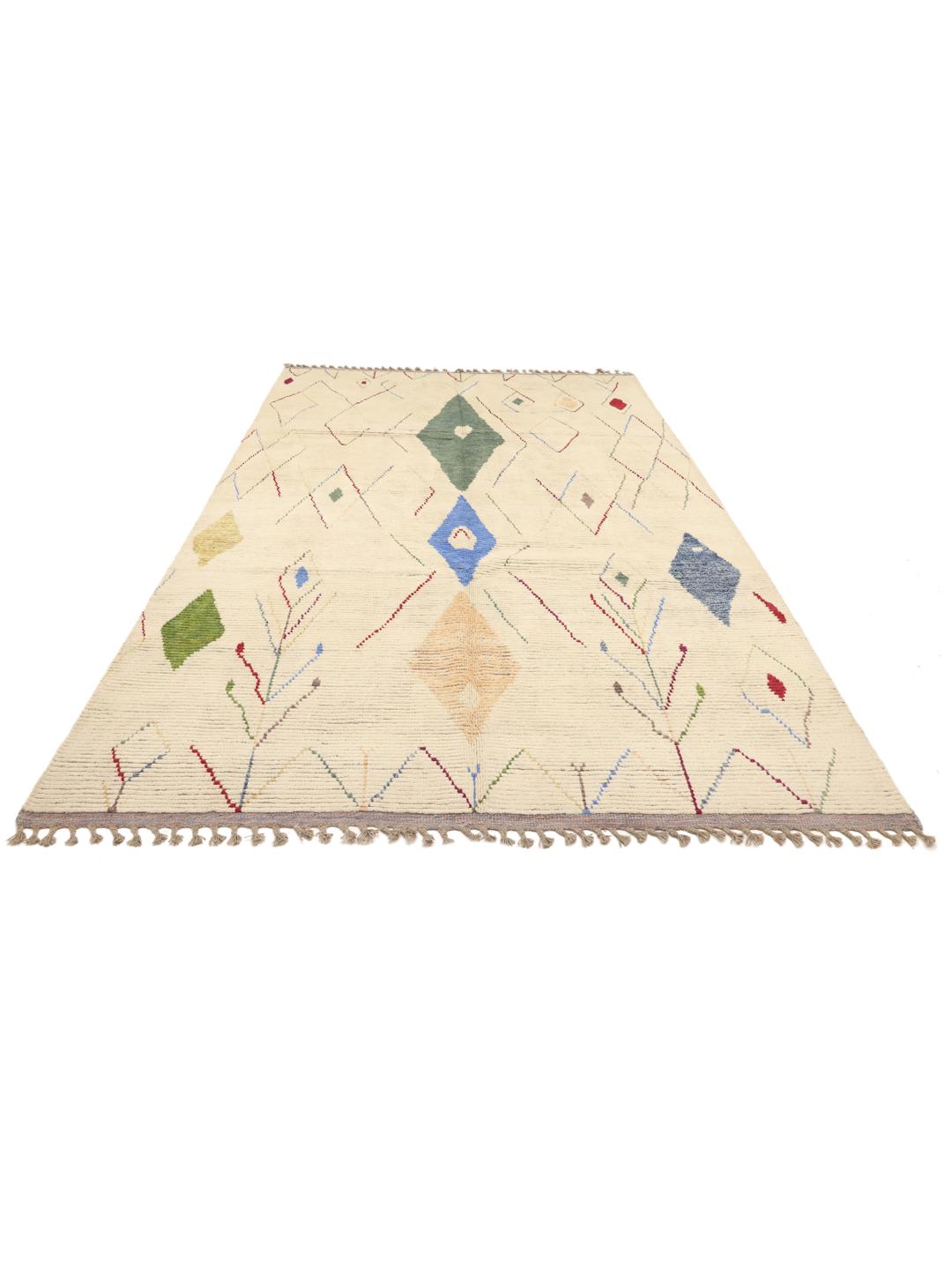
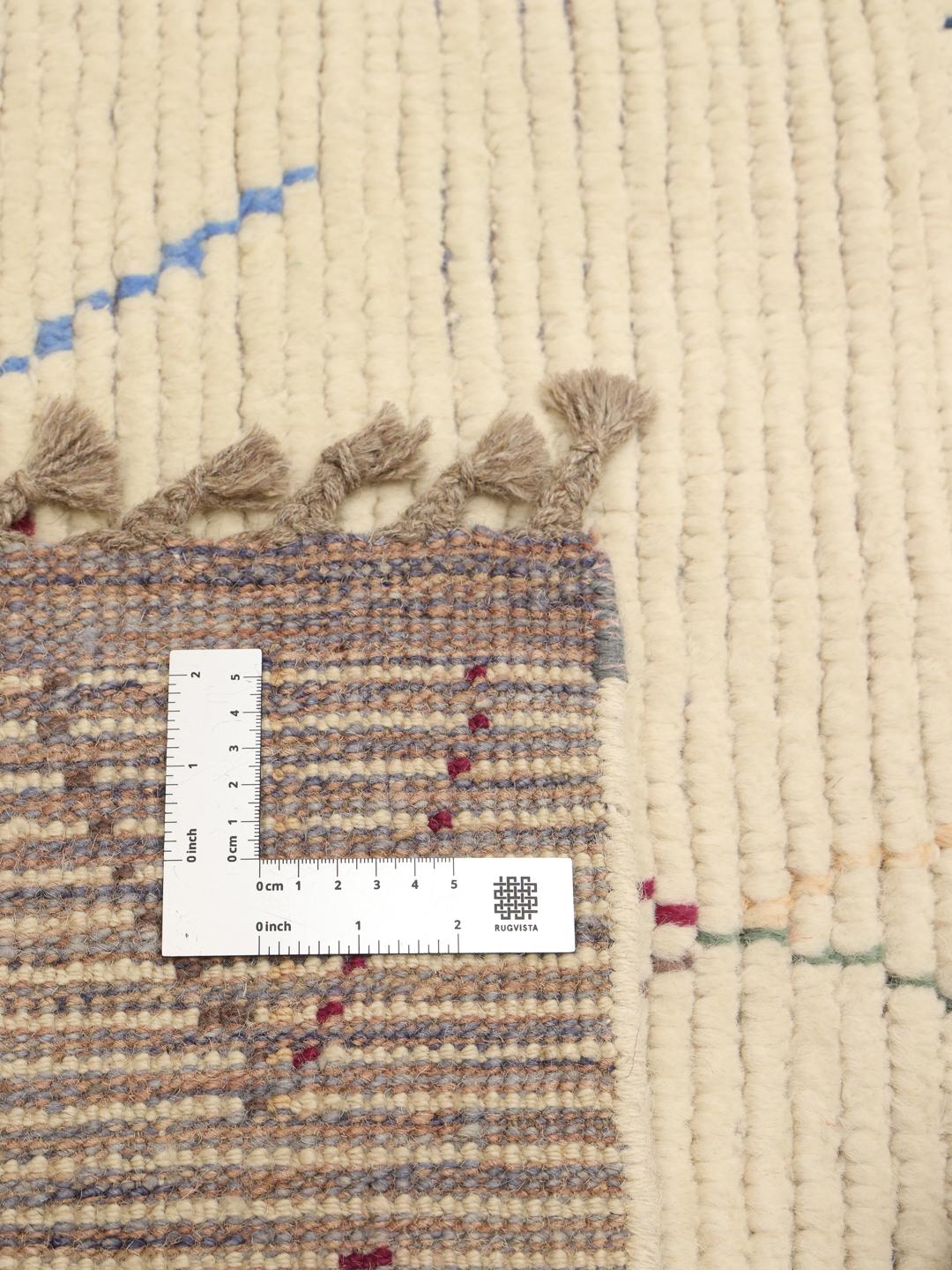
The tradition of weaving in Afghanistan is deeply rooted in the cultural landscape of the region, where rug making has served as a vital form of artistic expression for generations. Drawing inspiration from nomadic heritage, these rugs often incorporate symbolic motifs that tell stories of the environment, family, and local folklore.
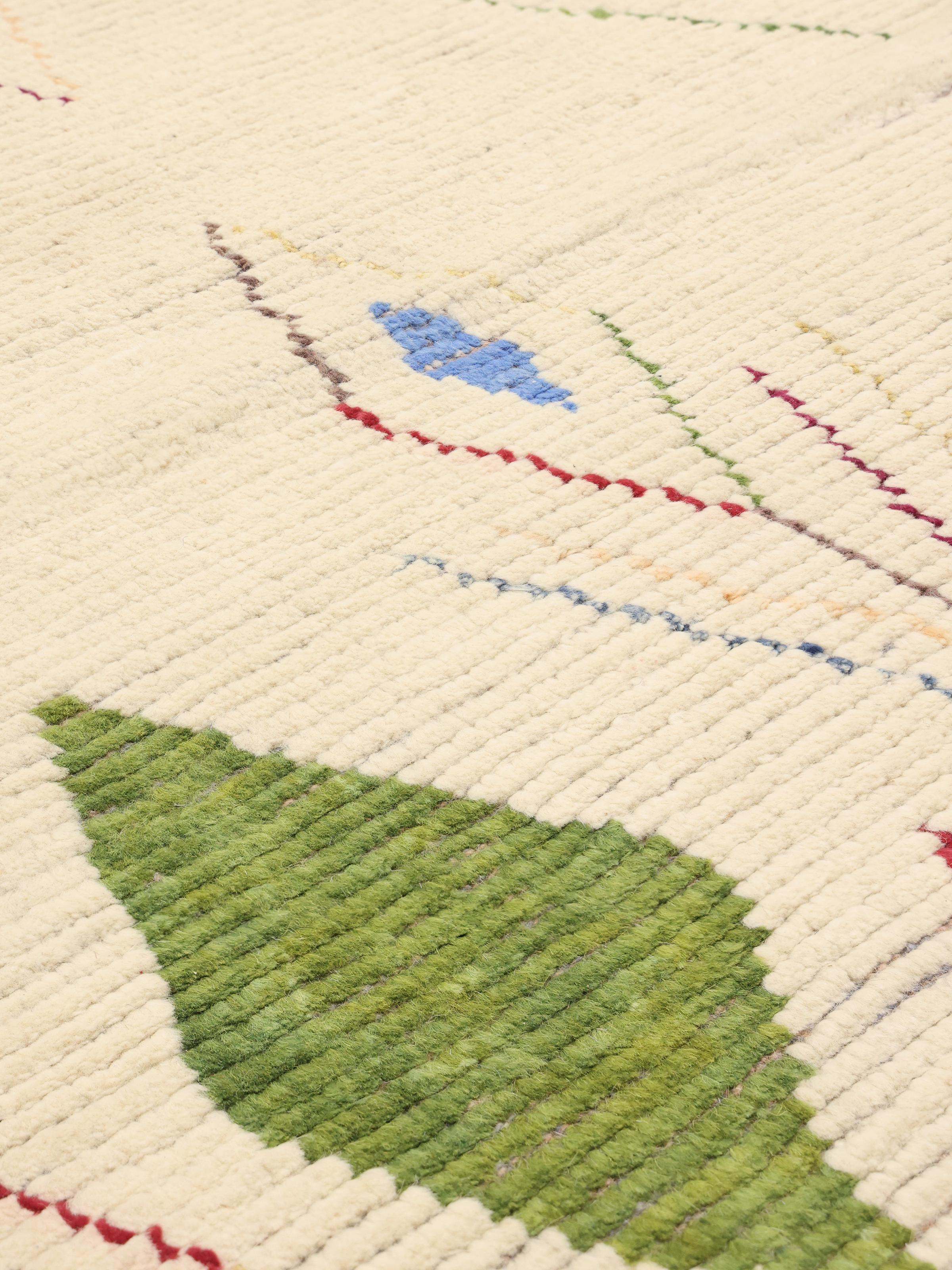
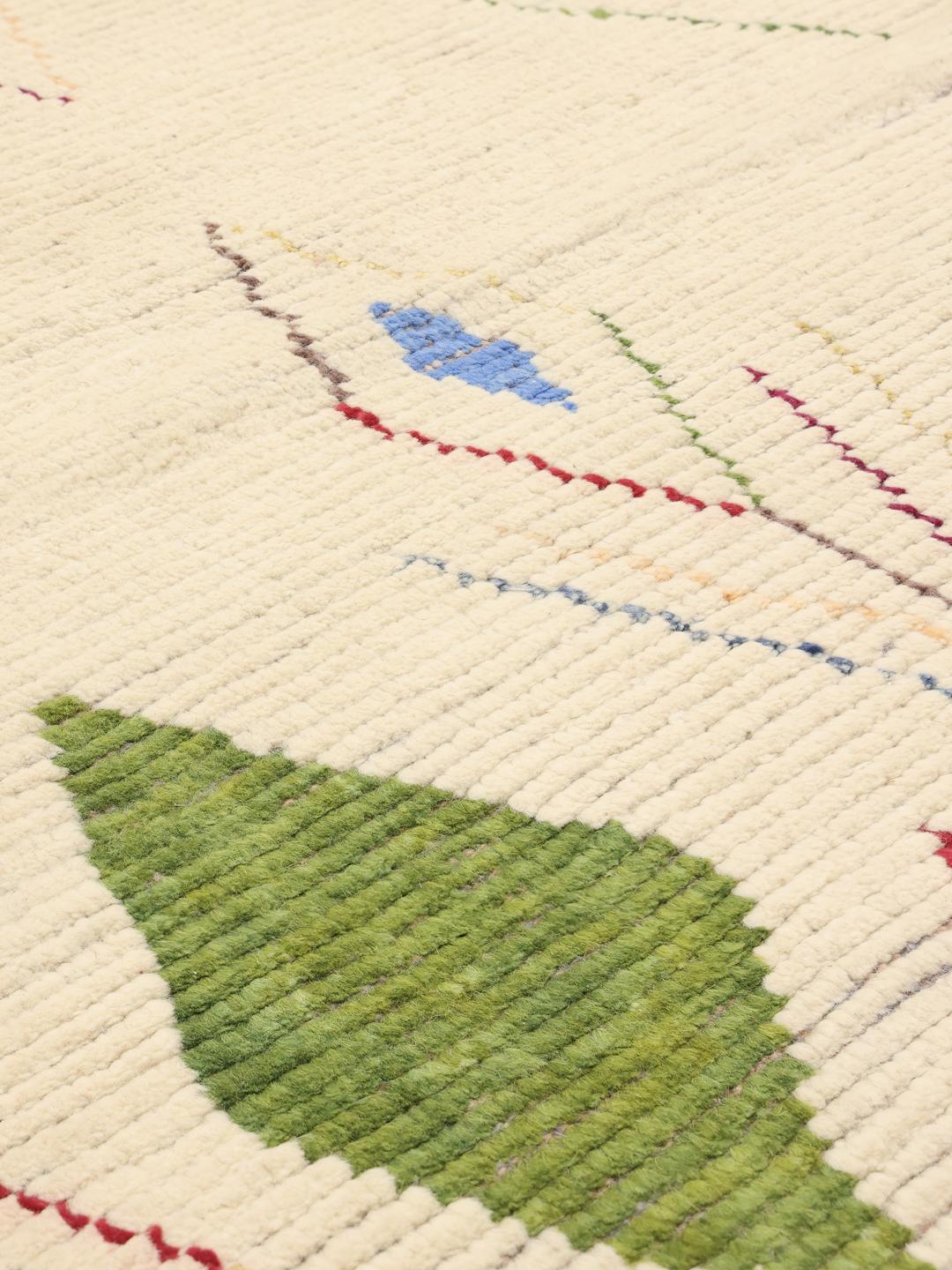
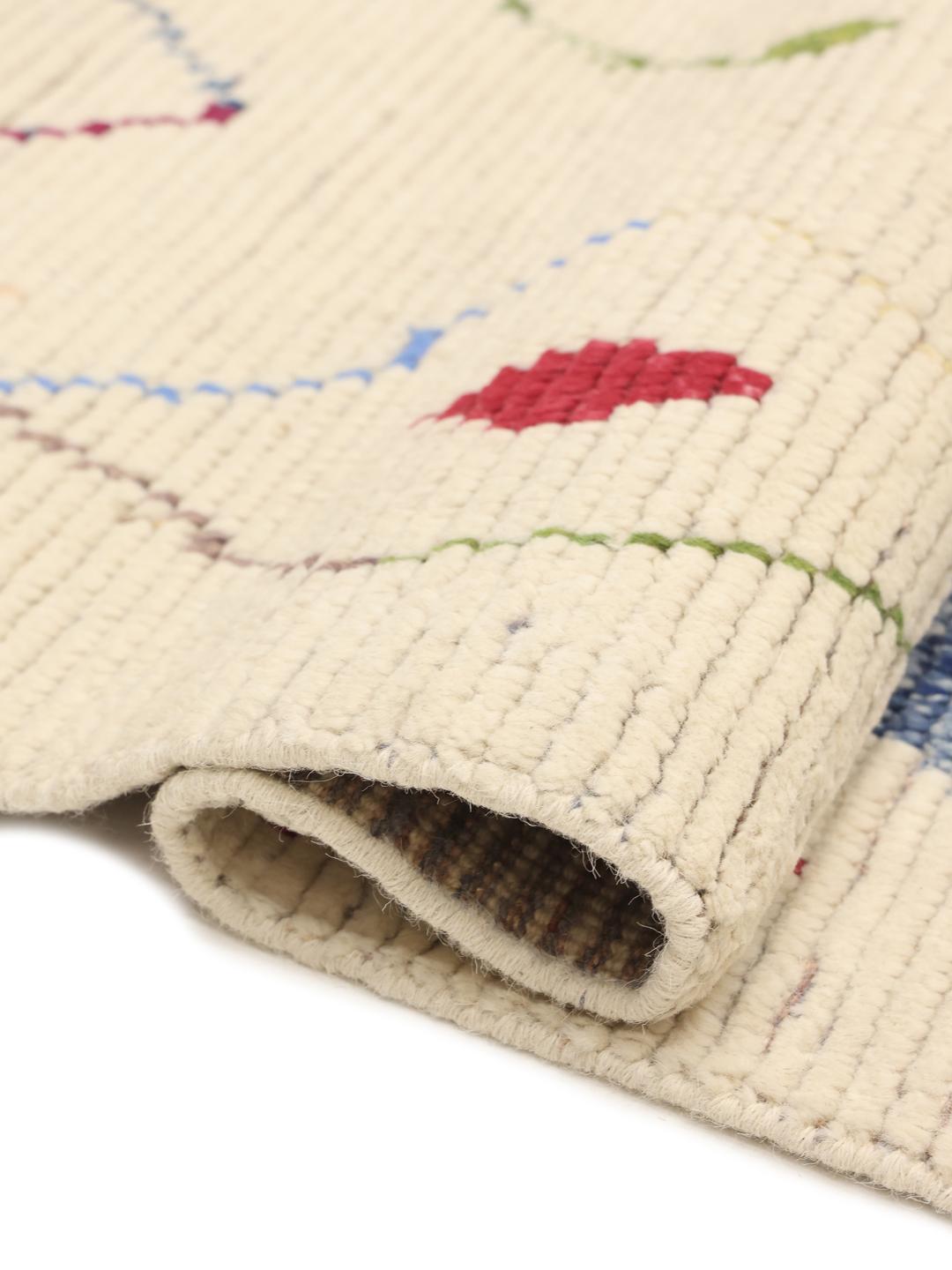
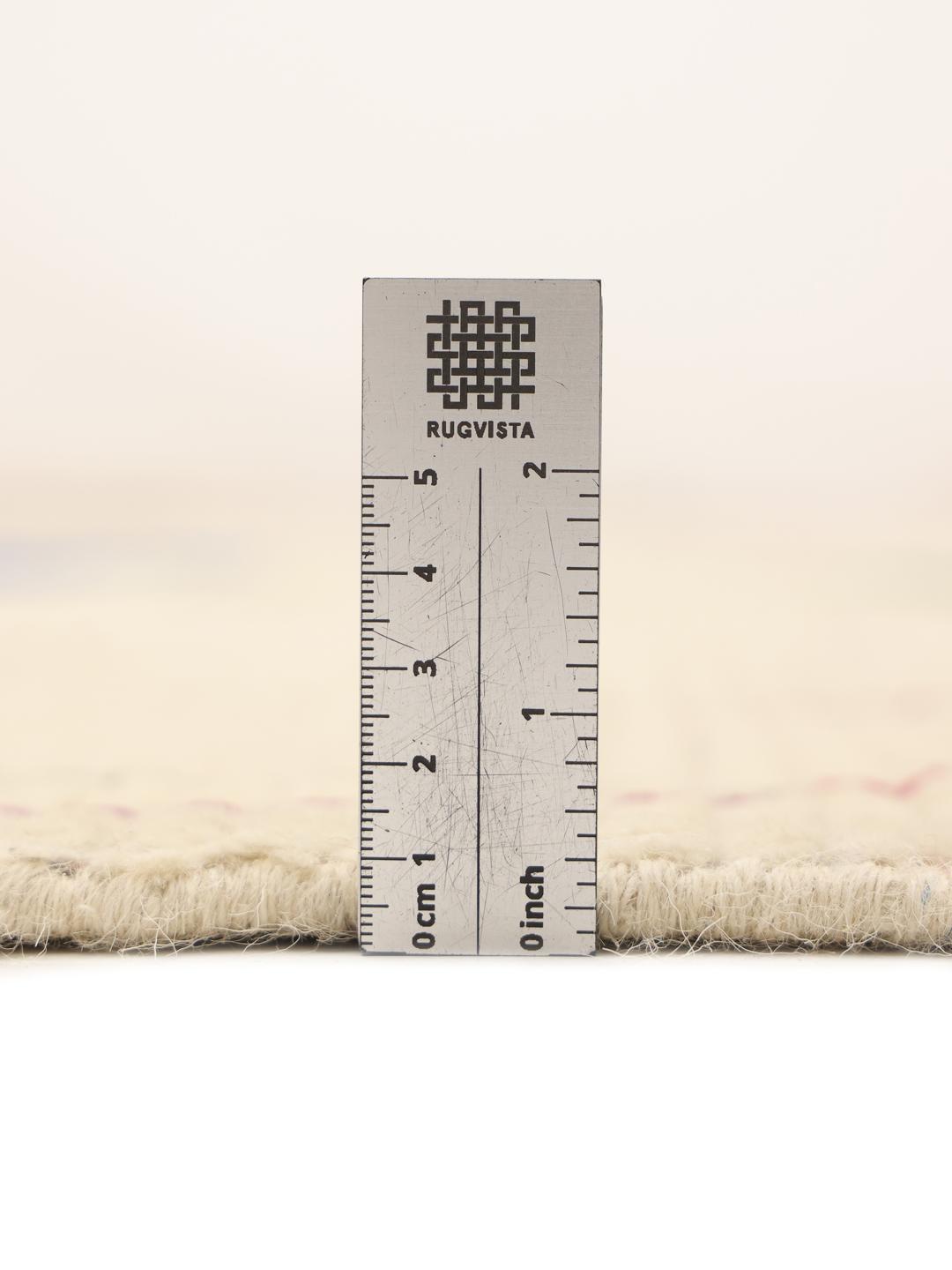
The term Berber Style refers to a specific aesthetic influenced by the traditional, thick-pile rugs of North Africa, which have been adapted by Afghan weavers to reflect their own regional techniques. These rugs are known for their minimalist yet bold patterns, often using natural wool to create a thick, cosy surface that is both durable and soft.
Geometric patterns such as the diamonds and lines seen here are signature elements of this tradition. These shapes are not merely decorative but often hold cultural significance, representing protection or nature. The use of vibrant, contrasting colours against a neutral field is a hallmark of this style, intended to bring light and energy into a home.
Owning a hand-knotted rug from this tradition is an investment in human skill and history. It represents a connection to a craft that has remained largely unchanged for centuries, celebrating the individual choices of the artisan who made it. These rugs are collected not only for their beauty but for their ability to bring a sense of history and warmth into modern living environments.