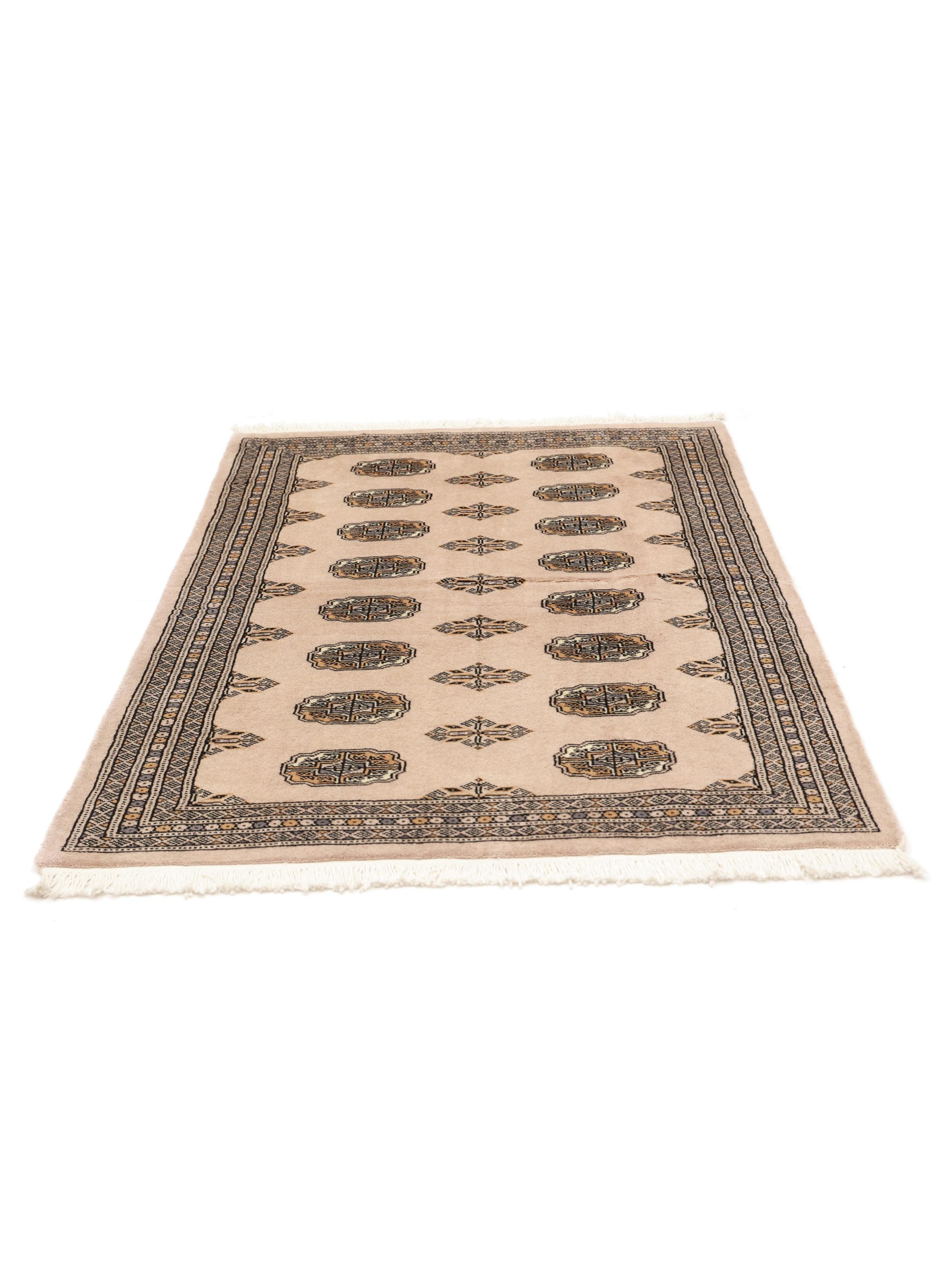
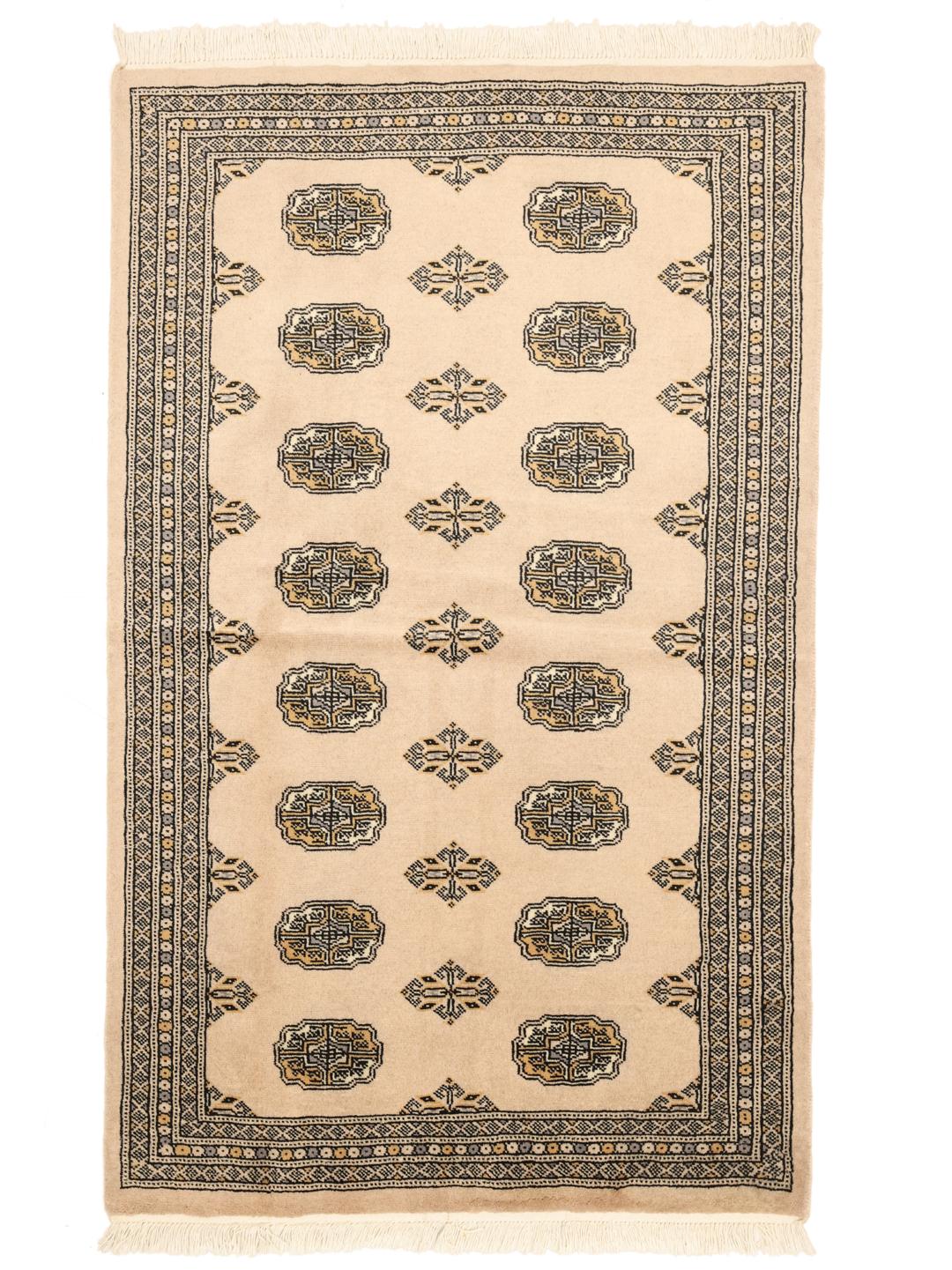
Bokhara rugs trace their design heritage back to the ancient Silk Road city of Bukhara in Central Asia, where nomadic and village weavers first developed the iconic patterns. Over generations, the tradition migrated southward, and today some of the finest examples are crafted by skilled artisans in Pakistan who keep these historic techniques alive.
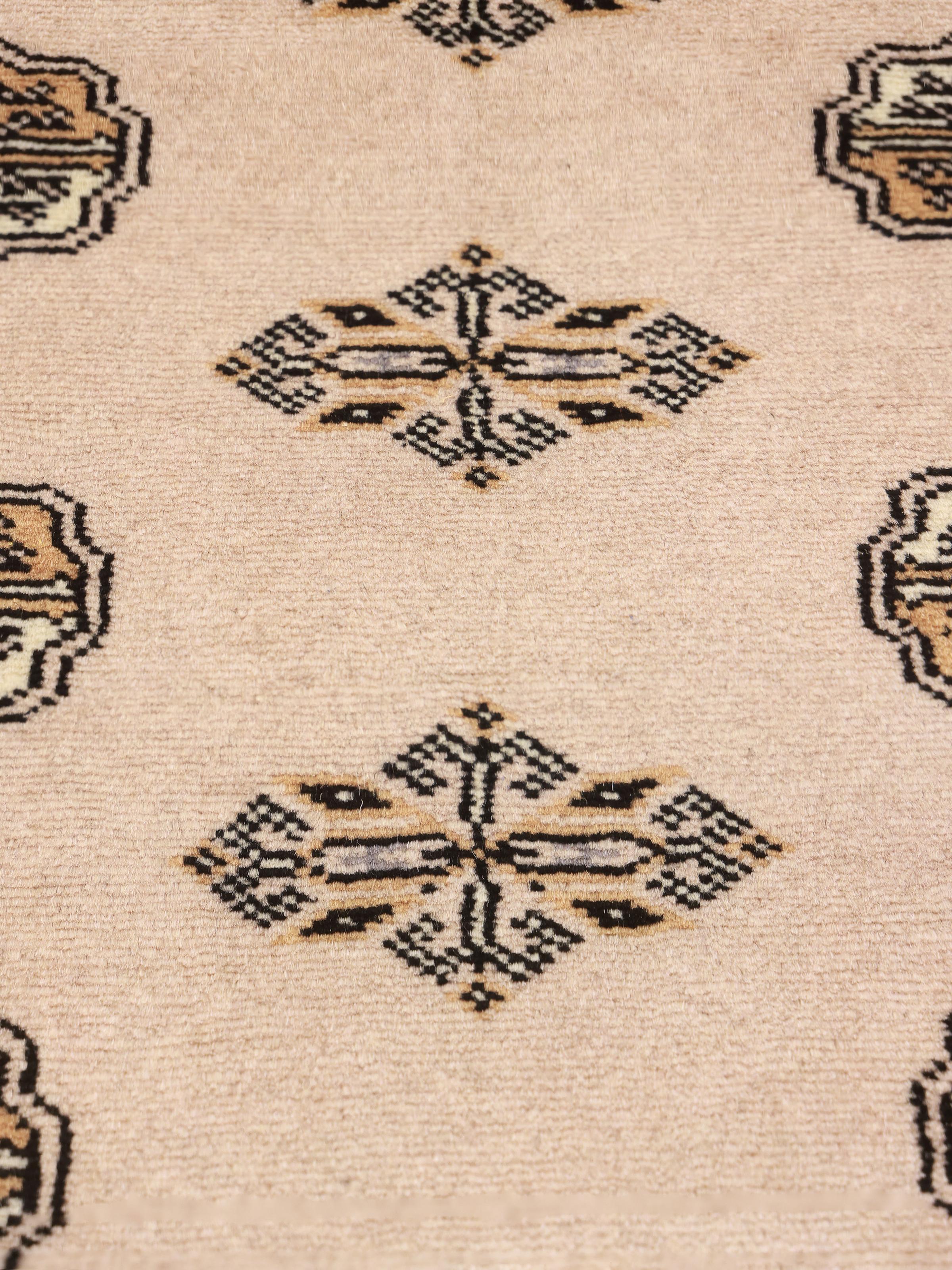
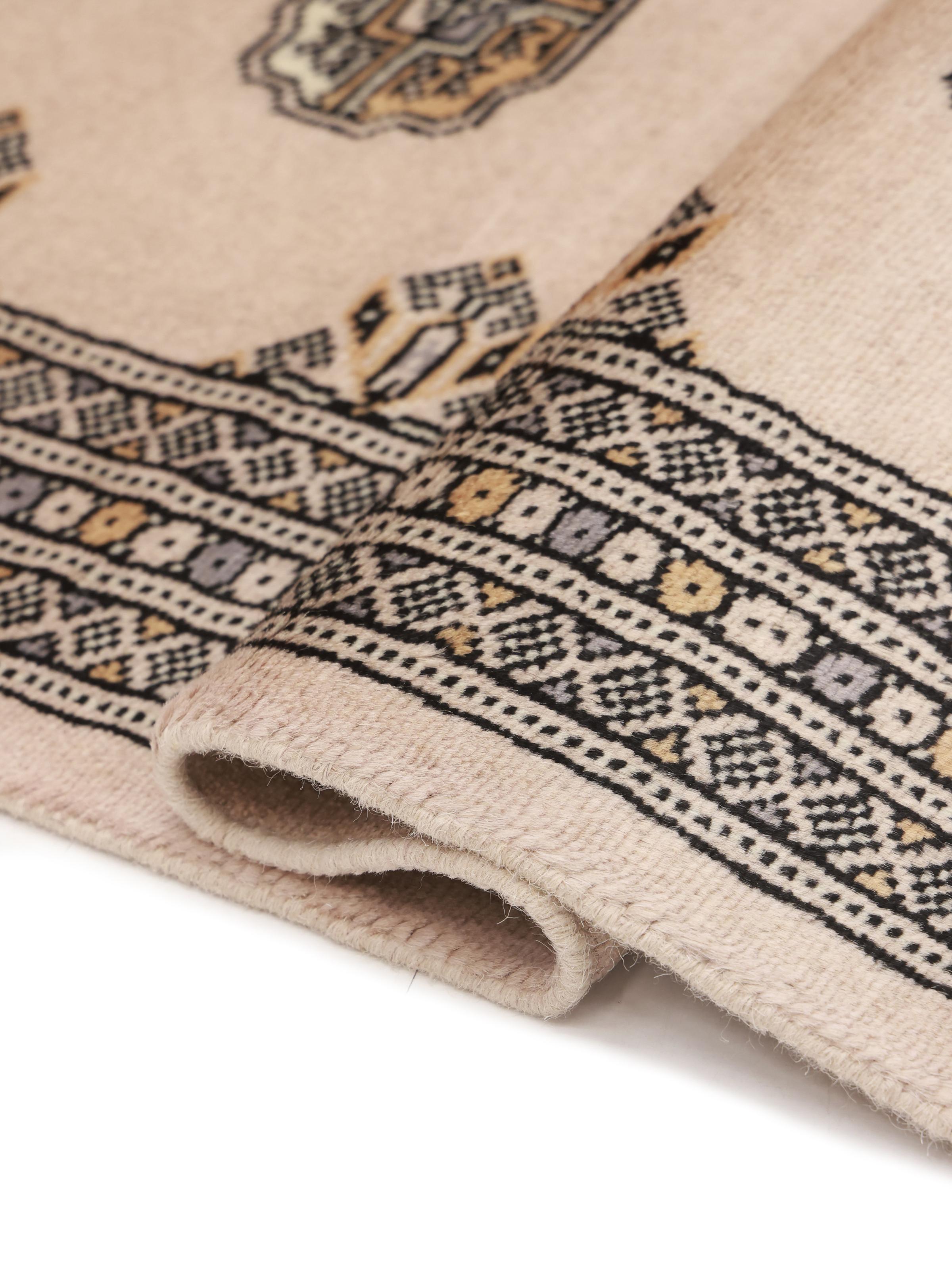
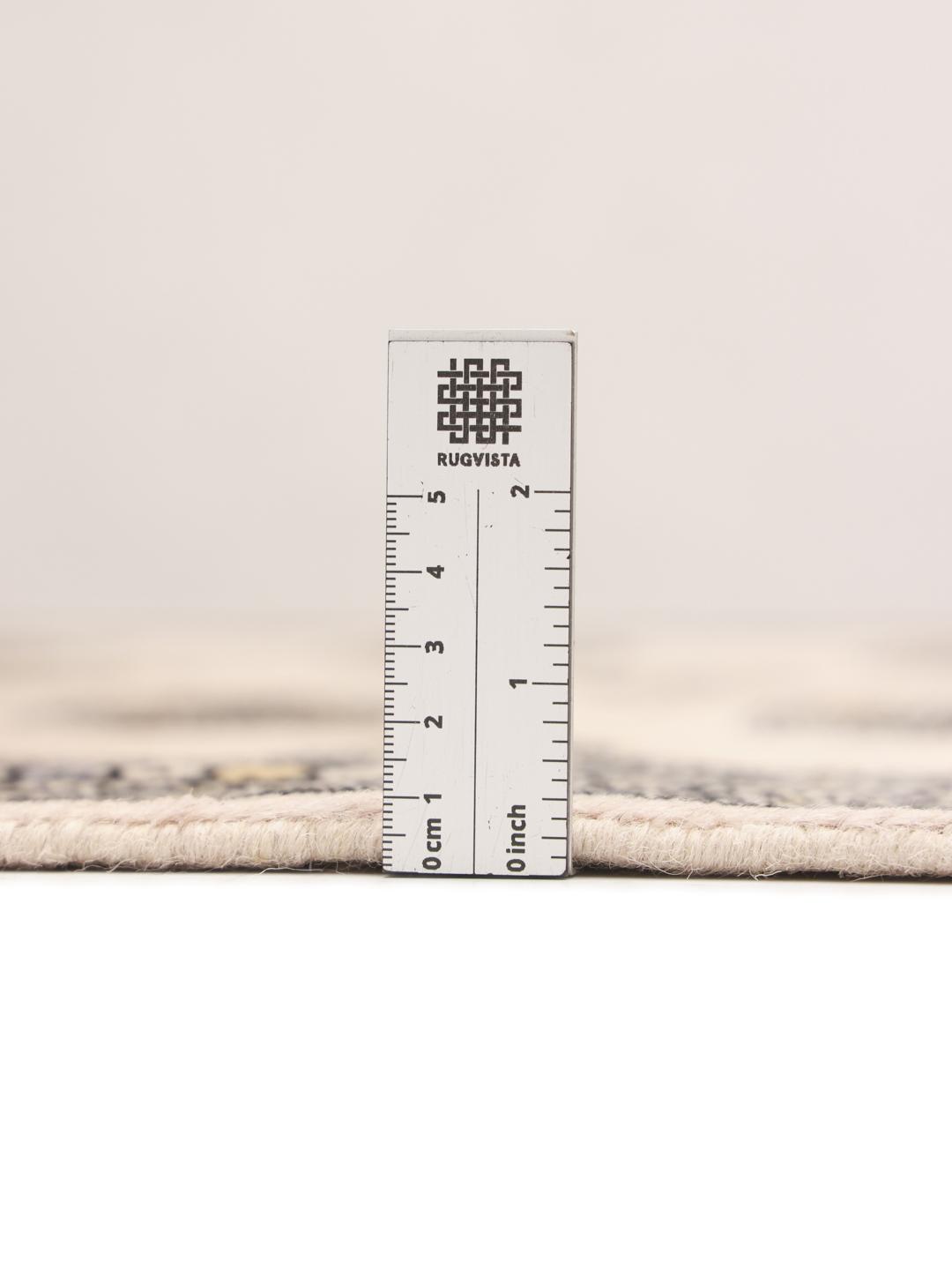
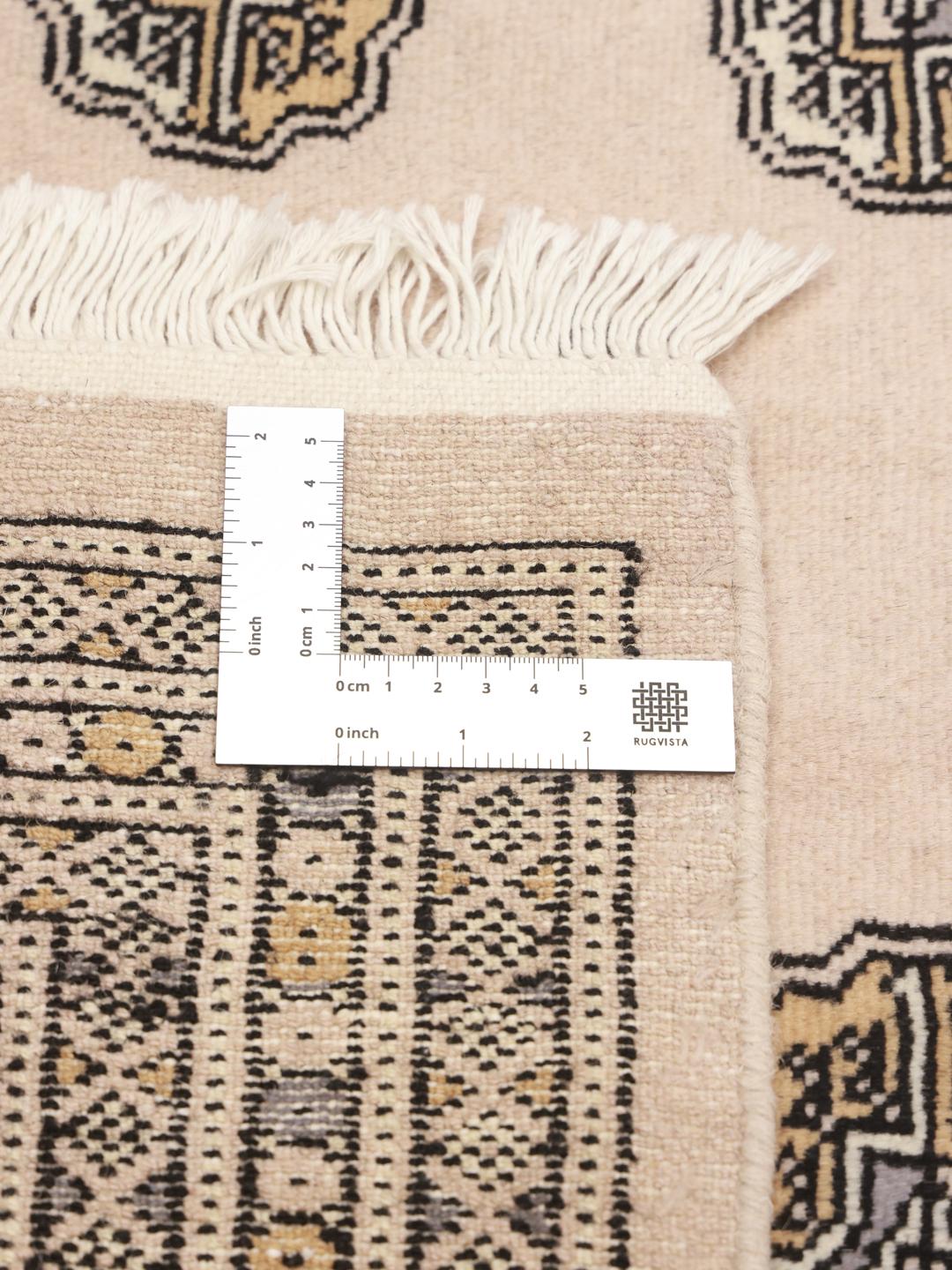
The designation 2ply refers to the construction of the pile, which is woven using two strands of wool twisted together before knotting. This specific technique produces a denser, more lustrous, and harder-wearing surface compared to single-ply variations, ensuring the rug stands up well to daily use while maintaining its visual depth.
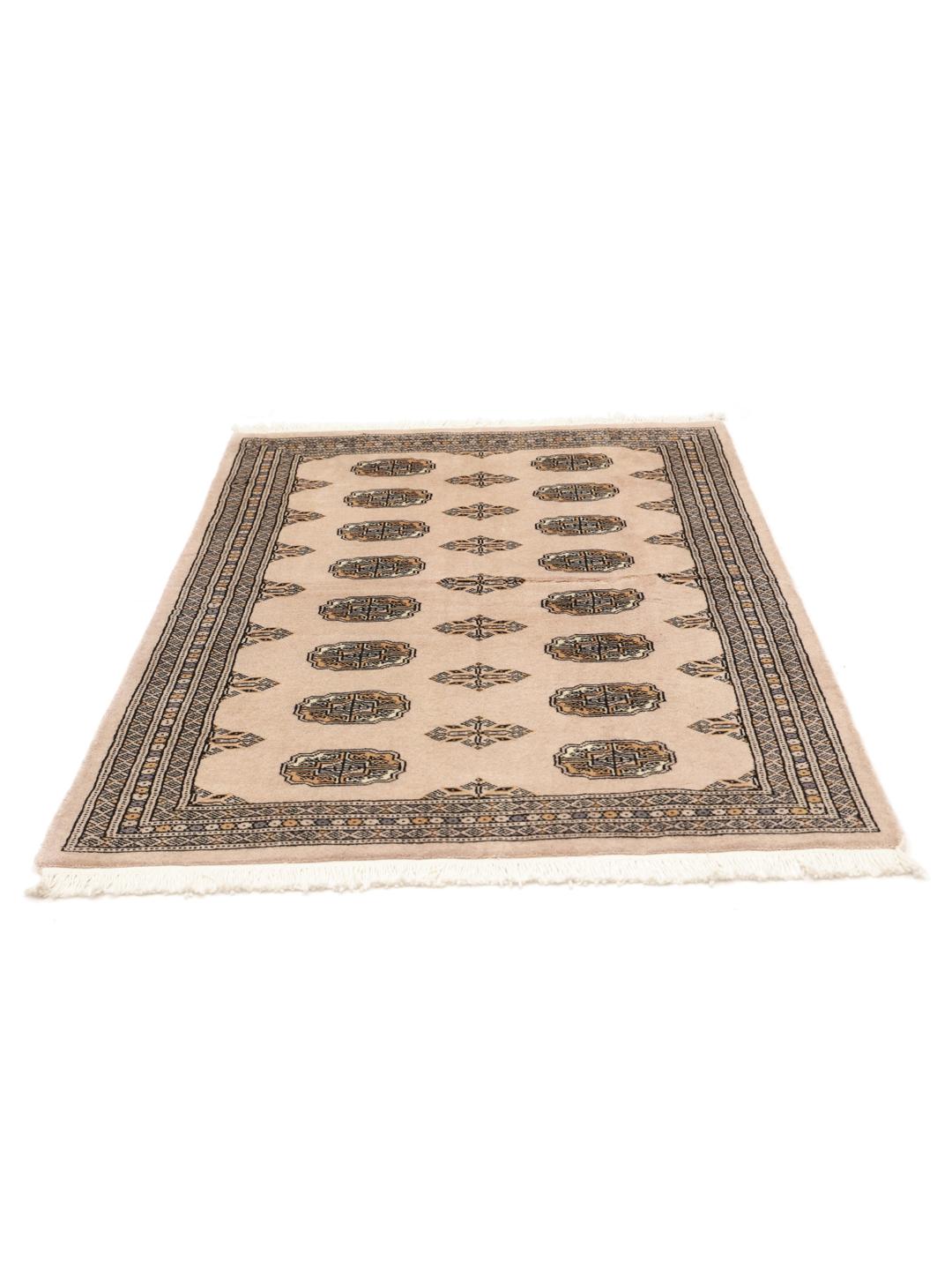
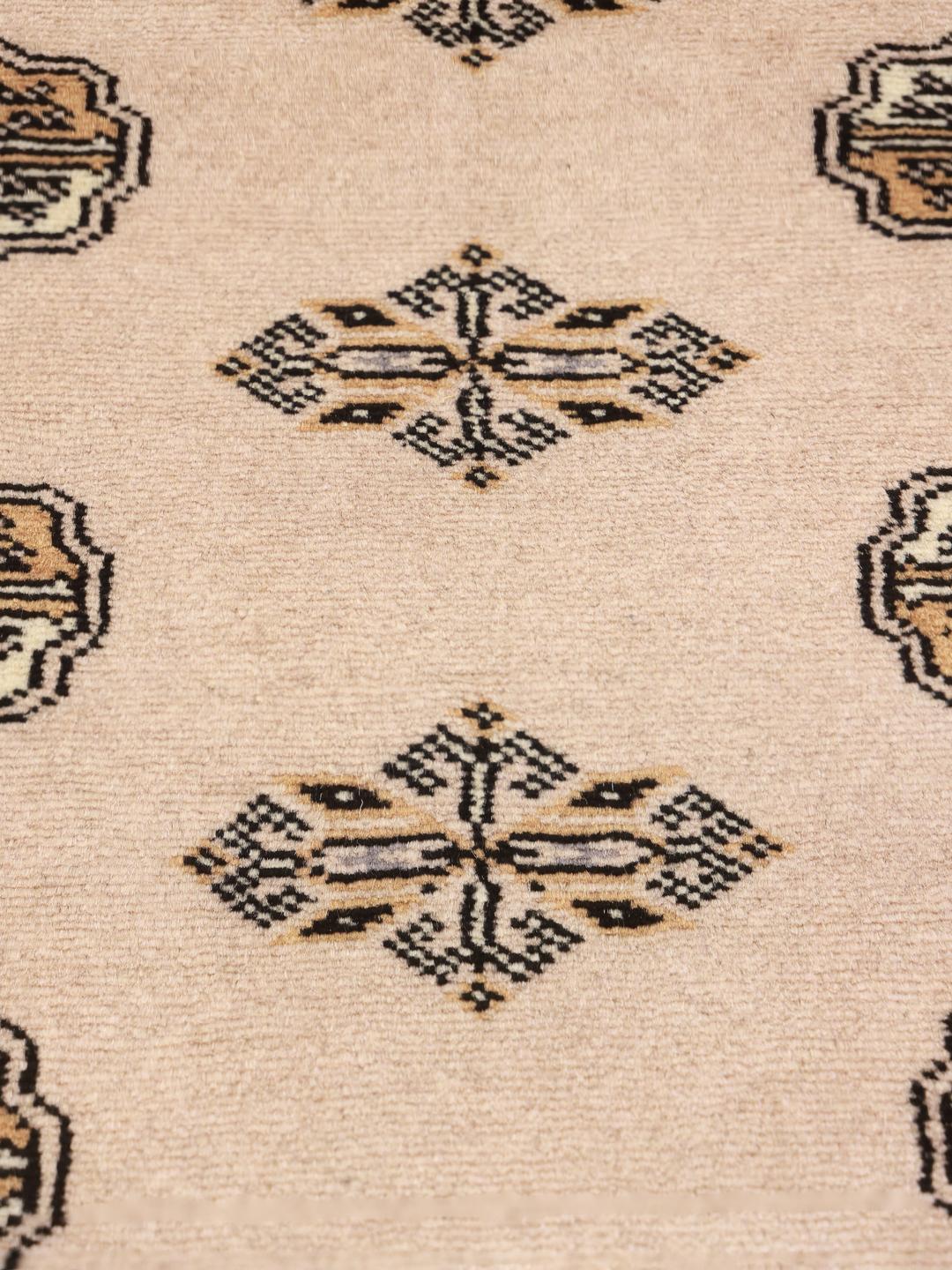
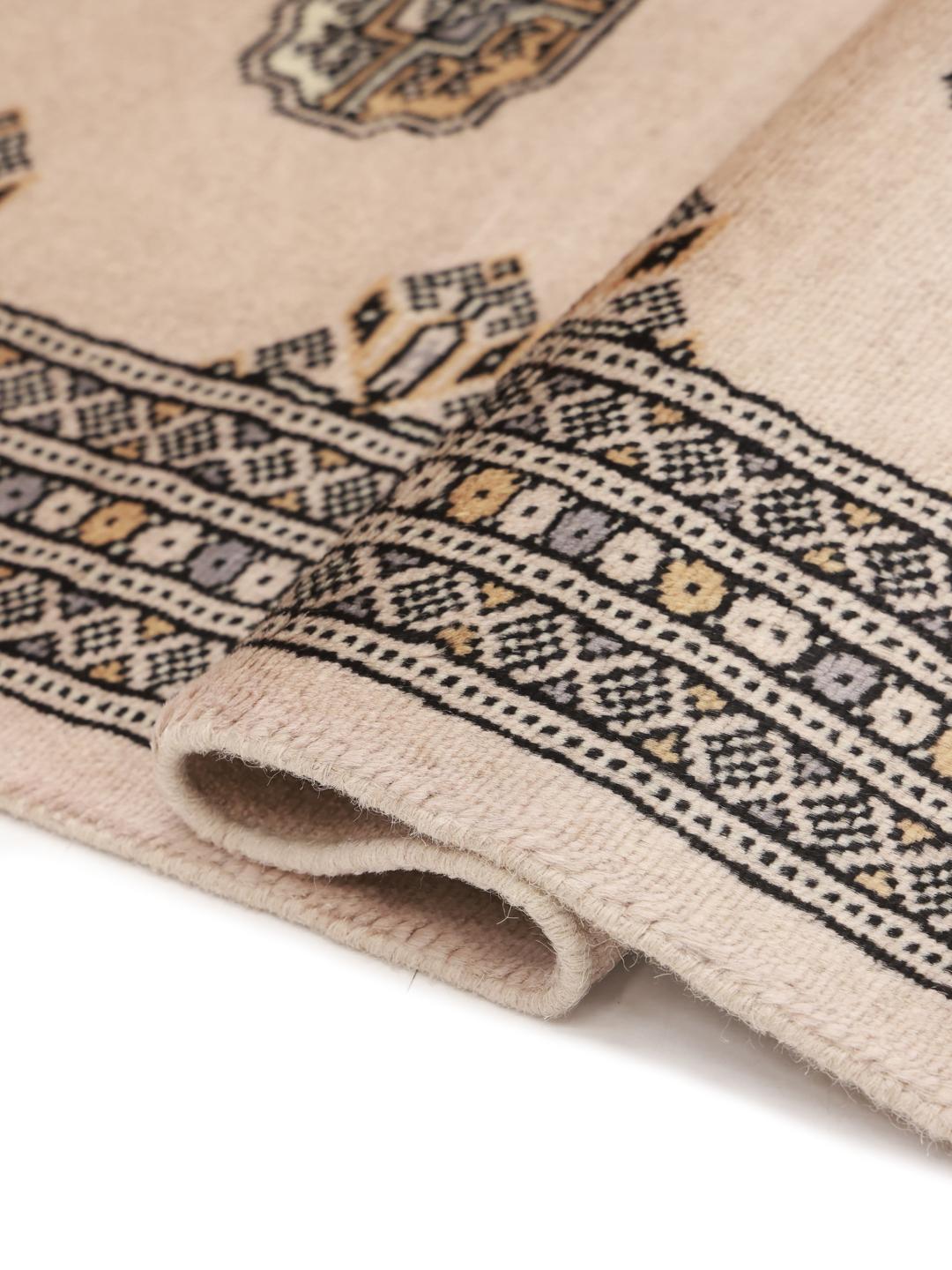
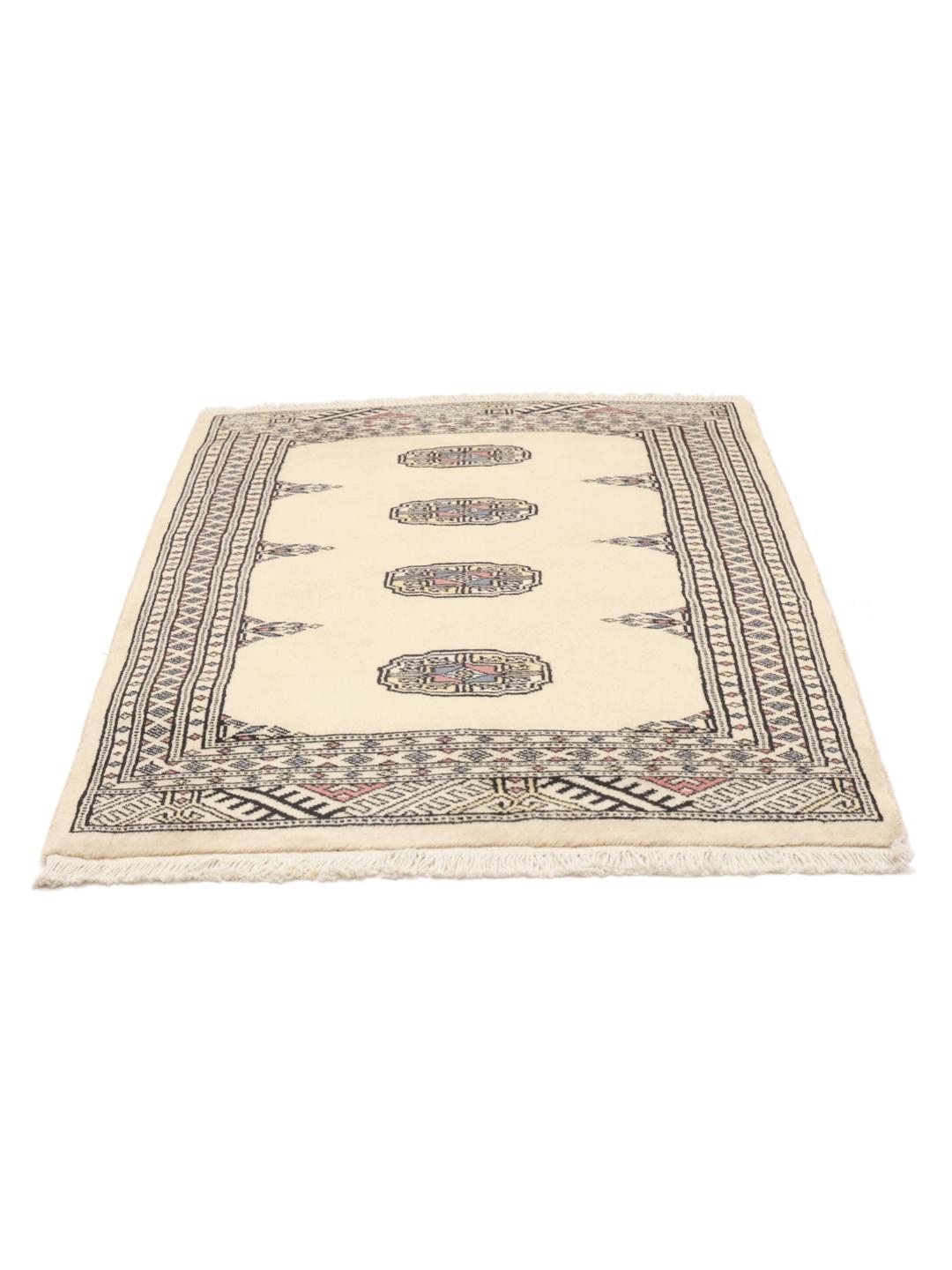
The visual signature of this tradition is the repeating gul motif, an octagonal or elephant-foot medallion arranged in orderly rows across the field. In this particular piece, the classic motifs are neatly framed by a structured geometric border, showcasing the balanced composition and careful symmetry characteristic of the style.
Owning a hand-knotted rug from this lineage connects your home to centuries of textile artistry. It represents an appreciation for human skill, traditional materials, and enduring quality that mass-produced floor coverings simply cannot match, making it a valued addition for those who appreciate heritage craft.