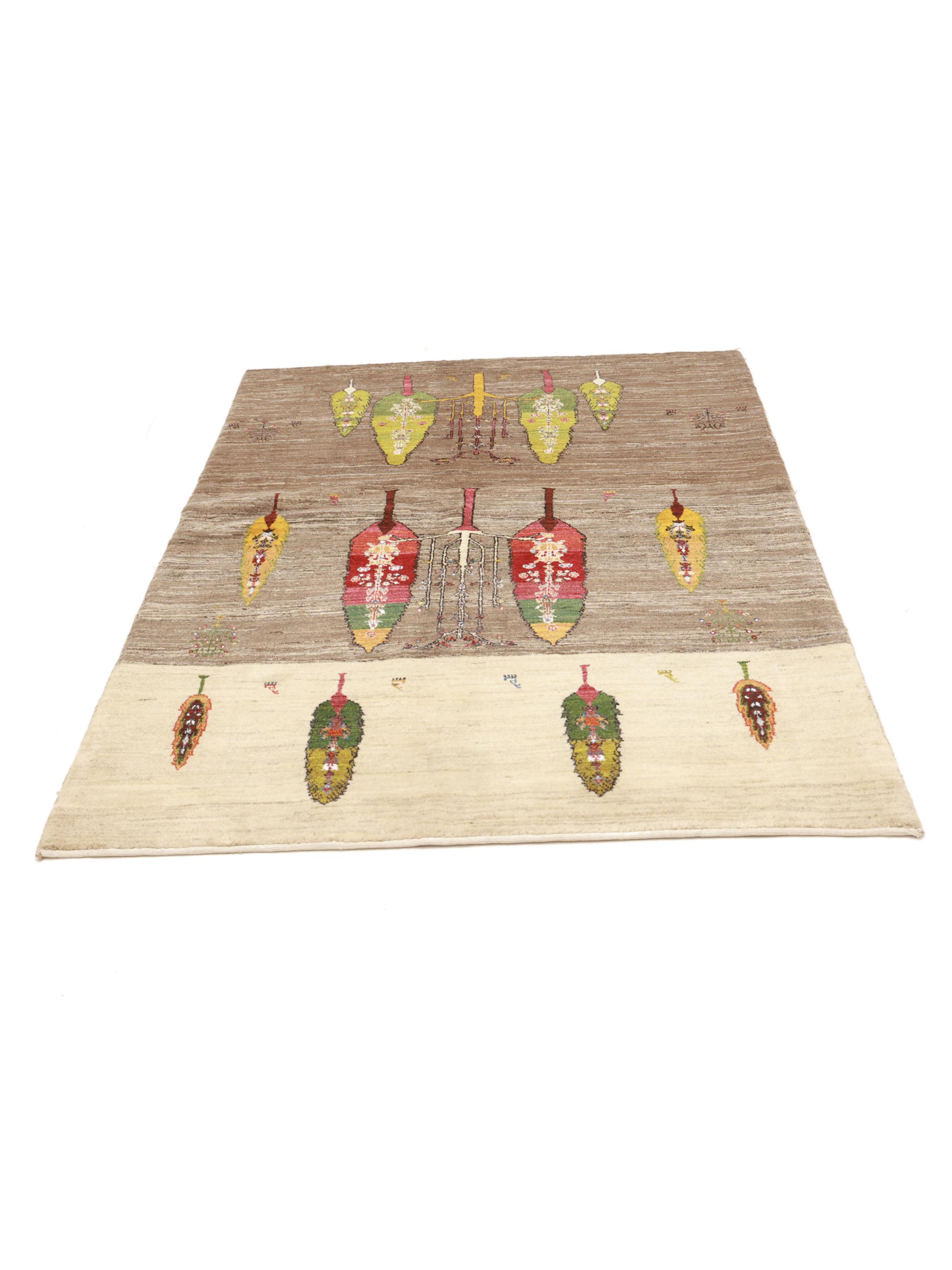
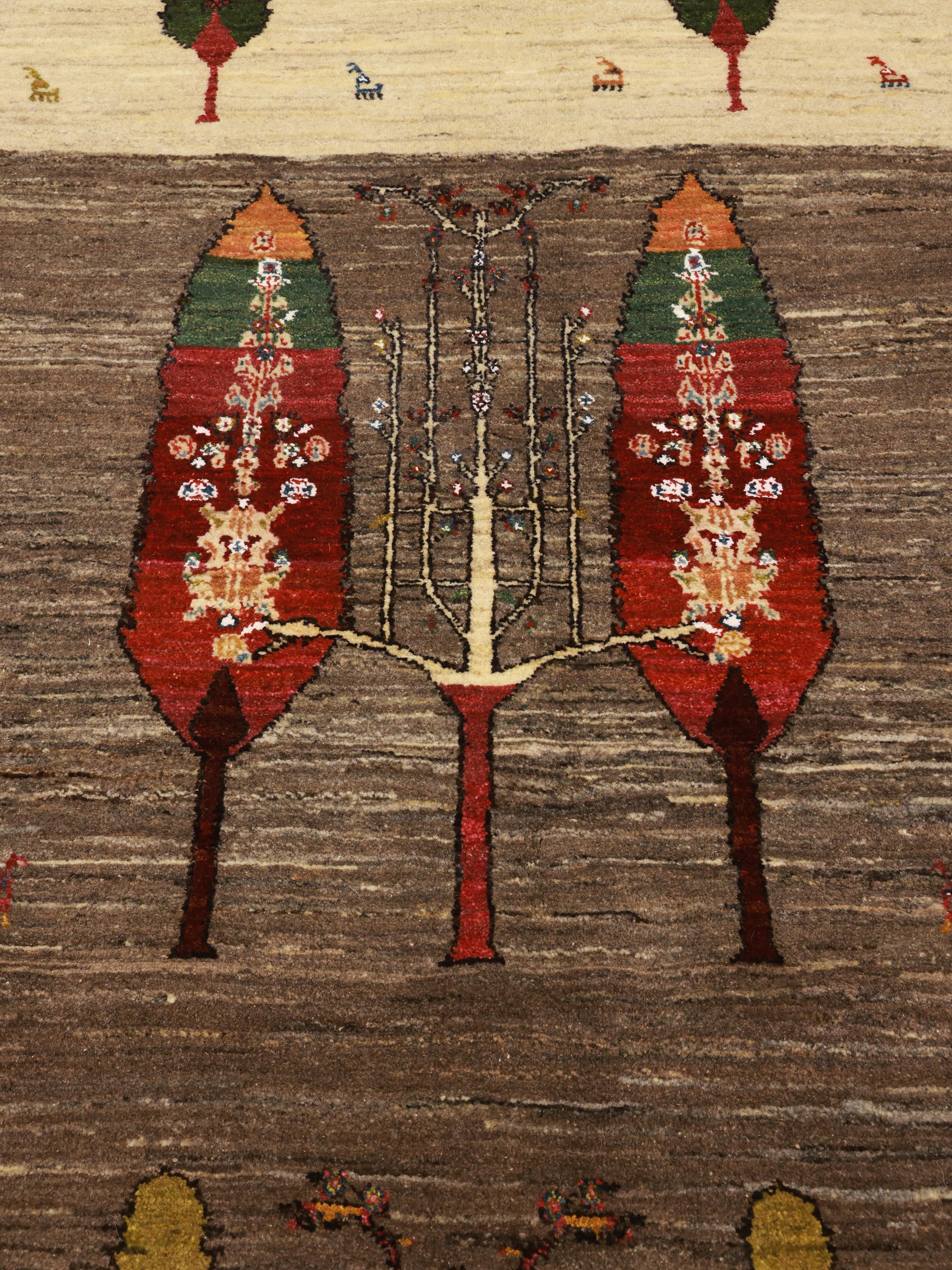
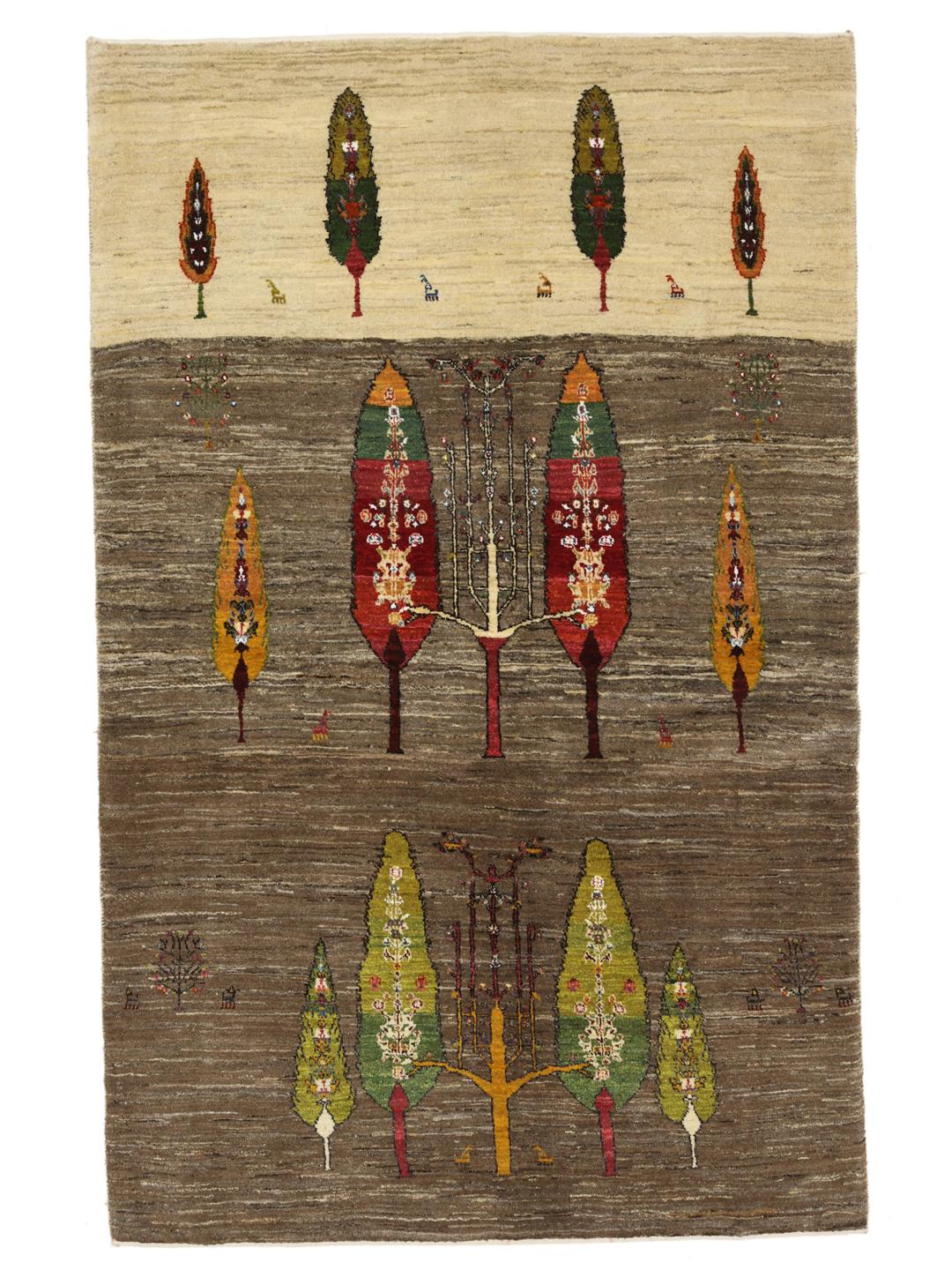
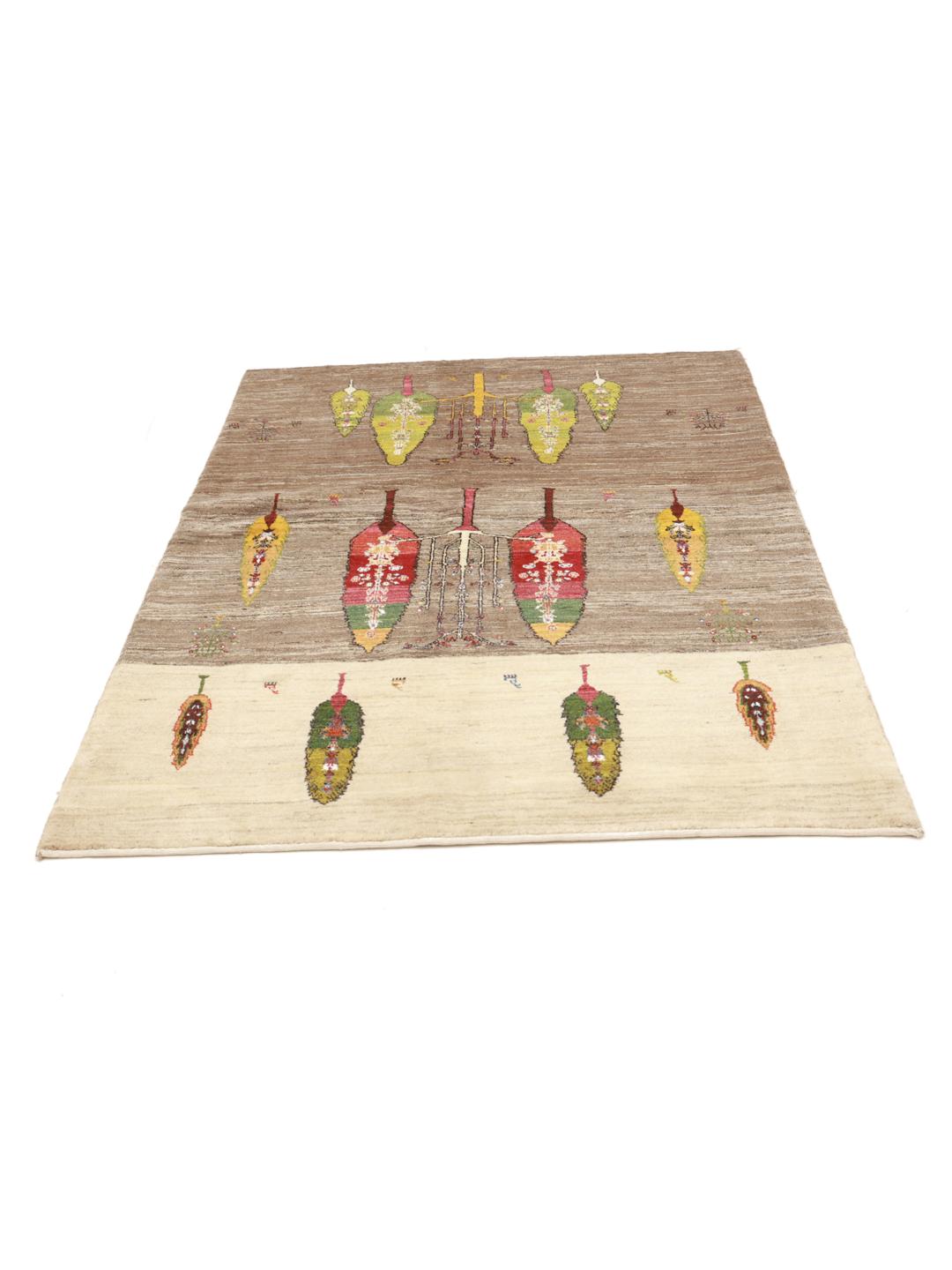
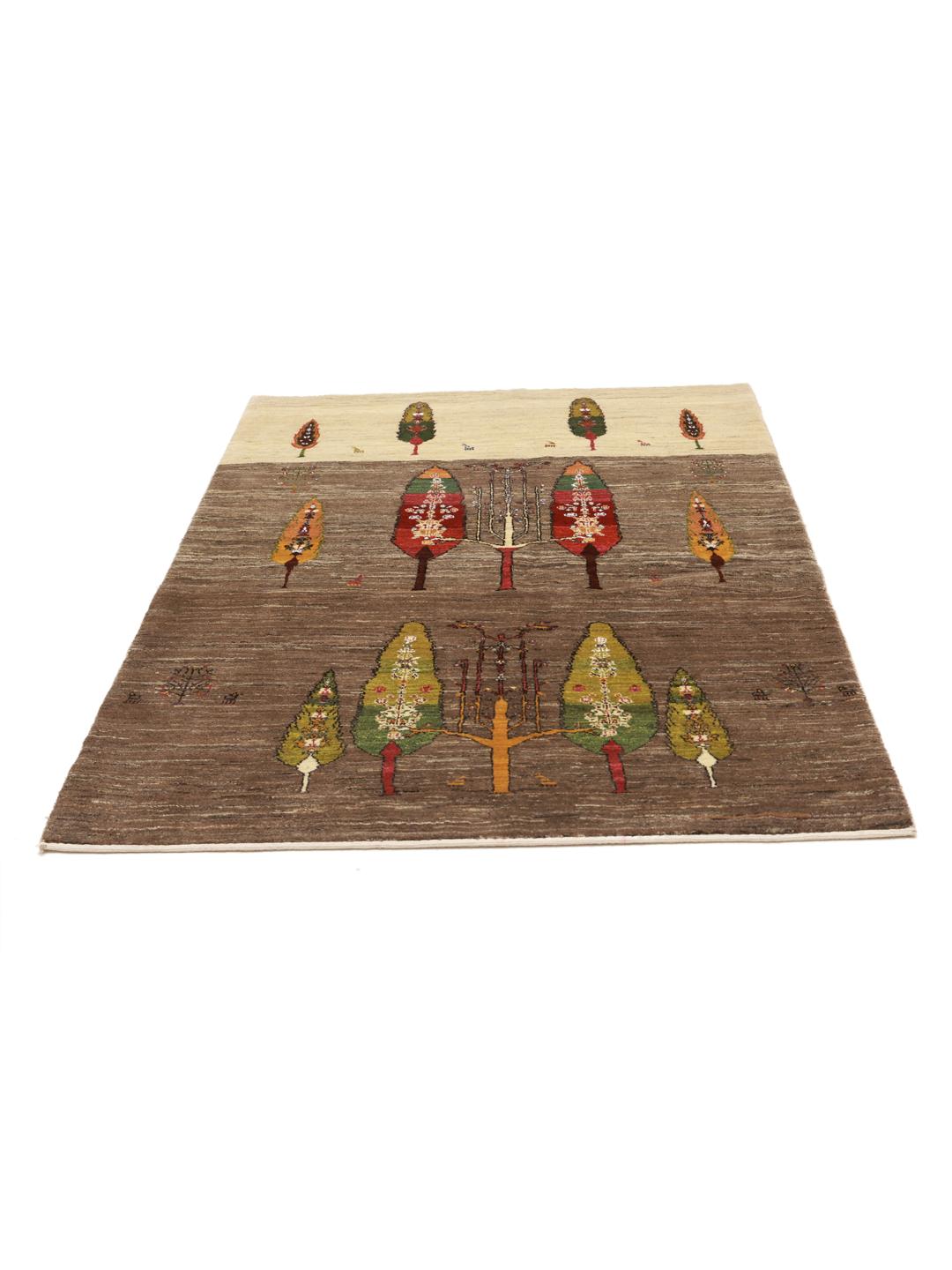
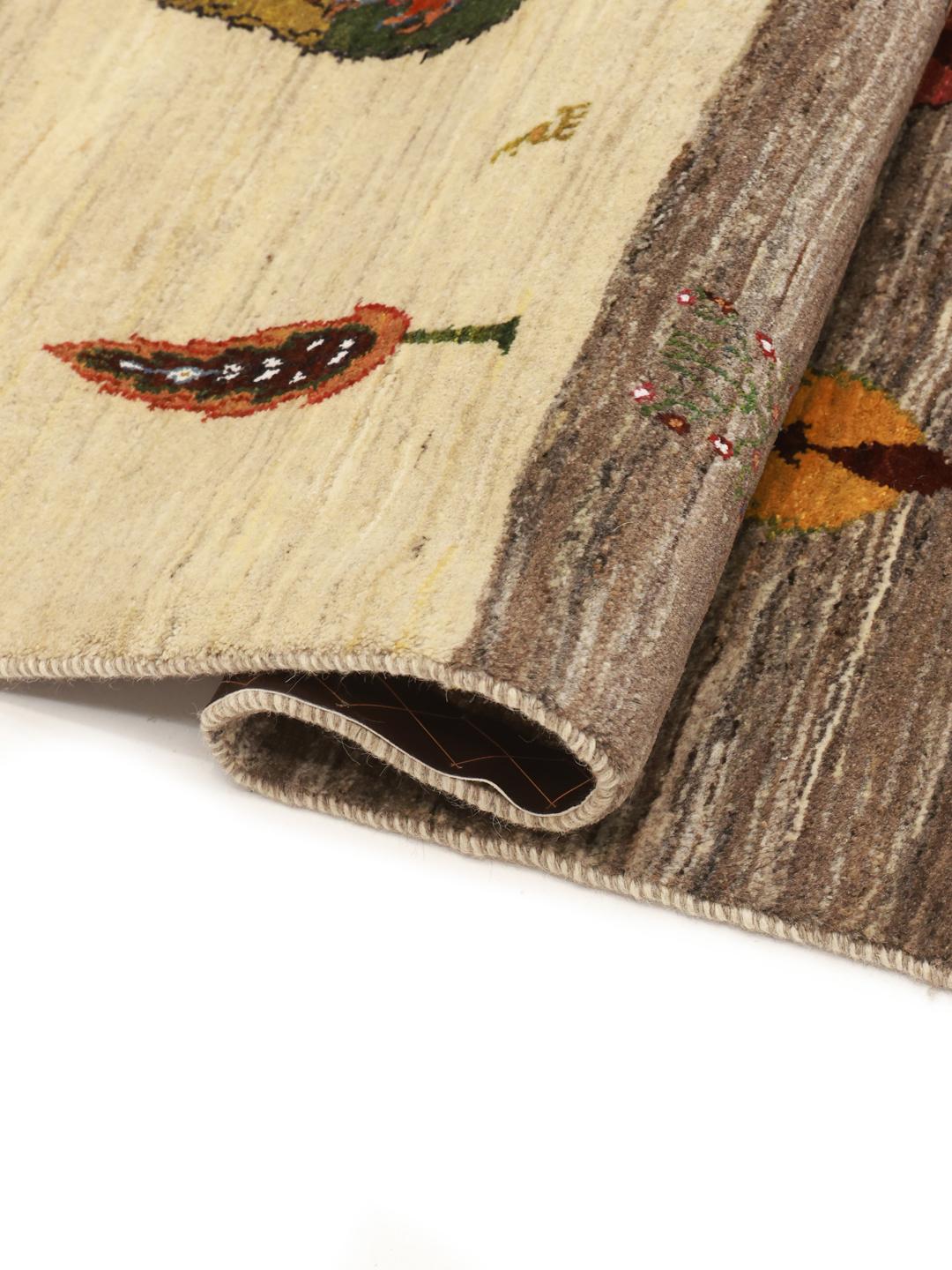
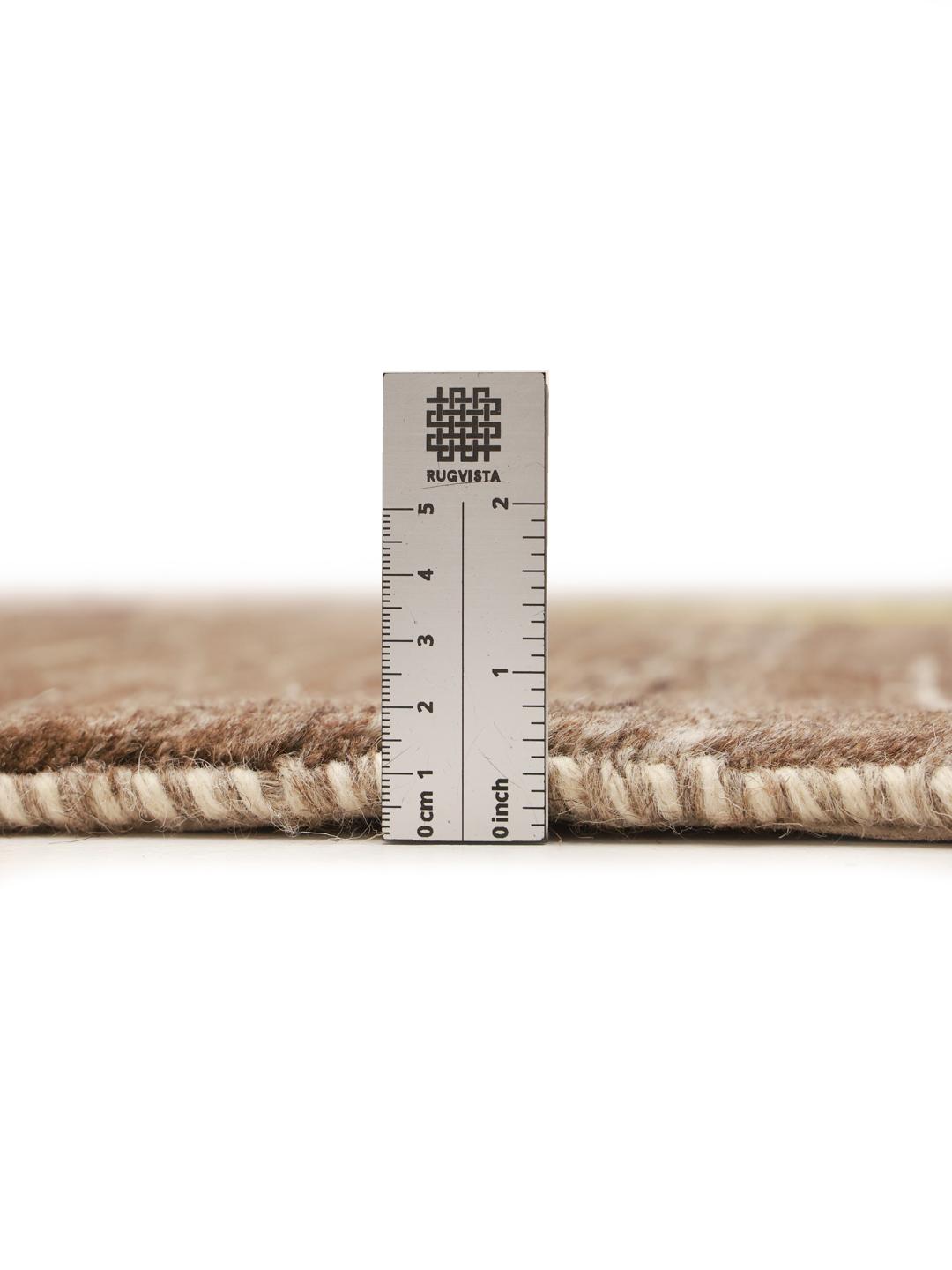
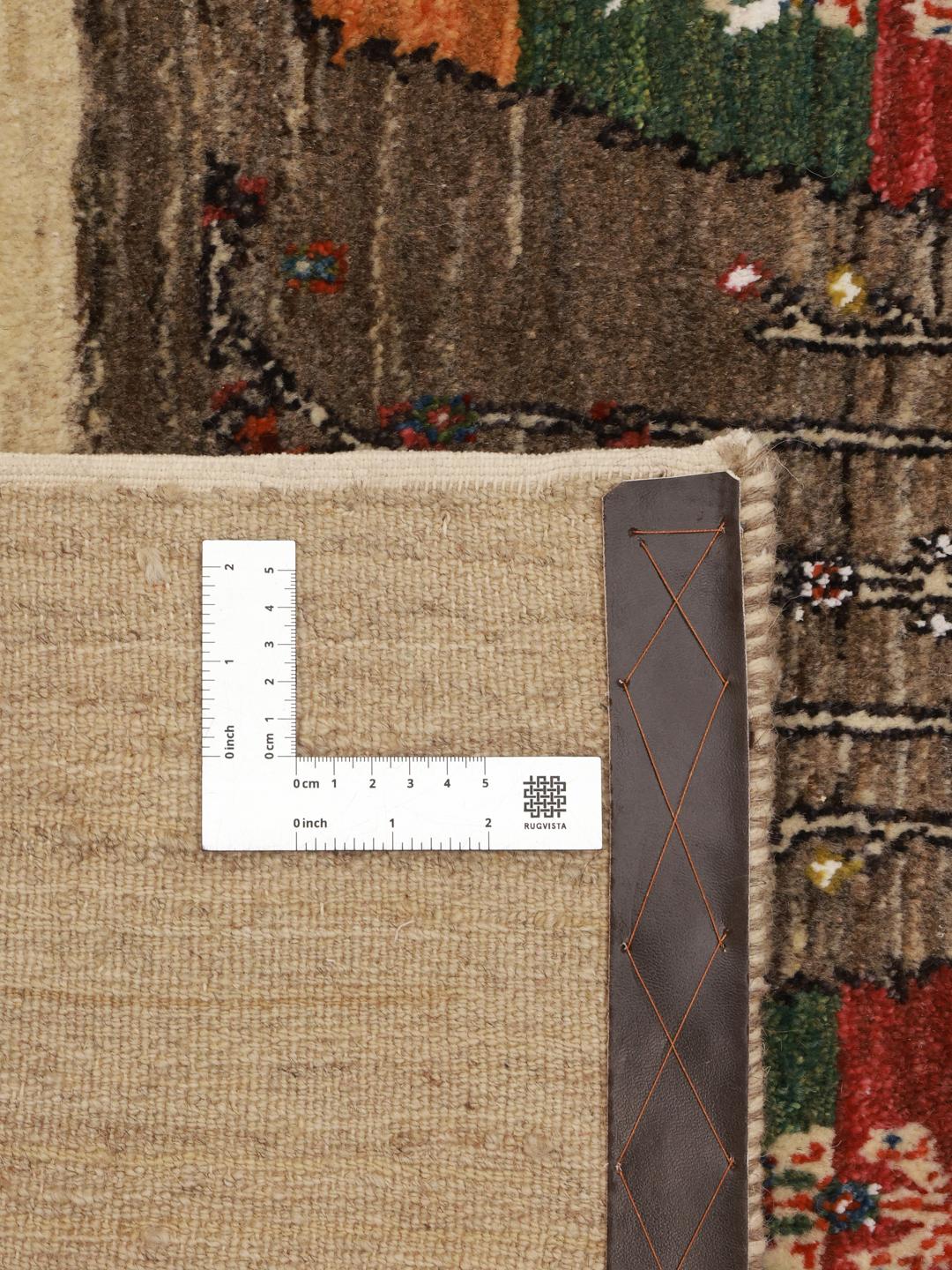
The Gabbeh rug tradition originates from the nomadic tribes of the Middle East, particularly the Qashqai people, who developed these textiles as functional items for daily life. Unlike formal, city-made rugs, Gabbeh rugs were originally woven for personal use within the family tent, serving as warm bedding and floor coverings. This heritage is reflected in their thick, plush pile and uncomplicated, expressive designs.
The term 'Shabargan' refers to a specific regional style within this broader tradition, known for its distinctive approach to colour and composition. These rugs are often characterised by their use of hand-spun, naturally dyed wool, which creates subtle variations in tone that give the surface a living, breathing quality. This process is essential to the authentic look of a Shabargan rug, ensuring that each piece has a unique depth that synthetic dyes cannot replicate.
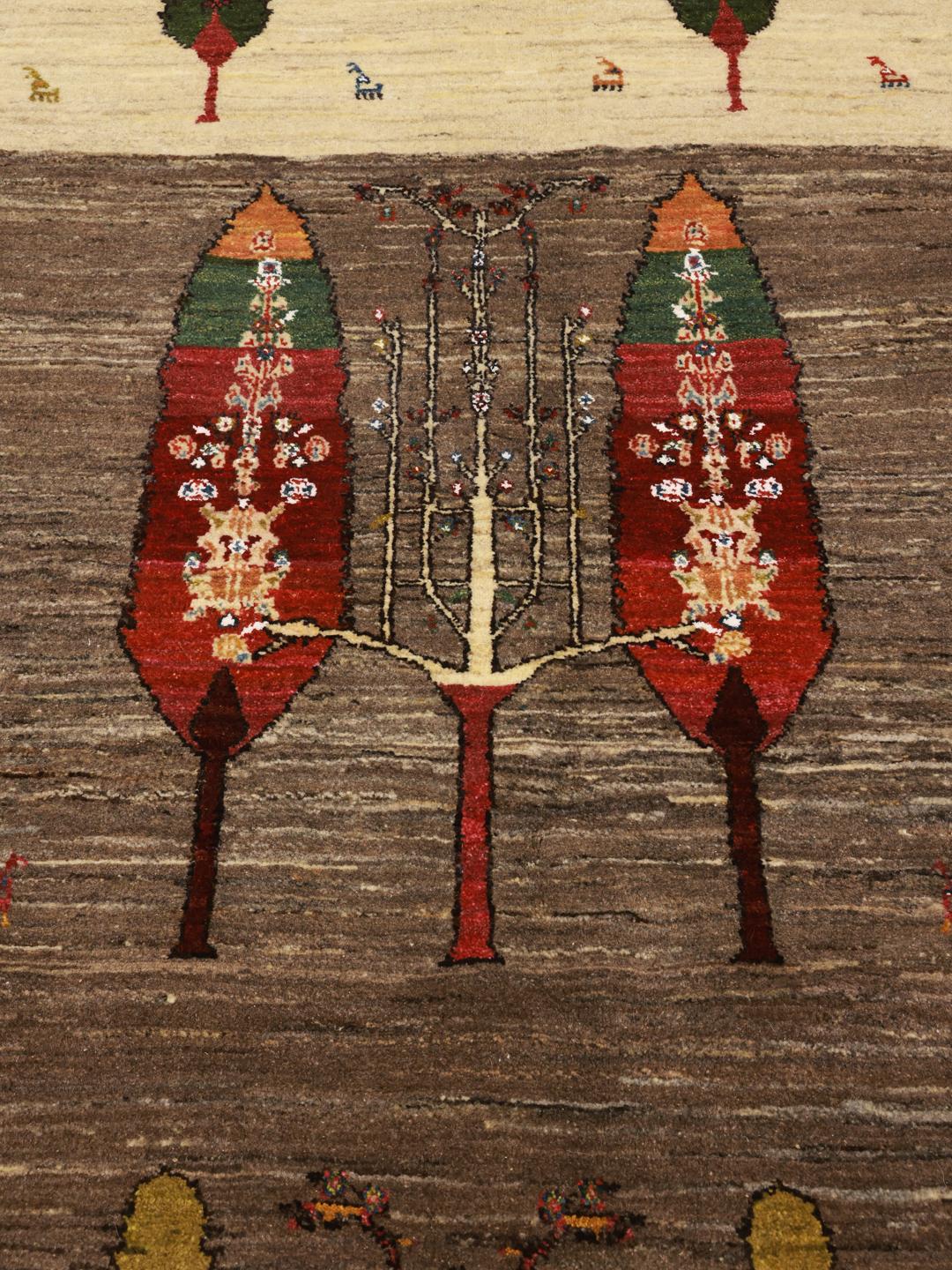
Visually, these rugs are celebrated for their bold, minimalist approach to storytelling. While formal rugs rely on rigid geometric patterns or floral scrolls, Gabbeh and Shabargan designs often feature stylized trees, animals, and human figures that represent the weaver's environment and daily life. The use of open, uncrowded fields allows these motifs to stand out, turning the rug into a canvas for tribal symbolism and personal memory.
Collecting these rugs is an investment in cultural history and human ingenuity. They are highly valued not only for their robust construction but also for the raw, uninhibited creativity they represent. By bringing a piece like this into your home, you are preserving a craft tradition that has been passed down through generations, celebrating a way of life that prioritises beauty, utility, and the human touch.