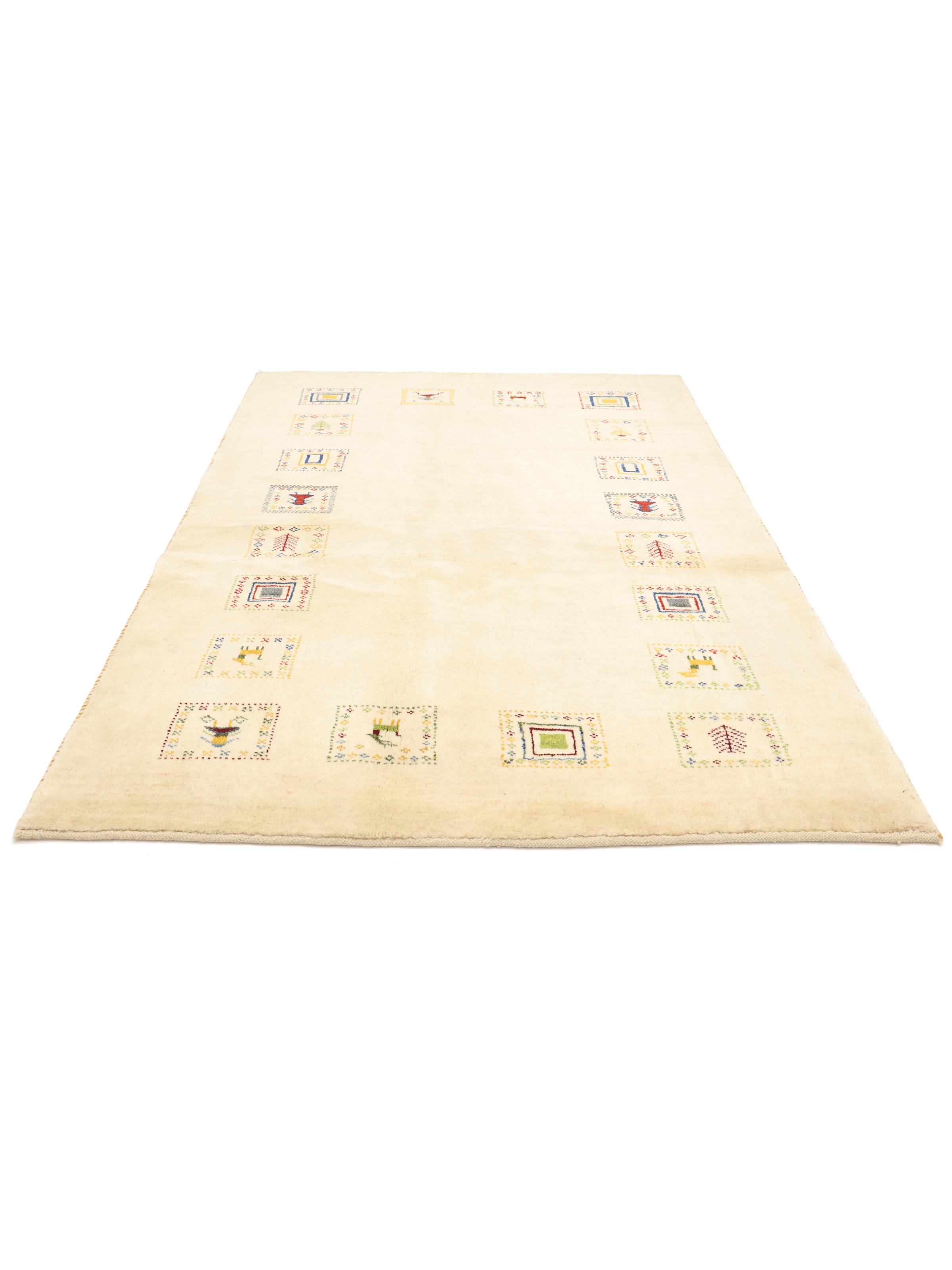
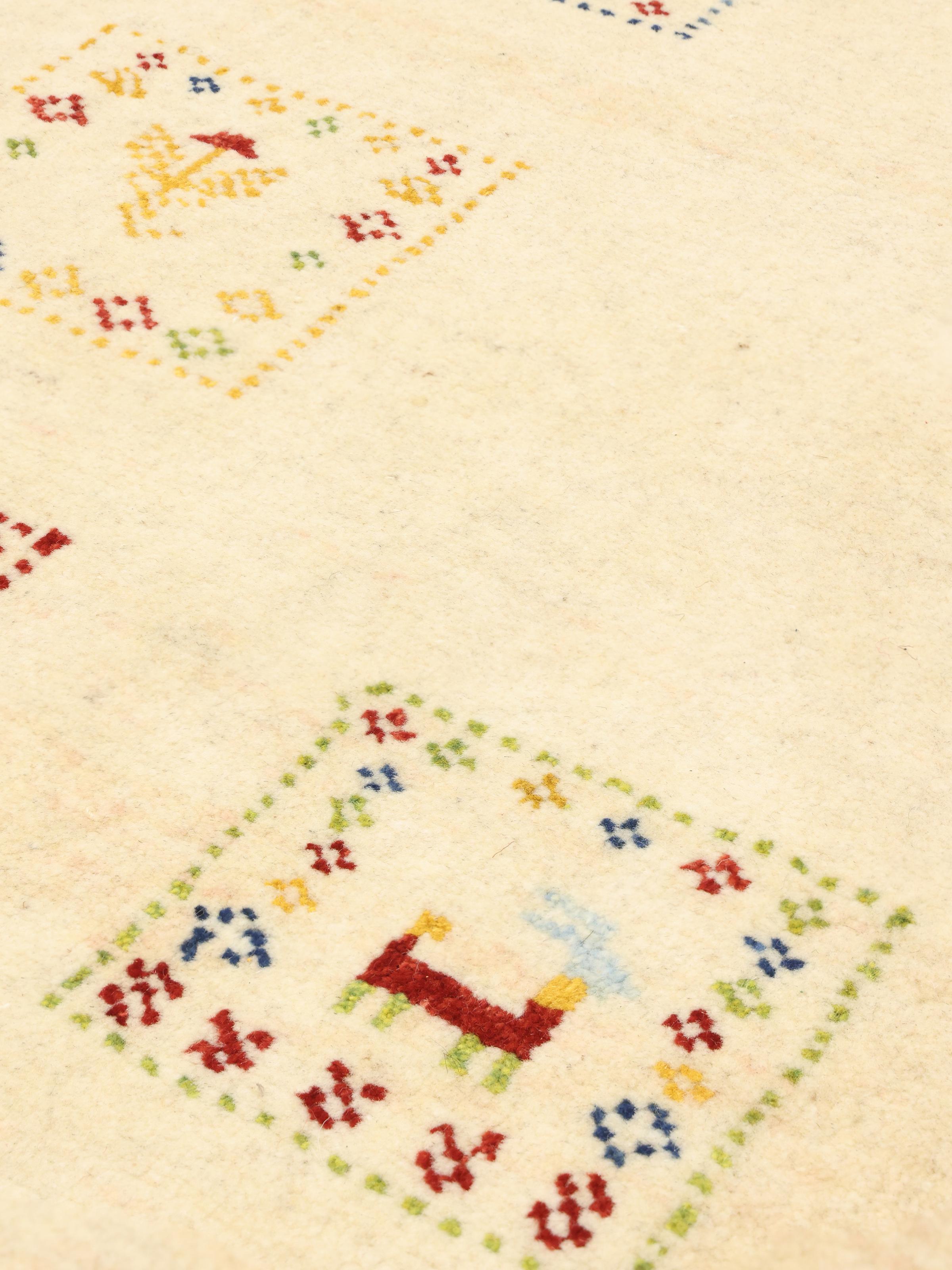
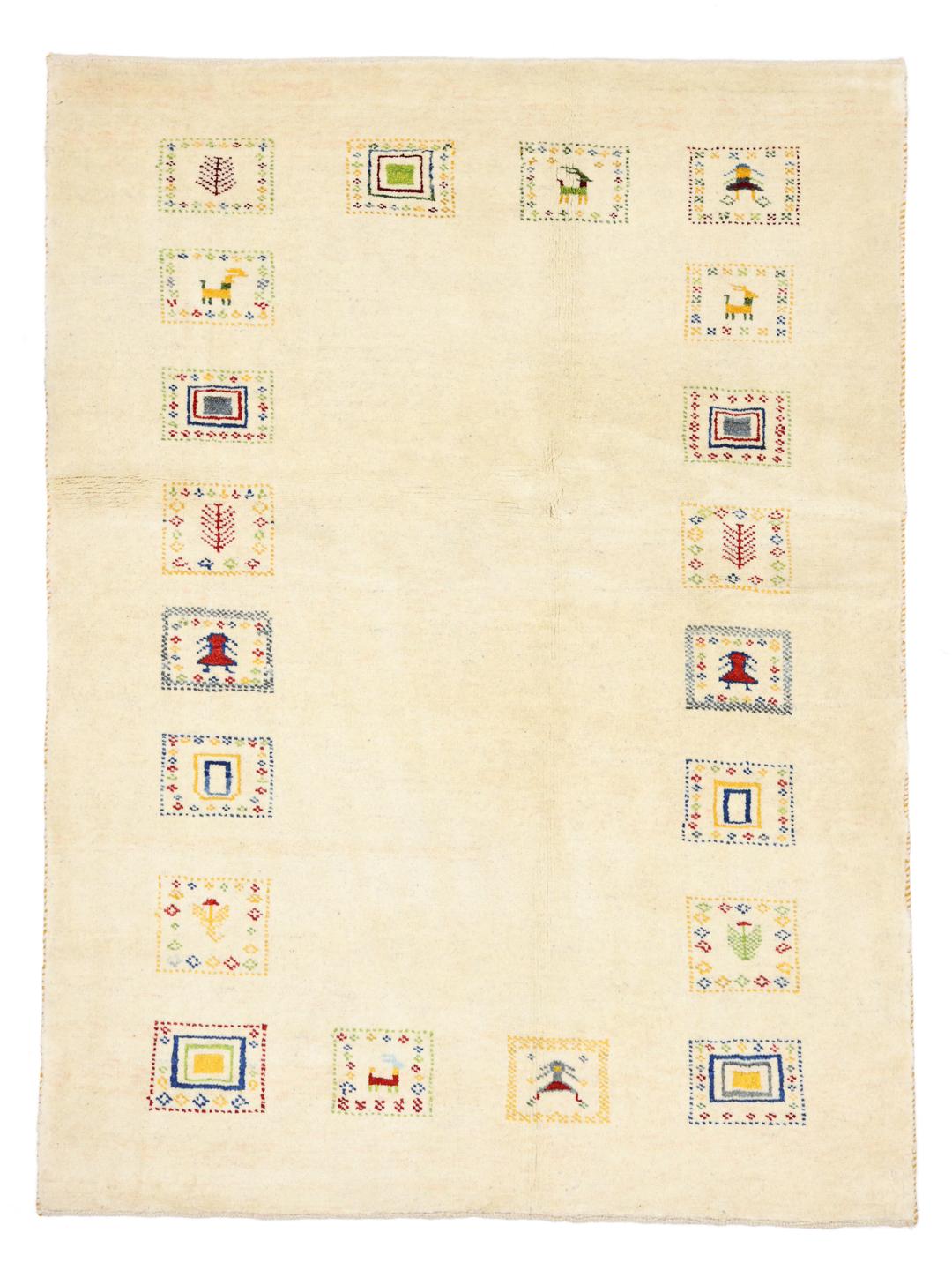
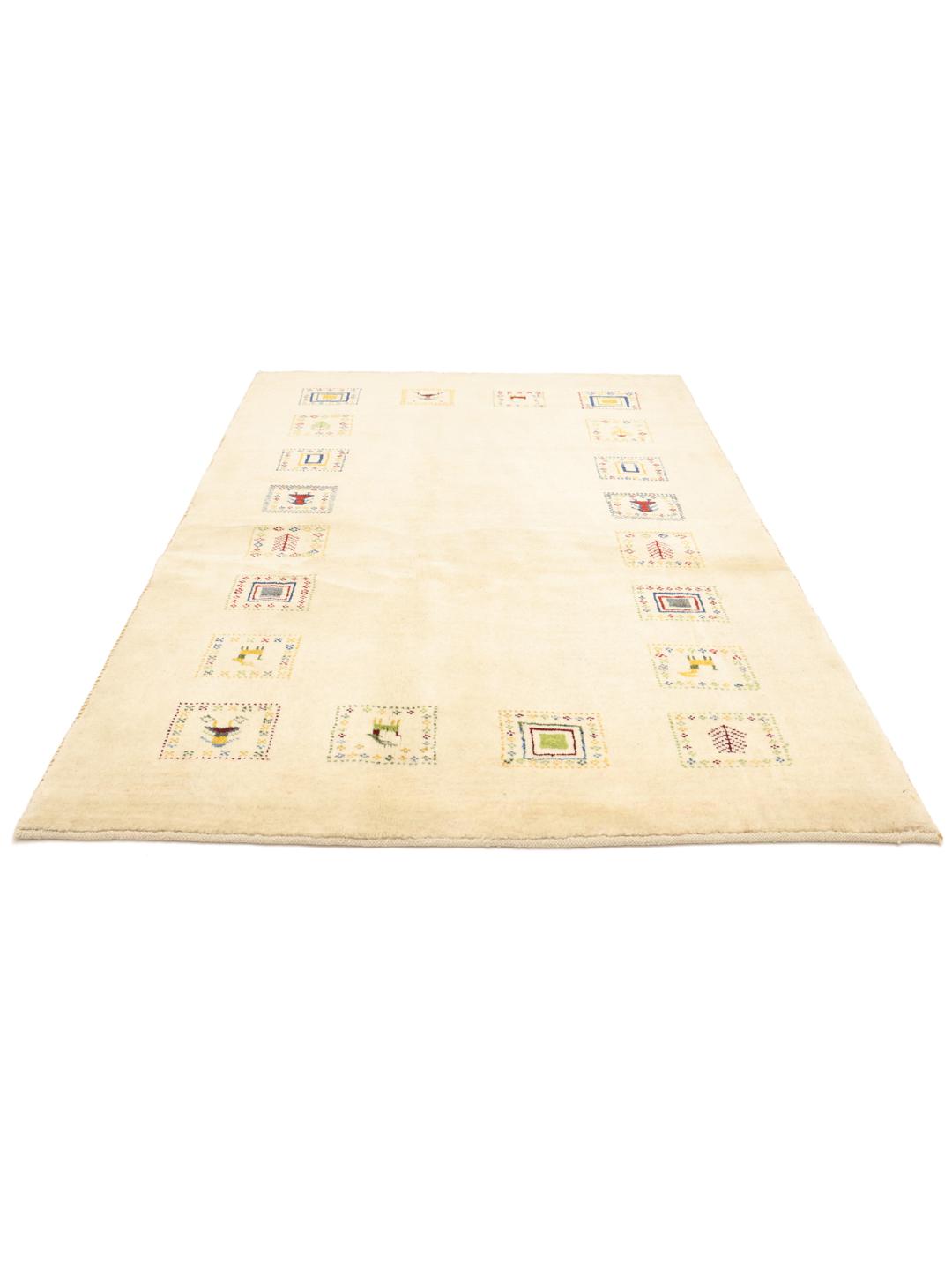
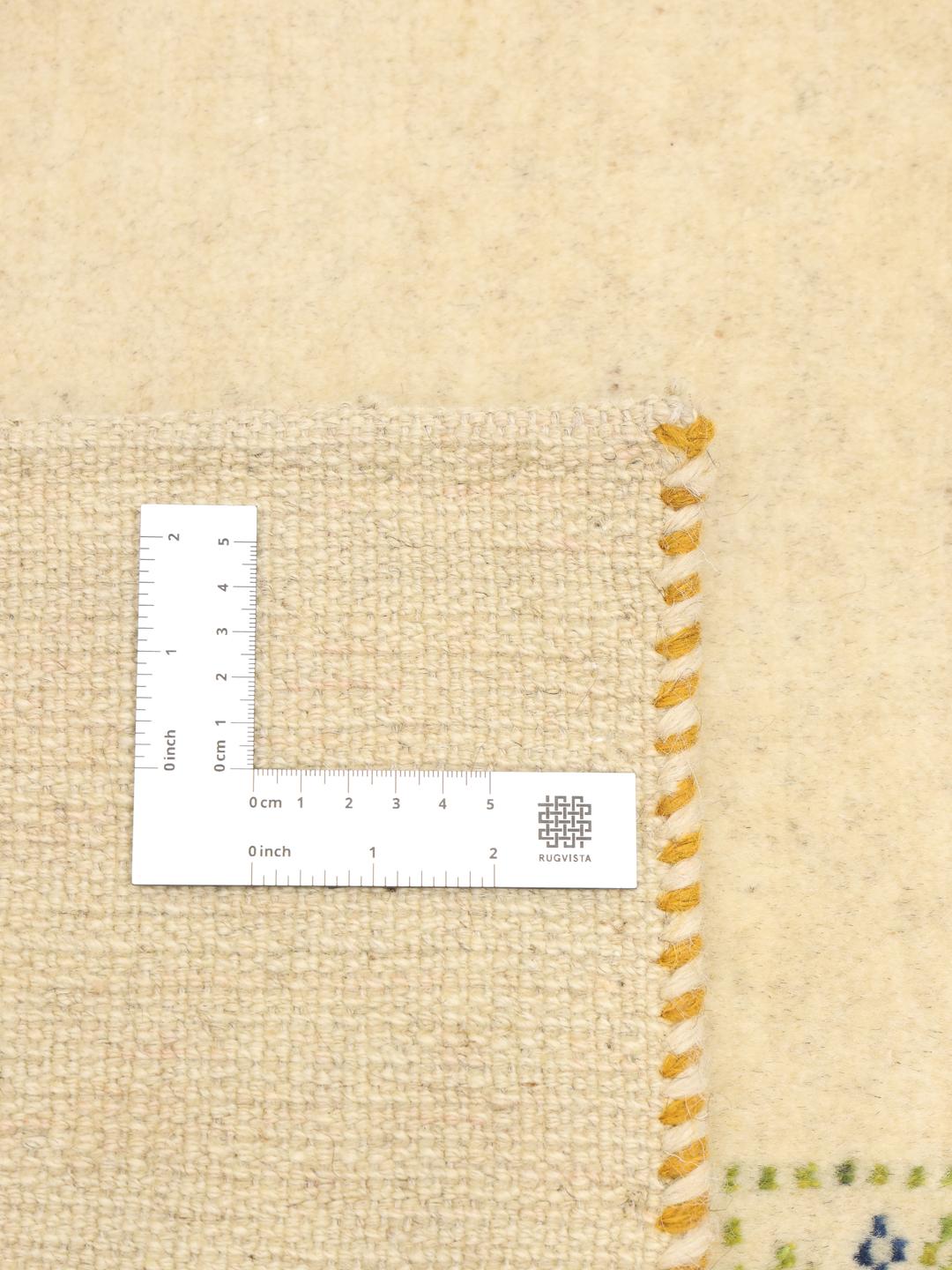
The Gabbeh tradition traces its roots to the nomadic tribes of the Middle East, who originally crafted these rugs for their own daily use. Unlike formal, court-style carpets, Gabbeh rugs were designed to provide warmth and comfort within the rugged conditions of nomadic life, often serving as bedding or floor coverings in family tents.
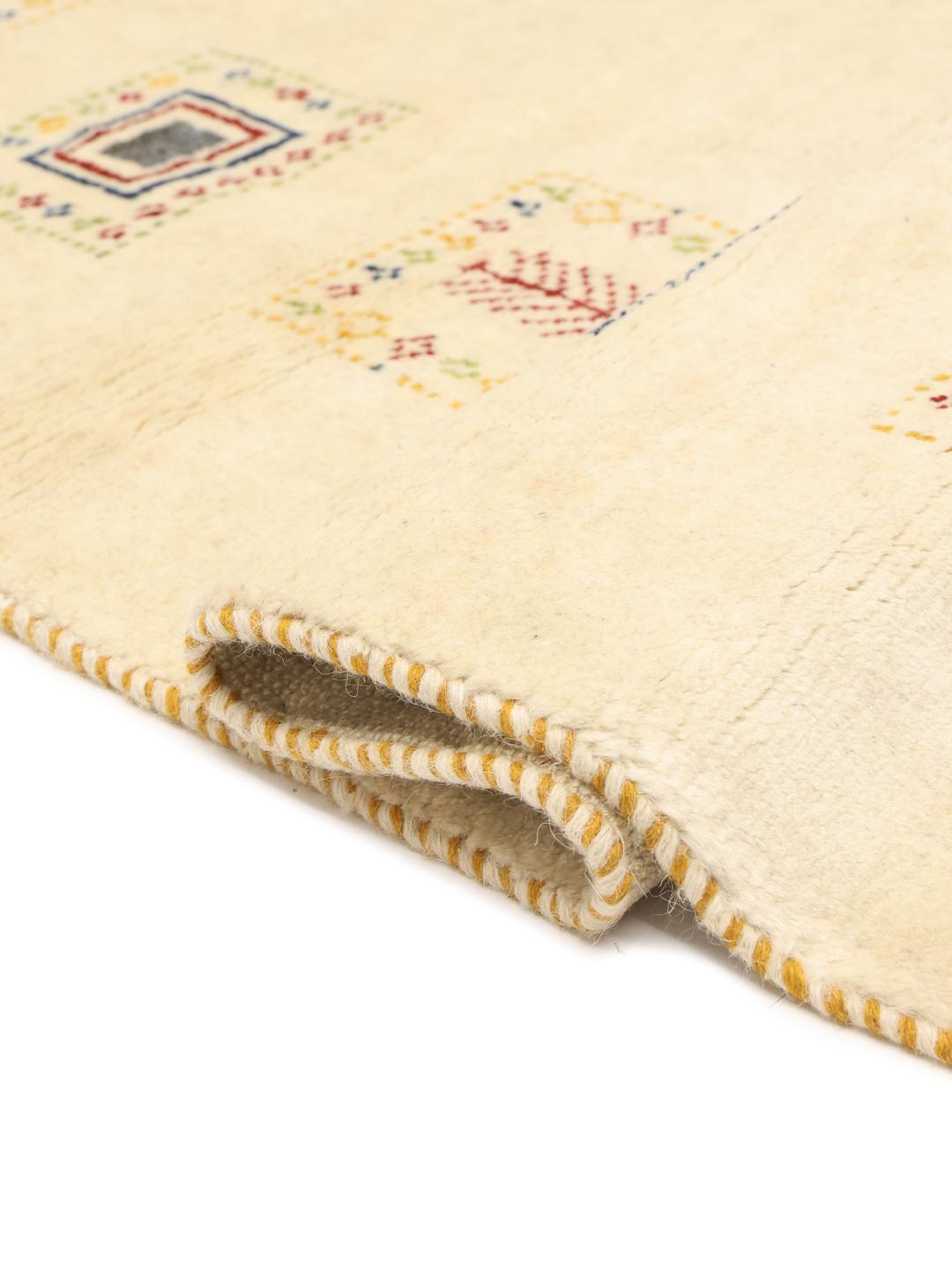
Technical excellence in a Gabbeh is defined by the use of hand-spun, high-quality Wool, which is often dyed with natural pigments to produce rich, earthy tones. The term 'Gabbeh' itself translates to 'raw' or 'natural', reflecting the unpretentious and honest nature of these textiles. This focus on natural materials ensures that the rug remains resilient and soft for years to come.
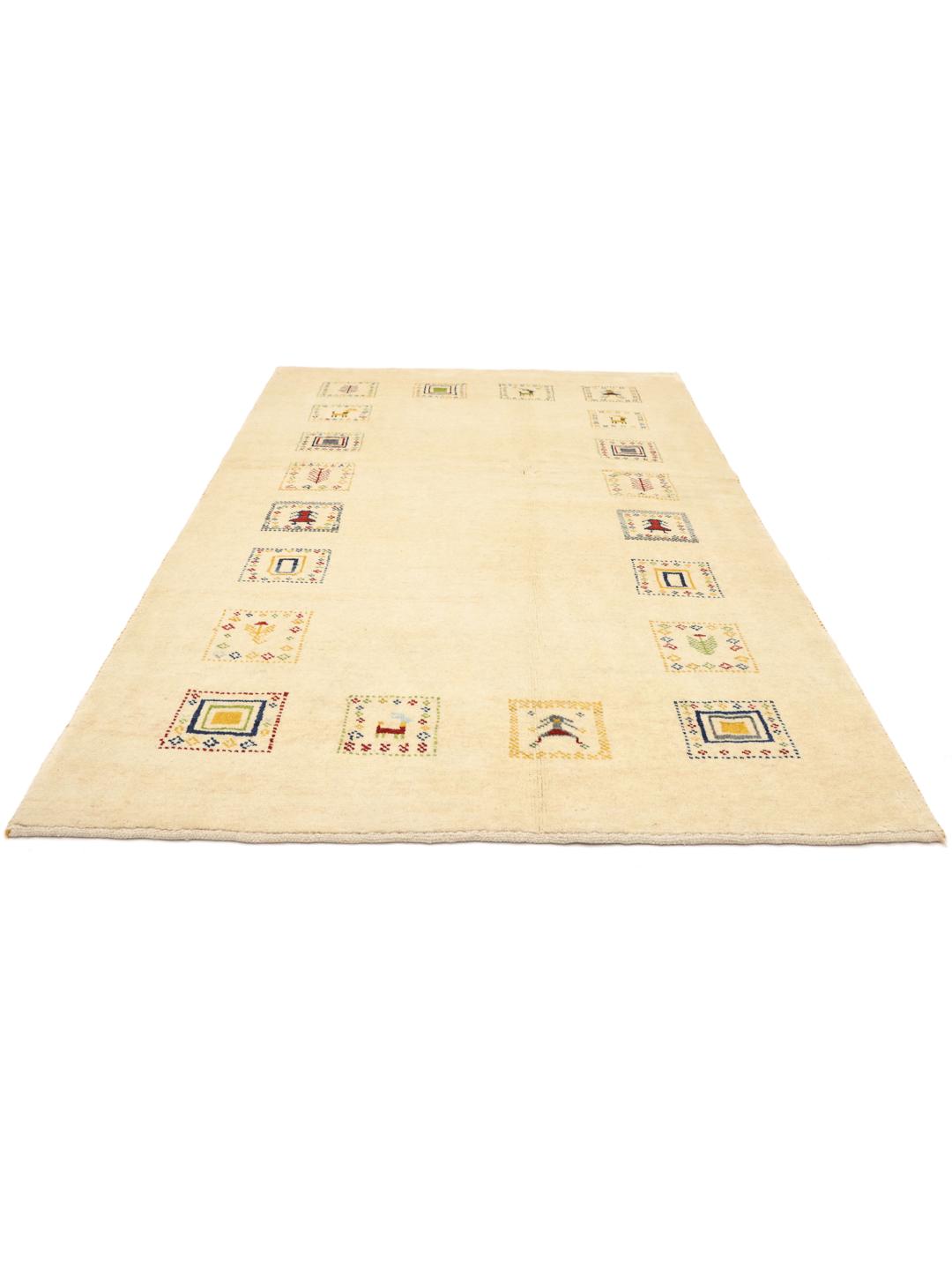
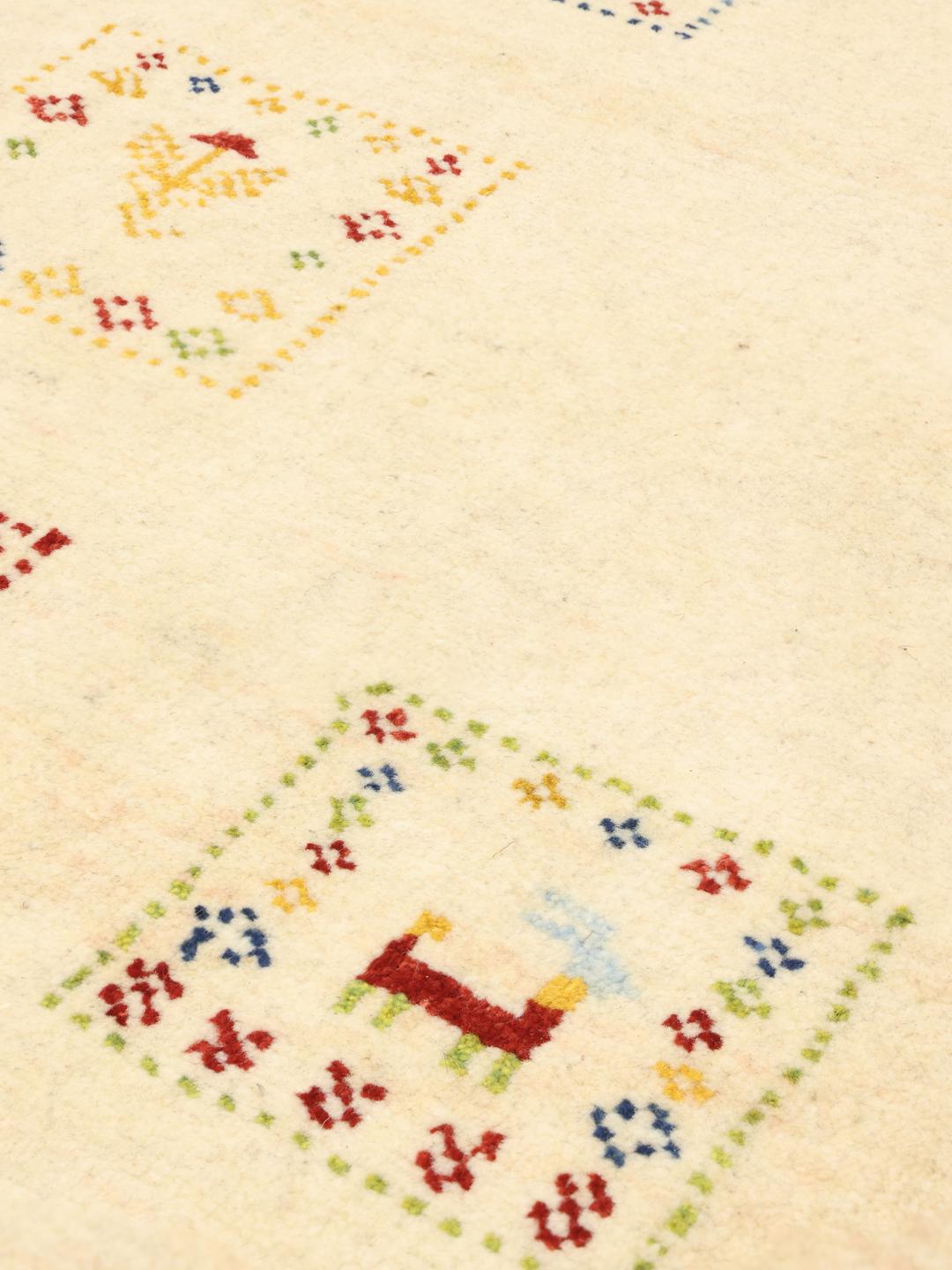
The visual language of these rugs is legendary for its simplicity and abstract charm. While many traditional rugs are defined by complex, repeating floral patterns, Gabbeh rugs often feature sparse, symbolic motifs—such as small animals, trees, or geometric shapes—that hold personal significance for the weaver. This piece follows that tradition, with its clean, open field allowing each unique design element to tell its own quiet story.
Today, these rugs are highly valued by collectors for their authentic connection to heritage and the human skill required to produce them. Owning a piece from this tradition is more than just purchasing a floor covering; it is an investment in a storied craft where every knot is a testament to the weaver's artistic expression and the enduring legacy of Middle Eastern tribal artistry.