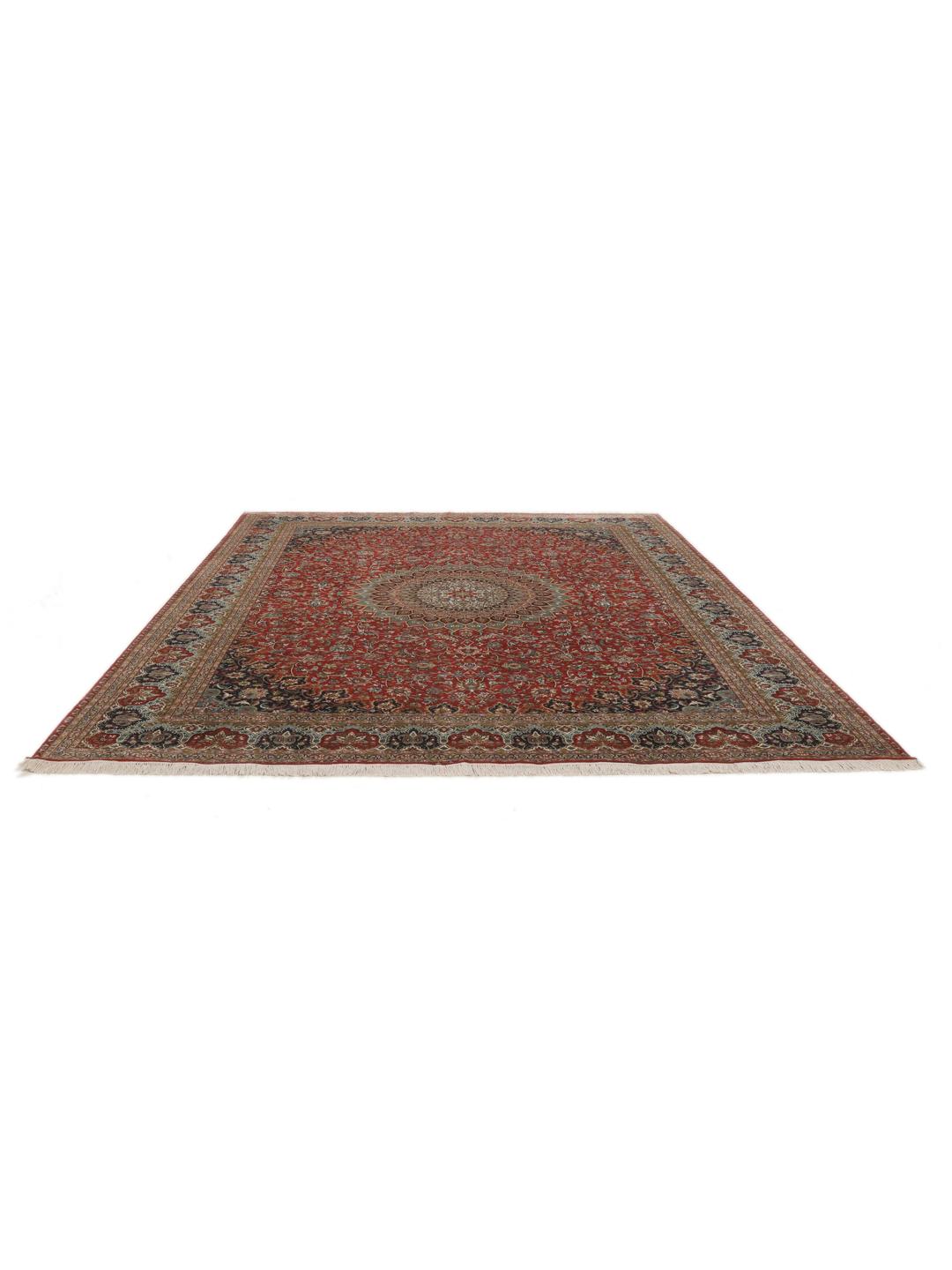
Kashmir silk rugs are celebrated globally for their connection to the rich textile history of the Kashmir Valley. This tradition, which has evolved over centuries, blends local aesthetic sensibilities with influences from the broader Middle Eastern and Central Asian weaving cultures. The region has long been a crossroads for artisans, resulting in a style that is both distinctively regional and deeply rooted in historical design motifs.
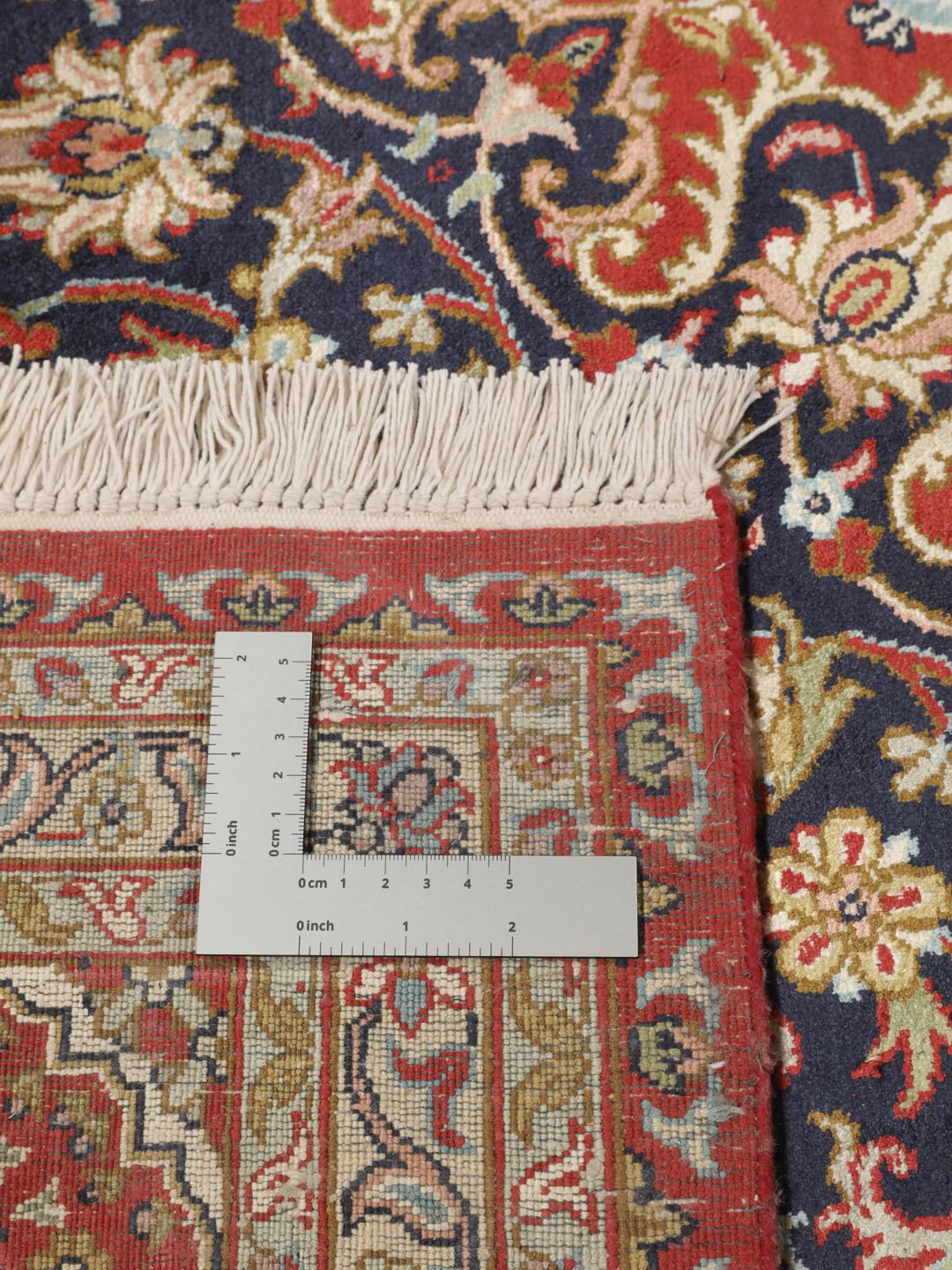
The term 'Kashmir silk' refers not just to the material, but to the specific style of fine, curvilinear weaving that has become the hallmark of the region. The use of high-quality silk allows for an incredibly fine knotting process, which in turn permits the creation of complex, flowing patterns that would be impossible to achieve with coarser materials. This technical mastery ensures that the resulting rugs are not only visually stunning but also possess a remarkable, fluid drape.
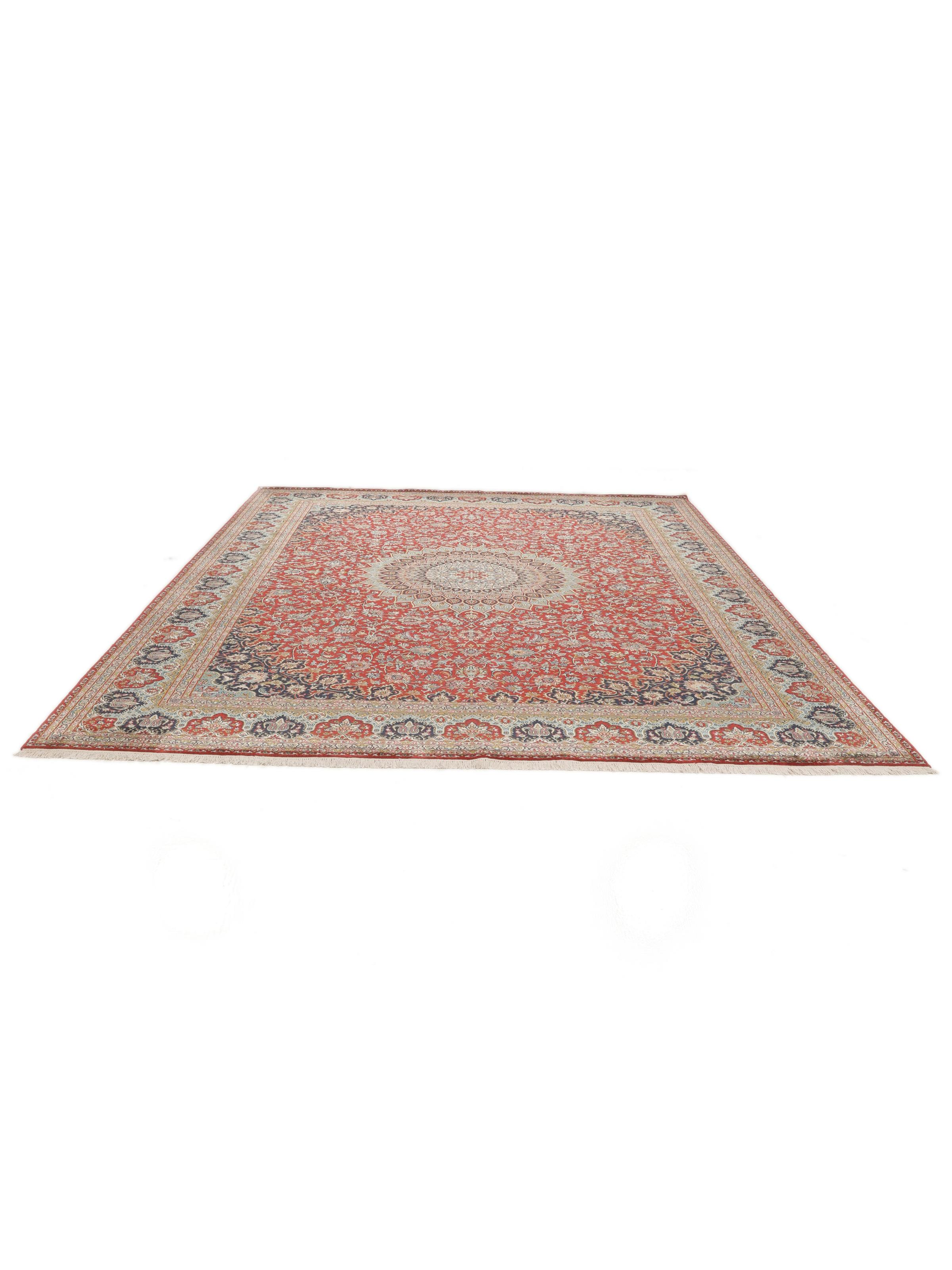
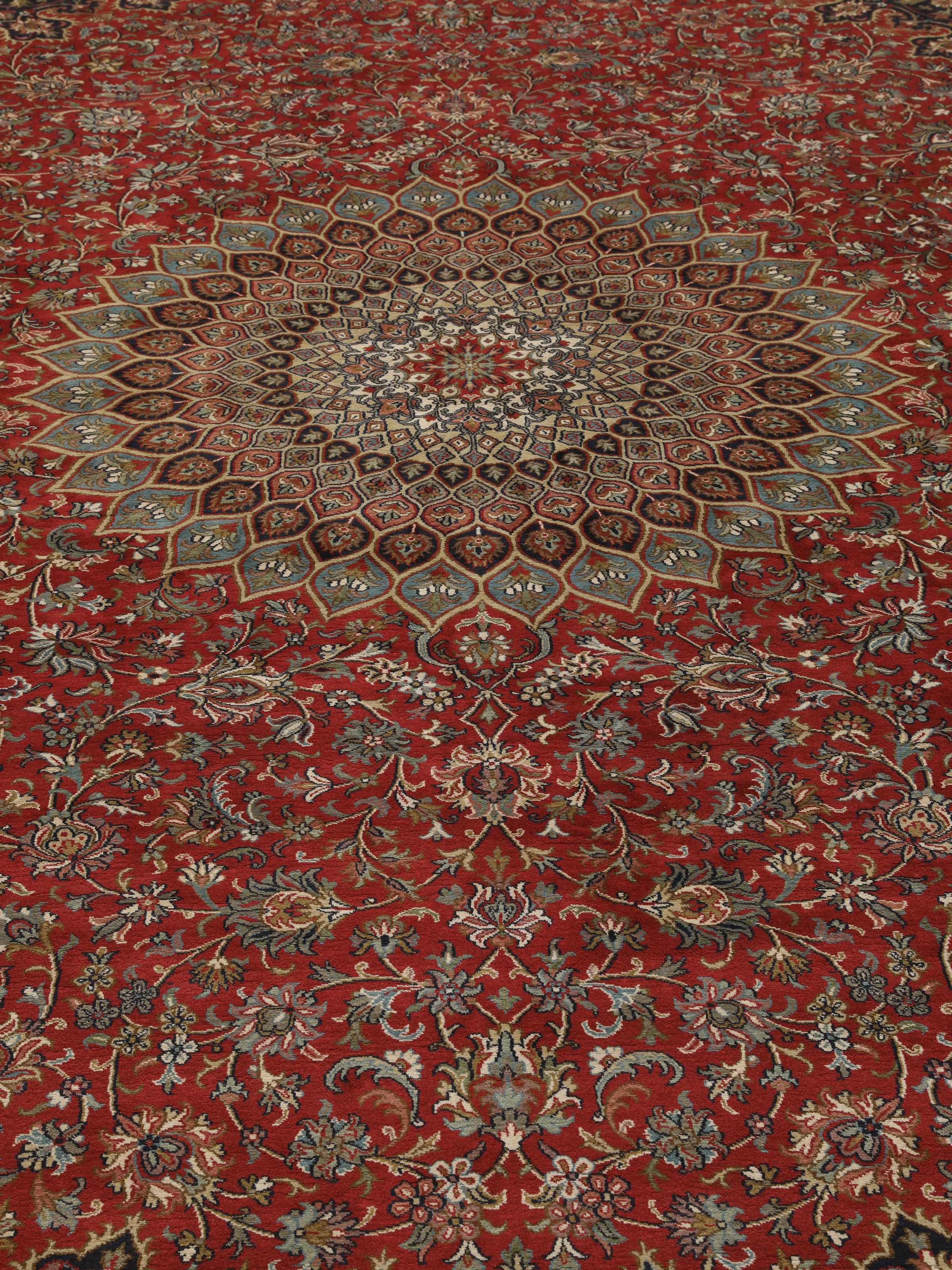
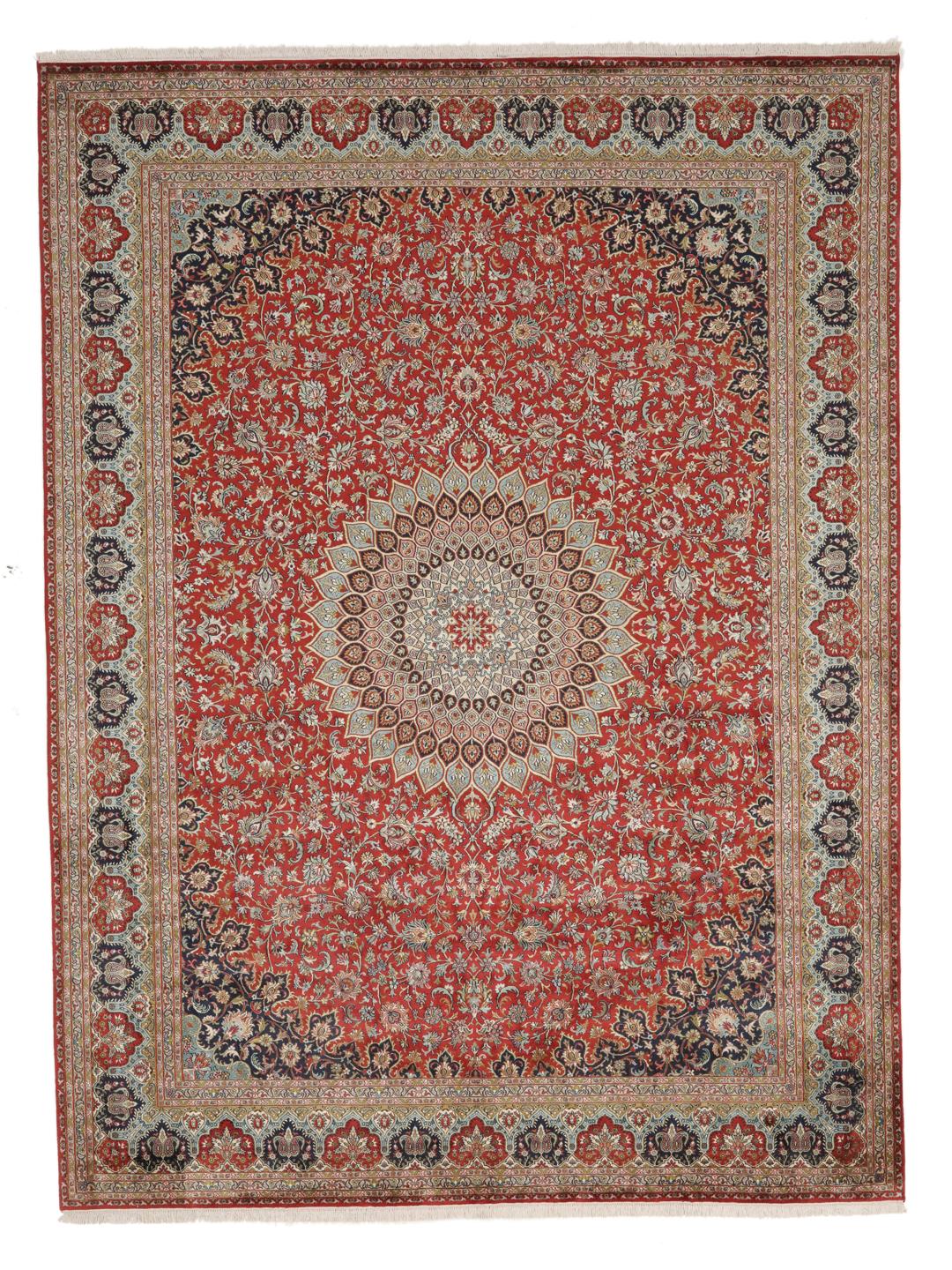
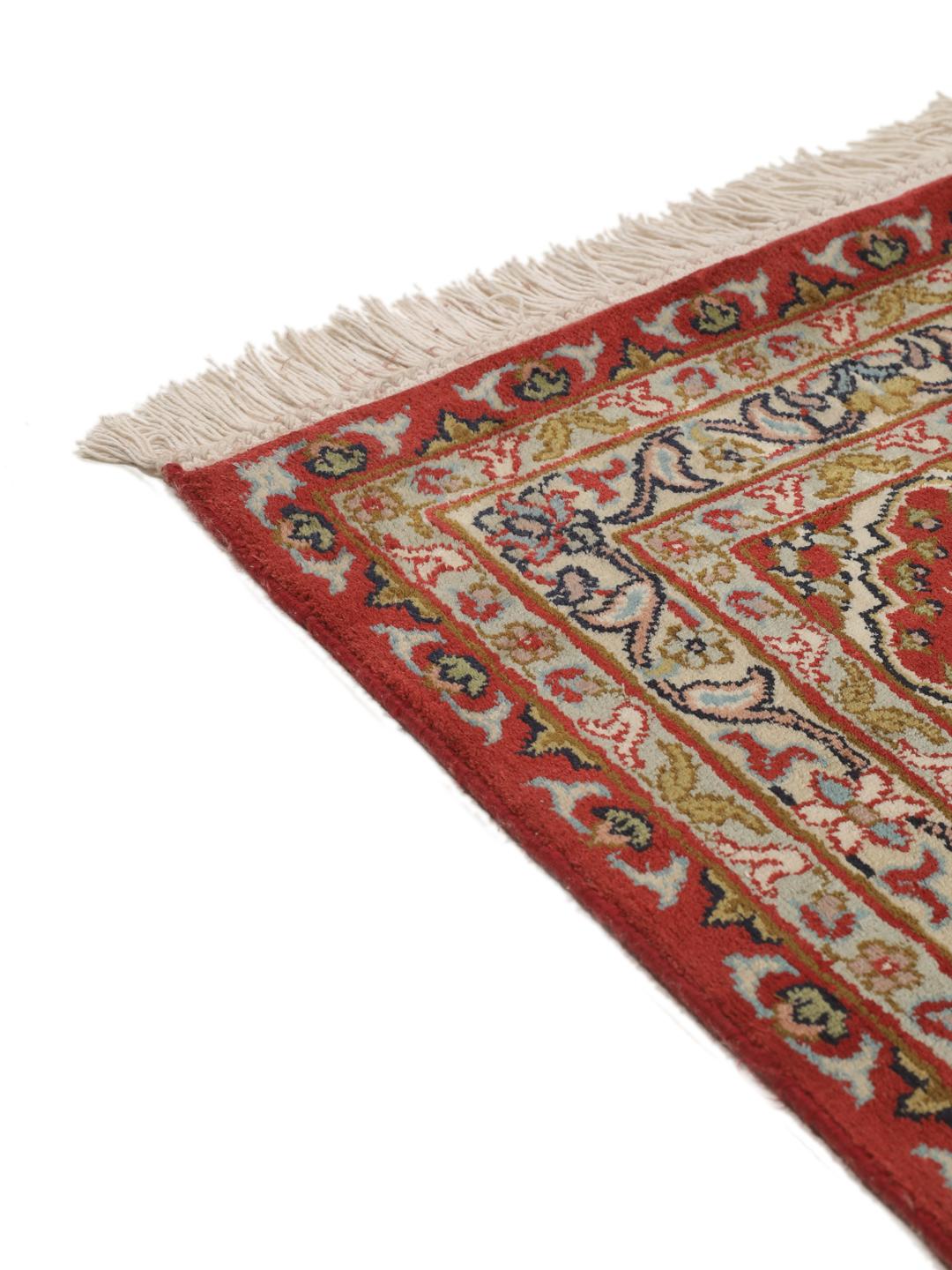
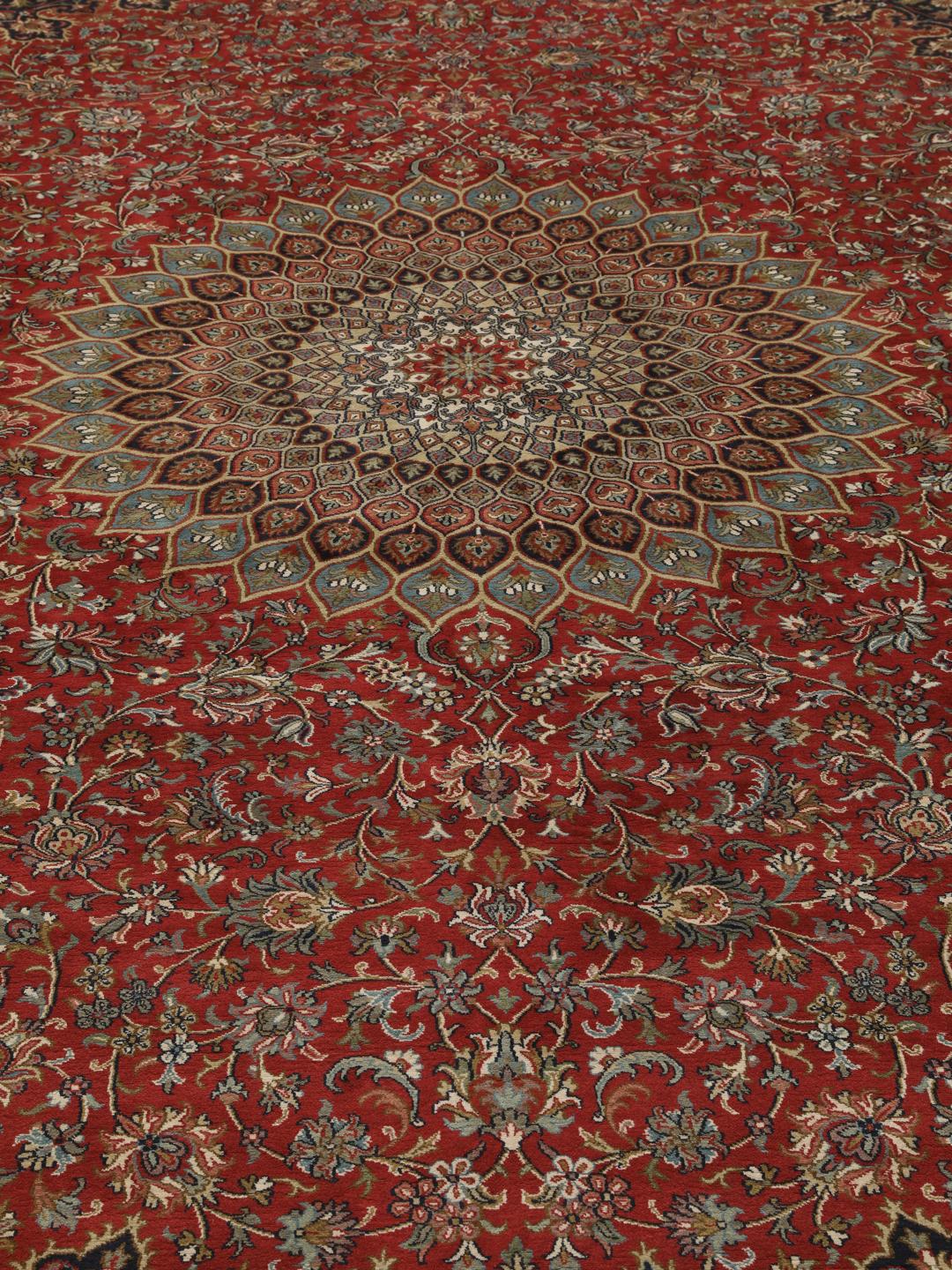
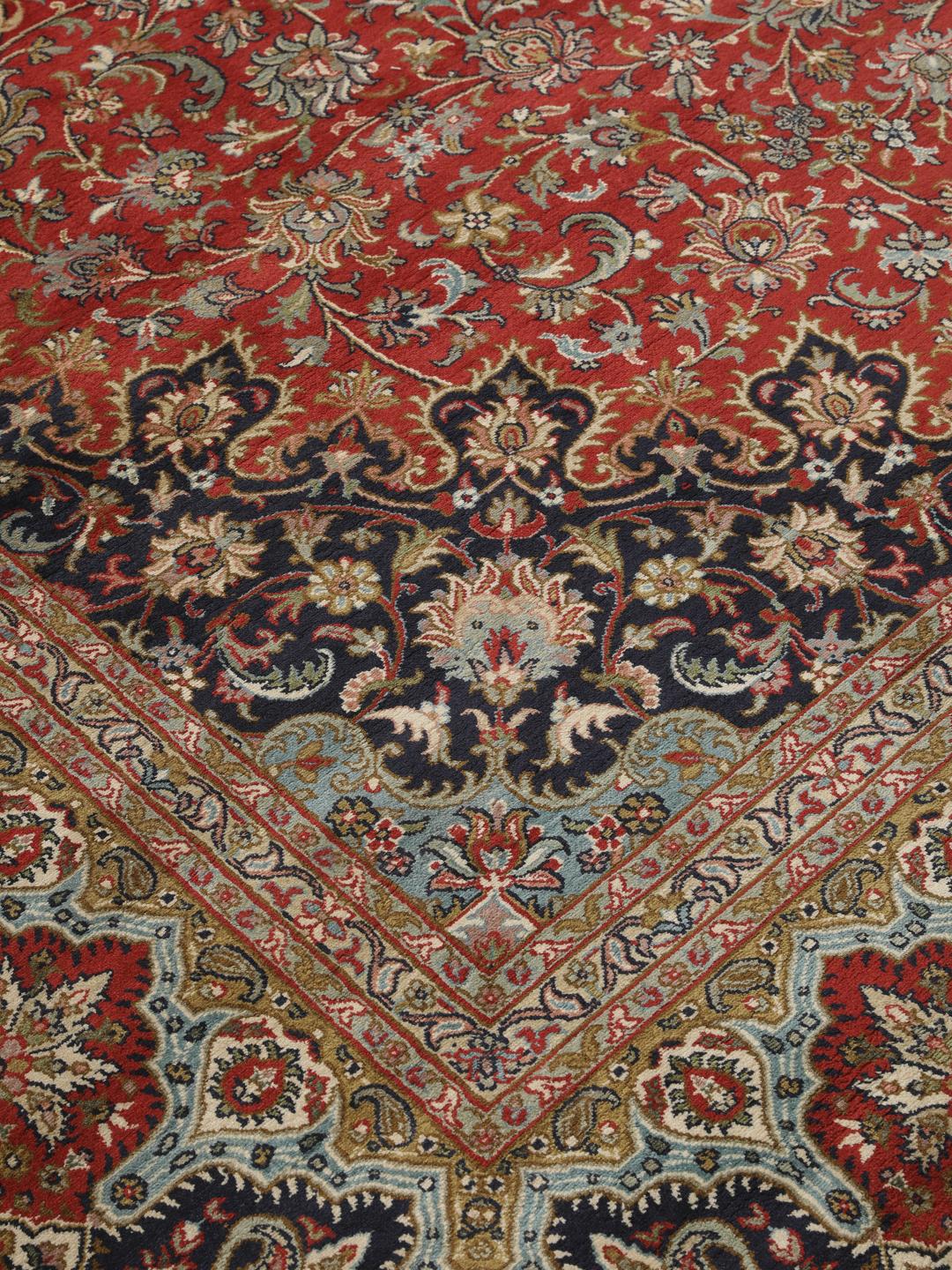
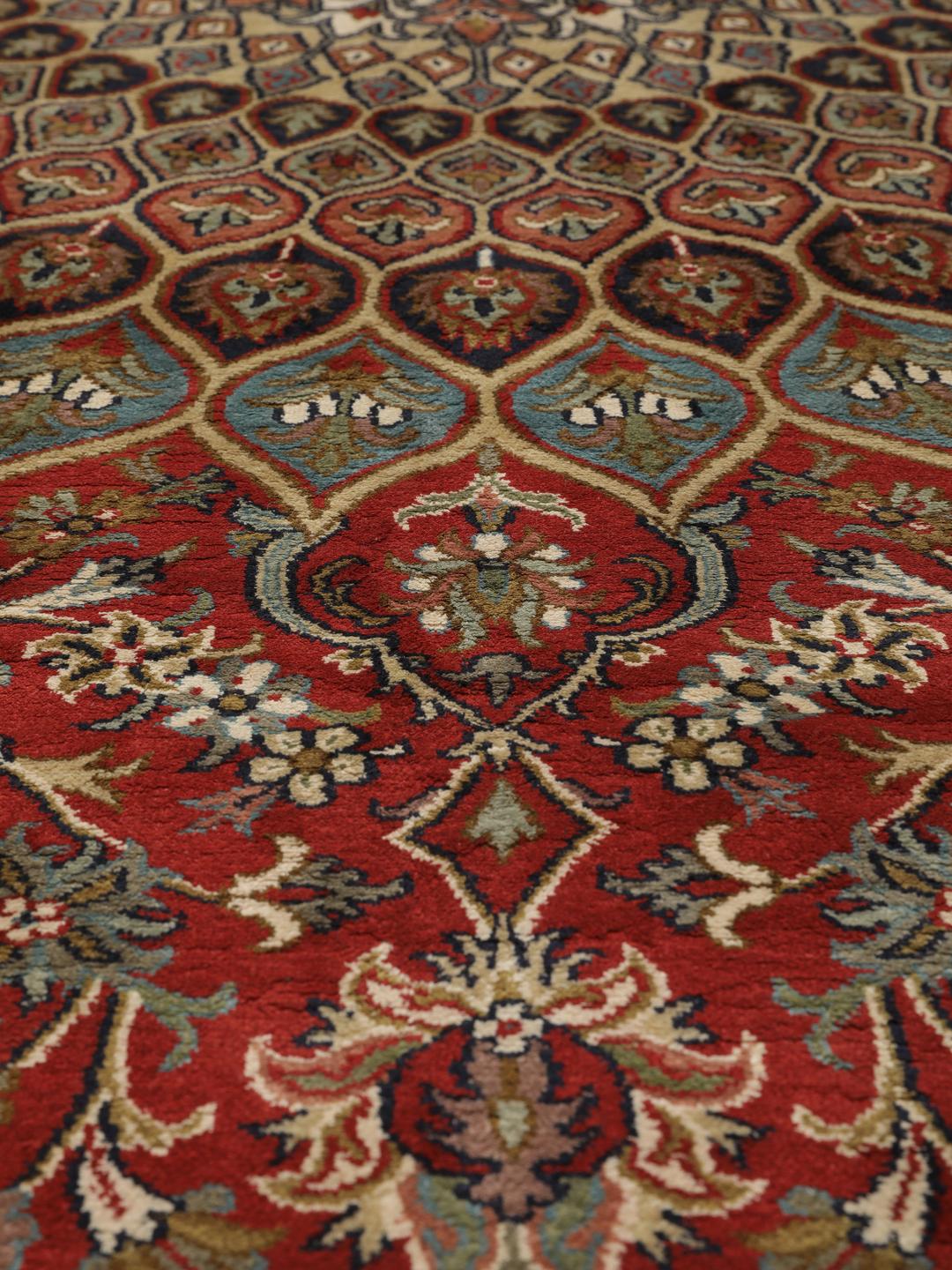
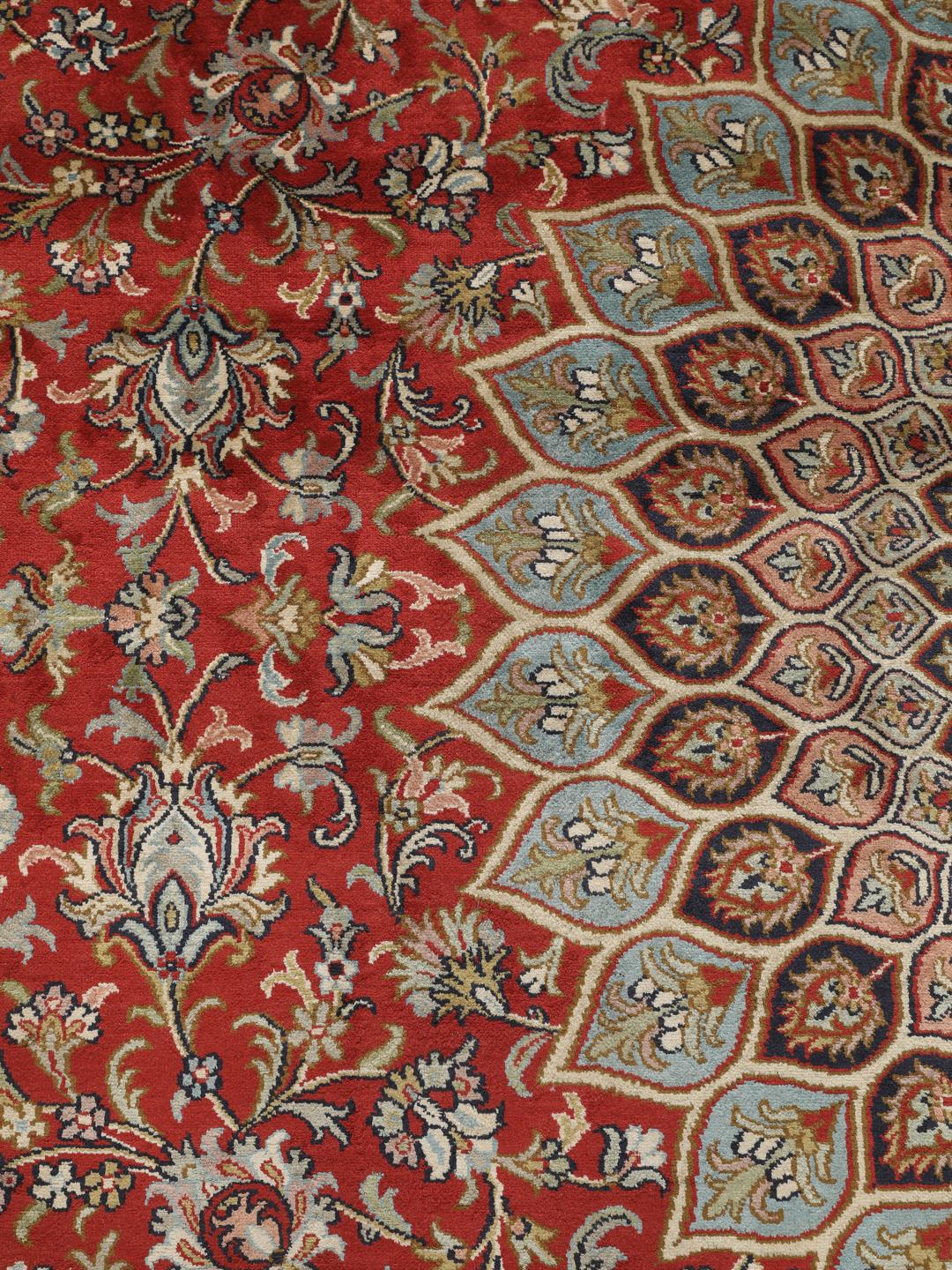
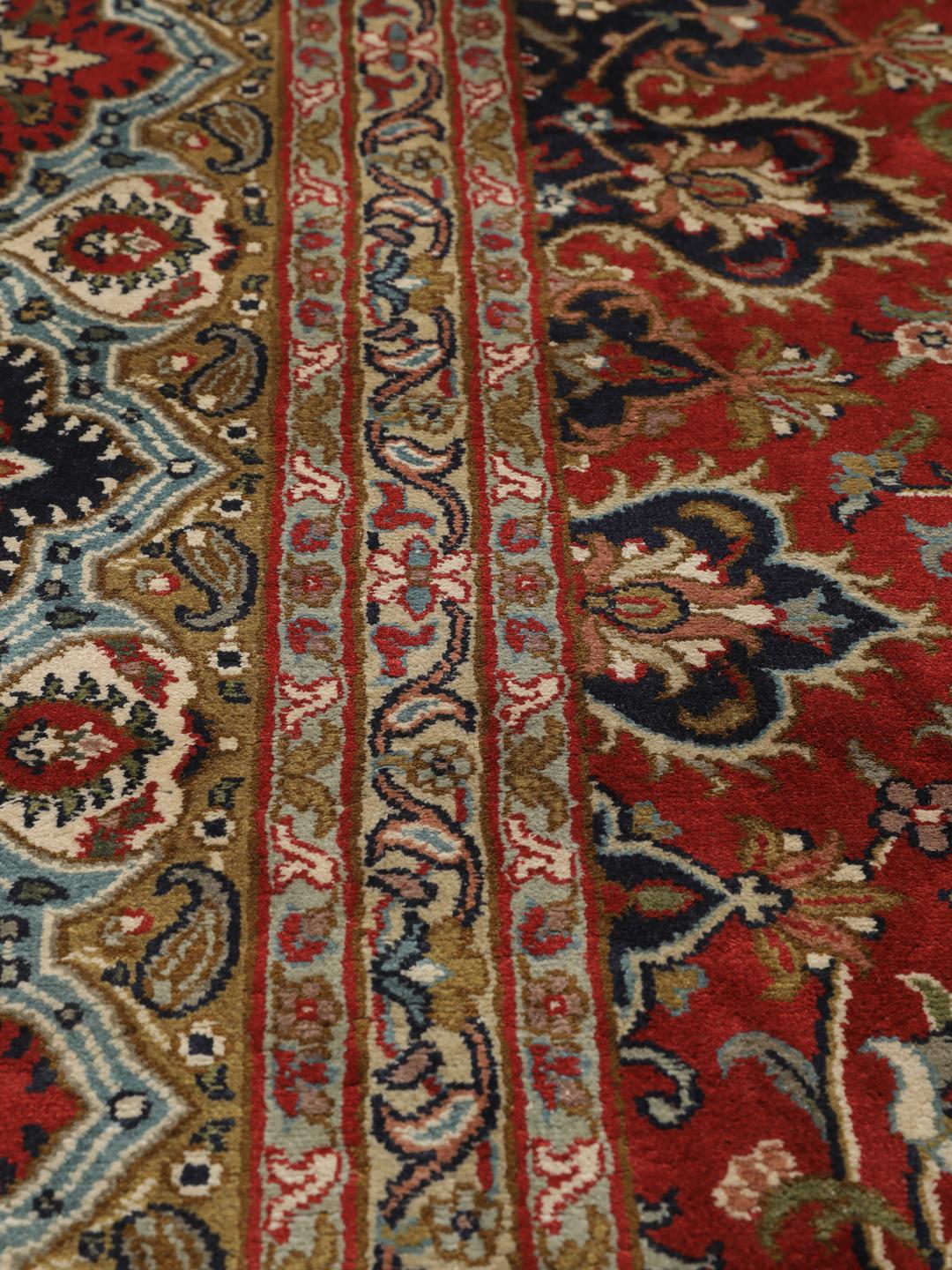
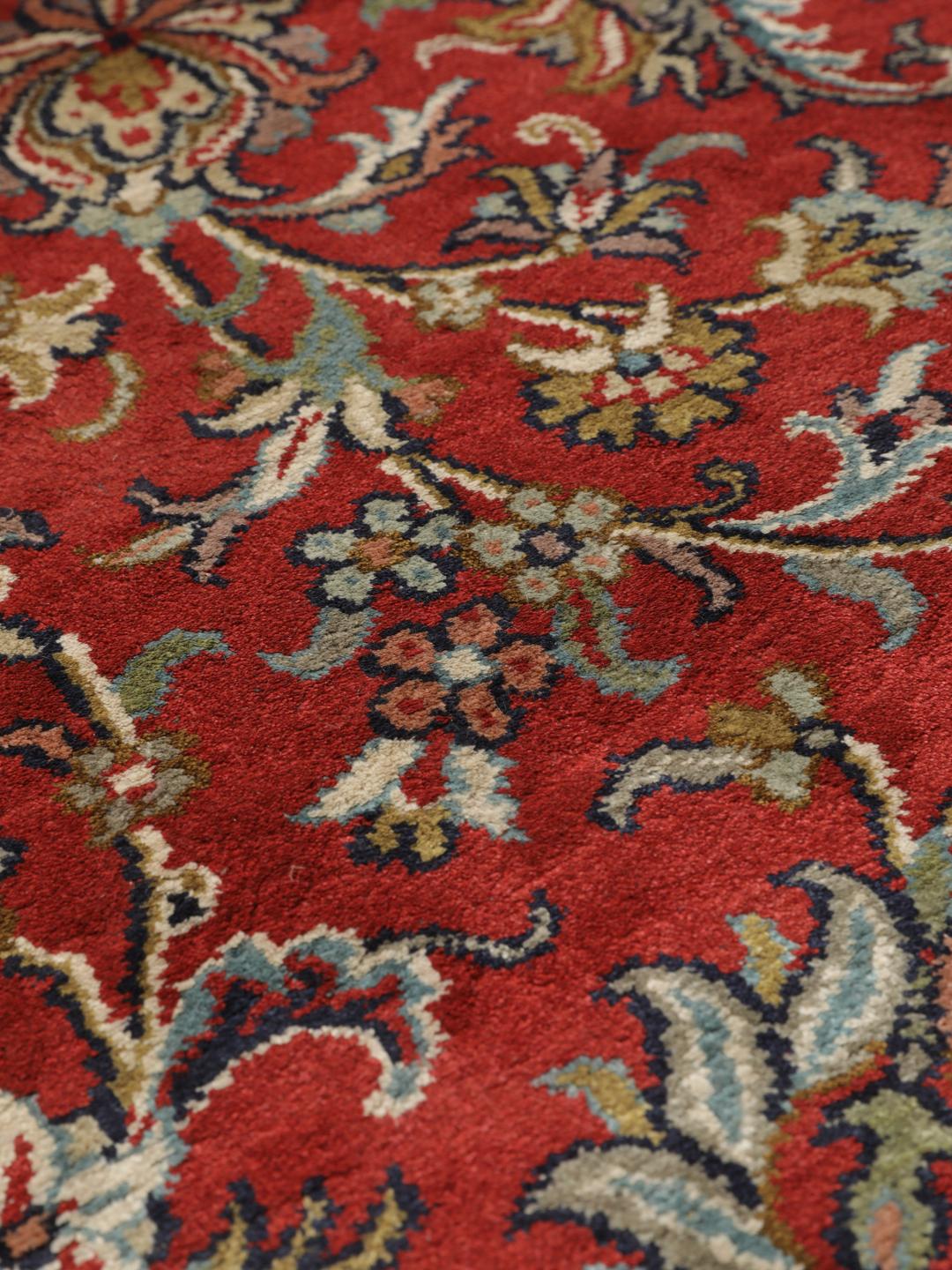
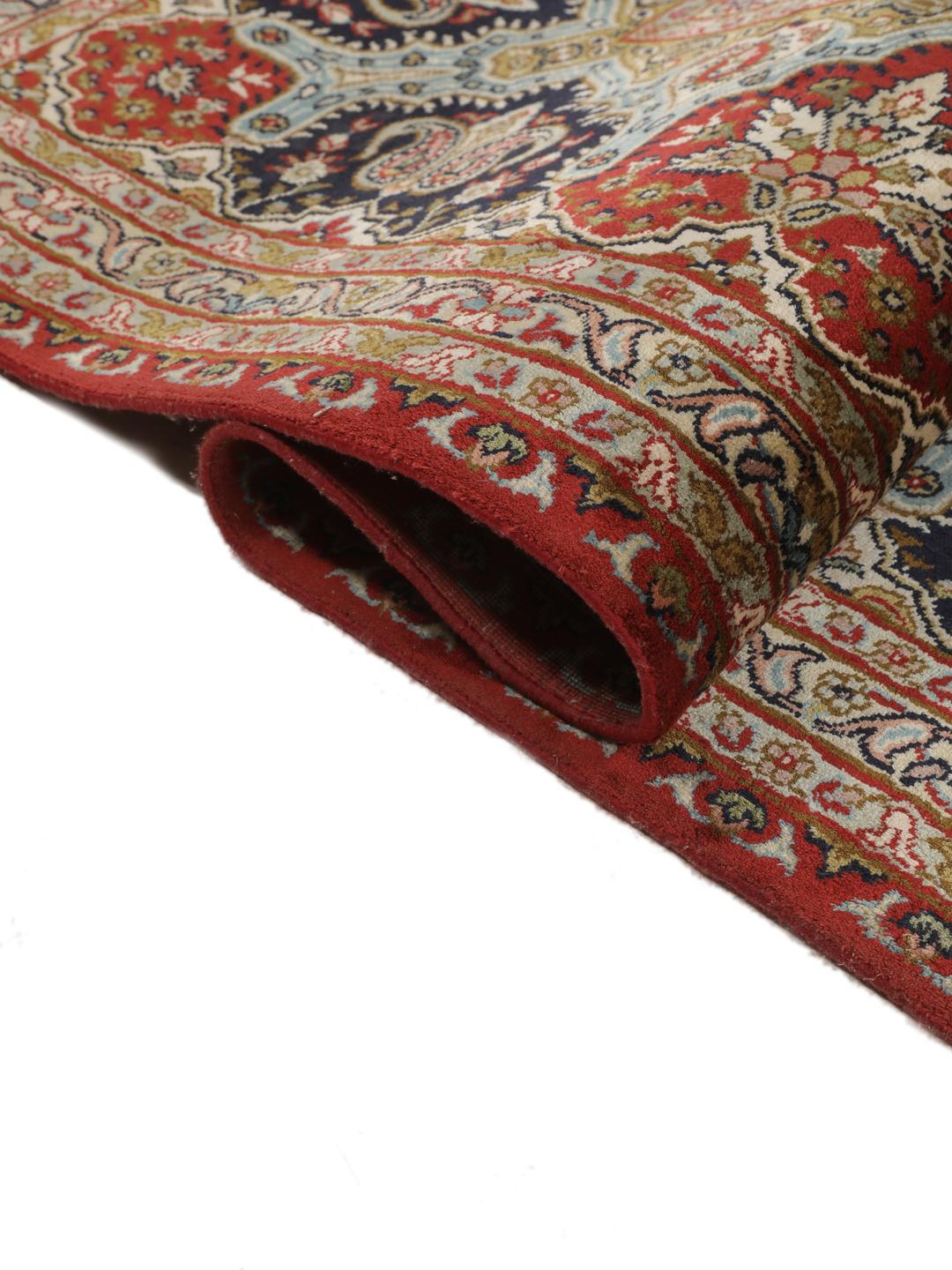
The design language of these rugs is dominated by intricate floral motifs, often organised around a central medallion. These patterns are heavily inspired by classical garden themes, featuring scrolling vines, delicate blossoms, and elaborate borders that frame the composition. The use of a red field, as seen here, is a classic choice in this tradition, symbolising warmth and vitality while providing a dramatic backdrop for the lighter, more detailed floral elements.
Owning a Kashmir silk rug is an investment in a legacy of craftsmanship. These rugs are highly prized by collectors for their ability to combine artistic complexity with functional longevity. Because each piece is the result of a long, human-centred process, they are considered items of significant cultural and aesthetic value, representing a level of skill that is becoming increasingly rare in the modern world.