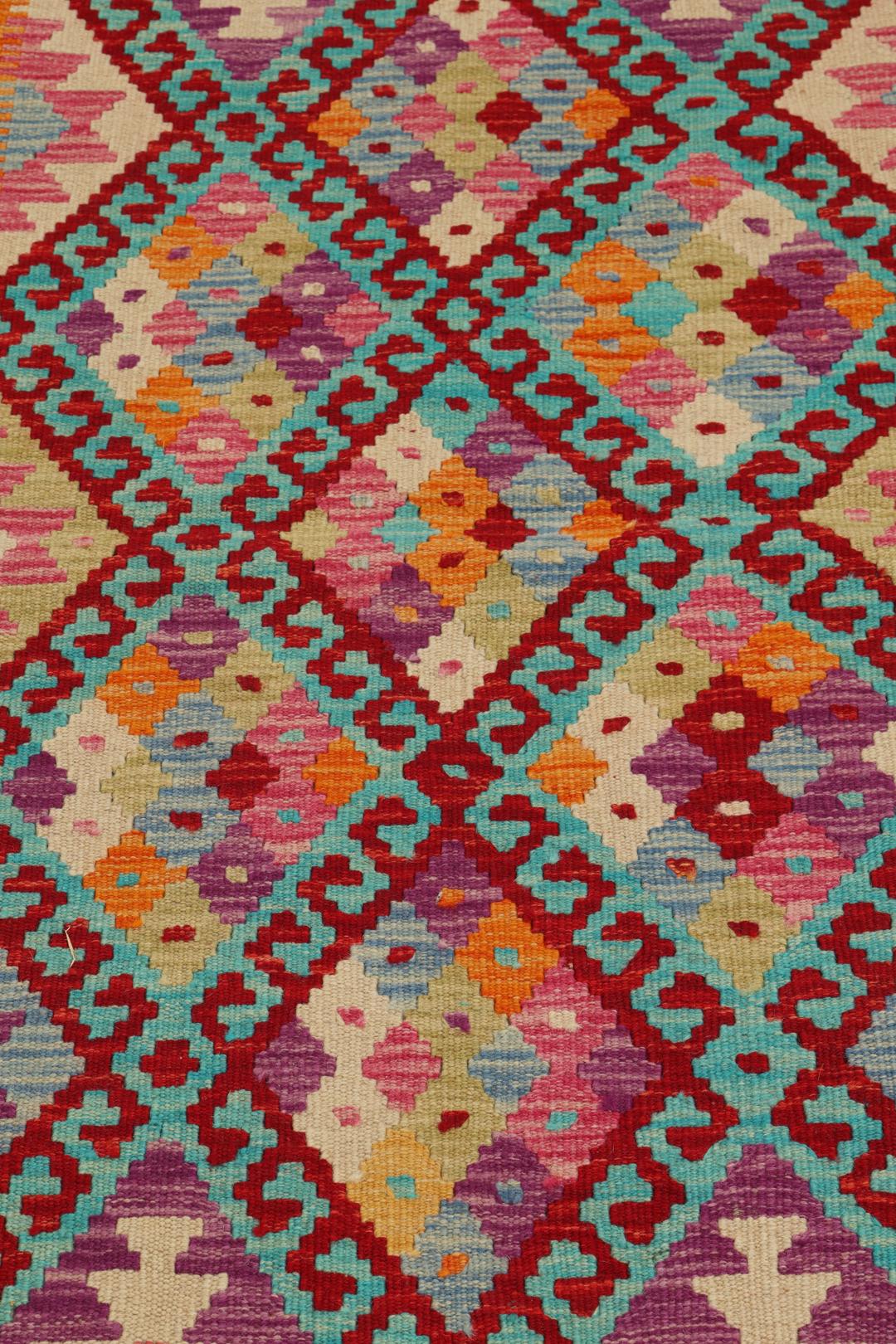
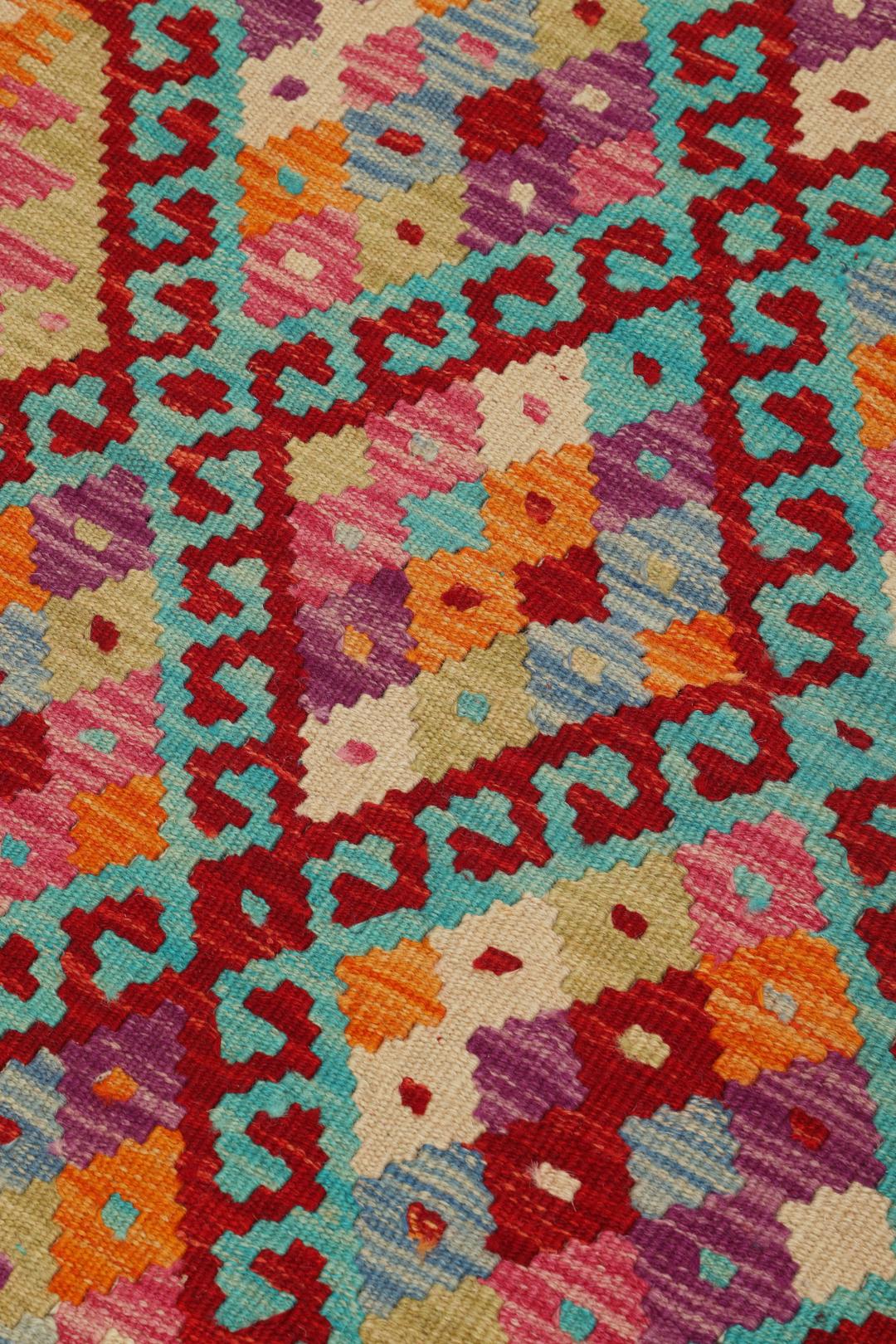
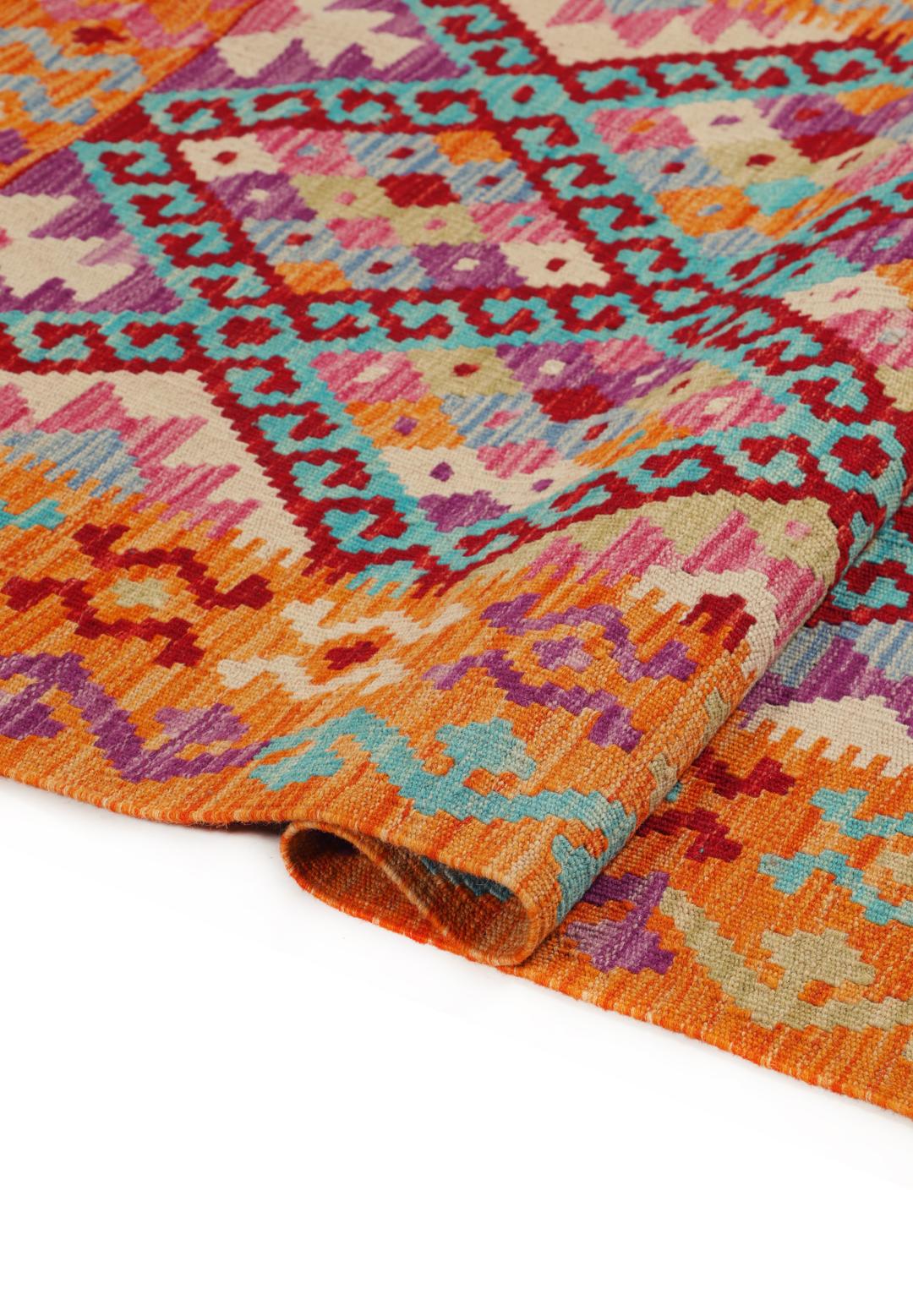
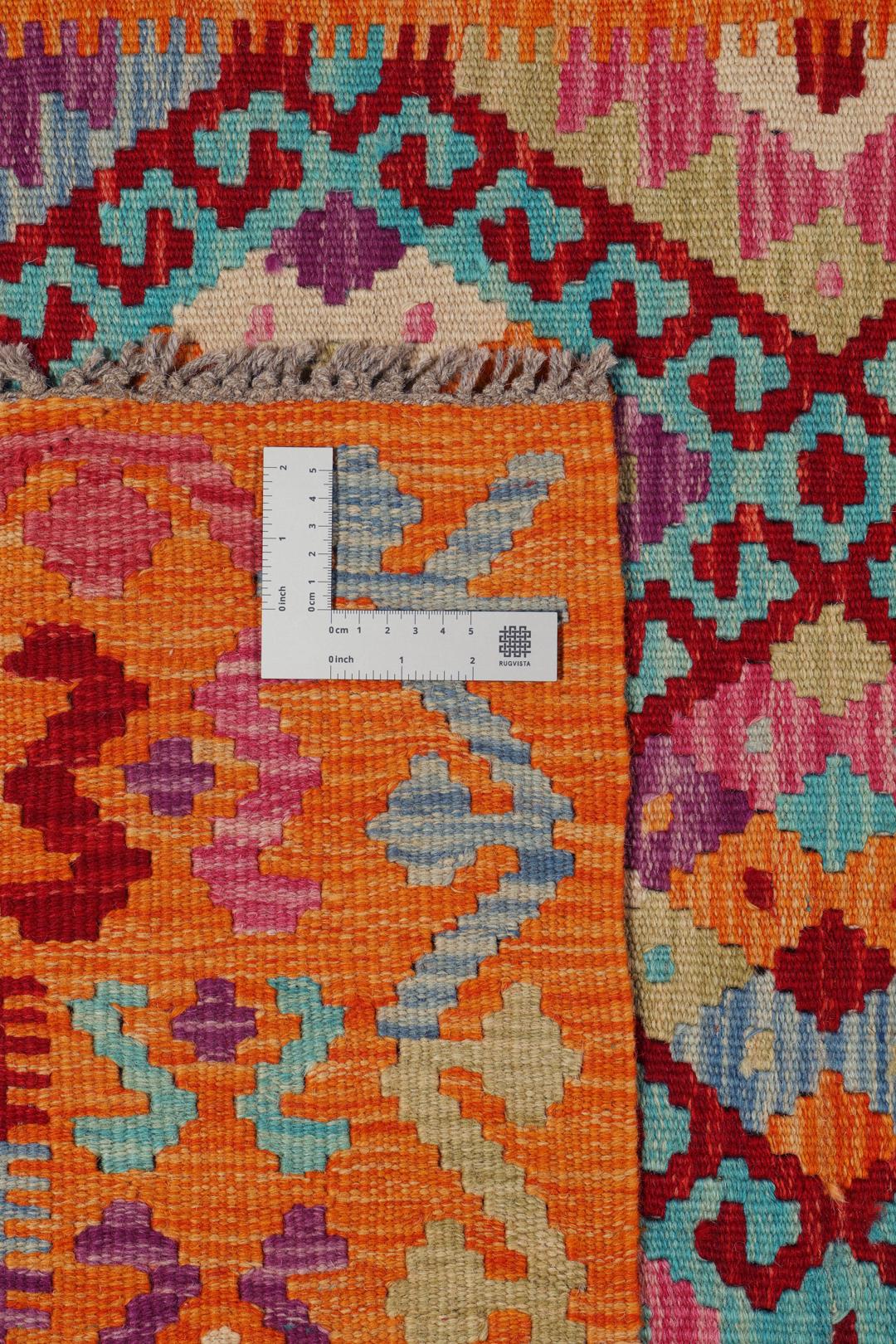
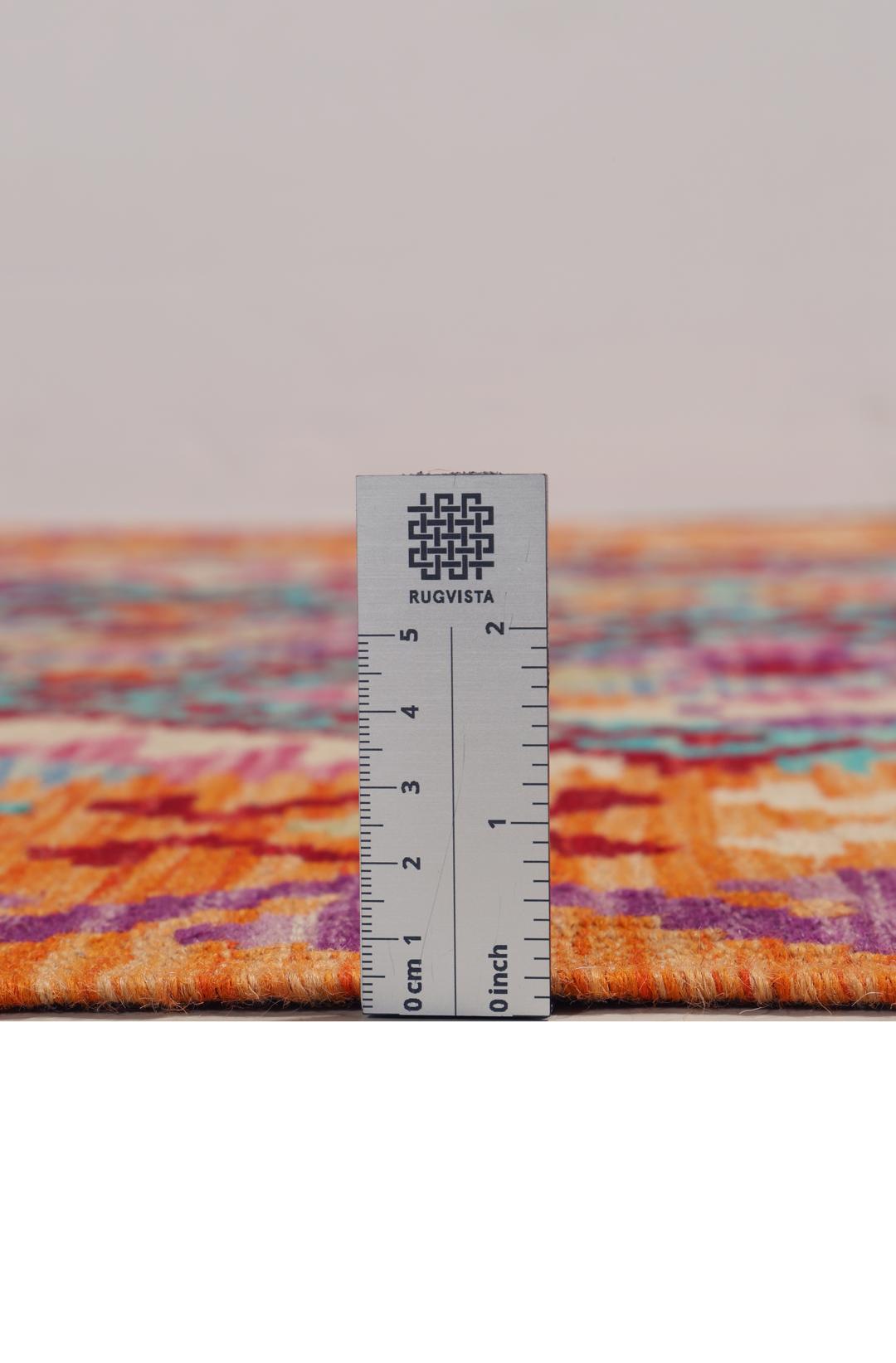
Kelim rugs from Afghanistan are deeply rooted in the nomadic traditions of the region. Historically, these textiles served as essential, portable furnishings for nomadic tribes, functioning as floor coverings, wall hangings, and storage bags. The evolution of these rugs has seen them transition from strictly utilitarian objects to highly sought-after decorative pieces that preserve ancient cultural narratives.
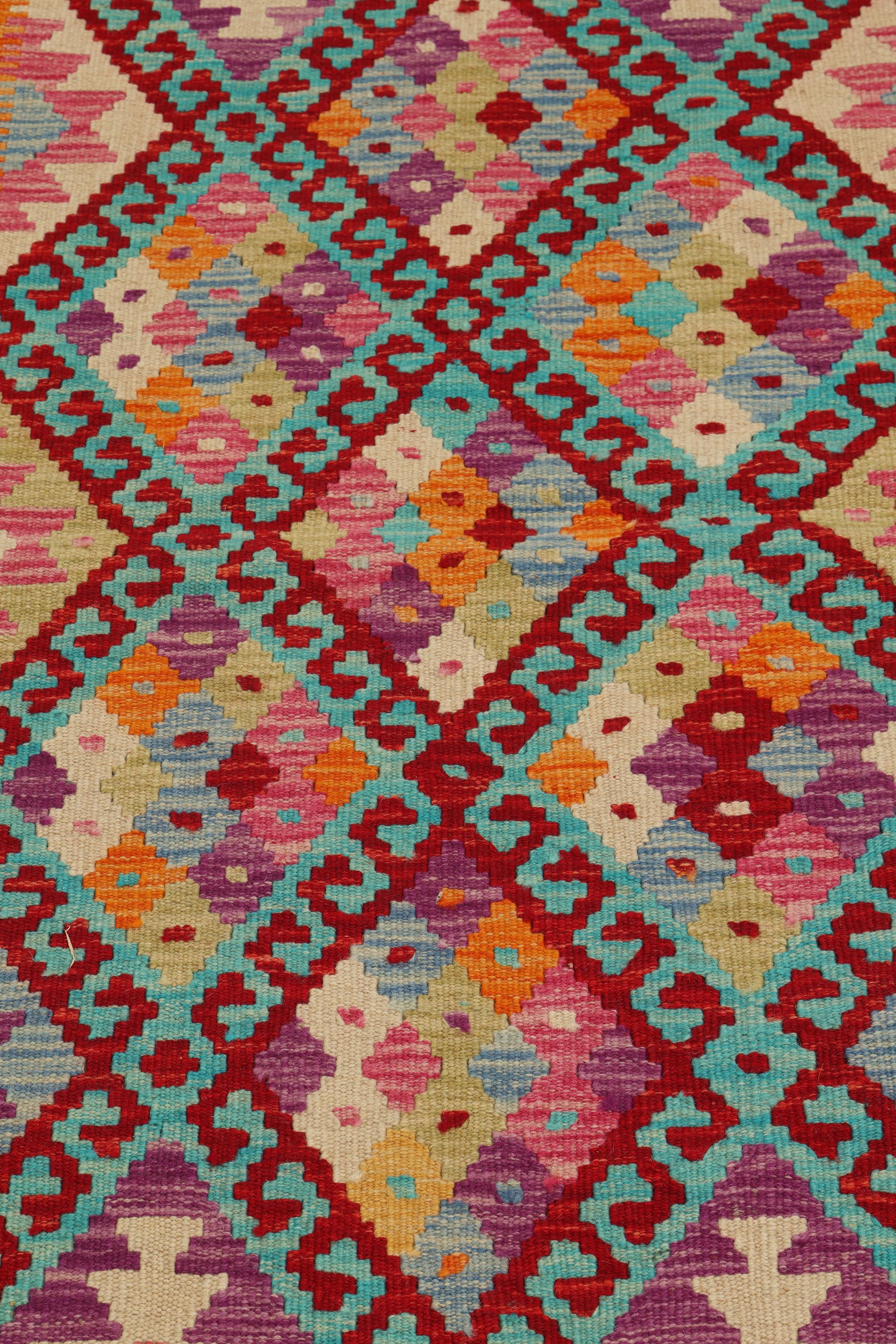
The term Kelim refers to a specific flat-weaving technique where the weft strands are pulled tightly over the warp strands to create a smooth, pileless surface. This method is technically demanding, as it requires the weaver to manage colour changes precisely at every pattern boundary. The result is a reversible textile that is both incredibly lightweight and remarkably strong.
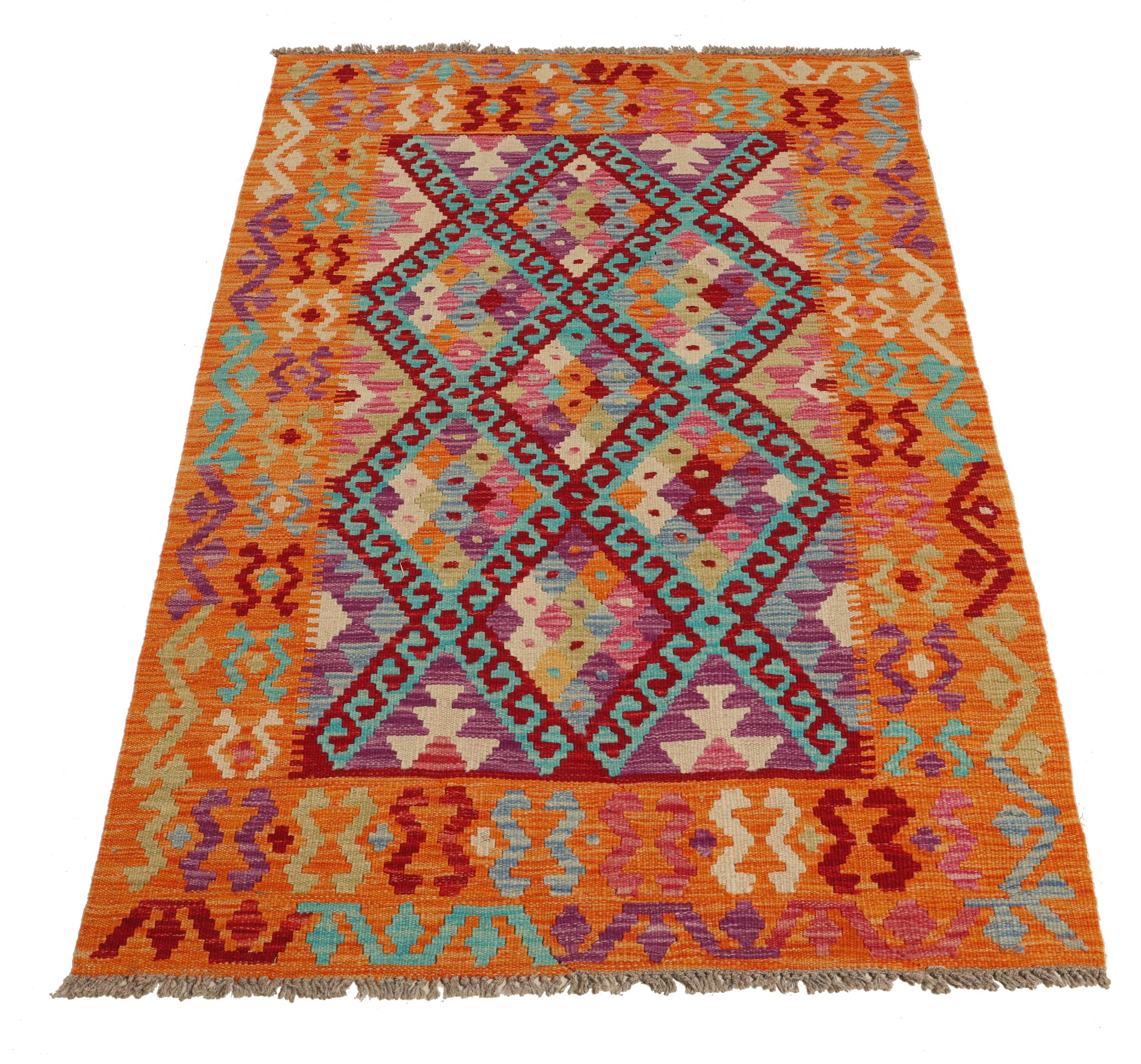
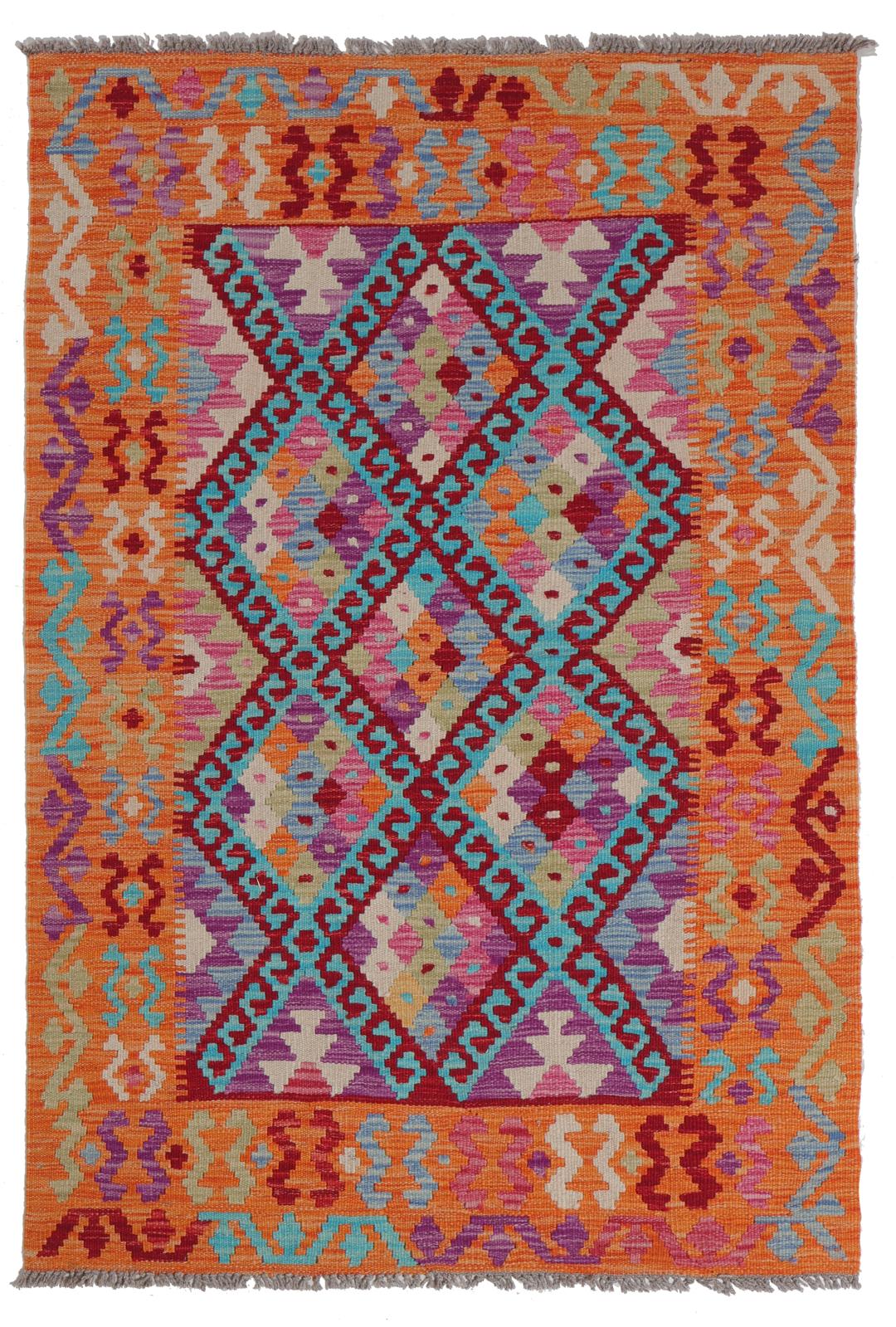
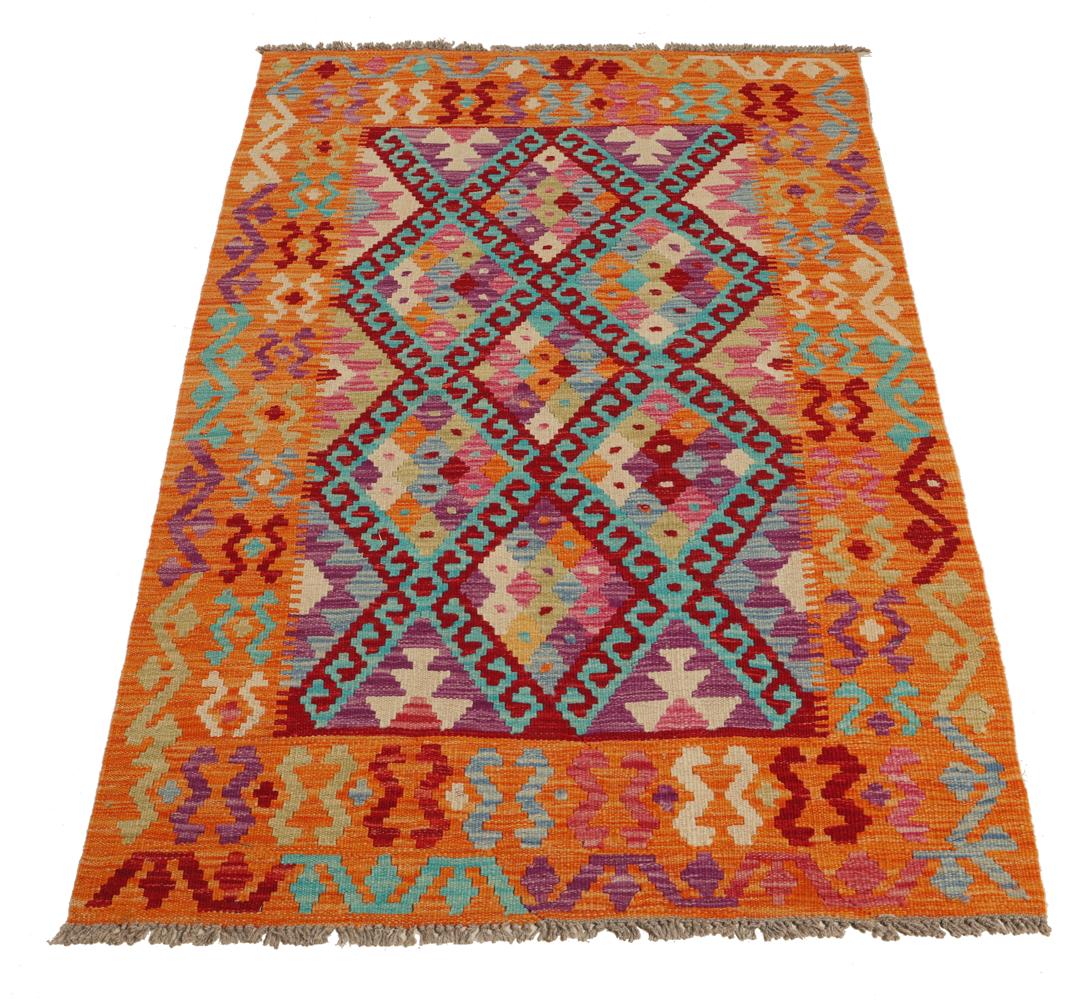
Visually, these rugs are defined by their bold geometric language. Common motifs often include diamonds, triangles, and stylized floral elements, all arranged in rhythmic, symmetrical compositions. This particular rug showcases a classic Afghan approach to colour, utilising saturated, warm tones that reflect the natural dyes and regional aesthetics of the Afghan landscape.
Owning an Afghan Kelim is an investment in cultural heritage. Collectors value these pieces for their authenticity, the skill required to produce them, and the way they bridge the gap between historical nomadic art and modern interior design. They are a testament to a resilient craft tradition that continues to thrive through the work of dedicated artisans.