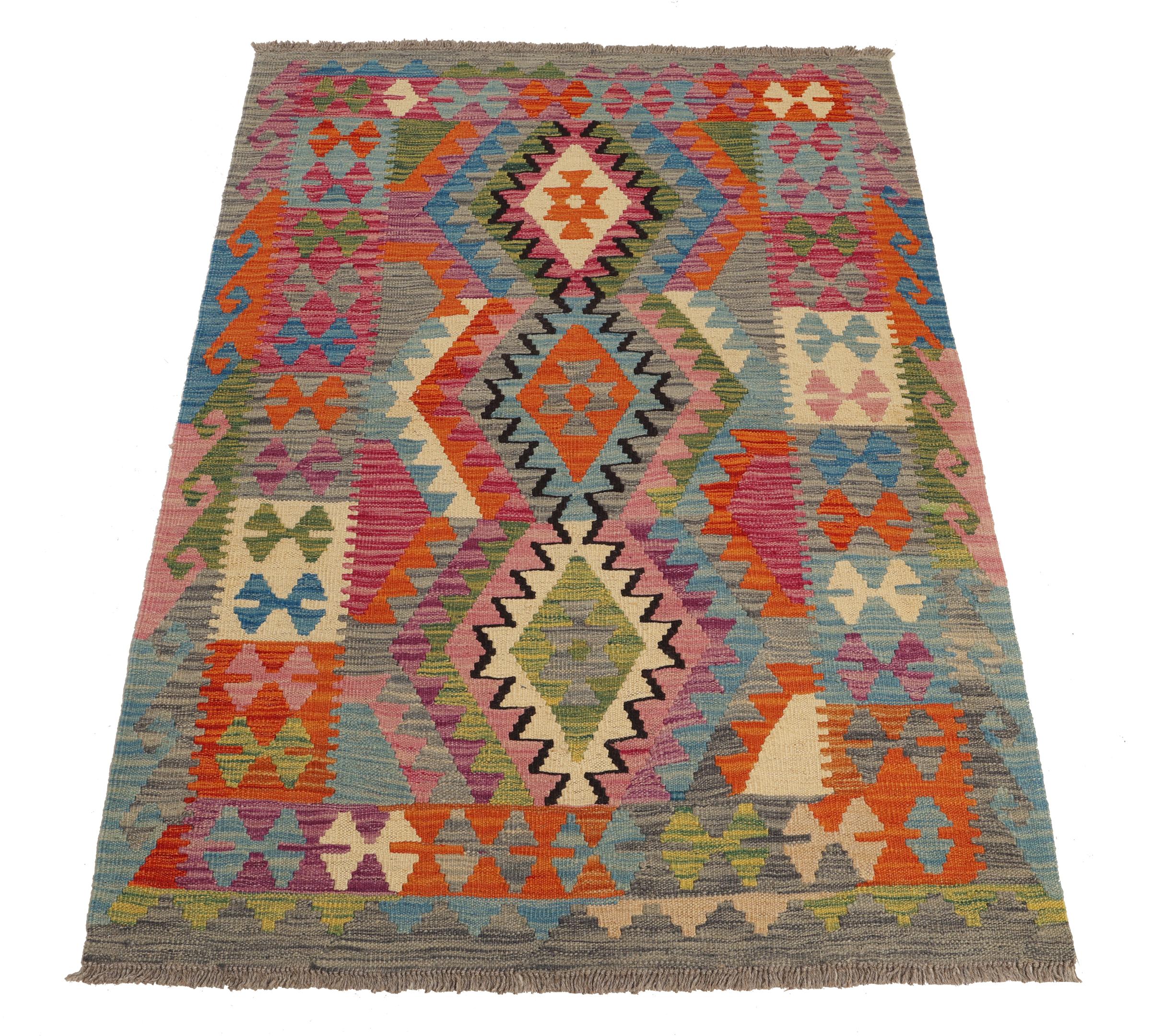
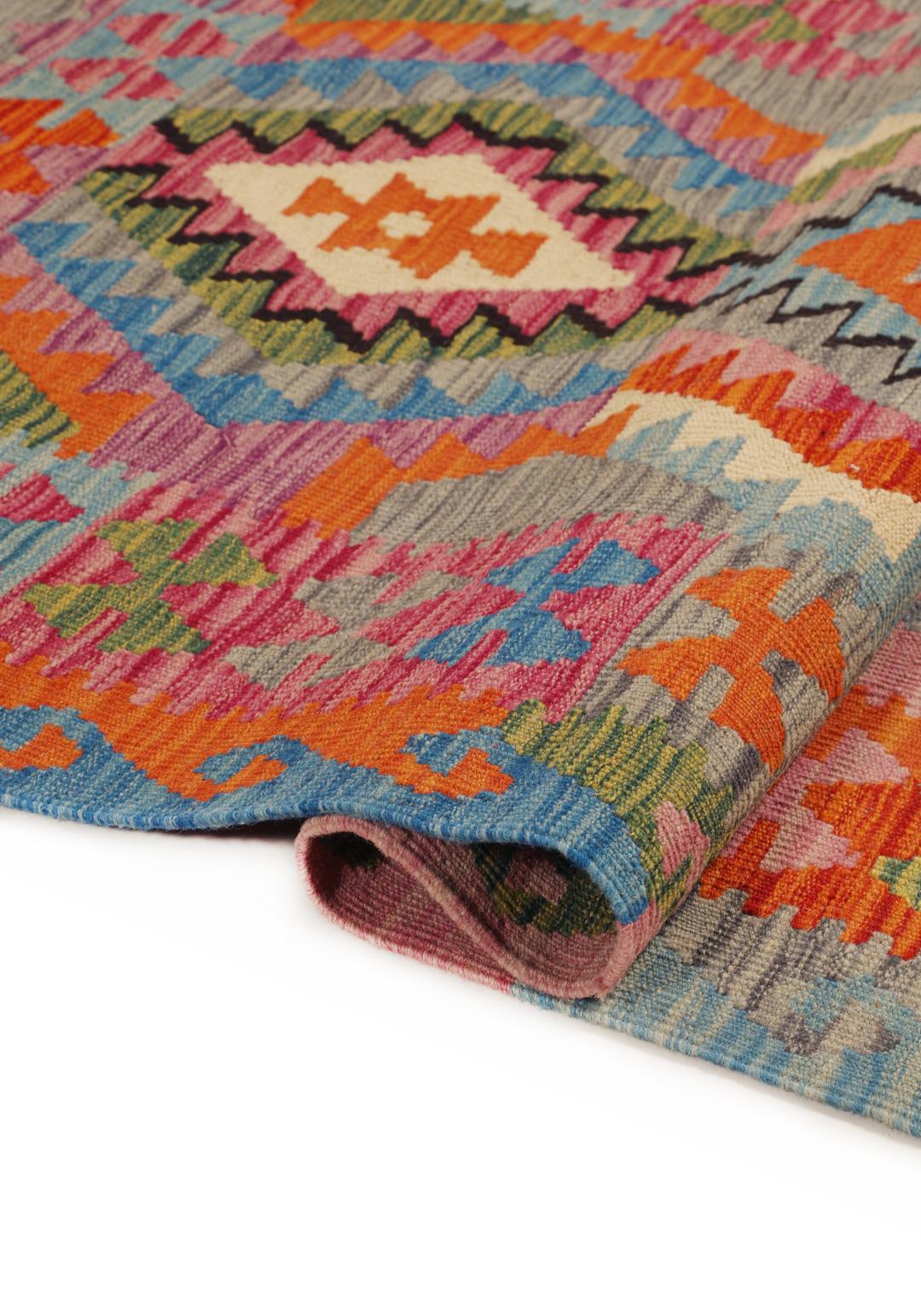
Kelim rugs have been woven for centuries across the Middle East and Central Asia, serving as both functional floor coverings and essential cultural textiles for nomadic tribes. The Afghan Kelim, in particular, is celebrated for its sturdy construction and bold, expressive use of colour, reflecting the landscape and artistic spirit of the region.
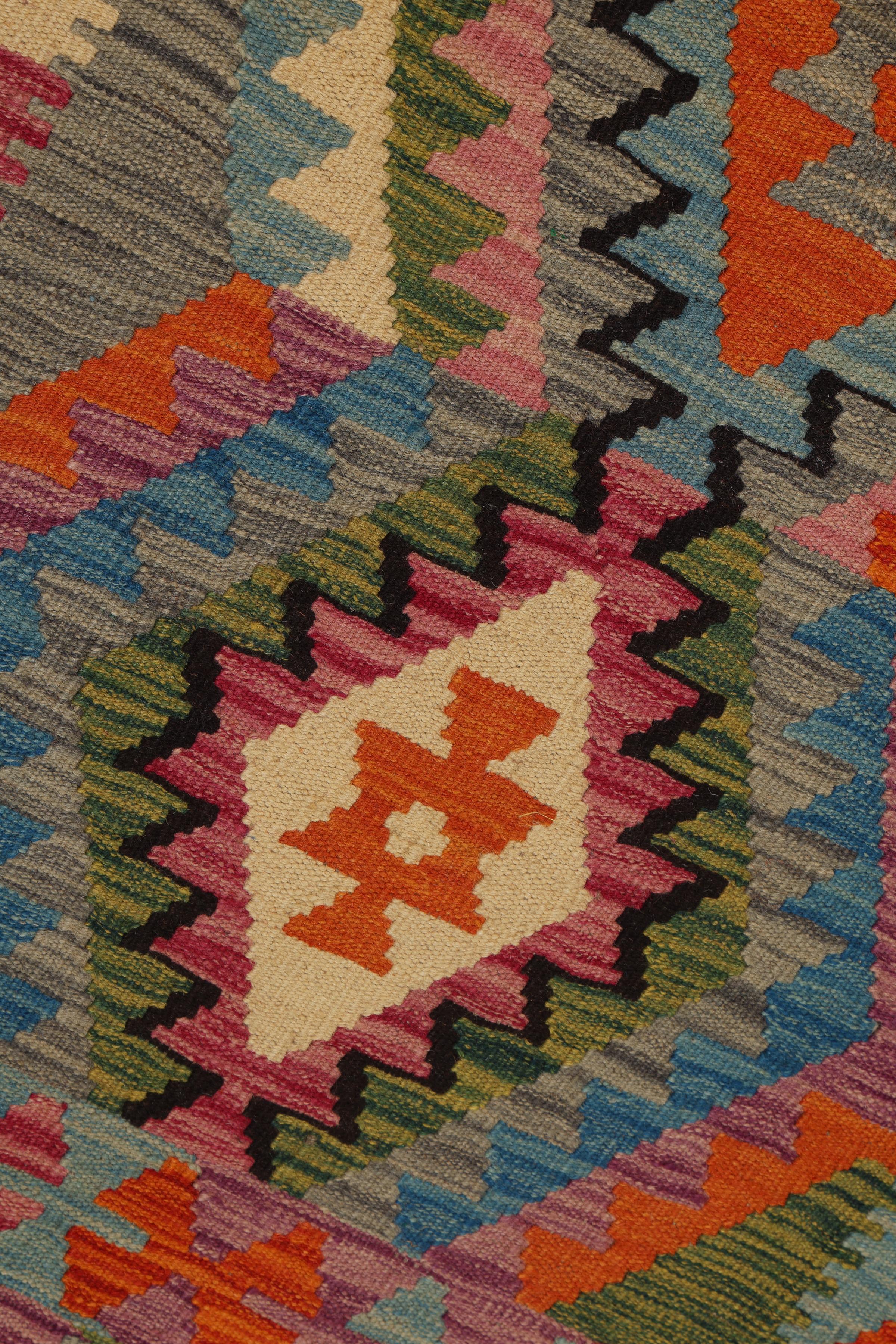
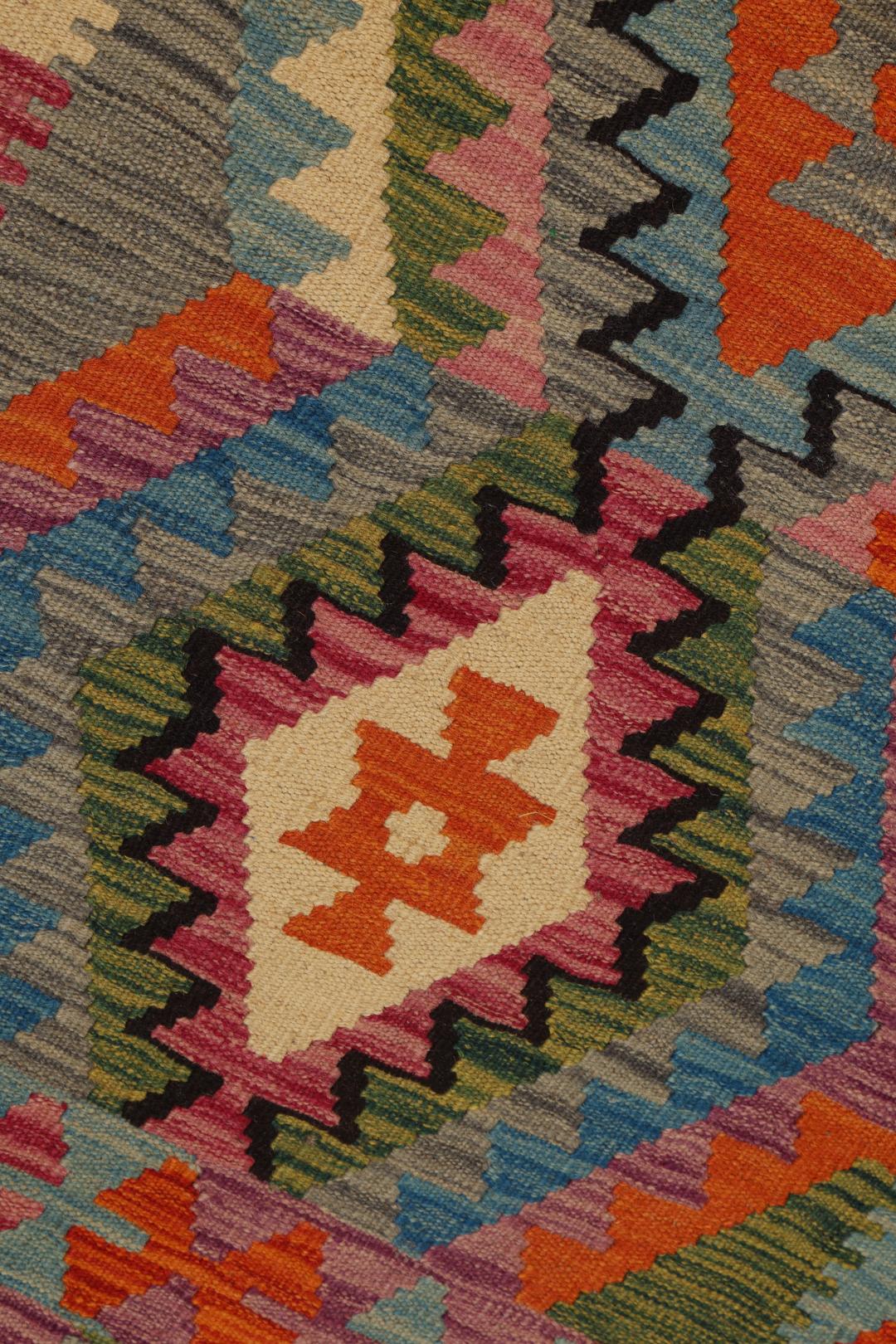
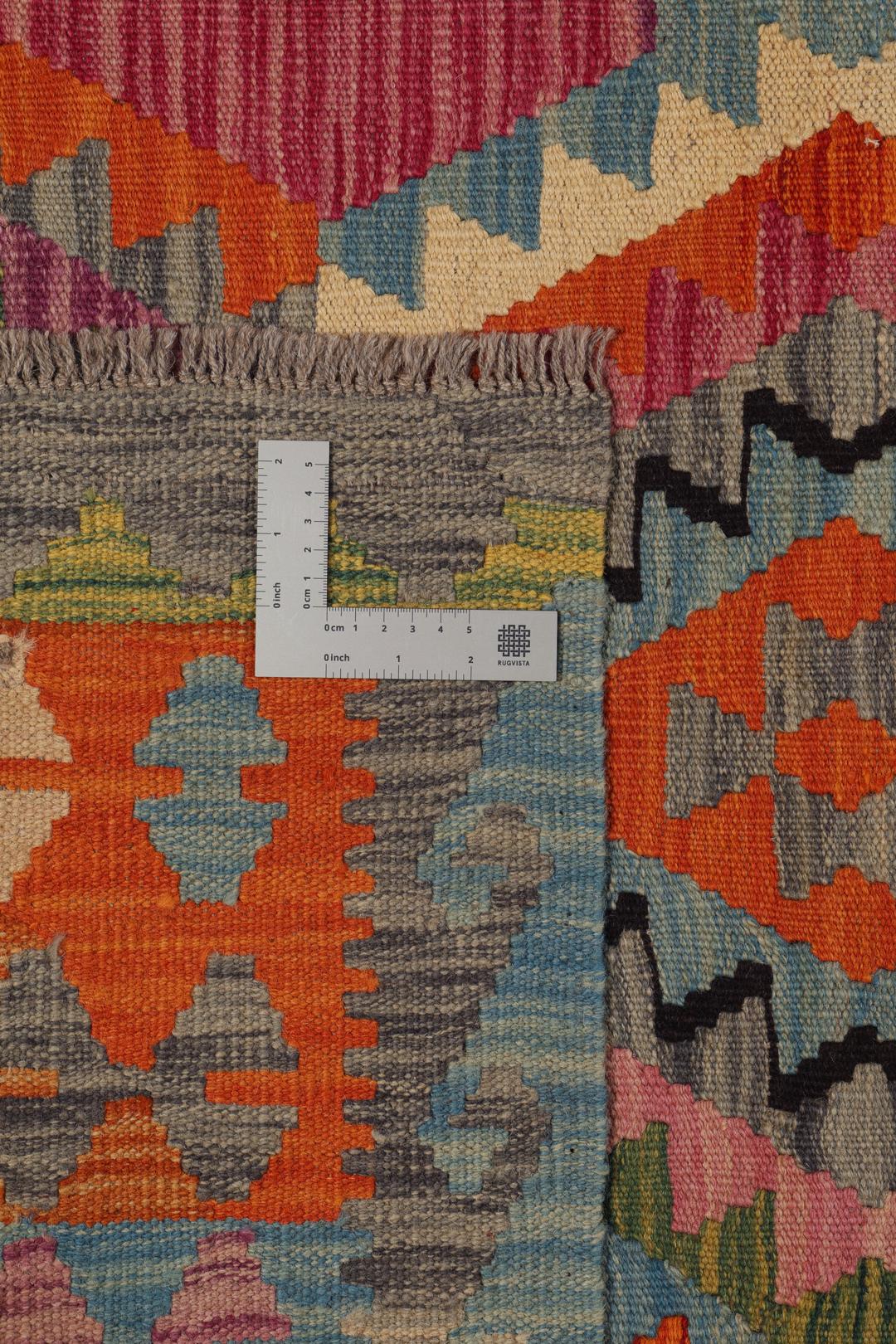
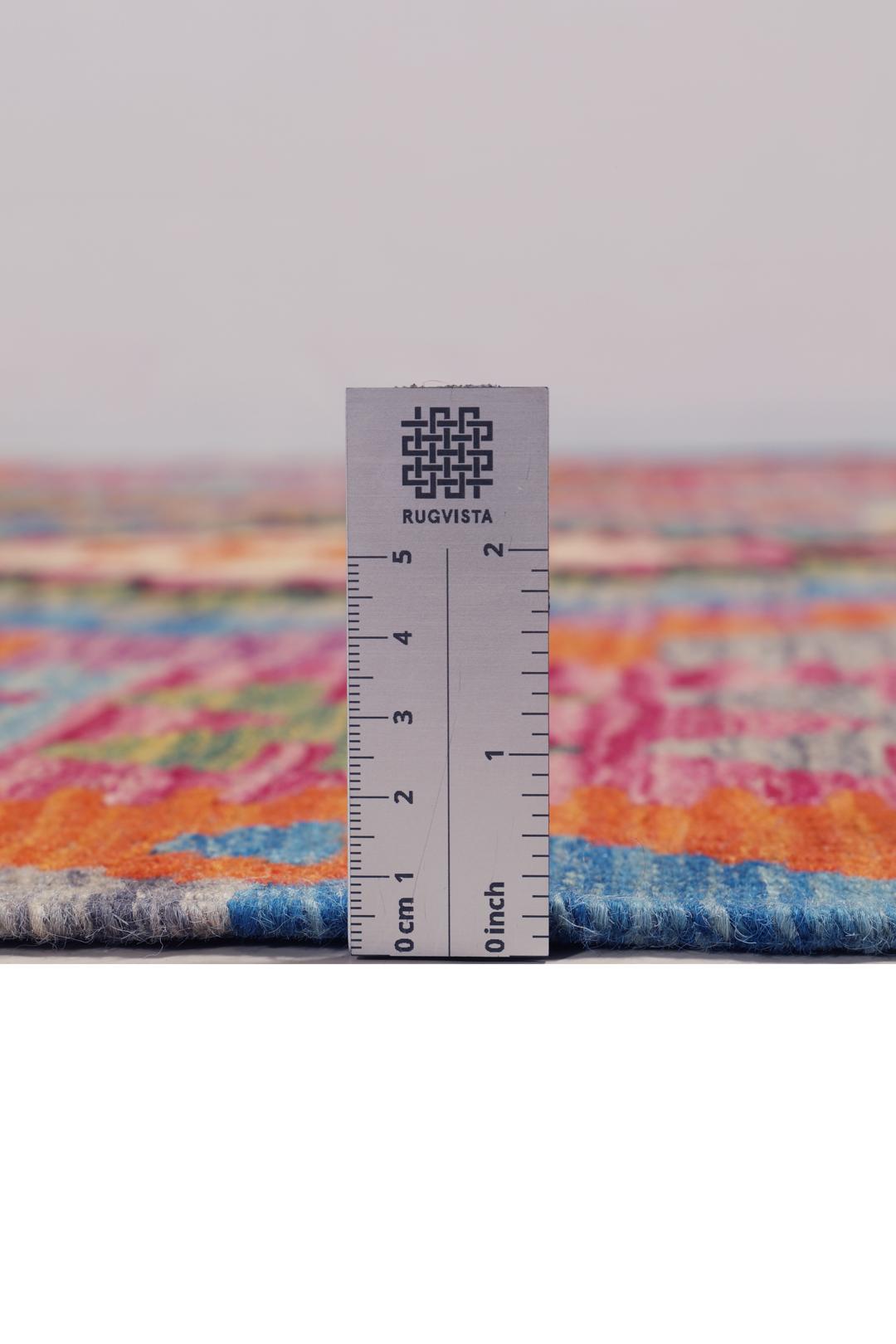
The term 'Kelim' refers to a specific flat-weaving technique where the design is created by the weft threads, which are woven over and under the warp. Because there is no pile, these rugs are remarkably lightweight and durable. This technique allows for sharp, crisp geometric lines that are a hallmark of the style.
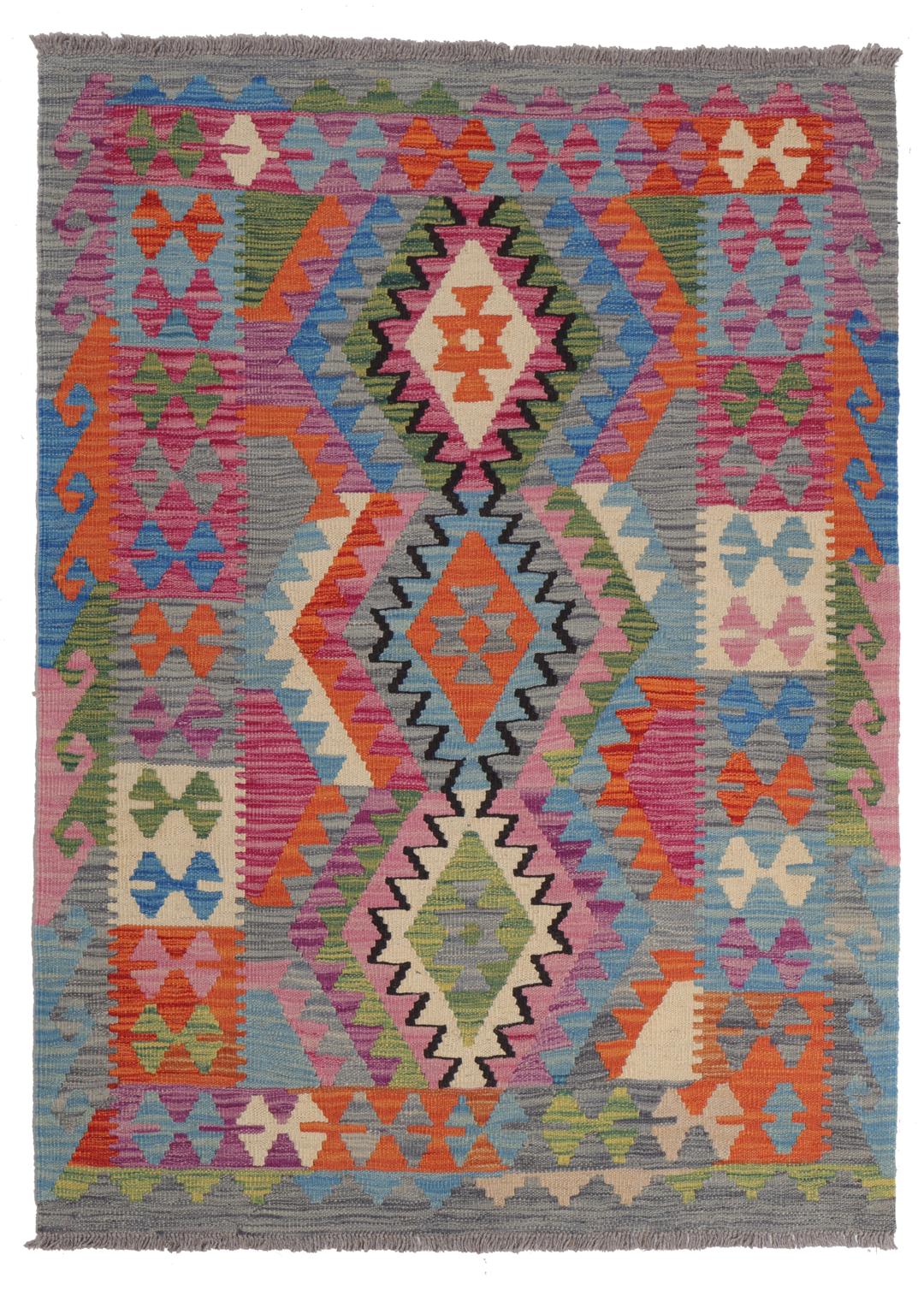
The design of this rug is defined by its geometric motifs, which often carry symbolic meanings related to protection, fertility, or tribal identity. The use of repeating diamonds and contrasting borders is a classic feature of Afghan flat-weaves, showcasing a sophisticated understanding of symmetry and colour balance.
Owning a Kelim is more than just purchasing a floor covering; it is an investment in cultural heritage. These rugs are highly valued by collectors for their authenticity and the skill required to produce such intricate patterns without the aid of modern machinery. Each piece tells a story of the person who wove it, preserving a tradition that has been passed down through generations.