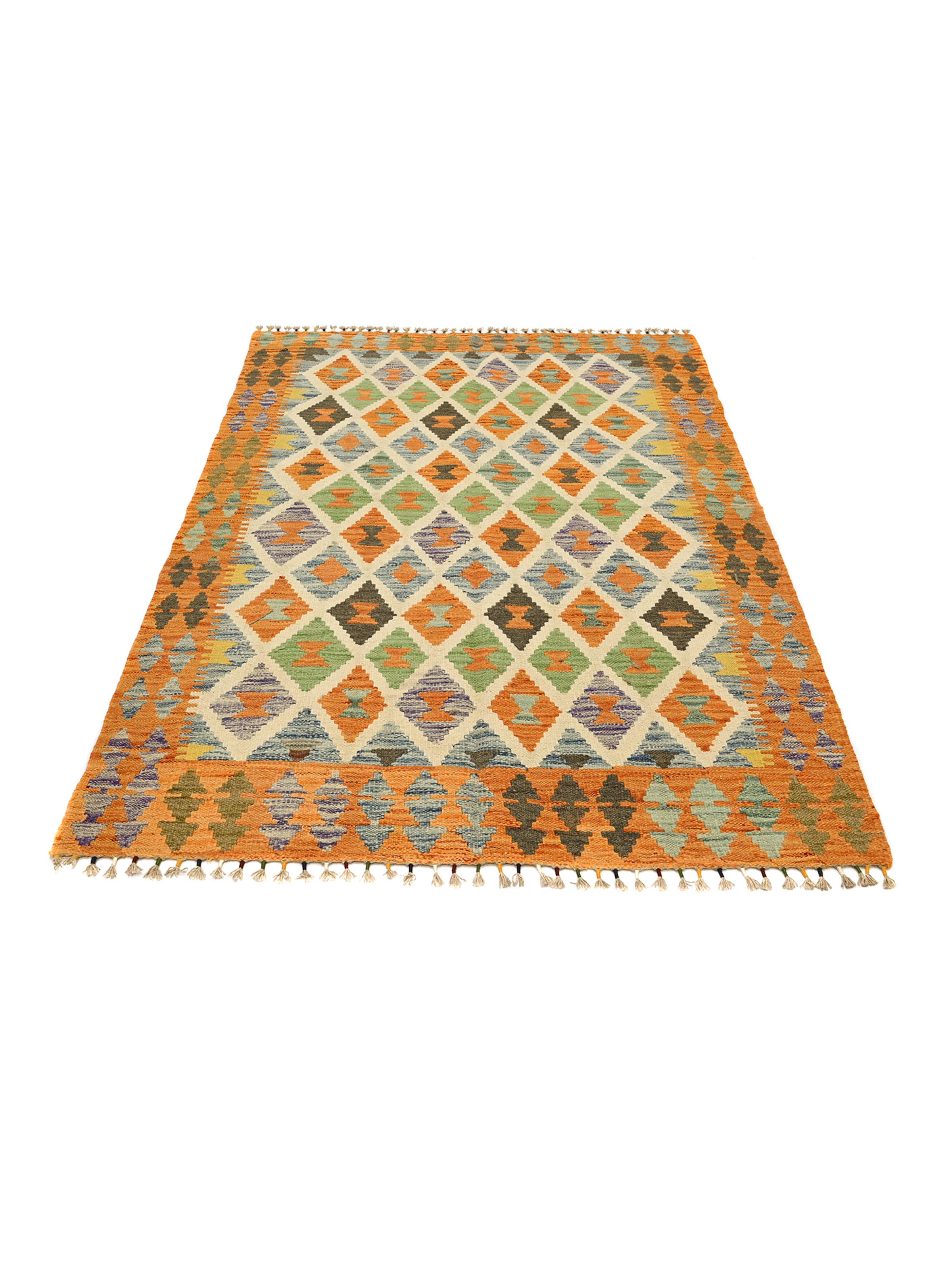
Kelim rugs from Afghanistan are deeply rooted in the nomadic traditions of the region, where weaving served as both a practical necessity and a form of artistic expression. These flat-woven textiles have been produced for generations, with designs often passed down through families and communities. The history of these rugs is linked to the rugged landscapes of the Middle East, reflecting a culture that values endurance, utility, and the beauty of natural materials.
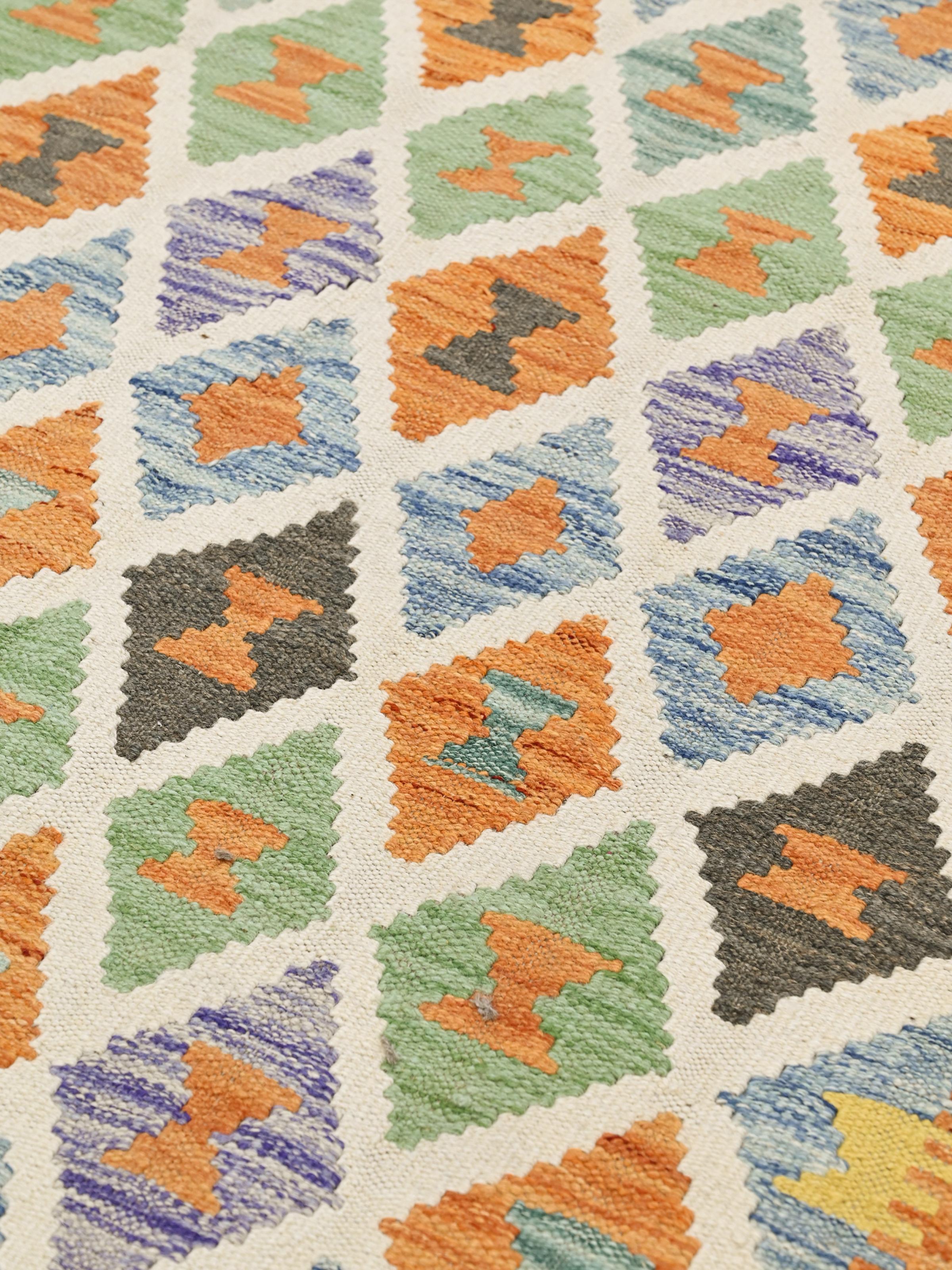
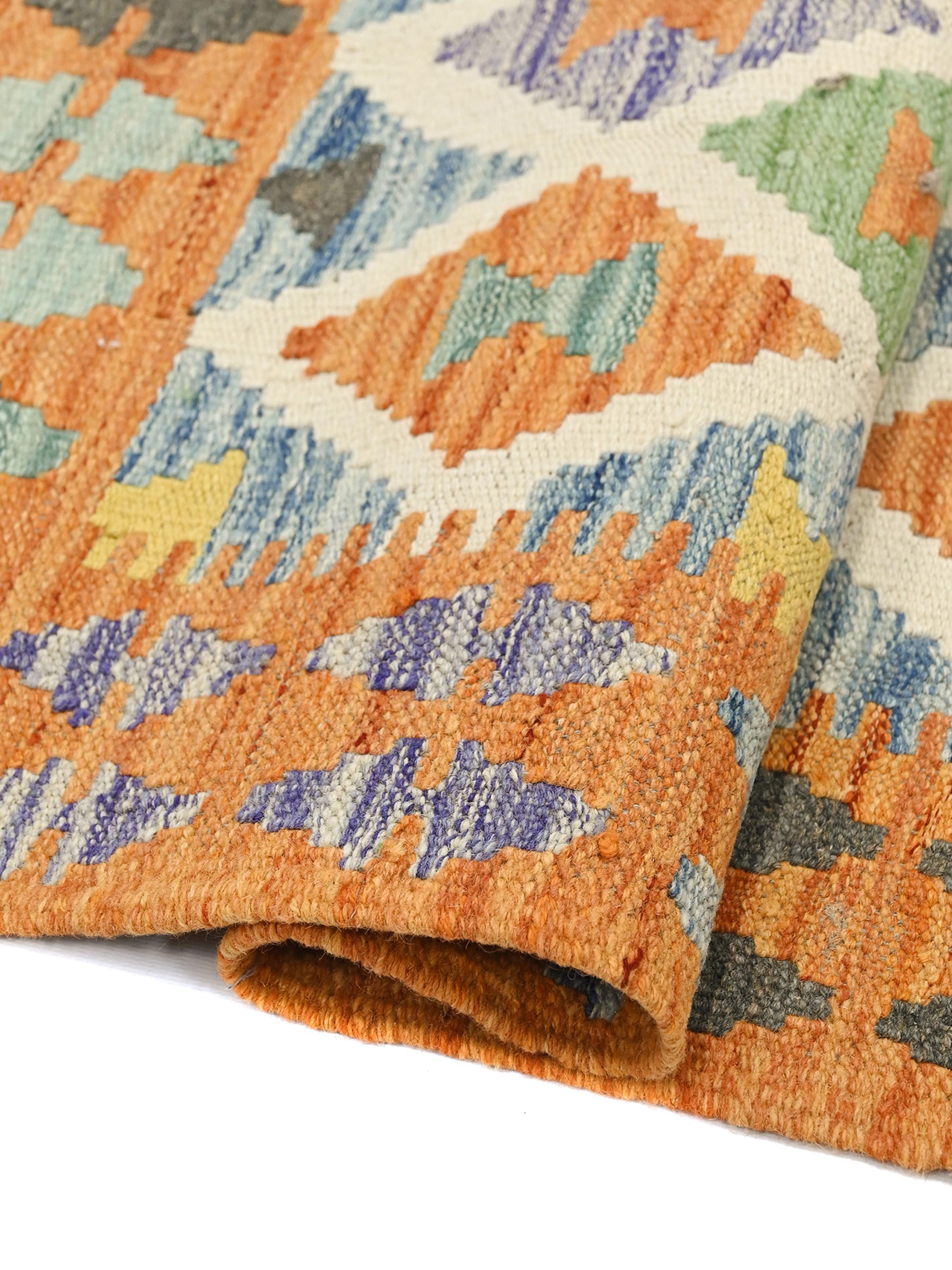
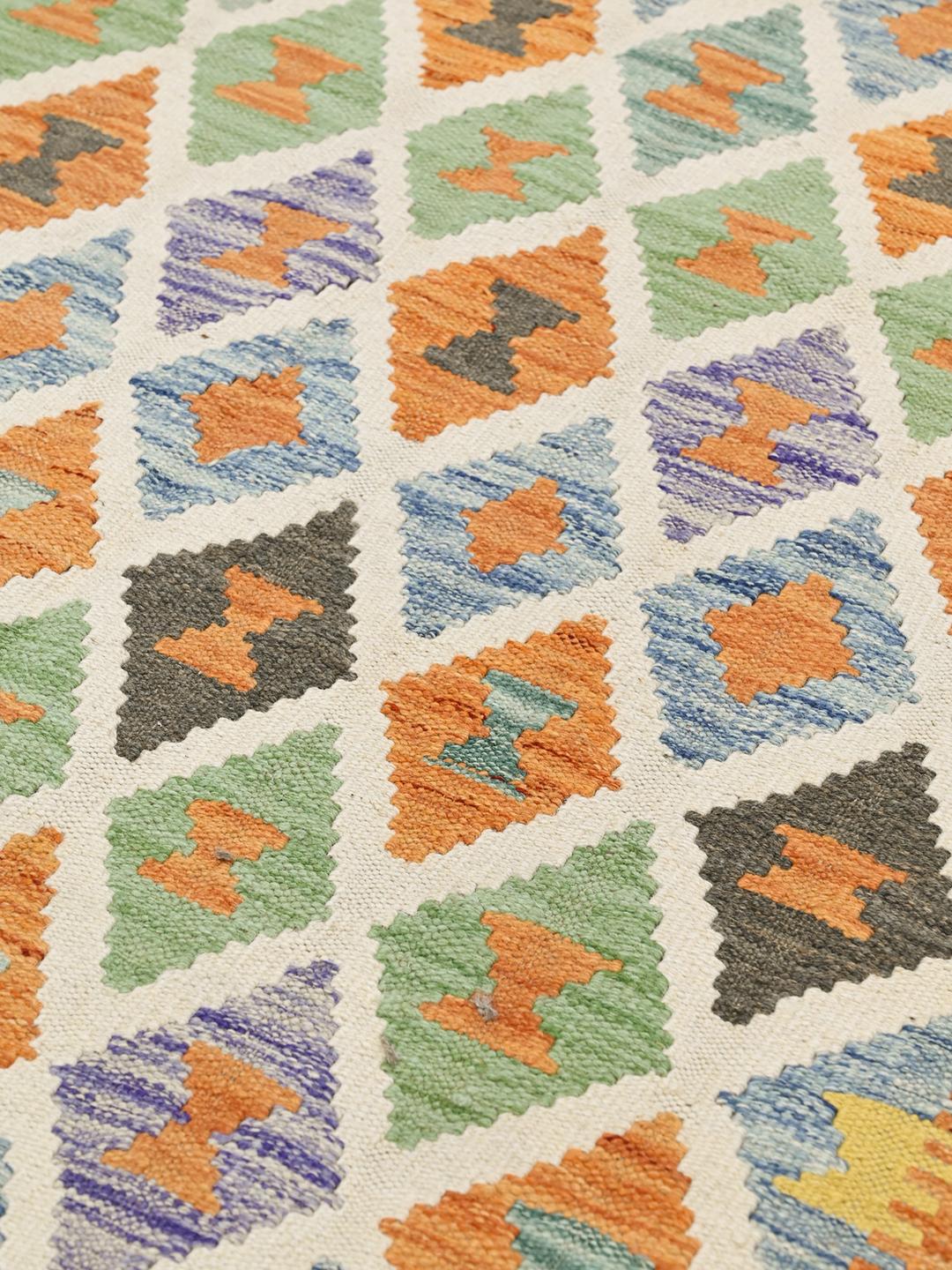
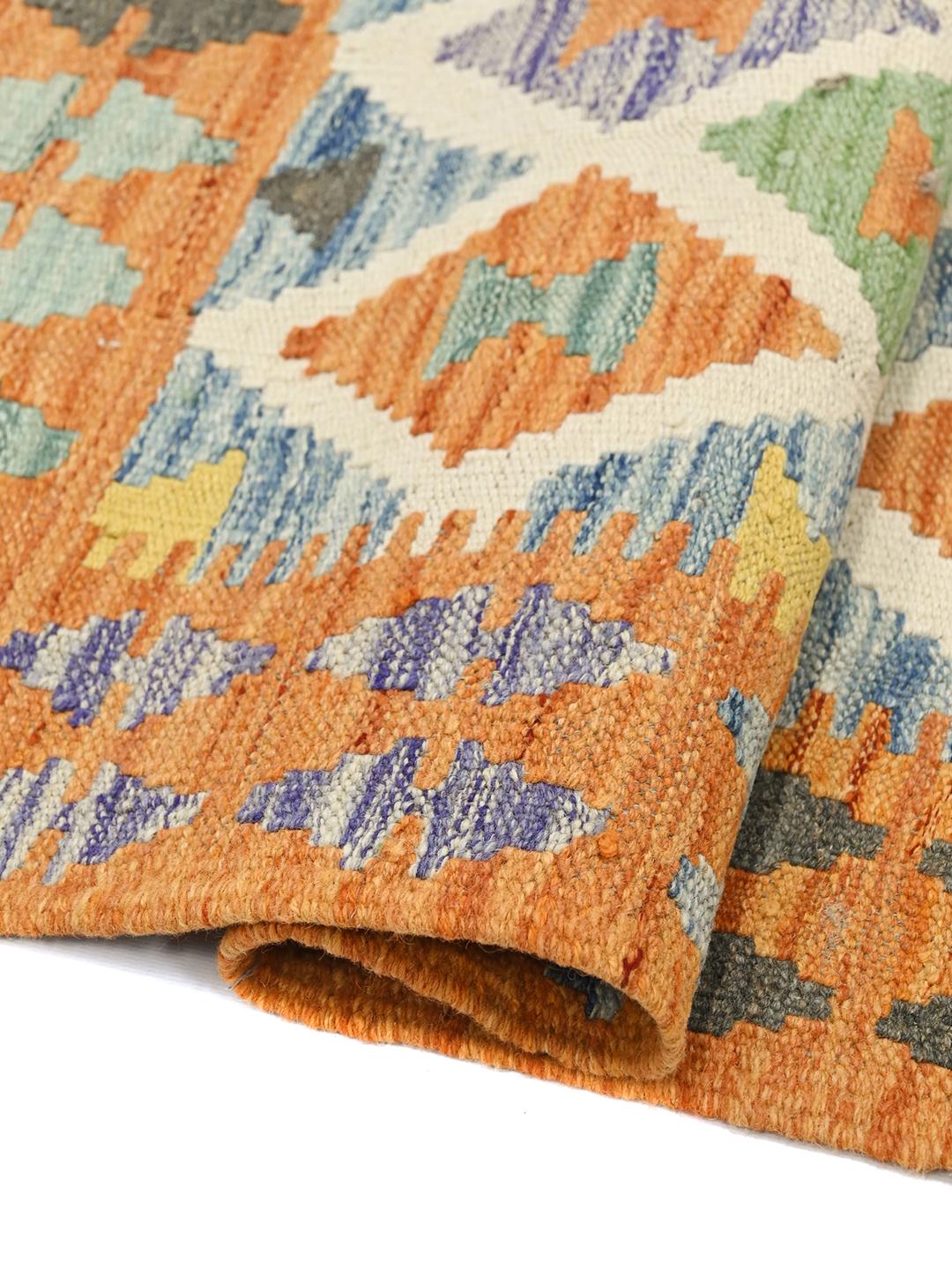
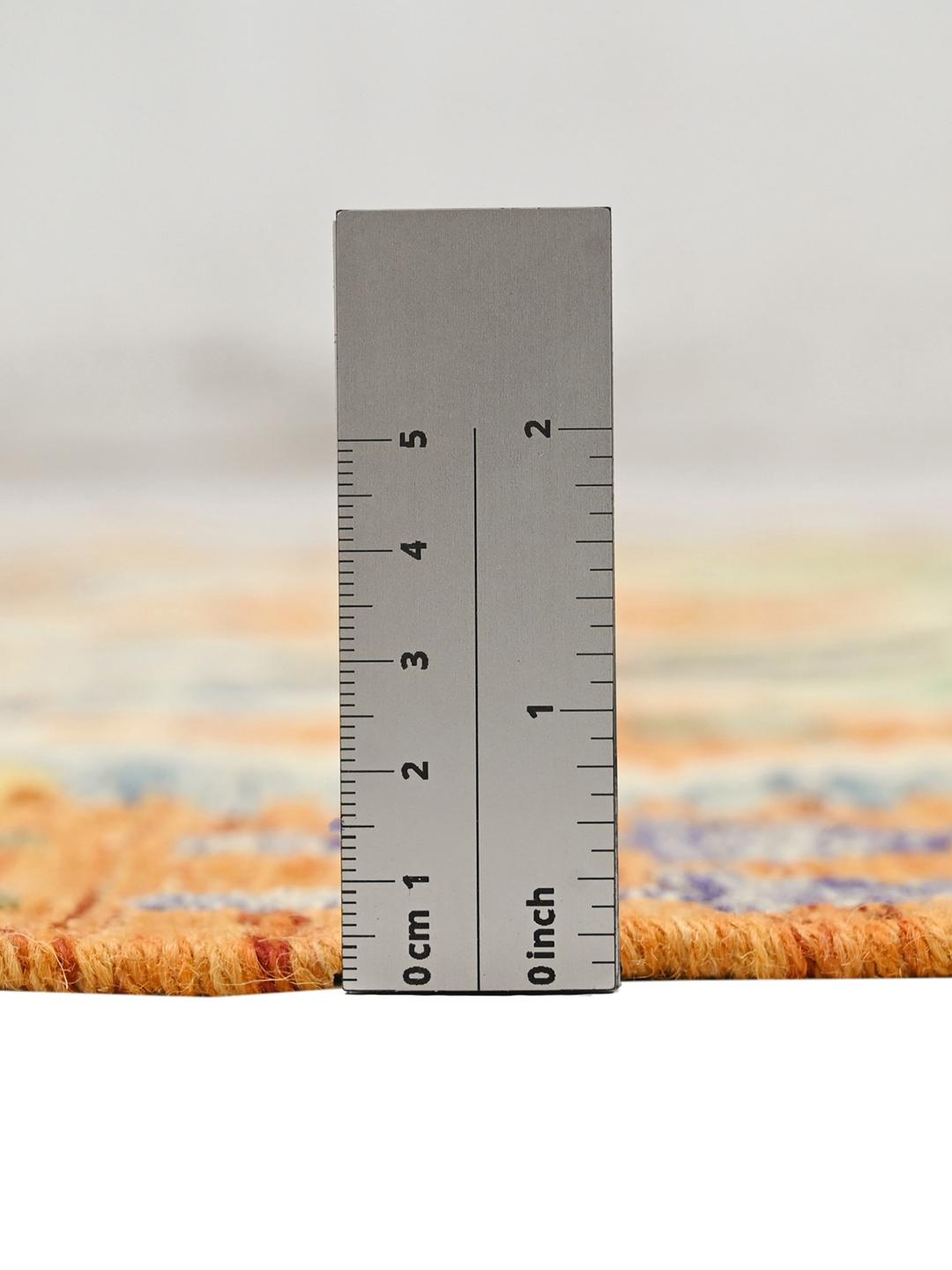
Technically, a Kelim is defined by its flat-weave construction, which distinguishes it from pile rugs. By interweaving the coloured weft strands with the warp, weavers create a smooth, reversible surface that is both lightweight and incredibly sturdy. This technical approach allows for the sharp, clean lines of the geometric patterns that are characteristic of the tradition, as the structure of the weave itself dictates the shape of every motif.
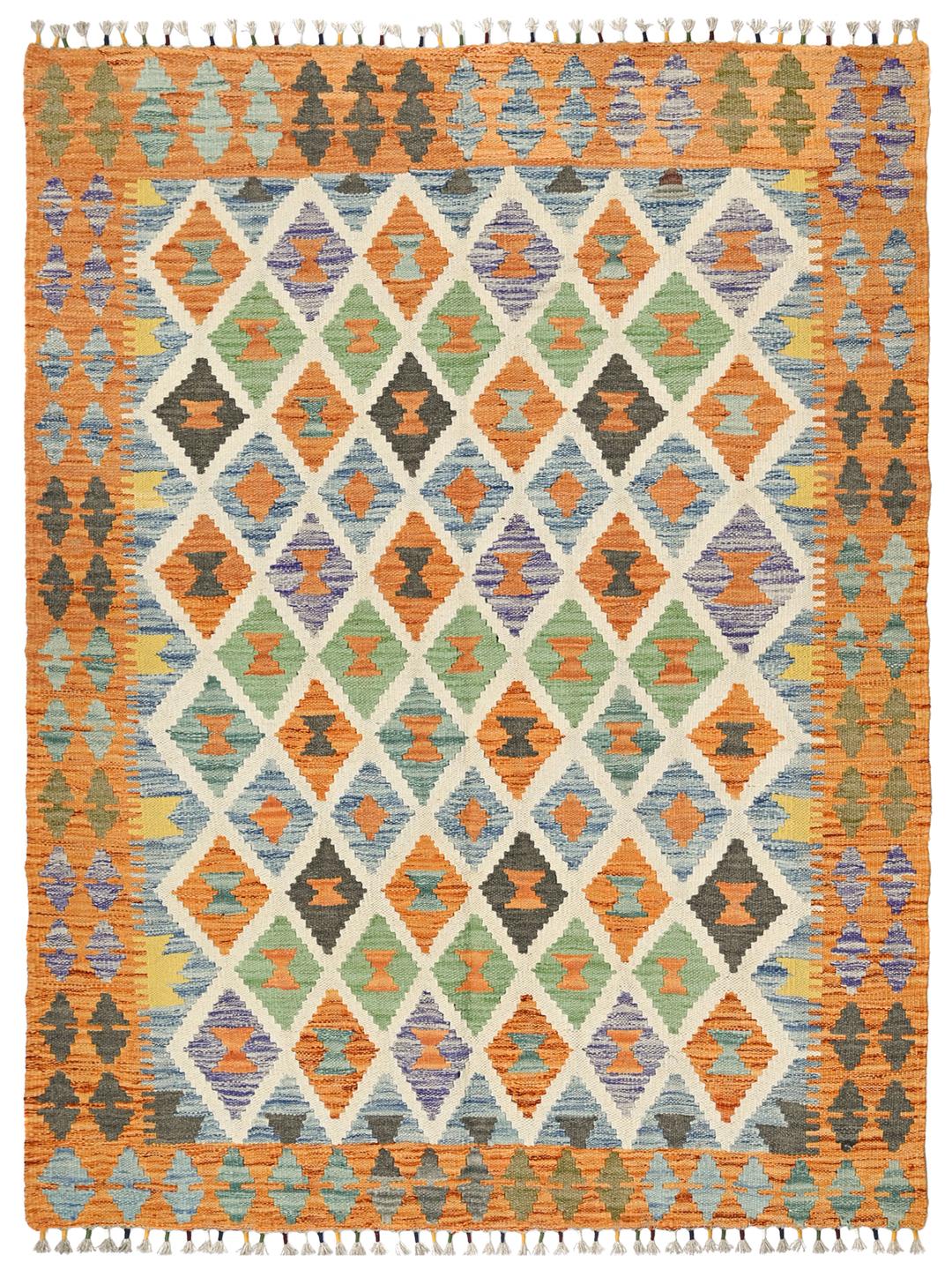
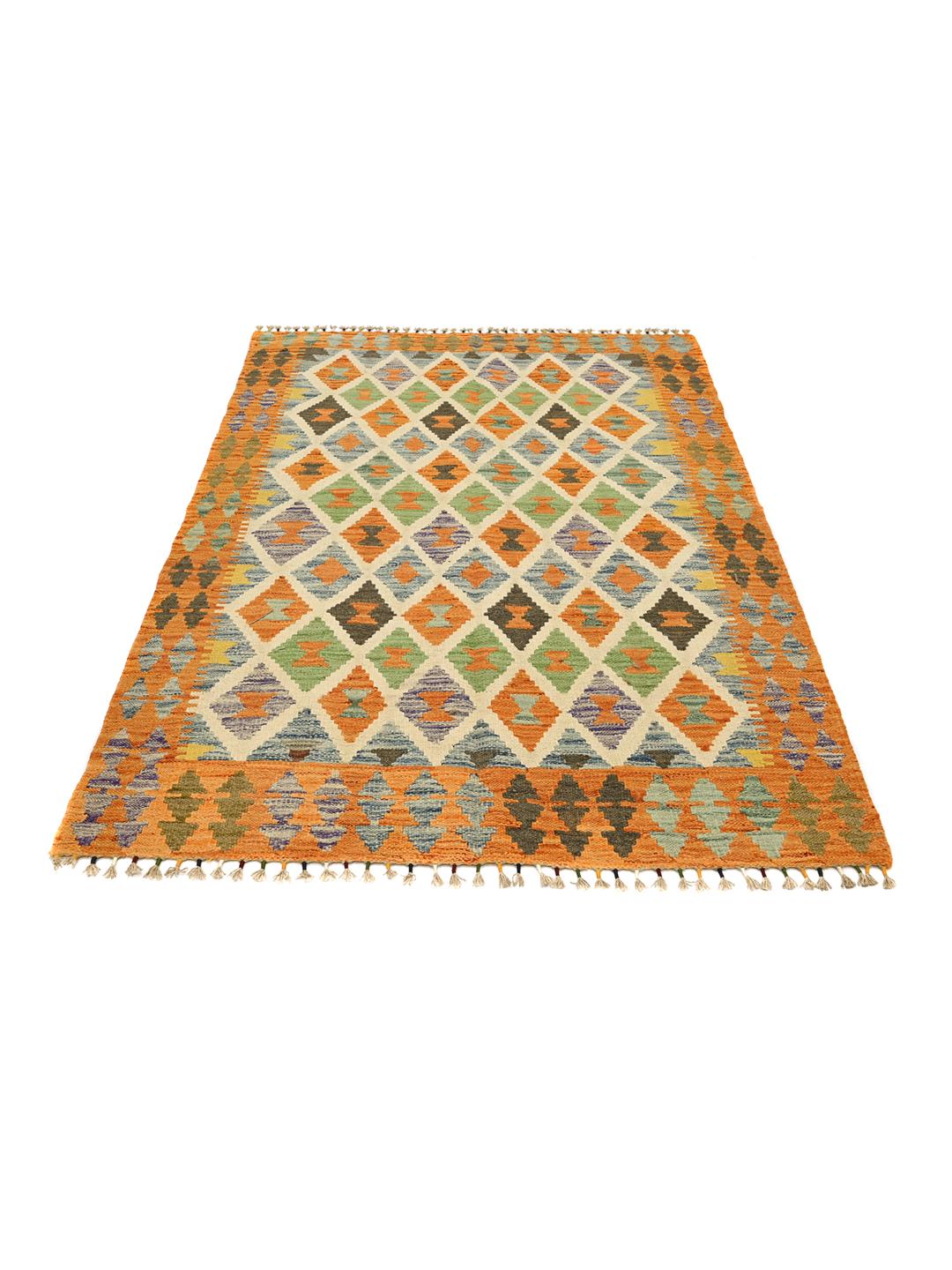
The signature design language of the Afghan Kelim is heavily focused on geometric abstraction. You will frequently find repeating diamond motifs, zig-zags, and stylized tribal symbols, all arranged to create a sense of movement across the field. The colour palettes are traditionally drawn from natural dyes, resulting in rich, earthy tones that harmonise well with both modern and traditional interiors. This specific rug showcases a vibrant array of colours that highlight the complexity of the geometric layout.
Collecting these rugs is an opportunity to own a piece of living heritage. Because each rug is made by hand without a rigid template, the slight variations in pattern and hue are considered hallmarks of authenticity. These pieces are valued for their ability to carry the cultural weight of their origin, offering a level of human connection and artisanal skill that modern manufacturing simply cannot emulate.