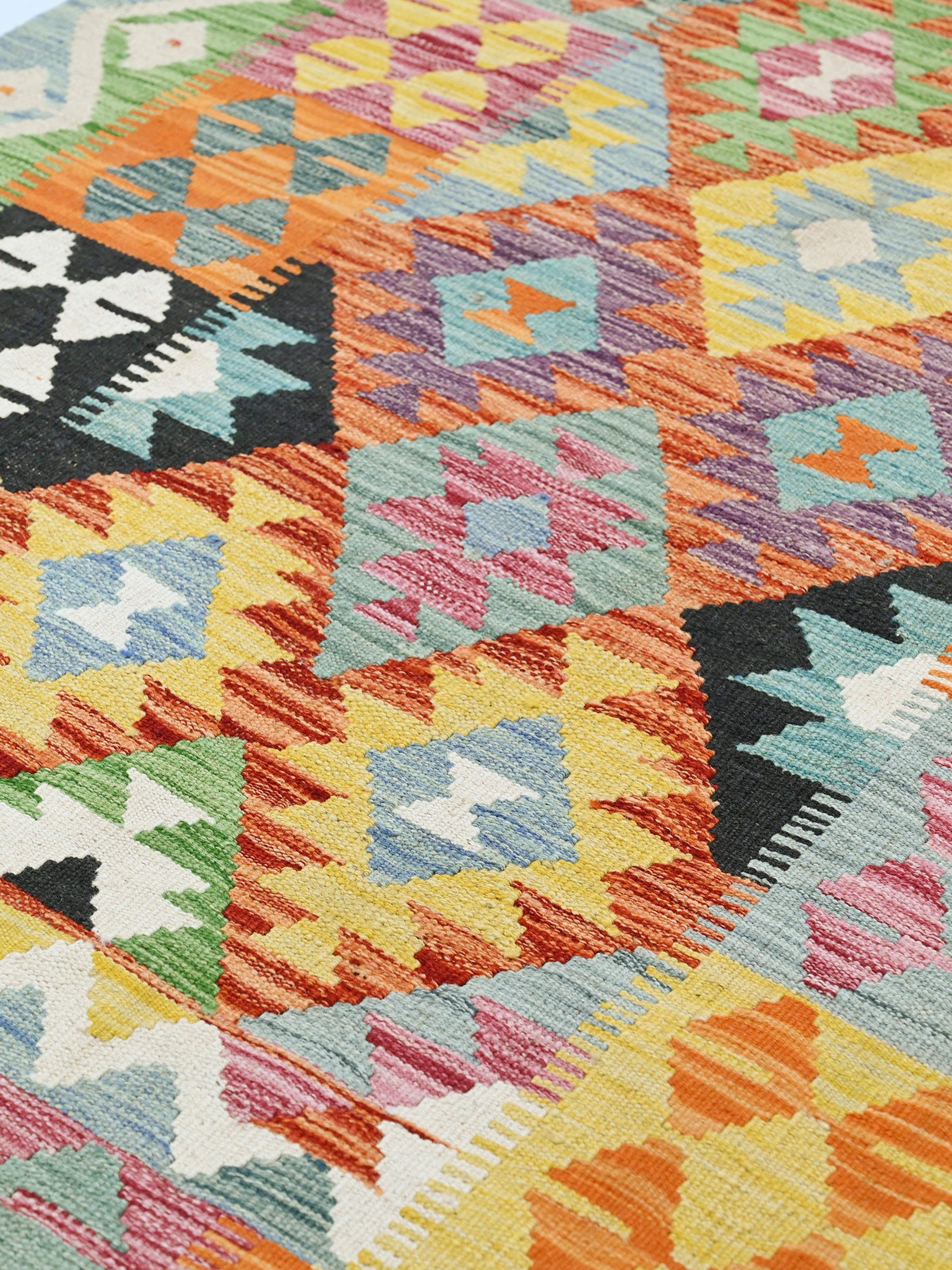
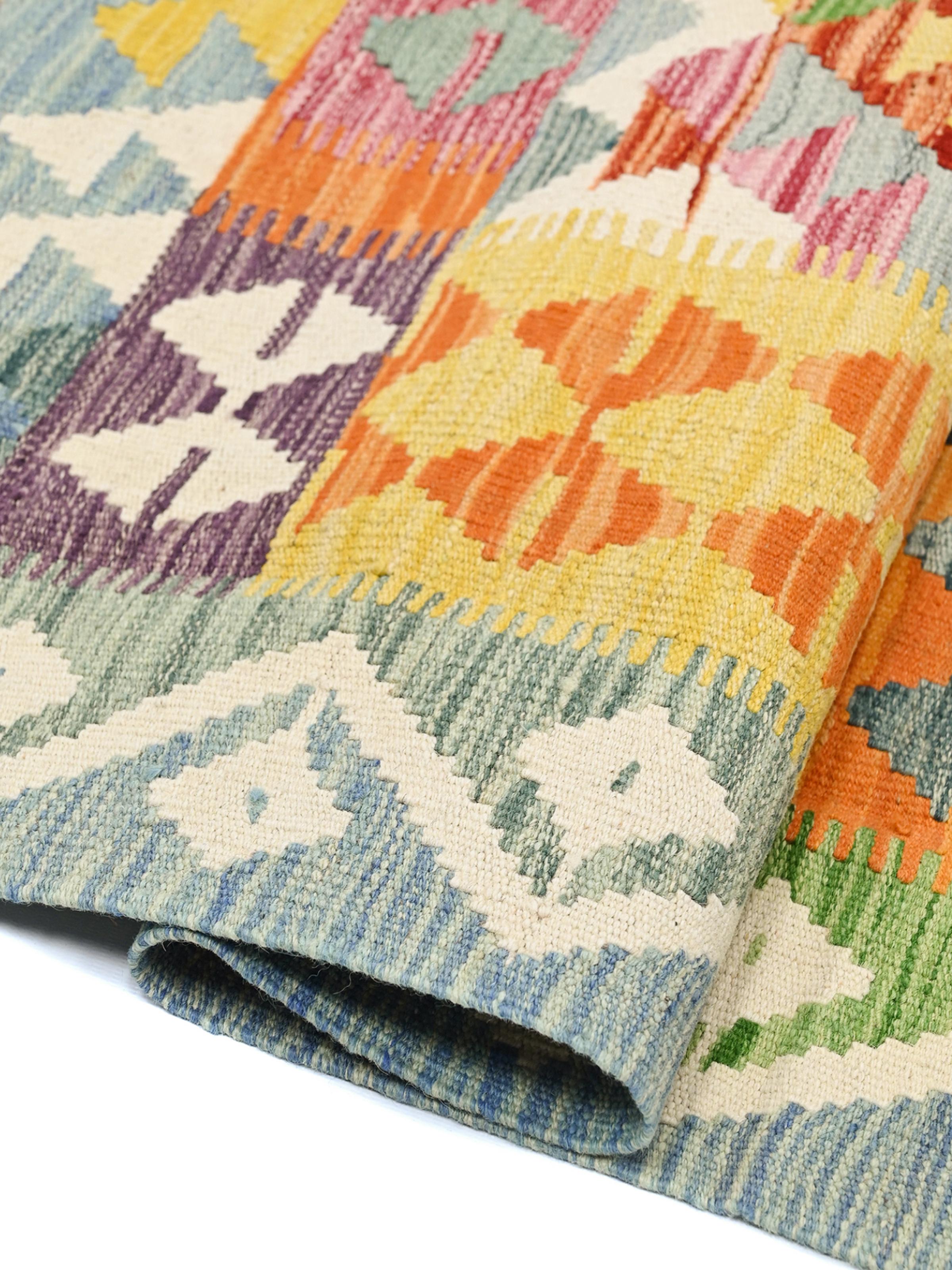
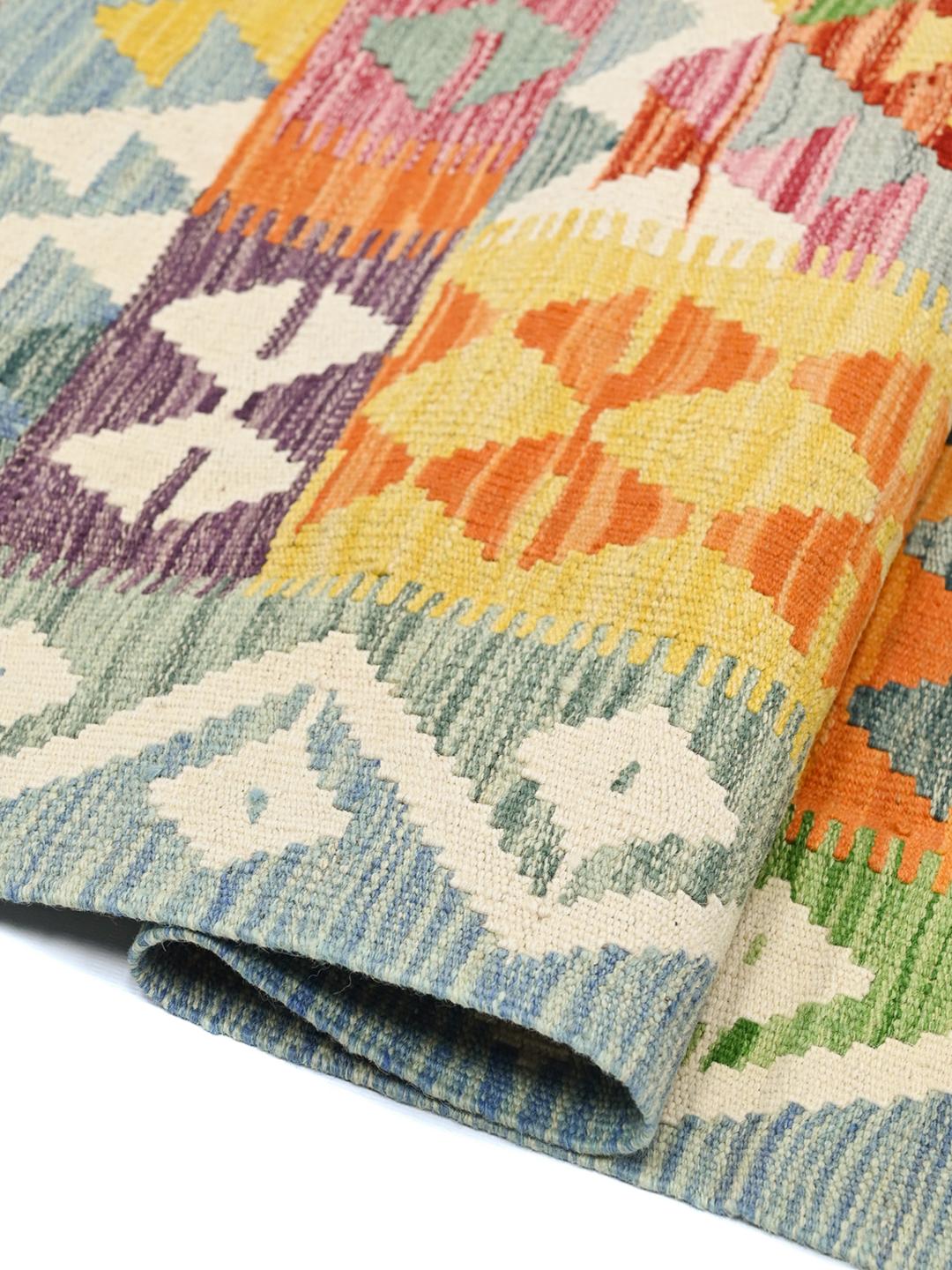
Kelim rugs have long been a cornerstone of nomadic life across the Middle East and Central Asia. Originally designed as functional, portable textiles for tents and homes, these flatweave rugs are deeply rooted in the cultural identity of the regions where they are produced. The term itself refers to the weaving technique where the weft threads are passed over and under the warp to create a smooth, pileless surface that is equally beautiful on both sides.
The Afghan tradition of Kelim weaving is particularly noted for its use of rich, natural wool and a bold, graphic design language. The artisans who create these pieces often use a traditional horizontal loom, a tool that has remained largely unchanged for centuries. This method requires a deep understanding of tension and pattern placement, as there are no pile knots to hide structural inconsistencies.
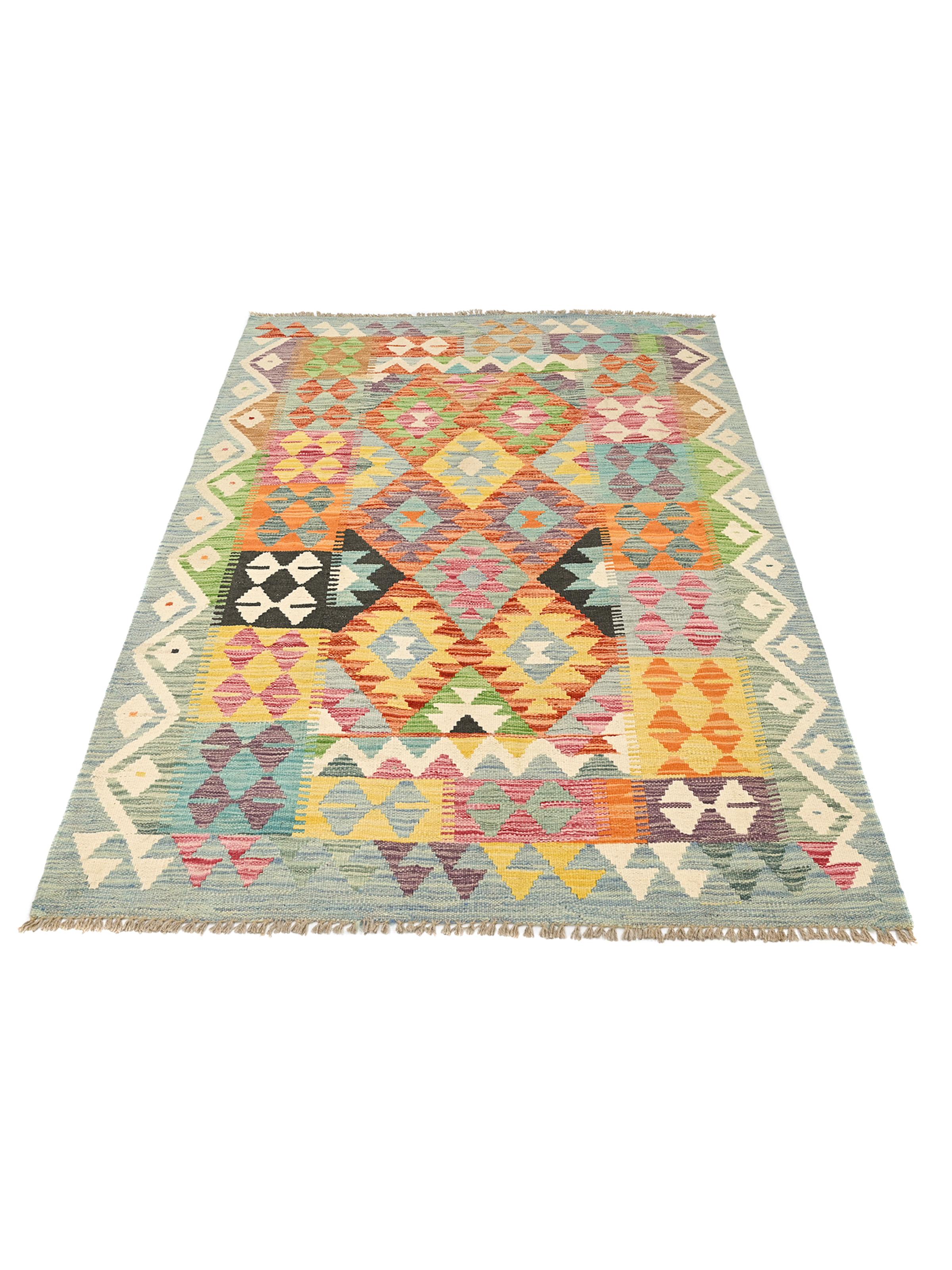
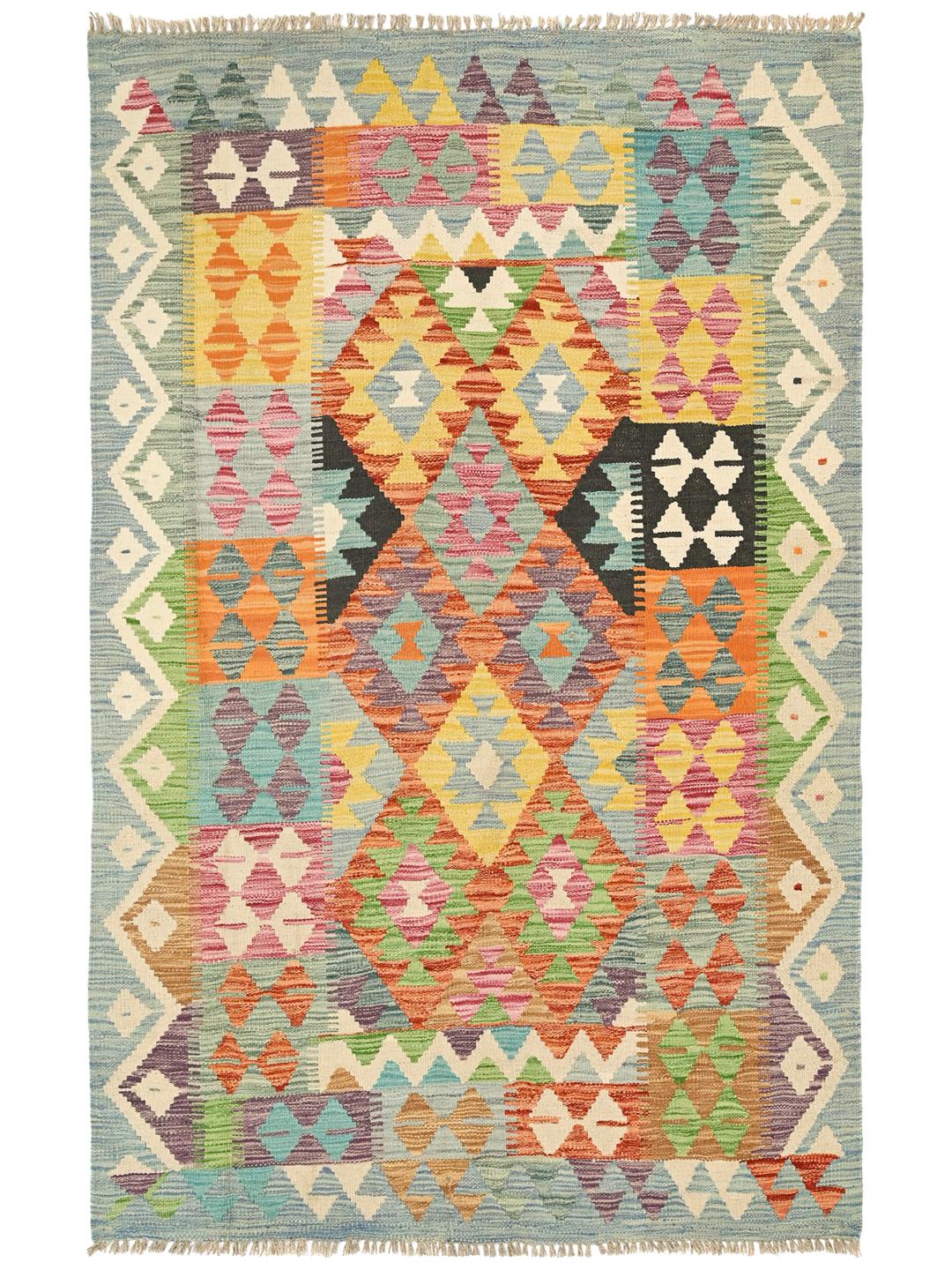
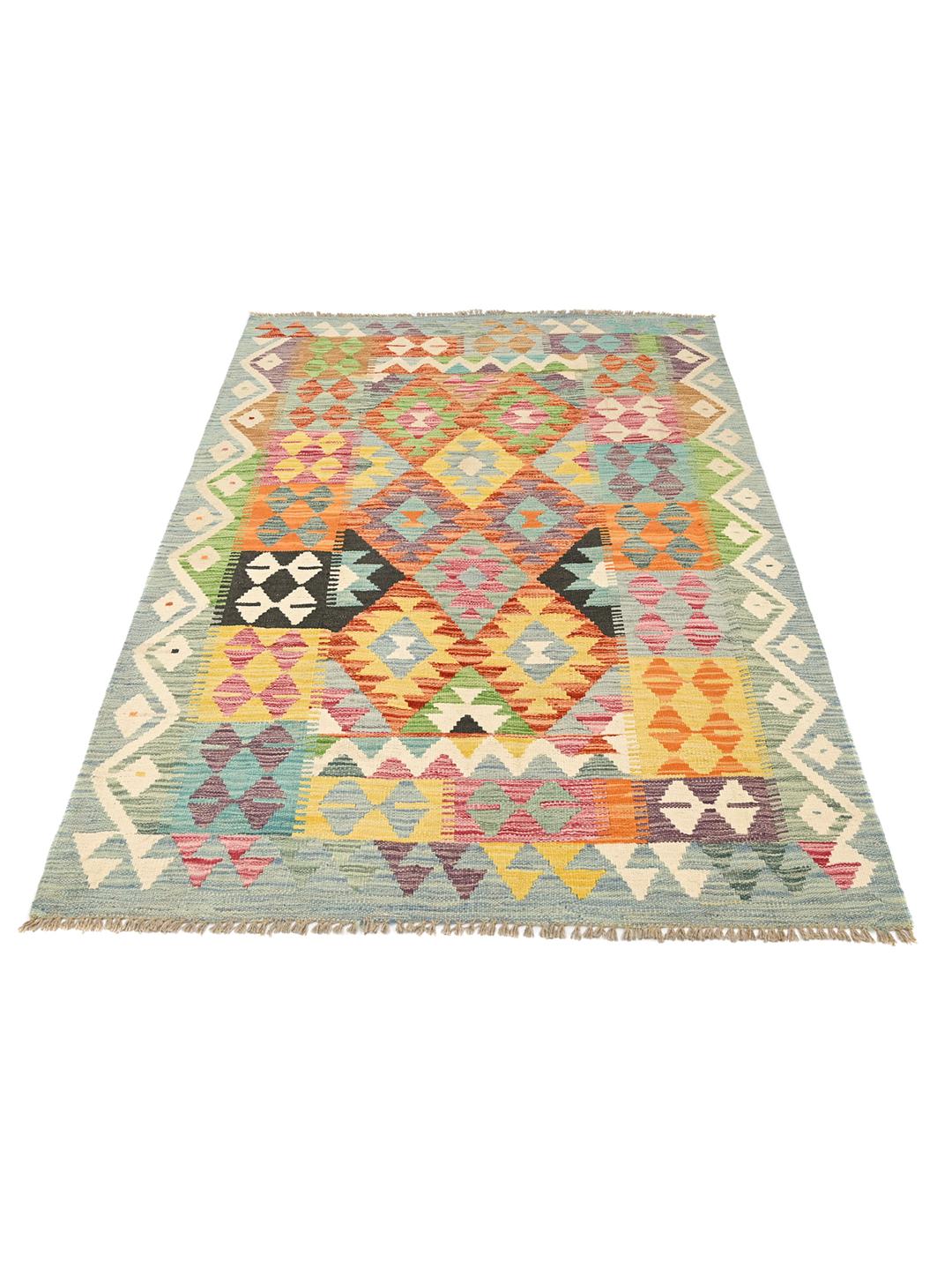
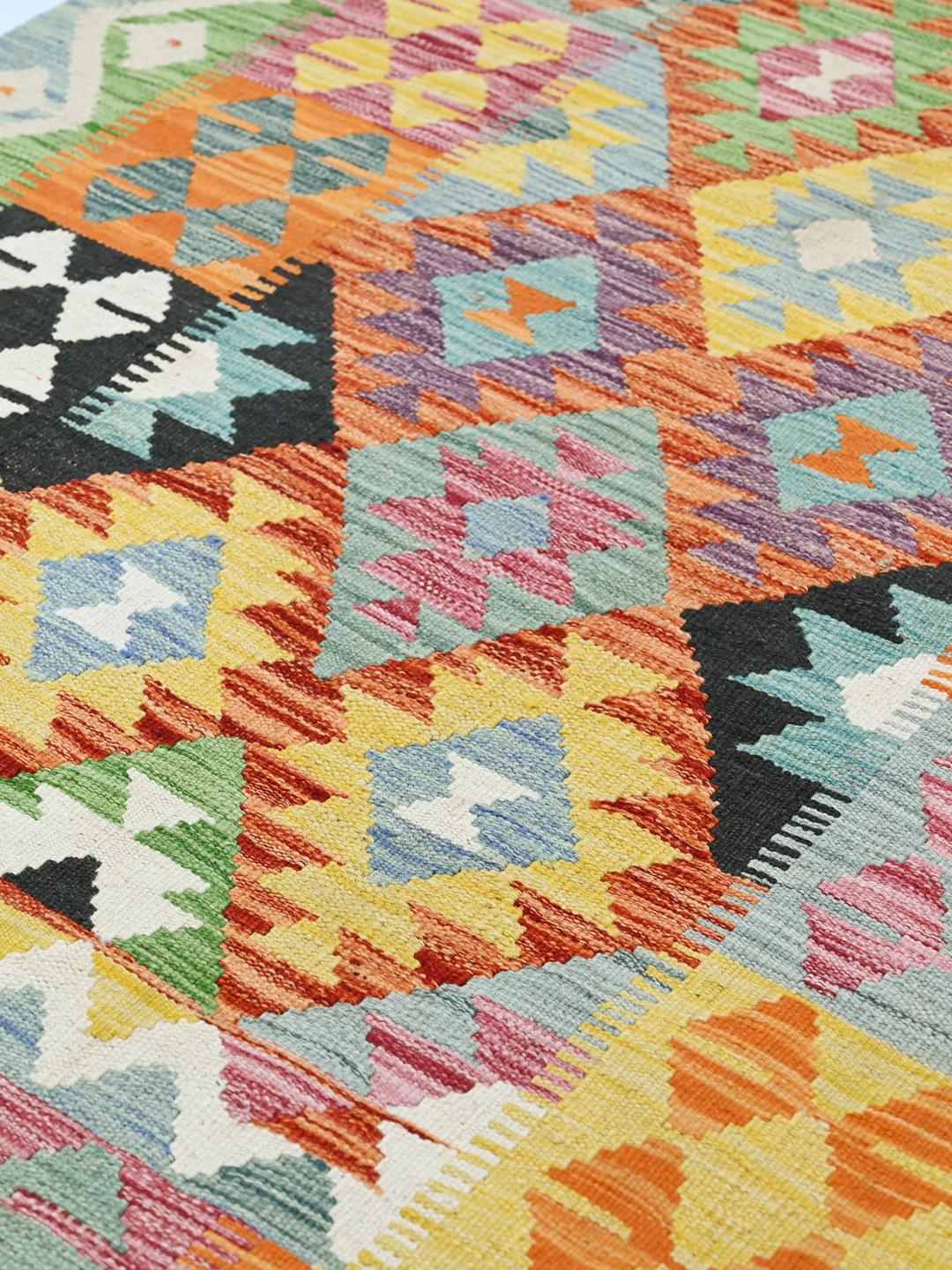
Visually, these rugs are defined by their geometric motifs, which often include diamonds, triangles, and stylized floral elements. The patterns are not just decorative but often hold symbolic meaning, reflecting the history, environment, and social status of the weaving community. In this particular piece, the vibrant colour palette and repeating shapes highlight the classic design traditions that have been passed down through generations of Afghan weavers.
Collectors value these pieces for their authenticity and the sheer skill required to achieve such intricate results without the benefit of modern machinery. Owning a traditional Kelim is an opportunity to preserve a living heritage, as the craft remains a vital link to the past. Each rug serves as a document of human creativity, representing a level of dedication that is increasingly rare in today's mass-produced market.