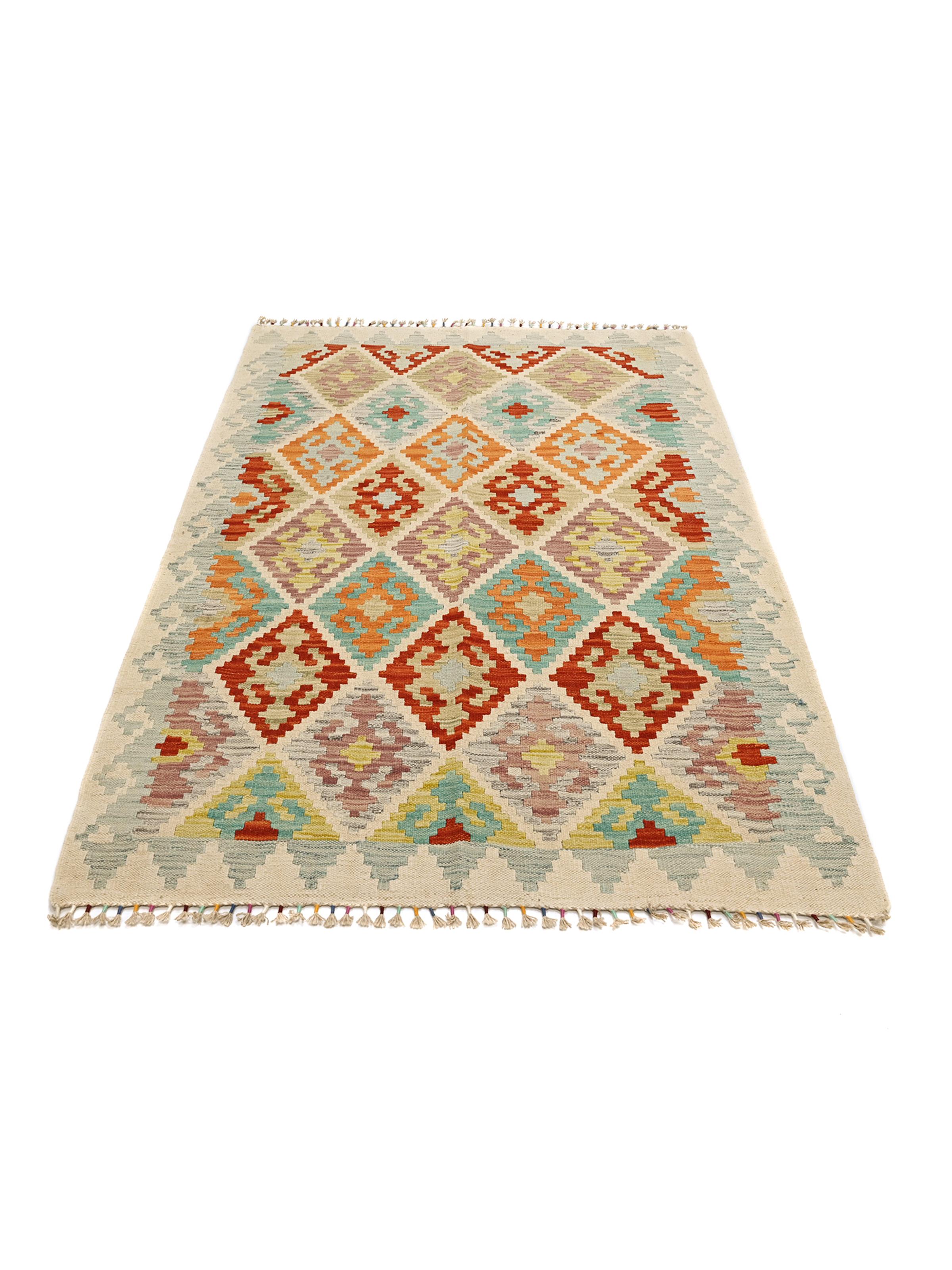
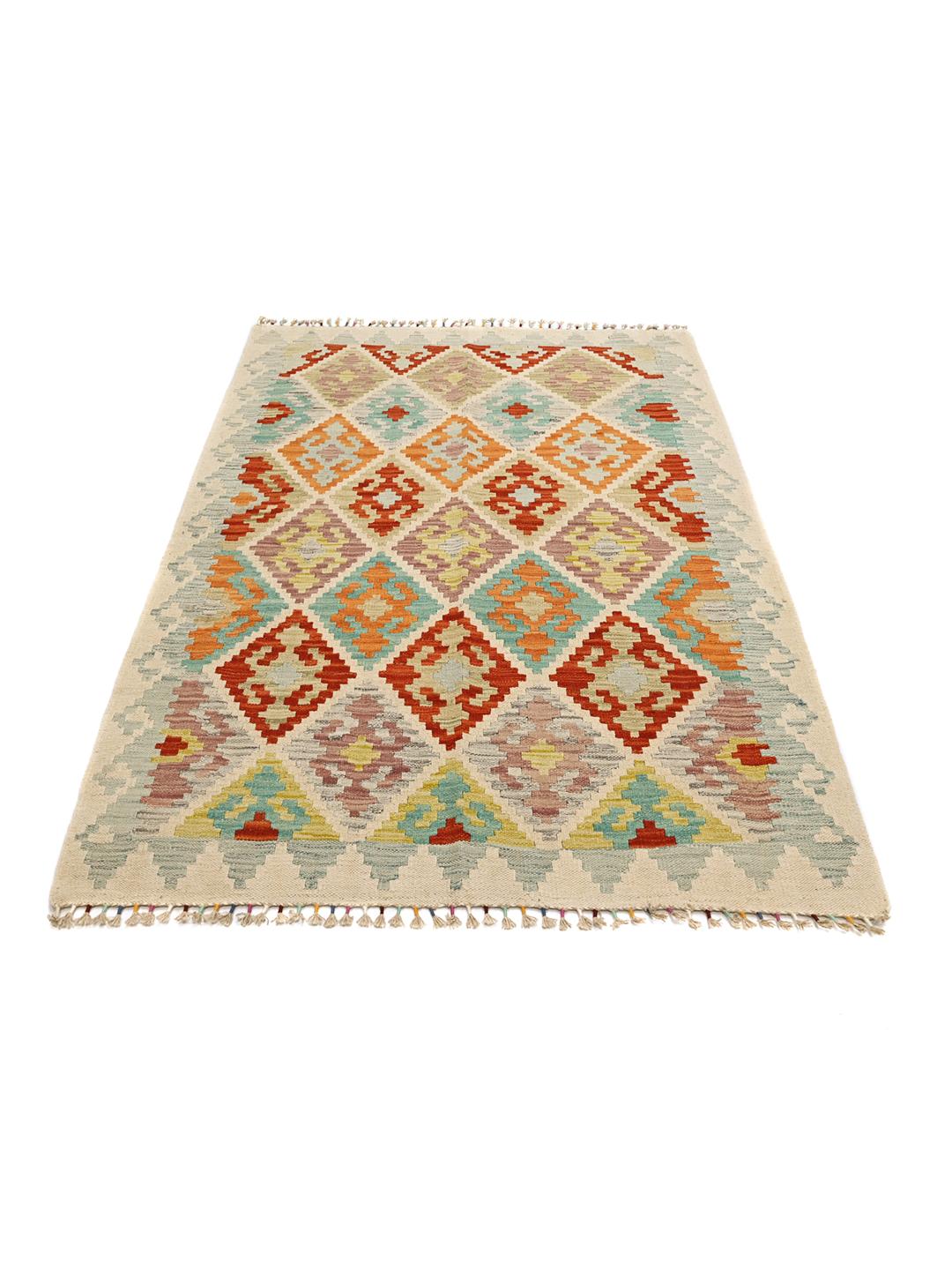
Kelim rugs have a storied history rooted in the nomadic traditions of the Middle East and Central Asia. Originally created by tribal weavers for practical purposes such as floor coverings, wall hangings, and storage bags, these flat-woven textiles were essential to the mobile lifestyle of their makers. Over centuries, the craft evolved into a sophisticated art form, with Afghanistan becoming a renowned centre for producing rugs that balance rugged durability with refined design.
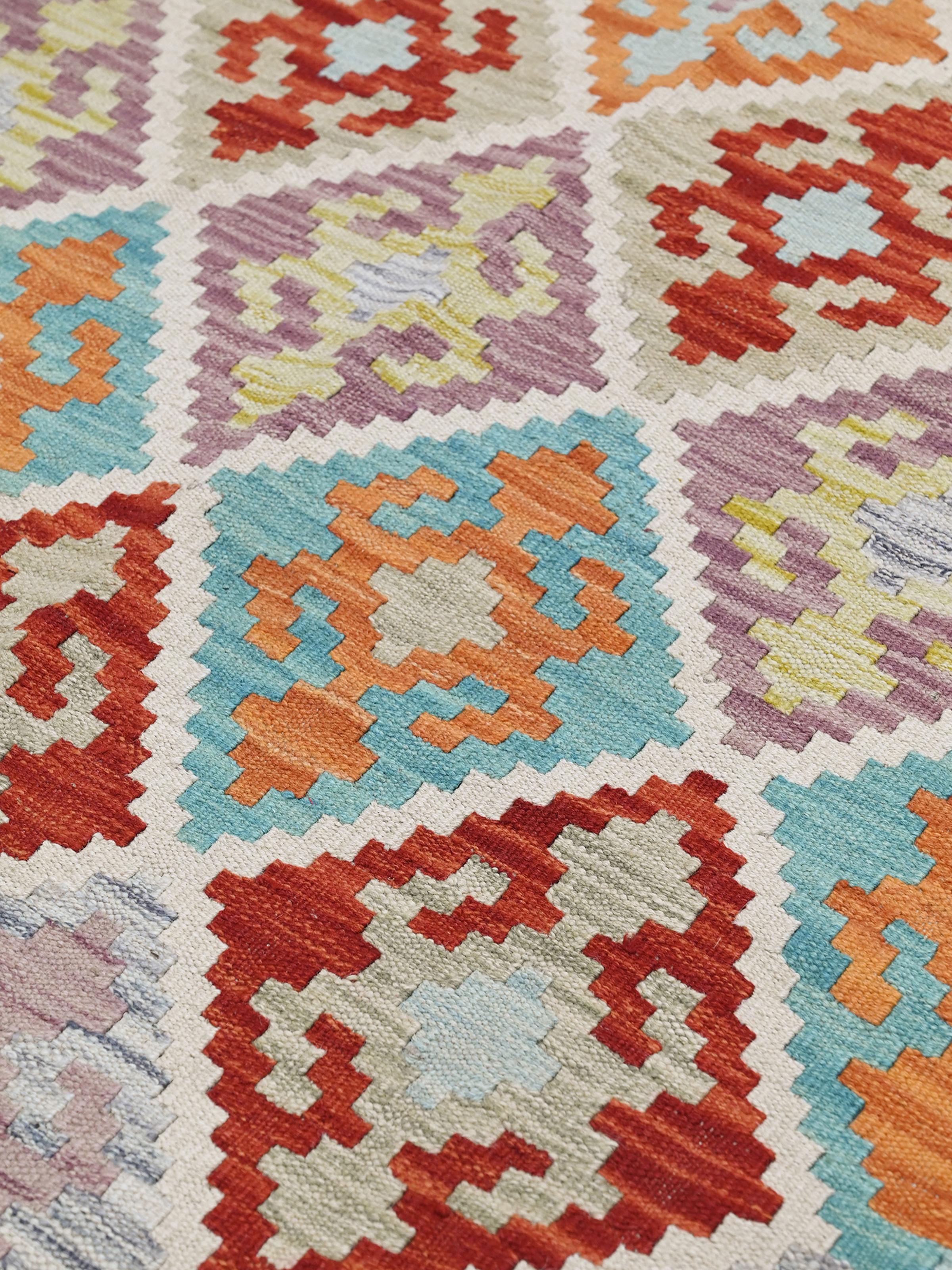
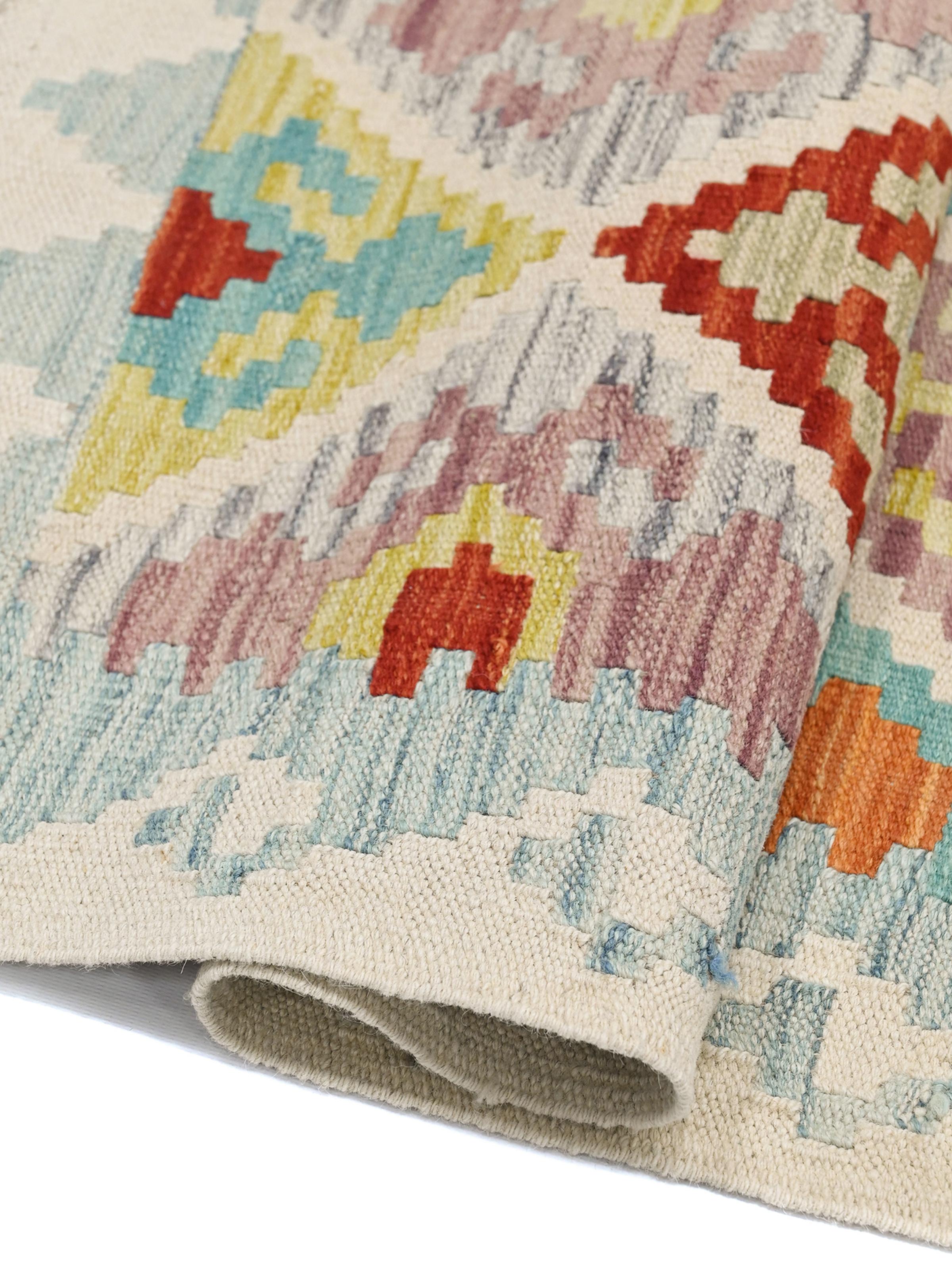
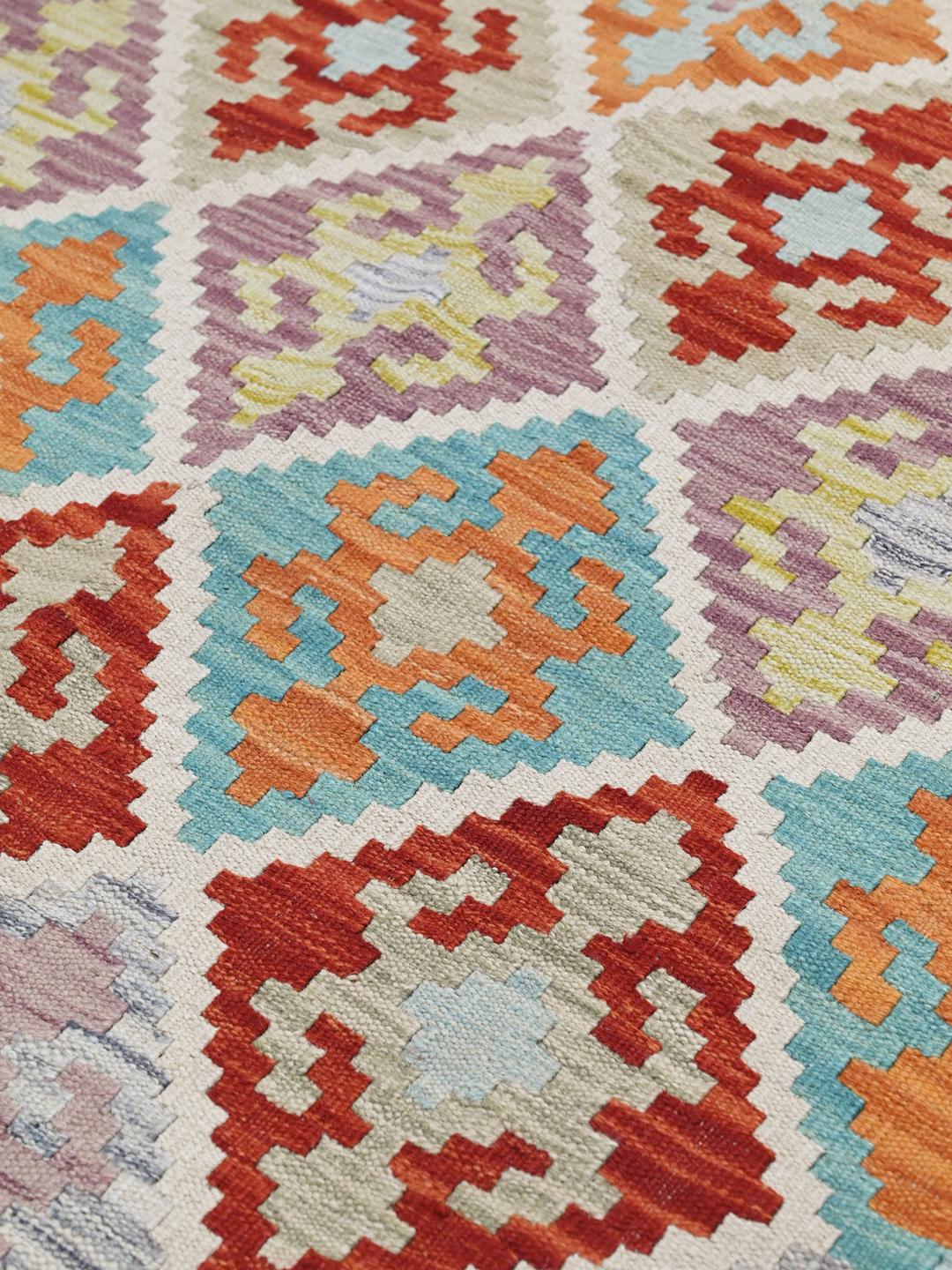
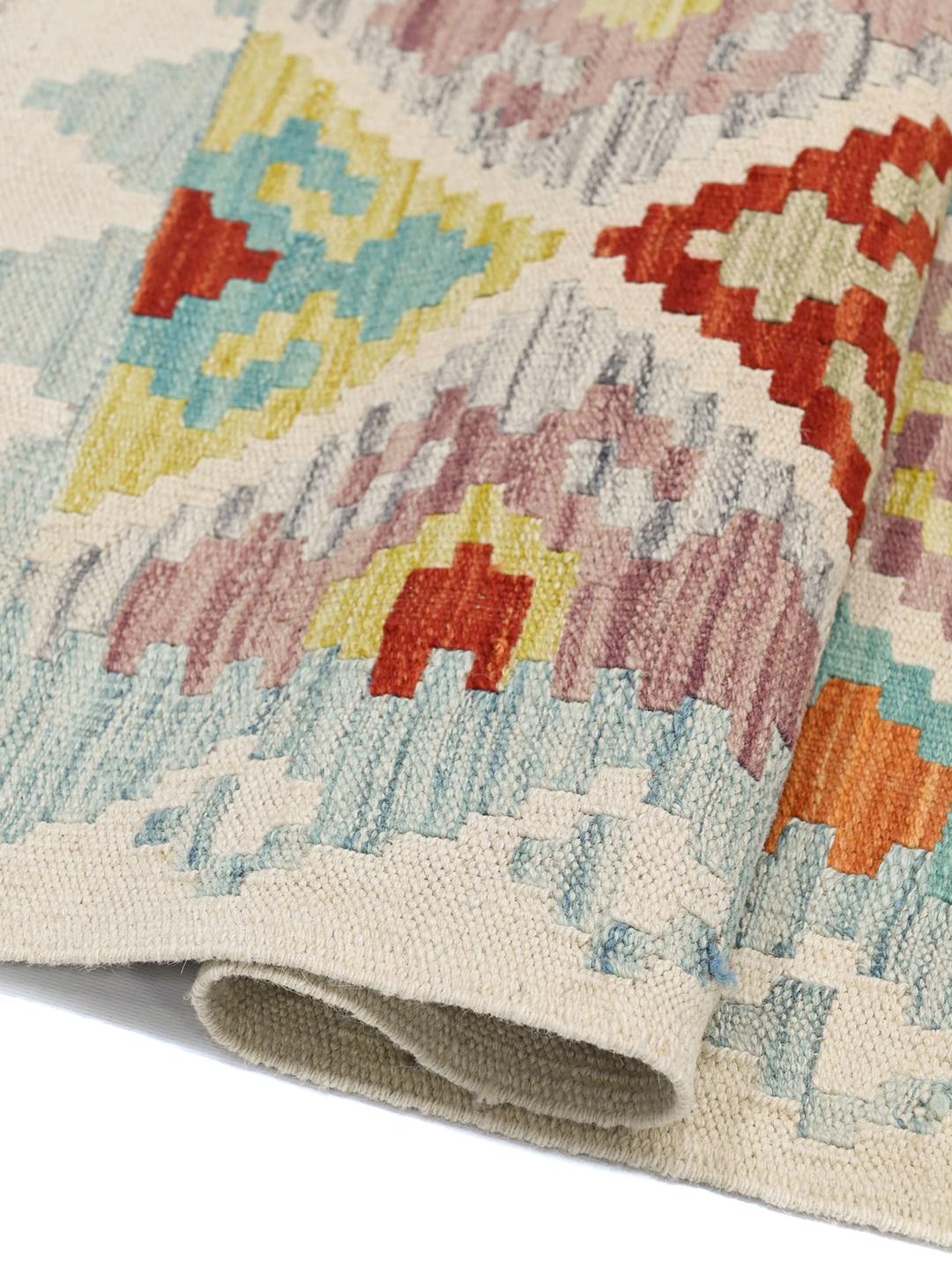
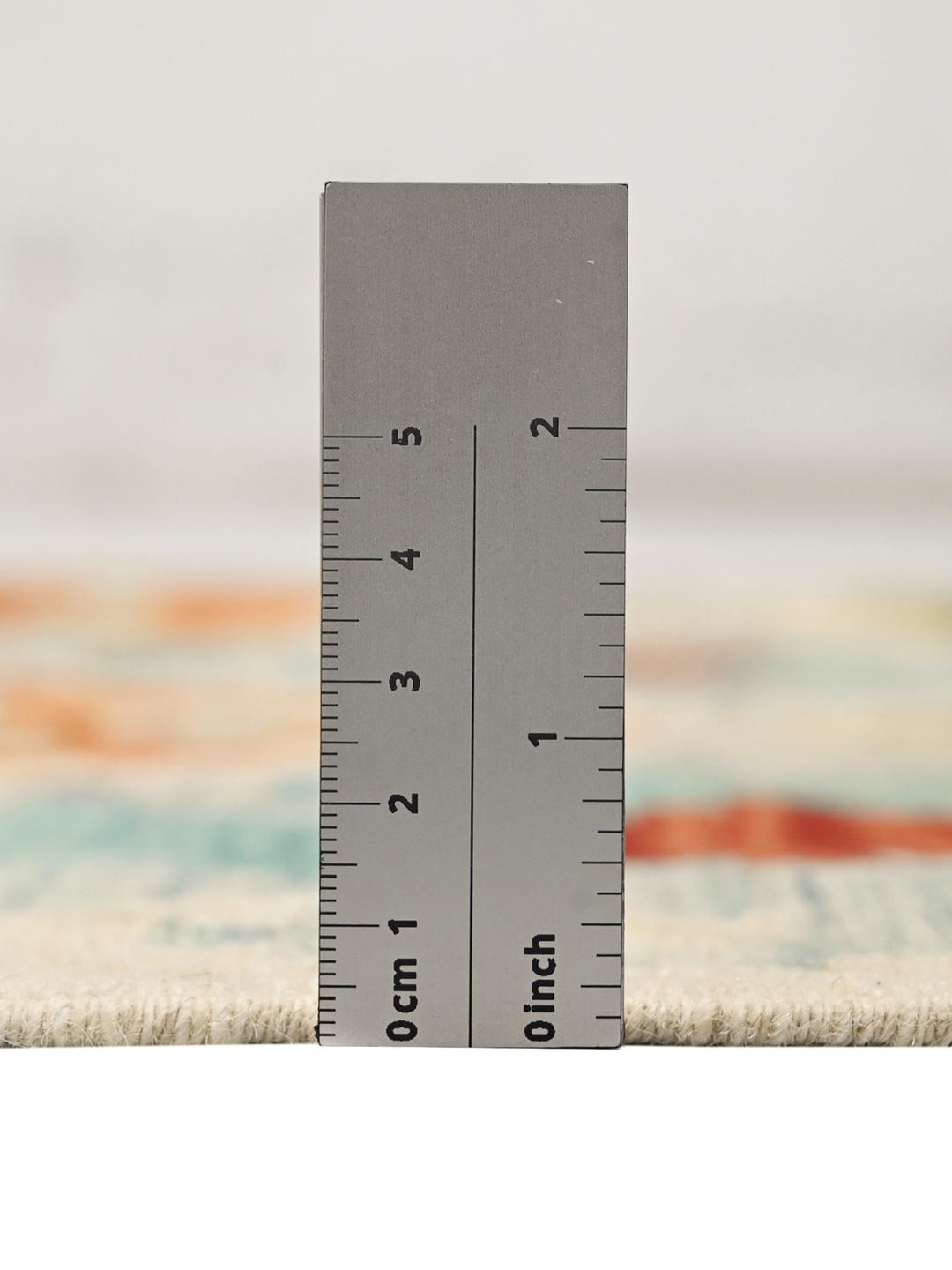
The term 'Kelim' refers to a specific type of tapestry-woven rug made without a pile. This technique involves interweaving the coloured weft threads through the warp threads to create the pattern, resulting in a rug that is identical on both sides. This construction is highly valued for its versatility and lightness, making it an excellent choice for modern homes where a less bulky, yet visually impactful floor covering is desired.
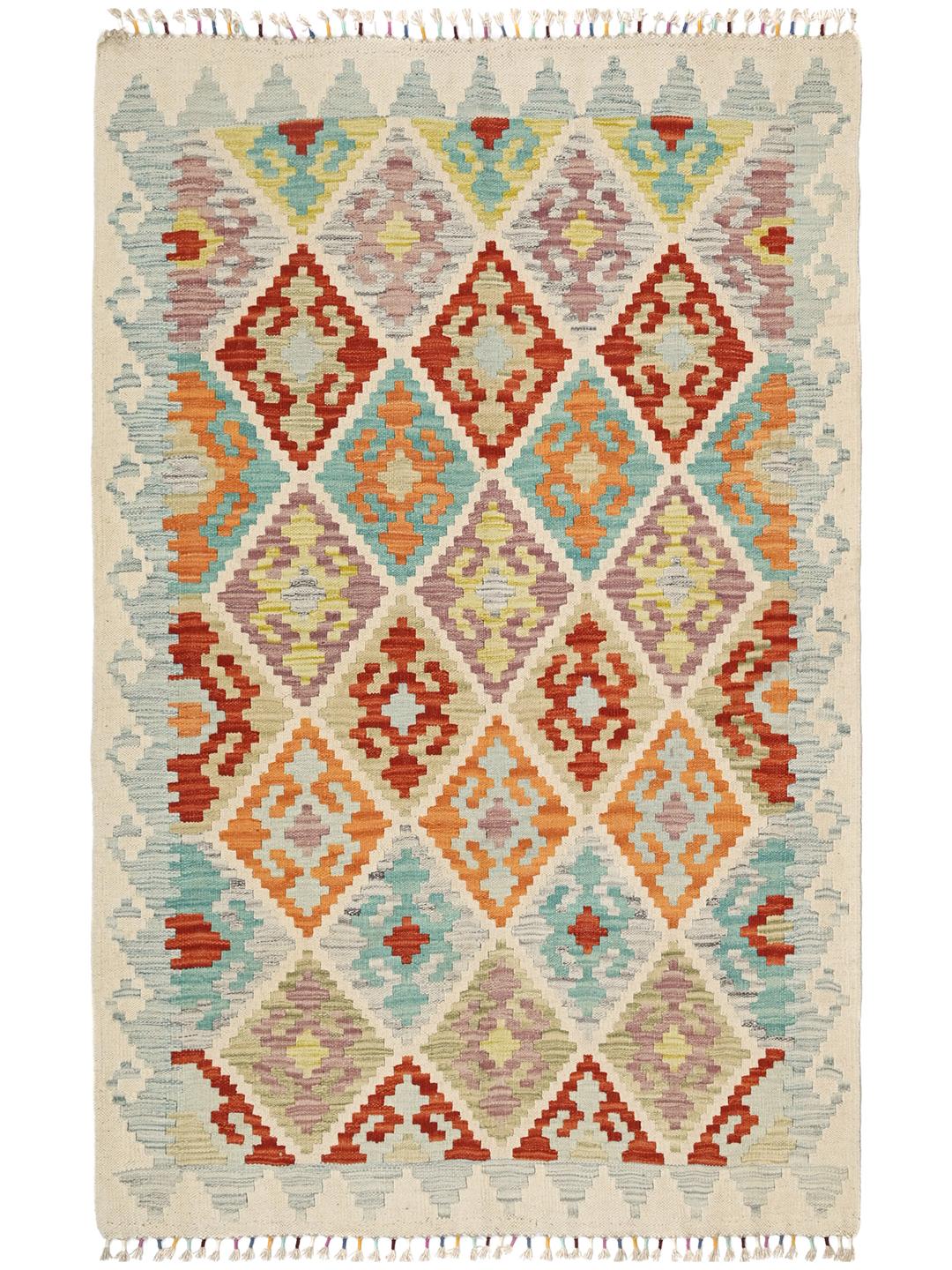
Visually, these rugs are defined by their bold geometric language. The diamond motifs and sharp, angular lines seen here are classic elements of the tradition, often symbolising protection or tribal identity. The use of vibrant, contrasting colours is a hallmark of the old-style Afghan tradition, which seeks to bring joy and warmth into the tent or home through intricate, rhythmic patterns.
Owning an Afghan Kelim is more than just purchasing a floor covering; it is an investment in cultural heritage. Collectors prize these pieces for their authenticity, the skill required to maintain consistency across such complex designs, and the way they bridge the gap between ancient nomadic utility and contemporary interior design. Each rug is a testament to the enduring human desire to create beauty in the everyday.