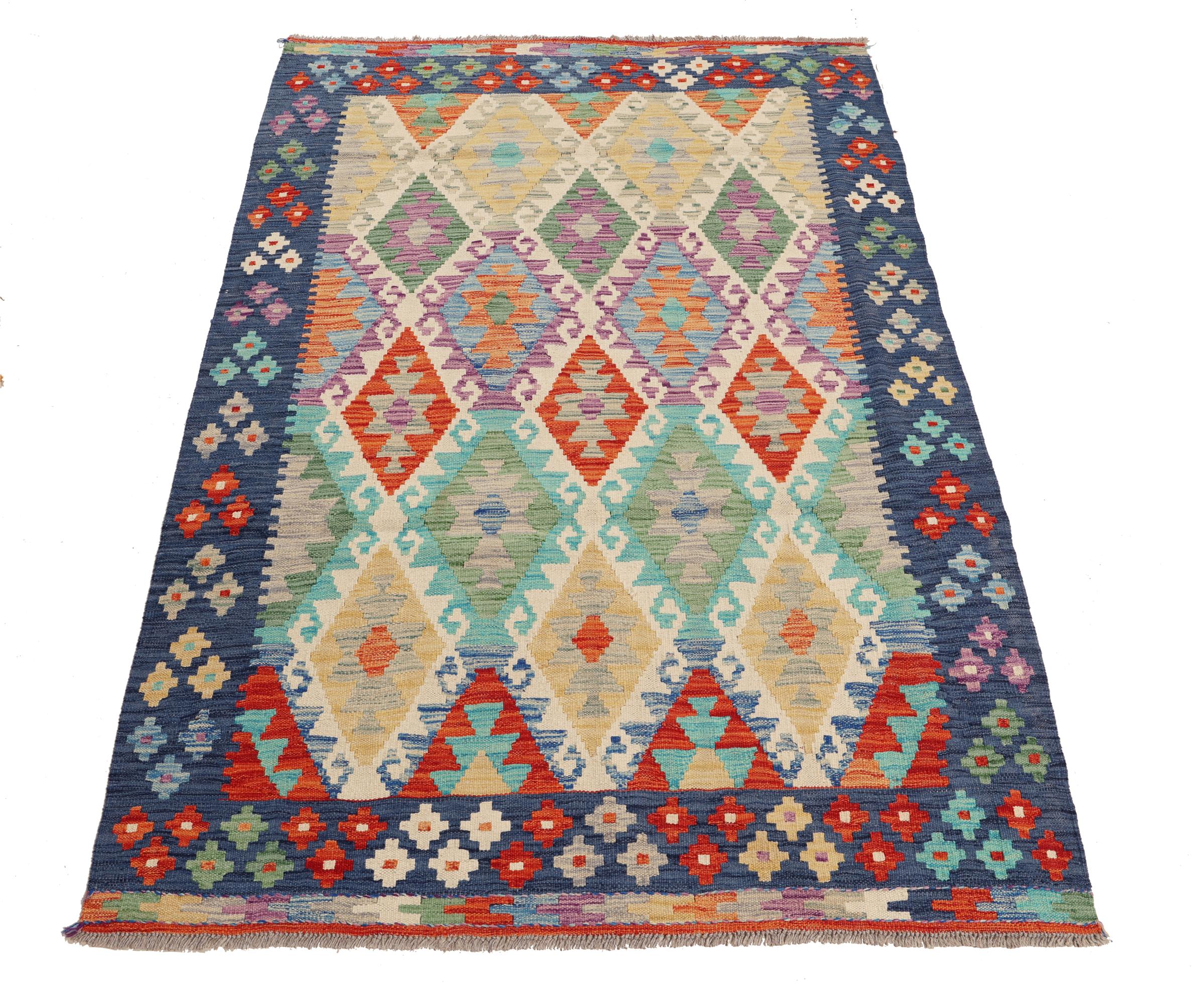
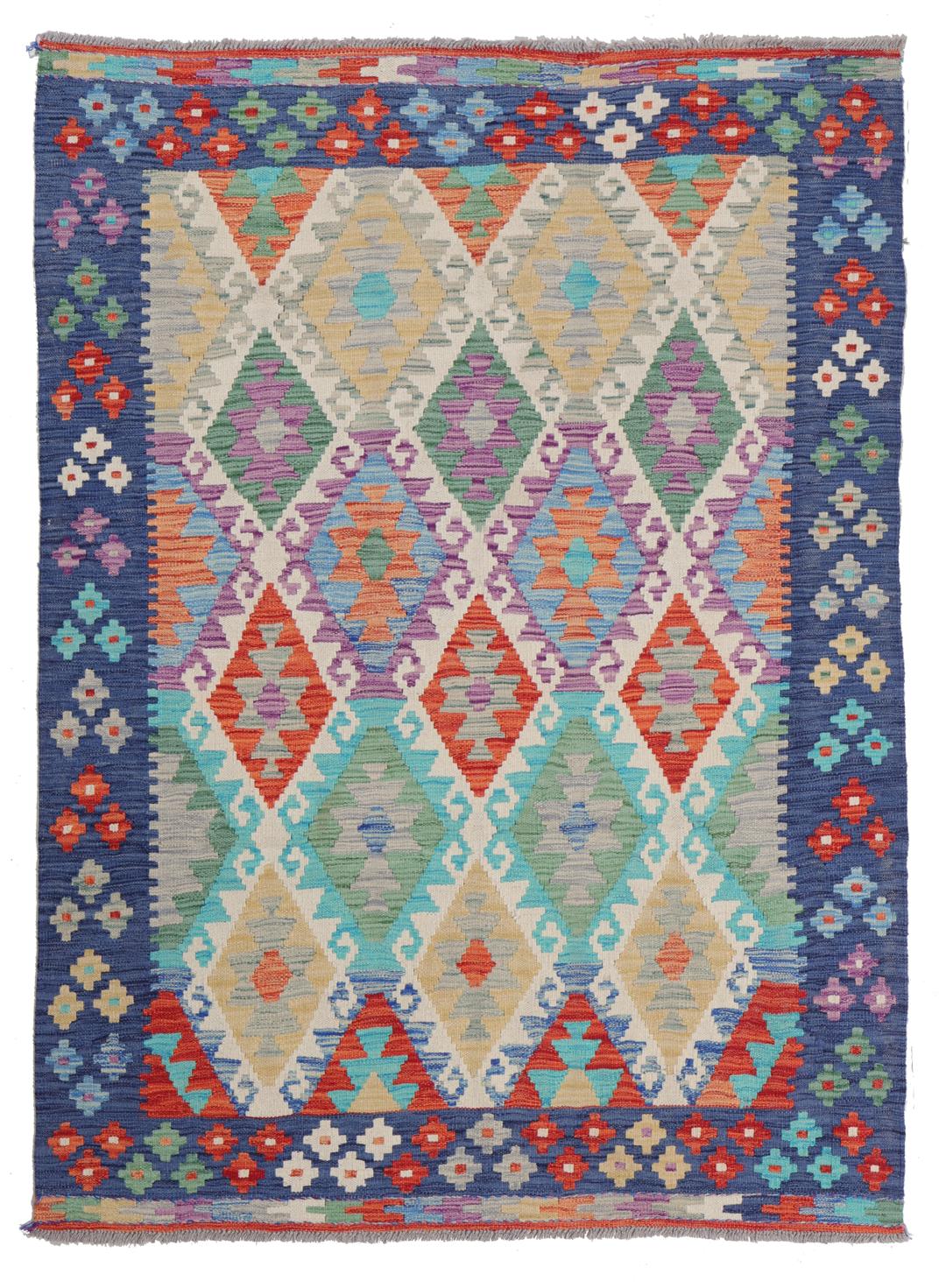
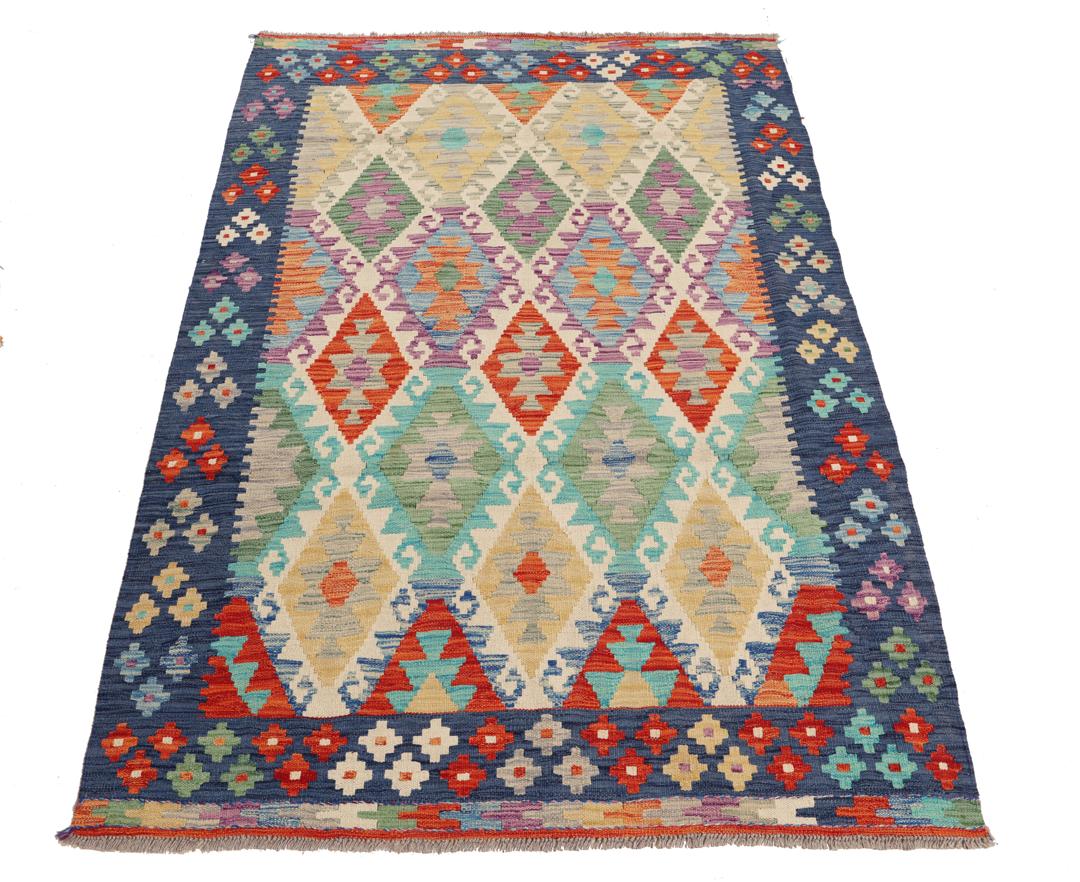
The tradition of Kelim weaving in Afghanistan is deeply rooted in the history of the Central Asian steppes, where nomadic tribes developed portable, durable textiles for their daily lives. These rugs were historically used as floor coverings, saddlebags, and wall hangings, reflecting the functional needs and artistic expressions of the cultures that created them.
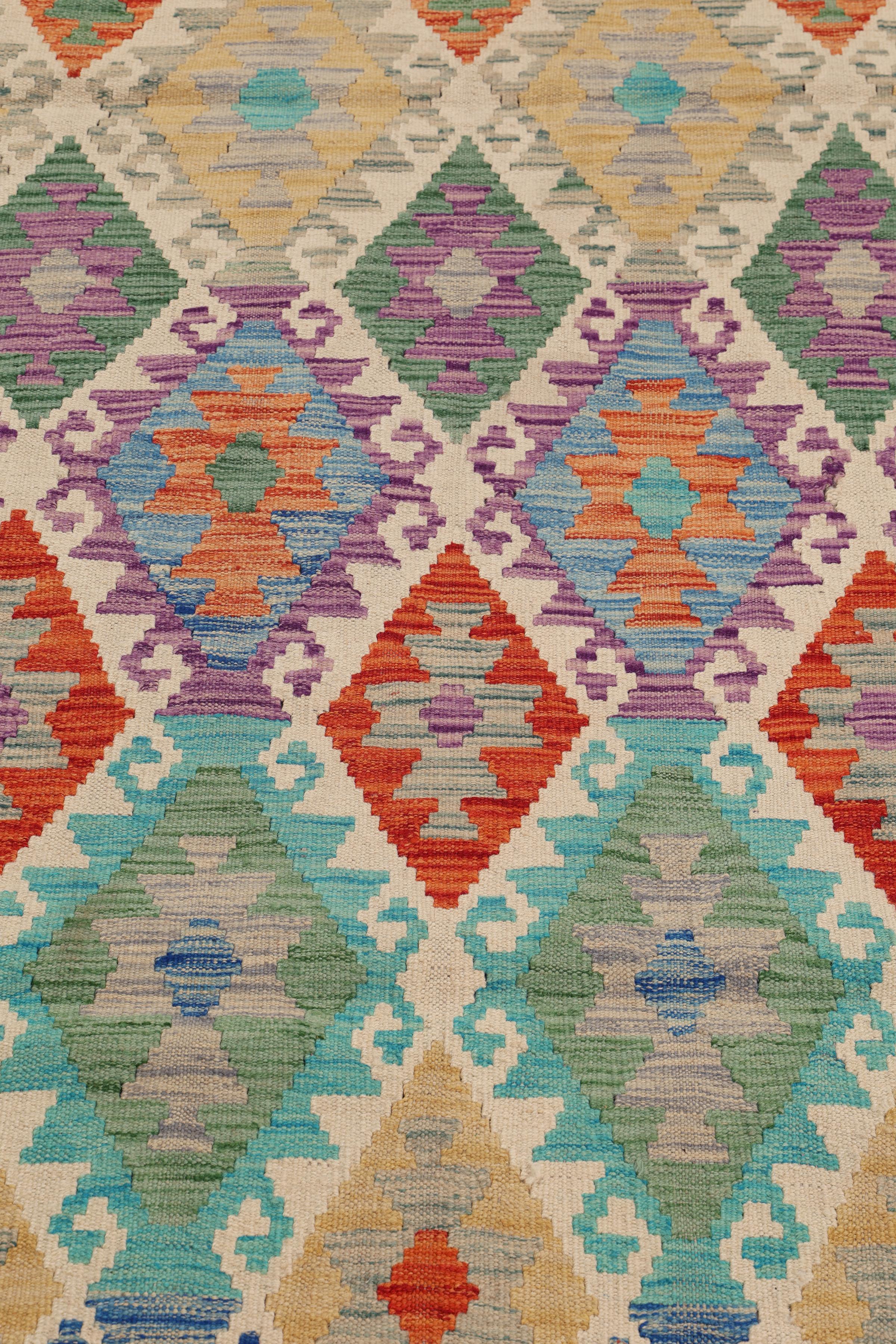
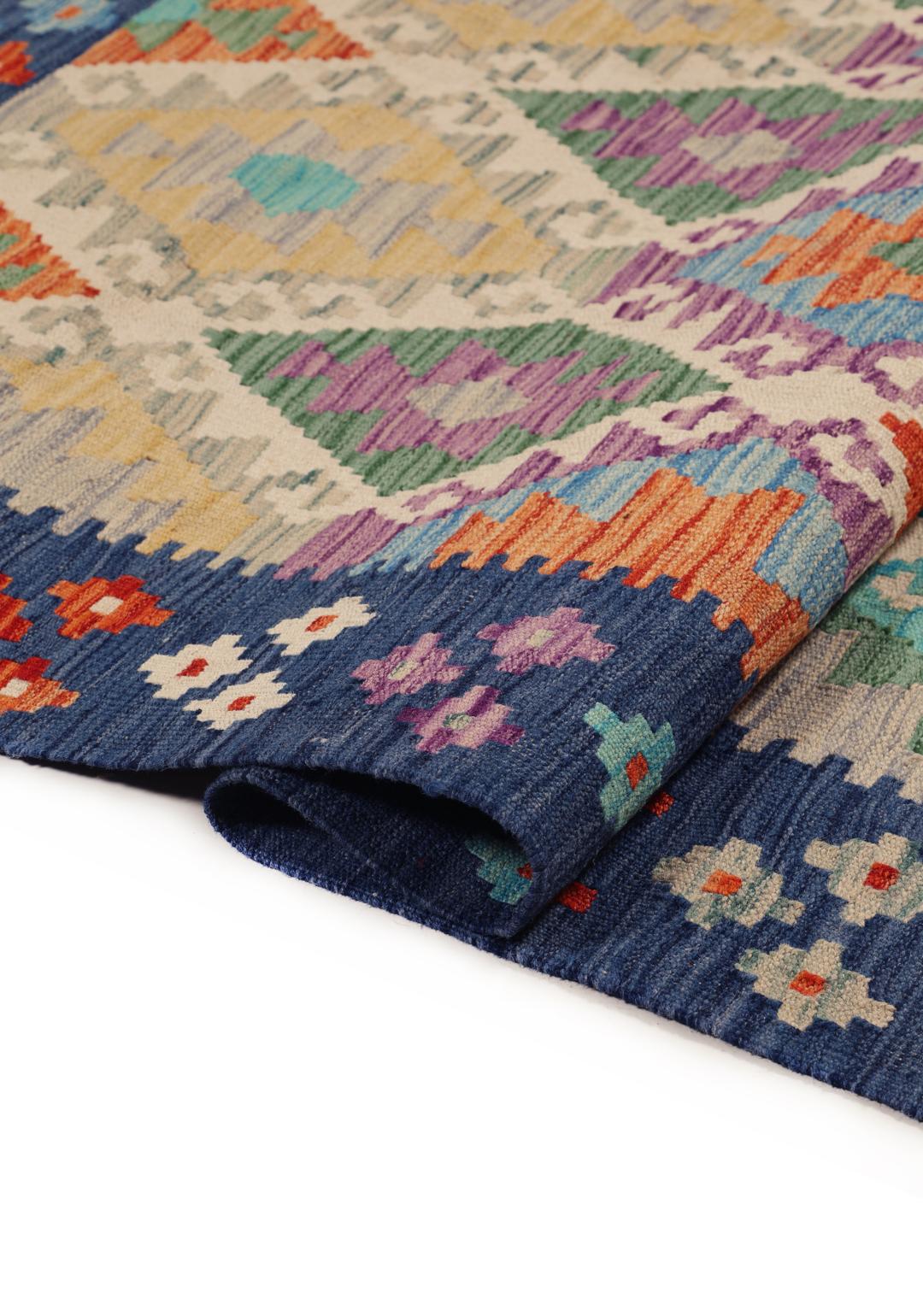
In the context of Afghan Kelims, the term 'Old Style' refers to the preservation of traditional motifs and dyeing techniques that have been passed down through generations. These rugs are typically flat-woven, meaning they lack a pile, which allows the intricate geometric patterns to be rendered with exceptional clarity and sharpness.
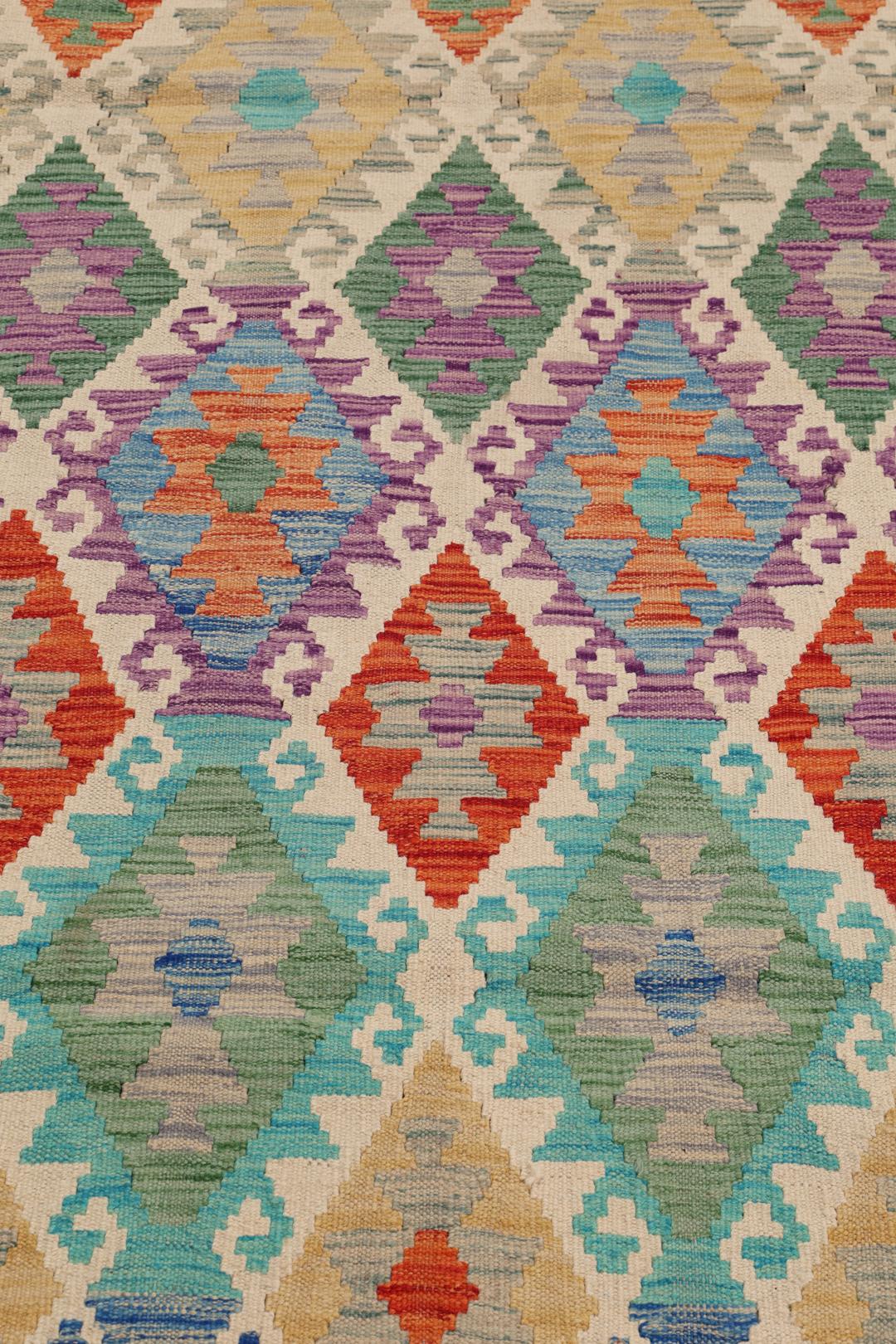
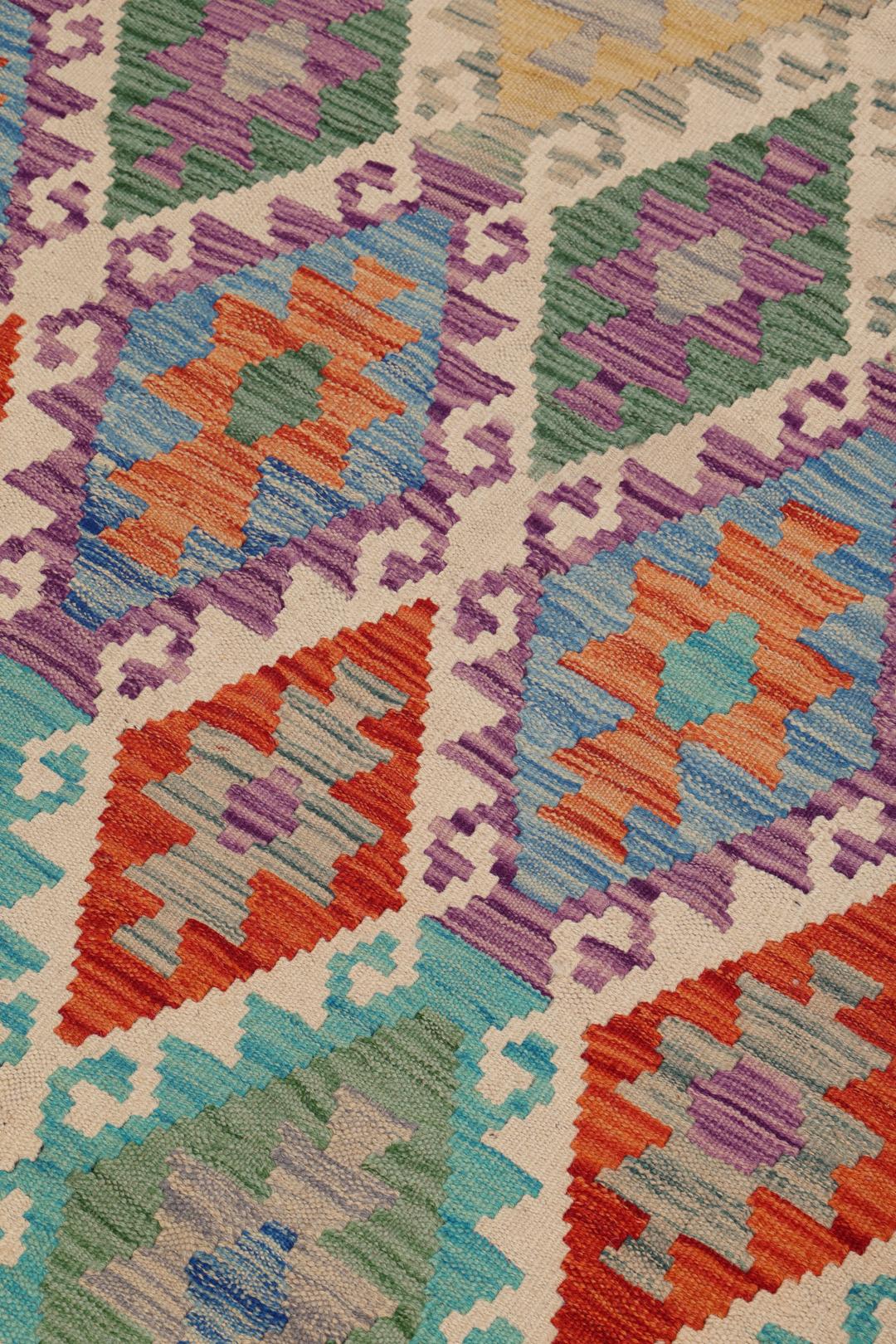
The design language of this tradition is dominated by bold, repeating geometric shapes, most notably the diamond and various tribal medallions. These motifs are often framed by ornate borders, creating a balanced and harmonious composition. The use of vibrant, contrasting colours is a hallmark of this style, intended to bring life and visual energy to the interior spaces of the home.
Today, these rugs are highly valued by collectors and design enthusiasts for their cultural weight and the undeniable skill required to produce them. Owning an Afghan Kelim is more than just selecting a floor covering; it is an appreciation of a heritage that values human creativity, storytelling through patterns, and the enduring quality of natural materials.