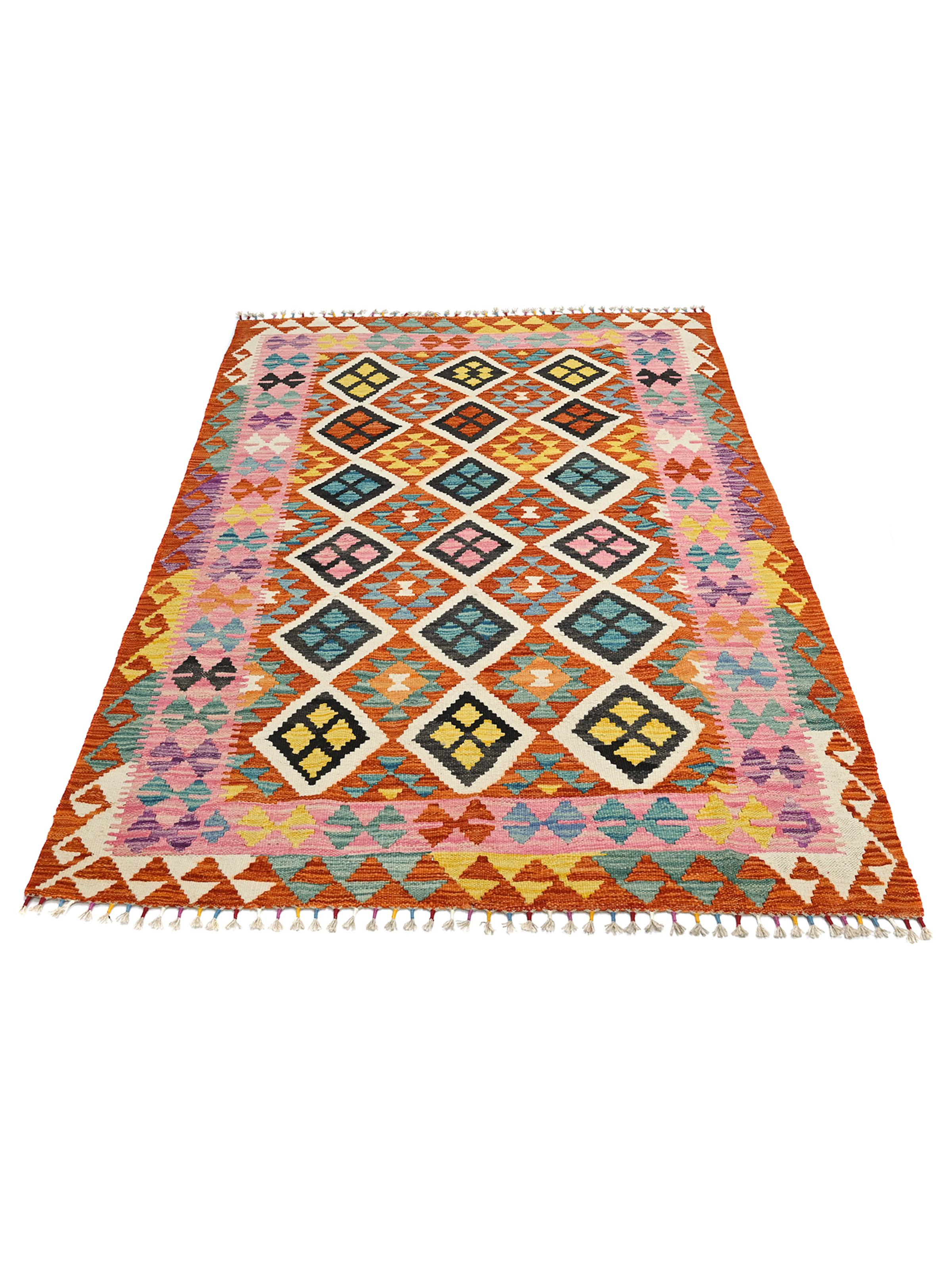
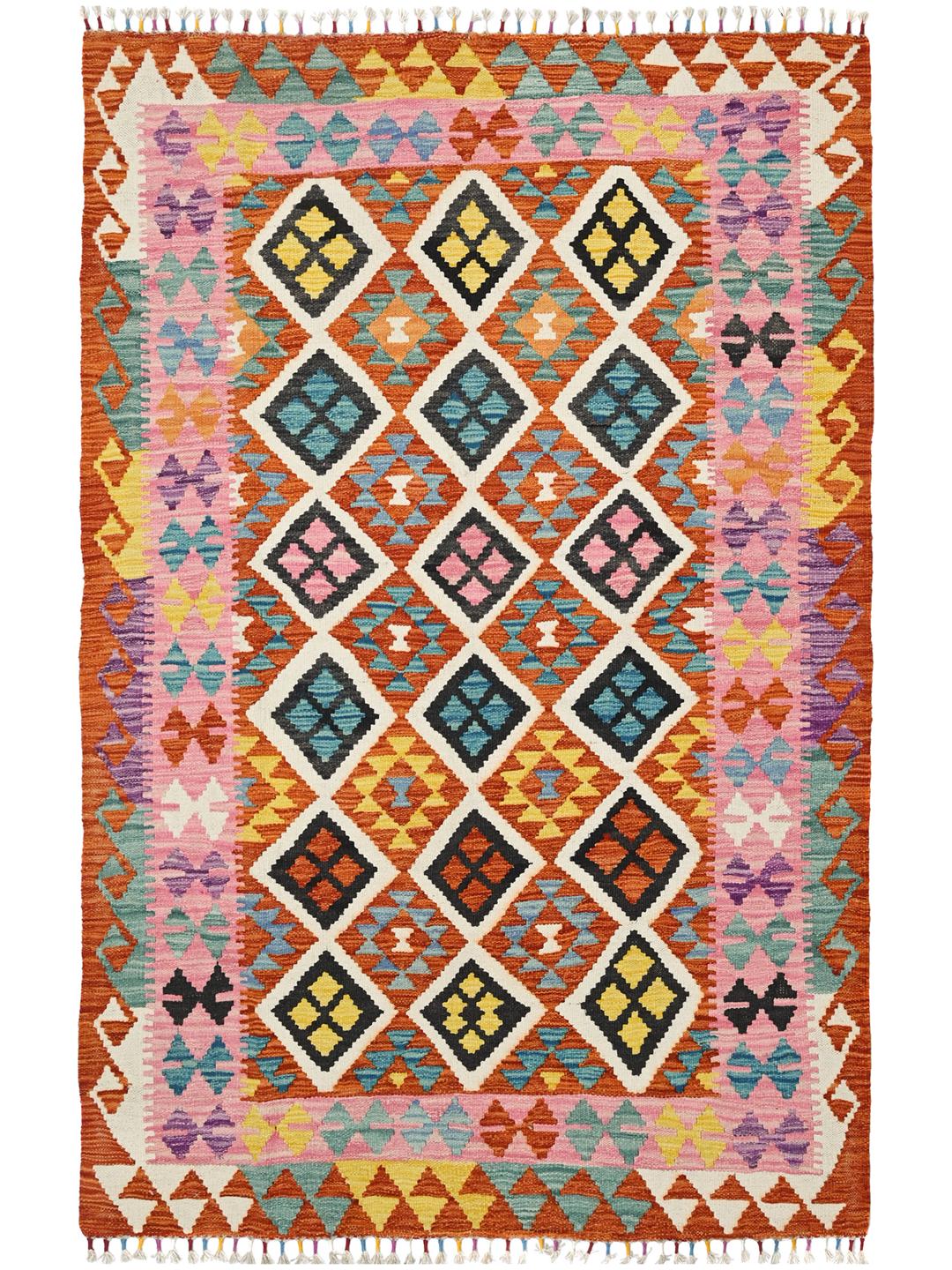
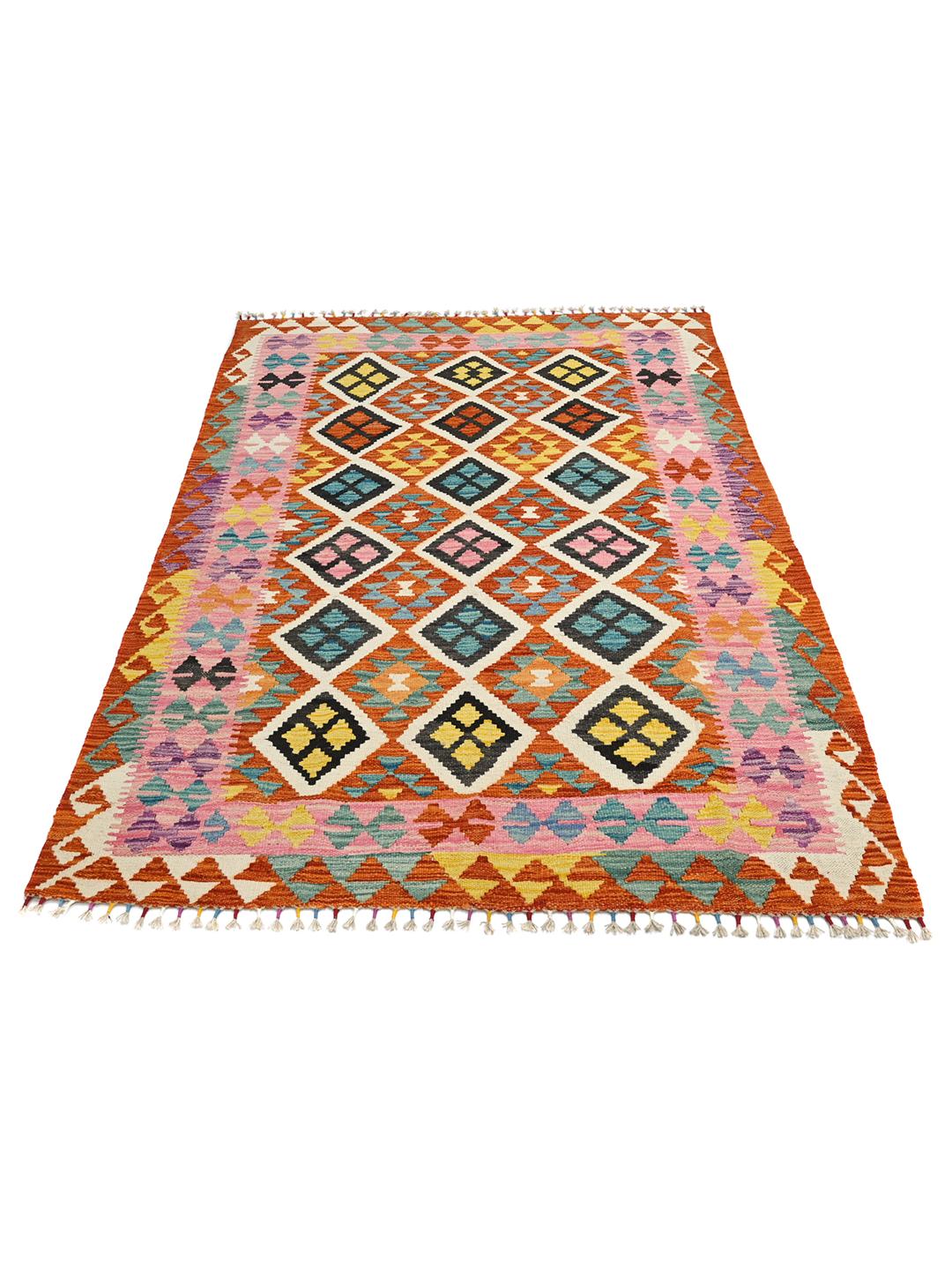
The tradition of weaving Kelim rugs in Afghanistan is deeply rooted in the nomadic and semi-nomadic cultures of the region. These flat-woven textiles were historically used by tribes for various practical purposes, including as floor coverings, wall hangings, and storage bags. The migration of these weaving techniques across the Middle East has resulted in a rich tapestry of styles, with Afghan weavers known for their robust construction and earthy, yet vibrant, colour palettes.
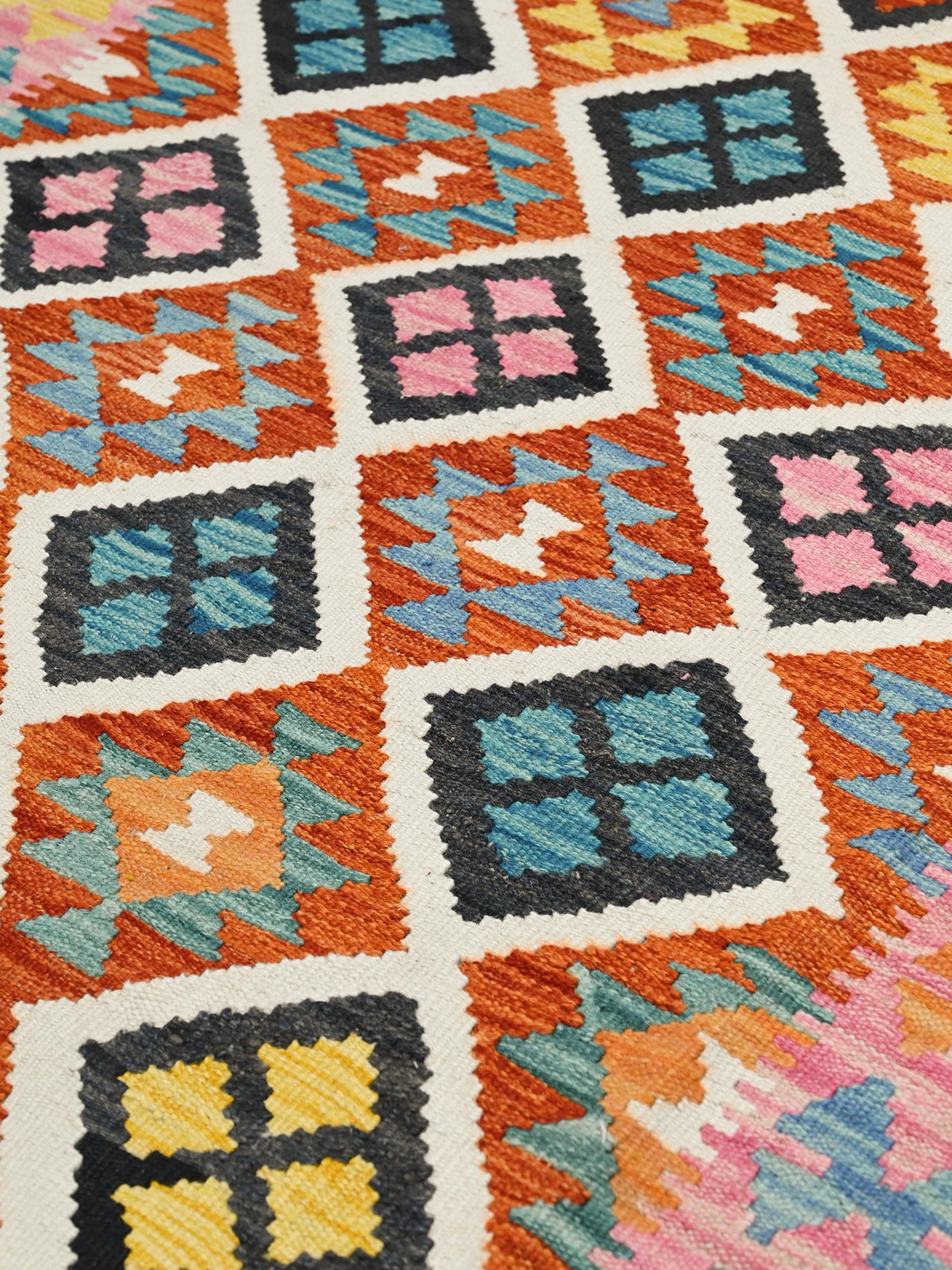
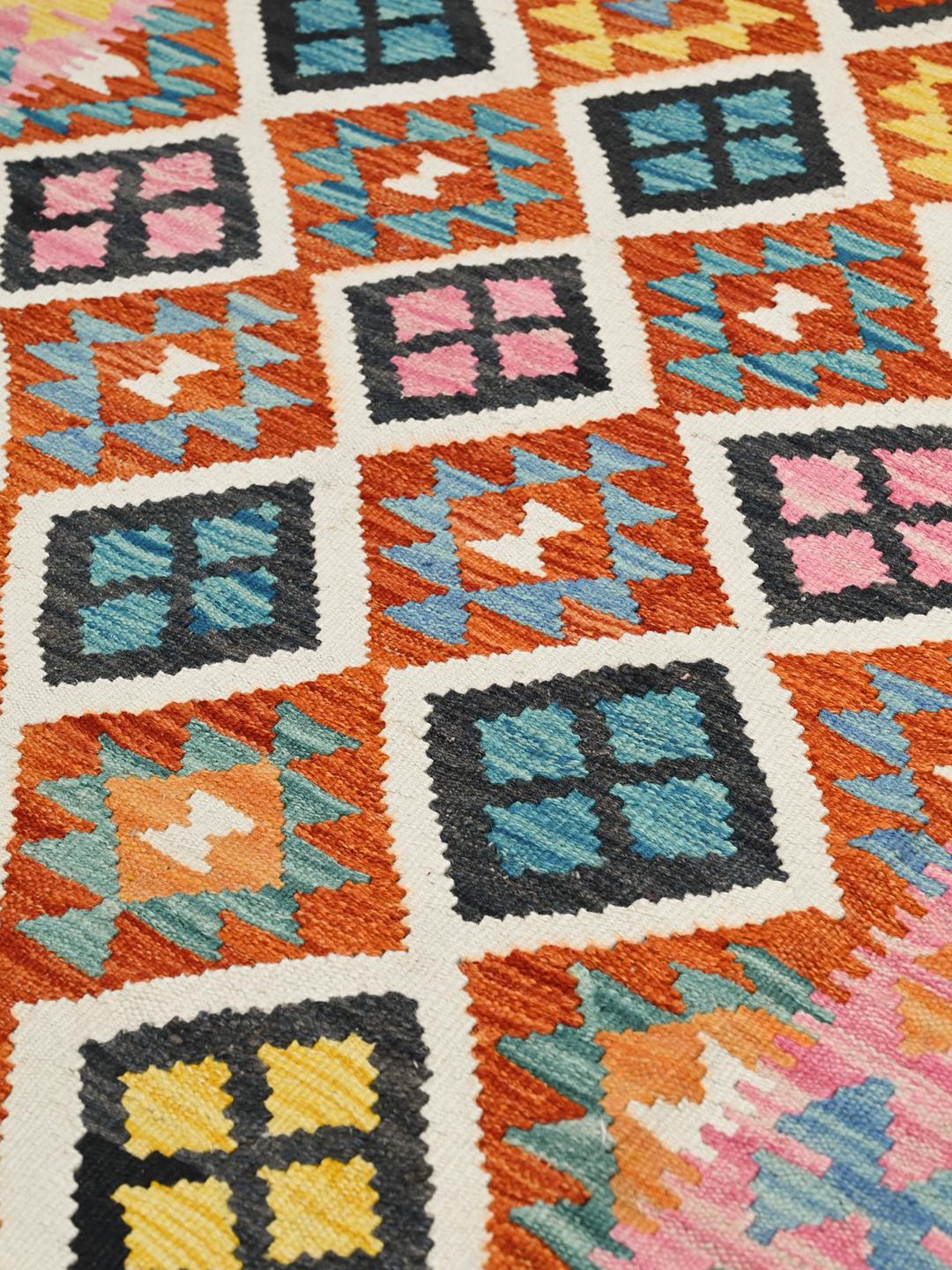
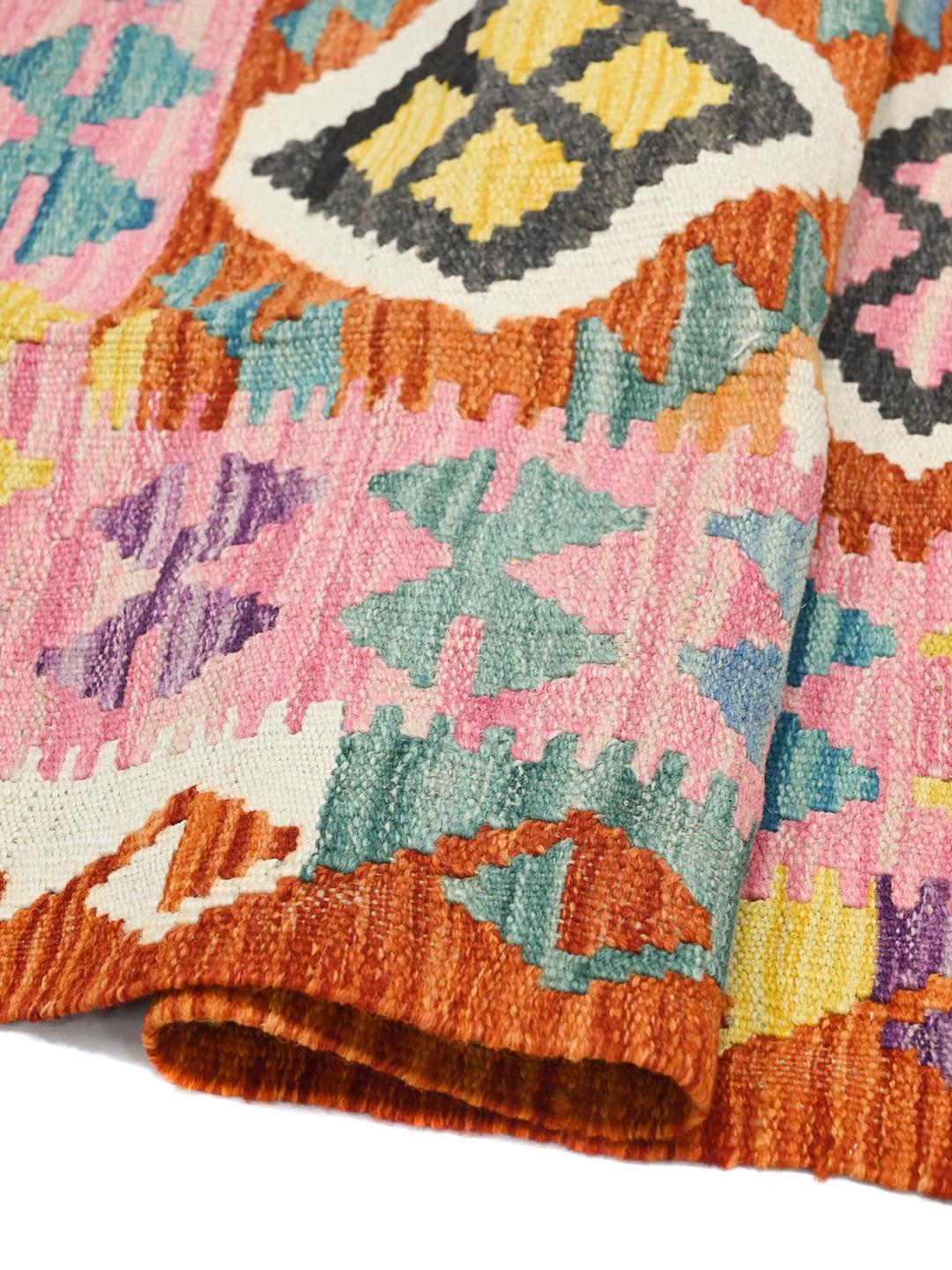
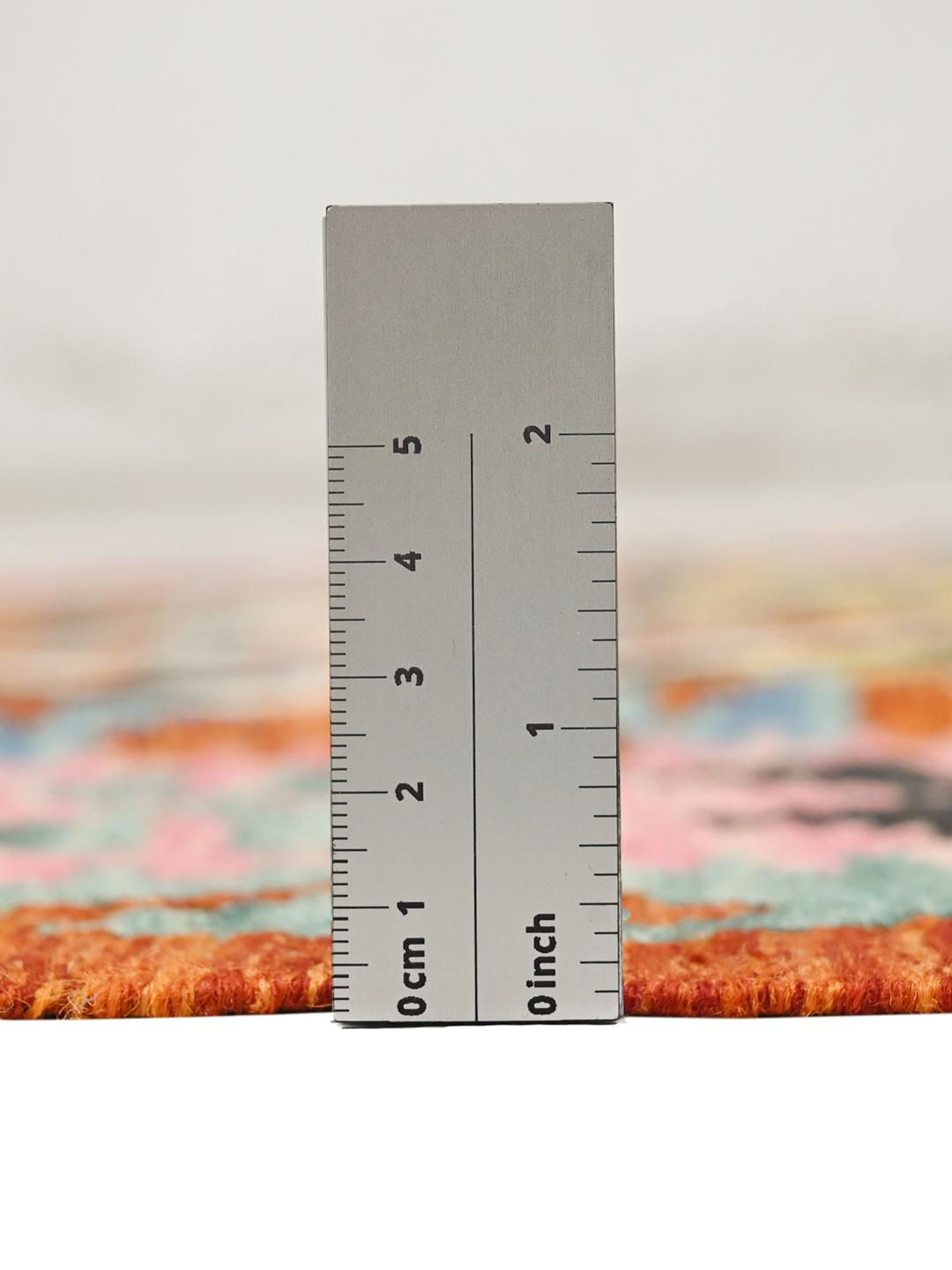
The term 'Kelim' refers specifically to the tapestry-weave, or weft-faced, technique where no pile is created. This method relies on the interlacing of the warp and weft threads to build the pattern directly into the structure of the rug. This technical approach results in a thinner, reversible textile that is prized for its versatility and the clarity of its geometric designs, as there is no pile to obscure the crisp lines of the motifs.
Signature design elements in Afghan Kelims often include bold, repeating geometric shapes like diamonds, triangles, and hooks. These patterns are not merely decorative but often hold symbolic meanings, reflecting the weaver's environment and cultural identity. The use of vibrant, natural-toned dyes is a hallmark of the old-style tradition, often resulting in a look that feels both ancient and remarkably modern in contemporary interior settings.
Collecting a Kelim from this tradition is an investment in cultural heritage and individual skill. These rugs are highly valued for their authenticity and the way they bridge the gap between historical utility and modern aesthetic appreciation. By acquiring such a piece, you are celebrating the endurance of a craft that has survived through centuries, bringing a piece of living history into your home that carries the story of its makers in every thread.