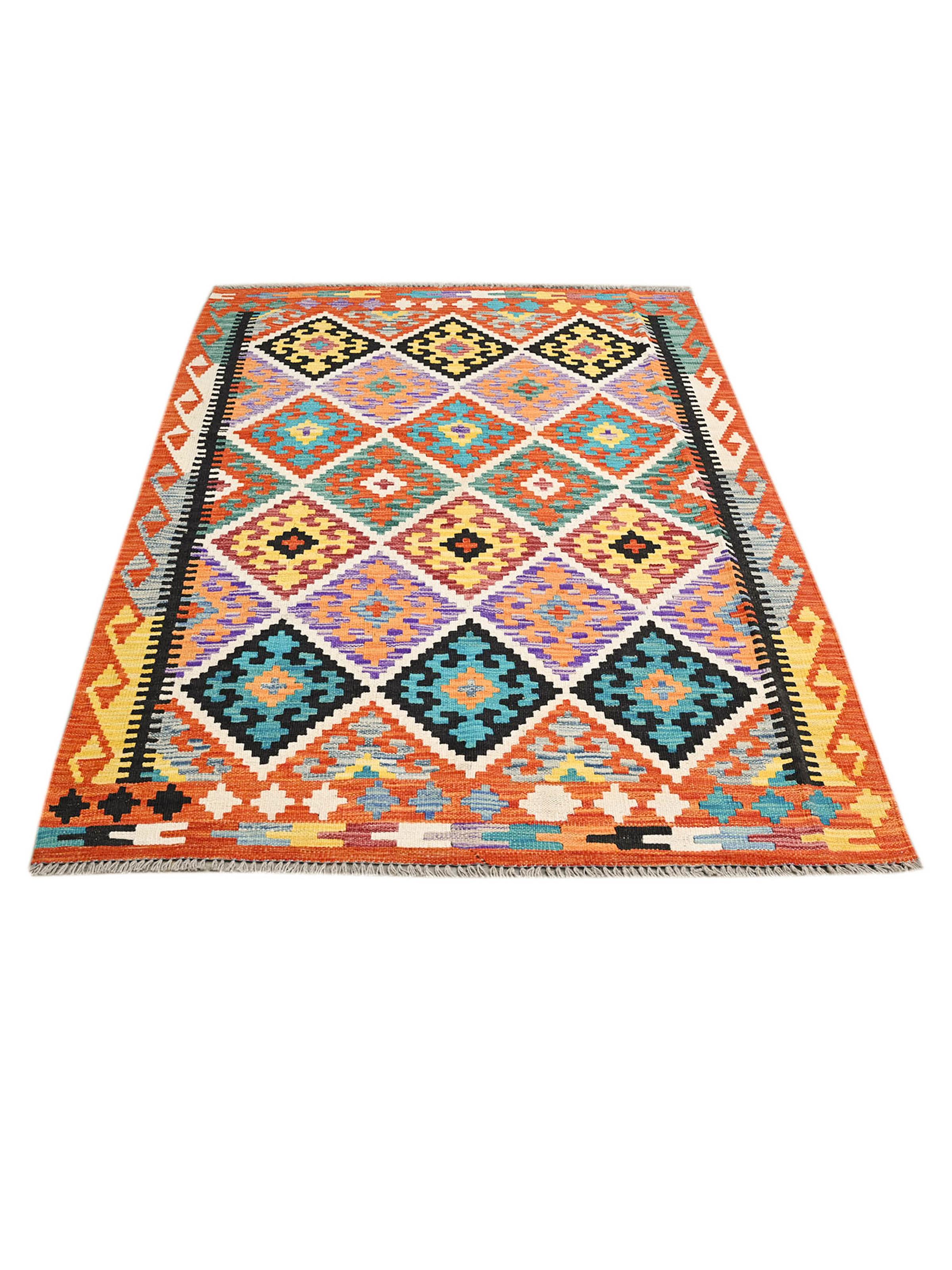
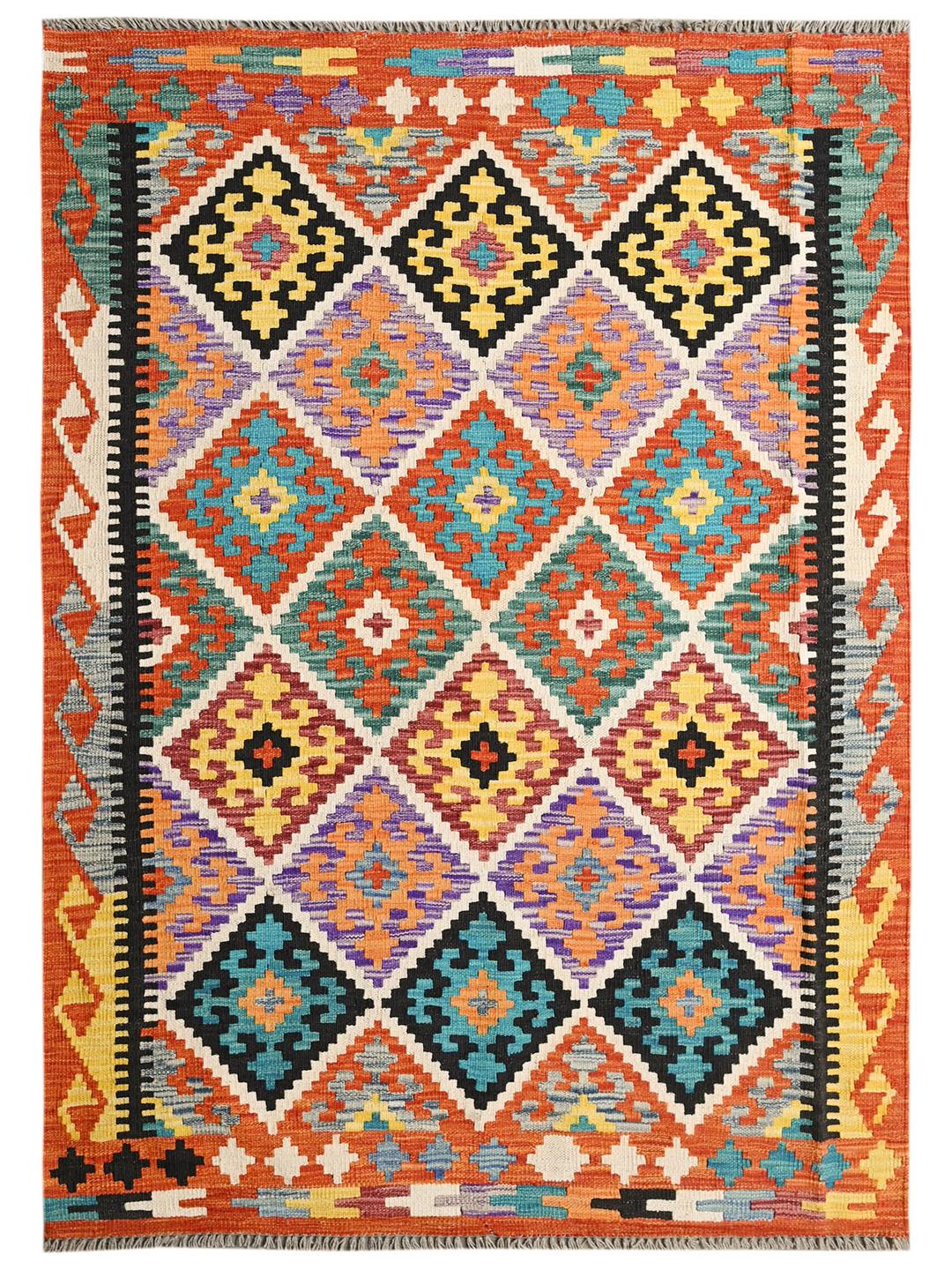
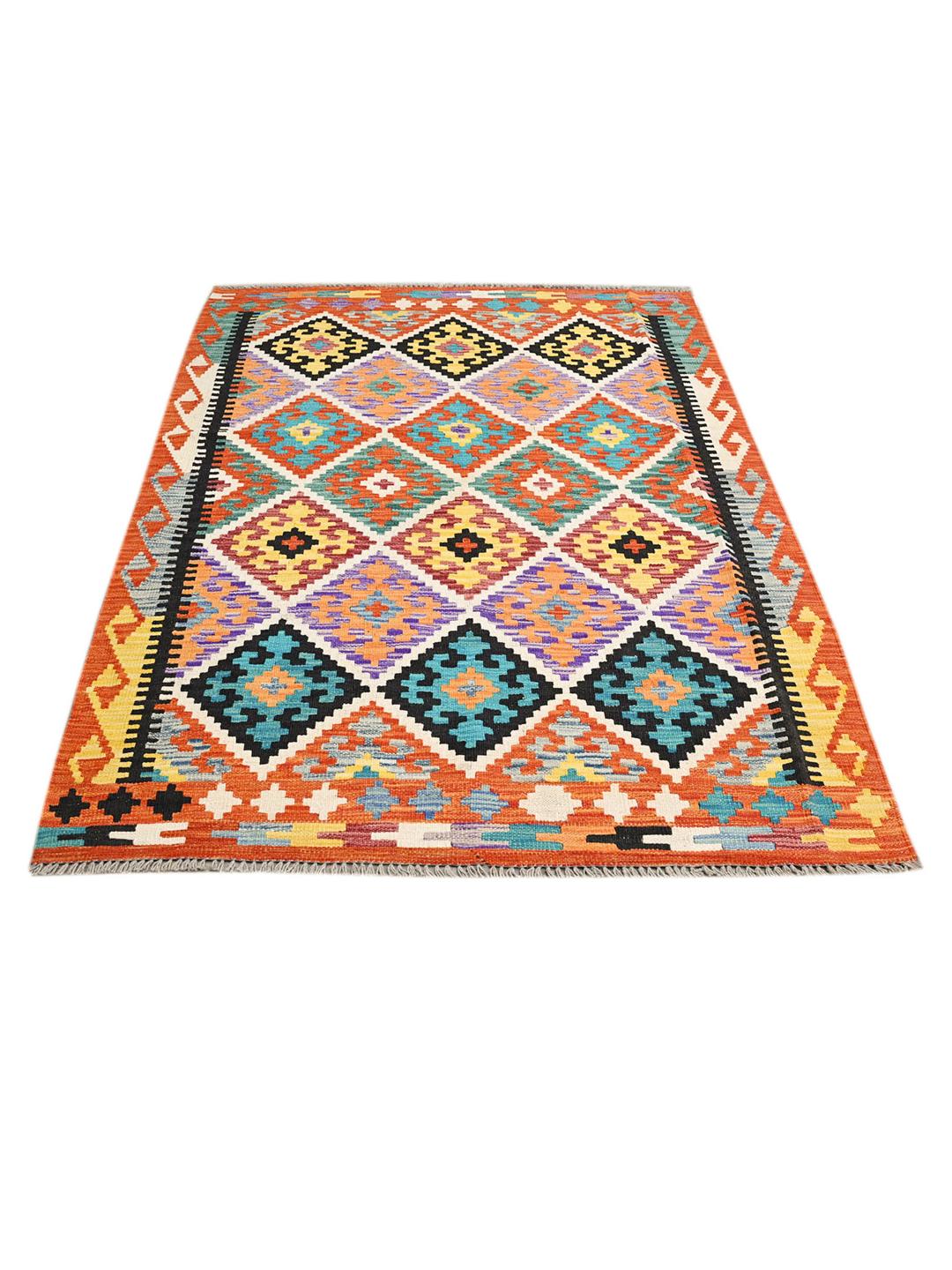
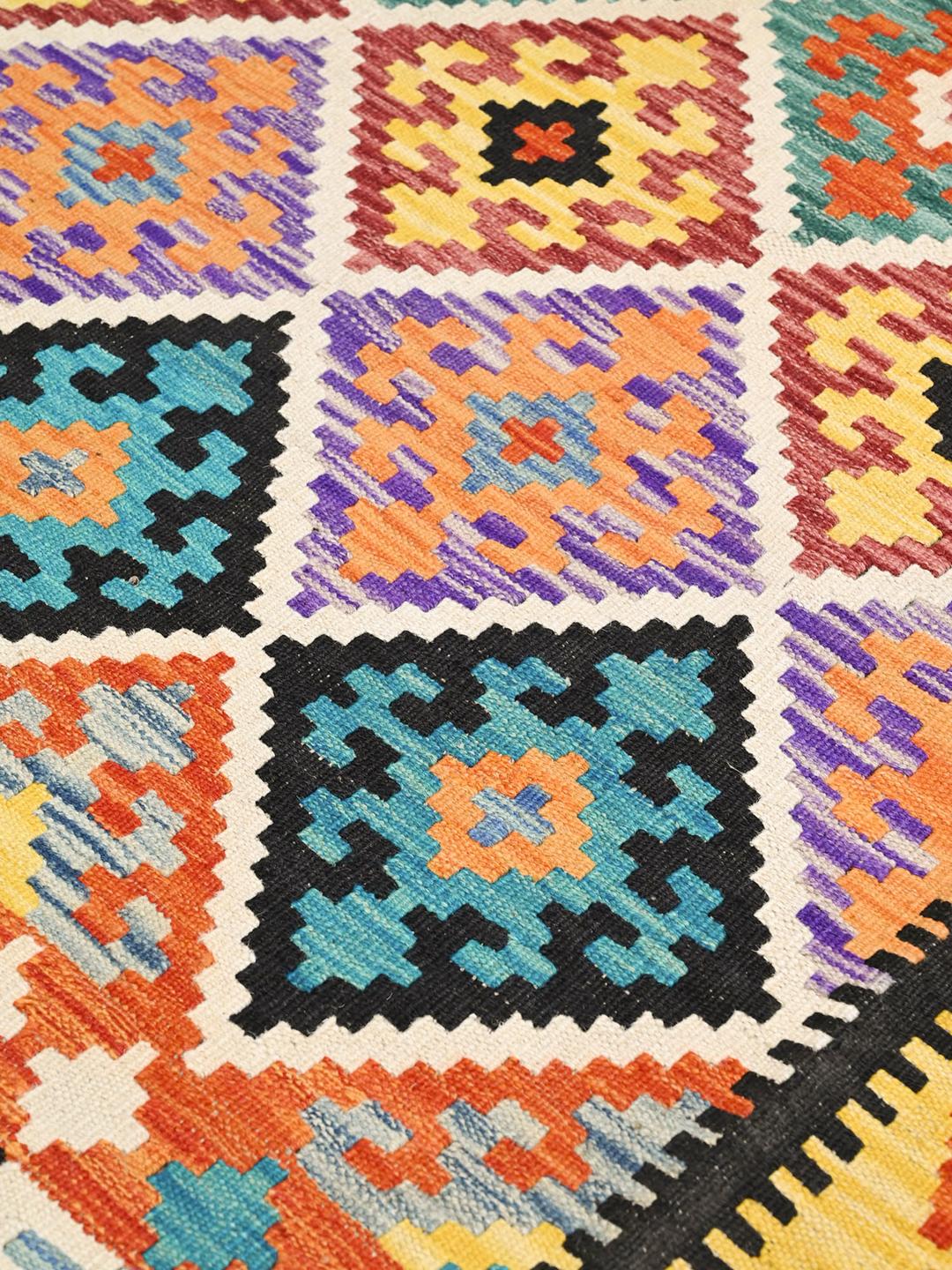
Kelim rugs have a long and storied history across the Middle East and Central Asia. They are flat-woven textiles, distinct from pile rugs, and have served as essential household items for nomadic tribes for centuries. These rugs were traditionally used as floor coverings, wall hangings, and even as storage bags, proving their versatility and endurance in challenging environments.
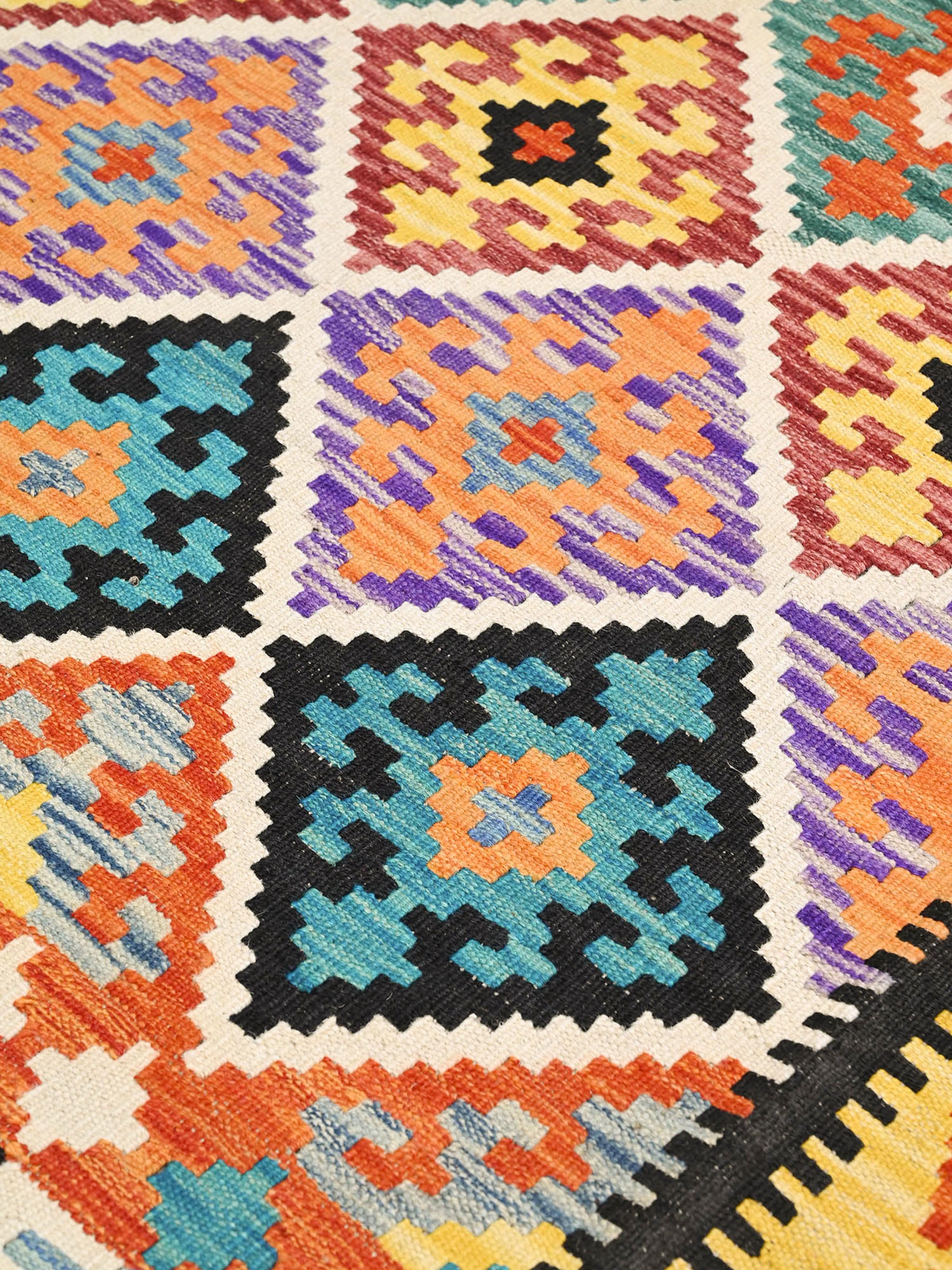
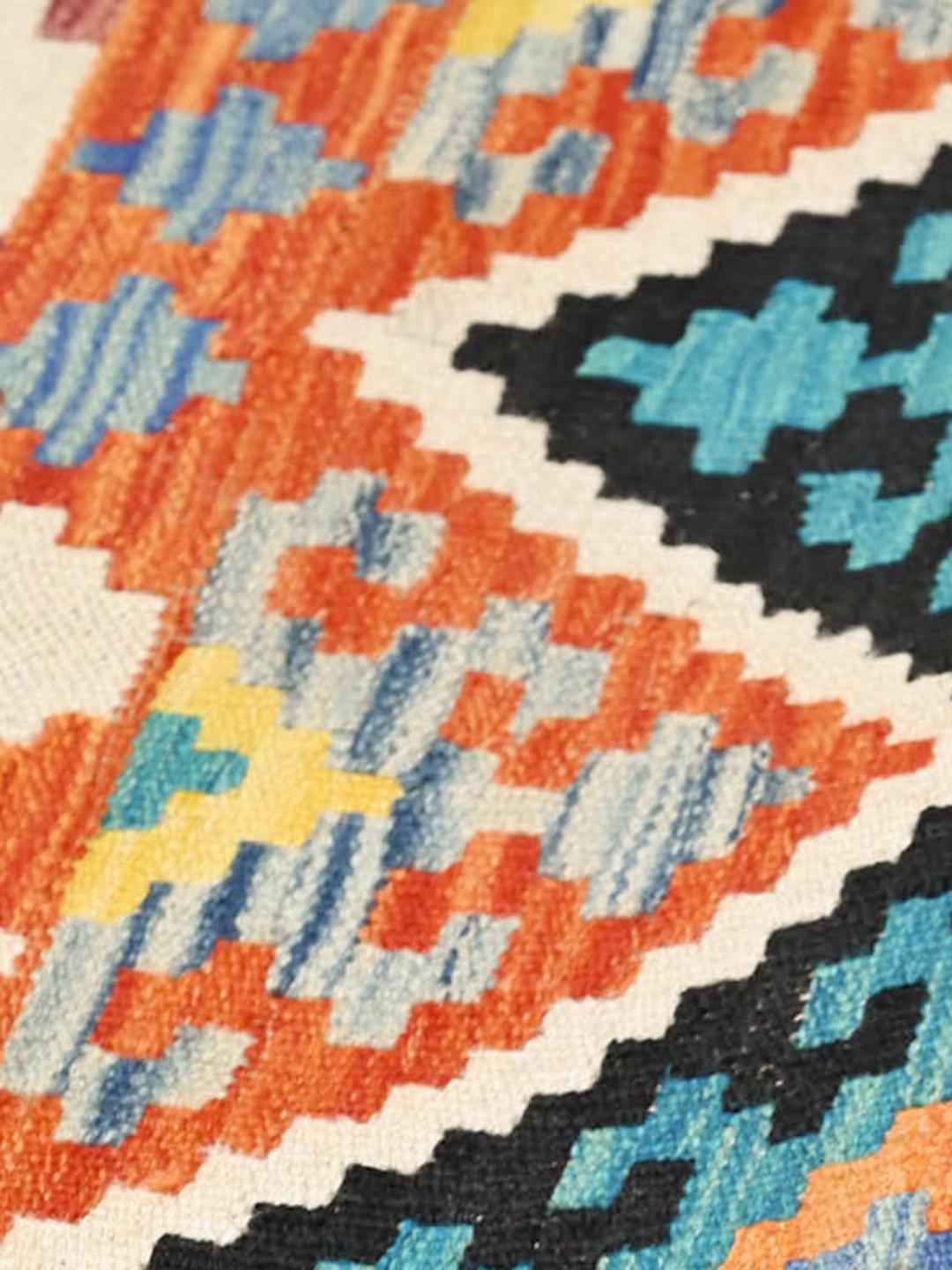
The term 'Kelim' refers to the specific slit-weave technique used to create the pattern. By interlocking the weft threads around the warp threads, the weaver creates sharp, clean transitions between colours, which is what gives these rugs their iconic, precise geometric appearance. This technique requires the weaver to manage complex colour changes without the support of a pile, demanding a high level of technical mastery to ensure the rug remains perfectly rectangular and flat.
Design-wise, these rugs are celebrated for their bold, symbolic motifs. The diamonds and geometric shapes often found in Afghan examples are not just decorative; they are rooted in regional traditions, with patterns frequently passed down through families. The use of vibrant, saturated colours is a hallmark of the style, often derived from natural dyes that have been used for generations to bring life and energy into the home.
Today, these rugs are highly sought after by collectors and interior enthusiasts alike. Owning a Kelim is more than just purchasing a floor covering; it is an act of preserving a traditional craft that has survived the pressures of industrialisation. Each piece represents a connection to a rich cultural lineage, offering a sense of history and warmth that mass-produced items cannot replicate.