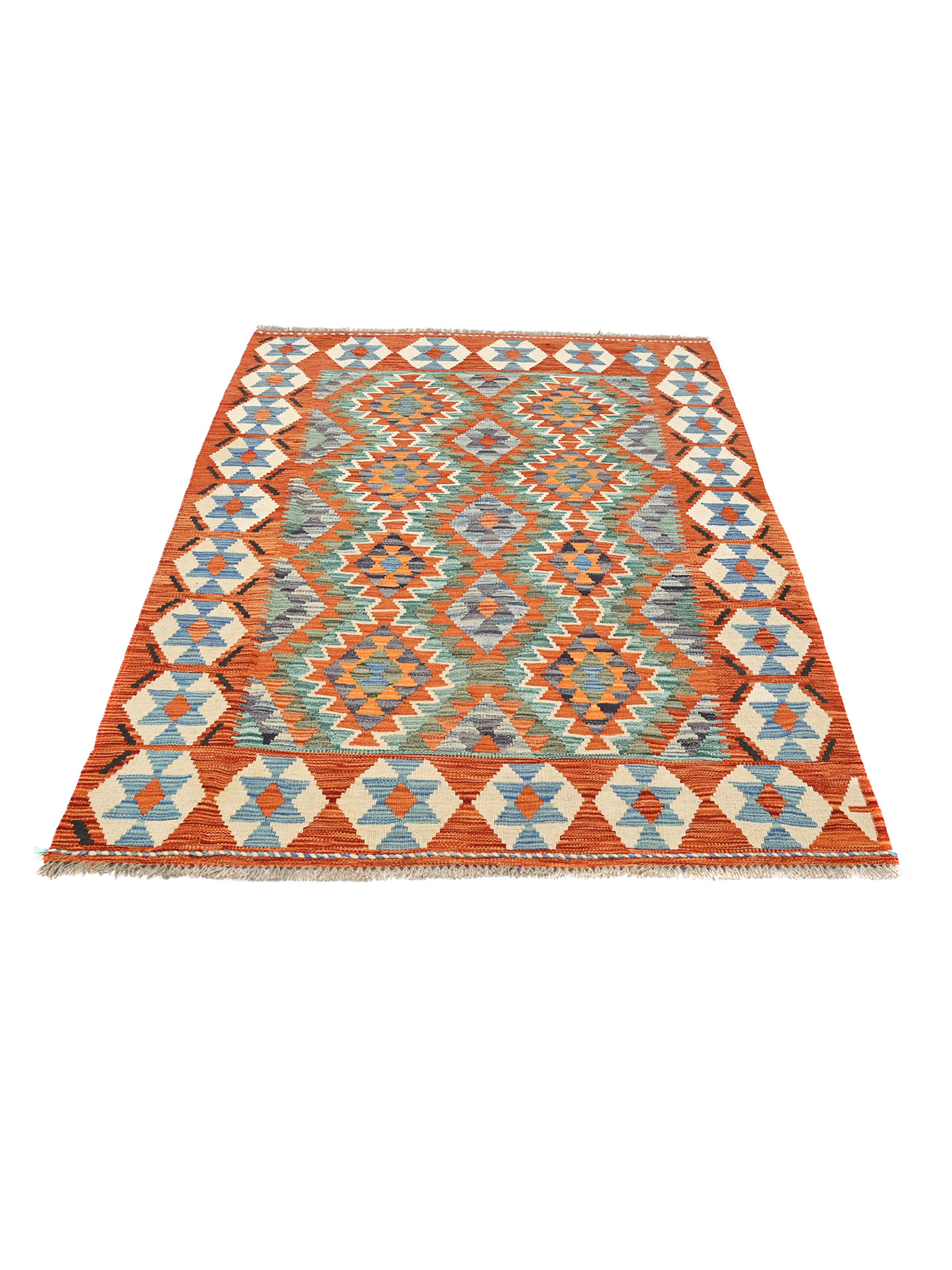
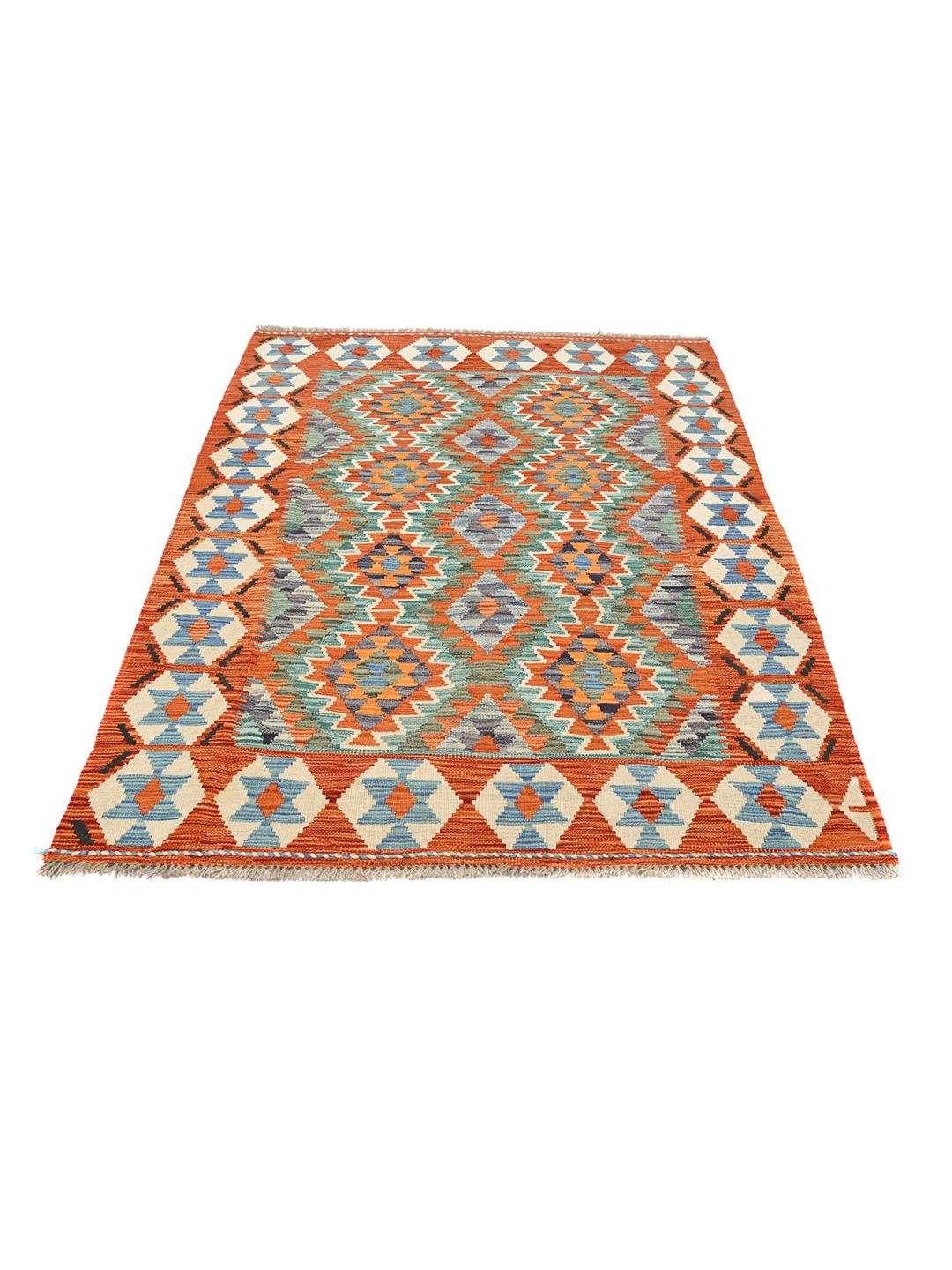
The Kelim tradition in Afghanistan is deeply embedded in the nomadic and semi-nomadic cultures of the region. These flat-woven rugs were historically created by tribal communities for practical purposes, serving as floor coverings, wall hangings, and storage bags. The migration of these techniques across the Middle East has created a rich tapestry of styles, with Afghan weavers known for their robust wool and earthy, natural dyes.
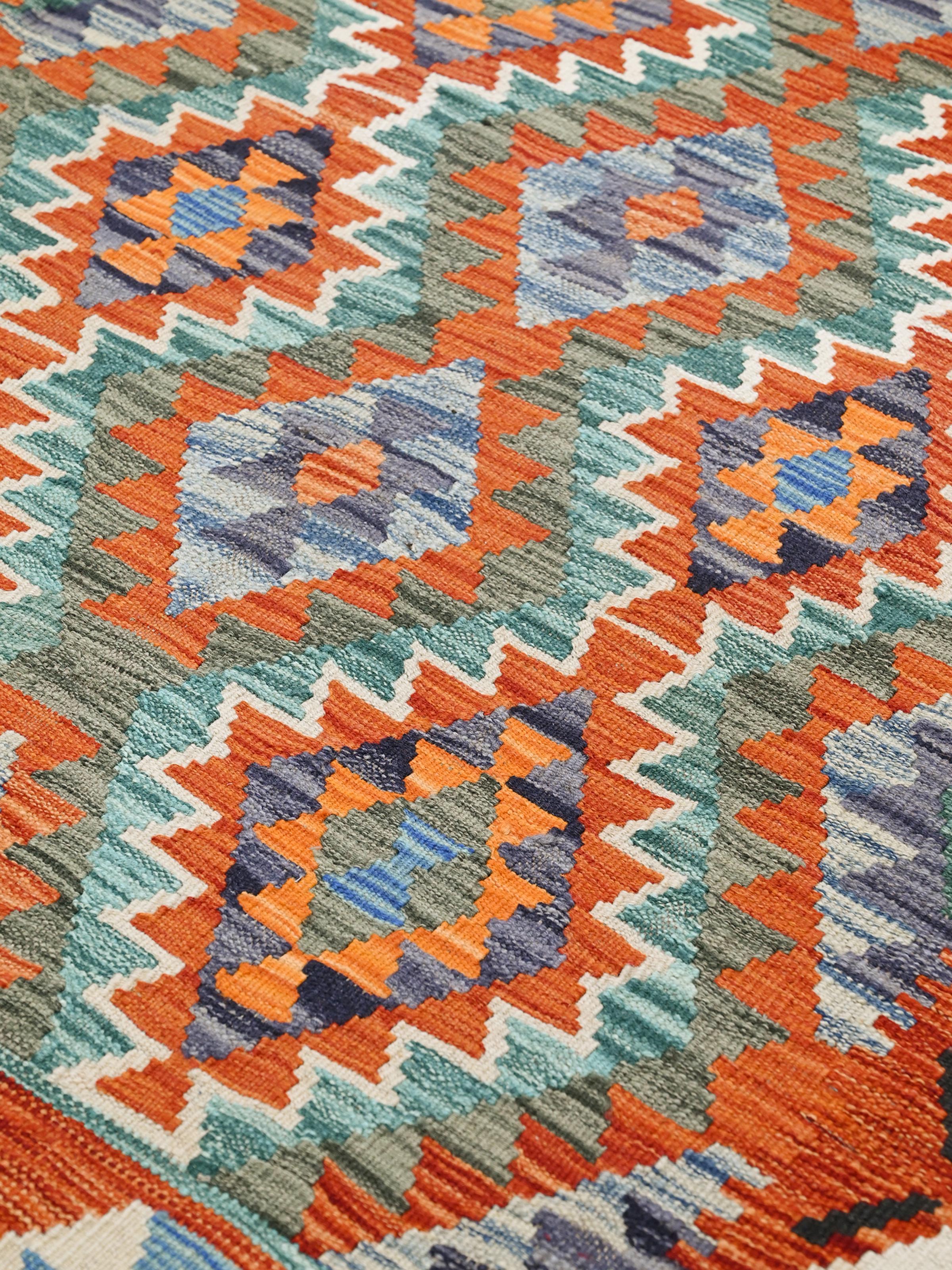
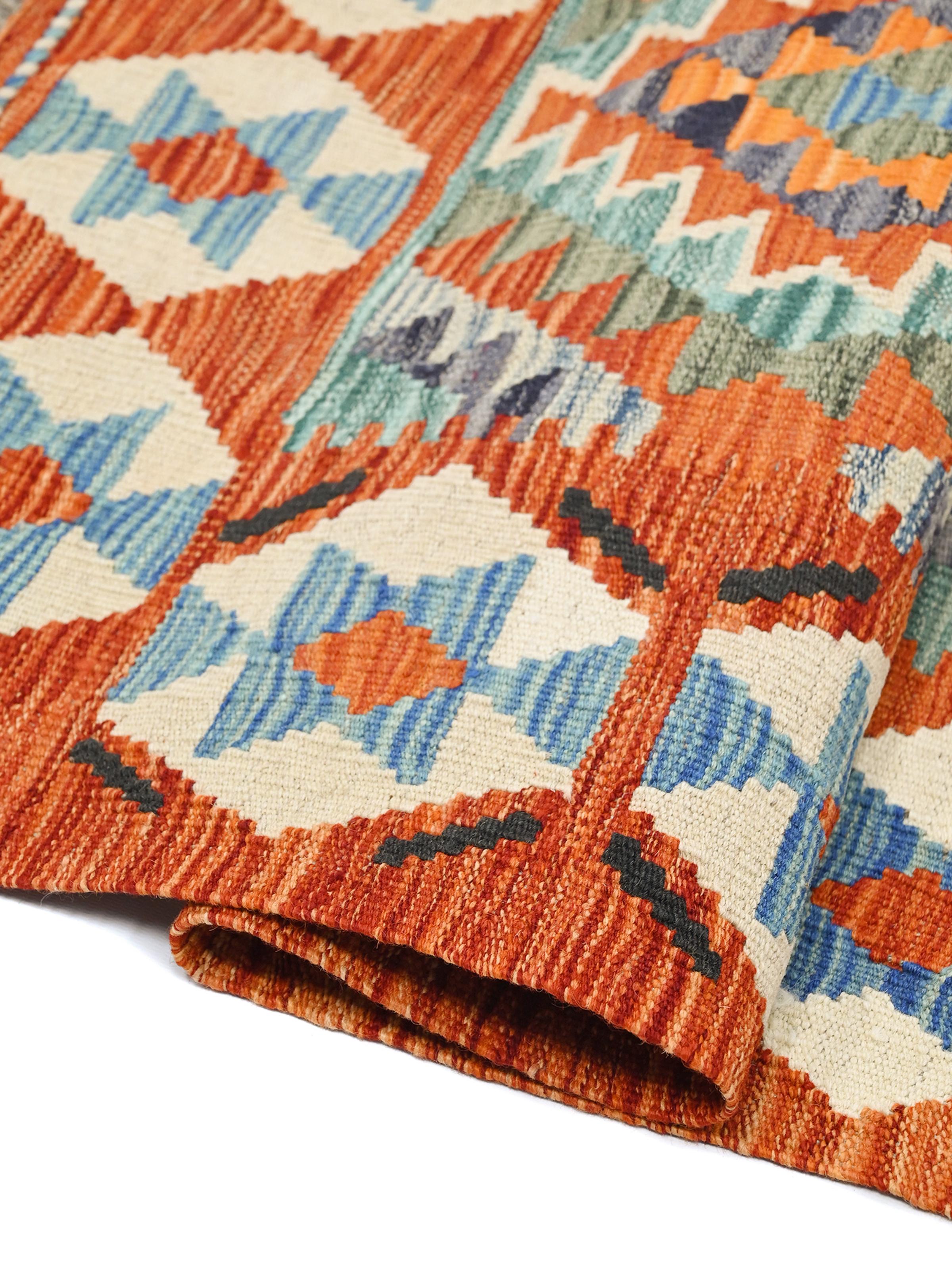
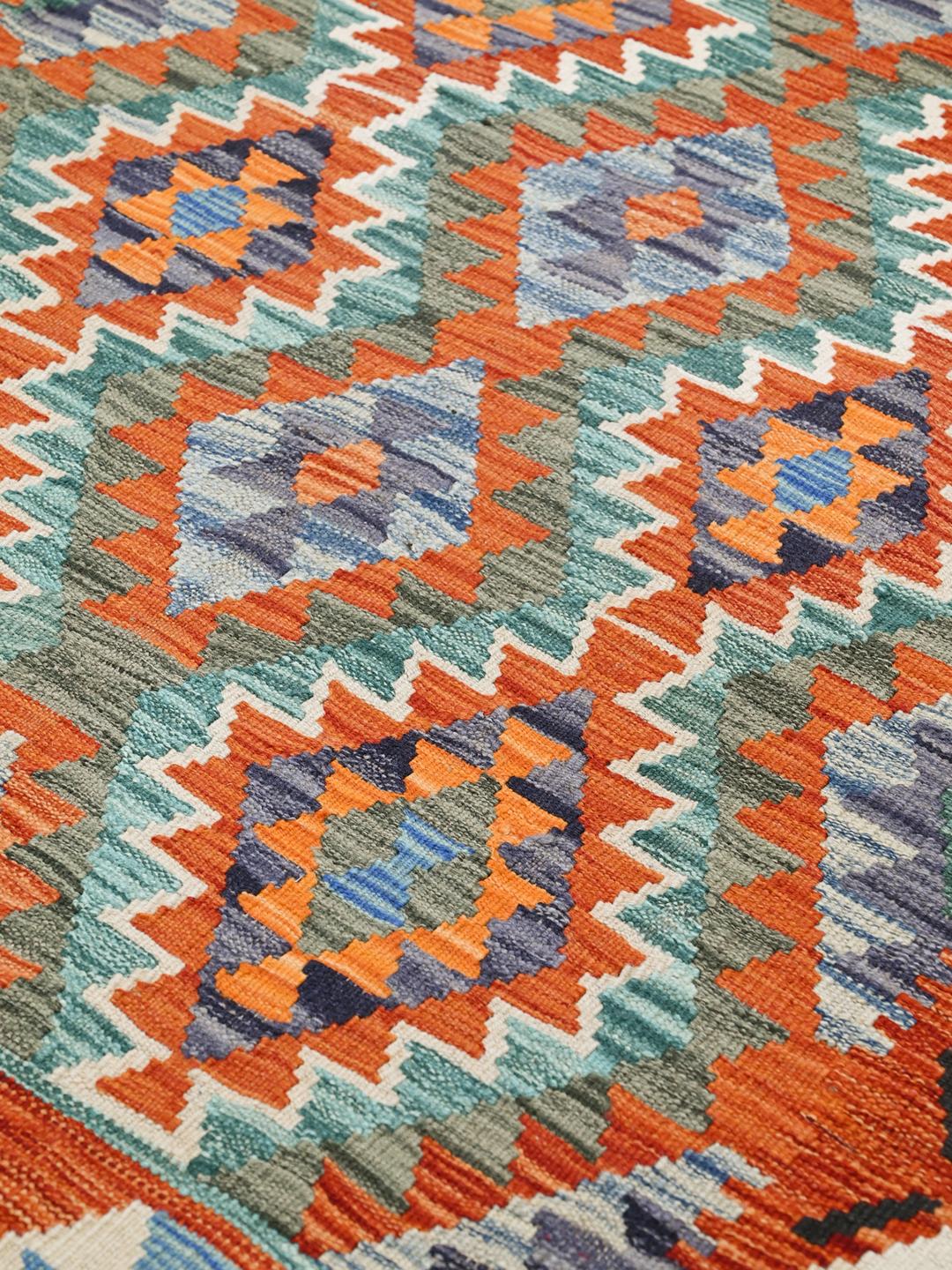
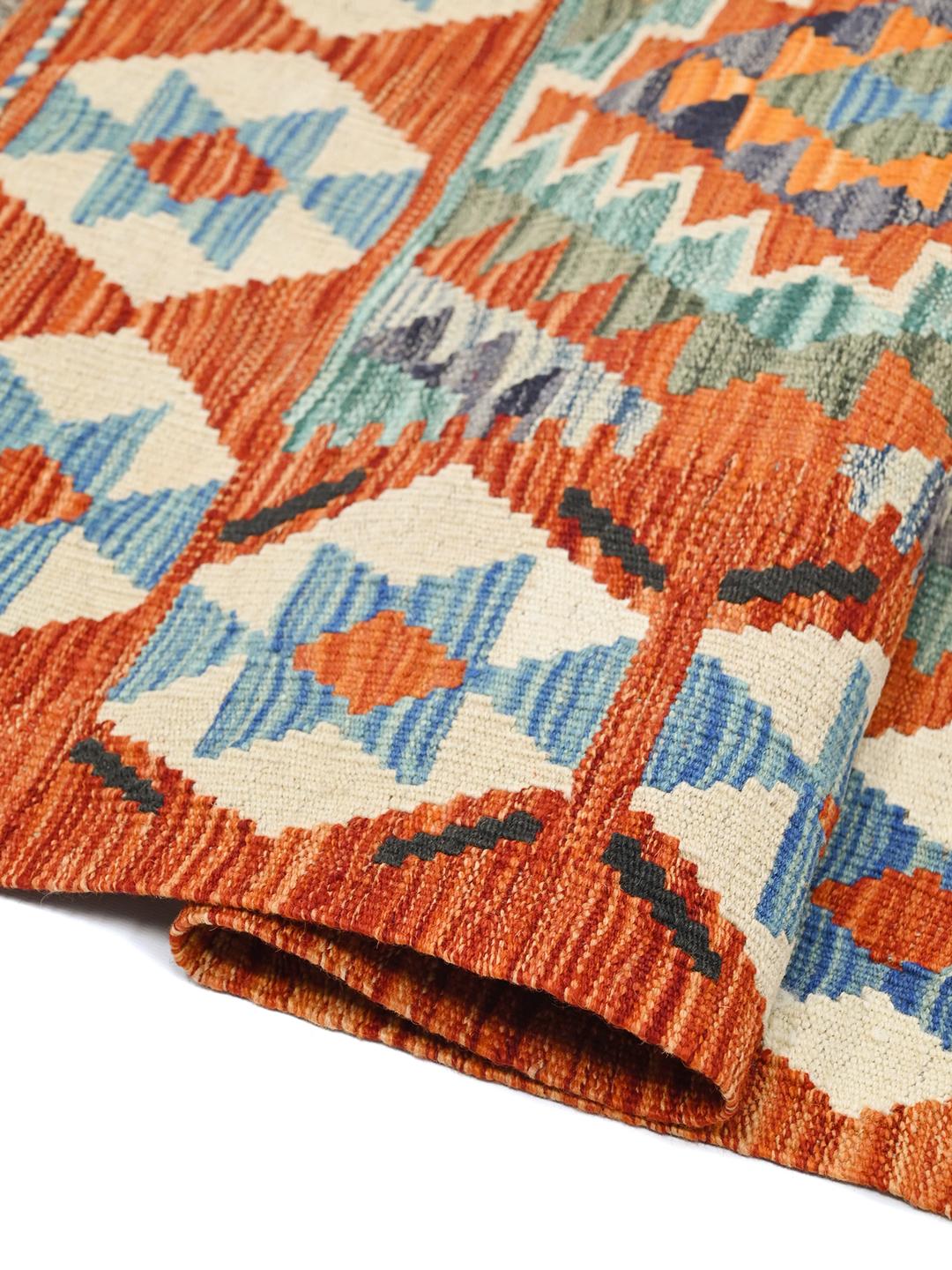
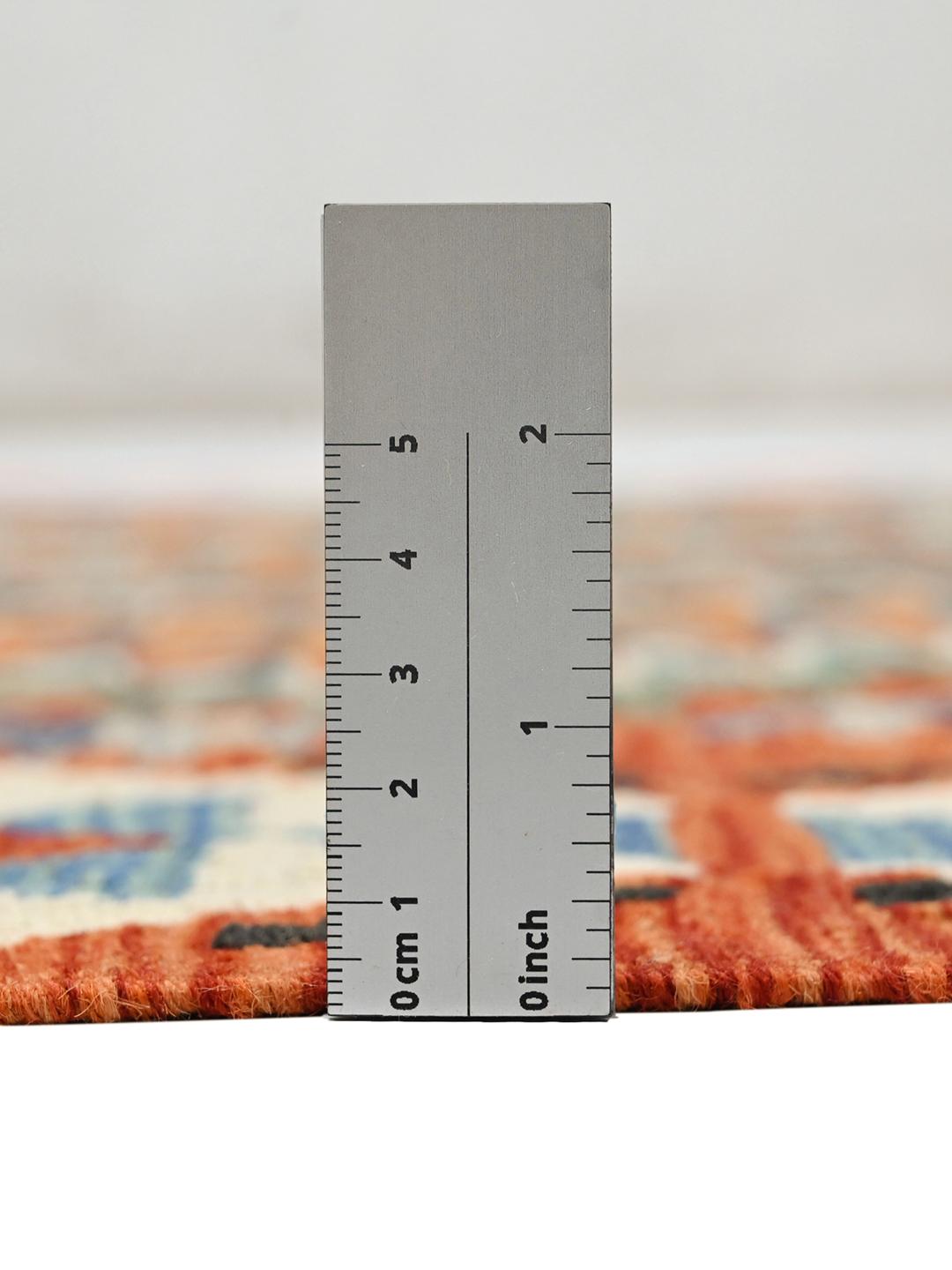
The term Kelim refers to the specific flat-weaving technique where the weft threads are passed through the warp threads to create the design. Because there is no pile, the resulting rug is reversible and incredibly durable. This technique allows for the creation of sharp, clean geometric patterns that are characteristic of the region's design language.
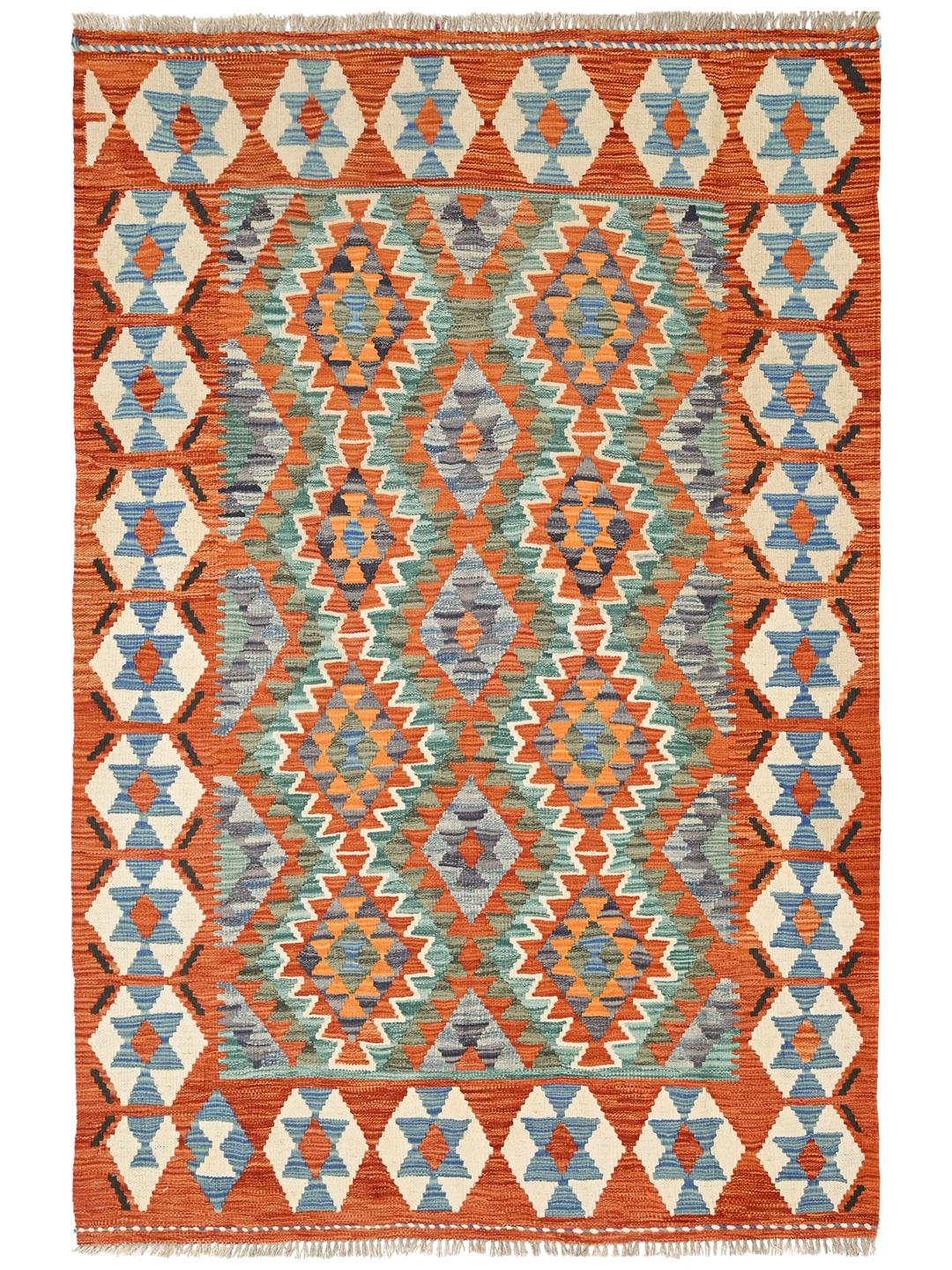
Geometric motifs, such as the diamonds seen here, are central to the visual vocabulary of these rugs. These patterns often hold symbolic meaning, representing elements of nature, protection, or tribal identity. The use of a vibrant colour palette, including deep oranges and striking blues, is a hallmark of this tradition, reflecting the bold aesthetic preferences of the weavers.
Collecting these rugs is an investment in cultural heritage. They are valued not only for their aesthetic appeal but also for the skill required to produce them. Owning a piece like this connects the modern home to a long lineage of artisans, preserving a craft that celebrates human expression and the enduring quality of natural materials.