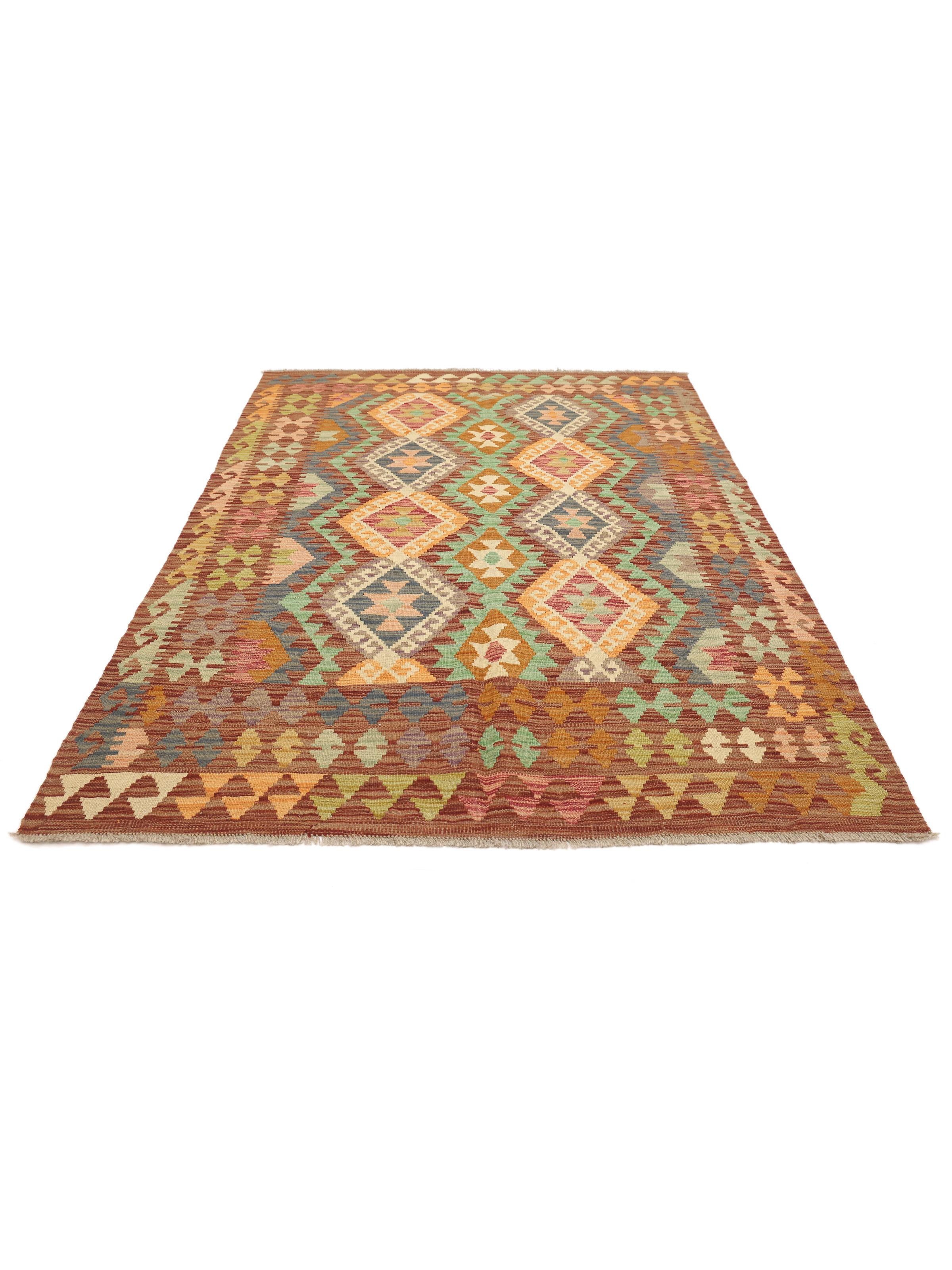
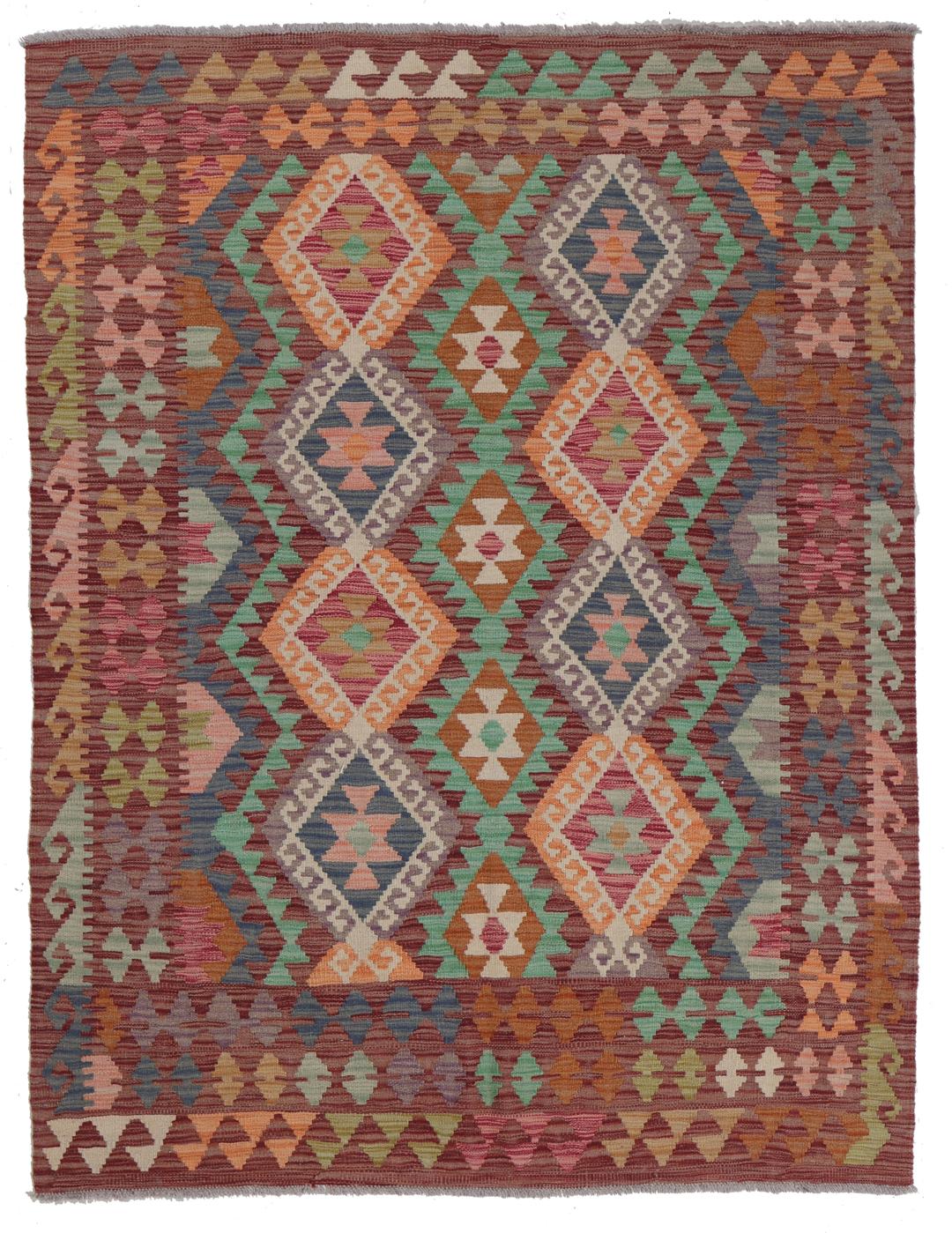
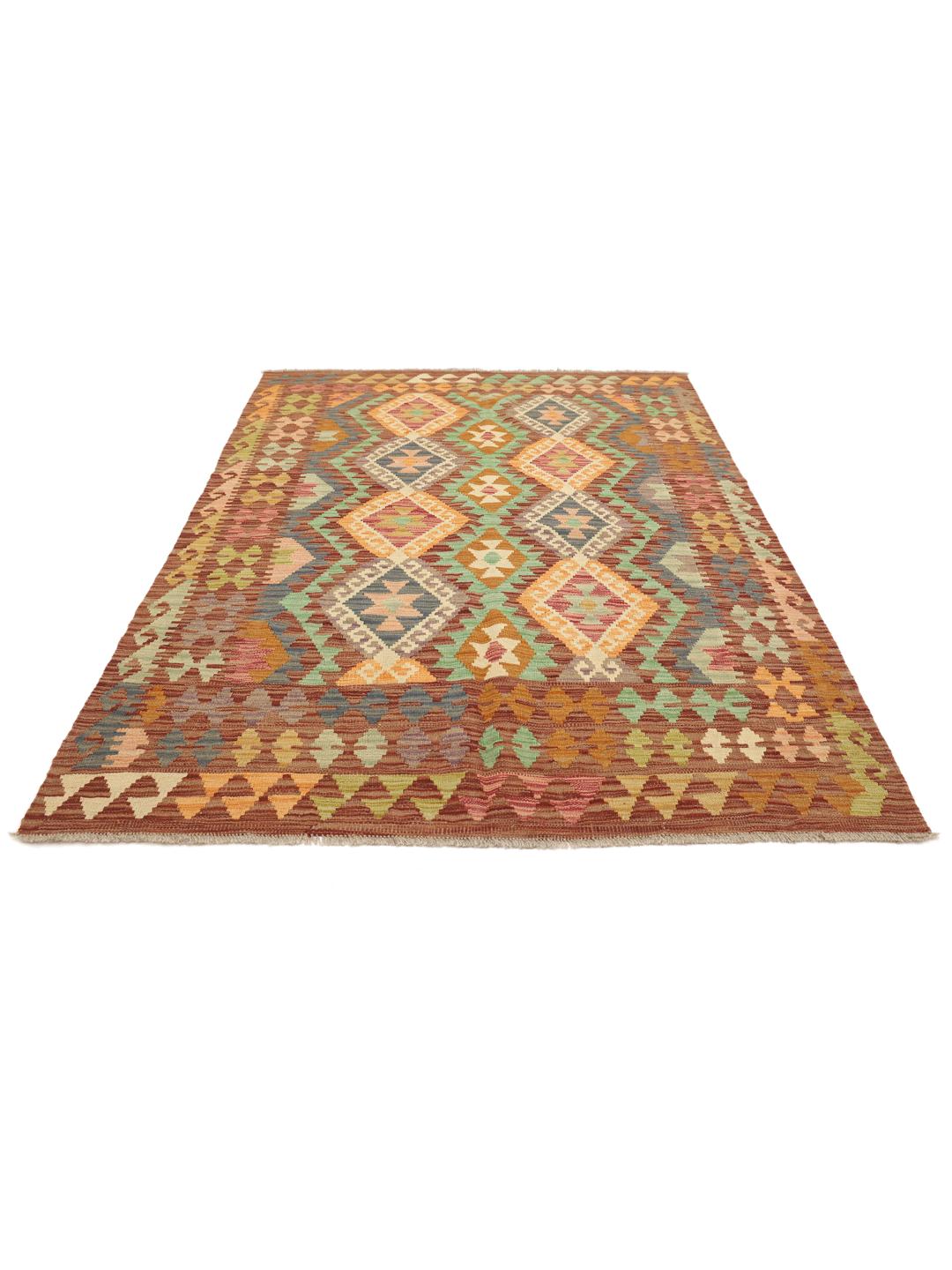
Kelim rugs have long been a cornerstone of the nomadic and village cultures across the Middle East and Central Asia. Originally created as functional items for daily life—serving as floor coverings, tent dividers, or storage bags—these textiles are deeply connected to the regions where they were produced, with Afghanistan being a primary hub for this ancient craft.
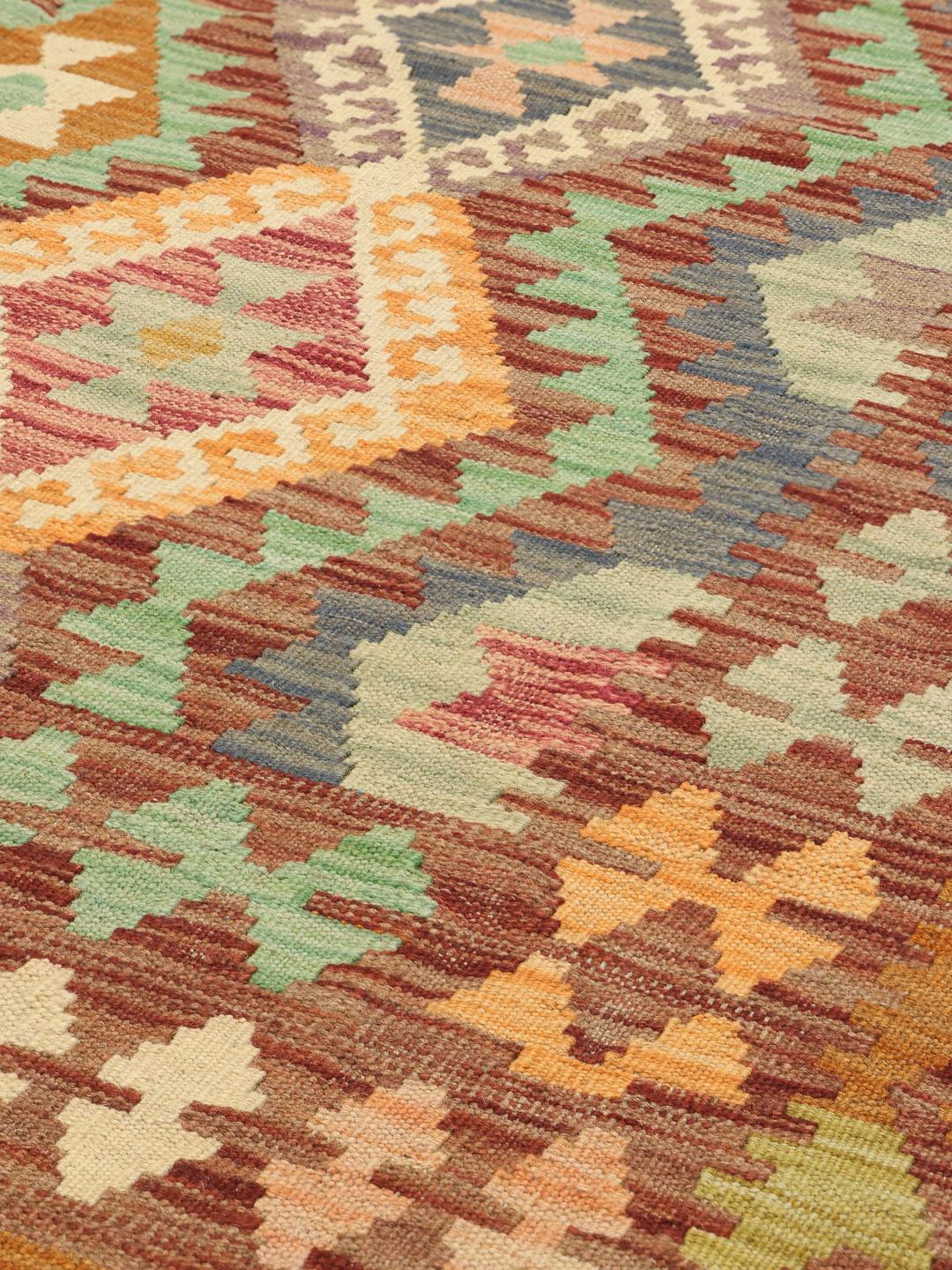
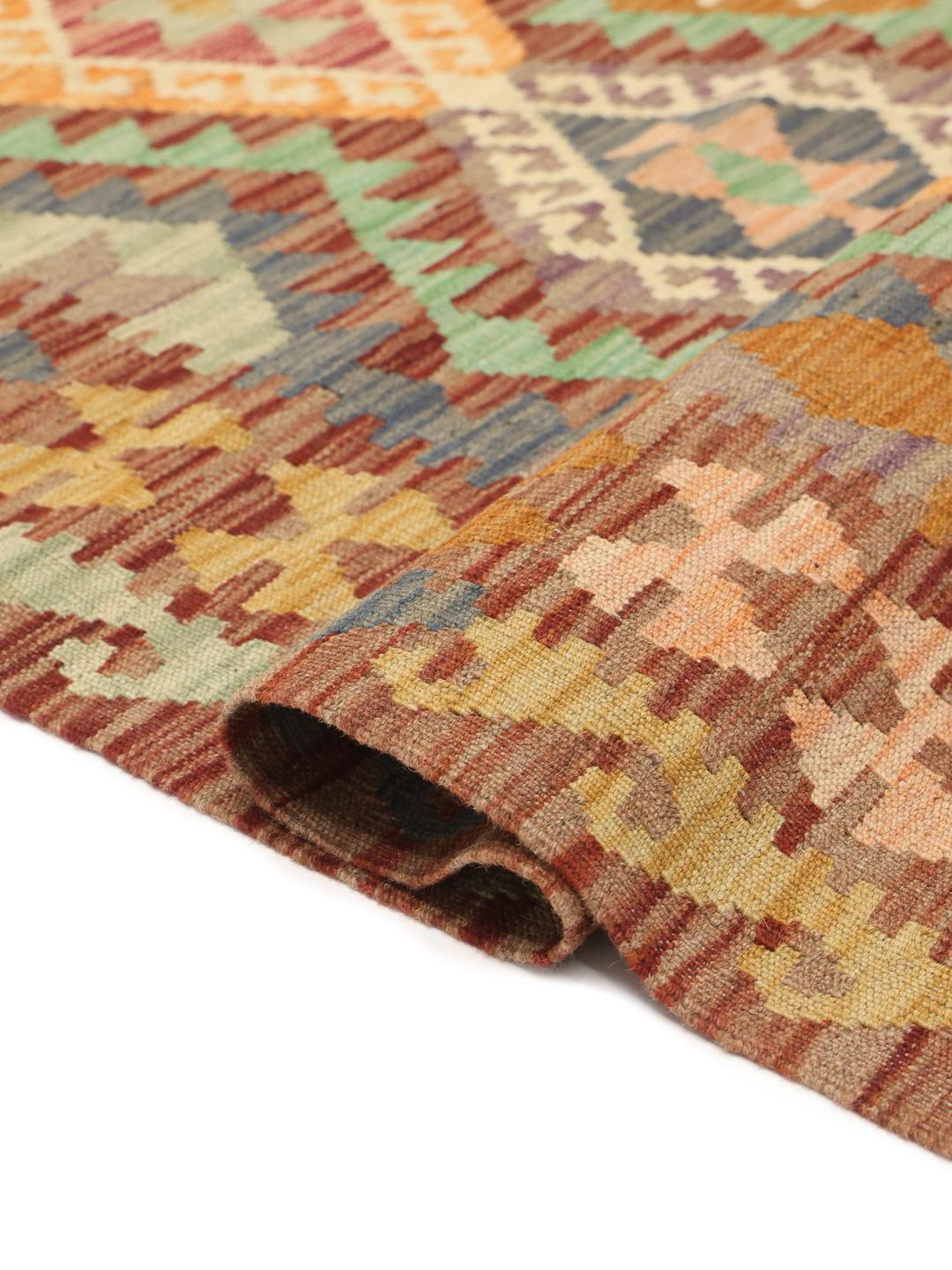
The term Kelim refers to the specific flat-weave technique, where the warp and weft are interlocked to create a surface without a pile. This method is highly prized for its durability and the clarity it brings to geometric designs. Because the pattern is created during the weaving process rather than knotted into a foundation, the resulting rug is reversible and incredibly resilient.
Visually, these rugs are defined by bold, geometric motifs, with the diamond being a classic and highly symbolic element. The use of vibrant, natural dyes creates a striking contrast against the traditional red field. This specific rug showcases the classic Afghan style, where the focus remains on repeating patterns that create a balanced, harmonious look.
Collecting a Kelim is an invitation to own a piece of cultural heritage. These rugs represent the skill and dedication of the people who created them, serving as a bridge between ancient traditions and modern living. Their lasting quality and timeless design ensure that they remain valued pieces in homes around the world for generations.