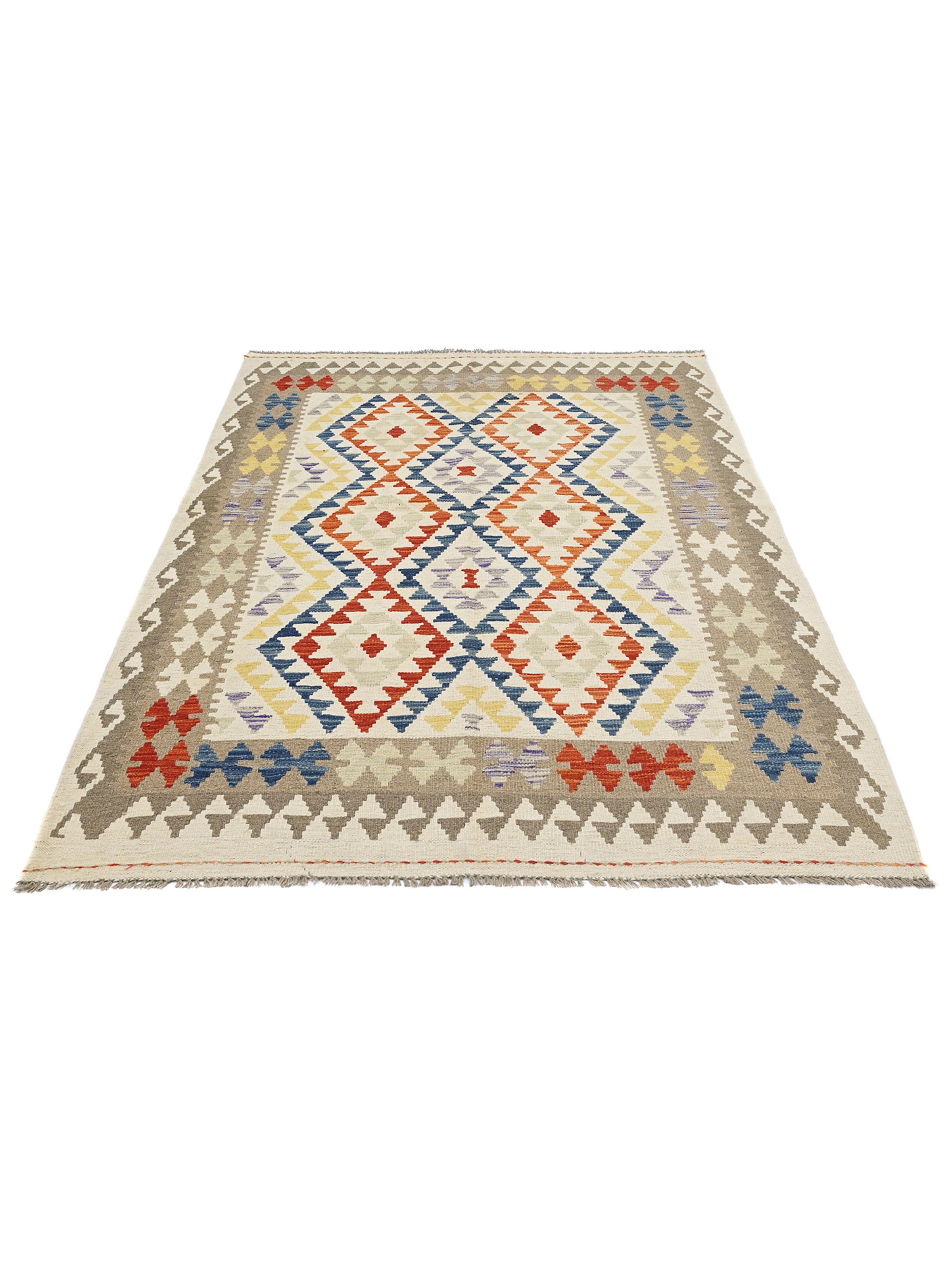
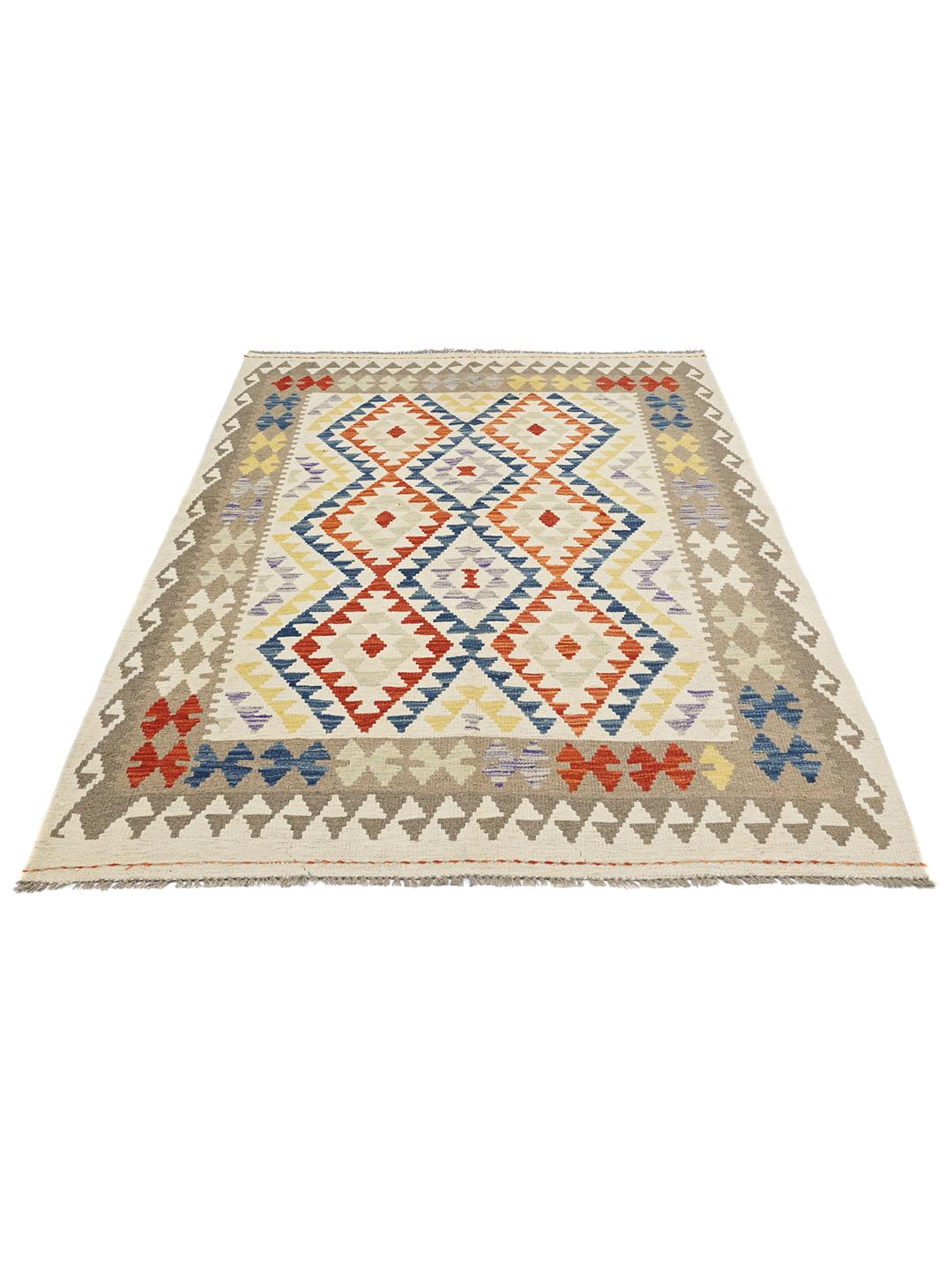
The Kelim tradition in Afghanistan is deeply rooted in the nomadic and semi-nomadic lifestyles of the region. These rugs were historically woven by tribal groups to serve as functional, portable items for the home, used as floor coverings, wall hangings, or even as saddlebags. The craft has been passed down through generations, with each region developing its own distinct visual vocabulary that reflects the landscape and cultural history of its people.
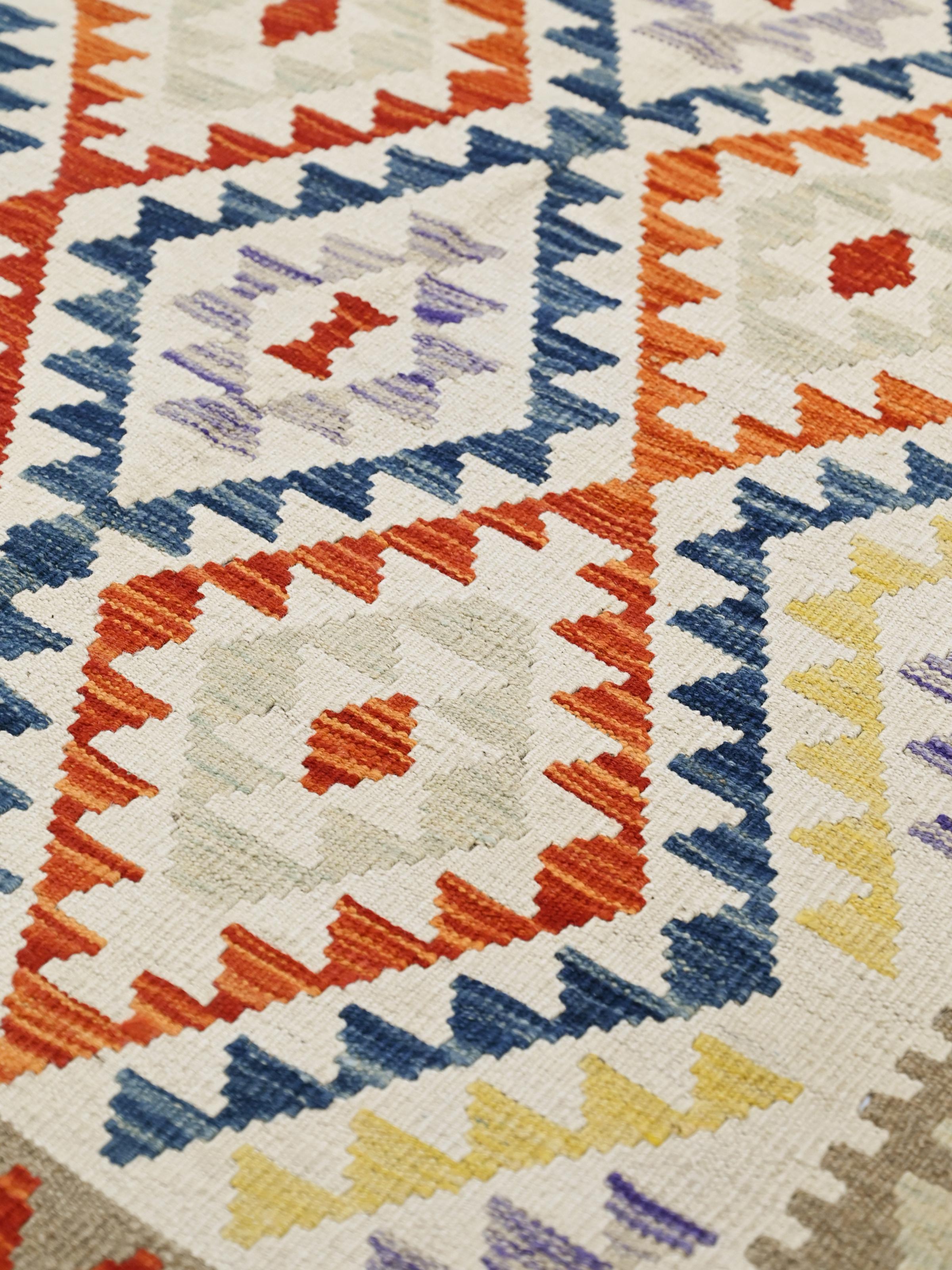
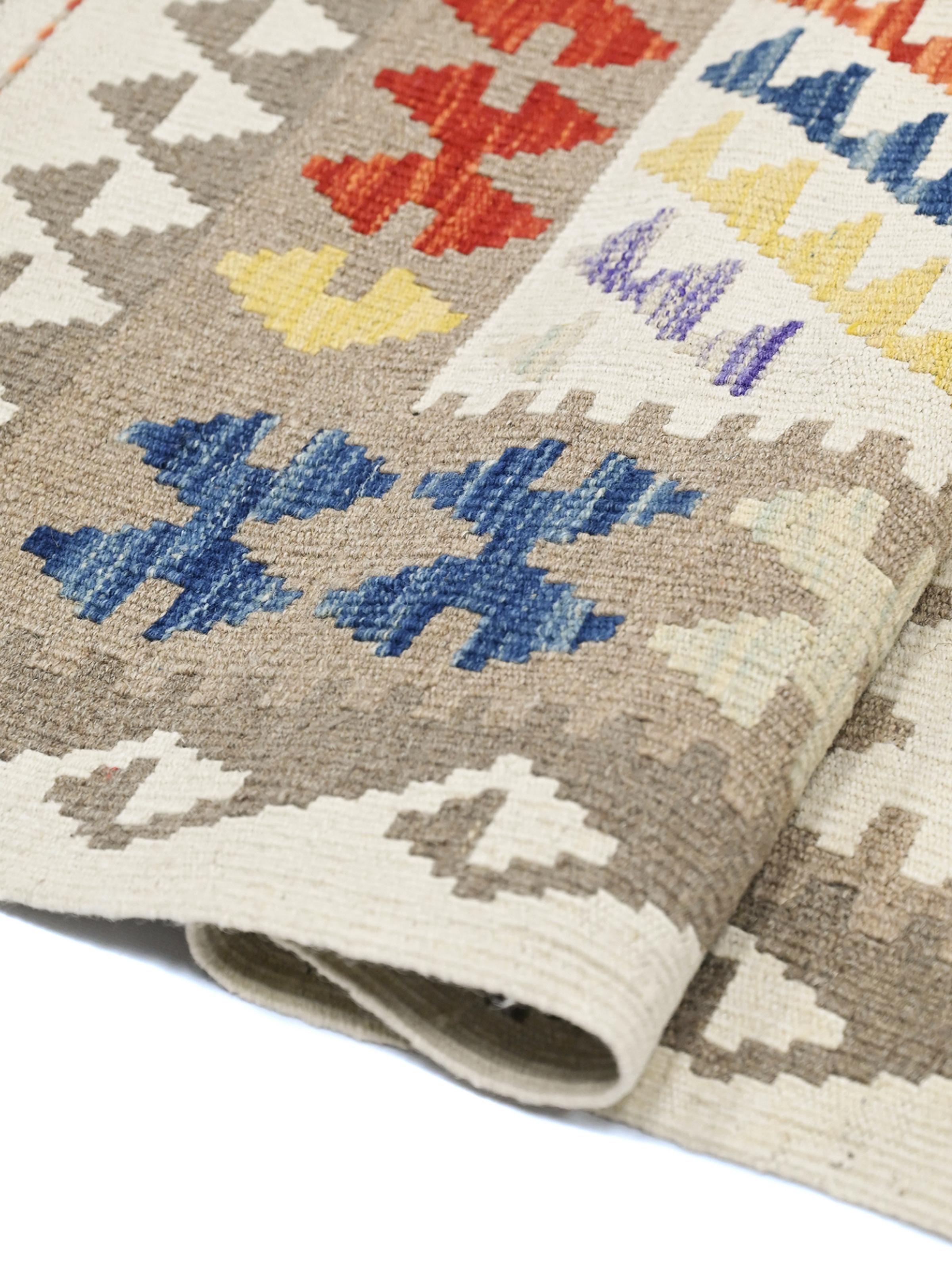
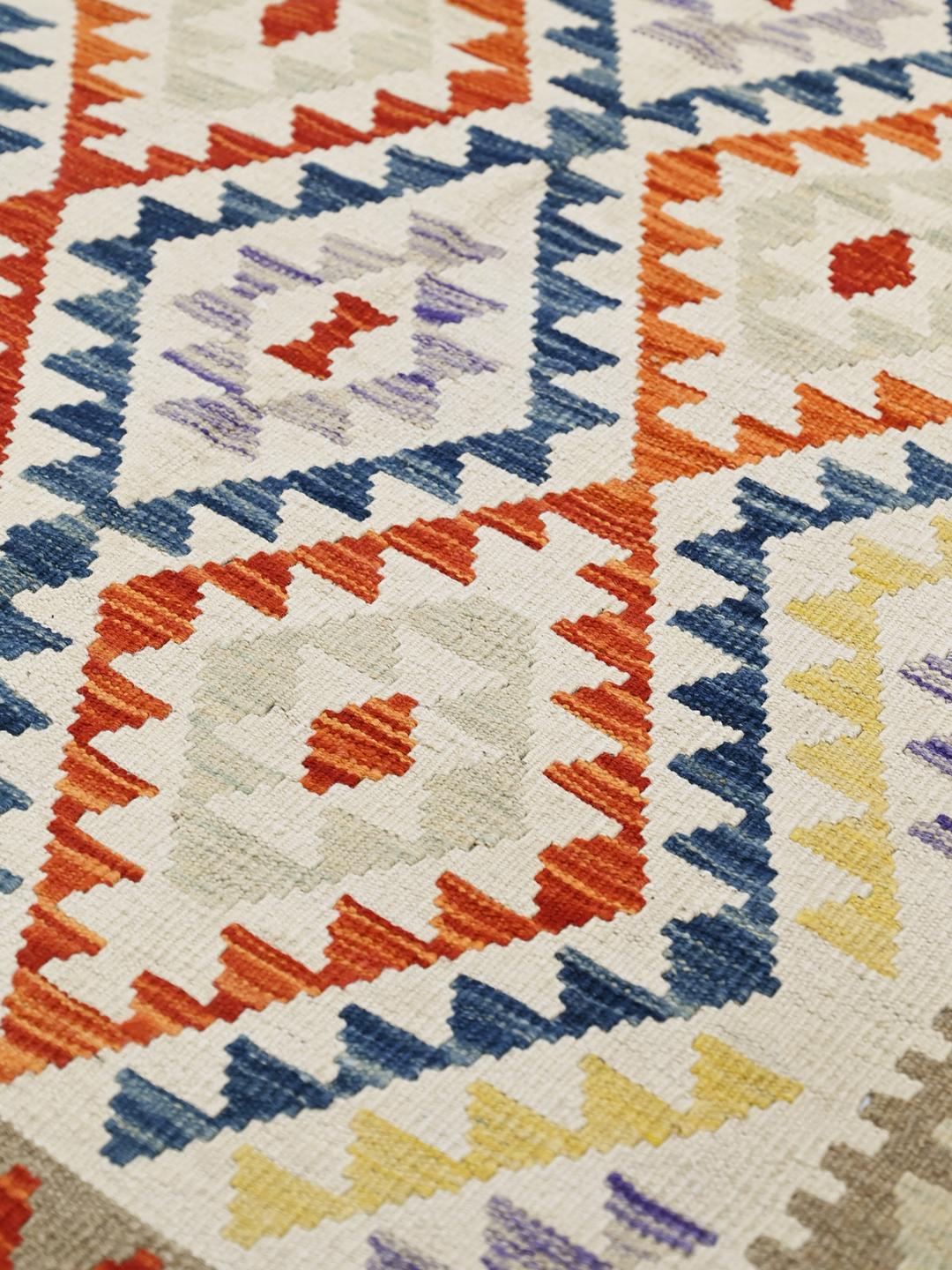
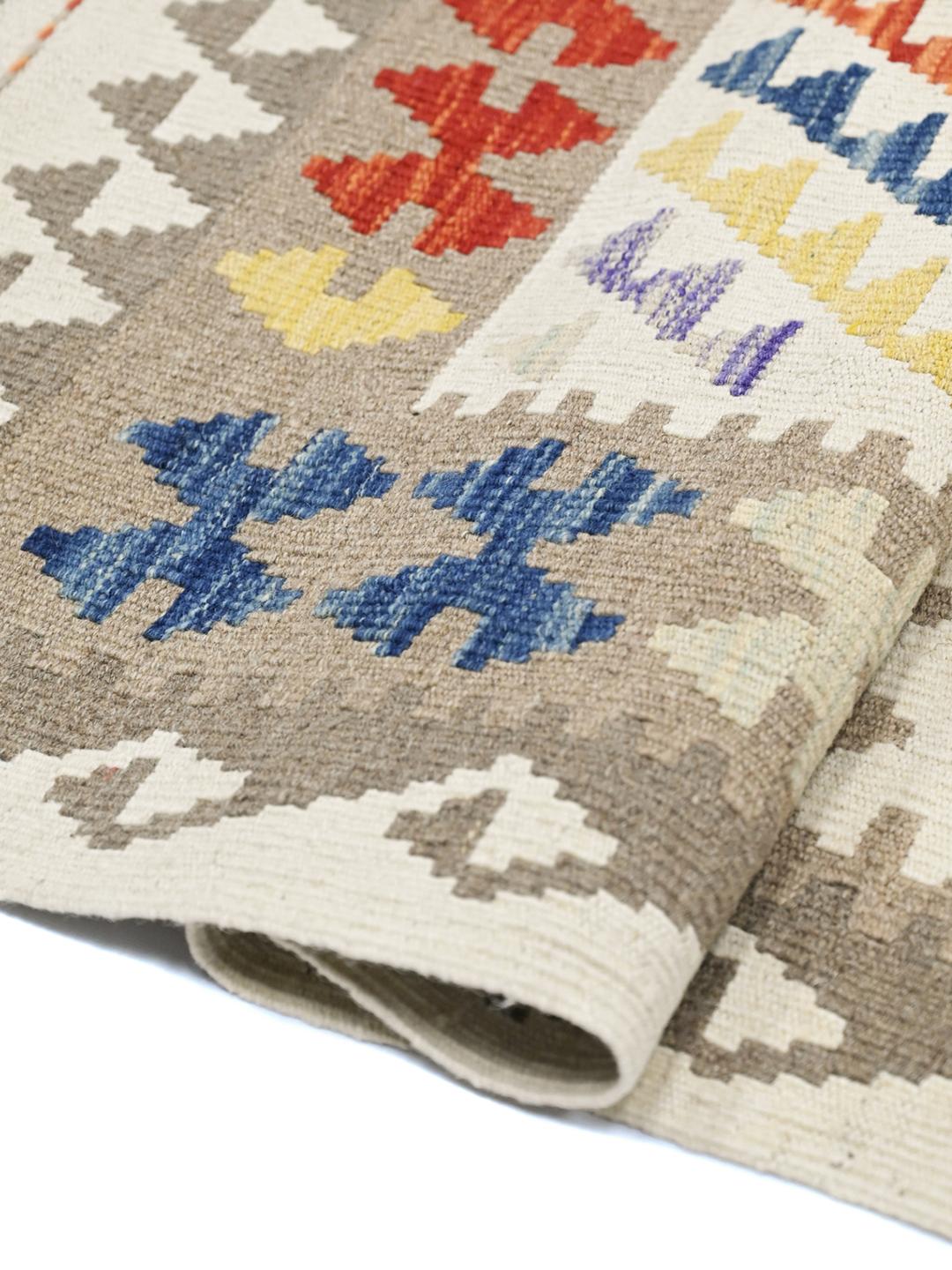
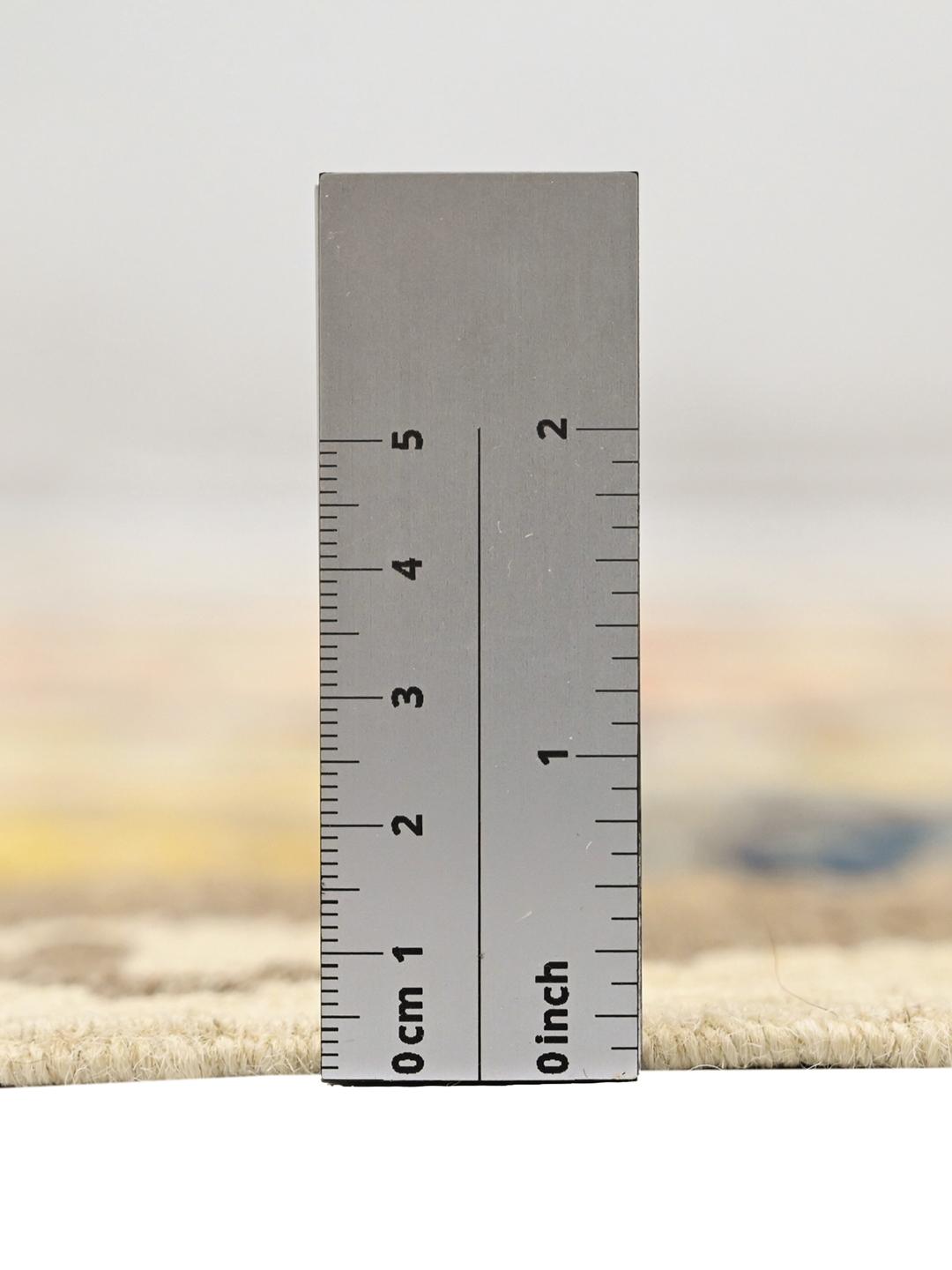
The term 'Kelim' refers to a specific flat-weaving technique that distinguishes these rugs from pile-knotted varieties. By omitting the pile, the weaver creates a thin, lightweight, and incredibly durable fabric that is often reversible. This construction method allows for very sharp, clean lines in the design, as the patterns are formed by the crossing of the coloured weft threads over the warp, resulting in a crisp aesthetic that highlights the skill of the weaver.
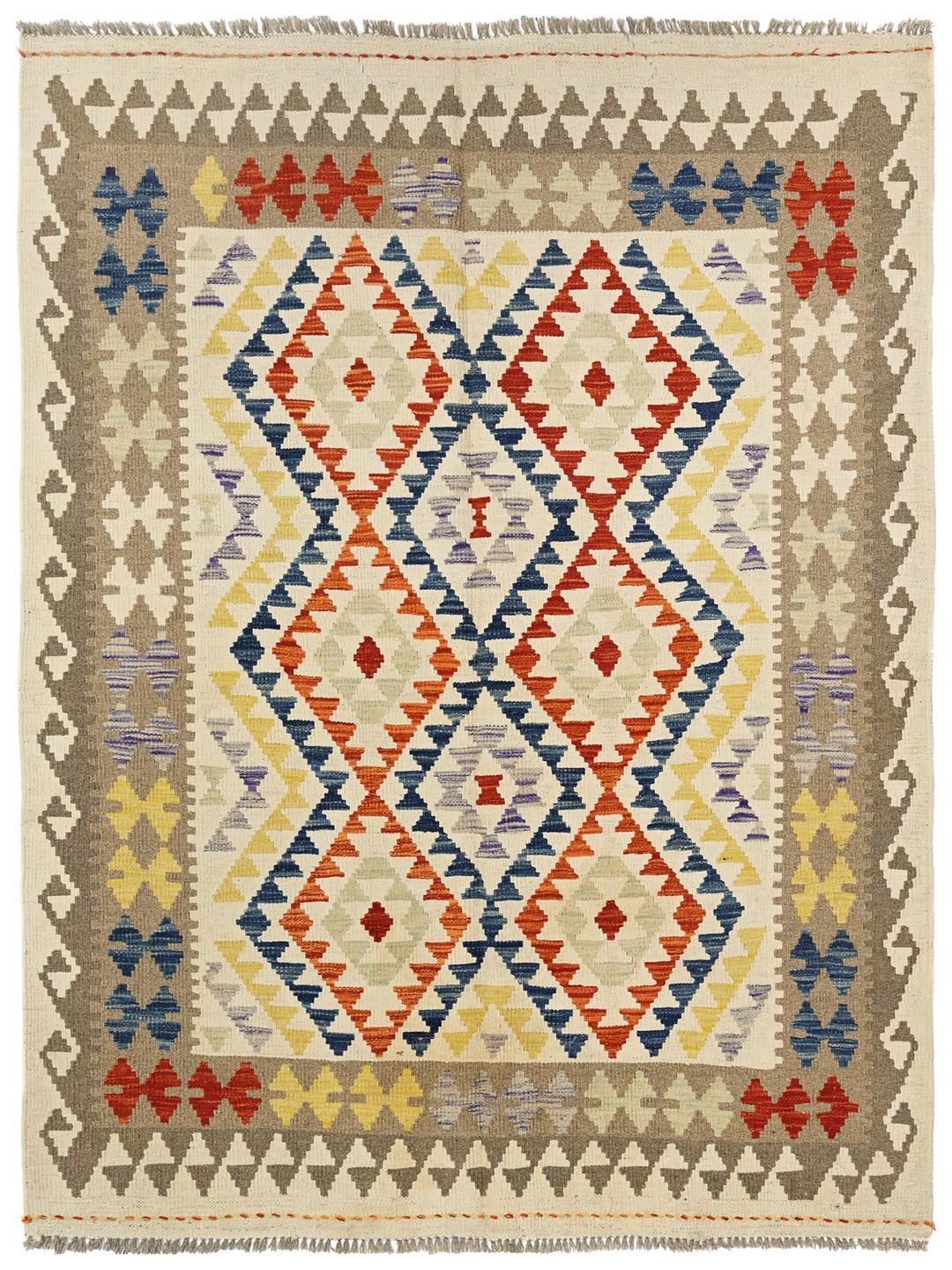
Signature design elements in Afghan Kelims often feature bold, repeated geometric shapes such as diamonds, triangles, and stylised floral motifs. These patterns are not merely decorative but often hold symbolic meaning, representing protection, fertility, or the natural world. The use of vibrant, natural-inspired colours—often derived from local dyes—gives these rugs their characteristic warmth and depth, ensuring they remain visually engaging even after years of use.
Collectors value Afghan Kelims for their authenticity and the clear reflection of human artistry they provide. Owning a piece from this tradition is an invitation to connect with a history that spans centuries of trade and cultural exchange along the ancient routes of Central Asia. It is an acquisition that celebrates the preservation of traditional skills and the enduring appeal of hand-made textiles in a modern world.