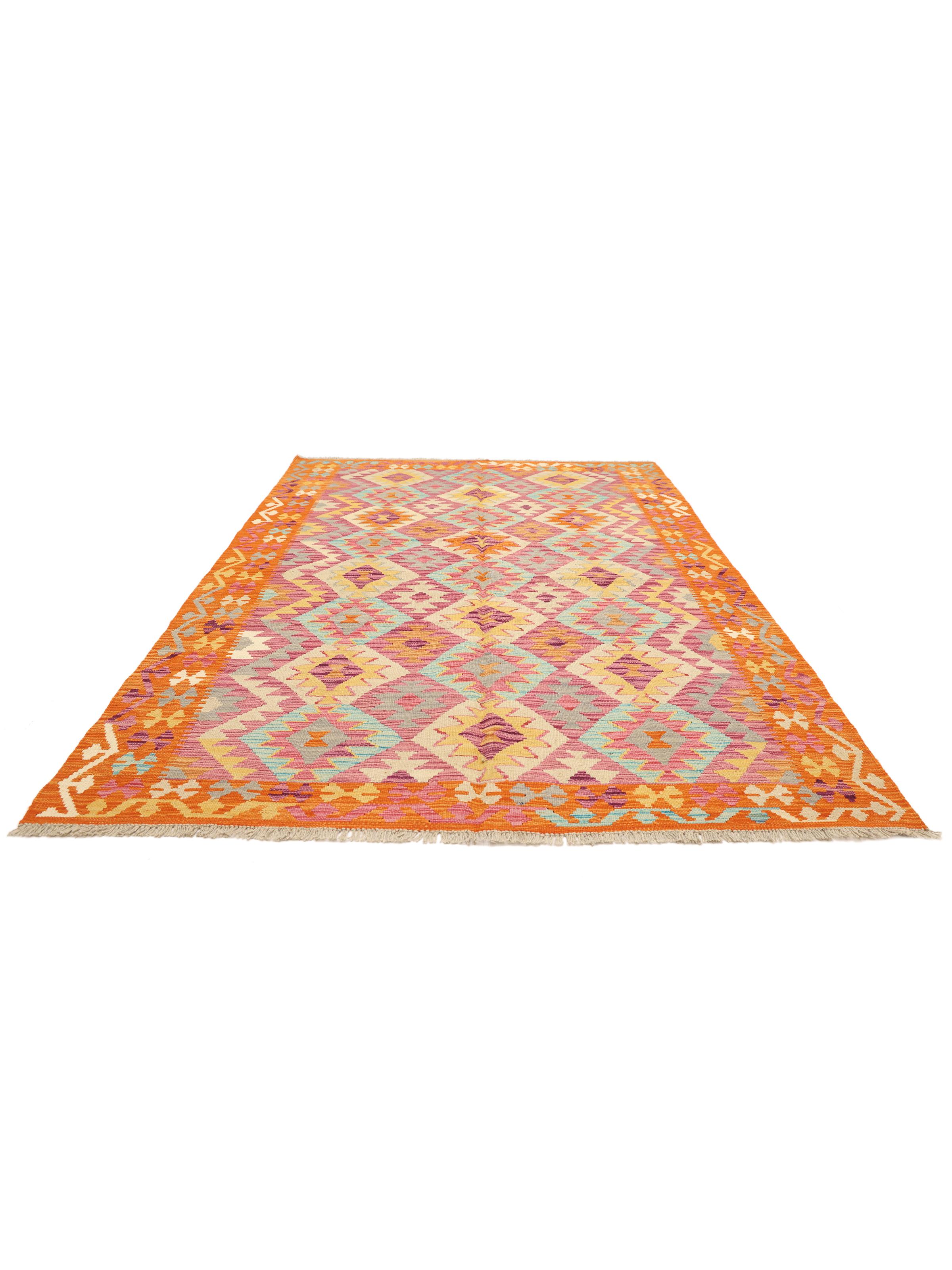
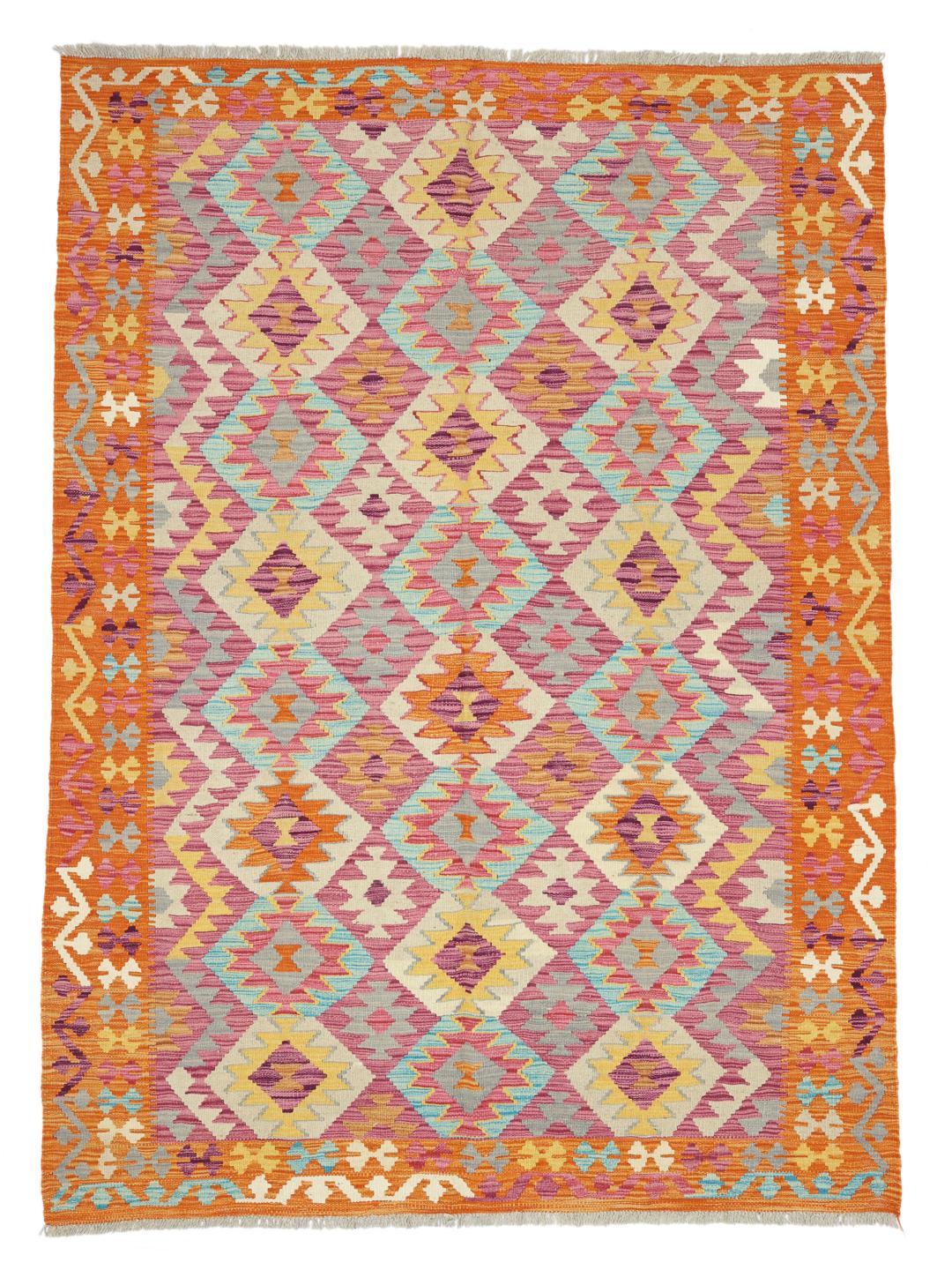
The Kelim tradition finds its roots in the nomadic cultures of the Middle East and Central Asia, where flat-woven textiles were essential for both utility and expression. These rugs were historically used as floor coverings, wall hangings, and storage bags, serving as versatile companions for families on the move. The term Kelim itself refers to the specific slit-weave technique that allows for sharp, crisp geometric designs.
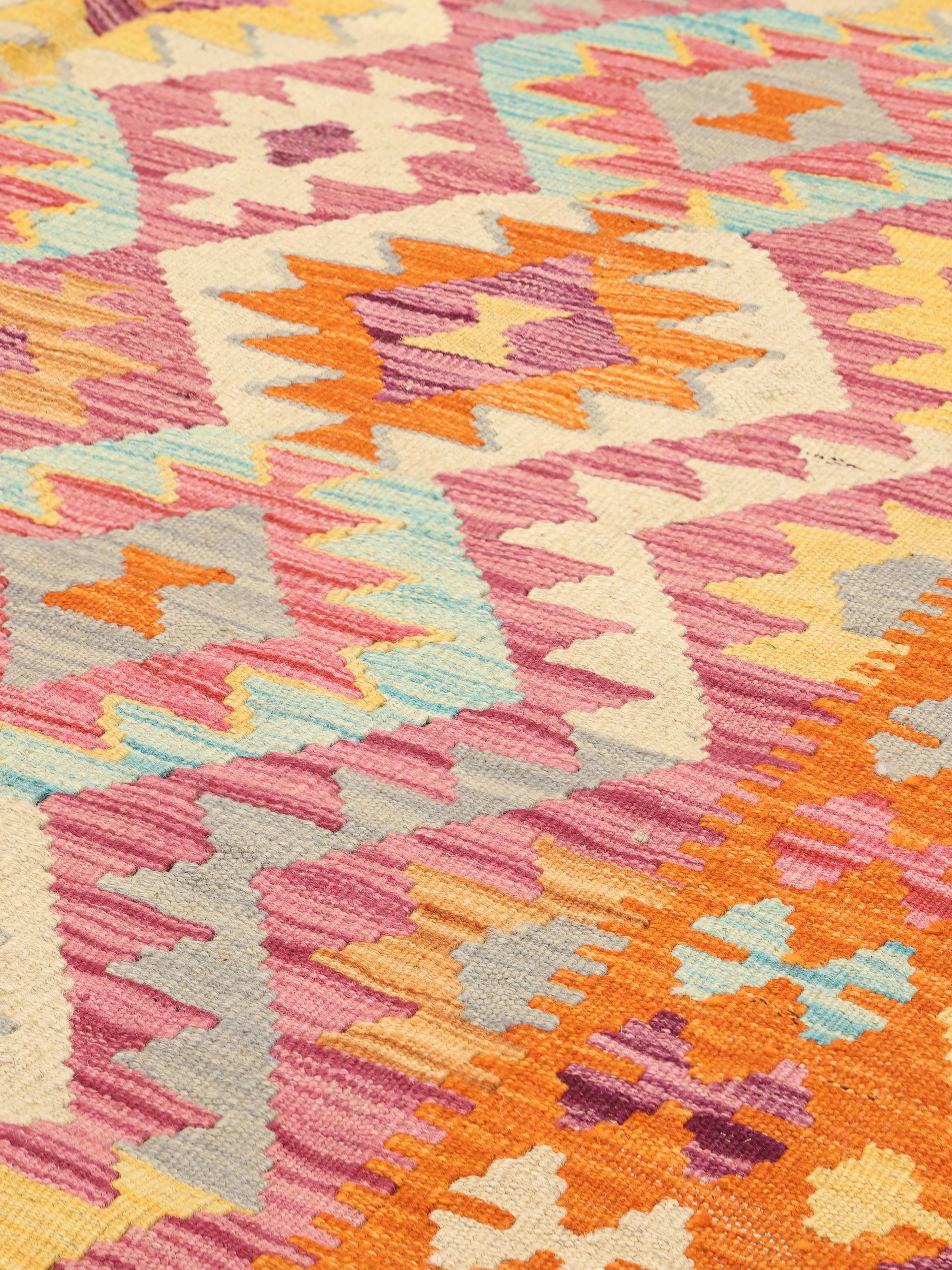
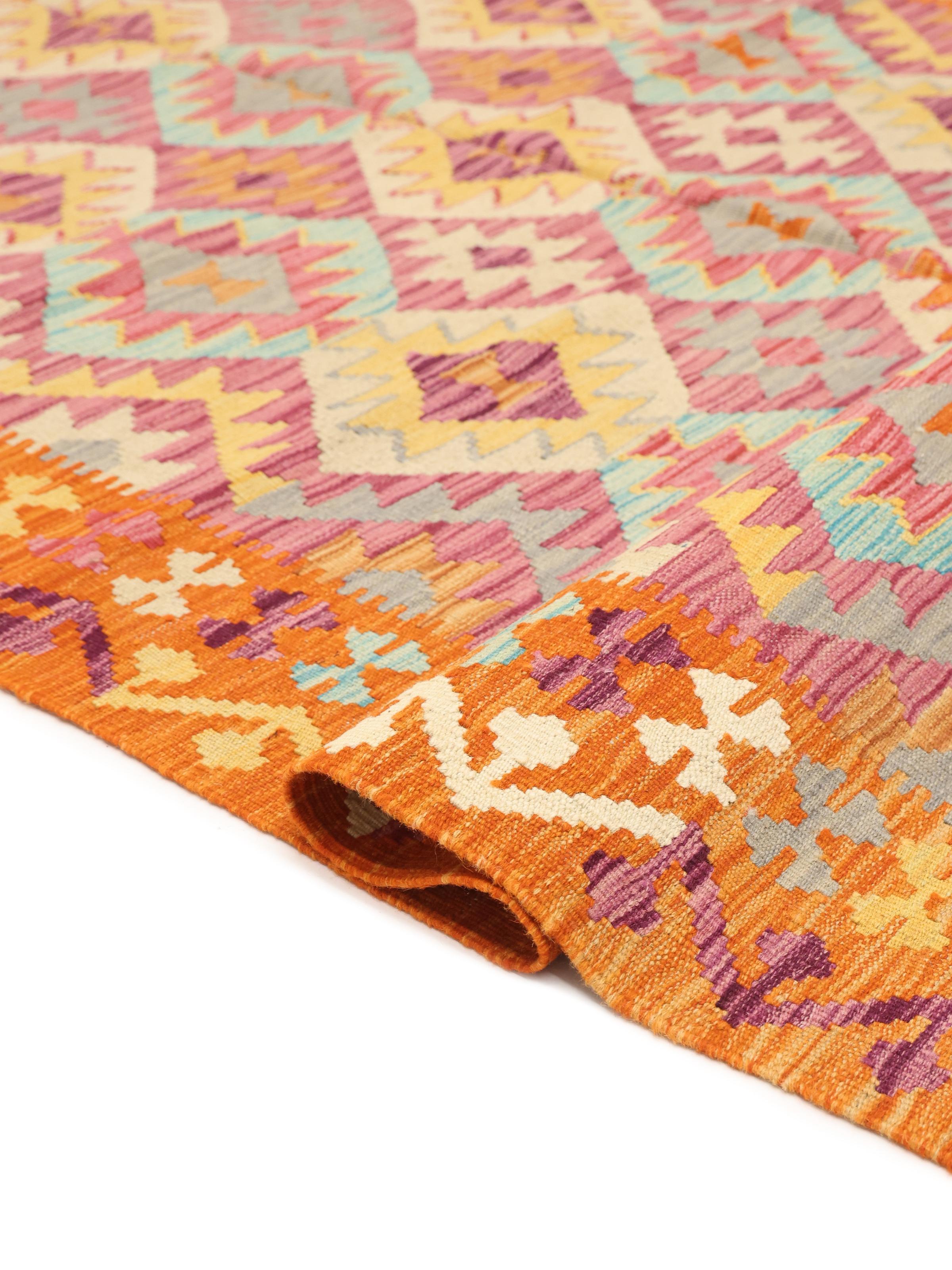
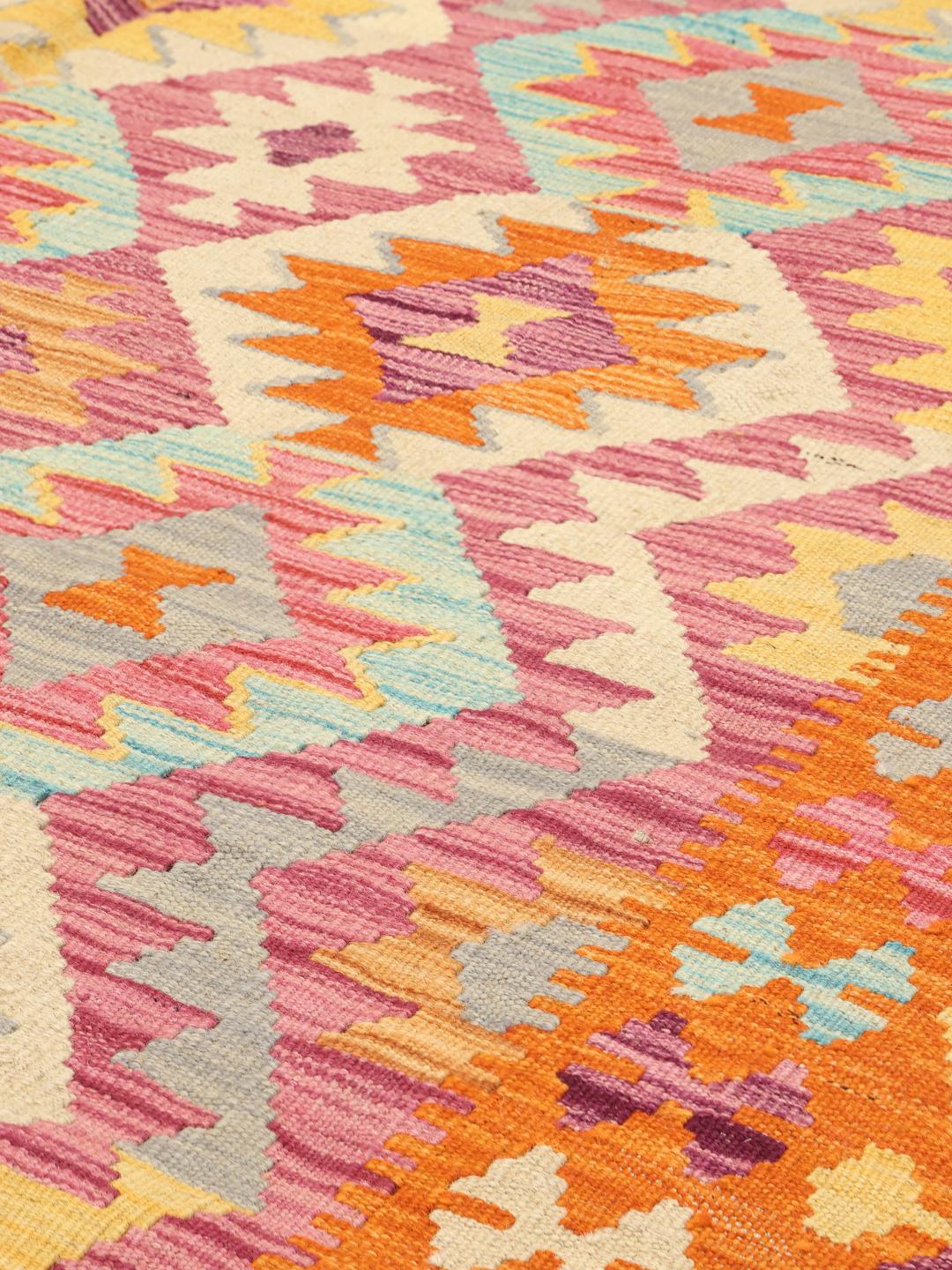
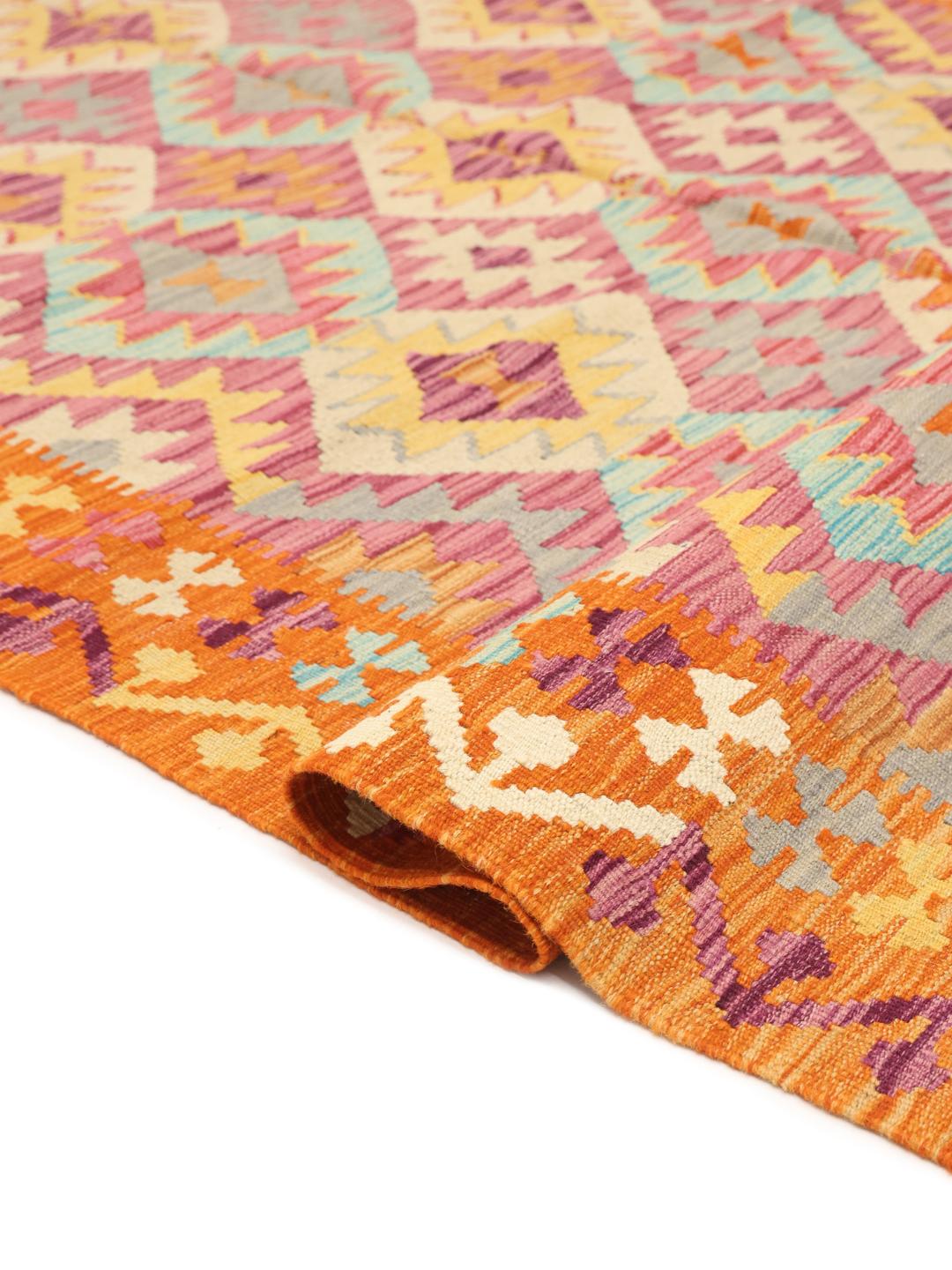
Technical excellence in Kelim production is defined by the tightness of the weave and the precision of the colour changes. By using a flat-weave method, artisans create a reversible rug that is remarkably durable despite its lack of a traditional pile. The quality is judged by how cleanly the lines of the patterns meet, a skill that takes years of practice to master and results in a long-lasting, lightweight floor covering.
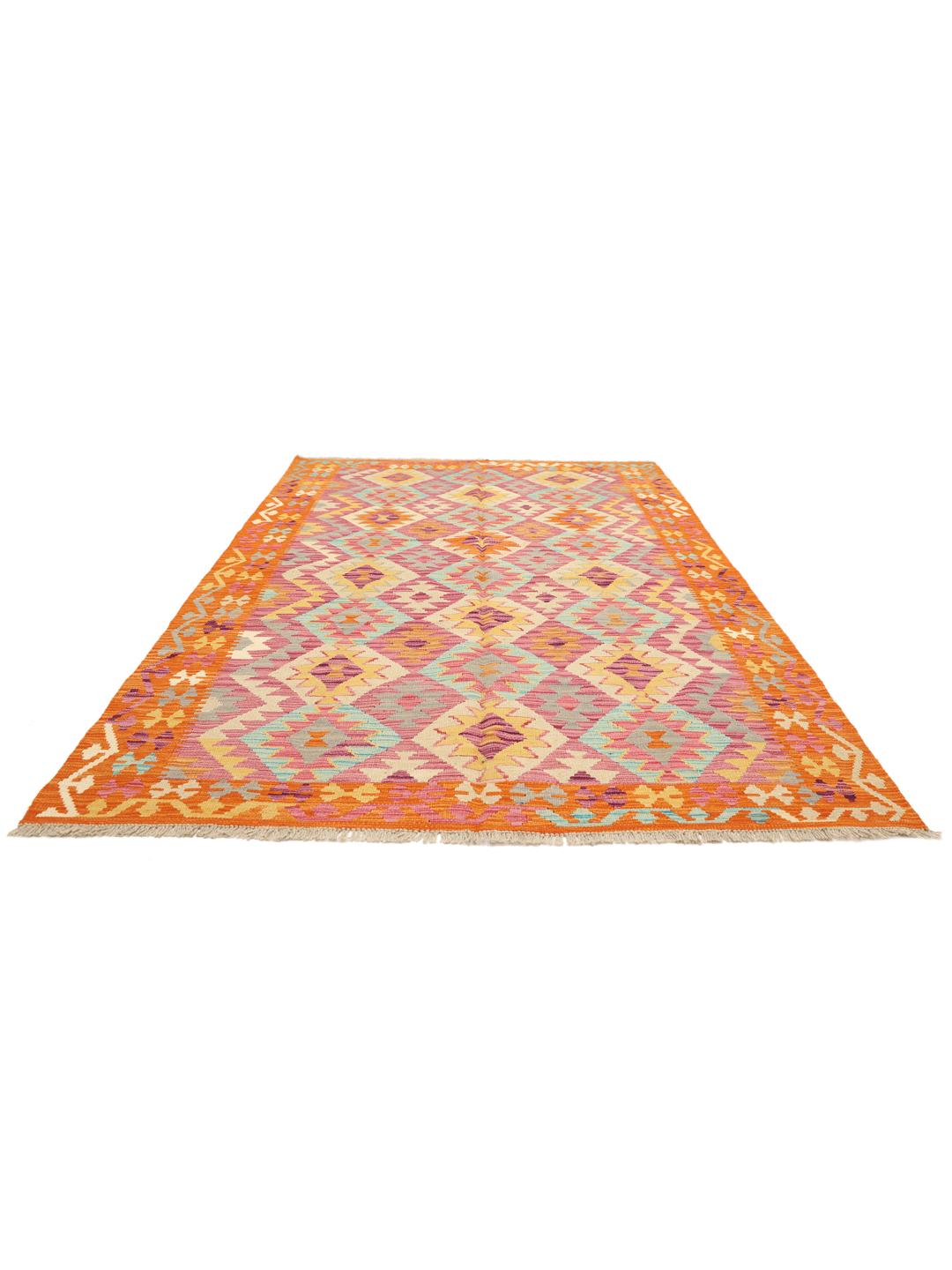
Visually, these rugs are defined by their bold geometric language. The use of repeating diamonds, triangles, and serrated motifs is a hallmark of the tradition, often representing protective symbols or elements of the natural world. This particular piece features a vivid palette that breathes new life into these ancient motifs, showcasing how traditional design can feel both timeless and contemporary.
Owning a Kelim is more than a design choice; it is an act of supporting a craft that has survived for centuries. These rugs are highly valued by collectors for their authenticity and the way they bridge the gap between functional household items and fine art. Each piece acts as a historical record, preserving the regional aesthetics and weaving techniques of its origin.