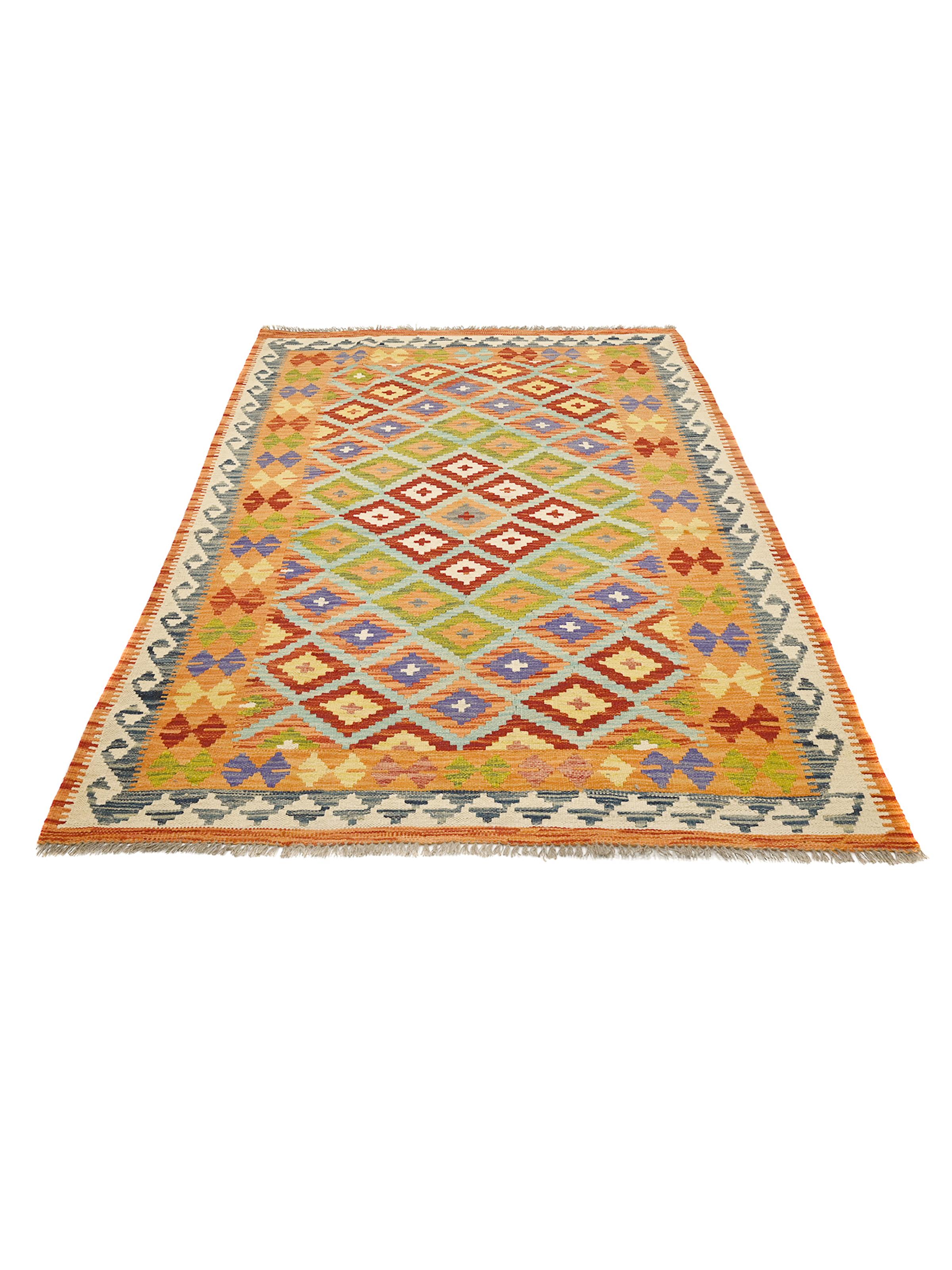
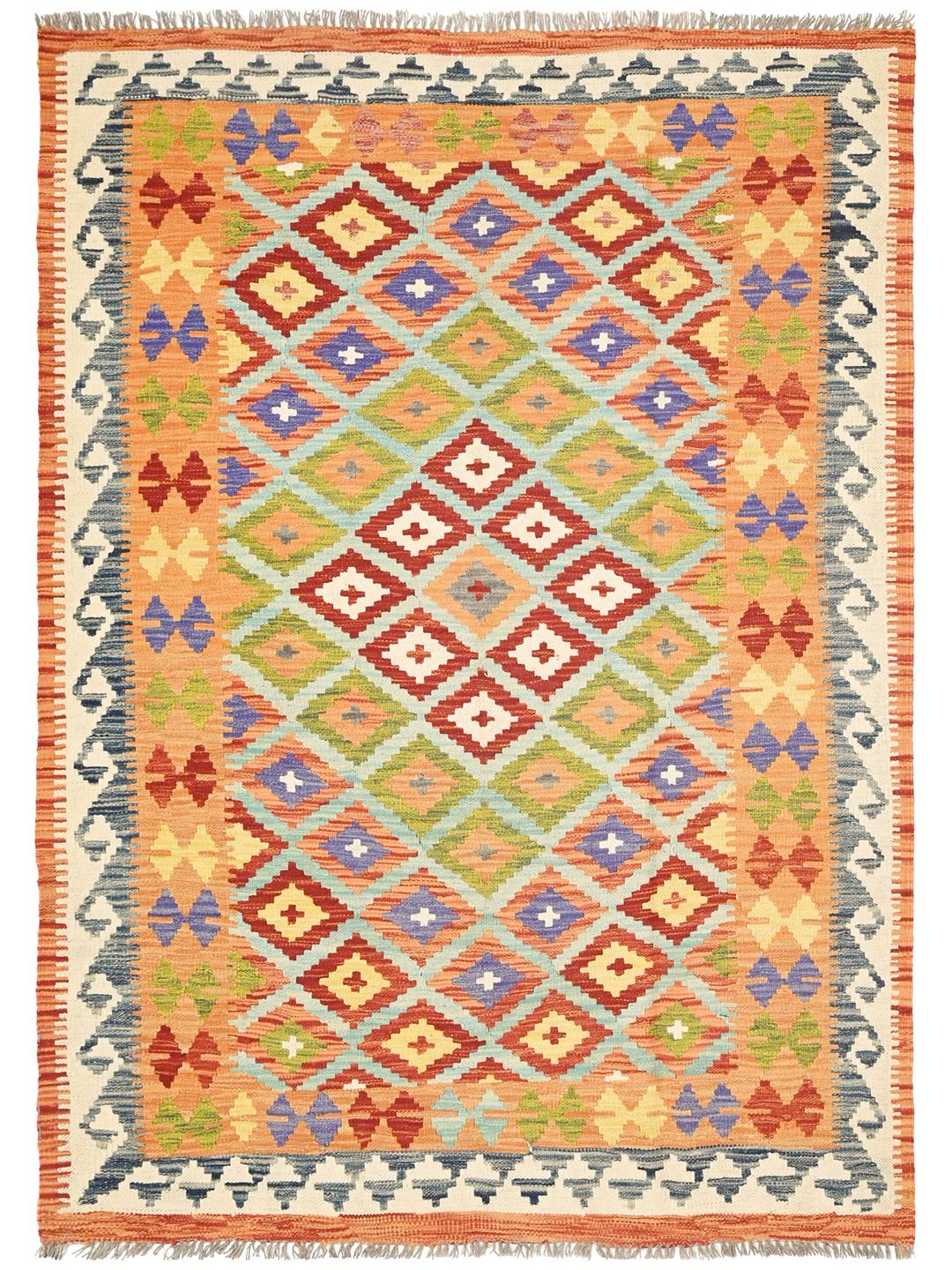
Kelim rugs have long been a cornerstone of nomadic life across the Middle East and Central Asia. Traditionally used as floor coverings, wall hangings, or even bags for transporting goods, these flat-woven textiles were designed to be lightweight, portable, and incredibly durable. The Afghan tradition of weaving is particularly celebrated for its use of rich, earth-toned wool and bold, geometric storytelling.
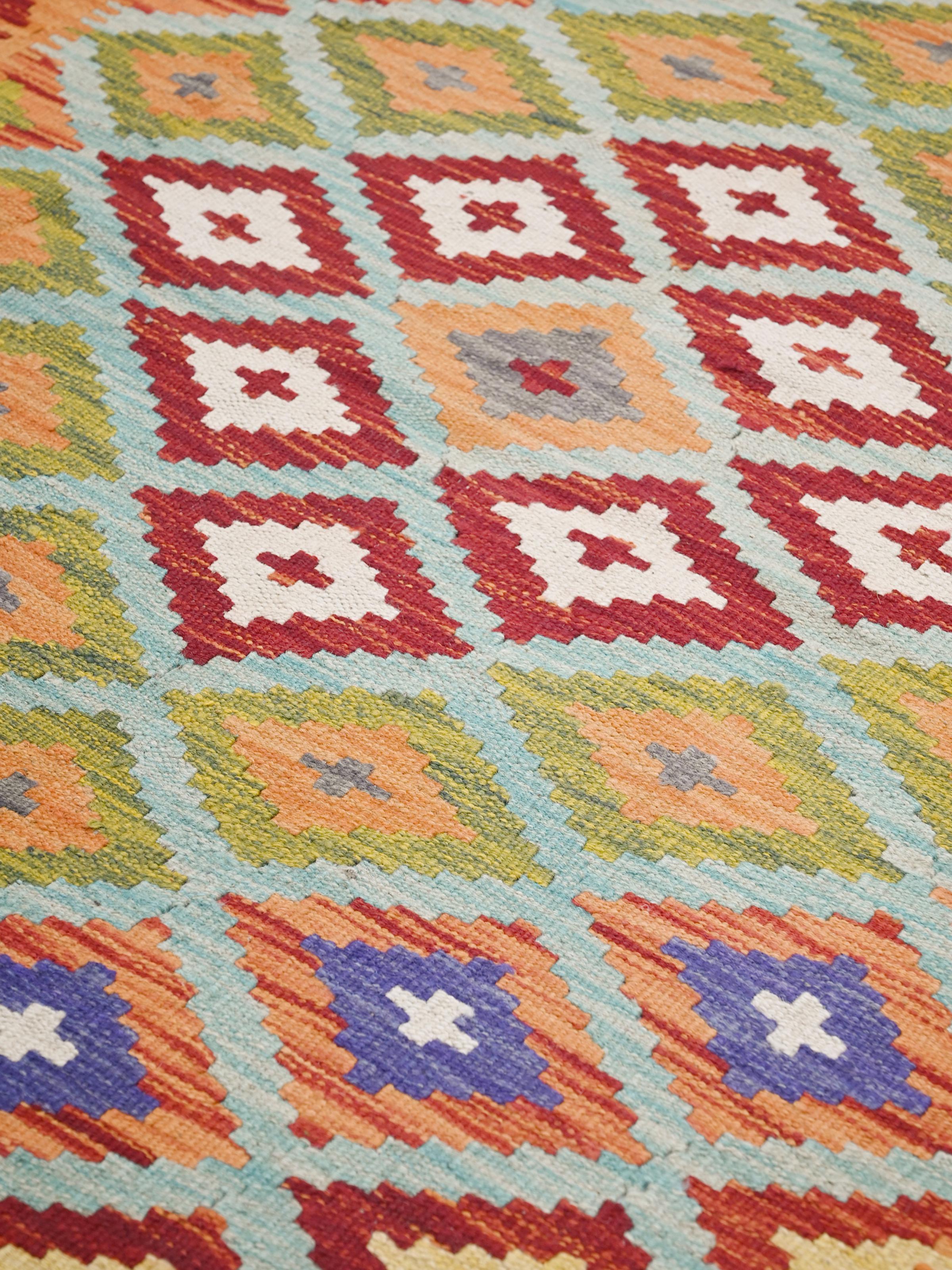
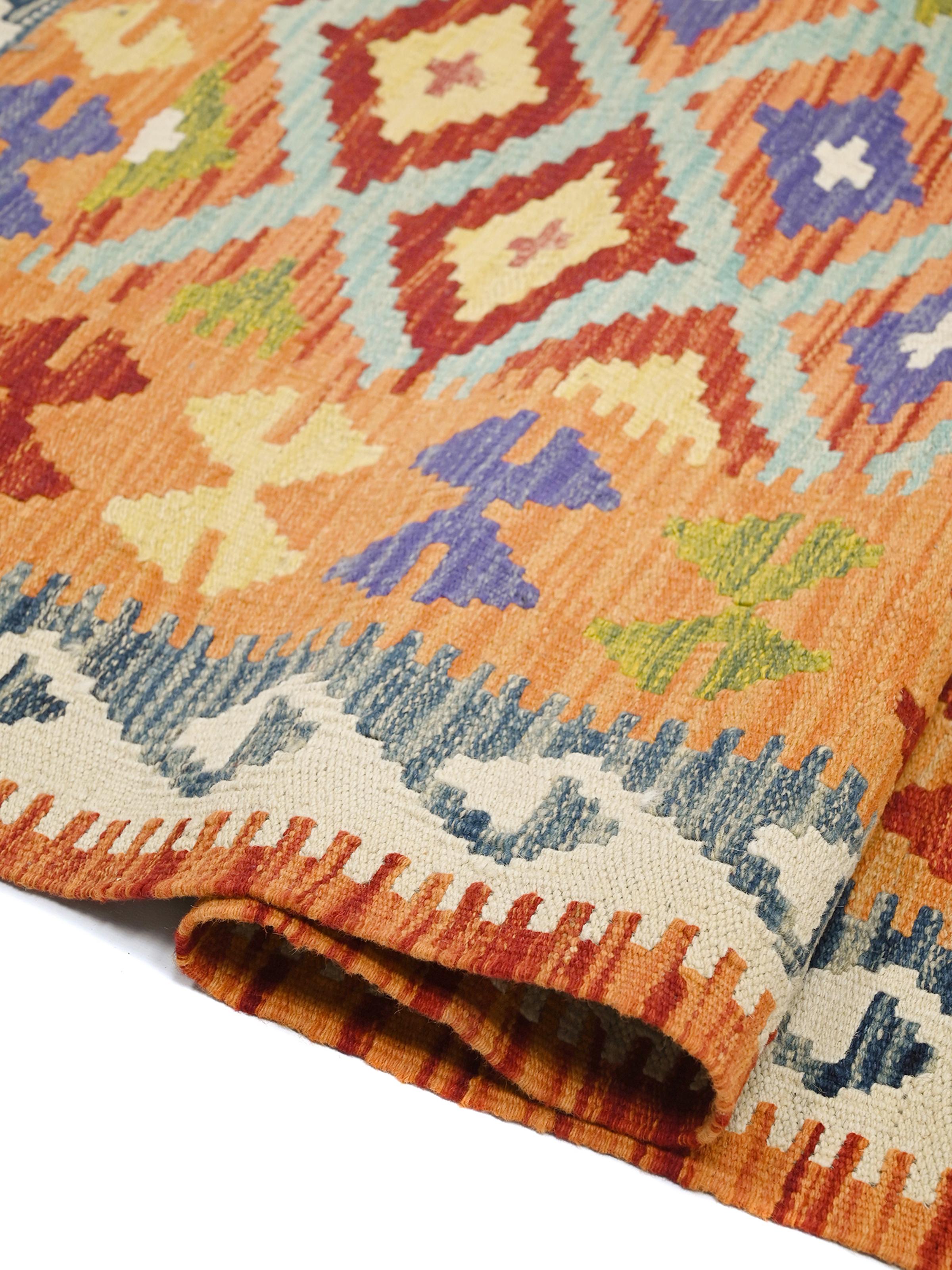
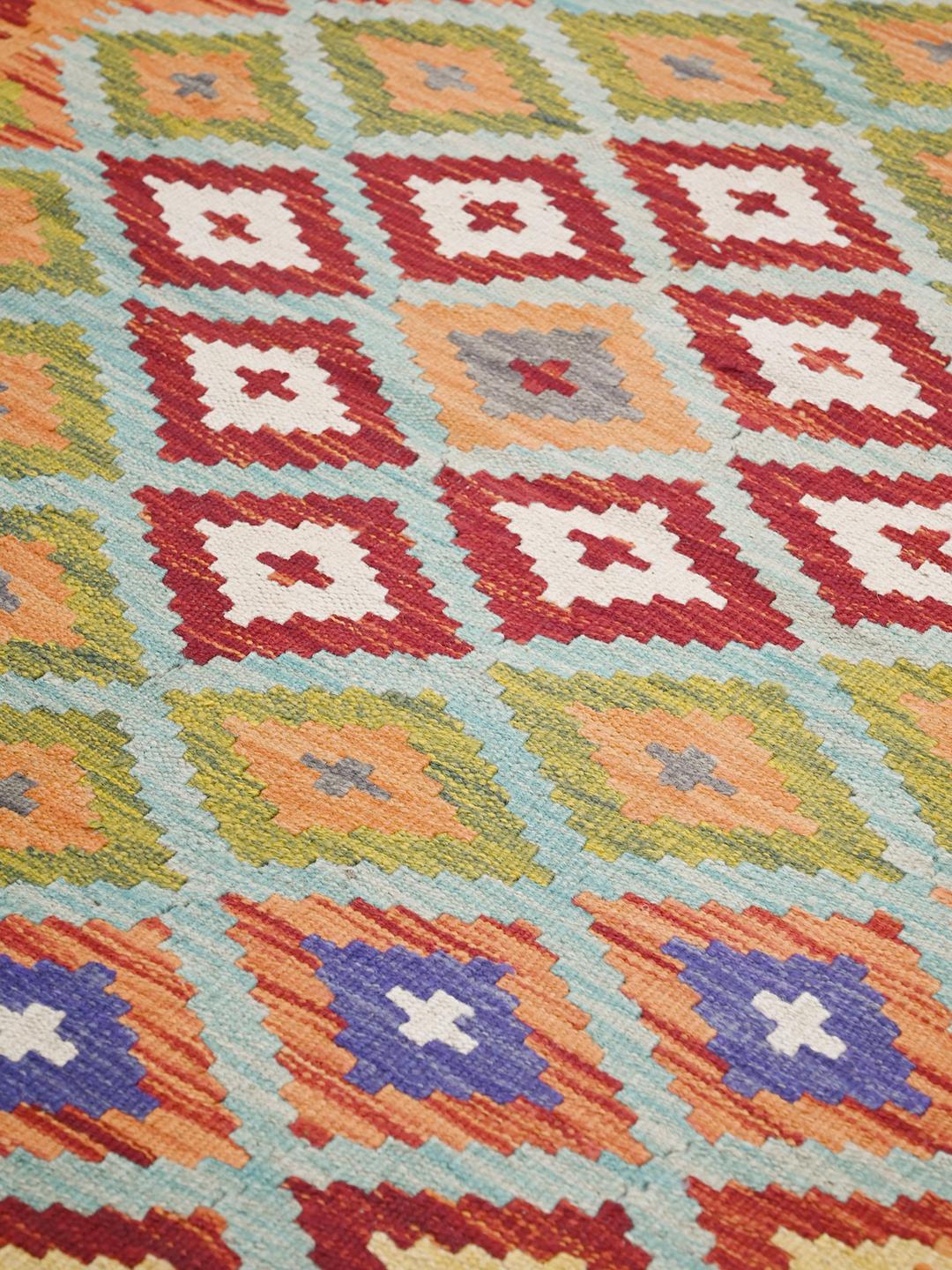
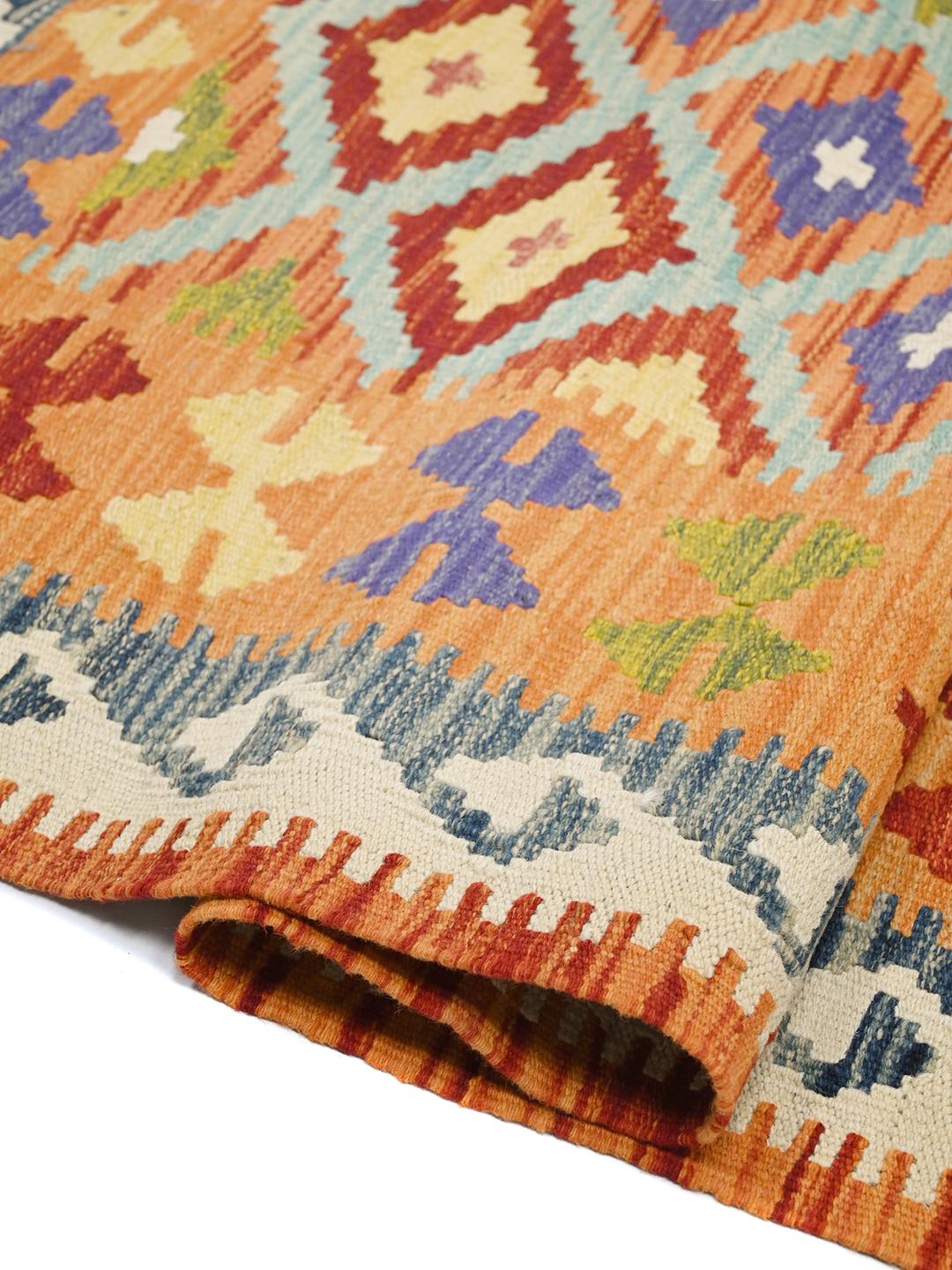
The term Kelim refers to the specific slit-weave technique used to create the patterns. By weaving the coloured weft threads back and forth around the warp, artisans create distinct blocks of colour without using knots. This technique is what gives the rug its signature flat surface and reversible nature, making it a highly practical and versatile choice for the modern home.
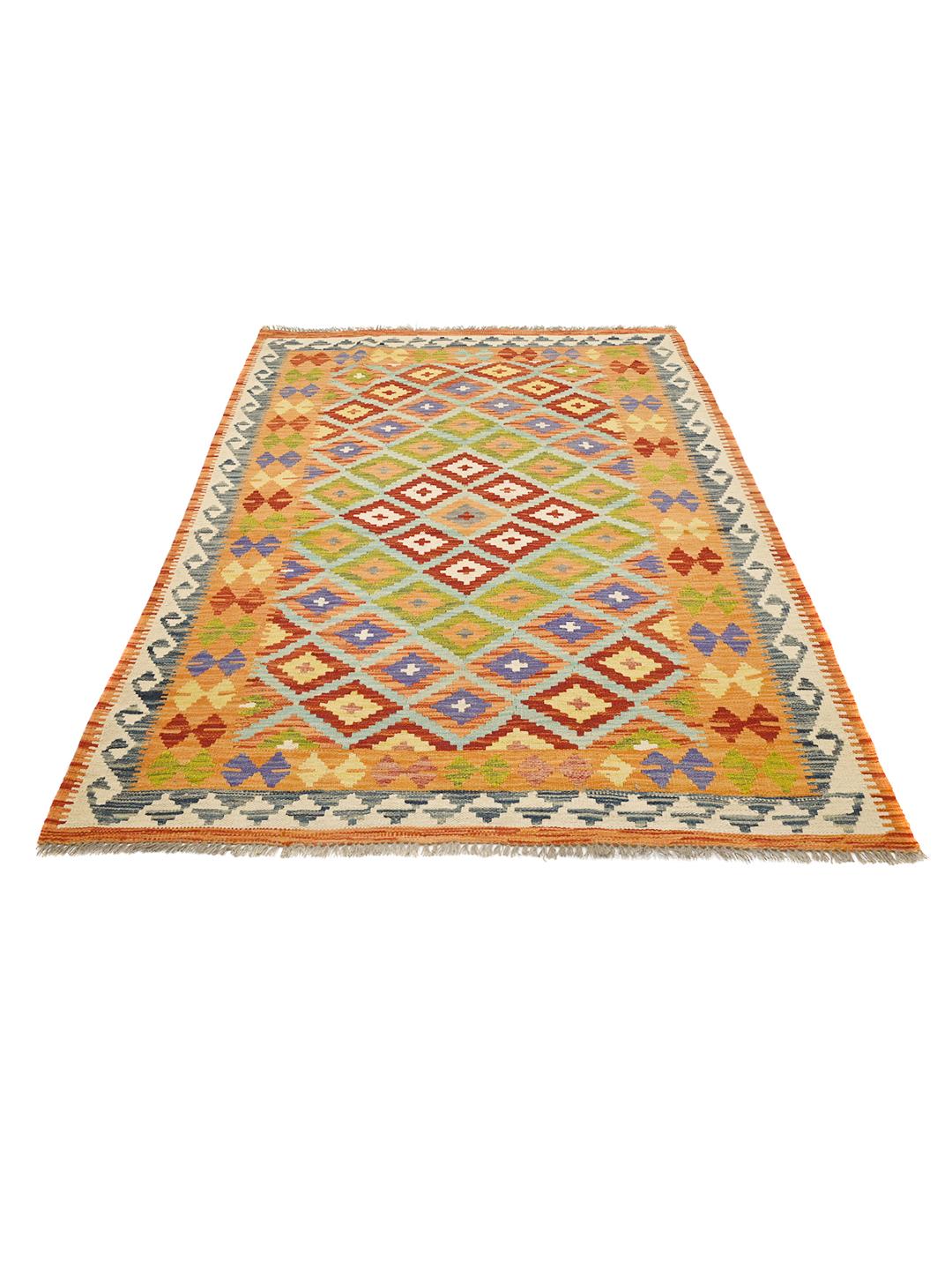
Visually, these rugs are defined by their reliance on geometric motifs, most notably the diamond, which is a common symbol of protection and fertility in local weaving cultures. The borders are often filled with repeating tribal patterns that frame the central field, creating a sense of balance and order. The use of vibrant, natural dyes in this piece highlights the artistic evolution of the region, where colour is used to convey mood and cultural heritage.
Today, these rugs are prized by collectors not just for their aesthetic appeal, but for the skill required to produce them. Owning a Kelim is a way to preserve a centuries-old craft that continues to thrive in the hands of skilled weavers. Each piece serves as a physical record of the weaver's community and tradition, offering a sense of connection to a heritage that values both utility and artistic expression.