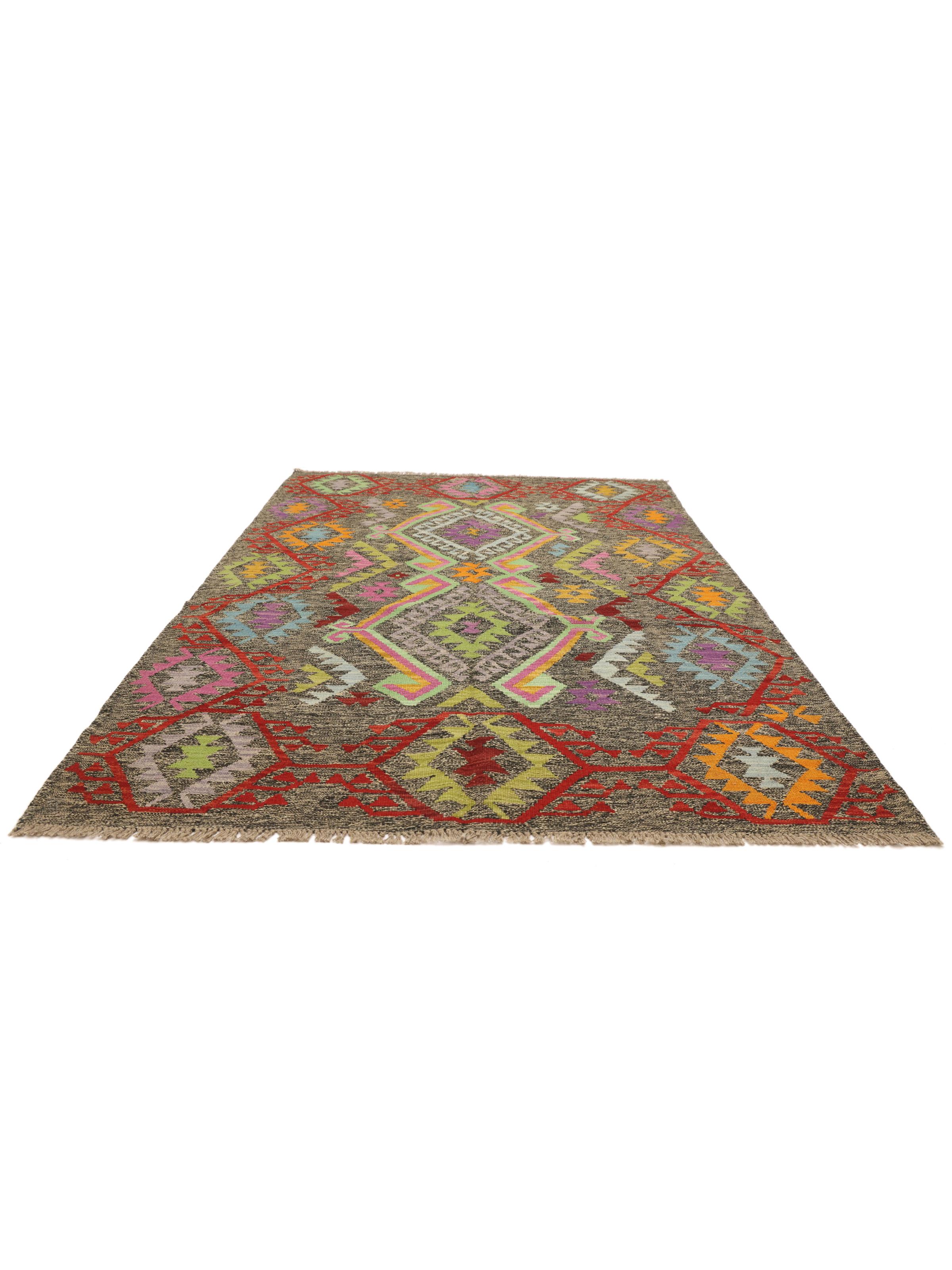
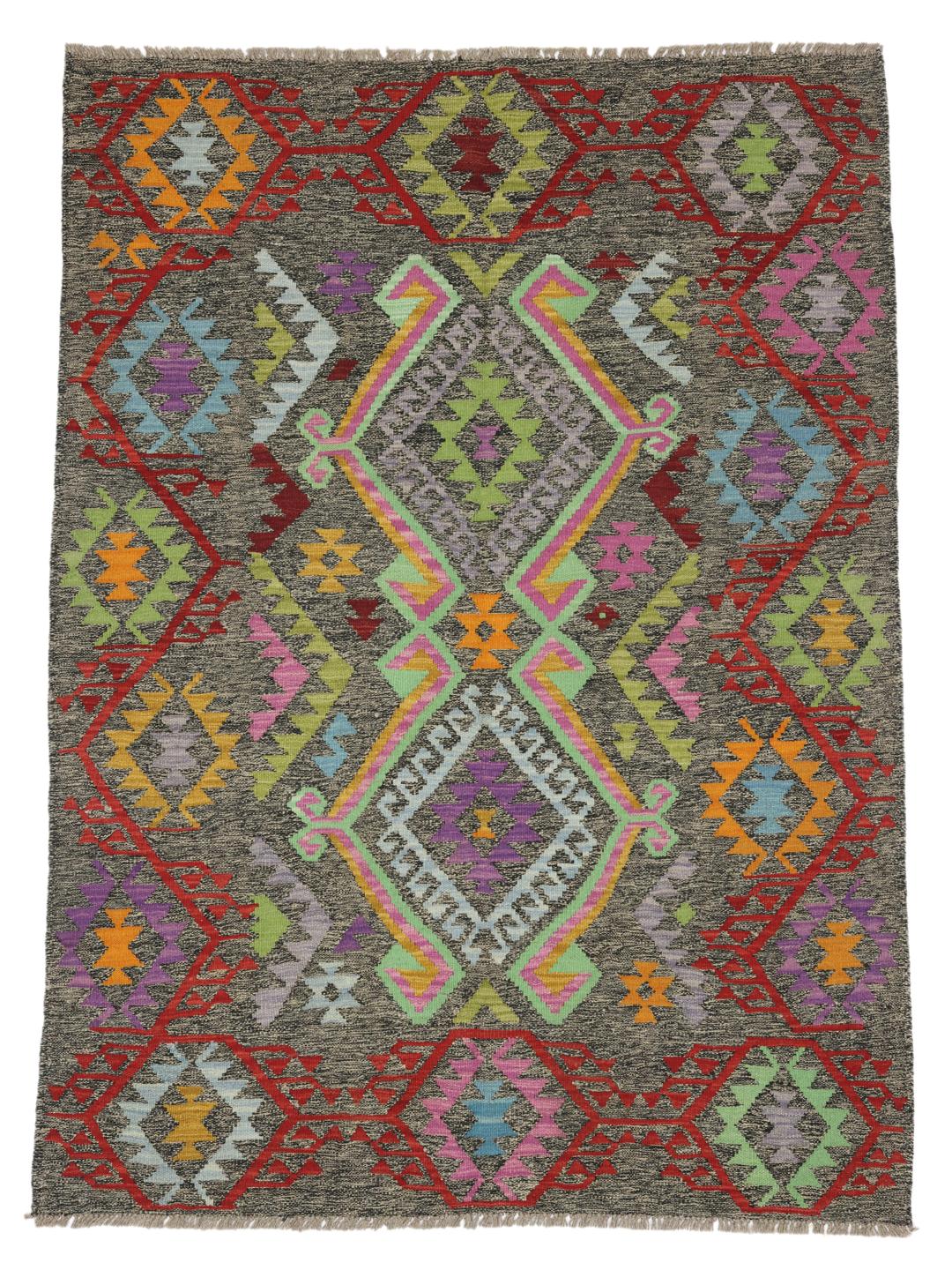
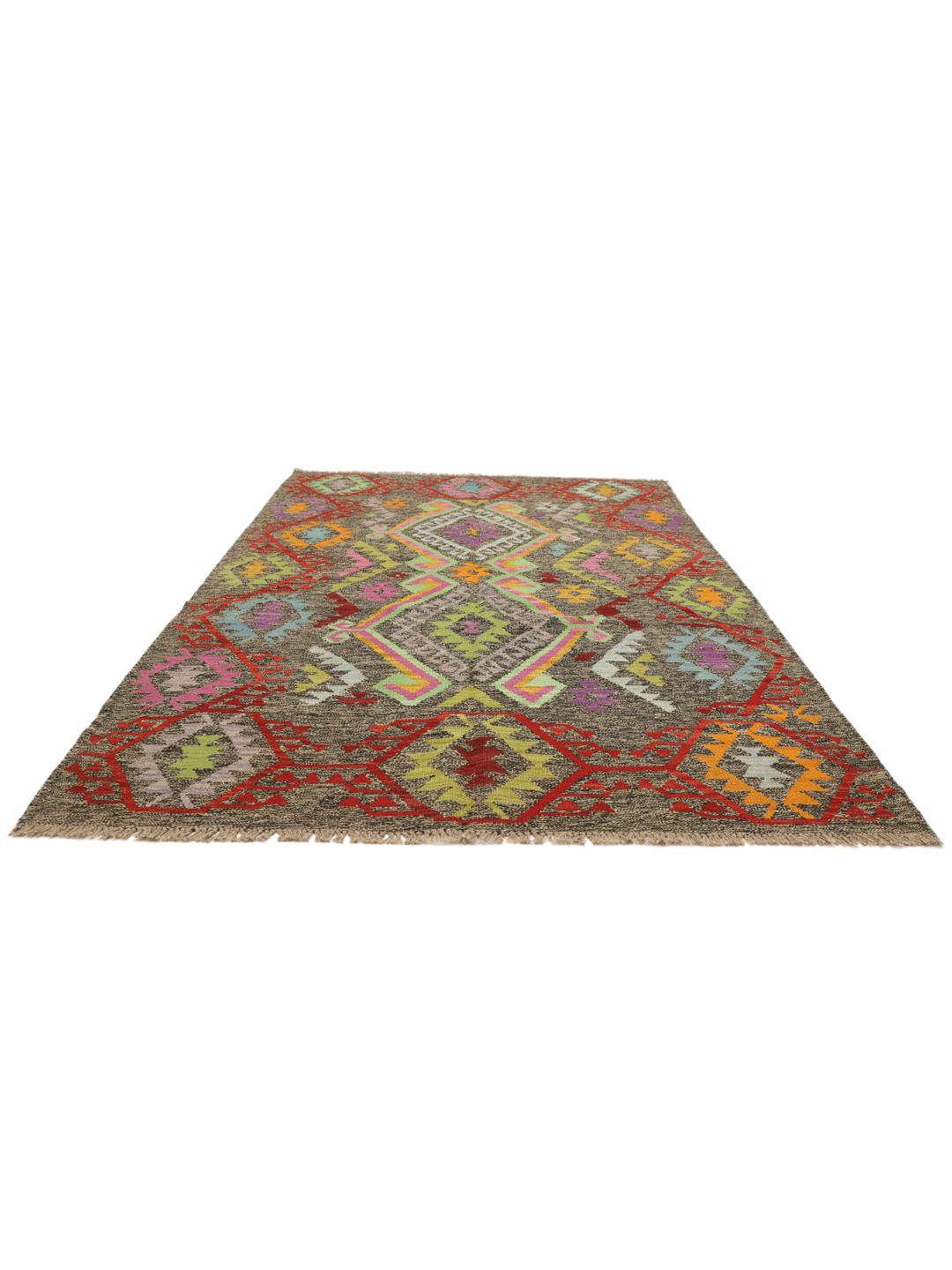
The tradition of Kelim weaving in Afghanistan is deeply rooted in the nomadic lifestyle of the region. Historically, these rugs were created by tribal communities not only for their utility as floor coverings or tent dividers but as a primary medium for artistic expression and storytelling.
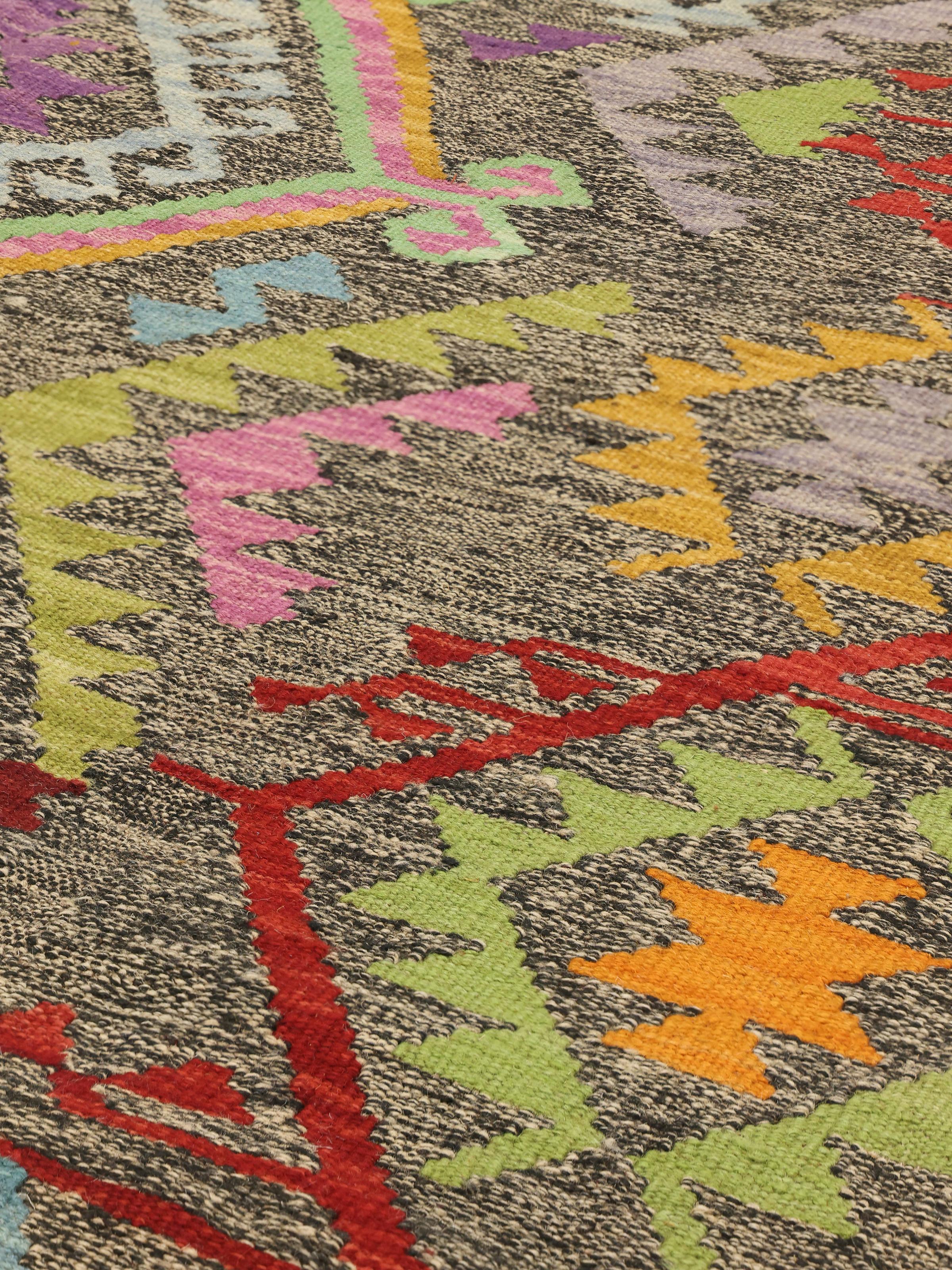
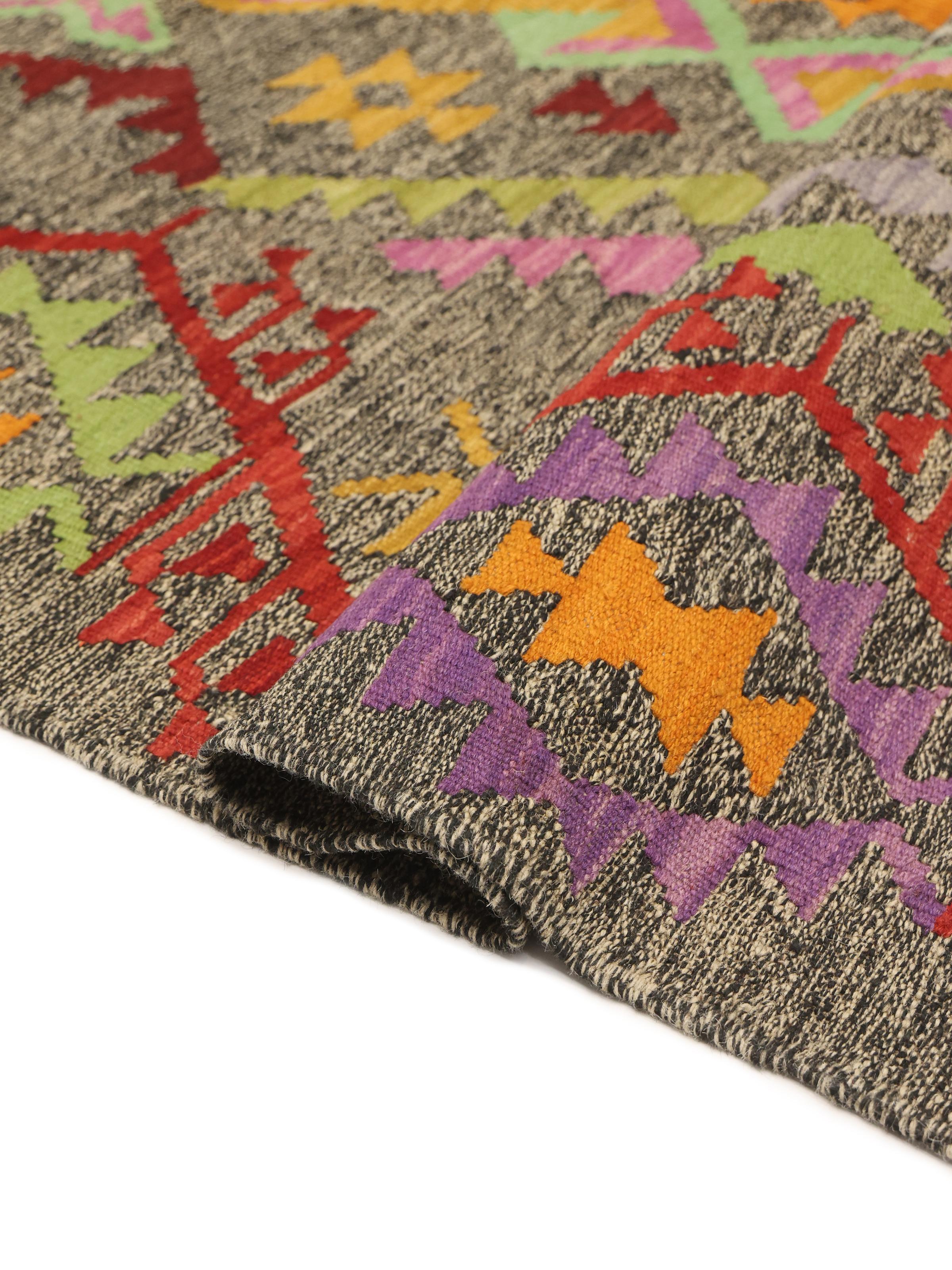
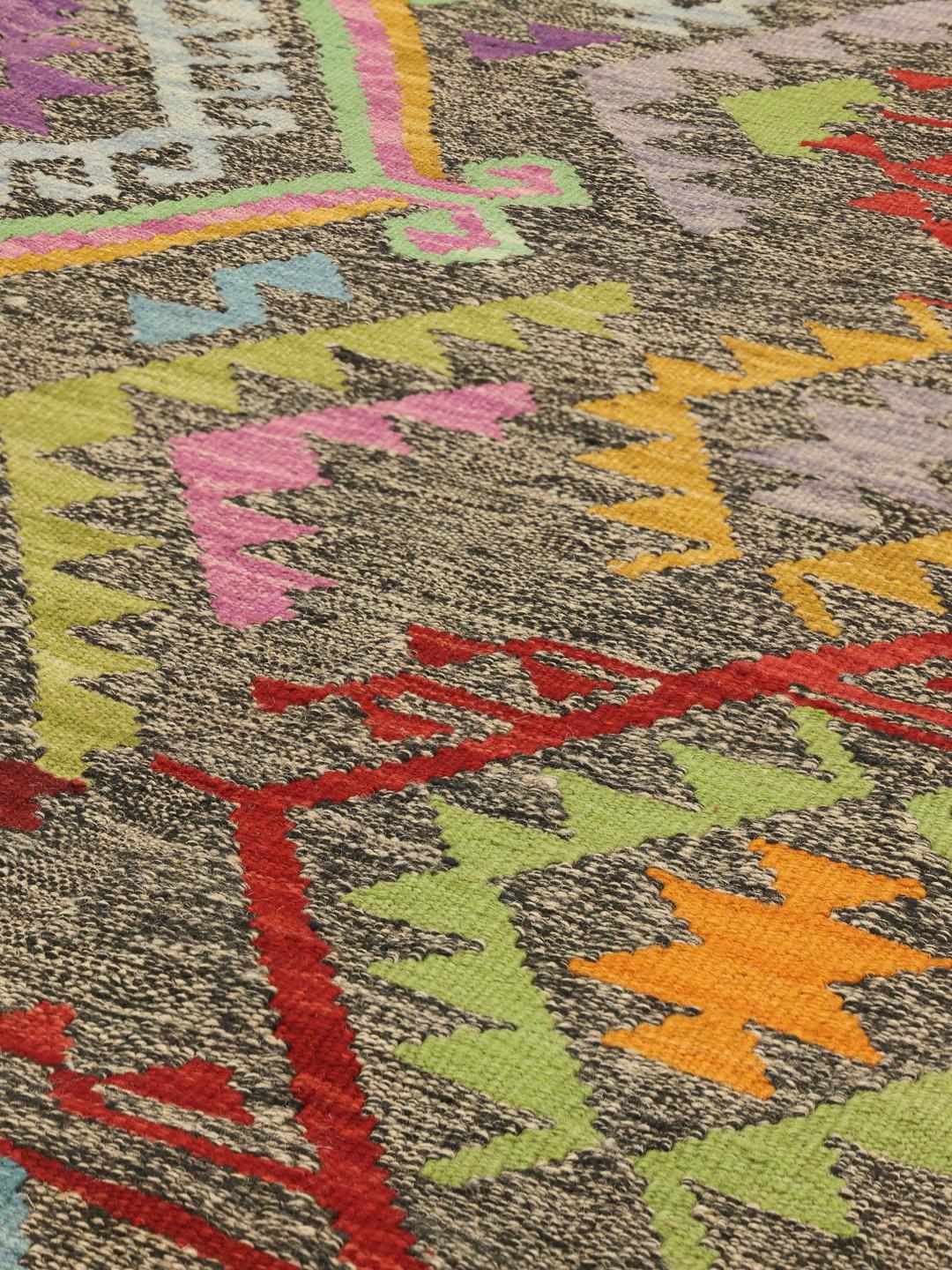
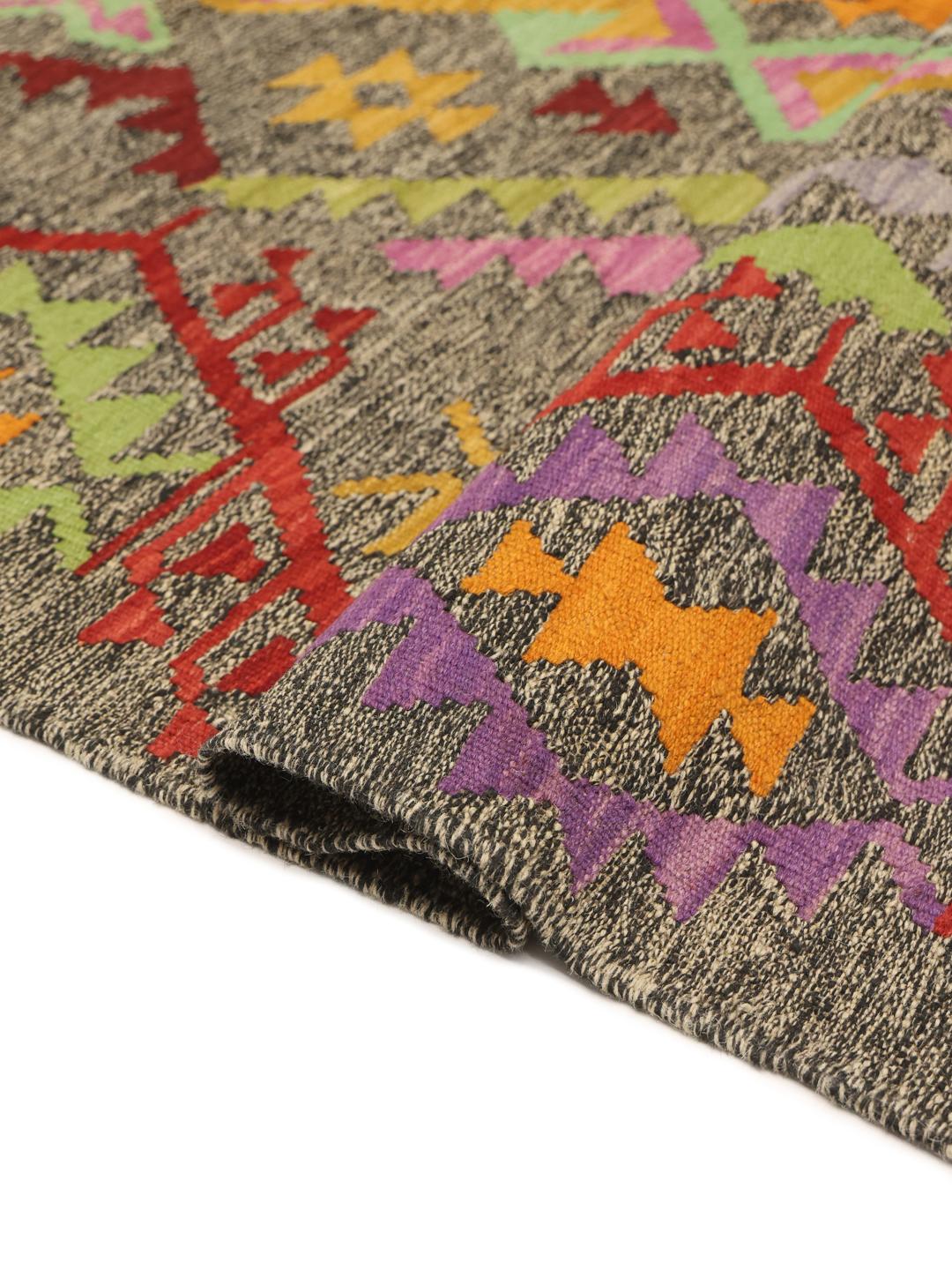
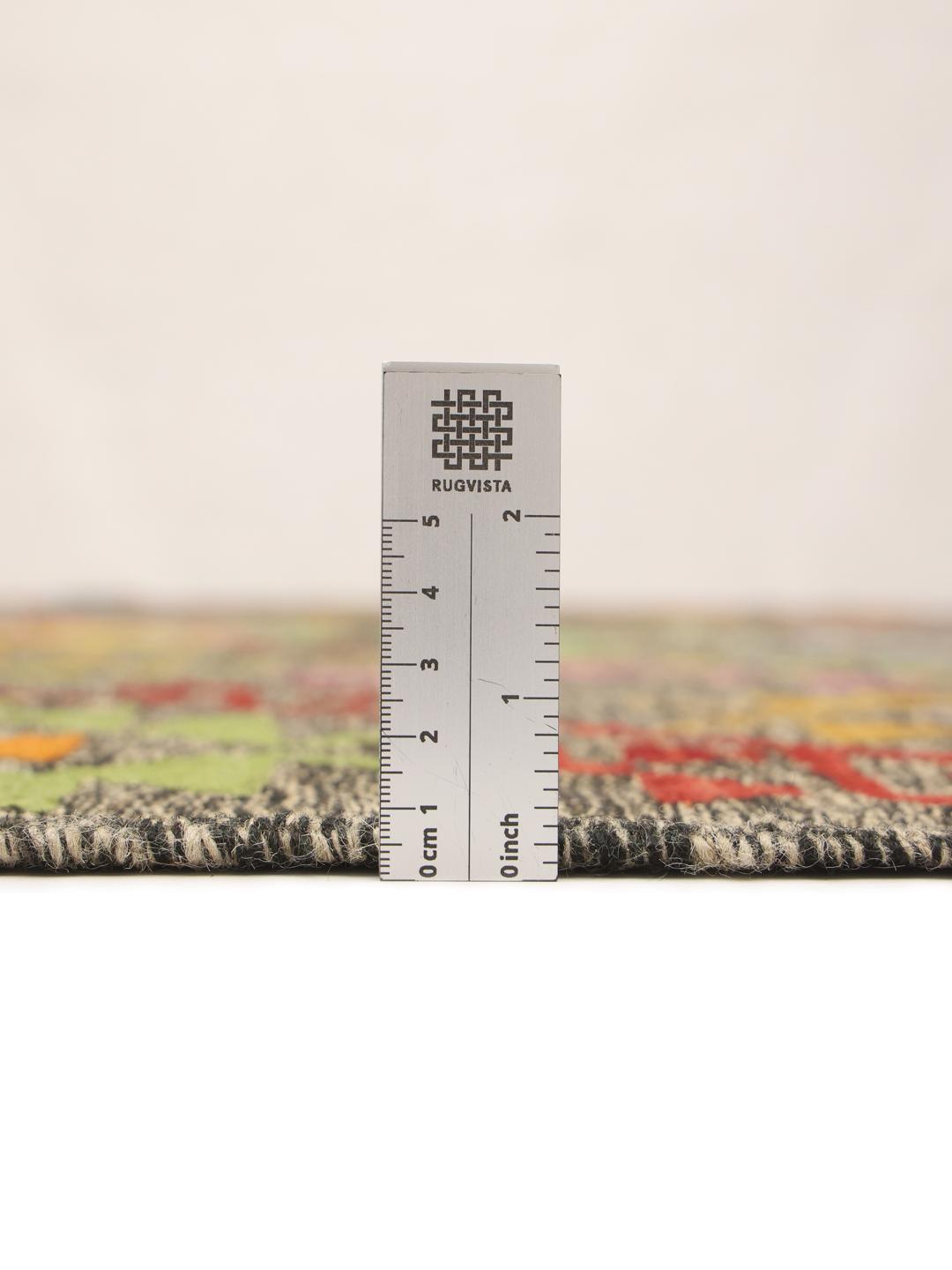
The term Kelim refers to a specific flat-weaving technique where the weft threads are passed through the warp threads to create the design. Unlike pile rugs, which are knotted, this method results in a thinner, reversible textile that is prized for its clean lines and graphic clarity. This technique requires a high degree of precision, as the weaver must constantly change colours to form the intricate patterns.
Signature design elements of Afghan Kelims include bold, tribal-inspired geometric motifs such as diamonds, zig-zags, and stylized floral forms. The use of vibrant, contrasting colours against a darker, earth-toned field is a hallmark of this tradition, reflecting the natural dyes historically sourced from local plants and minerals.
These rugs are highly valued by collectors for their cultural weight and the undeniable skill required to produce them. Owning an Afghan Kelim is an invitation to celebrate a living heritage, as each rug carries the distinct mark of the weaver and the cultural identity of the region from which it originated.