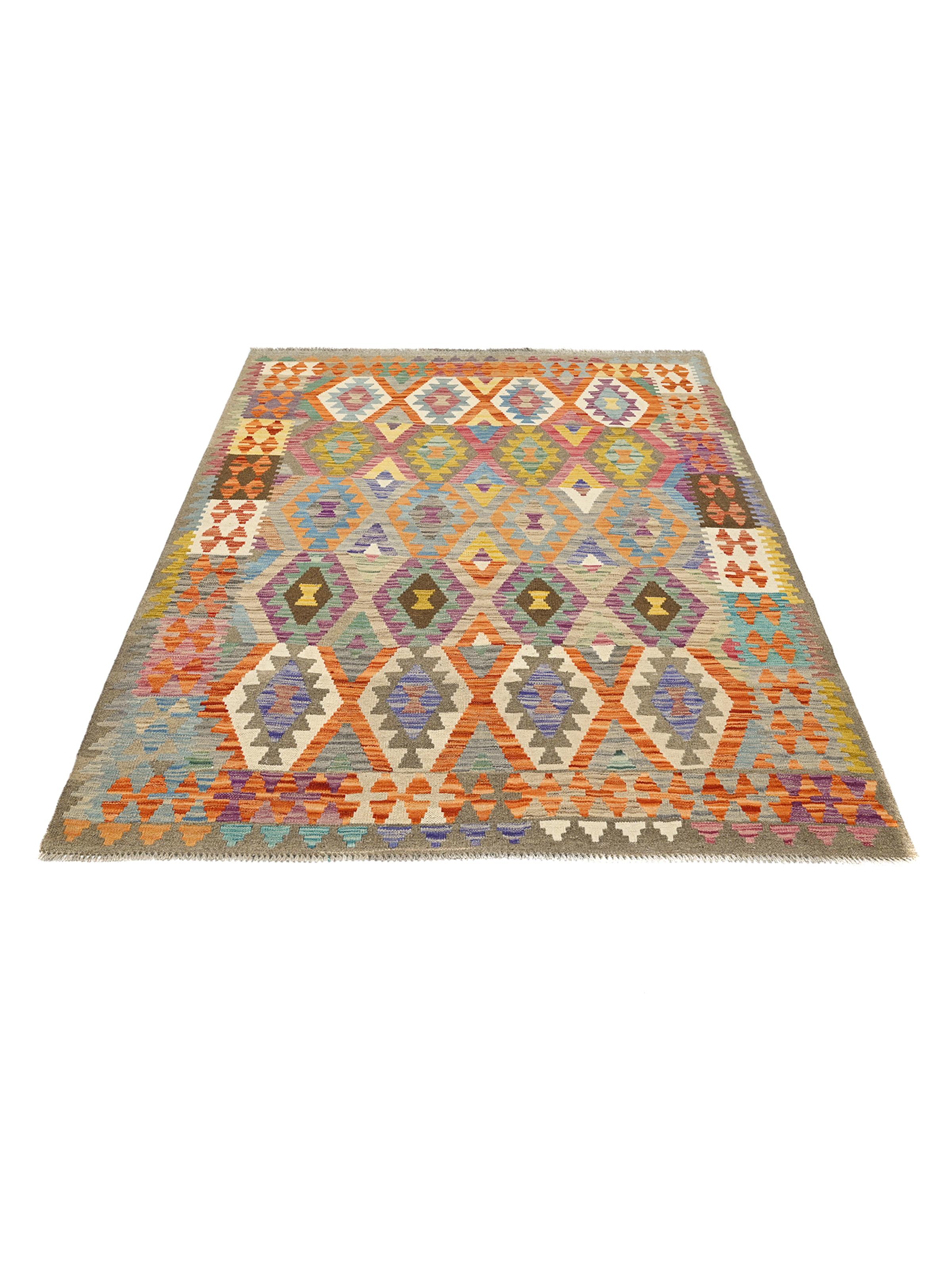
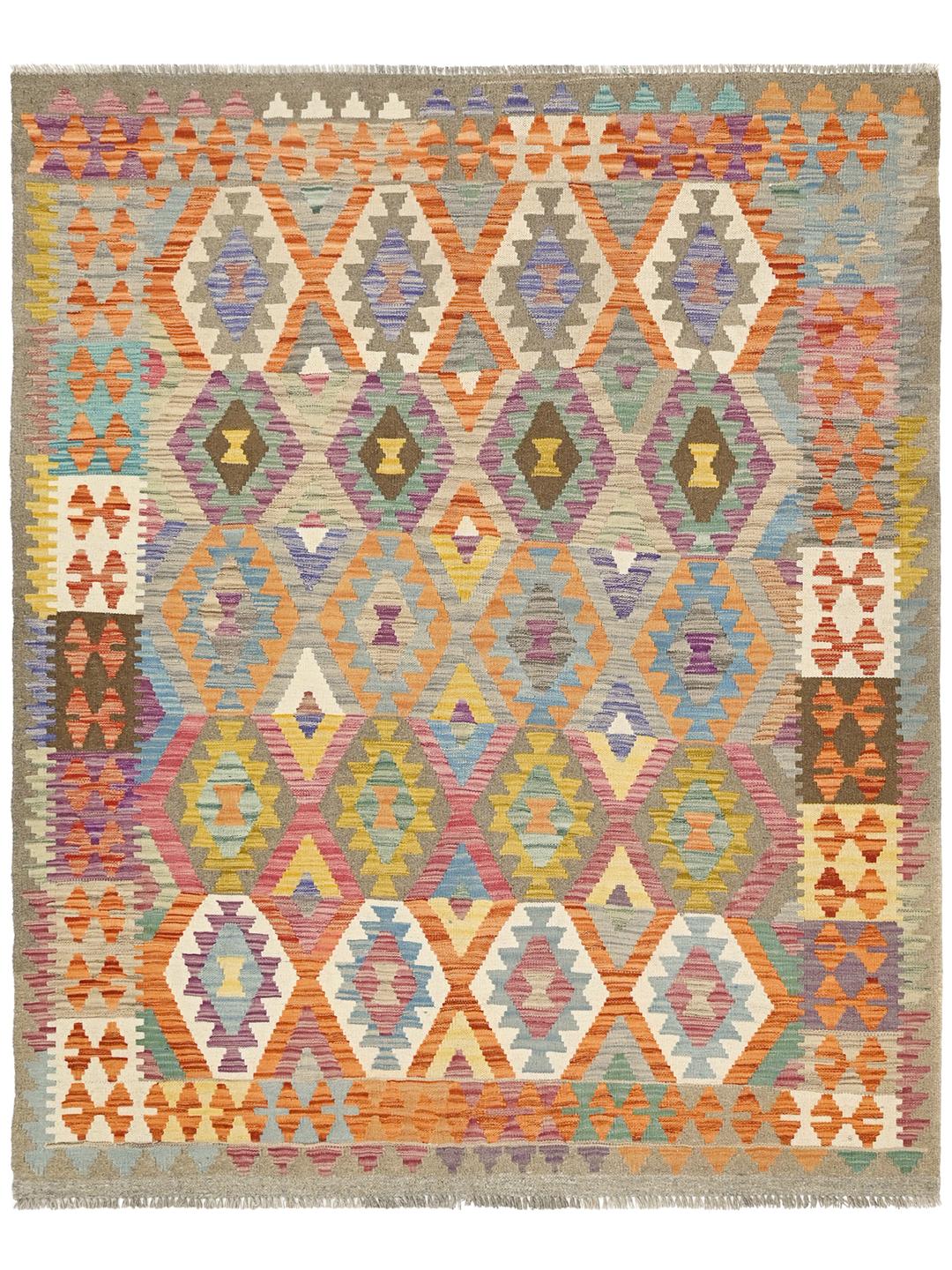
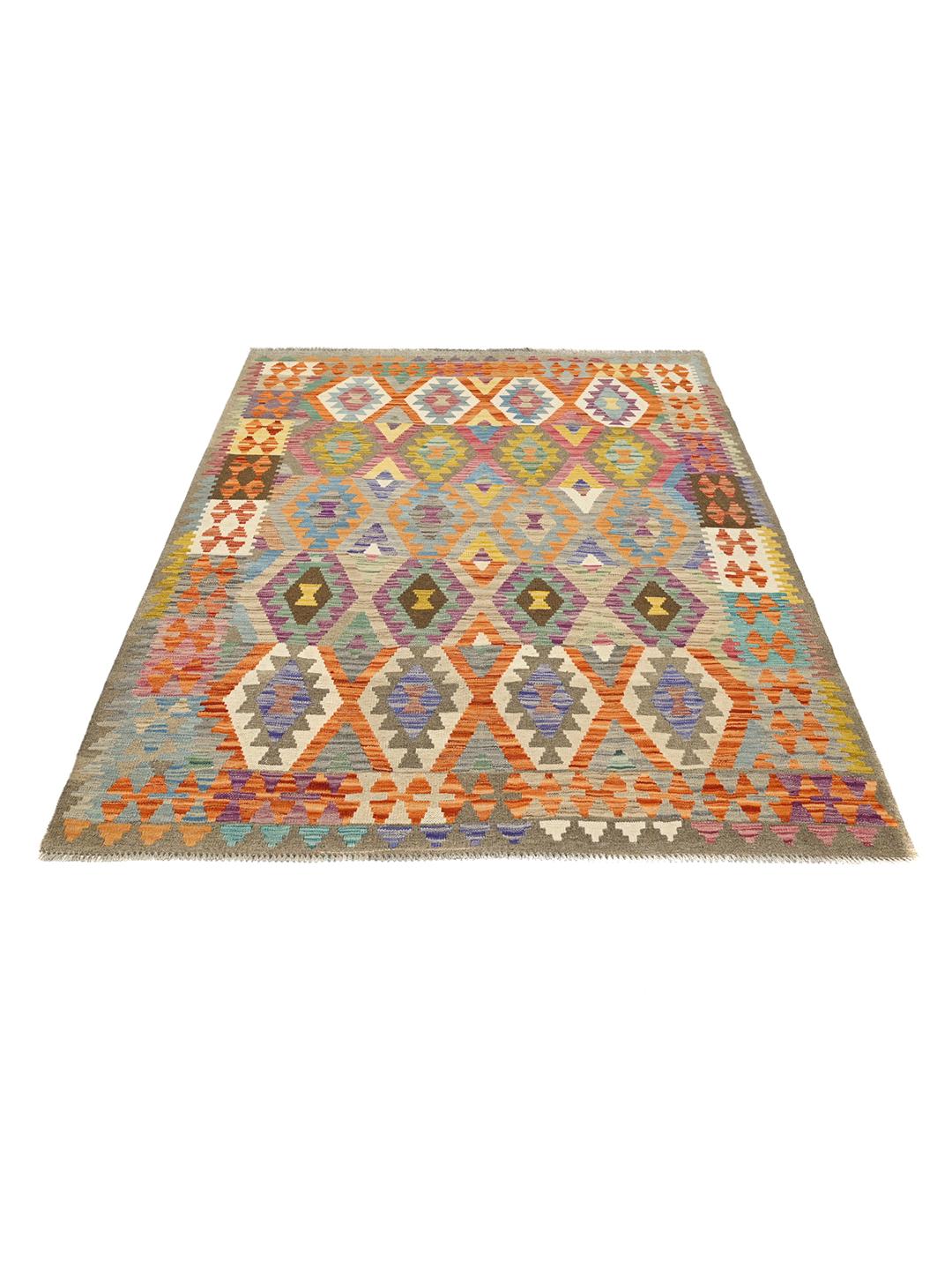
Kelim rugs have long been a cornerstone of nomadic life in the Middle East and Central Asia. Originally designed as functional, portable floor coverings and storage sacks for travelling tribes, these flat-woven pieces evolved into sophisticated art forms that tell the stories of the families and regions from which they originate.
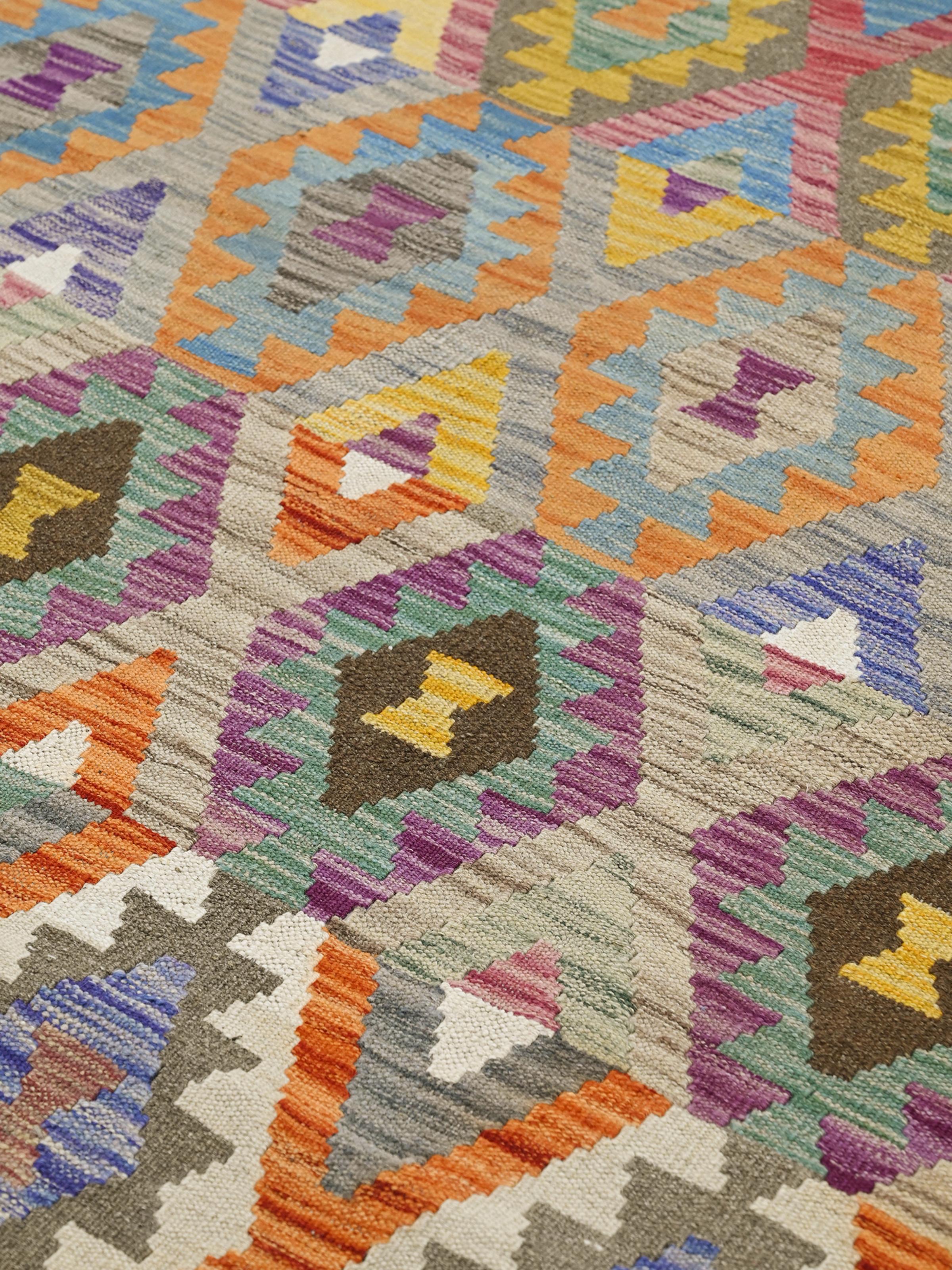
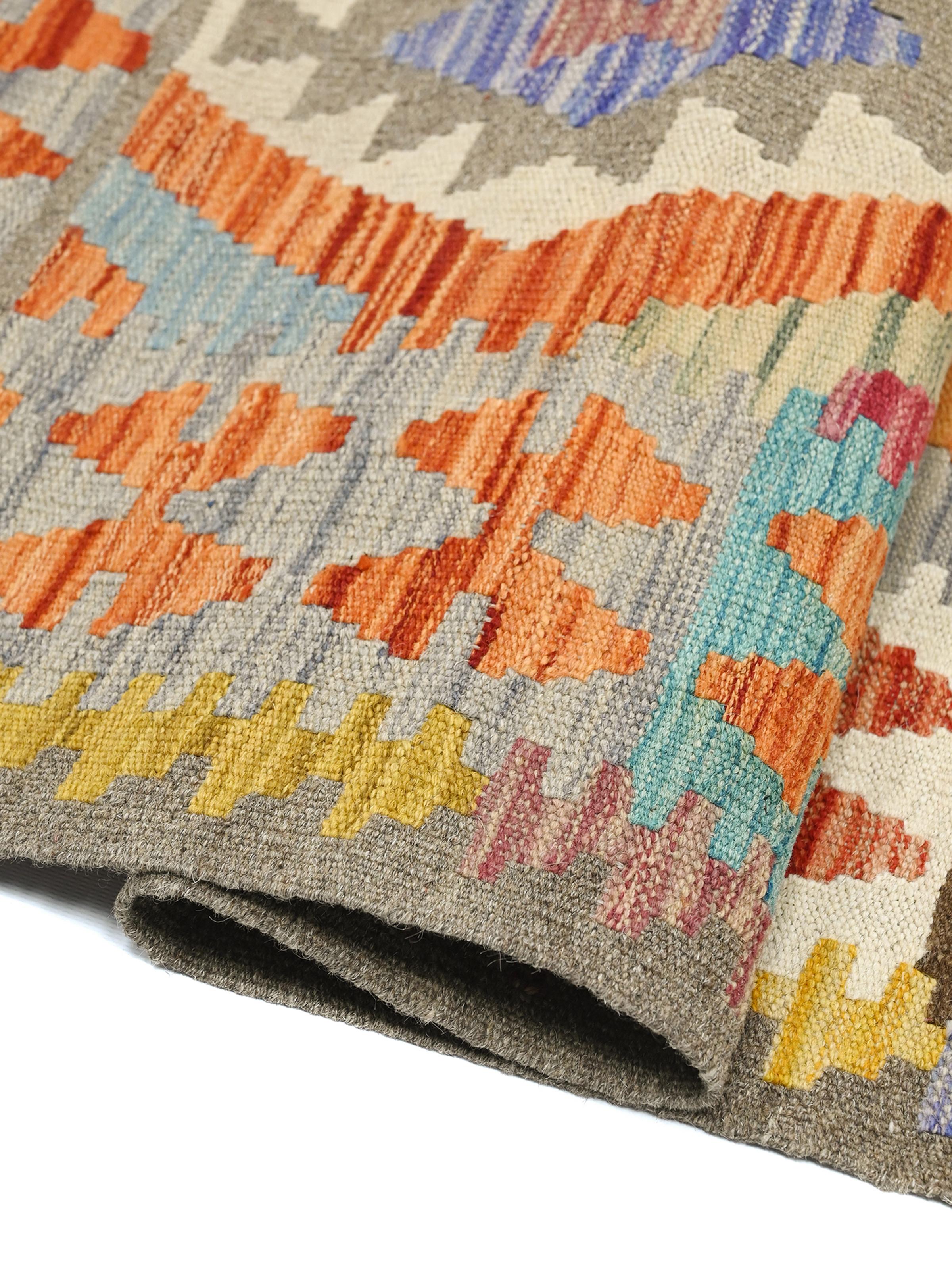
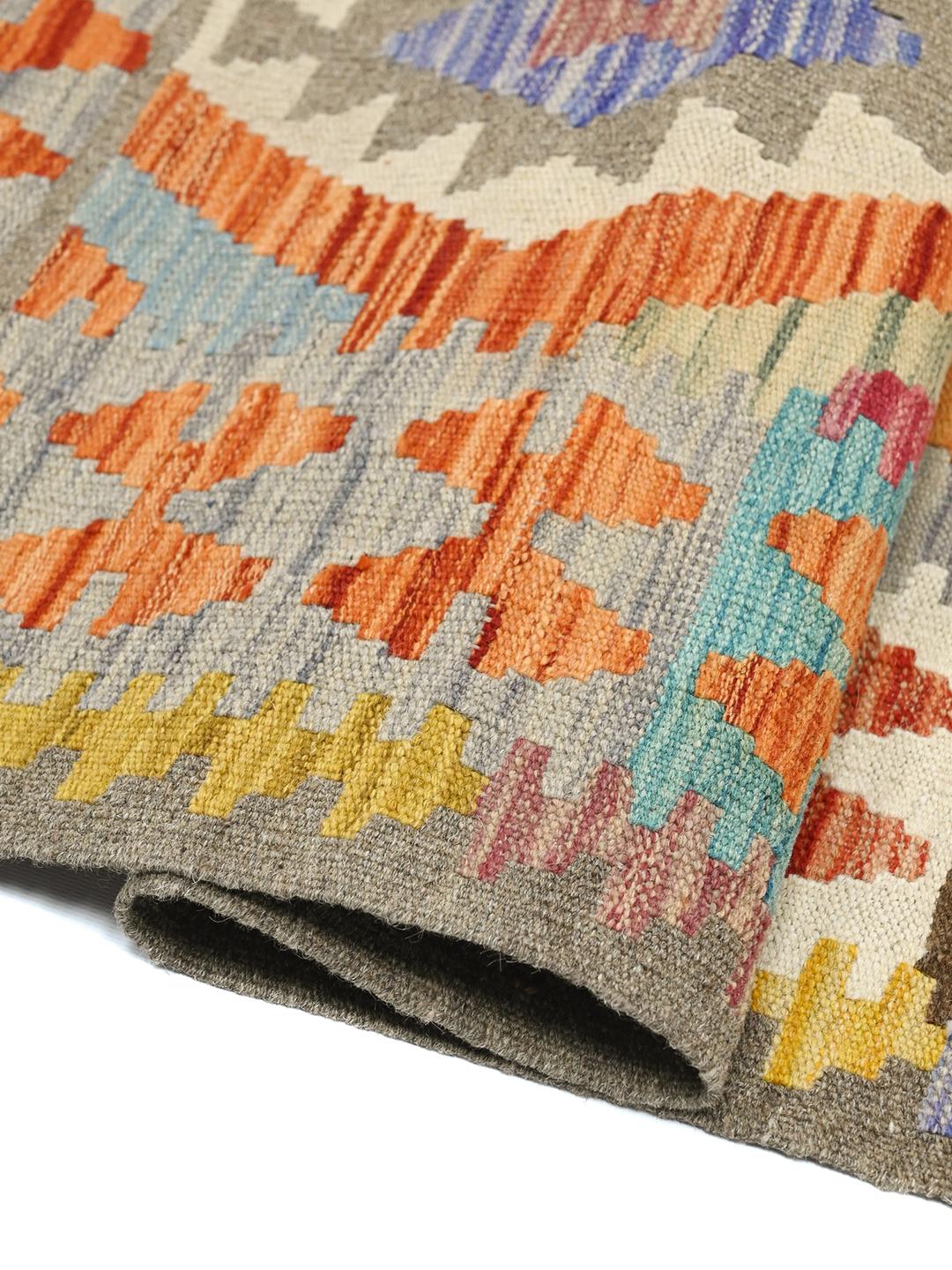
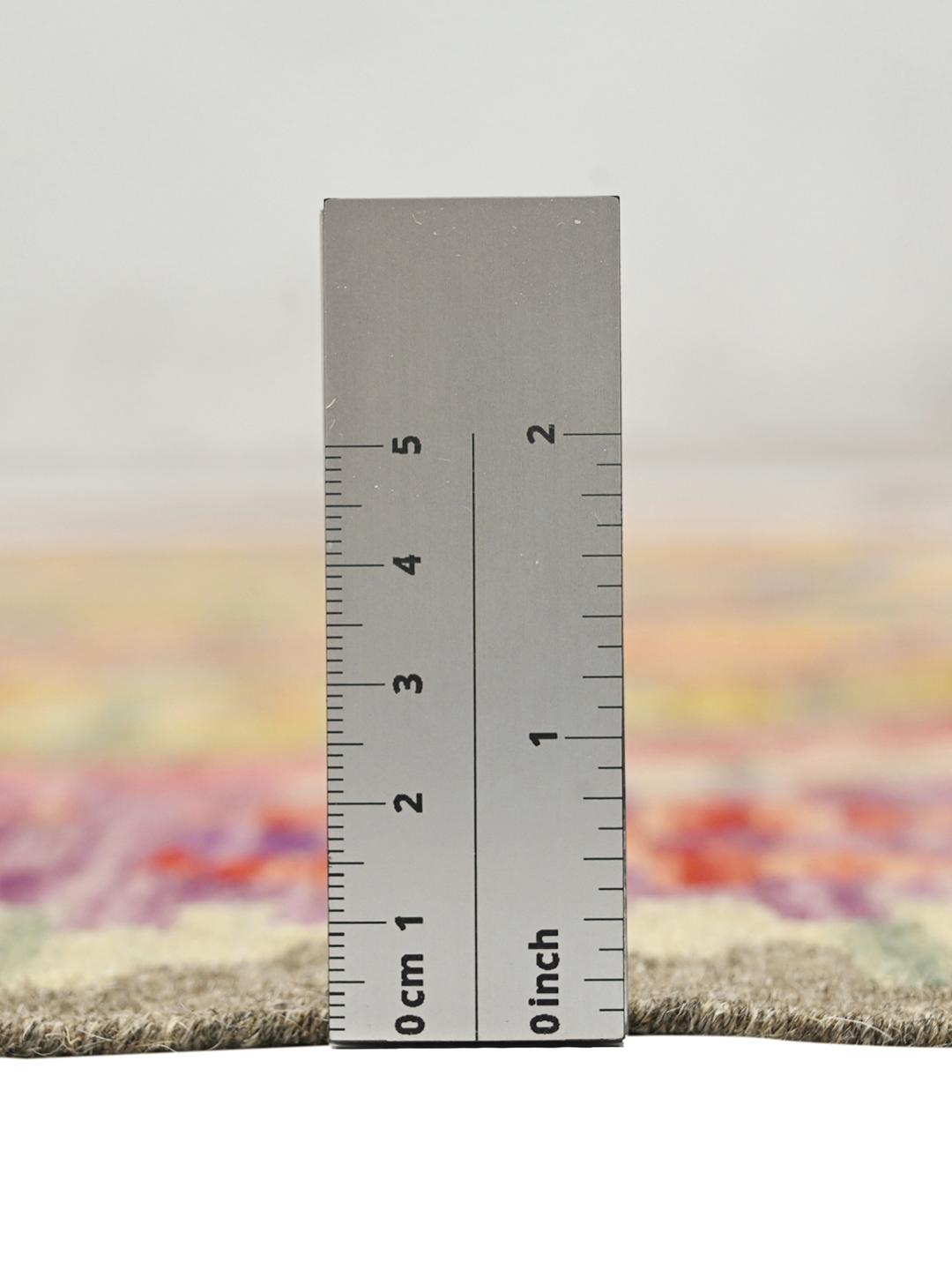
The term Kelim refers to the specific slit-weave technique used to construct these rugs. Unlike pile rugs, Kelims have no knots, which results in a lighter, thinner fabric. This method of construction is highly technical, as the weaver must manage the tension of the warp and weft perfectly to ensure the pattern remains crisp and the edges stay straight, reflecting a high level of expertise.
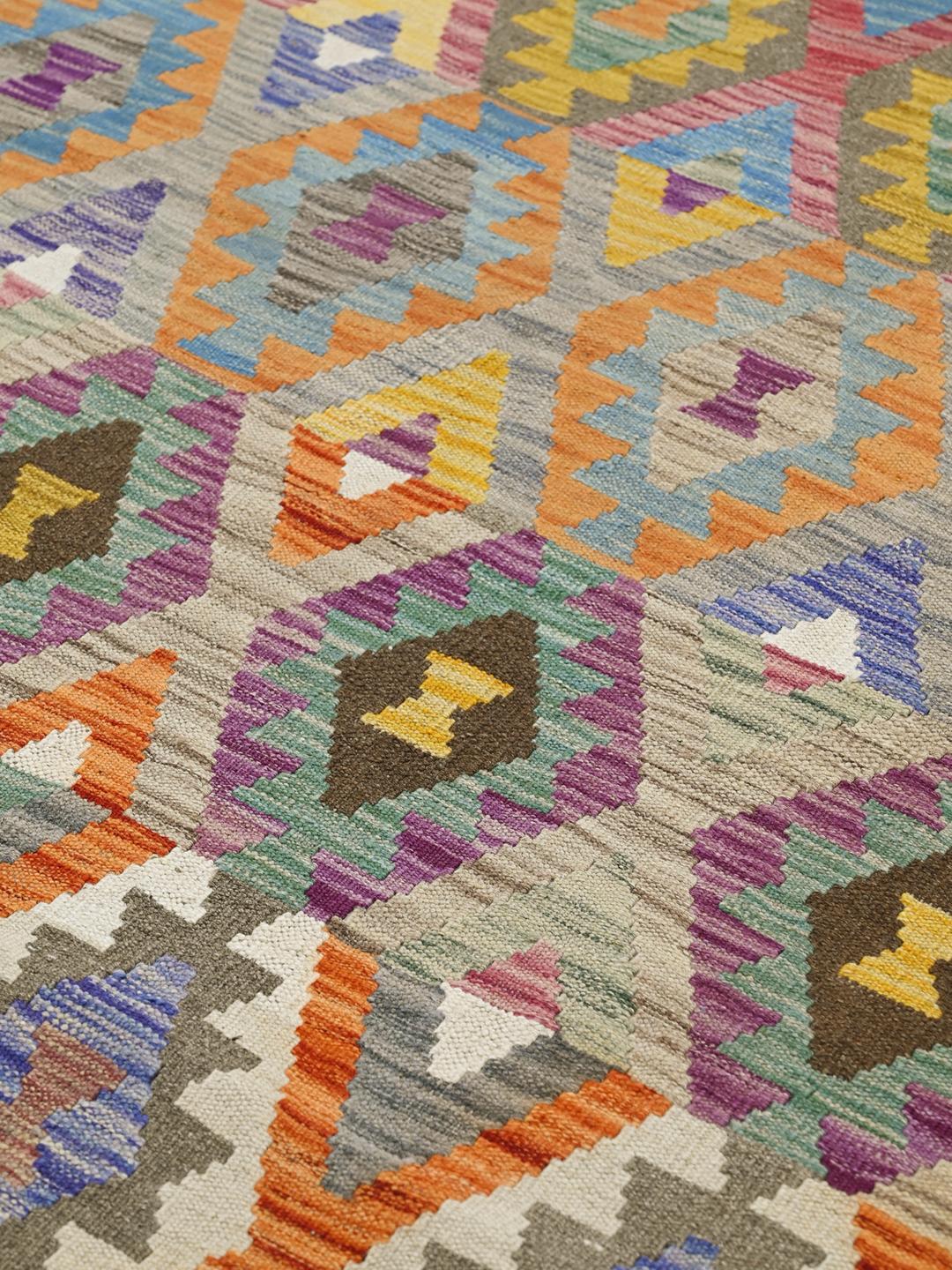
The visual language of this Afghan piece is defined by its bold, geometric motifs. You will often see repeating diamonds, triangles, and stylised floral elements, all rendered in a rich, earthy, or vibrant palette. These patterns are not merely decorative; they often serve as cultural symbols representing protection, fertility, or the specific lineage of the weavers who created them.
Today, these rugs are highly prized by collectors for their authenticity and the sheer skill required to produce them. Owning an Afghan Kelim connects you to a long-standing tradition of craft that values sustainable, natural materials and human connection, ensuring that your home is furnished with an item of genuine cultural significance.