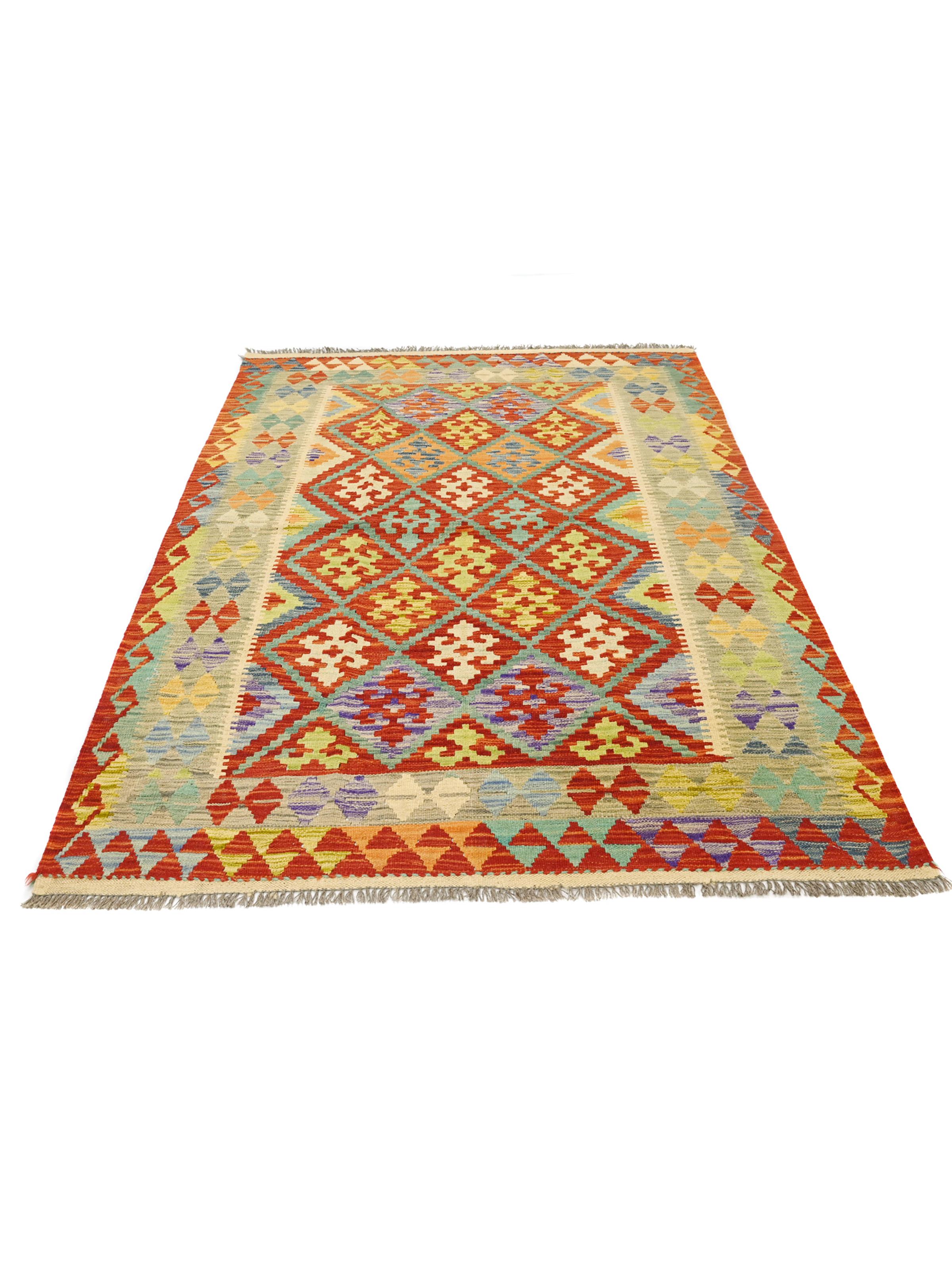
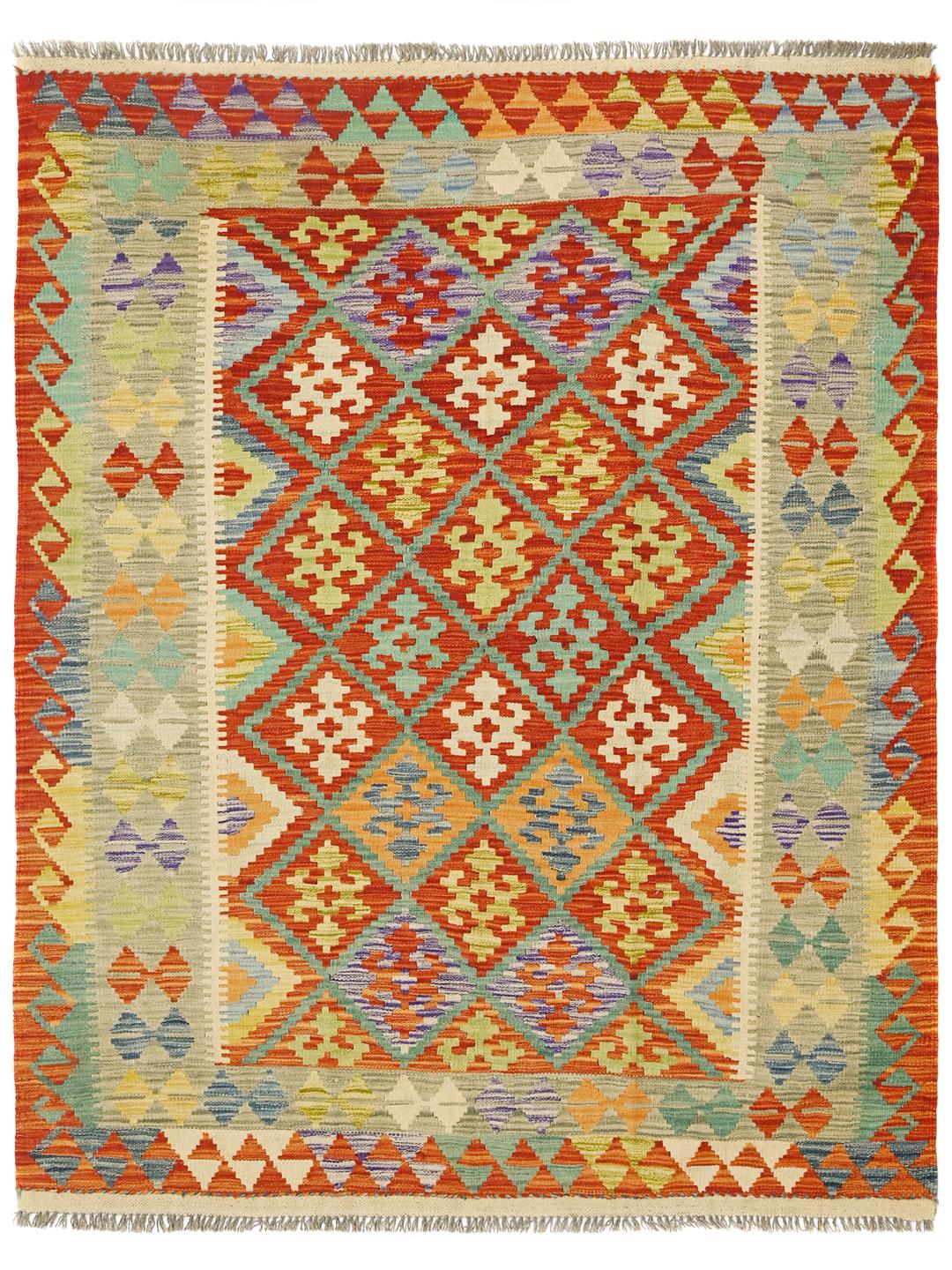
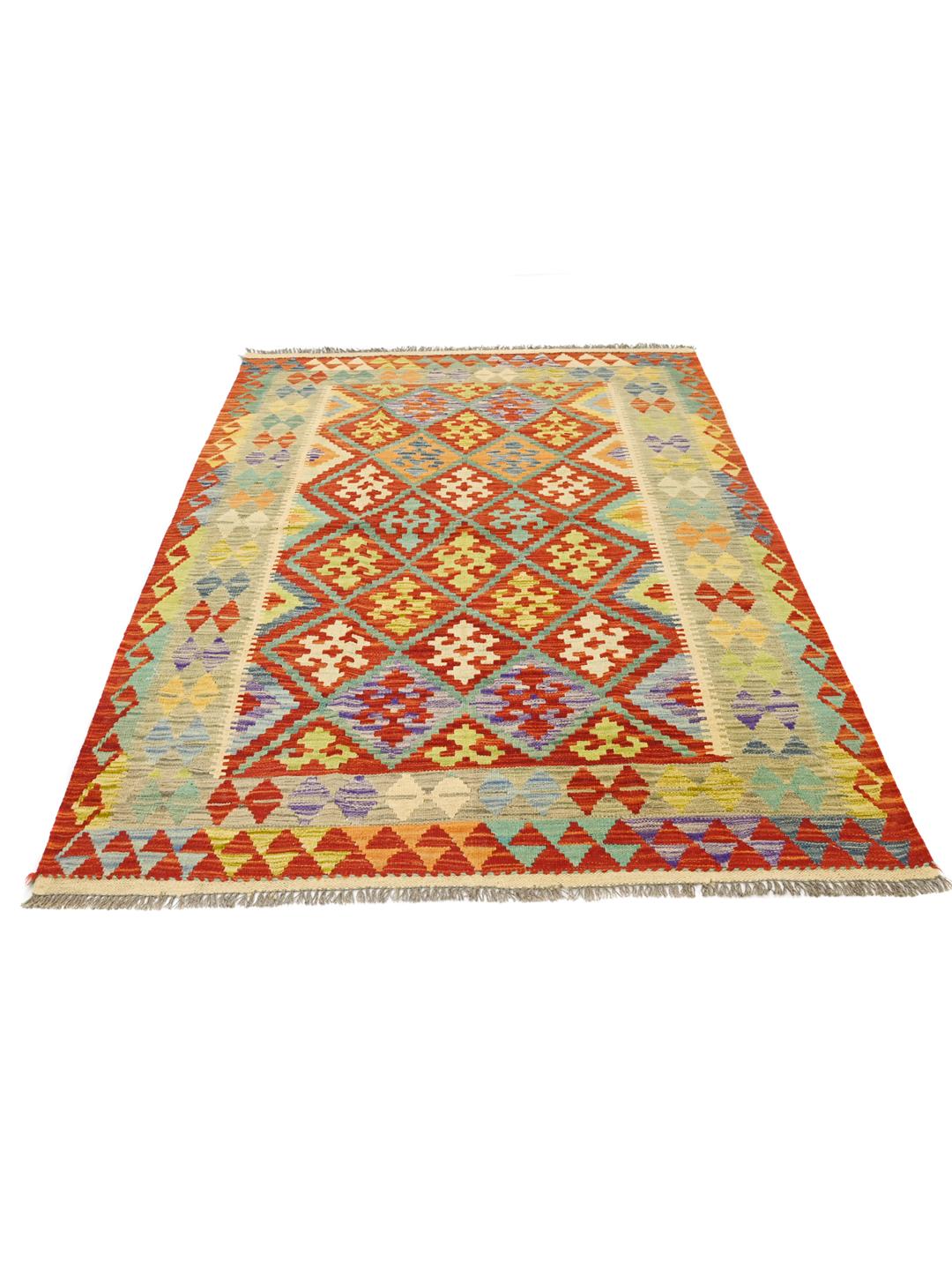
The Kelim tradition in Afghanistan is a testament to the enduring cultural legacy of the region, where weaving serves as a vital form of storytelling. These rugs originate from nomadic and semi-nomadic tribes who developed flatweave techniques as a way to create portable, durable, and beautiful textiles for their tents and homes. The evolution of these designs reflects the cross-pollination of cultures along the ancient trading routes that crisscrossed Central Asia.
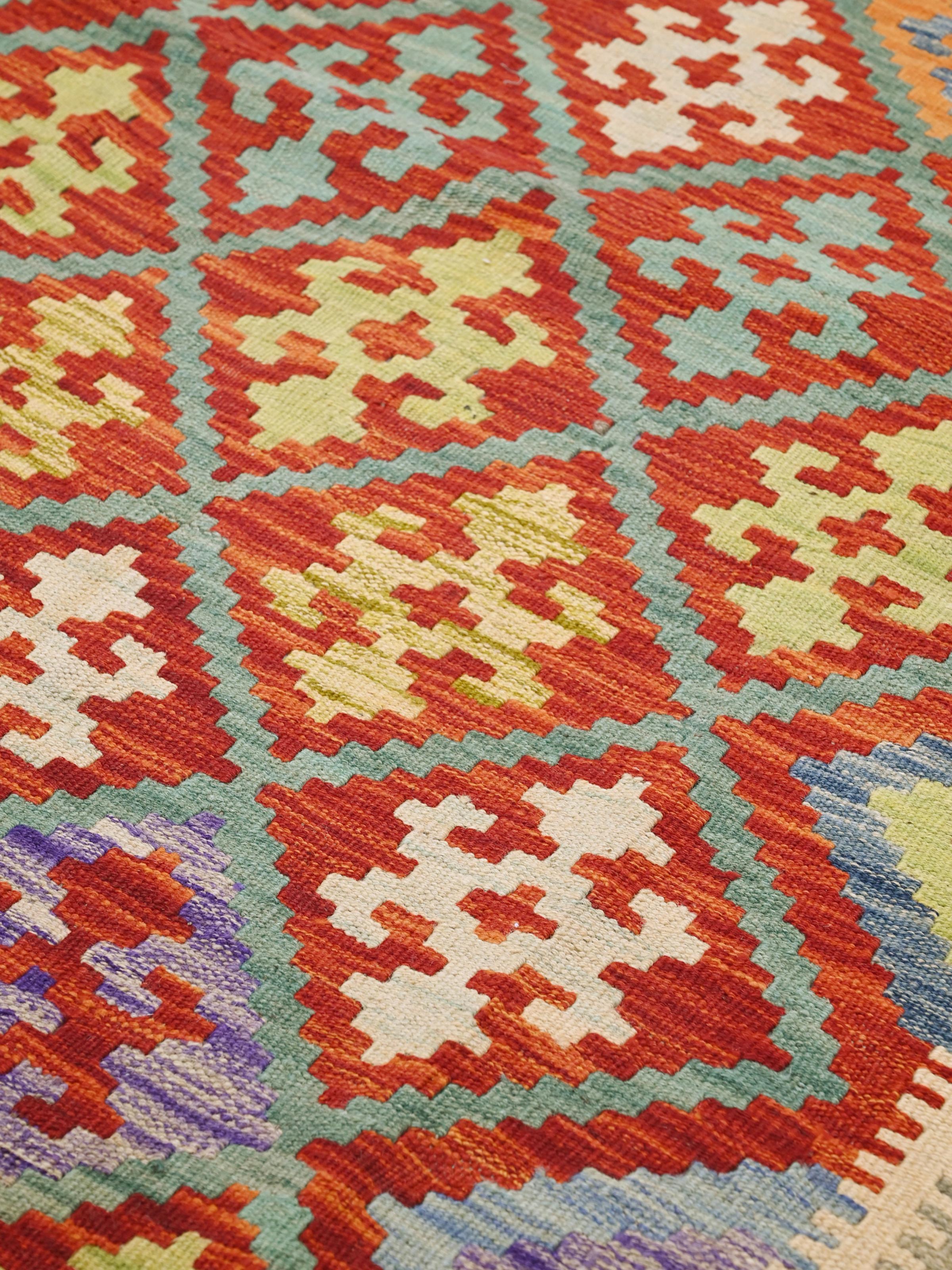
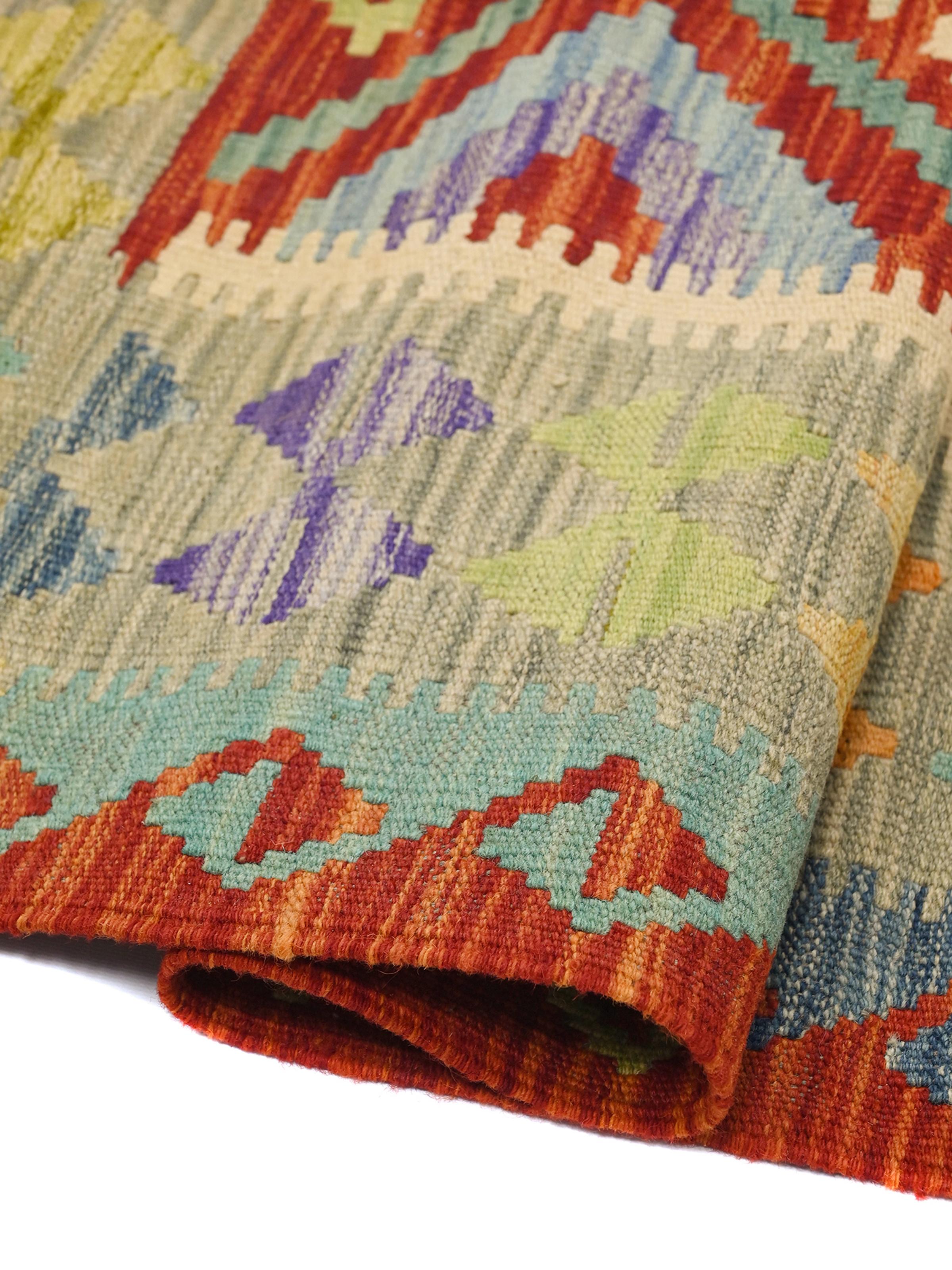
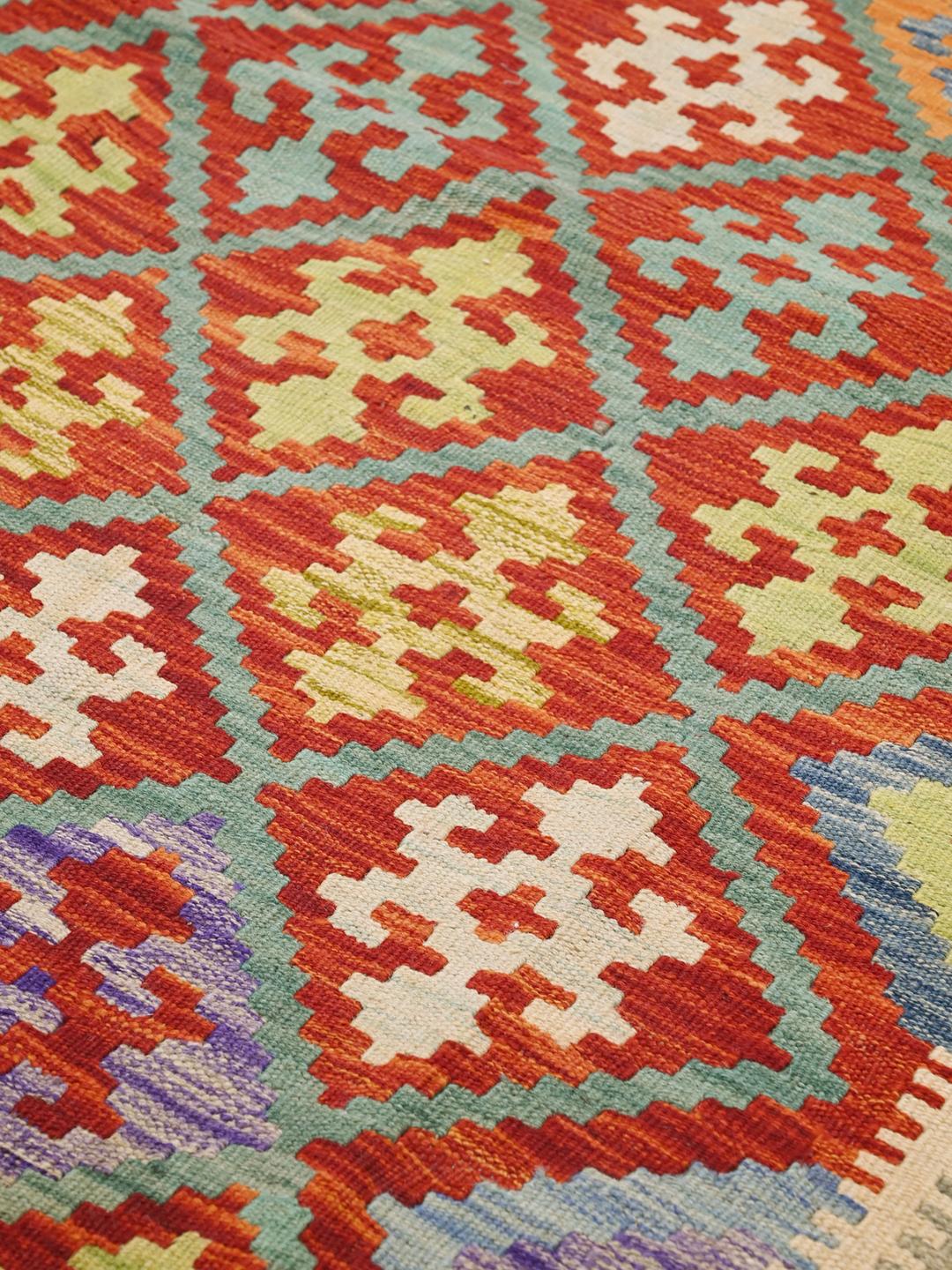
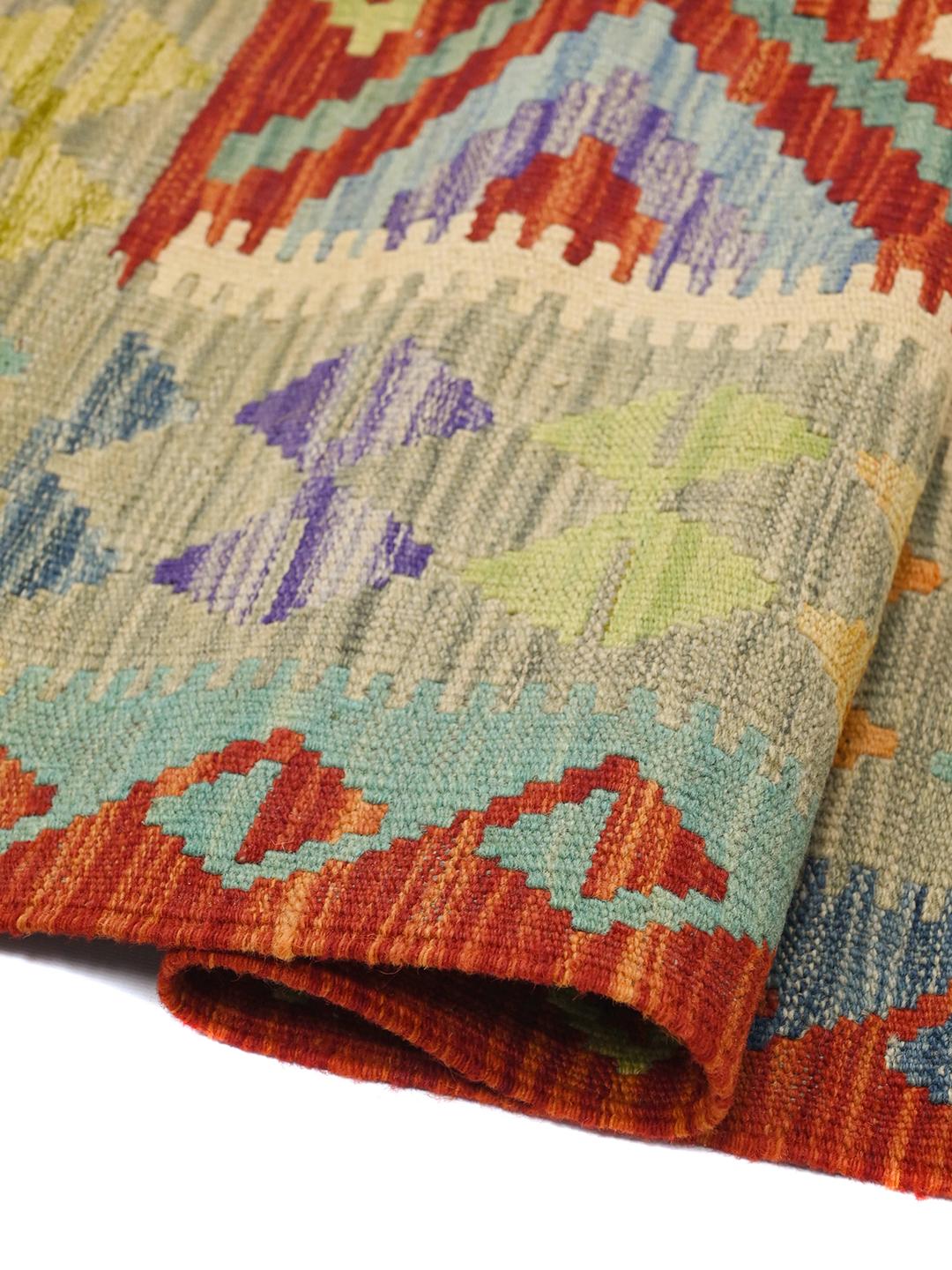
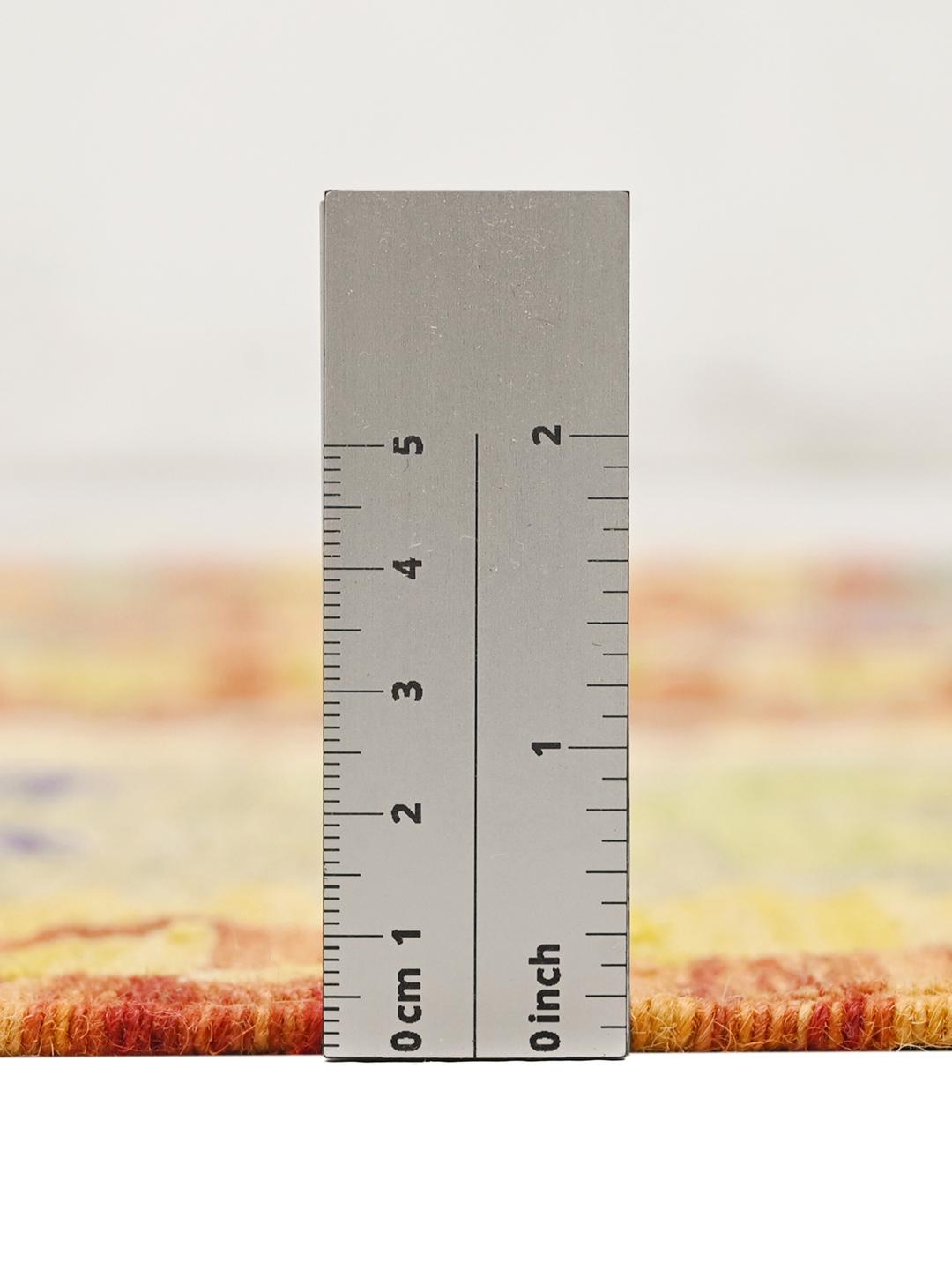
The term 'Kelim' refers to the specific flatweave technique where the design is created entirely by the interlacing of the warp and weft threads, rather than by knotting piles into a foundation. This method results in a reversible rug that is lightweight yet incredibly strong. The lack of a pile is a defining feature that allows for the crisp, bold geometric patterns that are characteristic of this tradition, as the structure does not rely on the density of knotted fibres to hold its shape.
Signature design elements of Afghan Kelims often include bold diamonds, stepped triangles, and repeating geometric motifs that hold symbolic meaning within the weaving communities. The use of vibrant, often vegetable-dyed colours is a hallmark of this style, with deep reds, earthy browns, and bright accents of blue or green creating a harmonious contrast. Each pattern is passed down through generations, ensuring that the visual language of the region remains vibrant and recognisable.
Collectors value these pieces for their authenticity and the sheer skill required to execute such complex patterns without the aid of a loom-mounted pattern guide. Owning an Afghan Kelim is an act of preserving a traditional craft that has remained largely unchanged for centuries. It represents a connection to the history of the Silk Road and the dedicated artisans who continue to produce these functional masterpieces, making them highly prized in modern interior design for their soul and character.