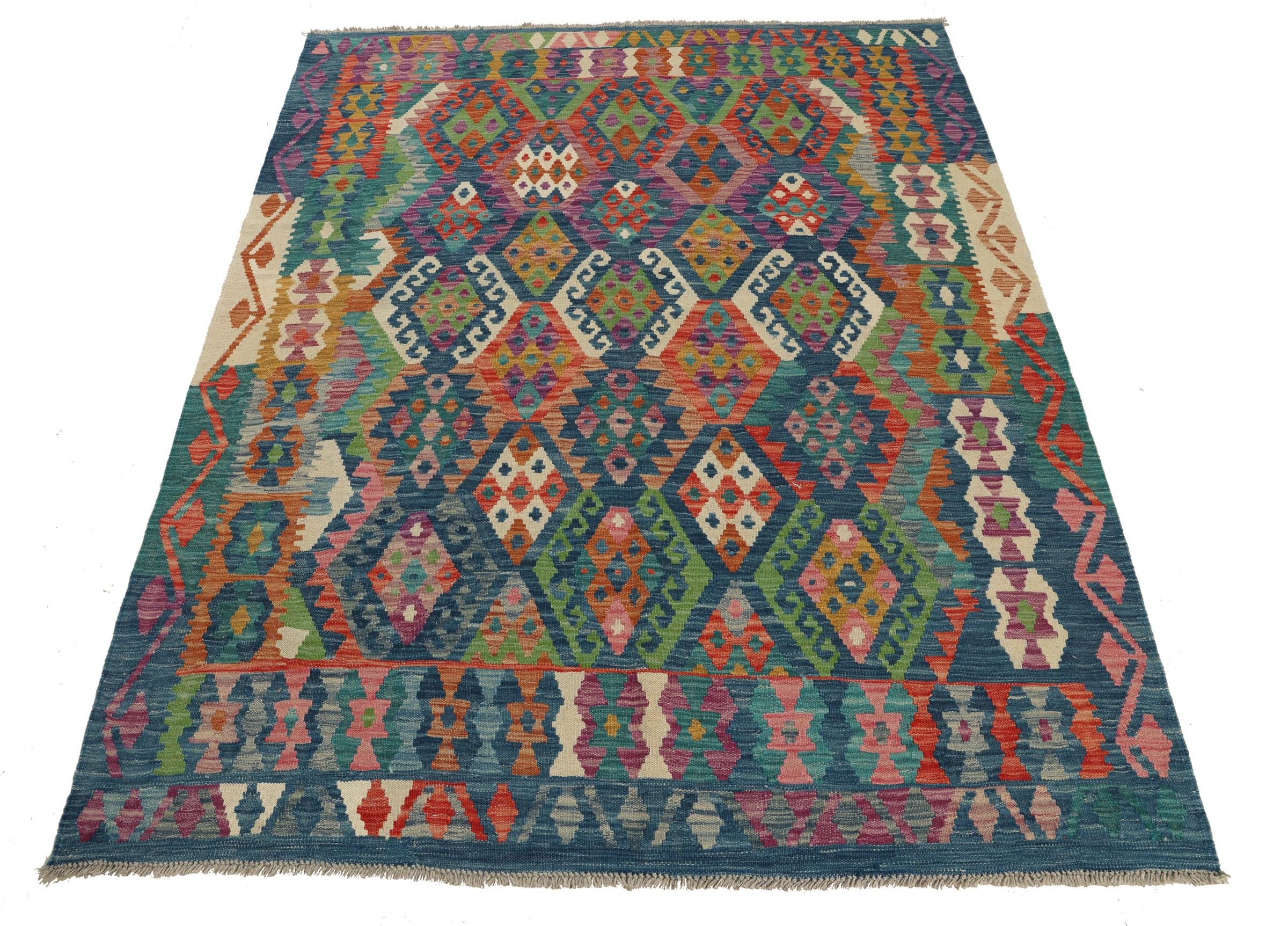
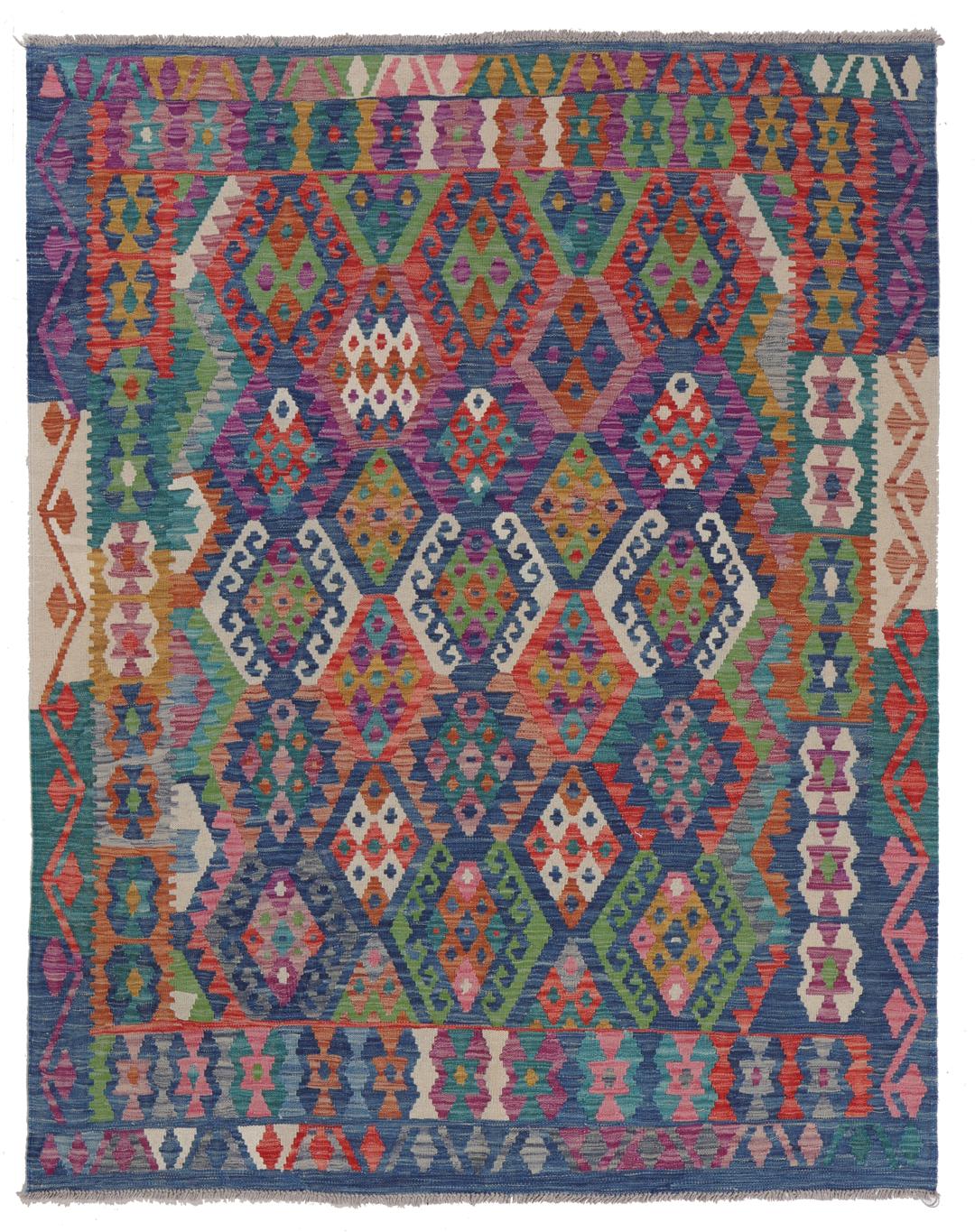
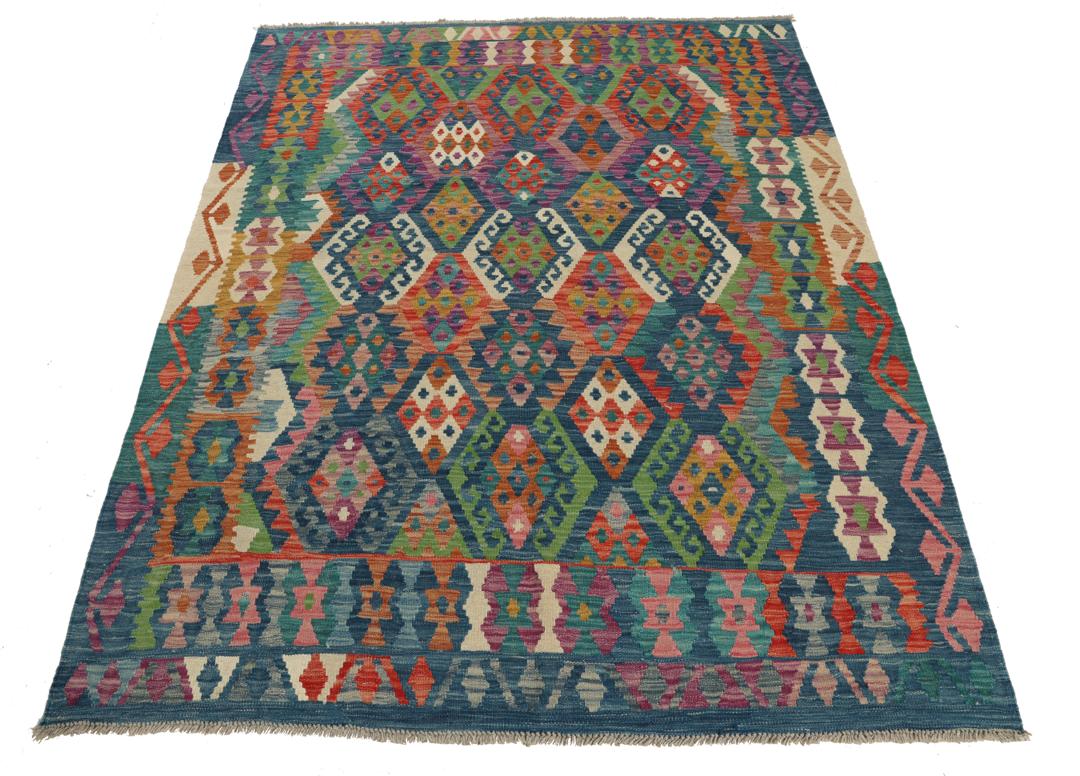
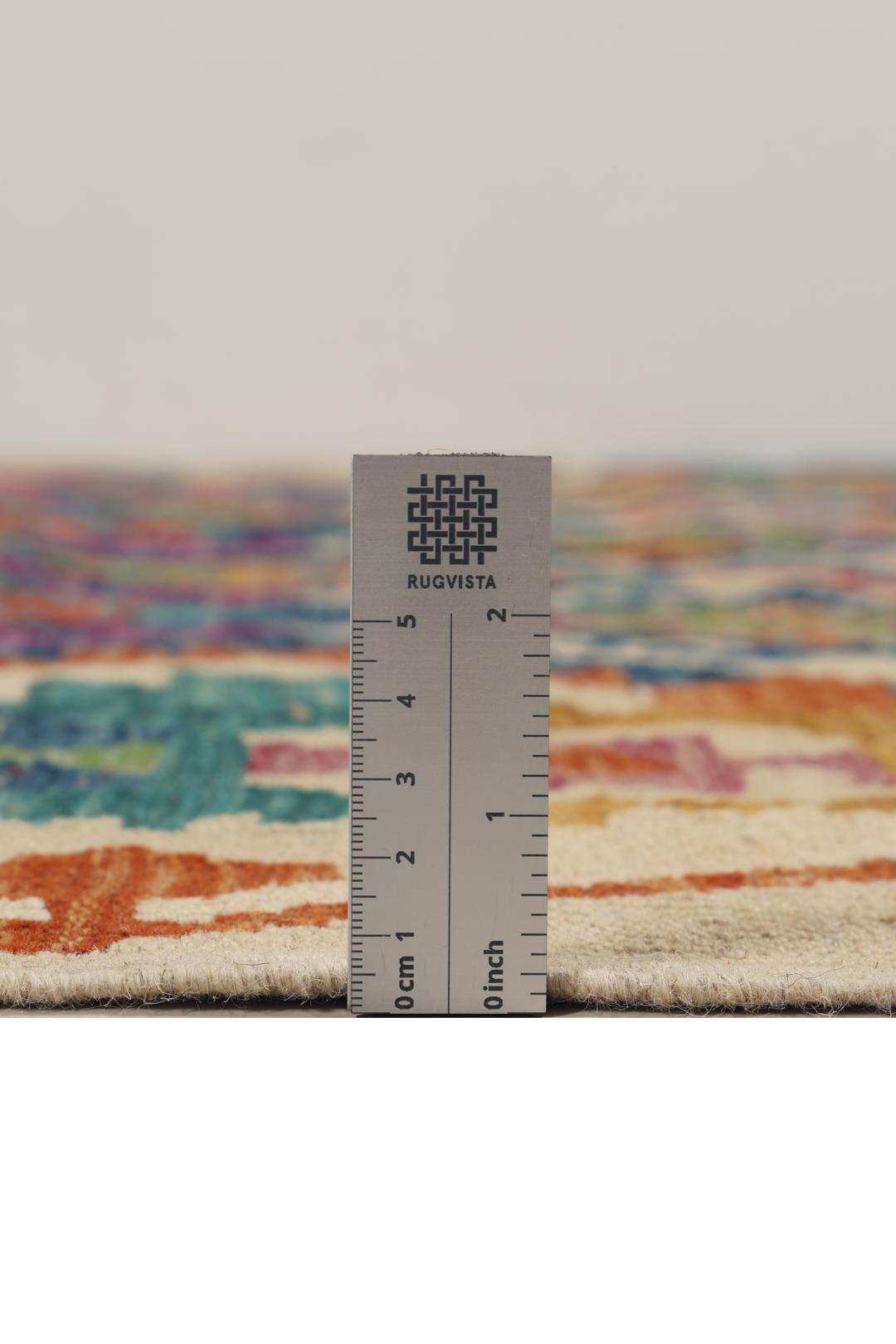
Kelim rugs have been woven for centuries across the Middle East and Central Asia, serving as essential household items that were as functional as they were beautiful. These flat-woven textiles are deeply rooted in the nomadic traditions of the region, where portability and durability were paramount for families moving across diverse landscapes.
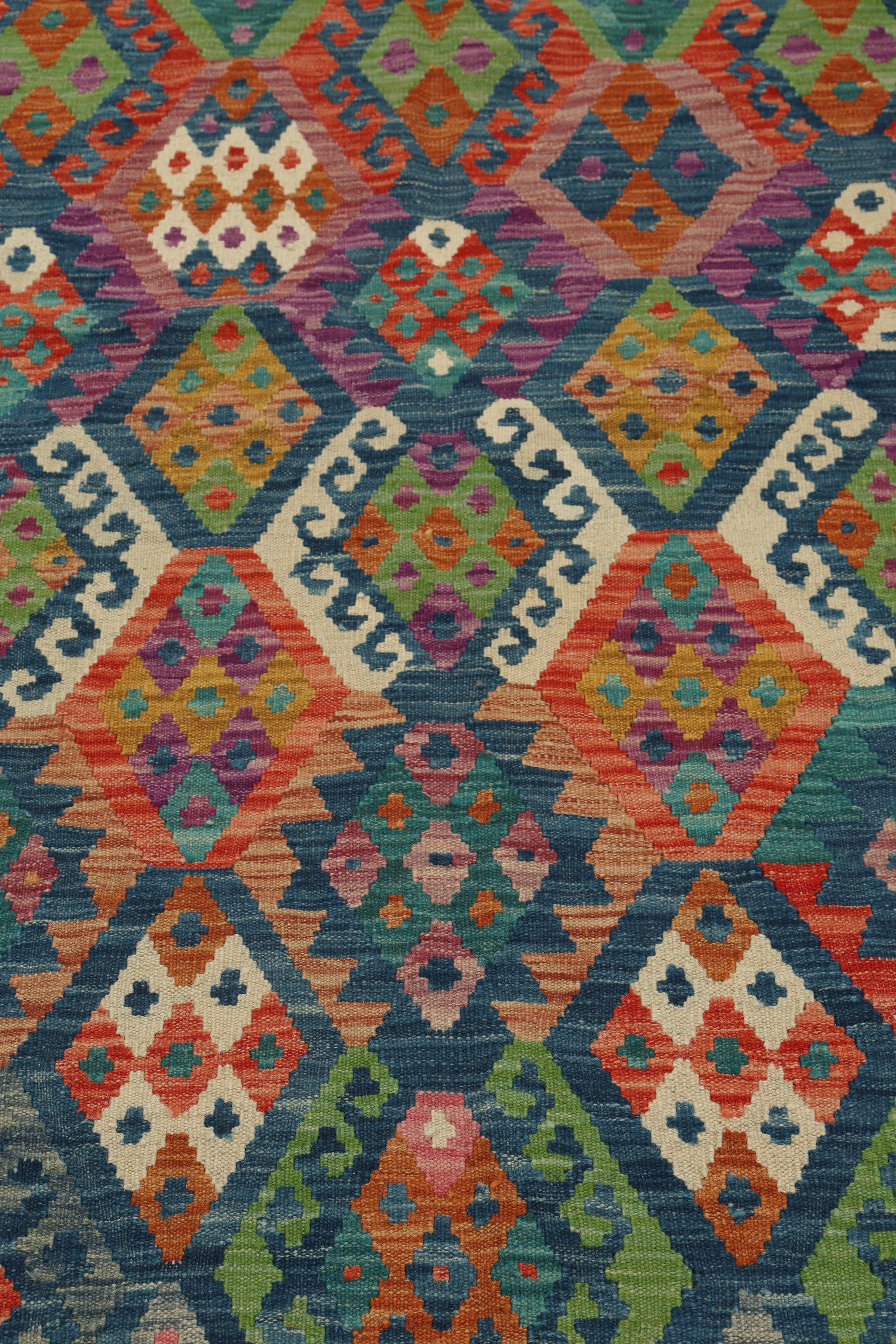
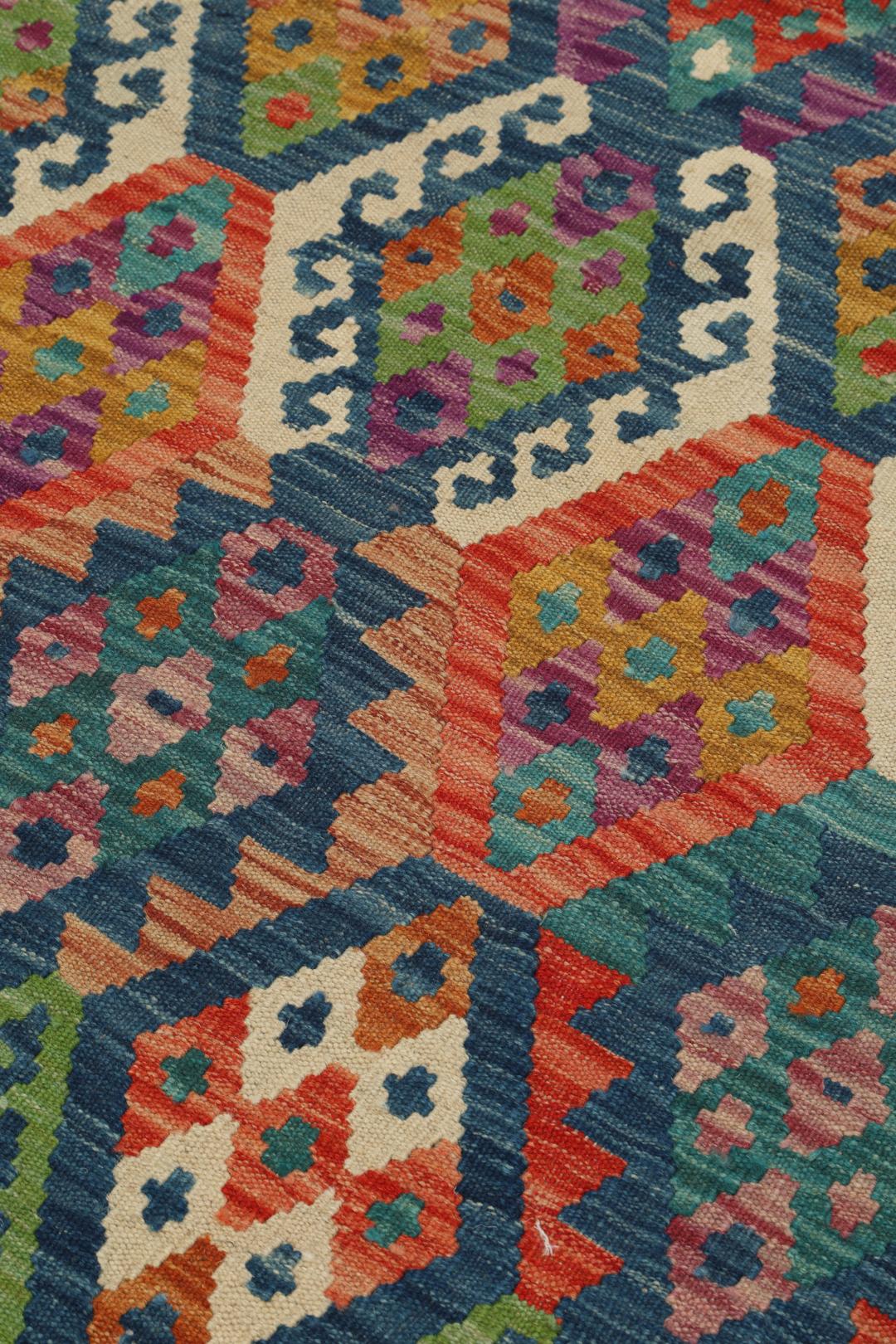
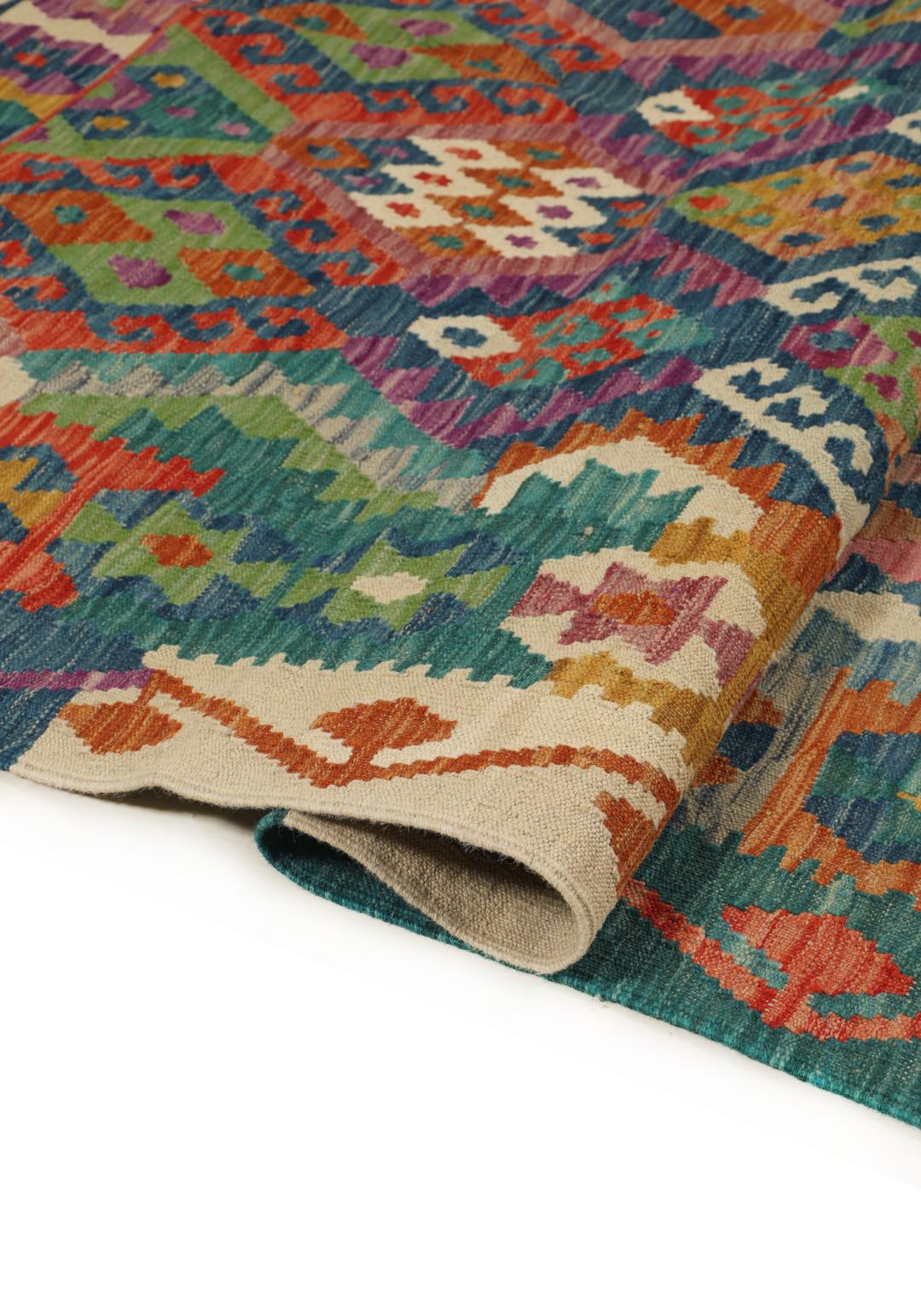
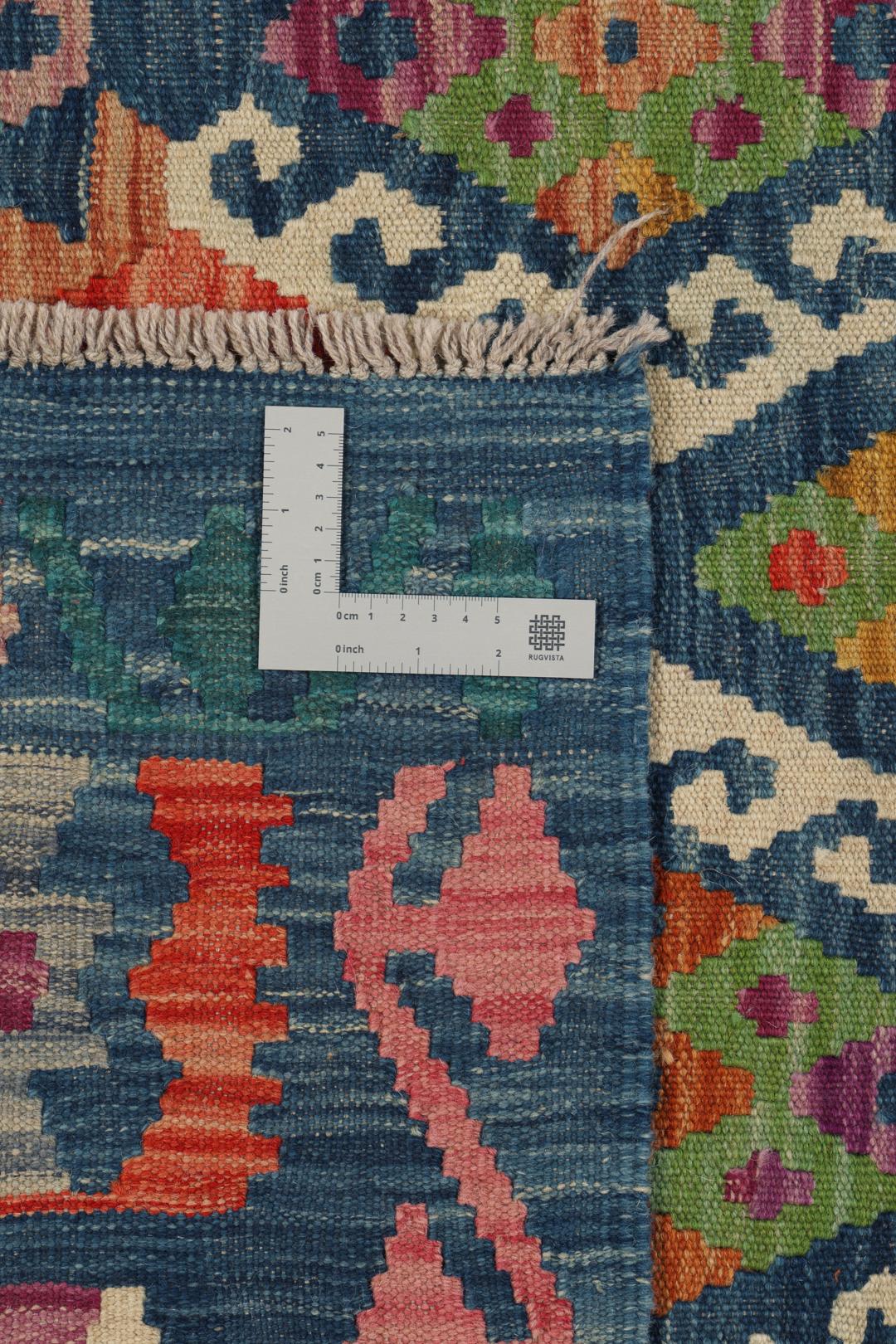
The term 'Kelim' refers to the specific technique of interweaving the warp and weft threads to create a flat, pileless surface. This method creates a reversible rug with a crisp, geometric clarity that is highly sought after by collectors for its ability to showcase complex motifs and sharp lines that are often difficult to achieve with knotted pile rugs.
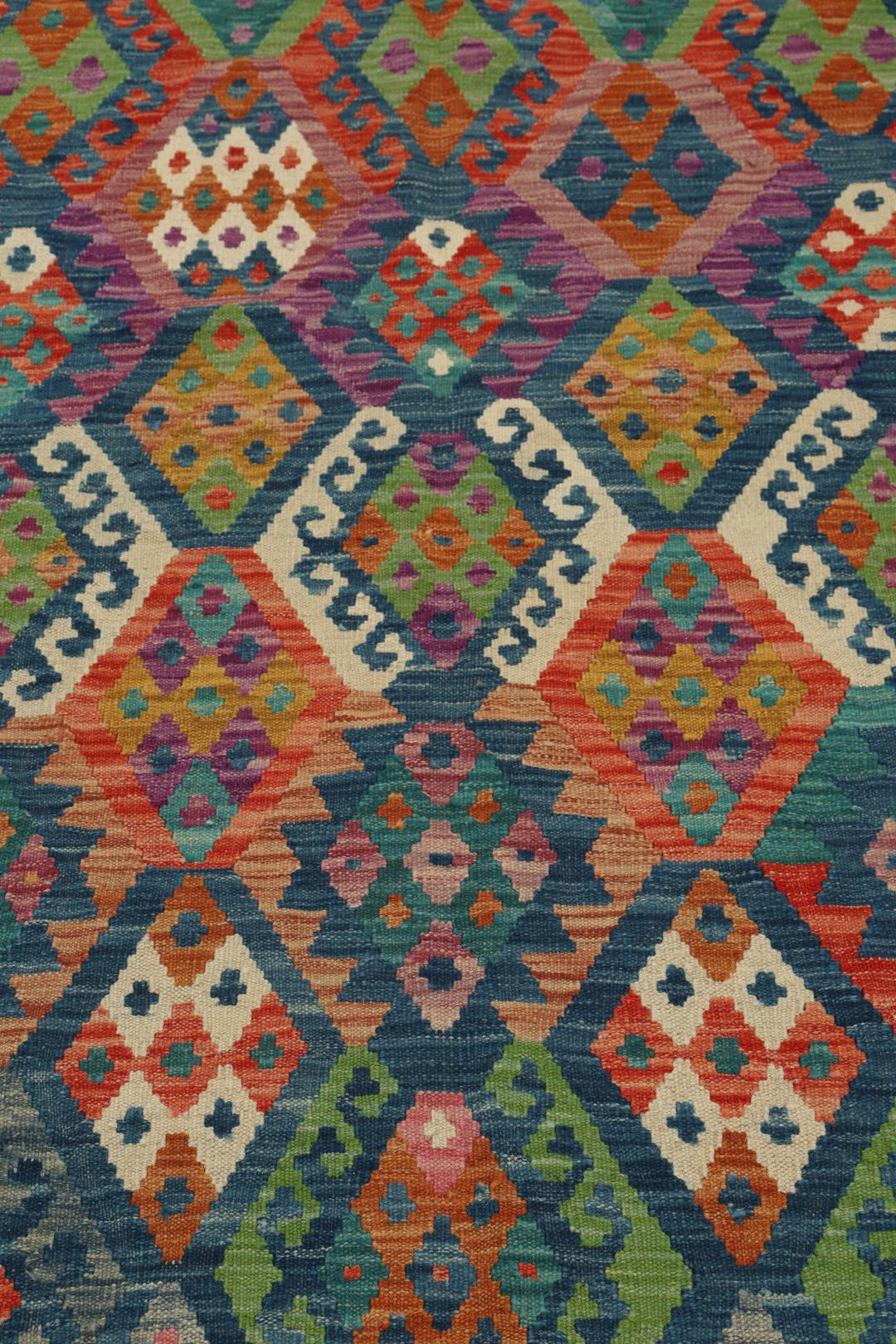
Signature design elements of Afghan Kelims often include bold, repeating diamond shapes and tribal motifs that hold symbolic meaning, often representing protection, fertility, or the natural world. The vibrant palette seen here reflects the traditional use of natural pigments, which develop a soft, authentic patina over time, adding to the rug's character as it ages.
Collecting a piece from this tradition is an act of preserving a centuries-old craft. These rugs are valued not just for their visual impact, but for the human story woven into every thread. Owning one means connecting your home to a heritage of skill and artistic expression that continues to thrive in the hands of modern-day master weavers.