Kelim rugs have long been a cornerstone of nomadic life in the Middle East and Central Asia. Originally created by tribal weavers for practical use as floor coverings, tent hangings, and storage bags, these rugs were designed to be portable yet durable. The tradition of Afghan Kelim weaving is particularly celebrated for its use of high-quality wool and its connection to ancient trade routes.
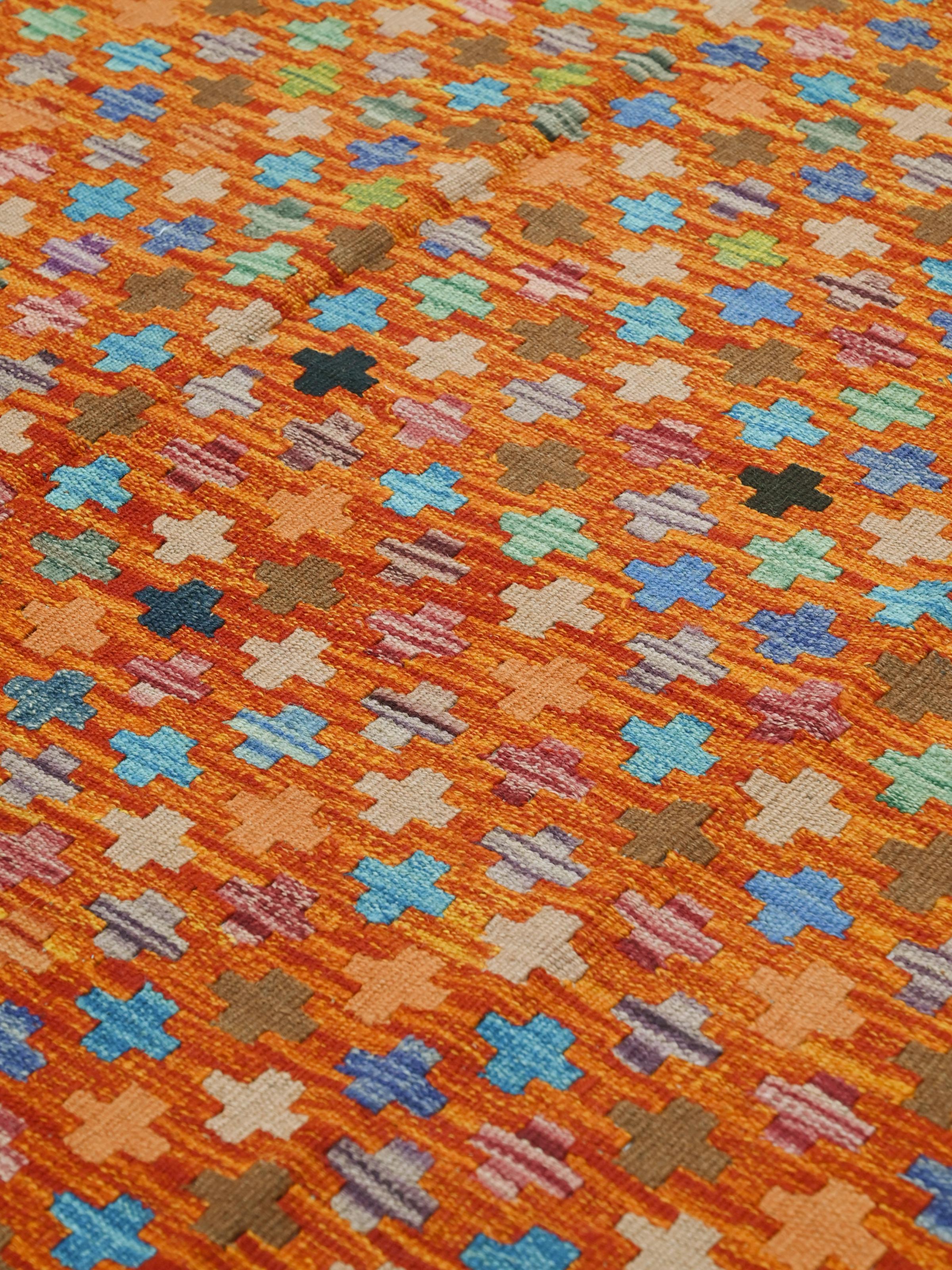
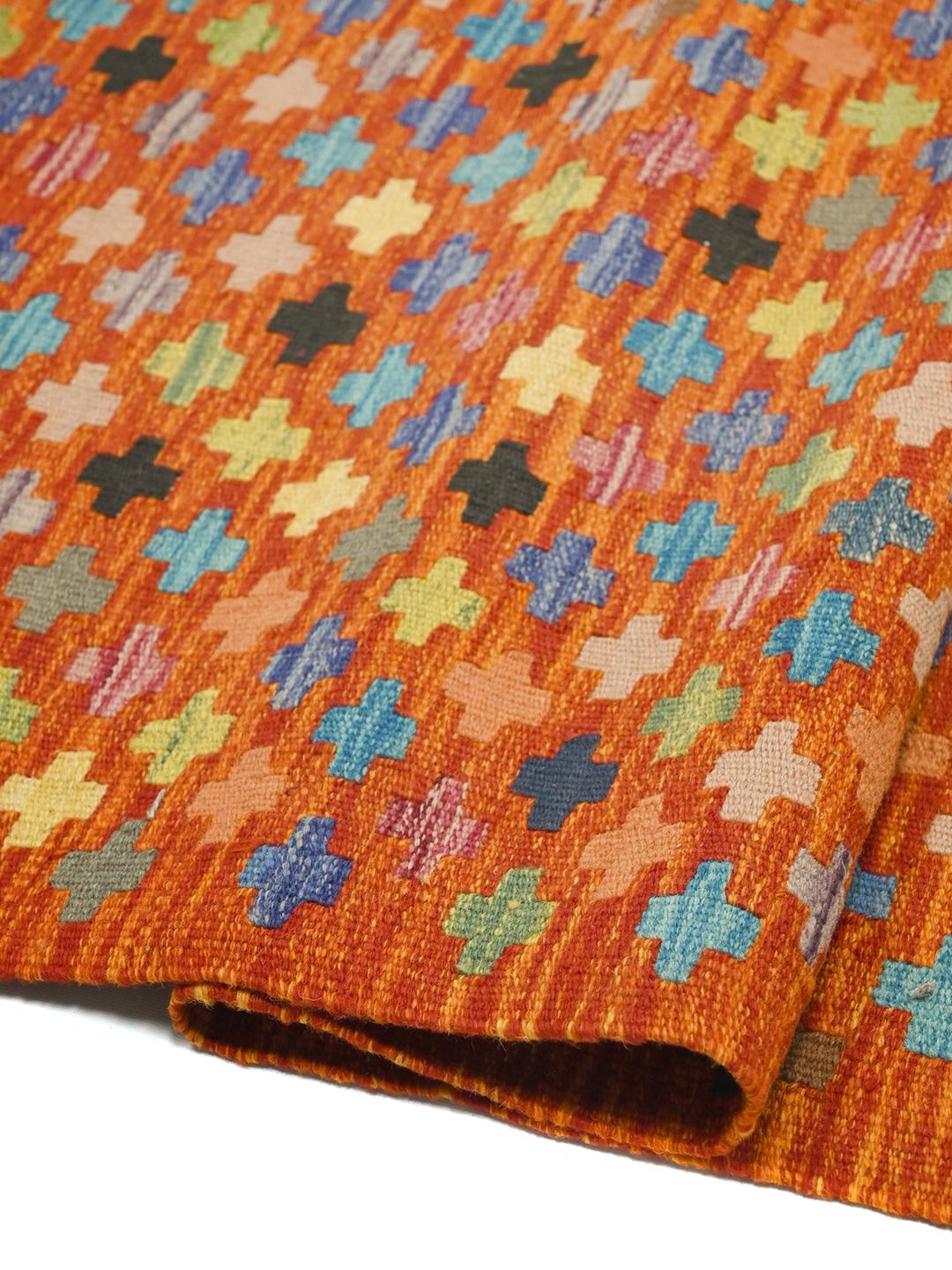
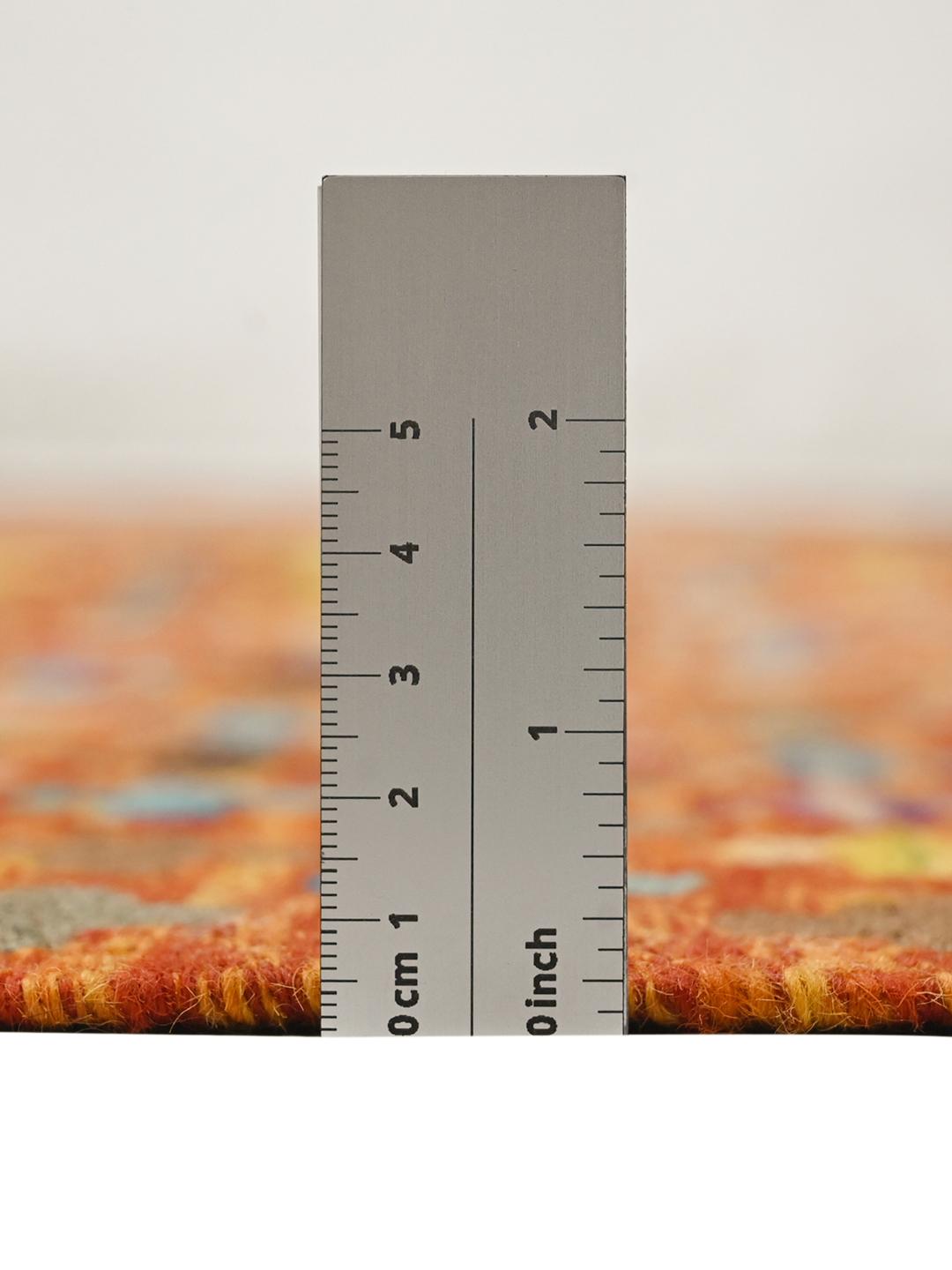
The term 'Kelim' refers to the specific flat-weaving technique where the warp and weft threads are interlaced tightly to create a smooth, pileless surface. Unlike knotted rugs, Kelims derive their strength and visual impact from the sheer density of this weave, which creates a robust and lightweight textile that is naturally resistant to wear.
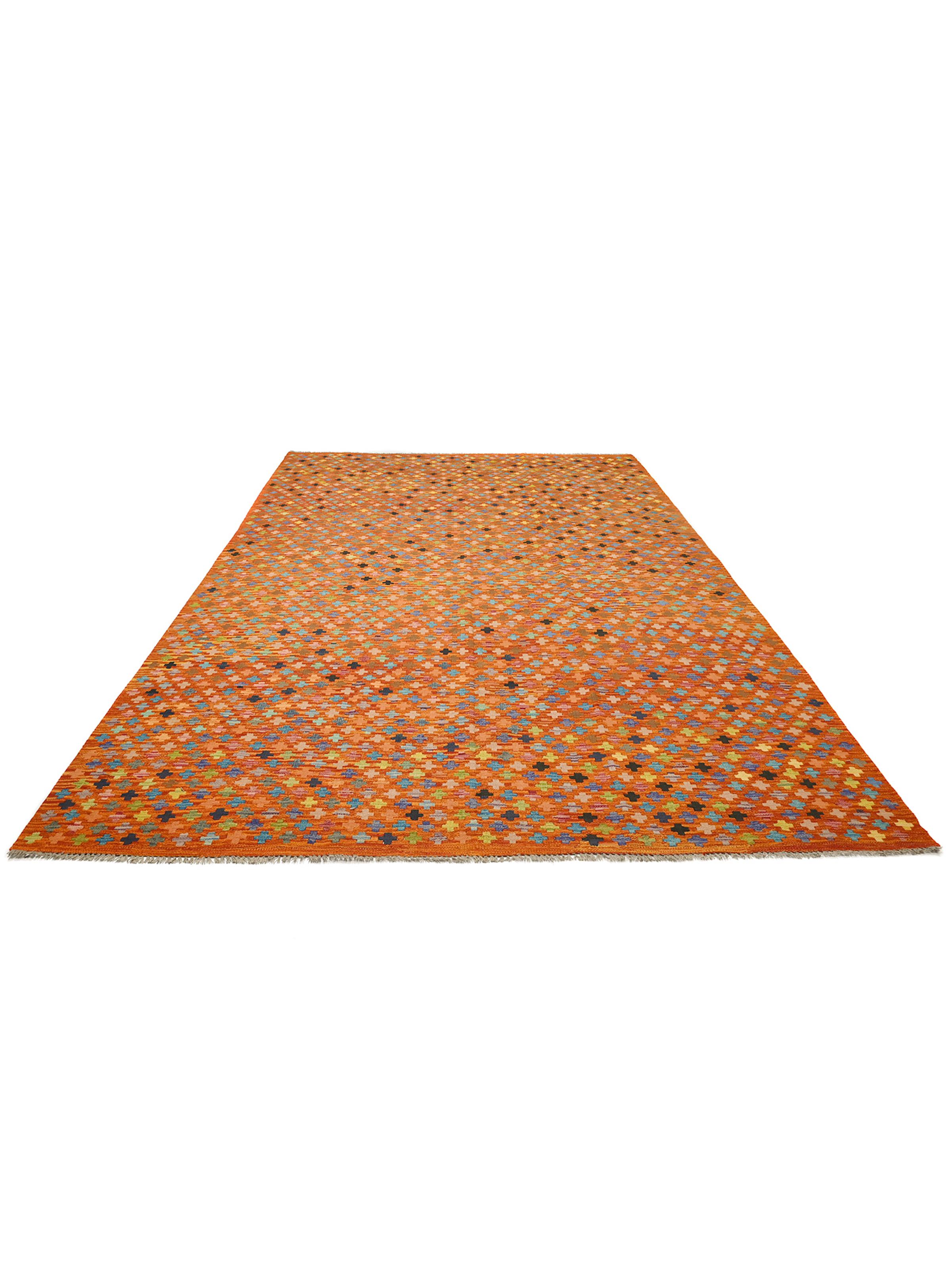
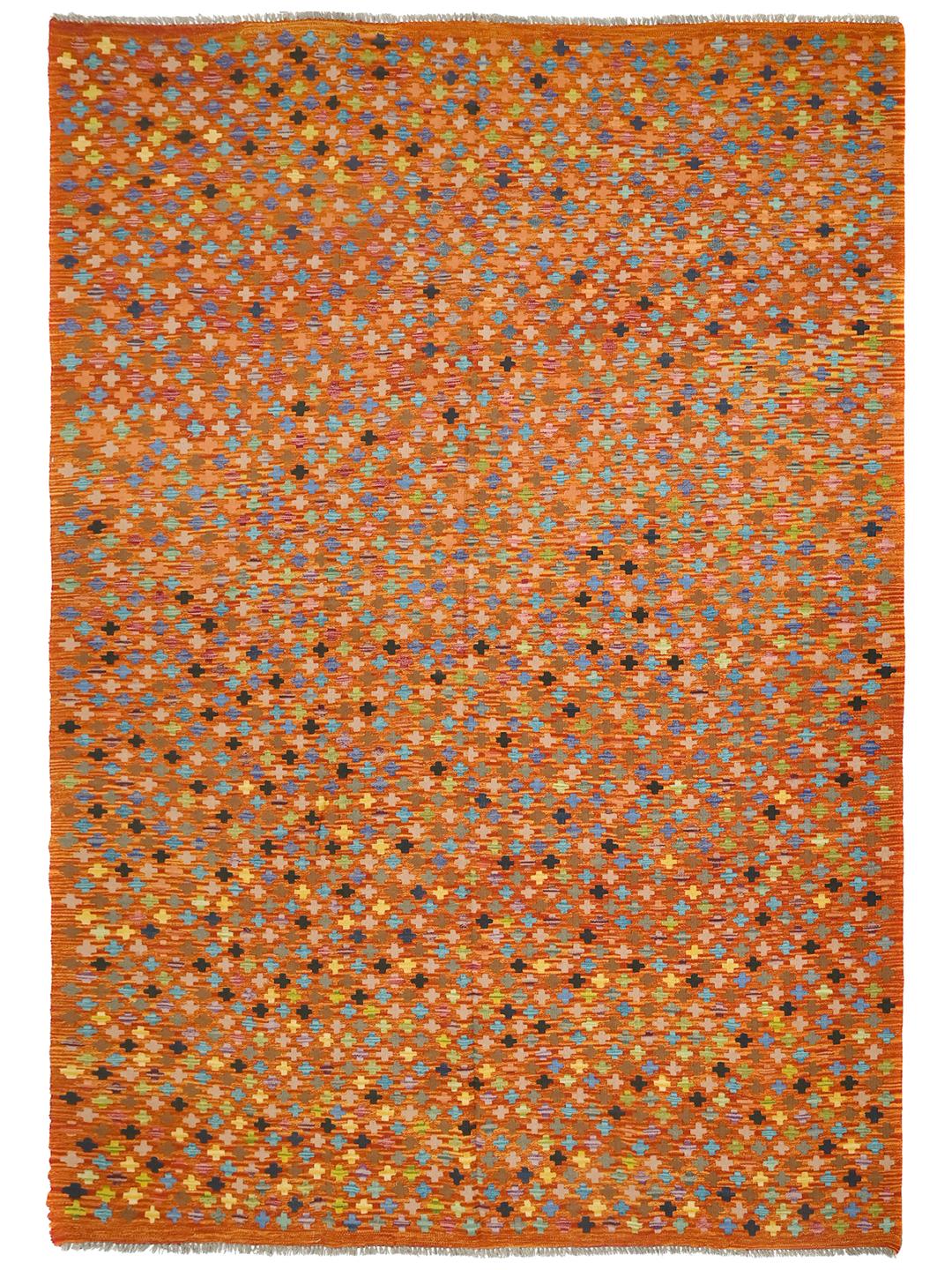
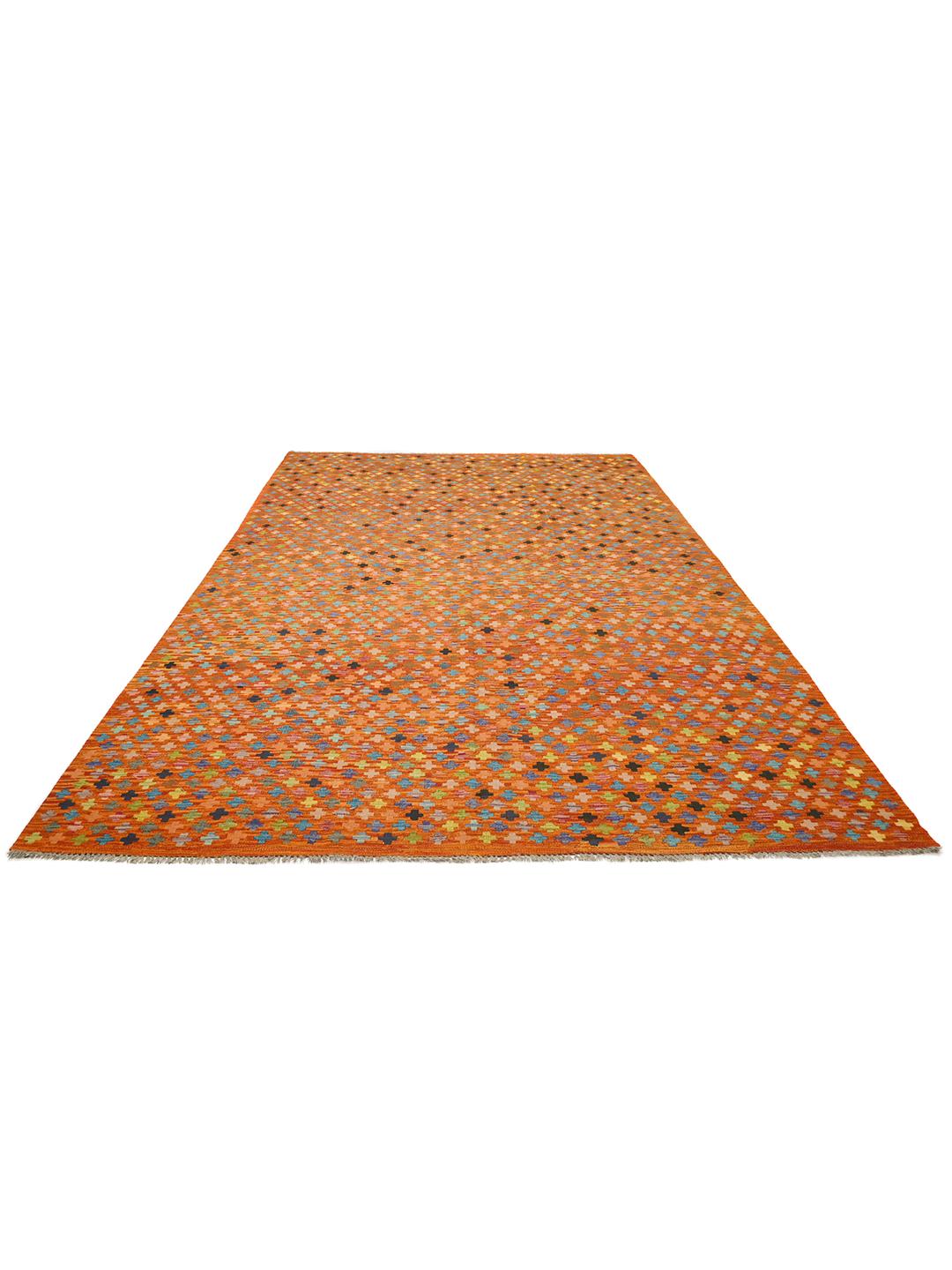
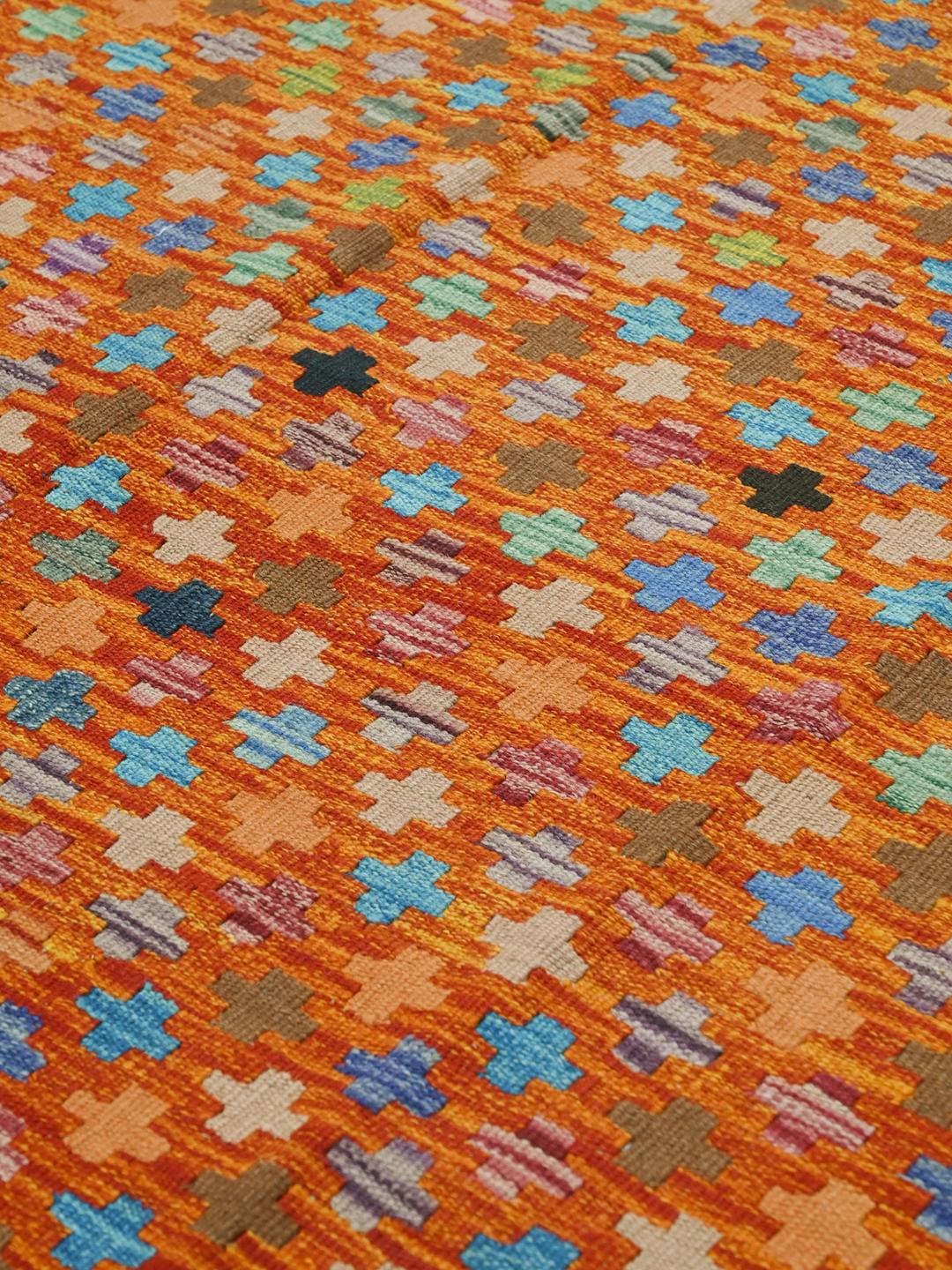
The design of this particular piece features repeating cross motifs, a classic element in tribal textile art. While many traditional Kelims rely on bold geometric diamonds or stripes, the use of scattered crosses adds a whimsical, artistic flair that bridges the gap between ancient craft and modern design sensibilities. These motifs are often symbolic, representing protection or prosperity within the weaver's culture.
Collectors value these rugs for their raw, honest connection to their origin. By choosing an authentic Afghan Kelim, you are not just acquiring a floor covering, but a piece of cultural heritage. These rugs represent the skill of generations of weavers who have passed down their techniques, ensuring that each piece carries a story of craftsmanship and tradition.