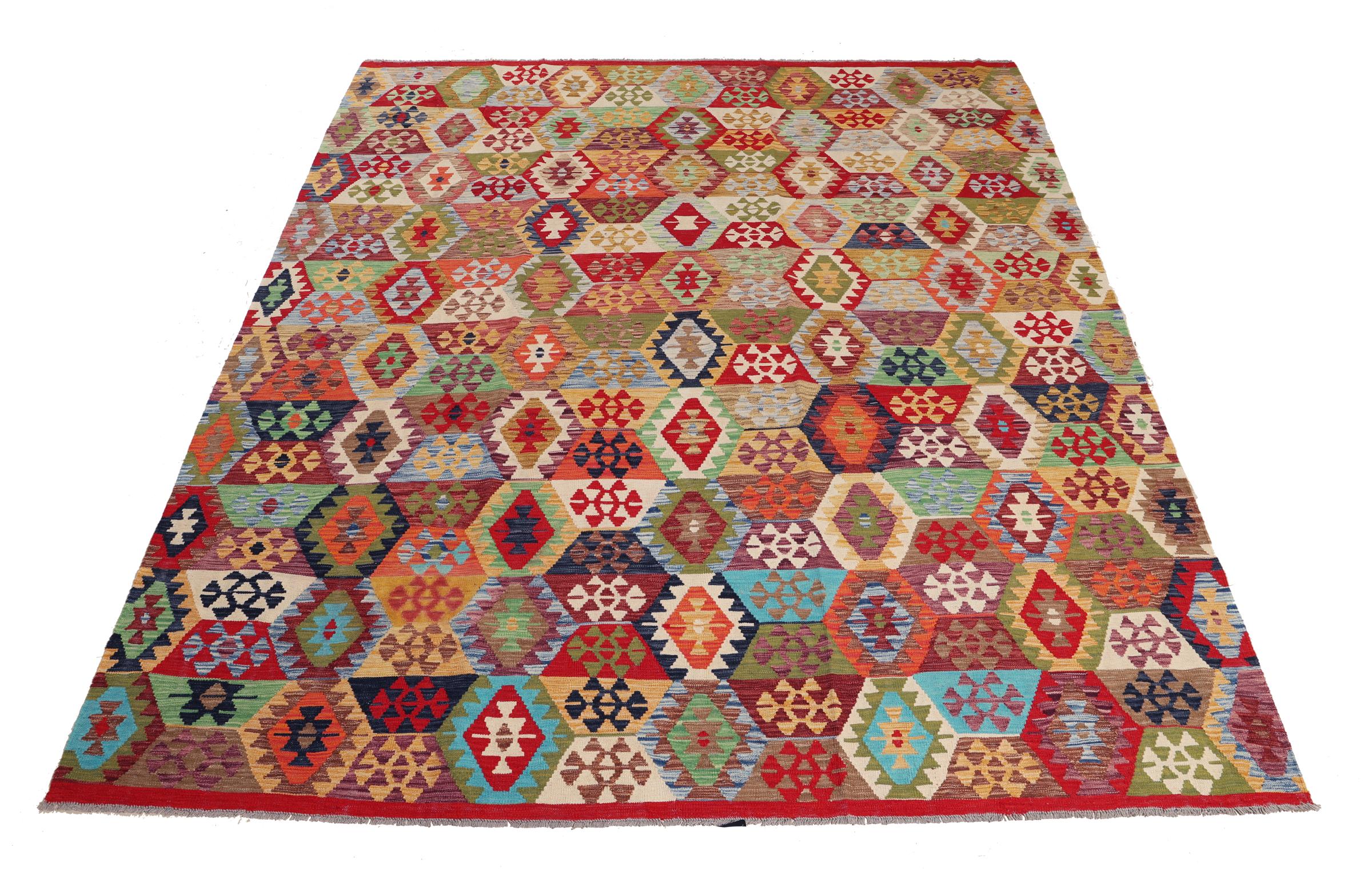
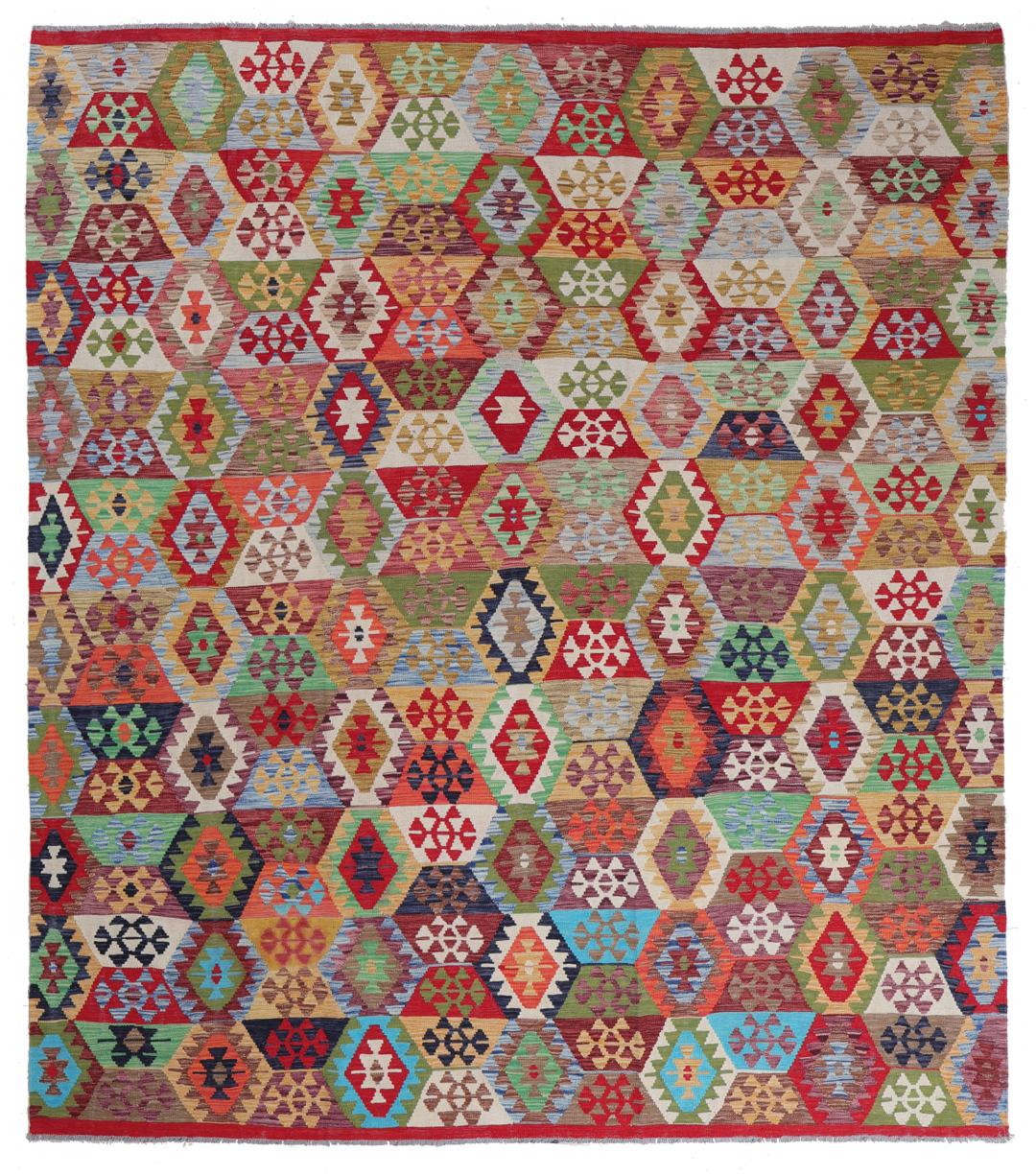
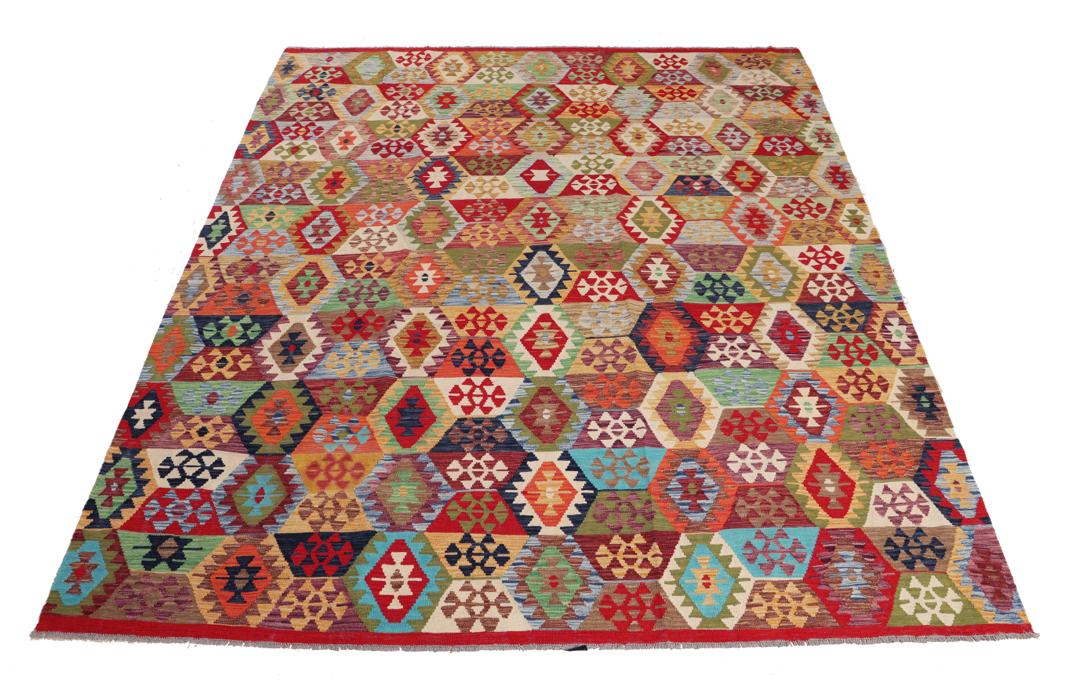
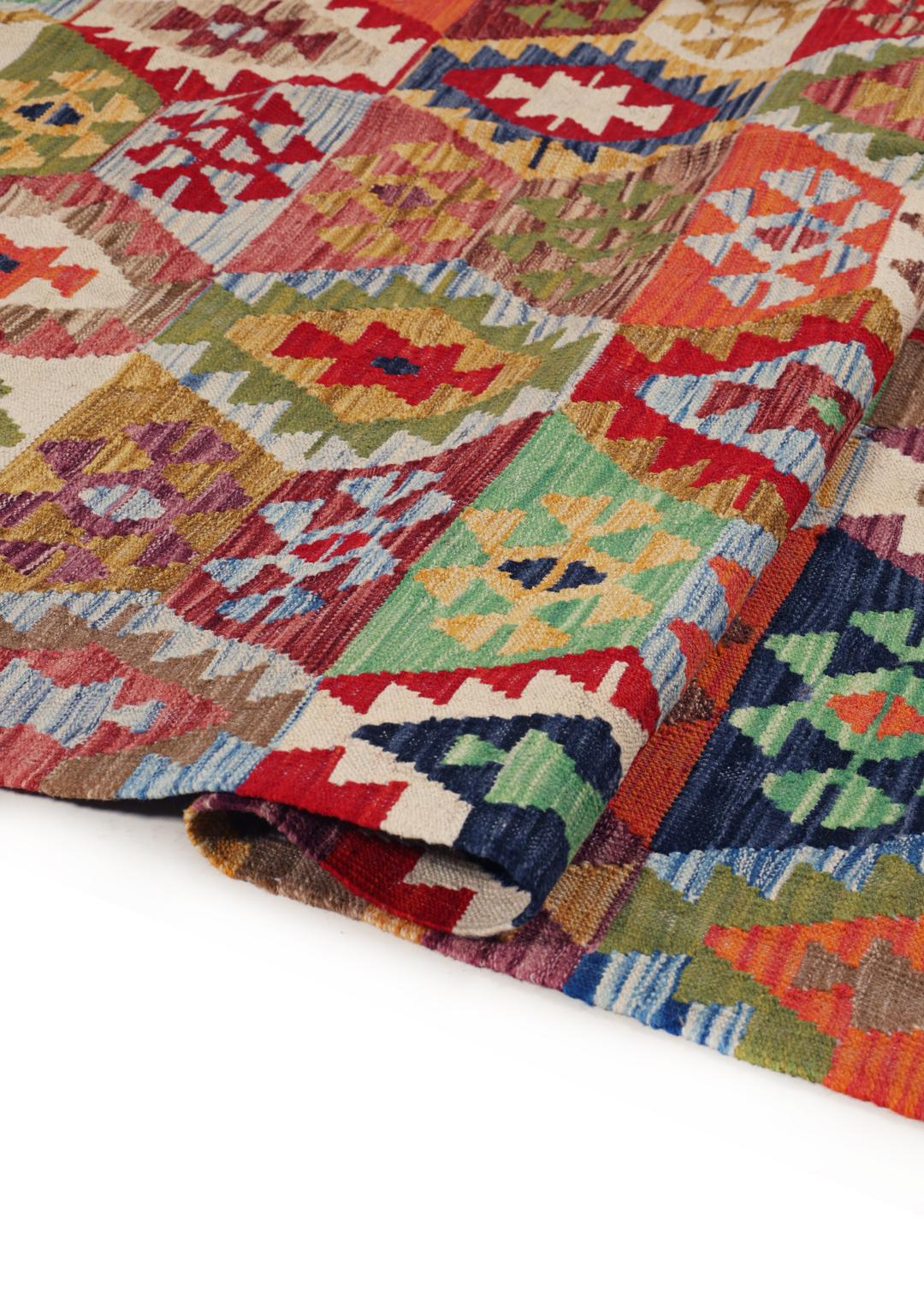
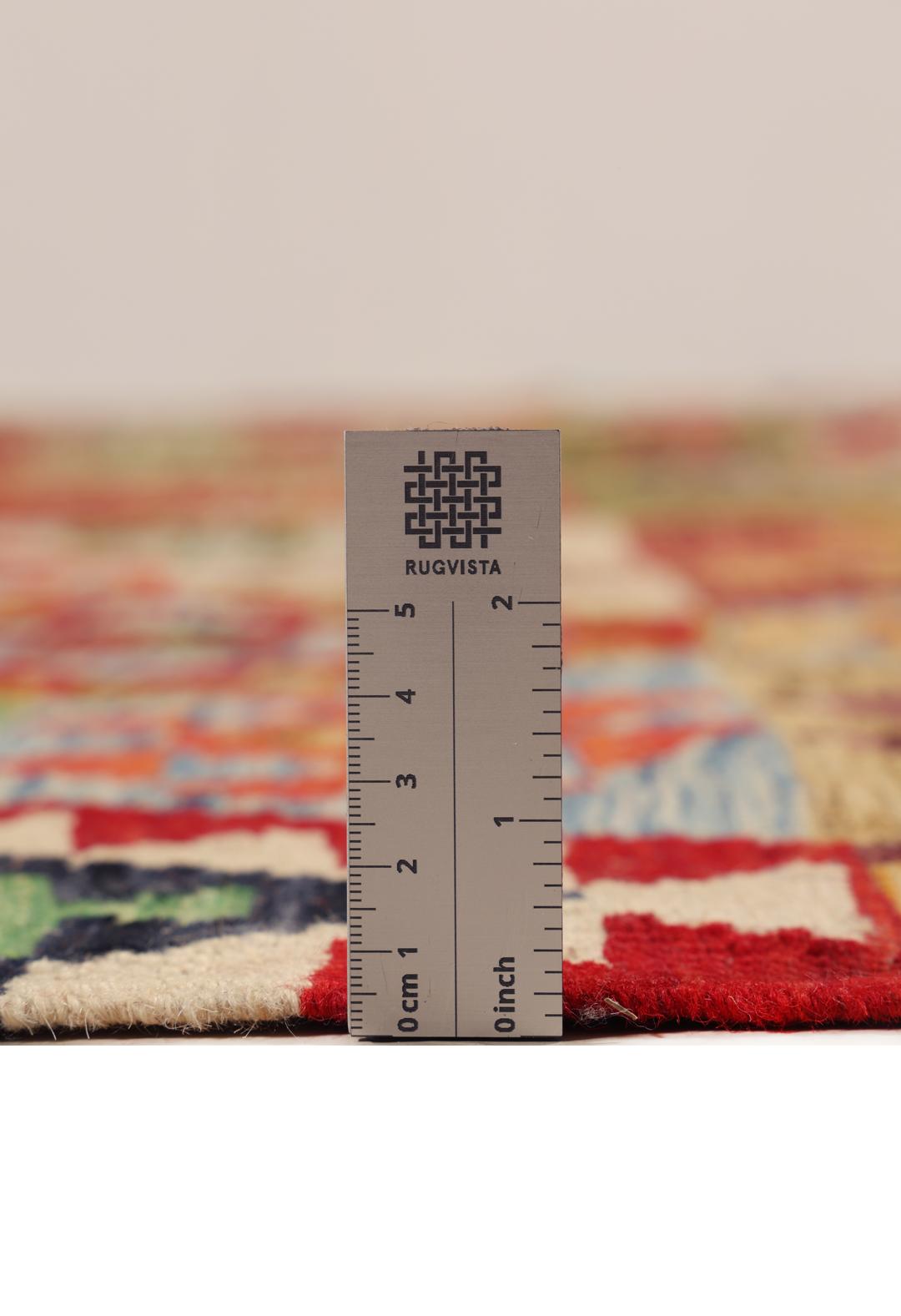
Kelim rugs are deeply rooted in the nomadic and village traditions of the Middle East and Central Asia. Historically, these flat-woven textiles were essential to daily life, serving as floor coverings, wall hangings, and functional storage bags for travelling tribes. The term Kelim itself refers to this specific tapestry-weave technique, where the weft threads are woven tightly over the warp to create a smooth, pileless surface that is both durable and portable.
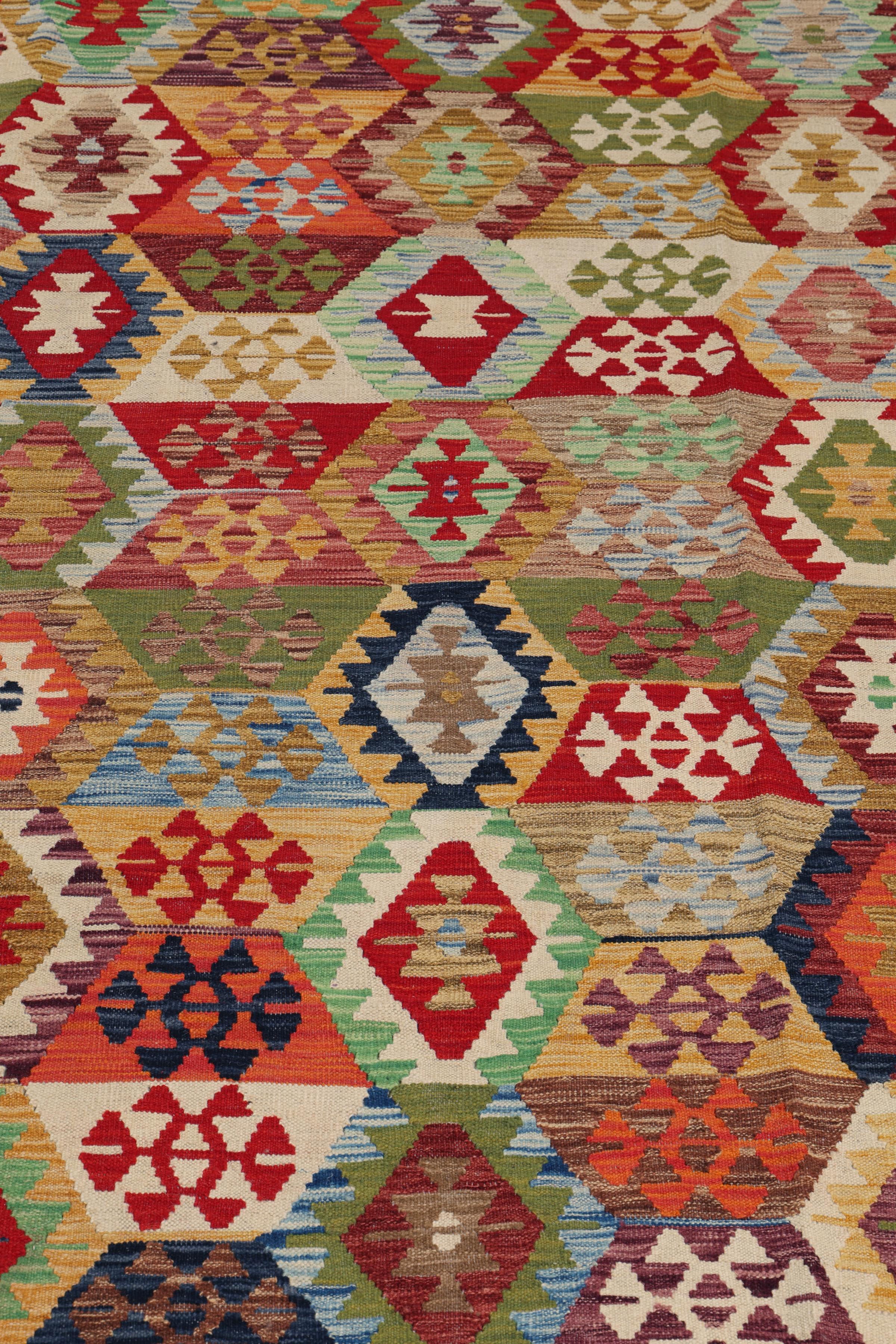
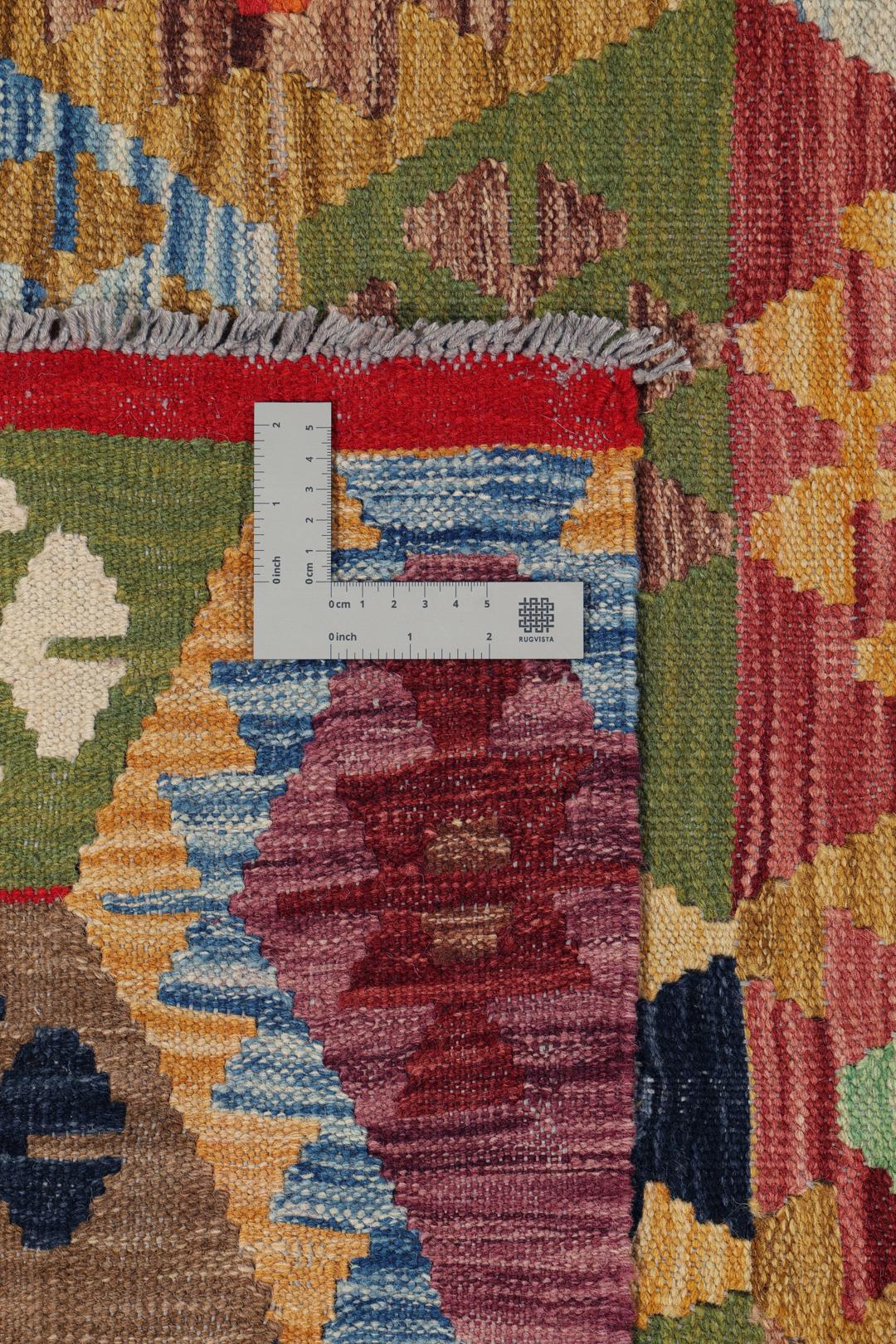
The craft of weaving a Kelim is a testament to the weaver's technical proficiency. Unlike knotted rugs, where the design is built into the pile, the pattern in a Kelim is created by the change of colour in the weft threads. This requires a high degree of foresight and planning, as the design must be calculated across the loom from the very first row. This technical complexity ensures that the resulting fabric is reversible and exceptionally sturdy.
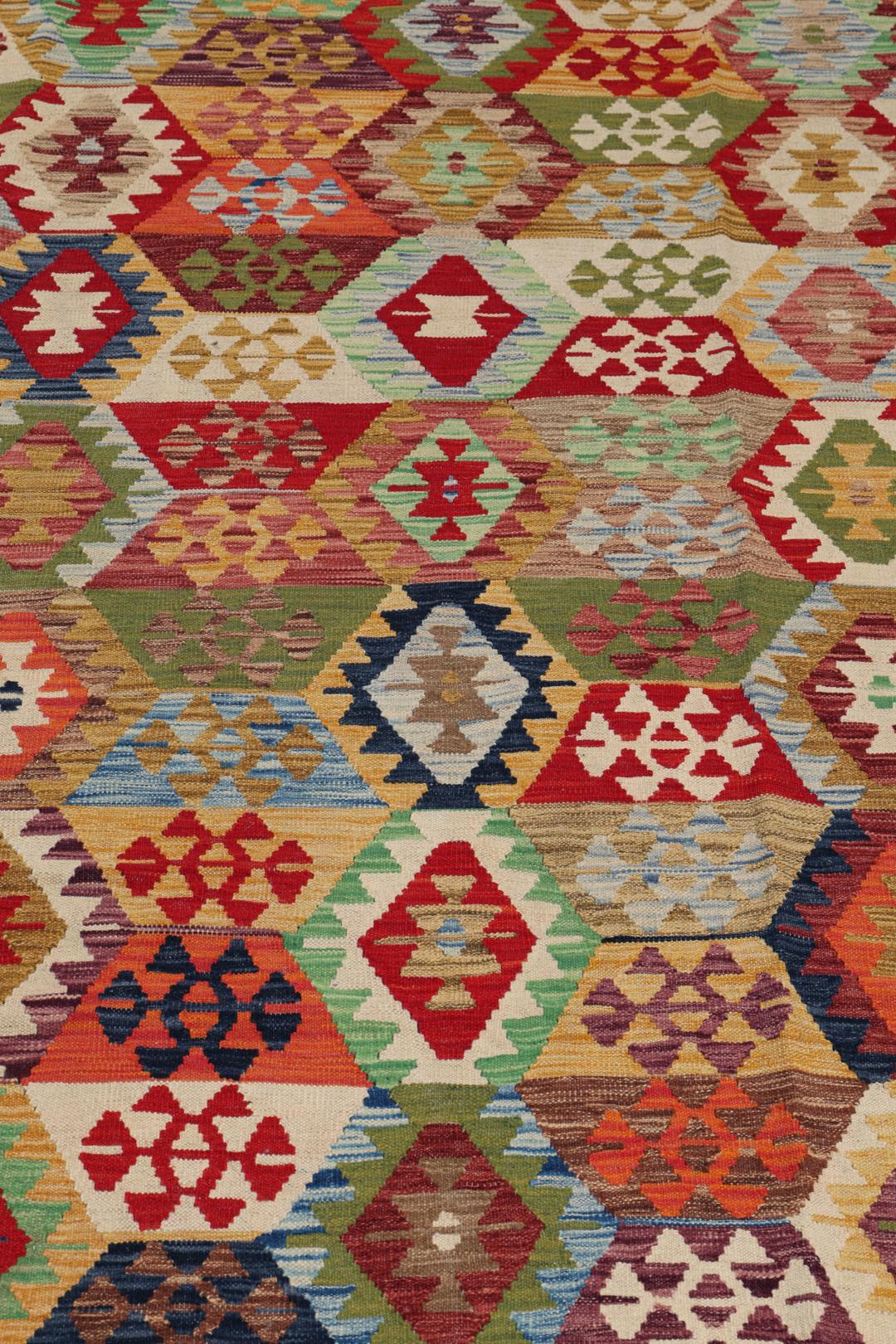
Design-wise, these rugs are celebrated for their bold geometric vocabulary. Motifs such as diamonds, hexagons, and stepped triangles are not merely decorative but often carry symbolic meanings related to protection, fertility, and the natural environment. The colour traditions are equally significant, often derived from local plant dyes that produce rich, earthy tones or, as in this piece, a vibrant spectrum of hues that highlight the complexity of the geometric layout.
Collecting a Kelim is an appreciation of a living heritage. These rugs are highly valued for their ability to bring a sense of history and human touch into modern living spaces. Because they are the result of traditional skills passed down through generations, owning a Kelim is a way of preserving a piece of cultural history. They are not just floor coverings, but storied objects that connect the modern home to the ancient, enduring traditions of the weaver's craft.