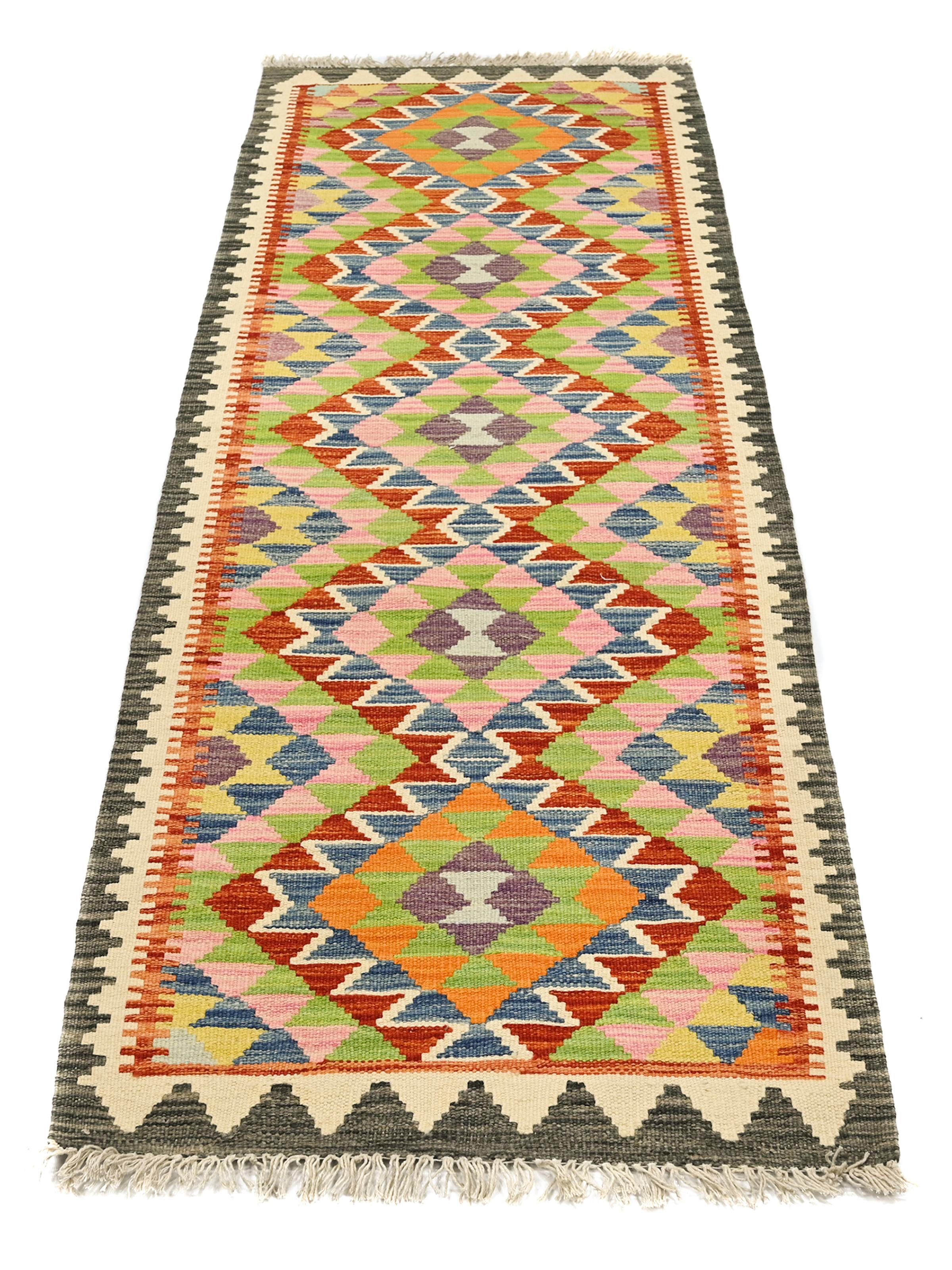
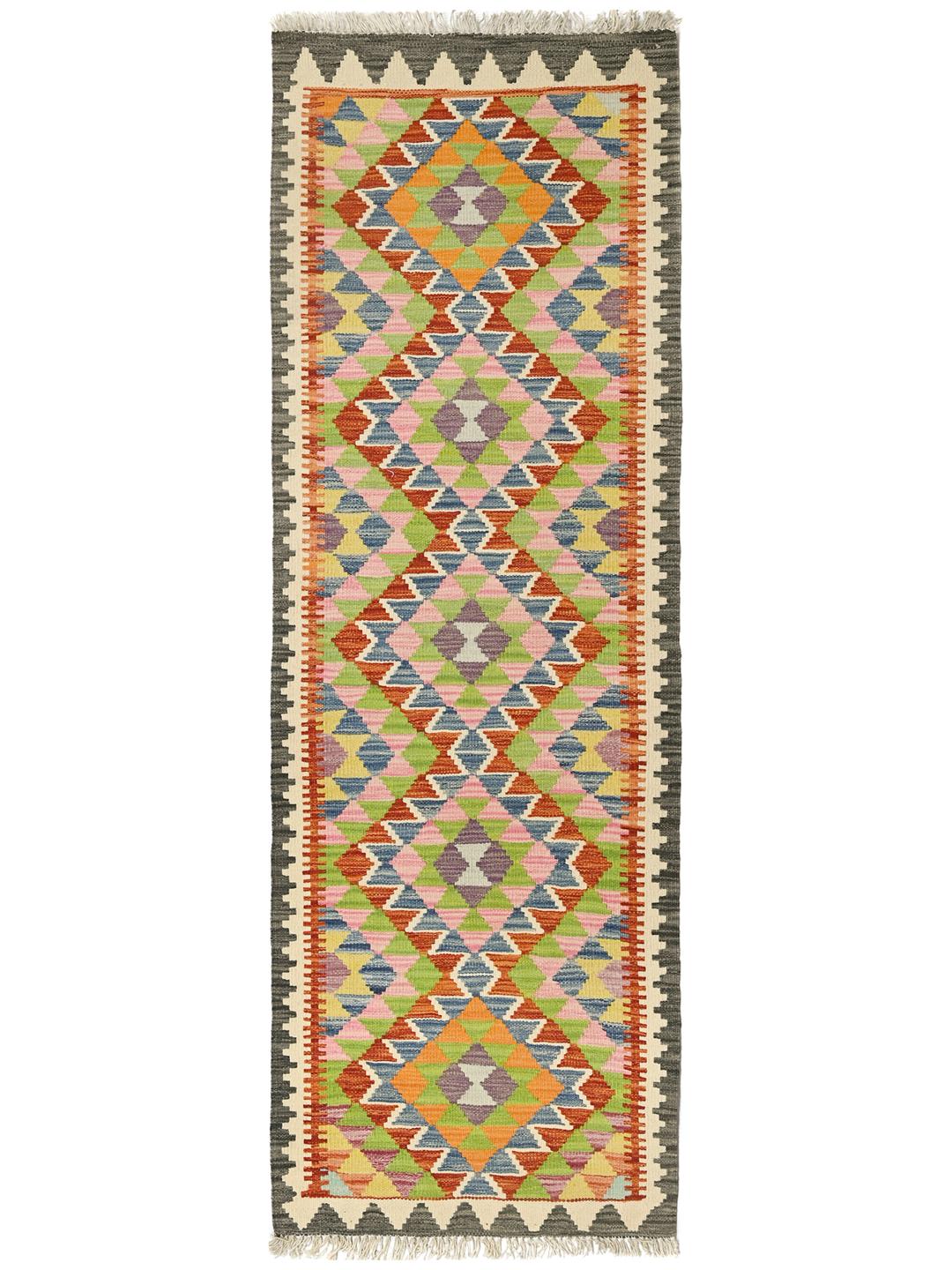
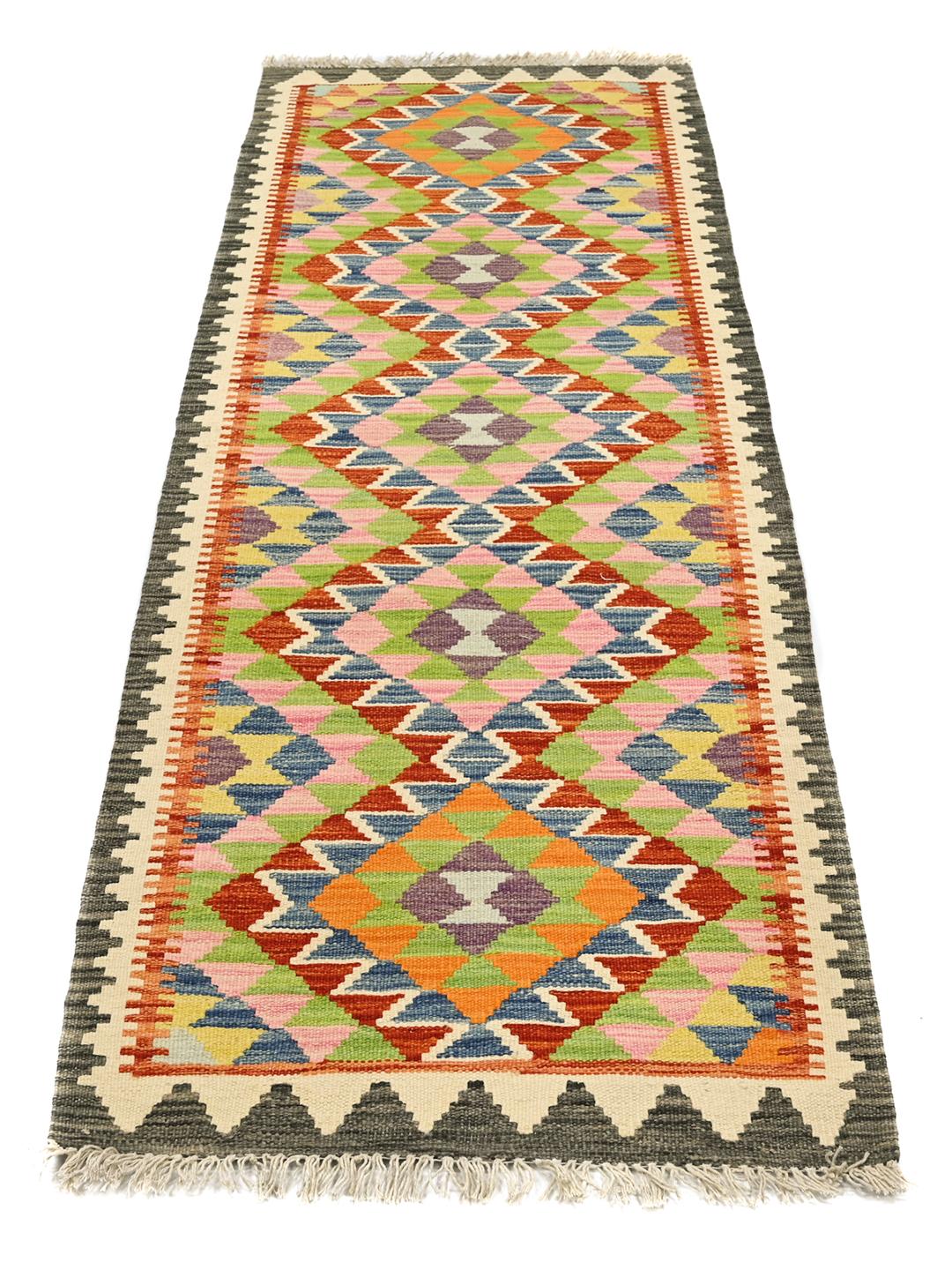
Kelim rugs have a long and storied history across the Middle East and Central Asia, serving as both functional floor coverings and expressions of cultural identity. The Kelim Afghan Old Style tradition draws on centuries of nomadic and village weaving heritage, where rugs were historically used for everything from warmth in tents to decorative wall hangings. These pieces are deeply connected to the landscapes and history of their origin regions.
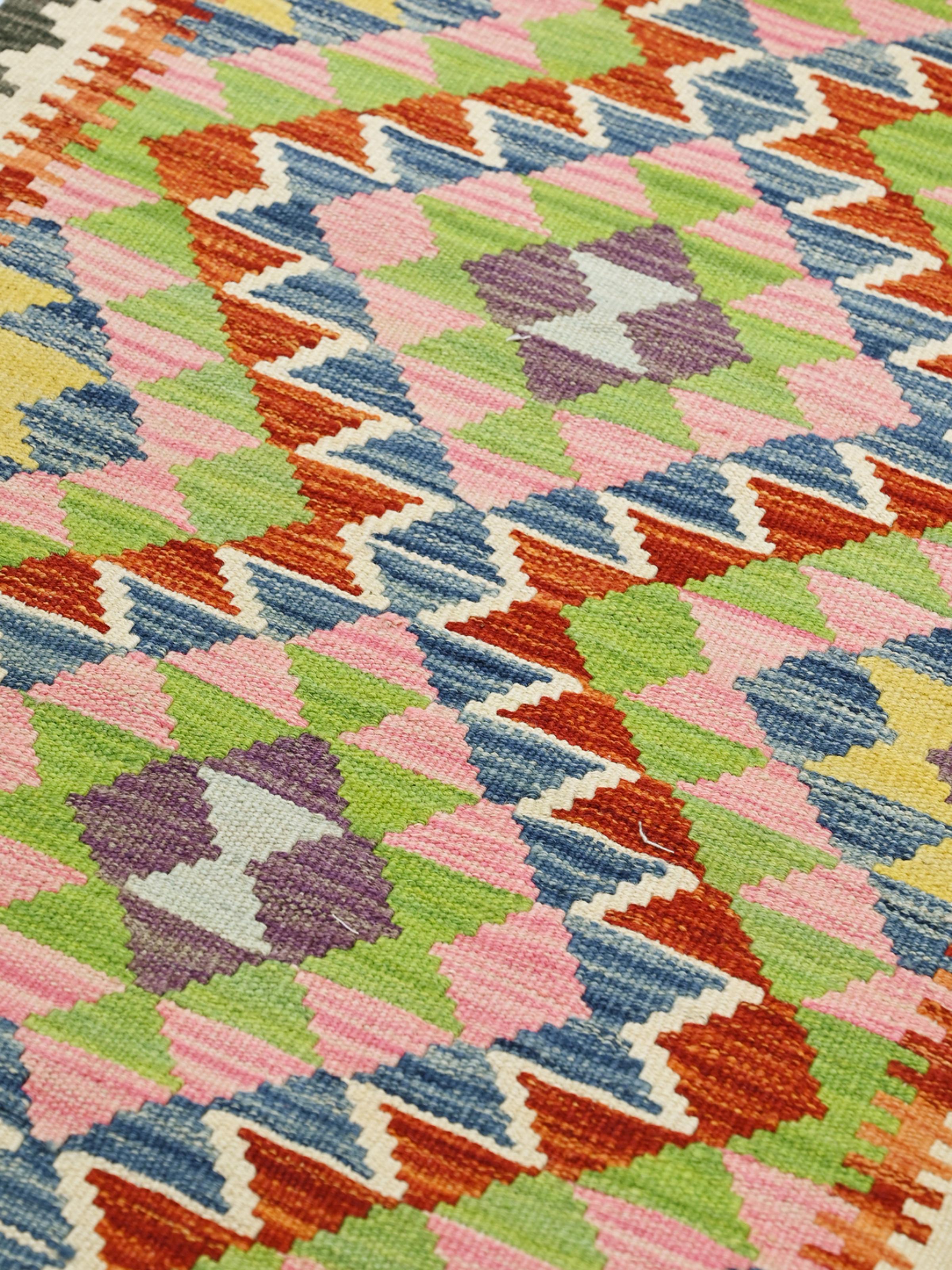
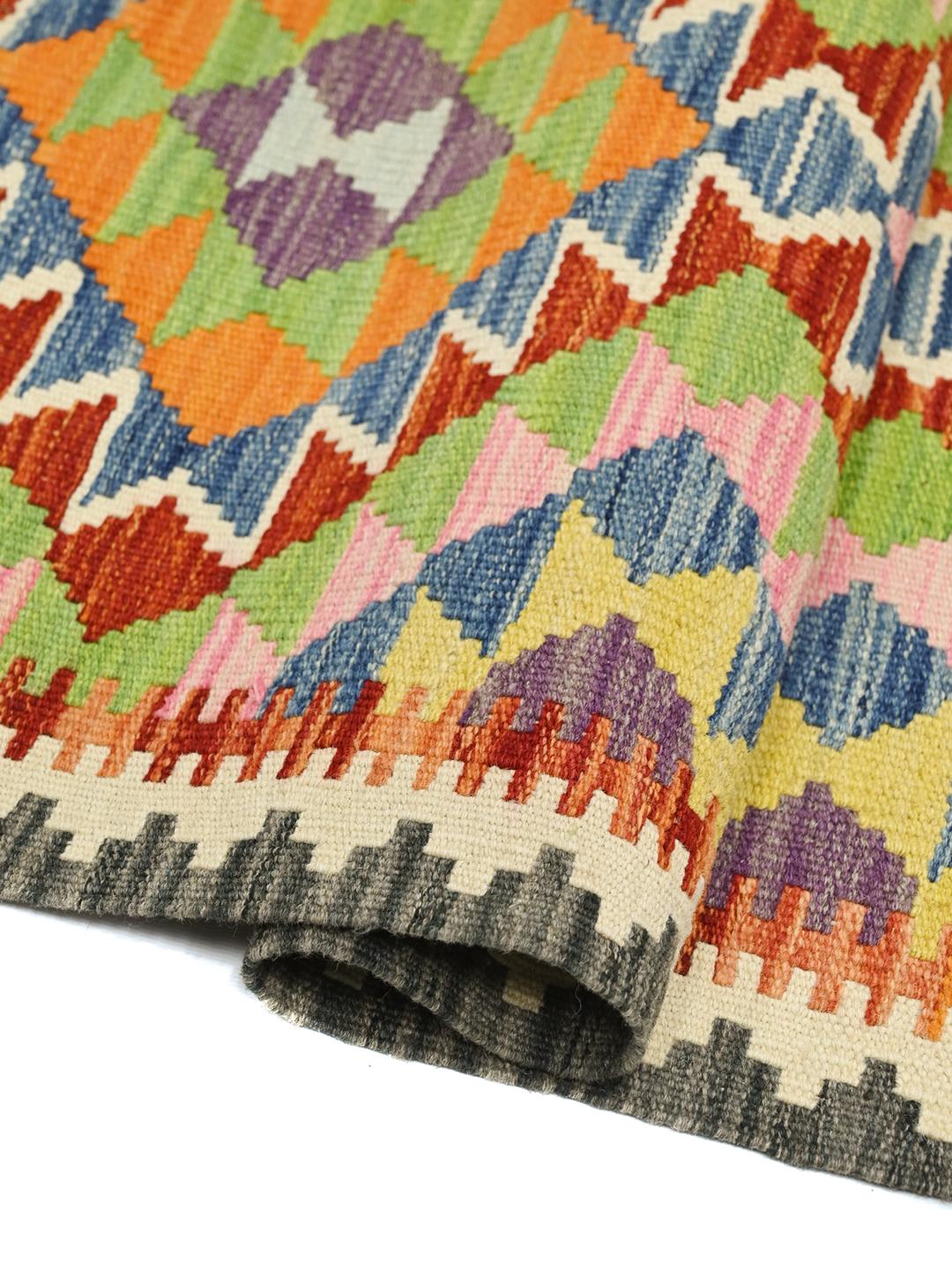
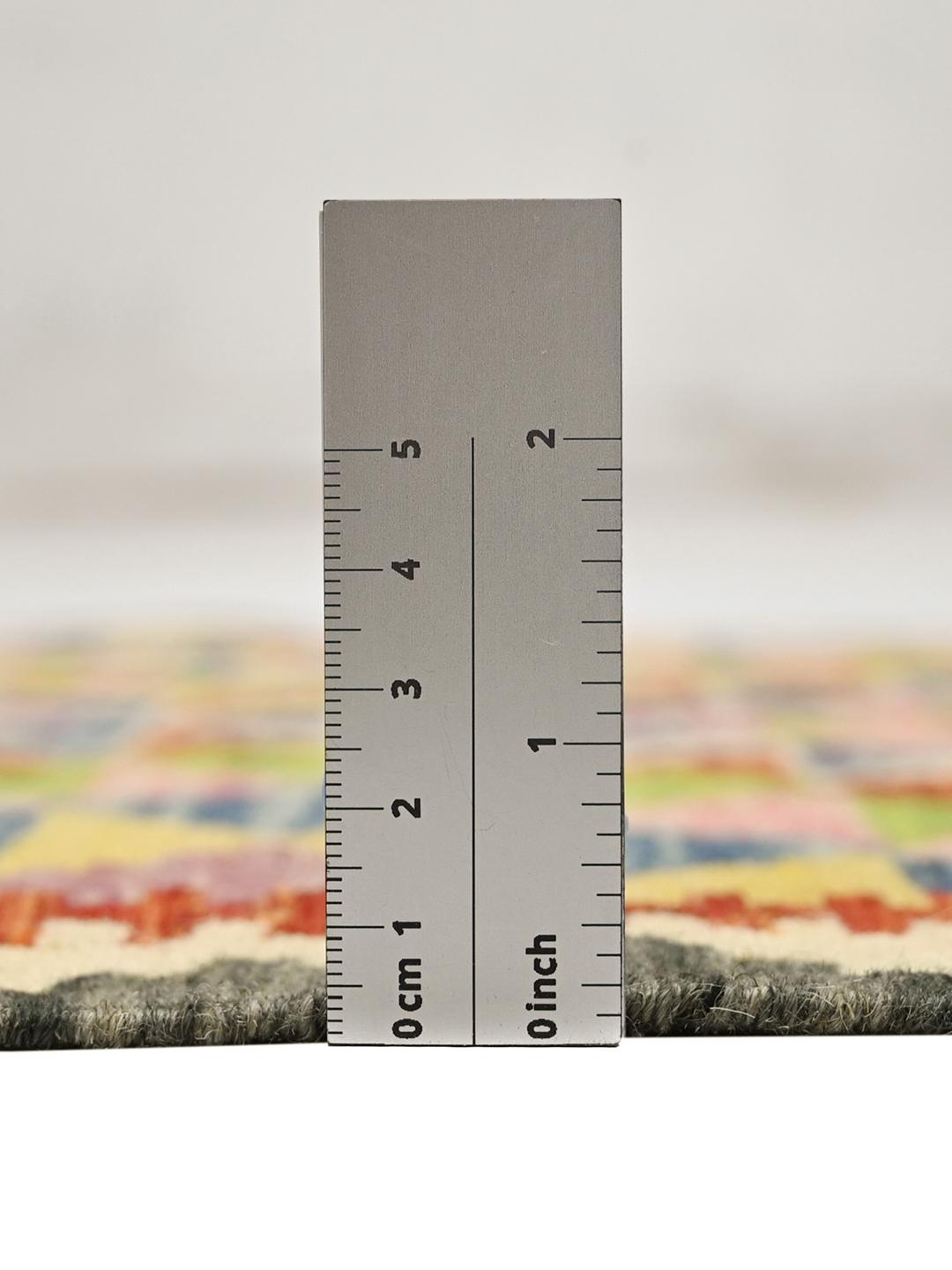
Technically, a Kelim is defined by its flat-weave construction, meaning it is crafted without a pile. This is achieved by interlocking the weft threads tightly around the warp threads, a method that allows for the creation of sharp, clean geometric designs. The resulting fabric is lightweight yet incredibly strong, making it a practical choice for nomadic life, where rugs needed to be durable and easily portable.
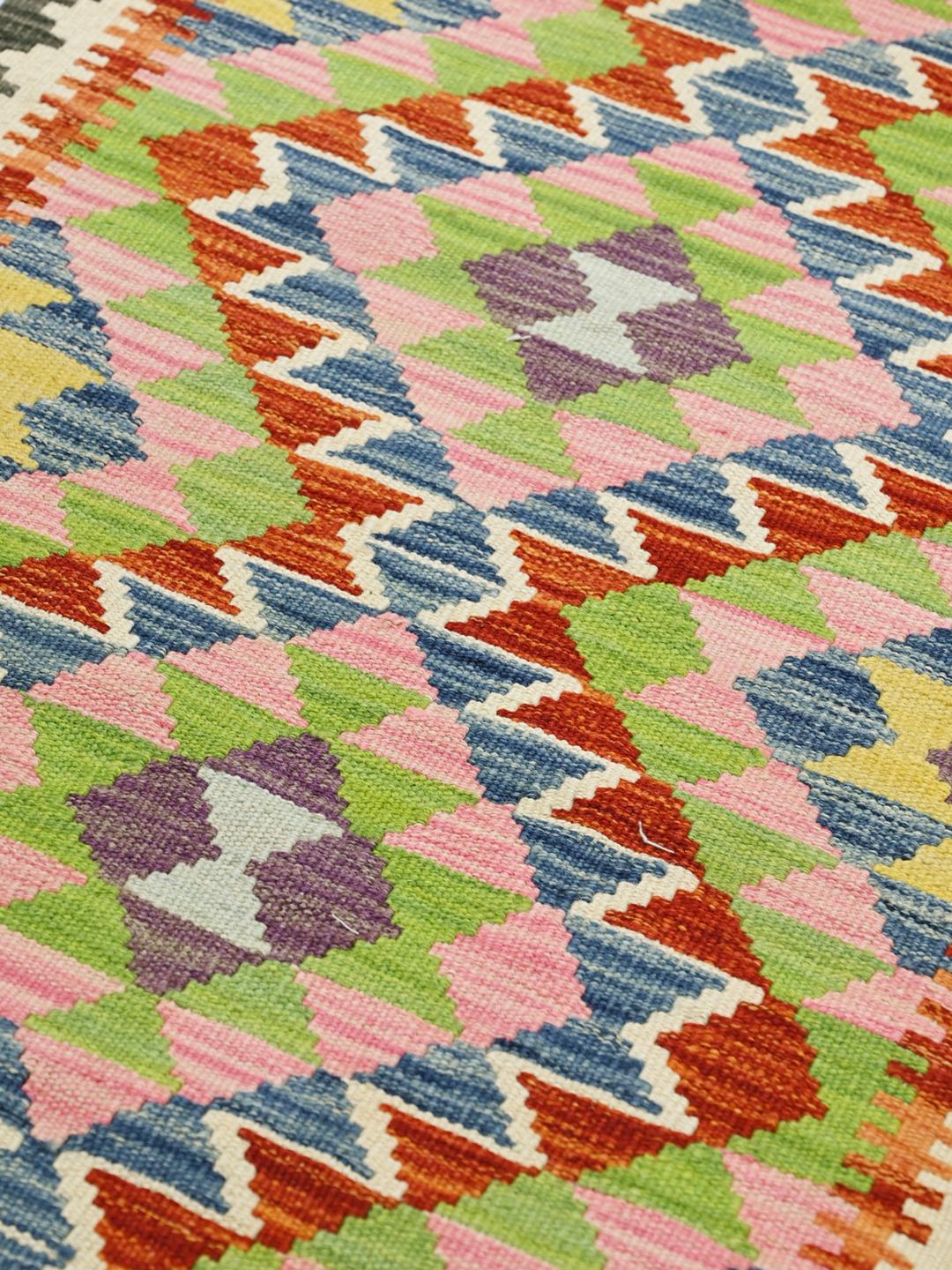
The signature design language of these rugs is dominated by bold geometric motifs, such as diamonds, triangles, and zig-zags, often arranged in repeating sequences. These patterns are not merely decorative but often carry symbolic meanings related to protection, fertility, and the weaver's environment. The use of vibrant, natural-inspired colours is a hallmark of the Afghan tradition, creating pieces that feel lively and full of energy.
Owning a Kelim Afghan Old Style rug is a way to connect with a living history of artistry and skill. These rugs are highly valued by collectors for their authenticity and the way they represent a specific moment in the weaver's creative process. By welcoming such a piece into your home, you are preserving a craft tradition that celebrates human ingenuity and the enduring appeal of hand-made objects.