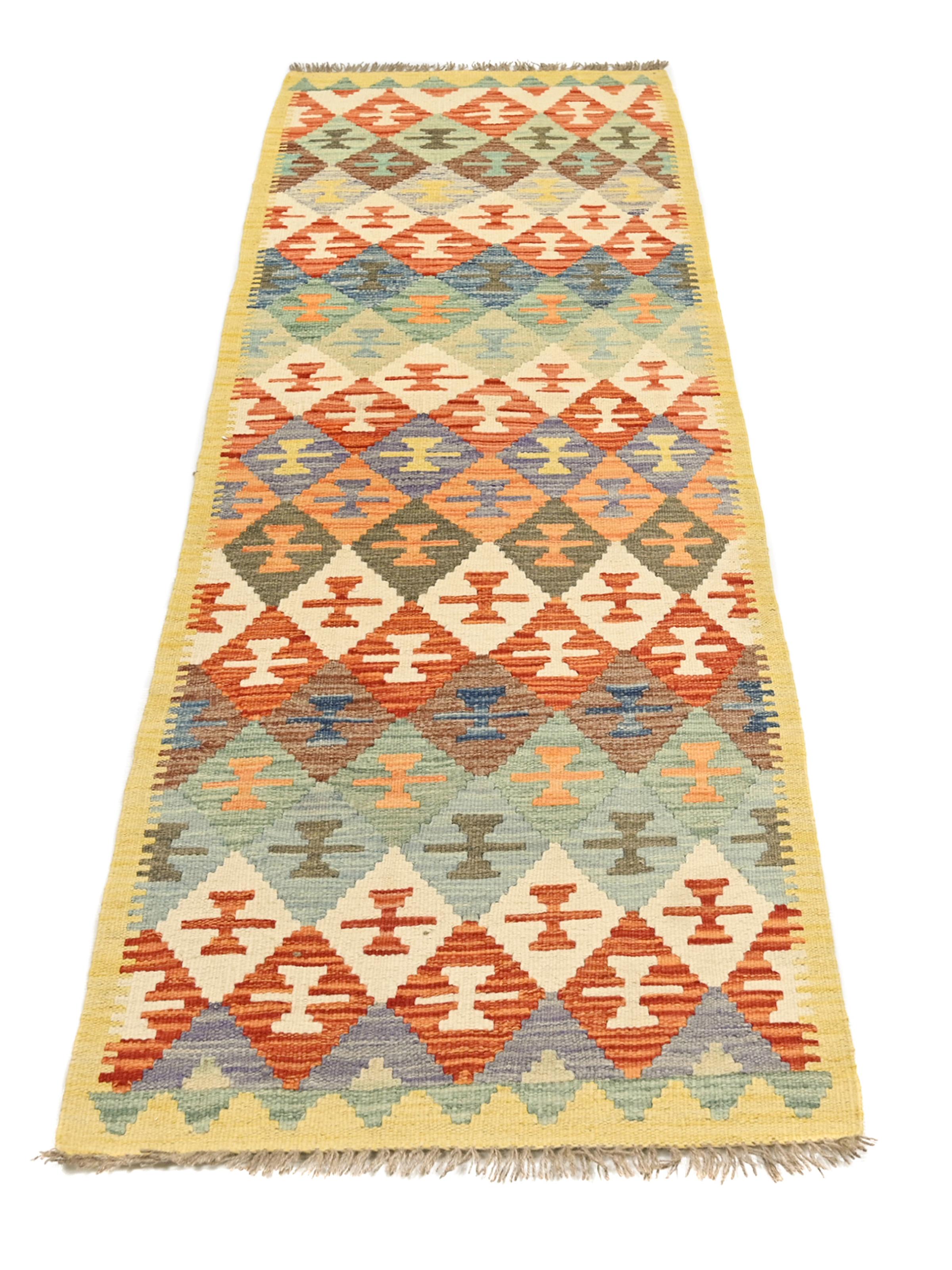
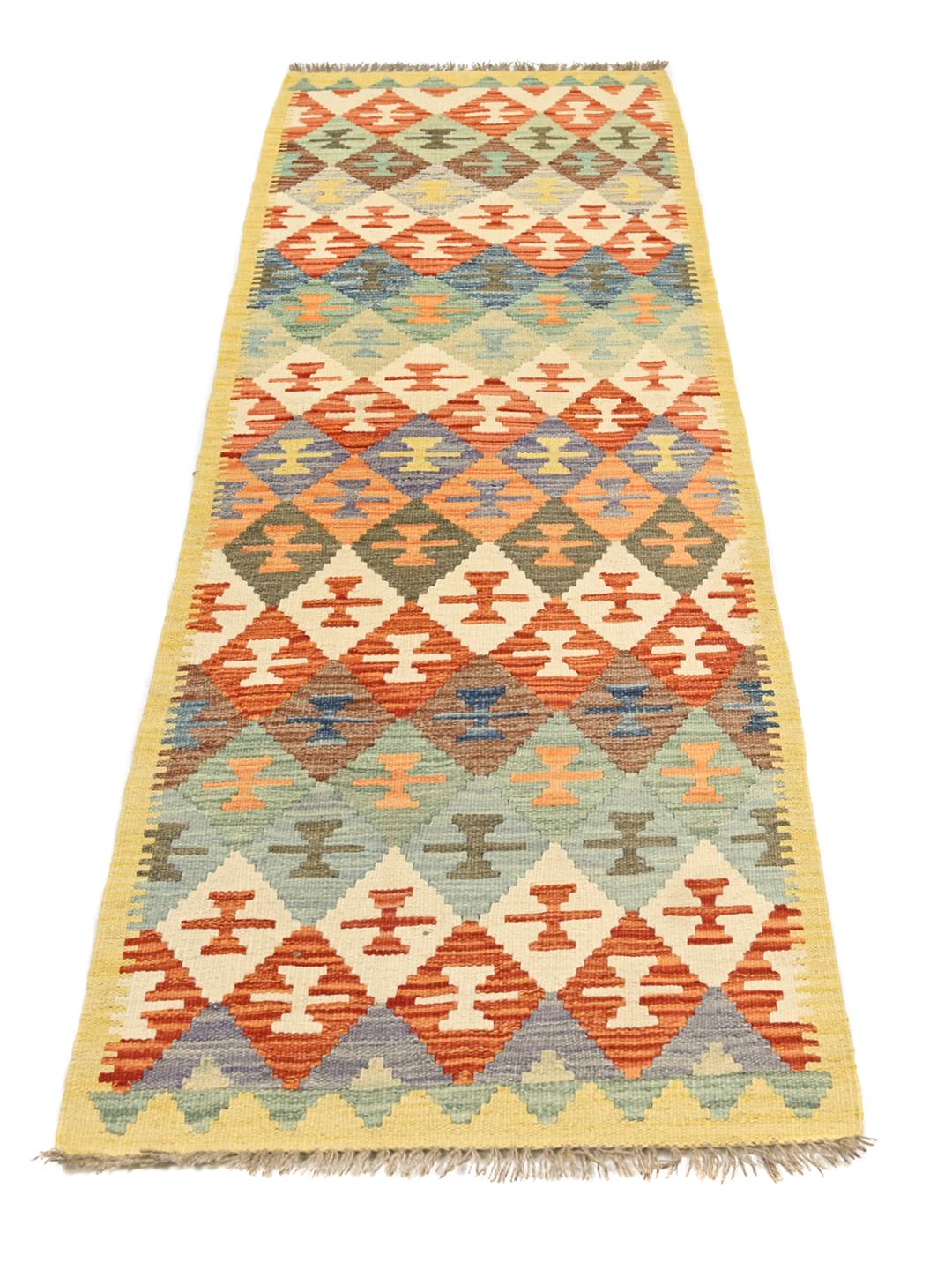
The Kelim tradition in Afghanistan is deeply rooted in the nomadic and semi-nomadic cultures of the region. These flat-woven rugs have been produced for centuries, serving essential roles as floor coverings, blankets, and storage bags for families on the move. Today, this tradition has evolved into a highly respected craft, with Afghan weavers producing some of the most sought-after flat-woven pieces in the world.
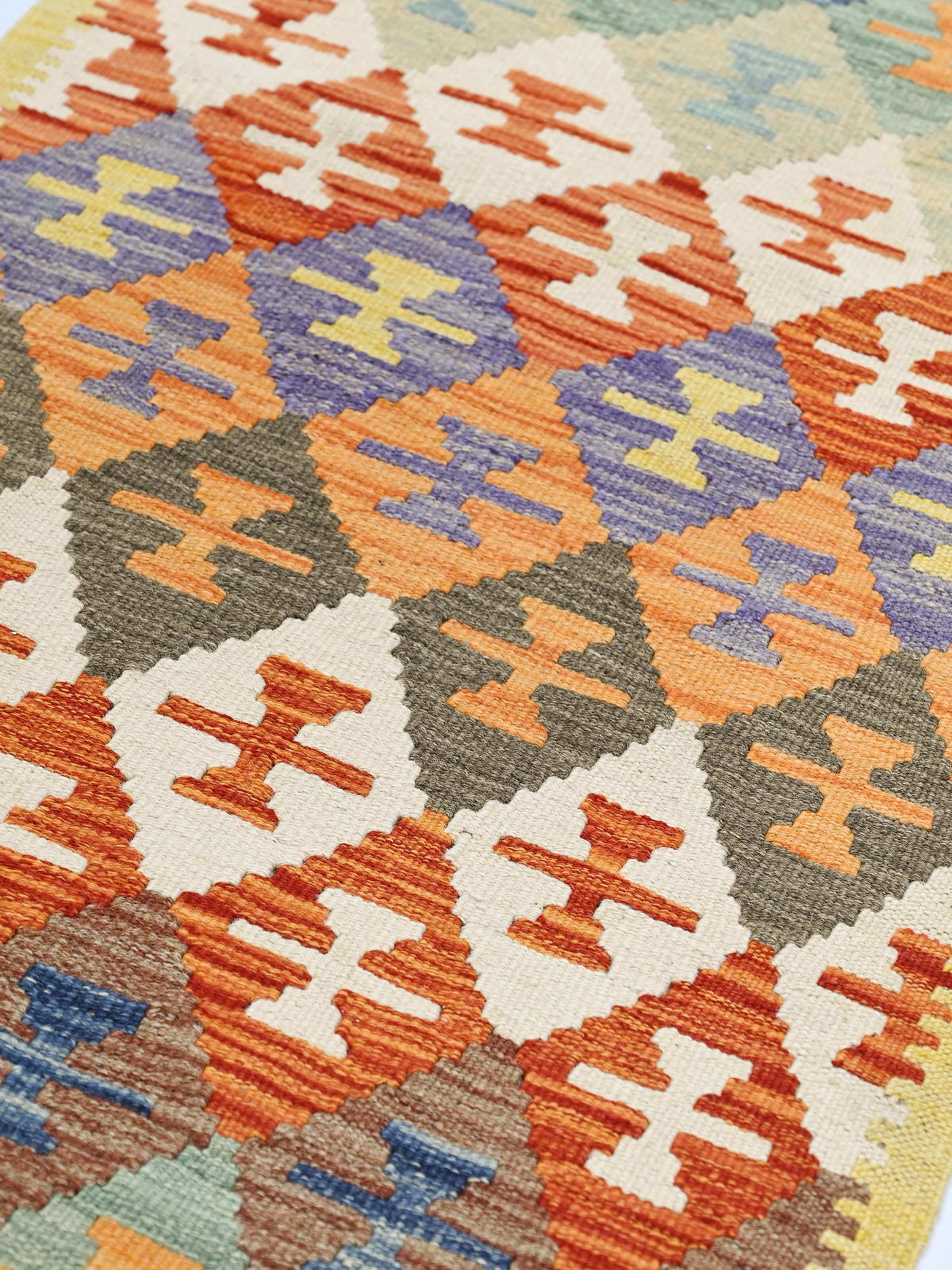
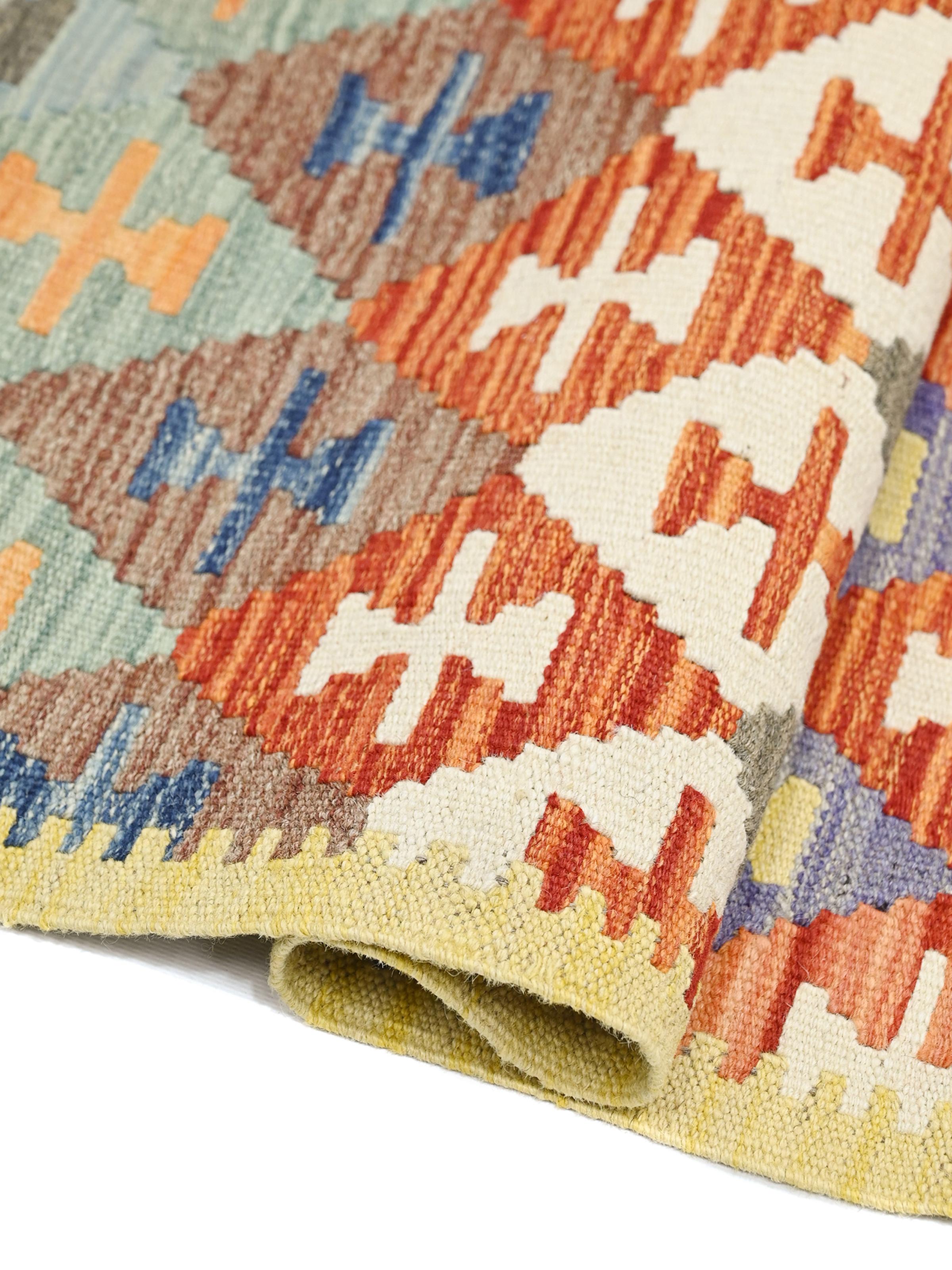
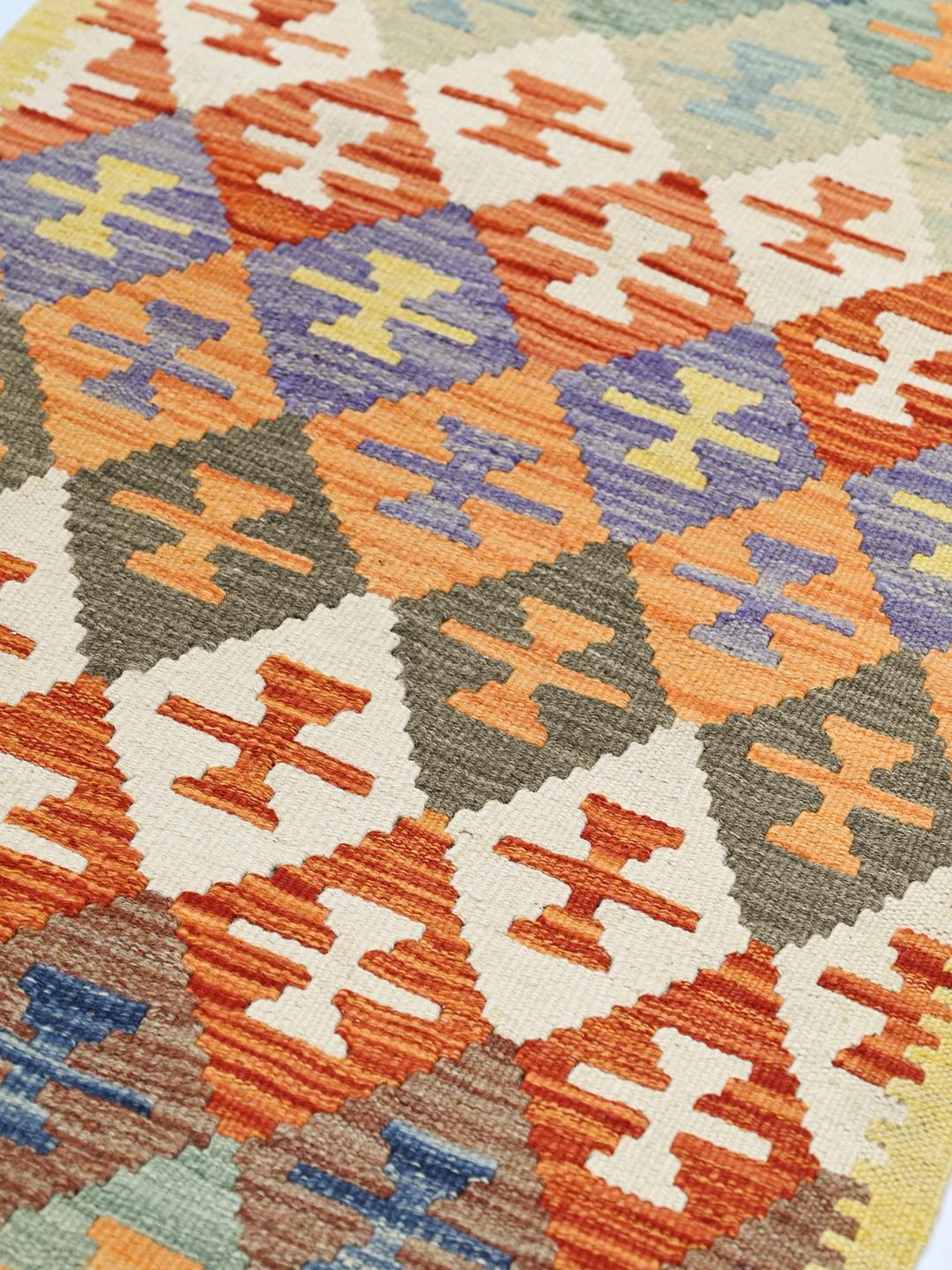
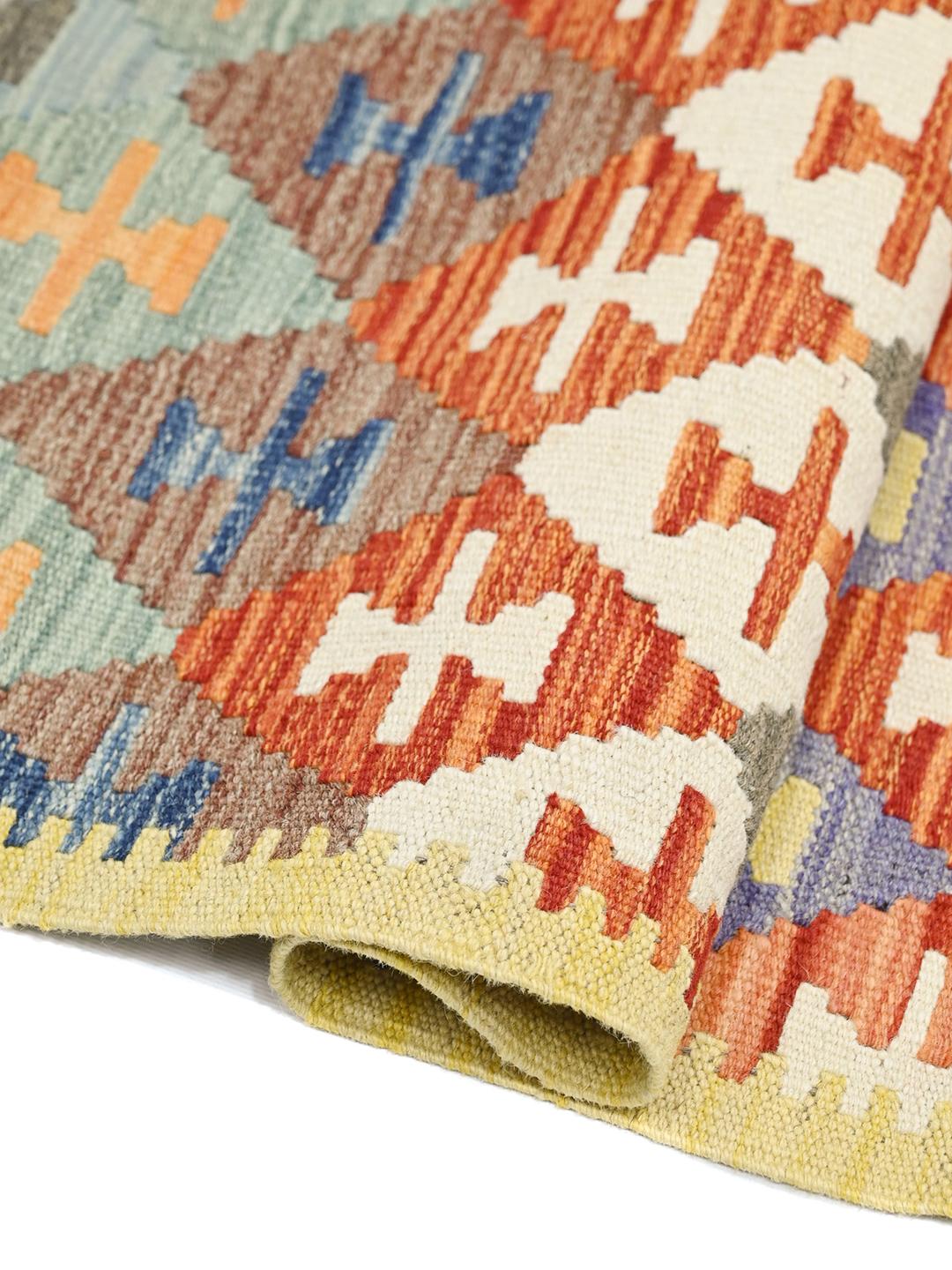
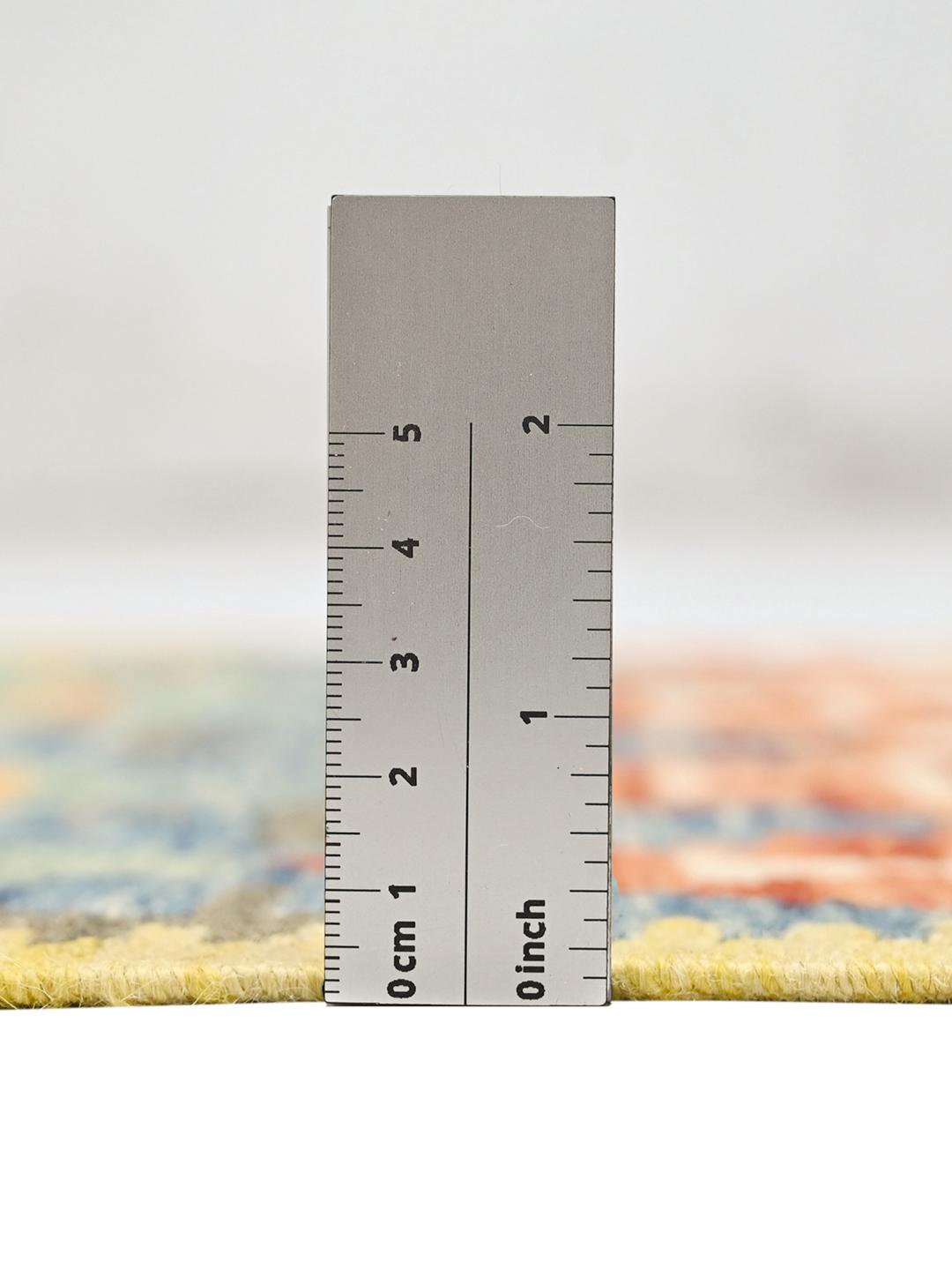
A Kelim is defined by its flat-weave construction, which lacks the pile found in traditional knotted rugs. This technique involves interlacing the warp and weft threads to create a smooth, reversible surface. Because the pattern is created by the threads themselves, the resulting design is crisp and clean, offering a sophisticated look that highlights the skill of the weaver in maintaining consistent tension throughout the process.
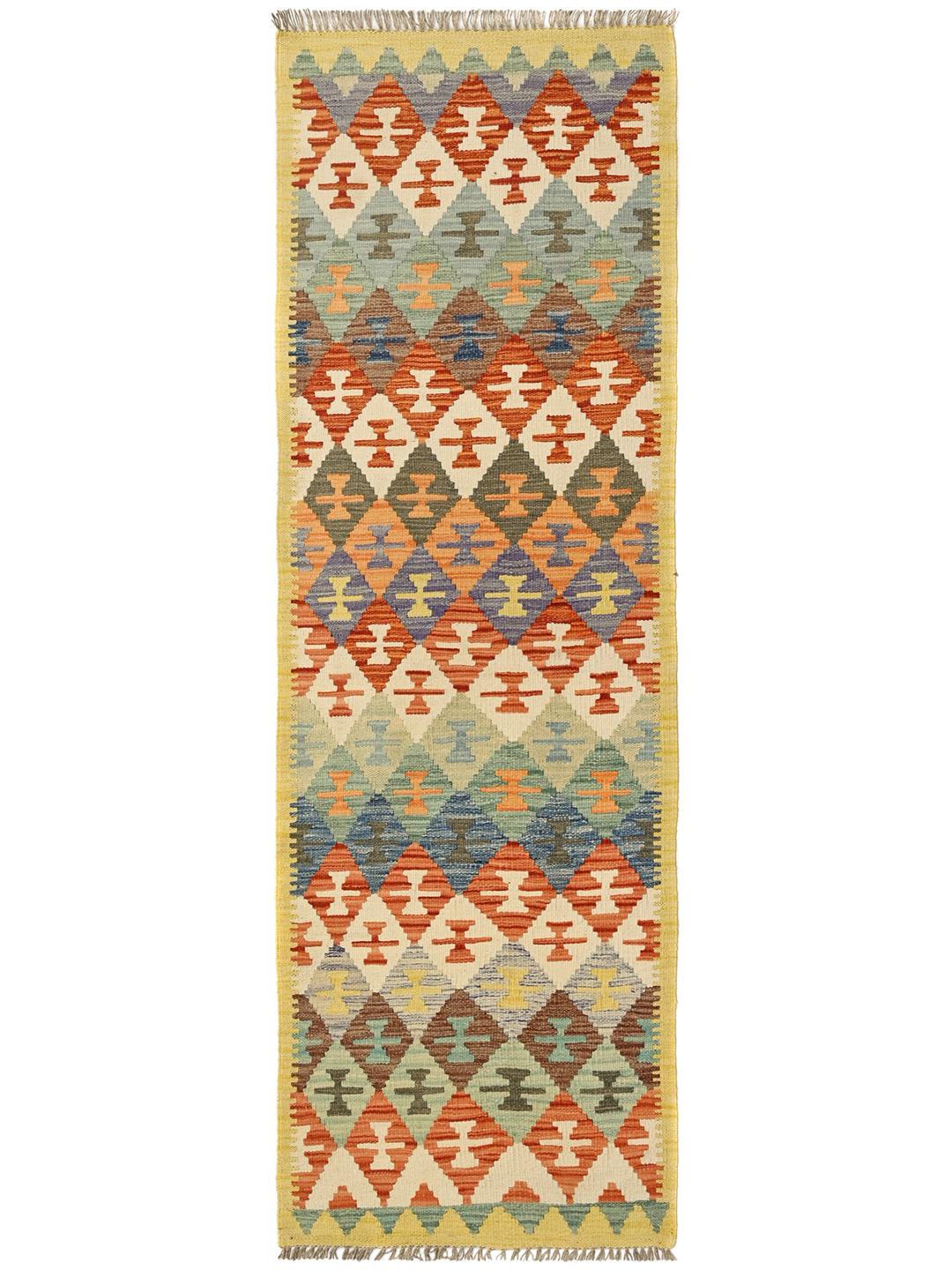
The signature design language of these rugs is dominated by geometric motifs, particularly diamonds and triangles, often arranged in repeating patterns. These shapes are not merely decorative but are deeply symbolic, often representing tribal identities, local flora, or protective talismans. The vibrant colours used in this style are traditionally derived from natural dyes, providing a rich, earthy palette that ages beautifully over time.
Owning a piece from this tradition means connecting with a legacy of human ingenuity and cultural expression. These rugs are highly valued by collectors for their authenticity and the way they bridge the gap between ancient craft and modern living. By bringing a Kelim into your home, you are preserving a centuries-old art form while enjoying a functional, durable, and deeply beautiful piece of history.