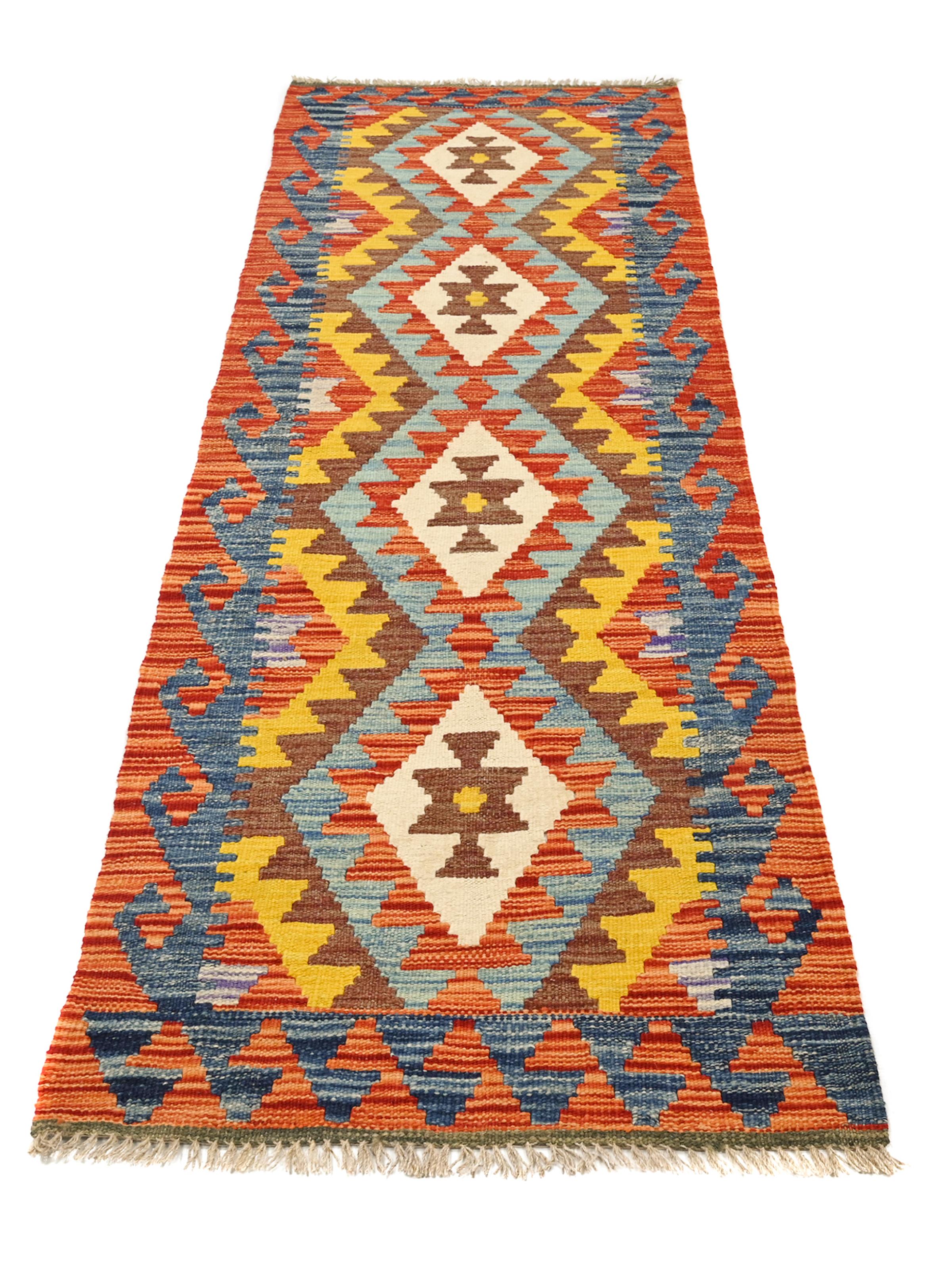
Kelim rugs have a long history rooted in the nomadic and village traditions of Afghanistan and Central Asia. Originally woven for practical use as tent covers, storage bags, and floor coverings, these flatweaves were designed to be lightweight, durable, and easy to transport across rugged terrains.
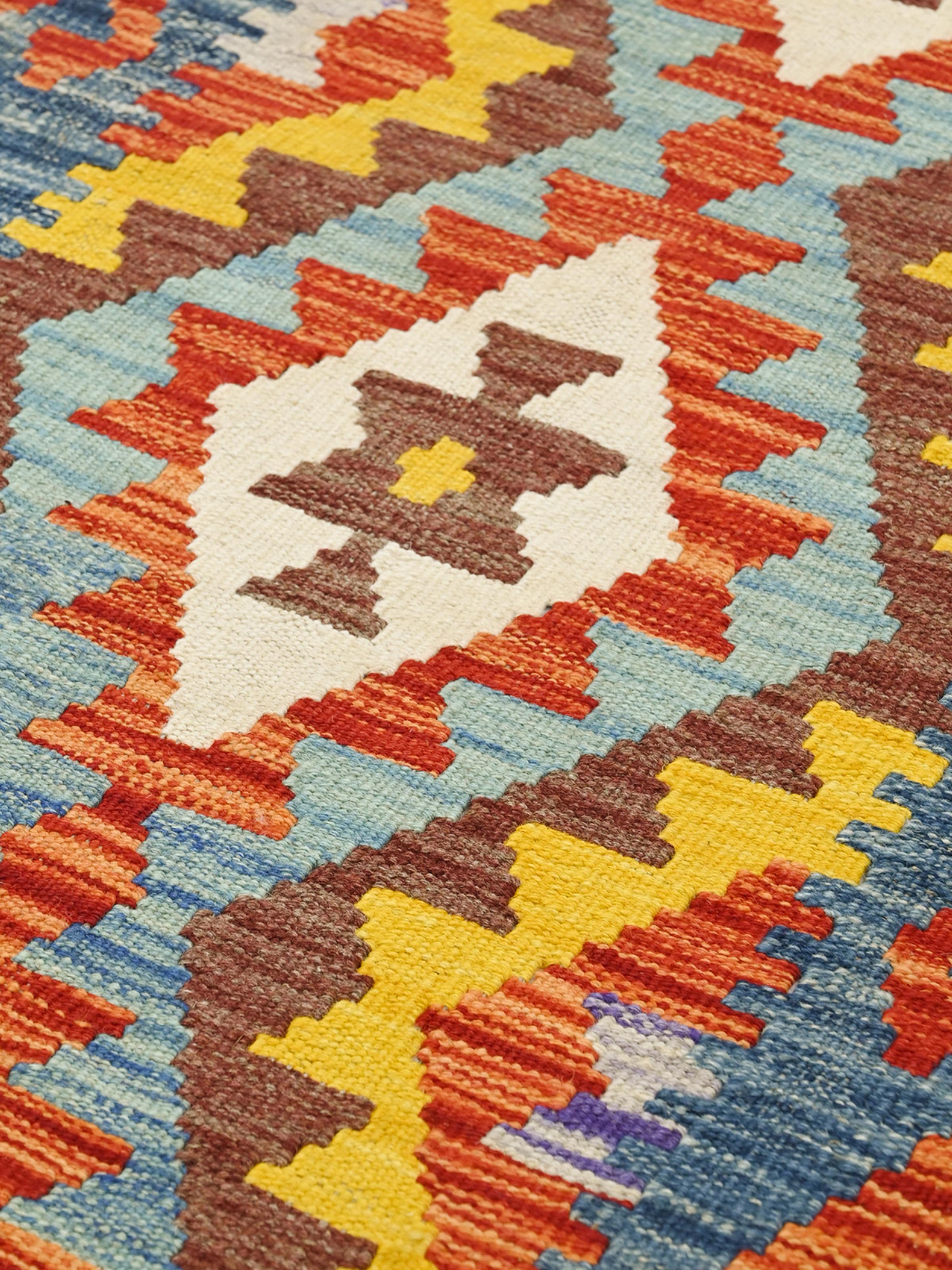
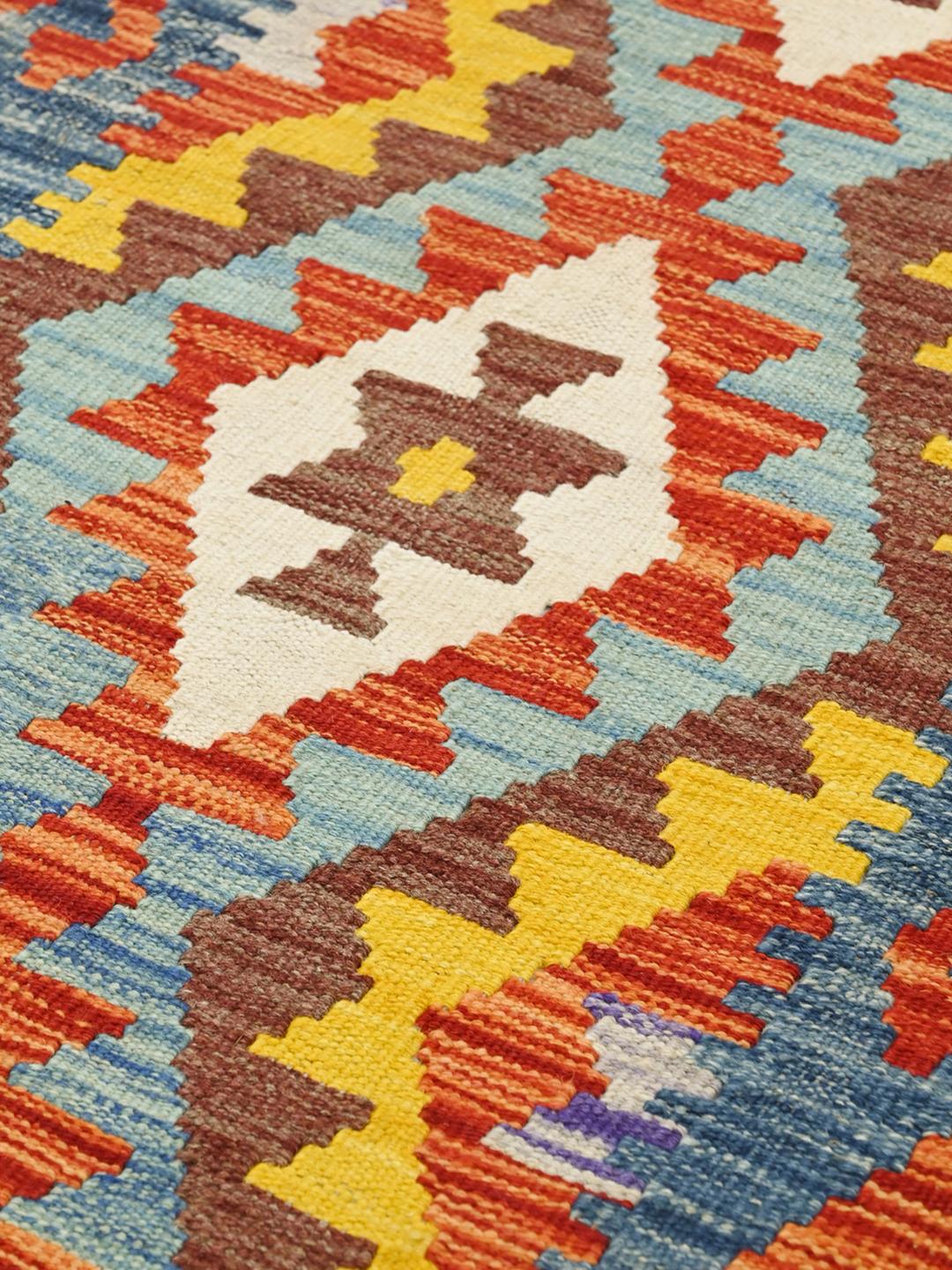
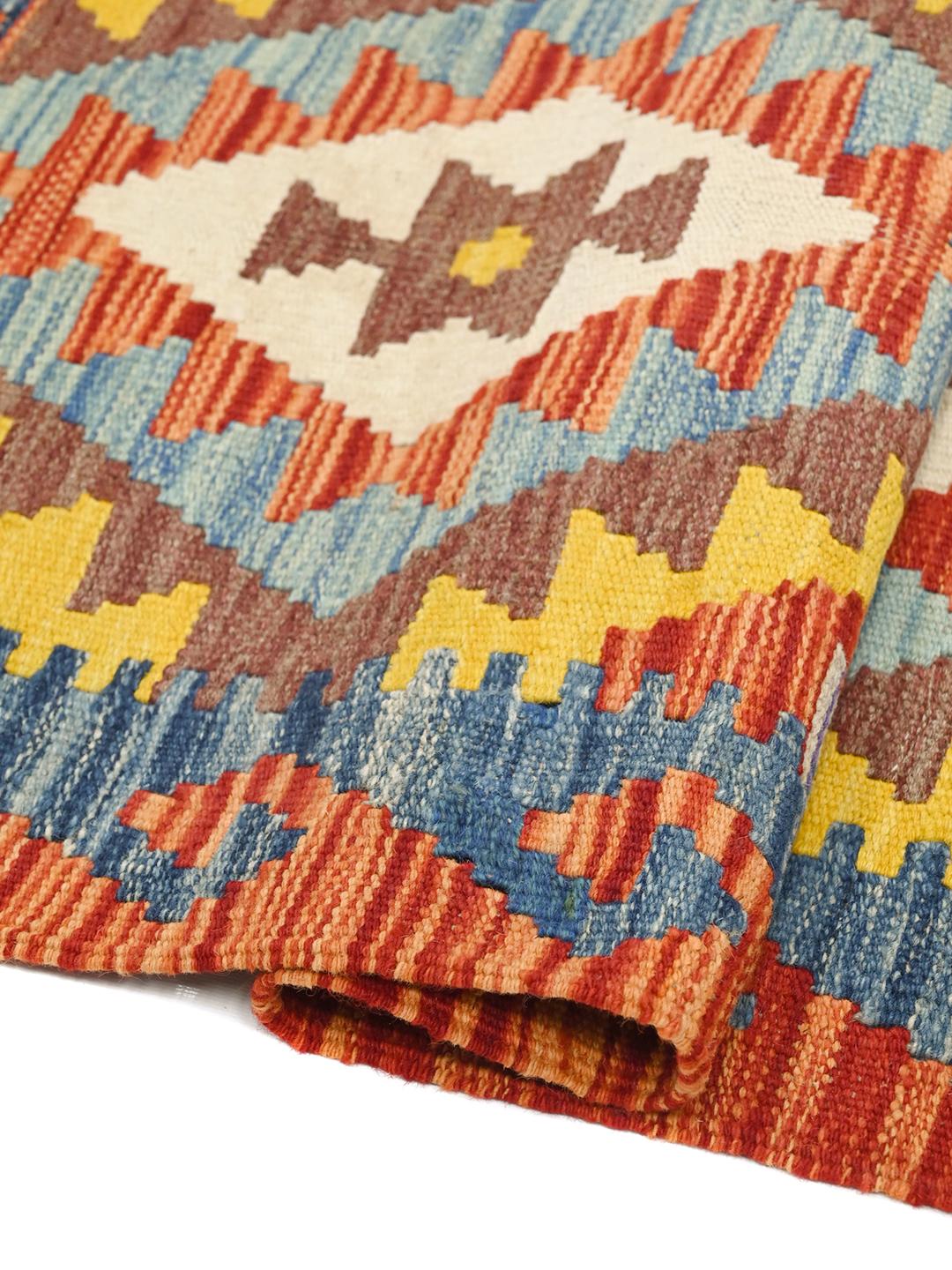
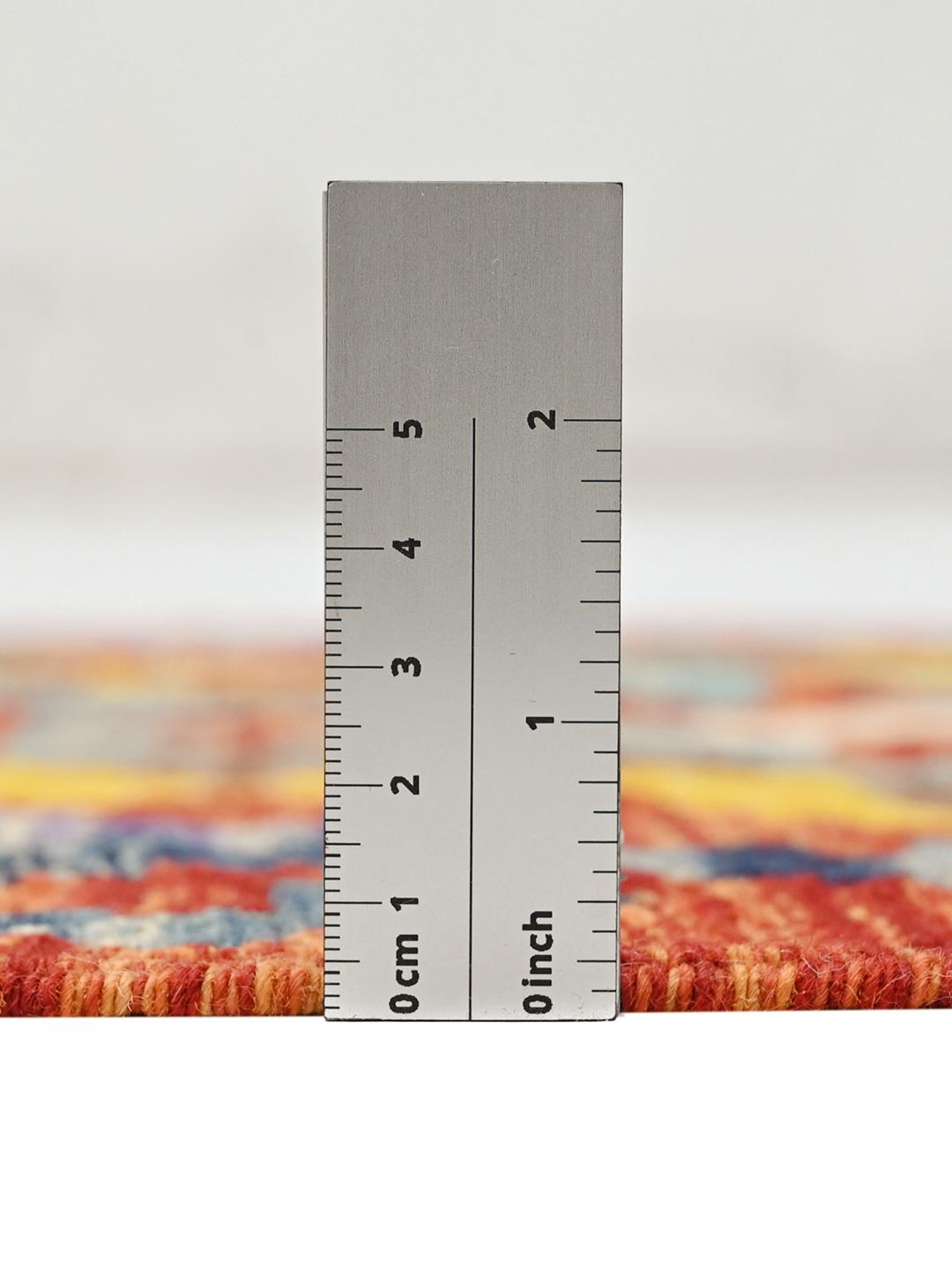
The term Kelim refers specifically to the slit-weave technique used to create the pattern. By leaving small gaps between different color blocks, weavers create sharp, clear geometric lines that define the visual style of the rug. This method produces a flat surface with no pile, showcasing the raw beauty of the spun wool.
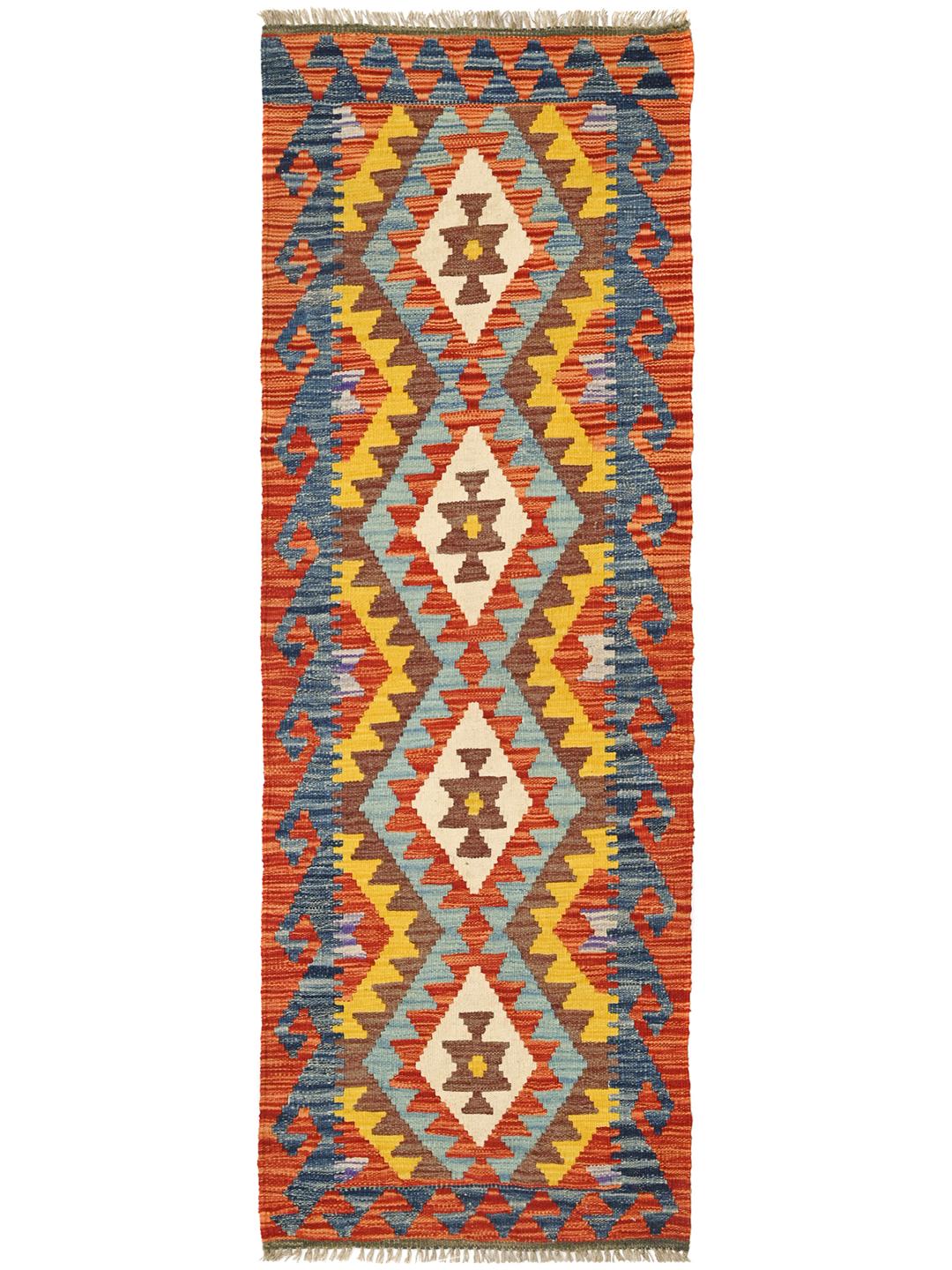
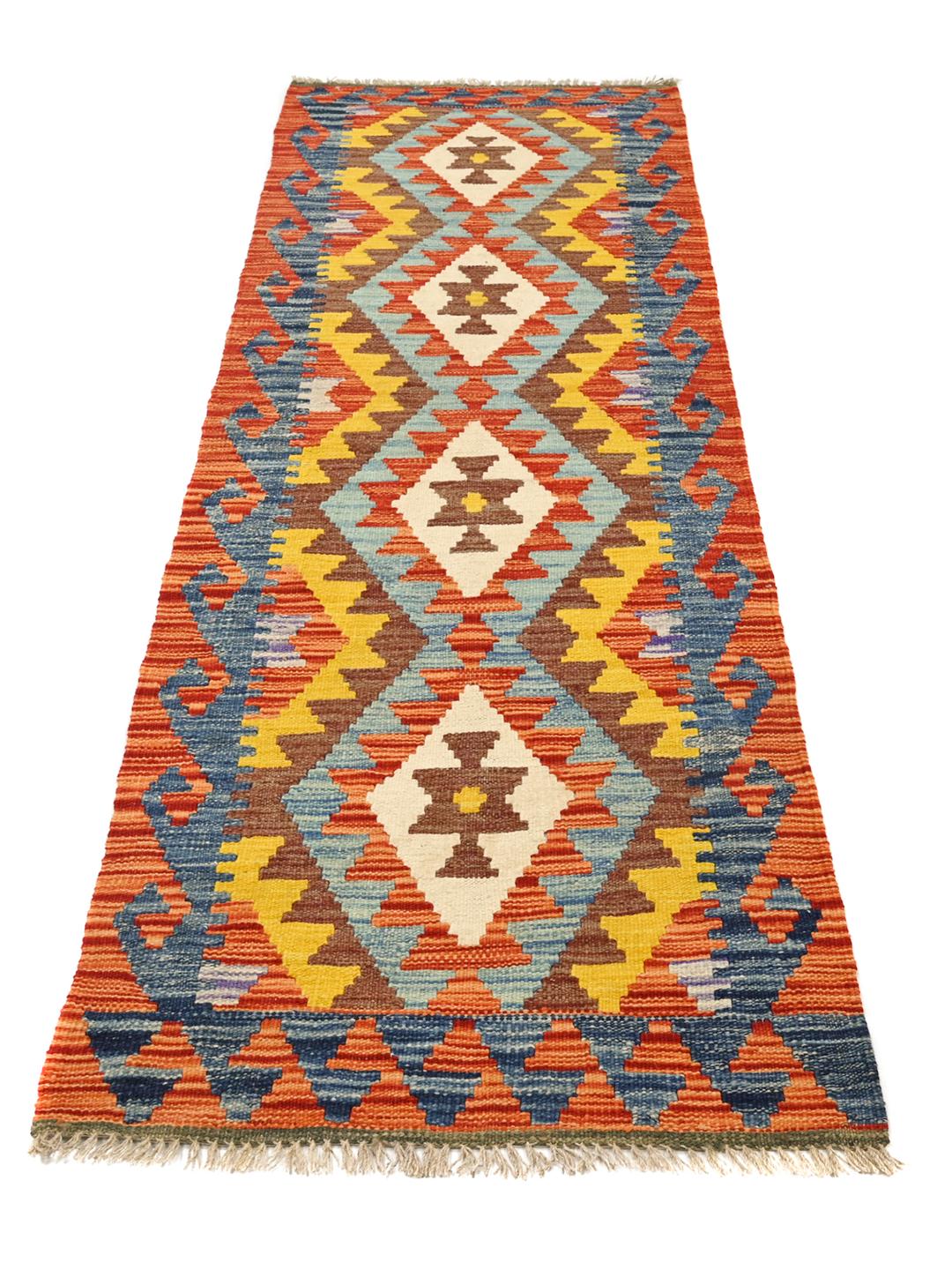
The design language of this piece is rich with traditional symbols, including central diamond shapes and protective tribal motifs. These patterns often carried personal meaning for the weaver, representing elements of nature, family heritage, or wishes for good fortune, rendered in vibrant natural dyes.
Owning an Afghan Kelim means bringing a piece of living history into your home. These rugs are highly valued by collectors and homemakers alike for their artistic expression, honest craftsmanship, and the way they connect modern living spaces with ancient textile traditions.