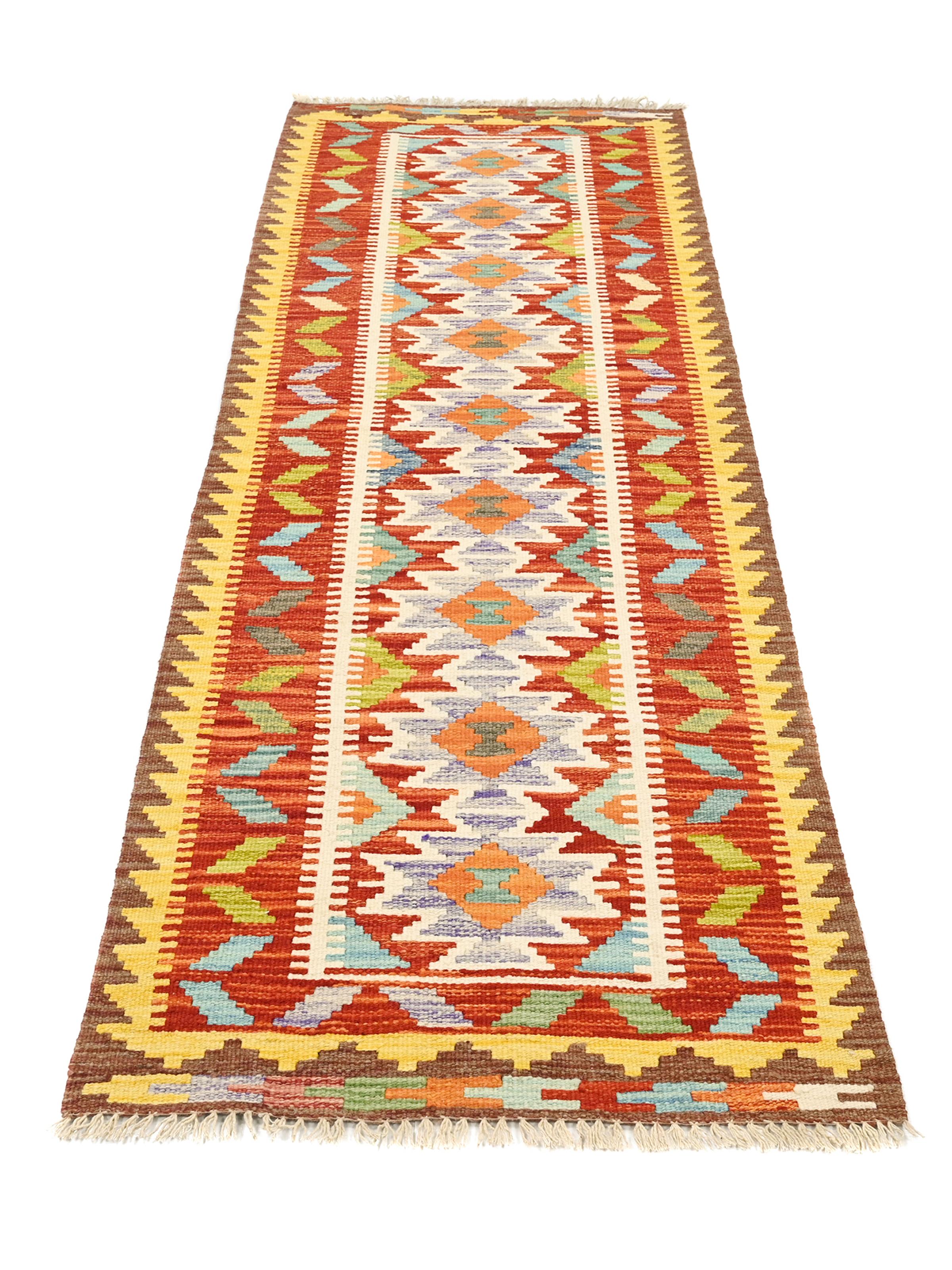
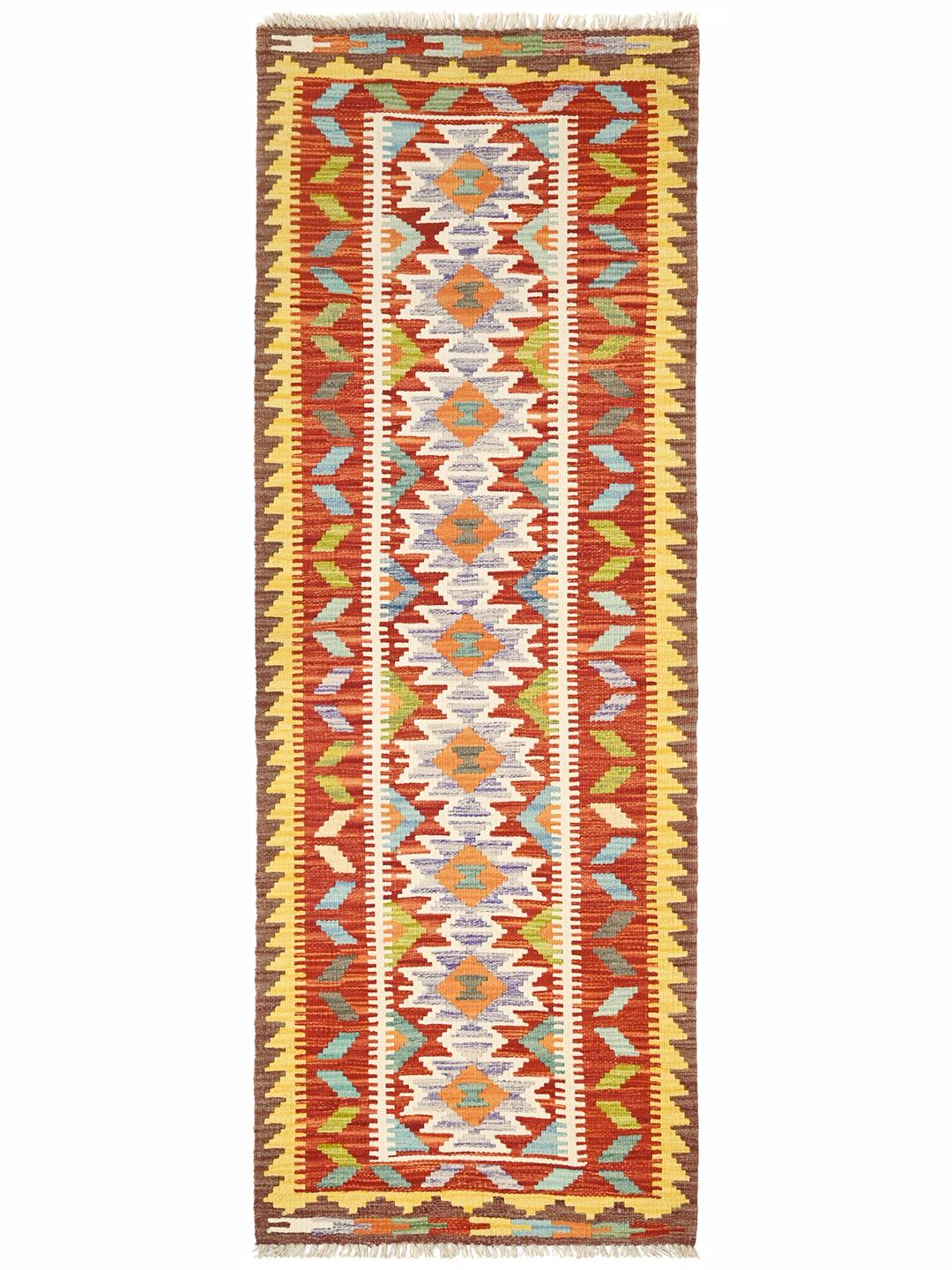
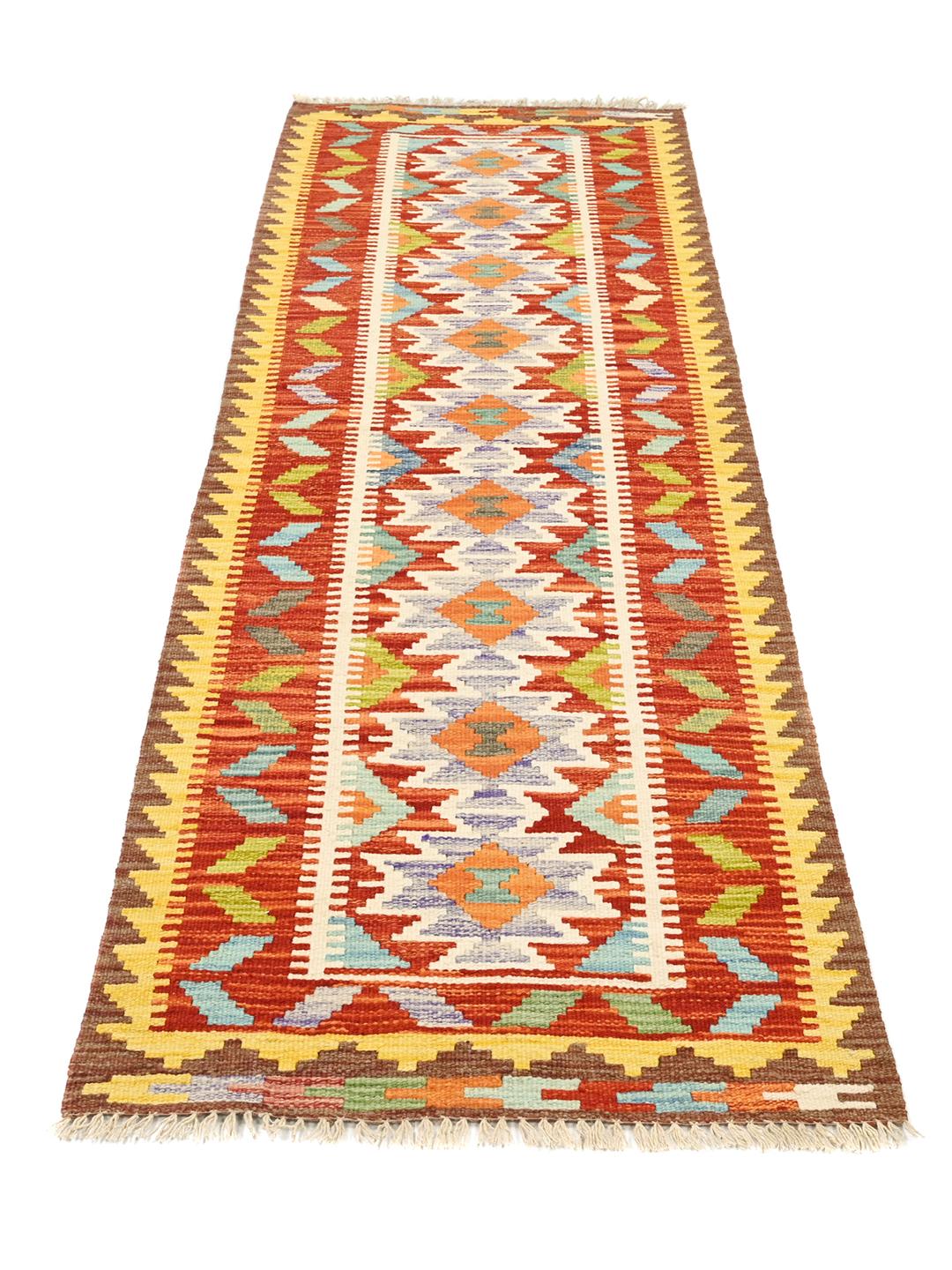
Kelim weaving is one of the oldest textile traditions in Afghanistan, developed by nomadic and semi-nomadic weavers who required lightweight, durable, and easily transportable floor coverings. These flatwoven rugs served not only as practical insulation for tents but also as important cultural expressions of tribal identity and weaving heritage.
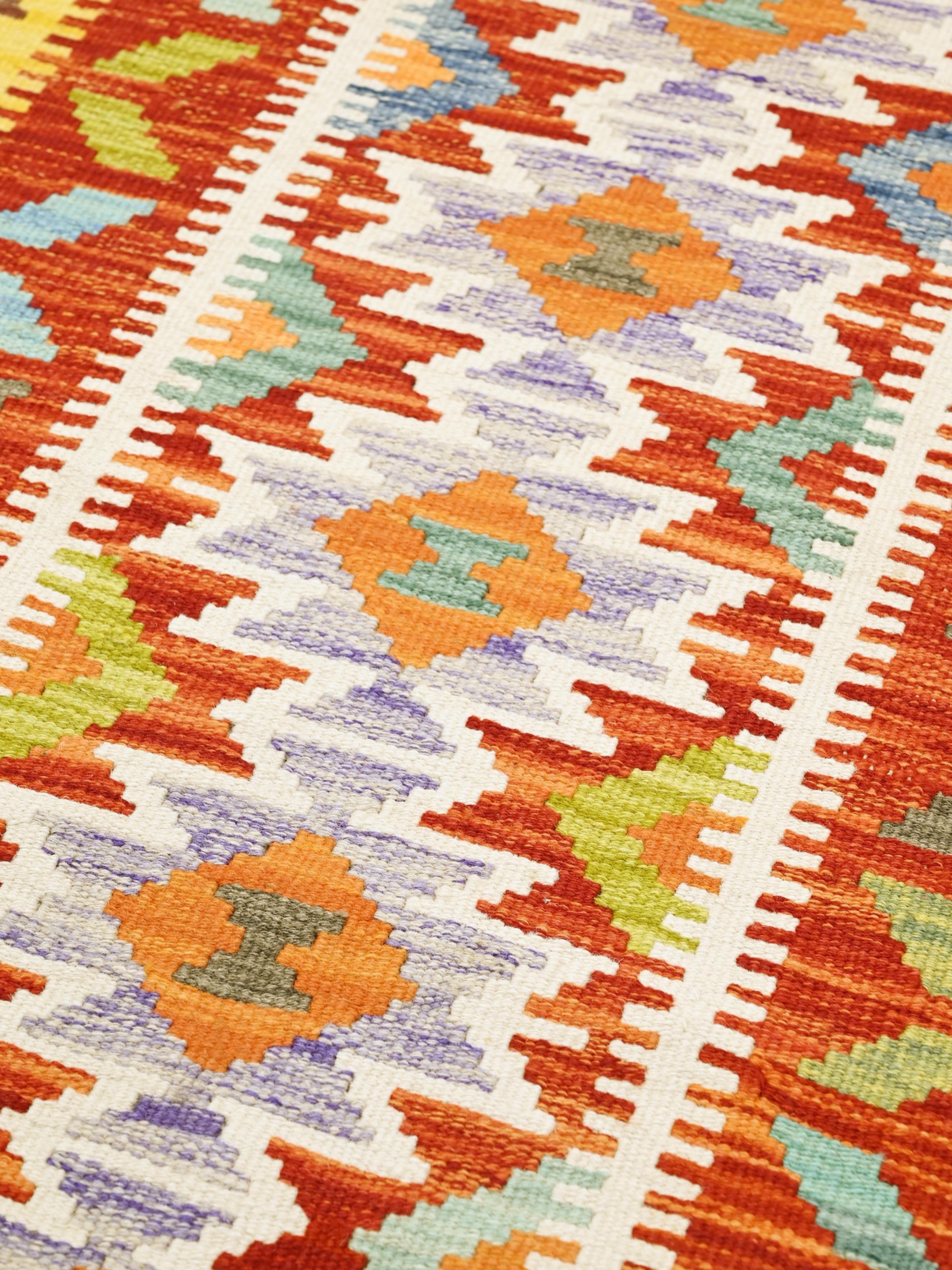
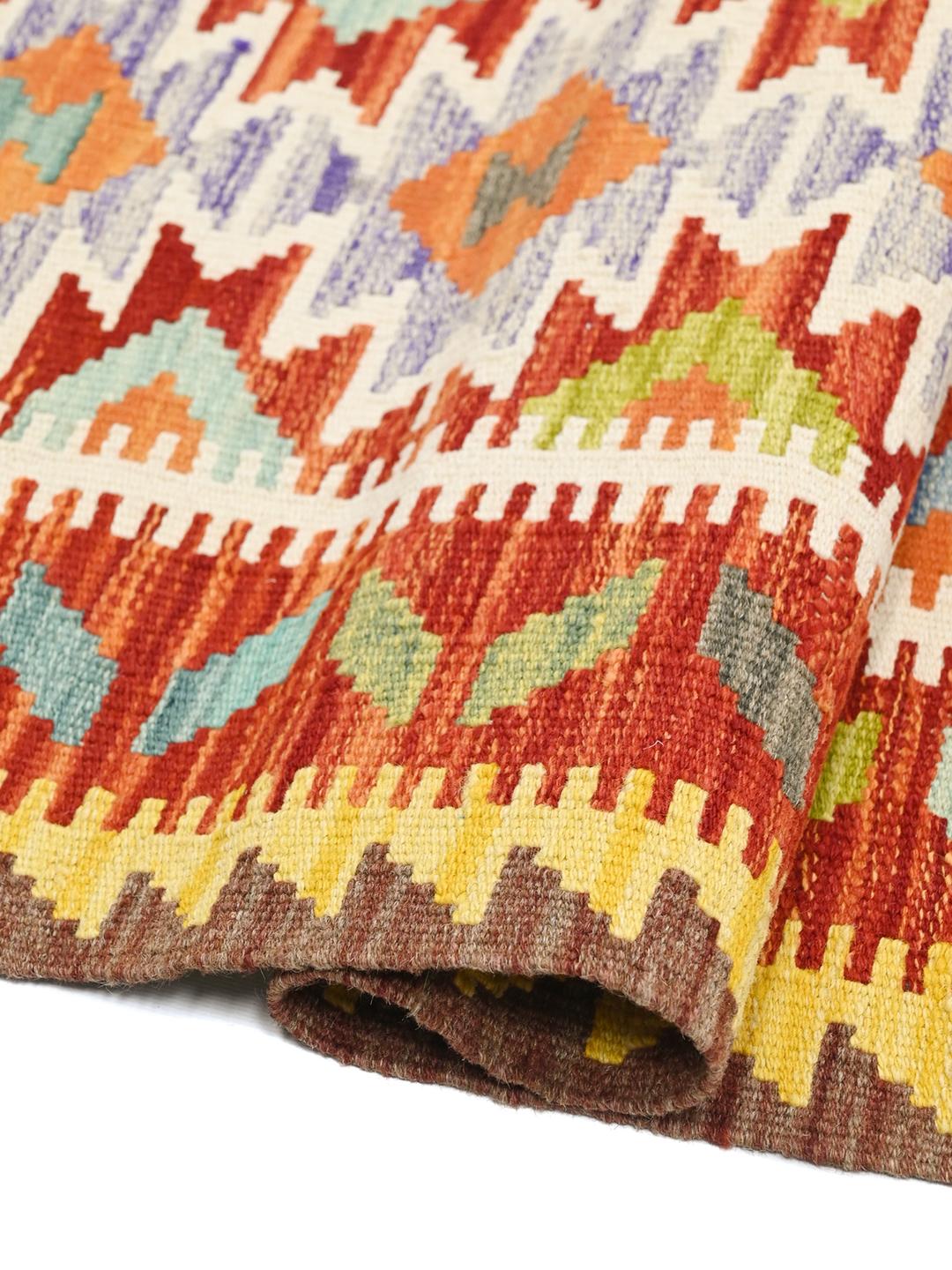
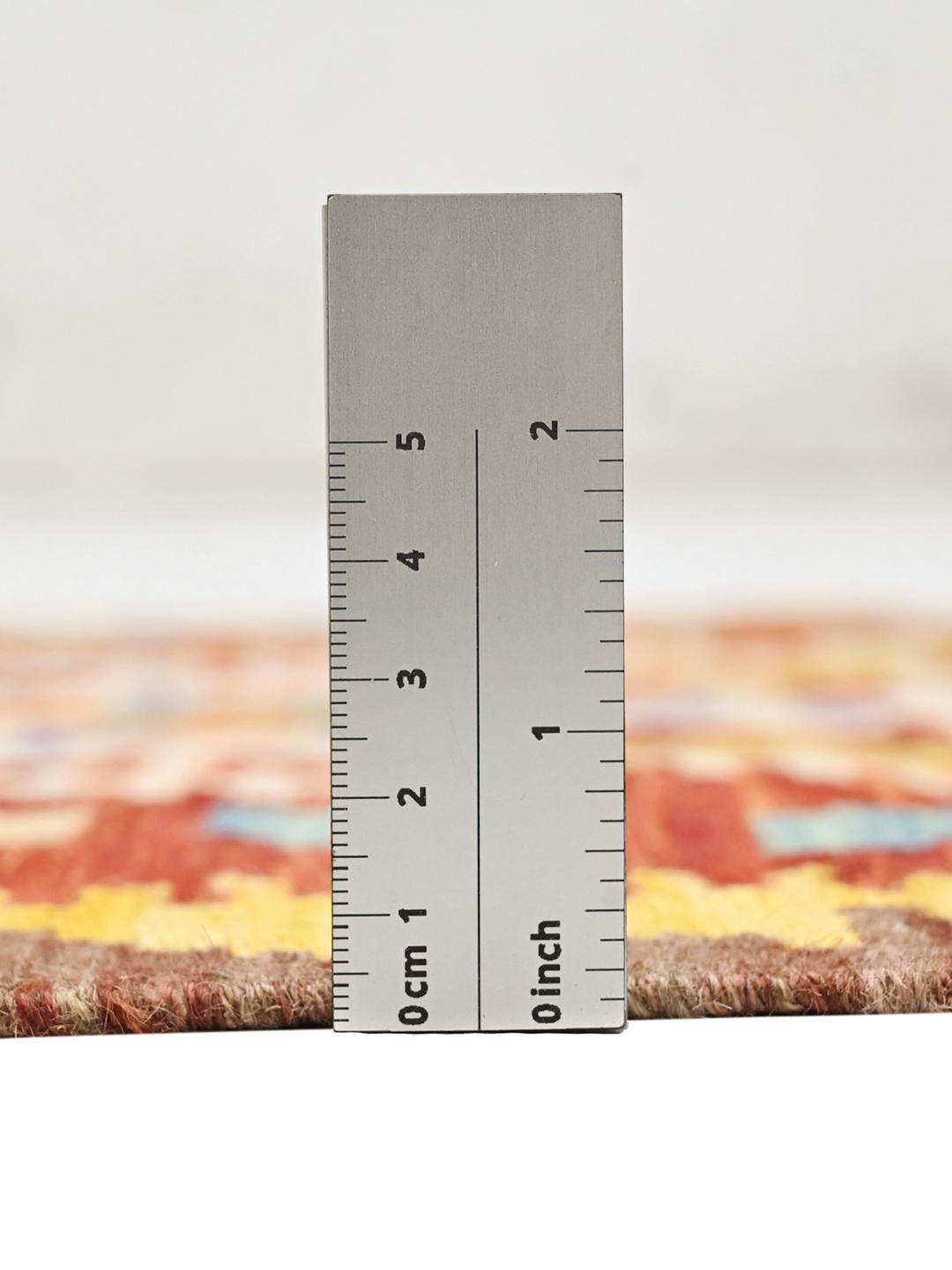
Unlike piled rugs, a Kelim is created using a flatweave technique where the horizontal weft threads are tightly woven through the vertical warp threads. This produces a pileless, double-sided textile that is exceptionally strong, reversible, and easy to maintain, making it a highly valued craft form across the Middle East and Central Asia.
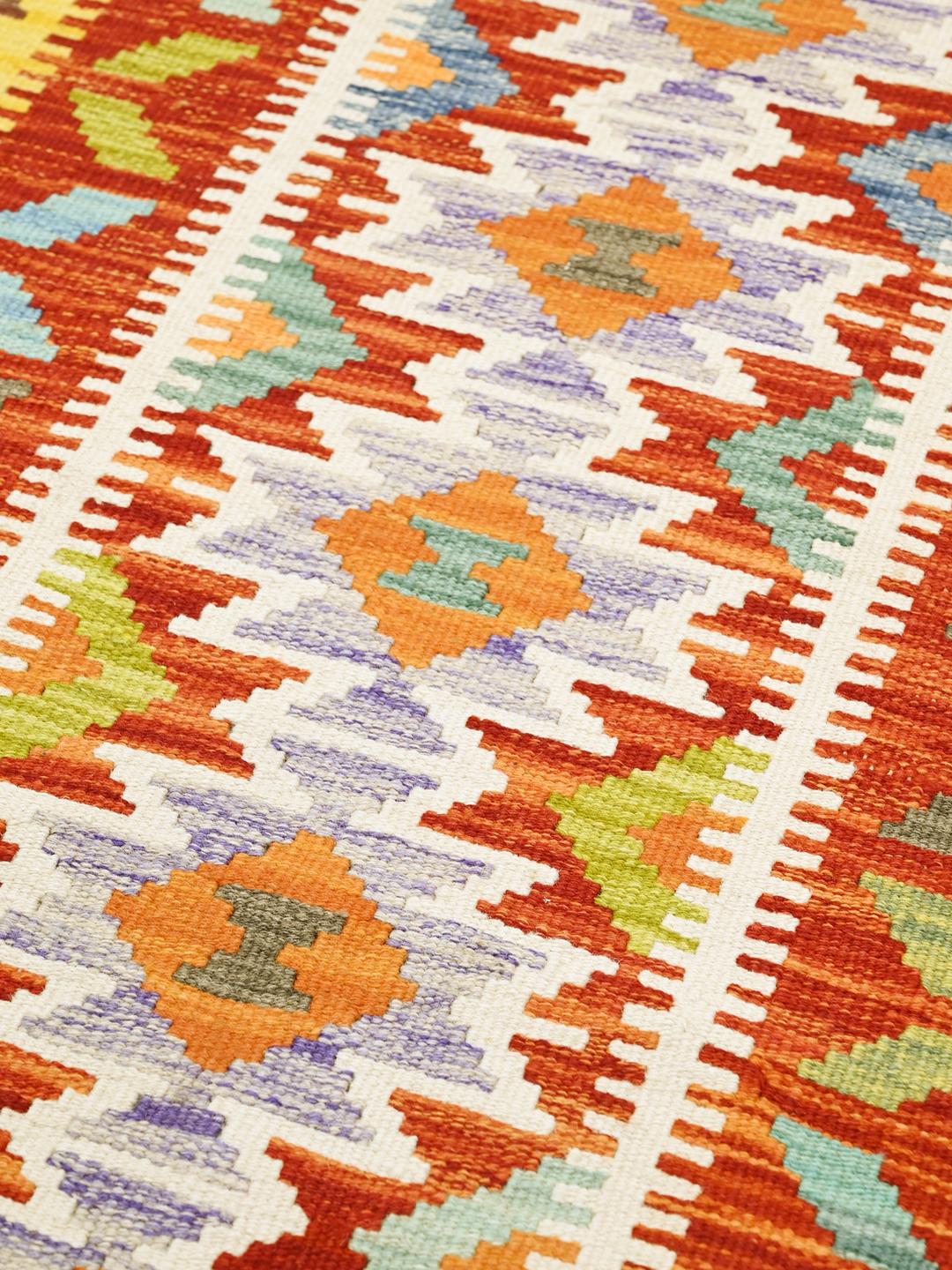
The design language of this Afghan Kelim is defined by its bold geometric patterns, featuring repeated diamond medallions and protective zig-zag borders. Each motif carries historical meaning, often representing elements of the natural world, family structures, or symbols of good fortune, rendered in rich natural dyes that mature beautifully over time.
Owning an Afghan Kelim means bringing a piece of living history into the modern home. Highly sought after by collectors and design enthusiasts alike, these rugs are celebrated for their rustic charm, graphic simplicity, and the enduring spirit of the weavers who keep this ancient craft alive today.