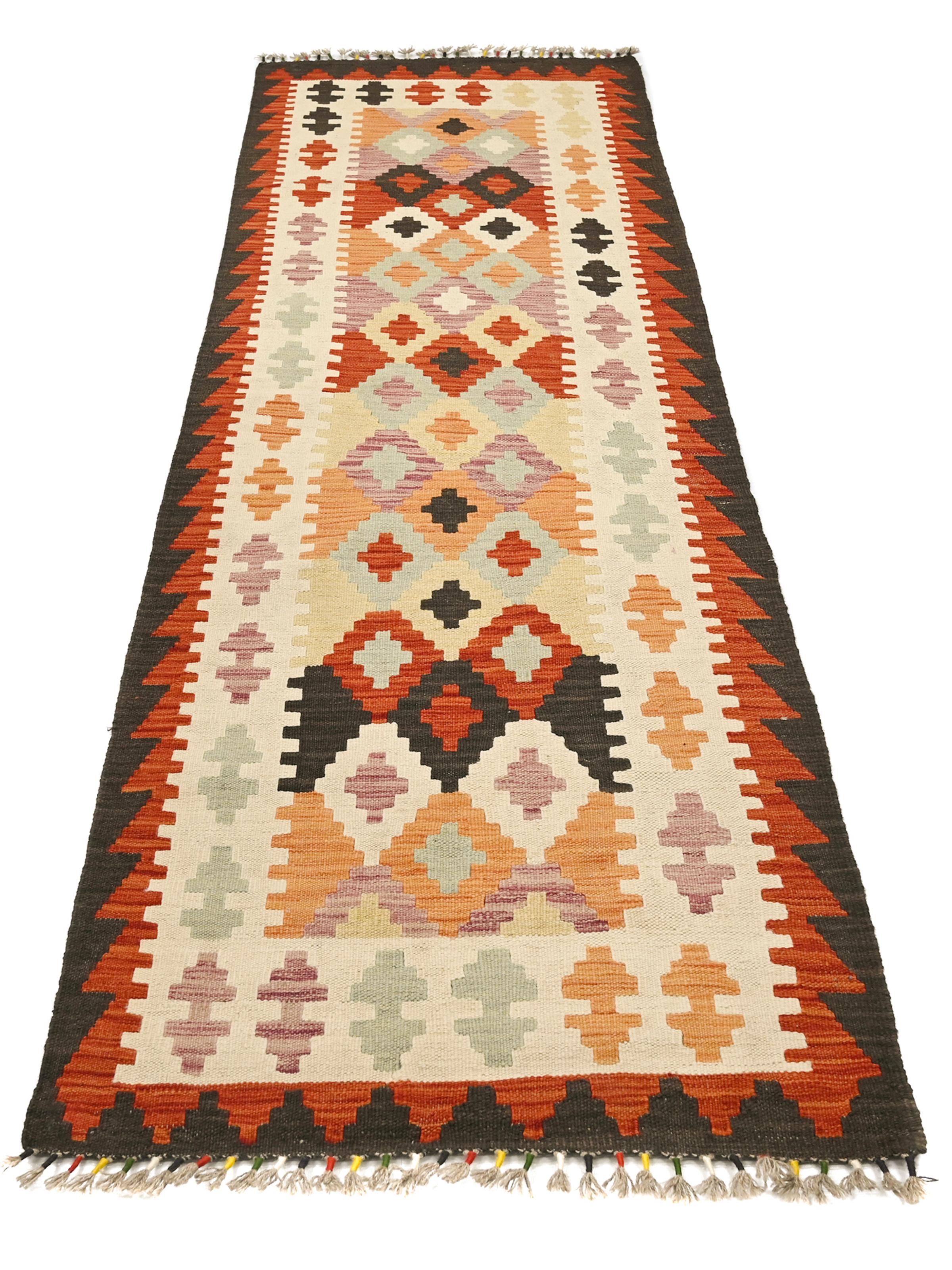
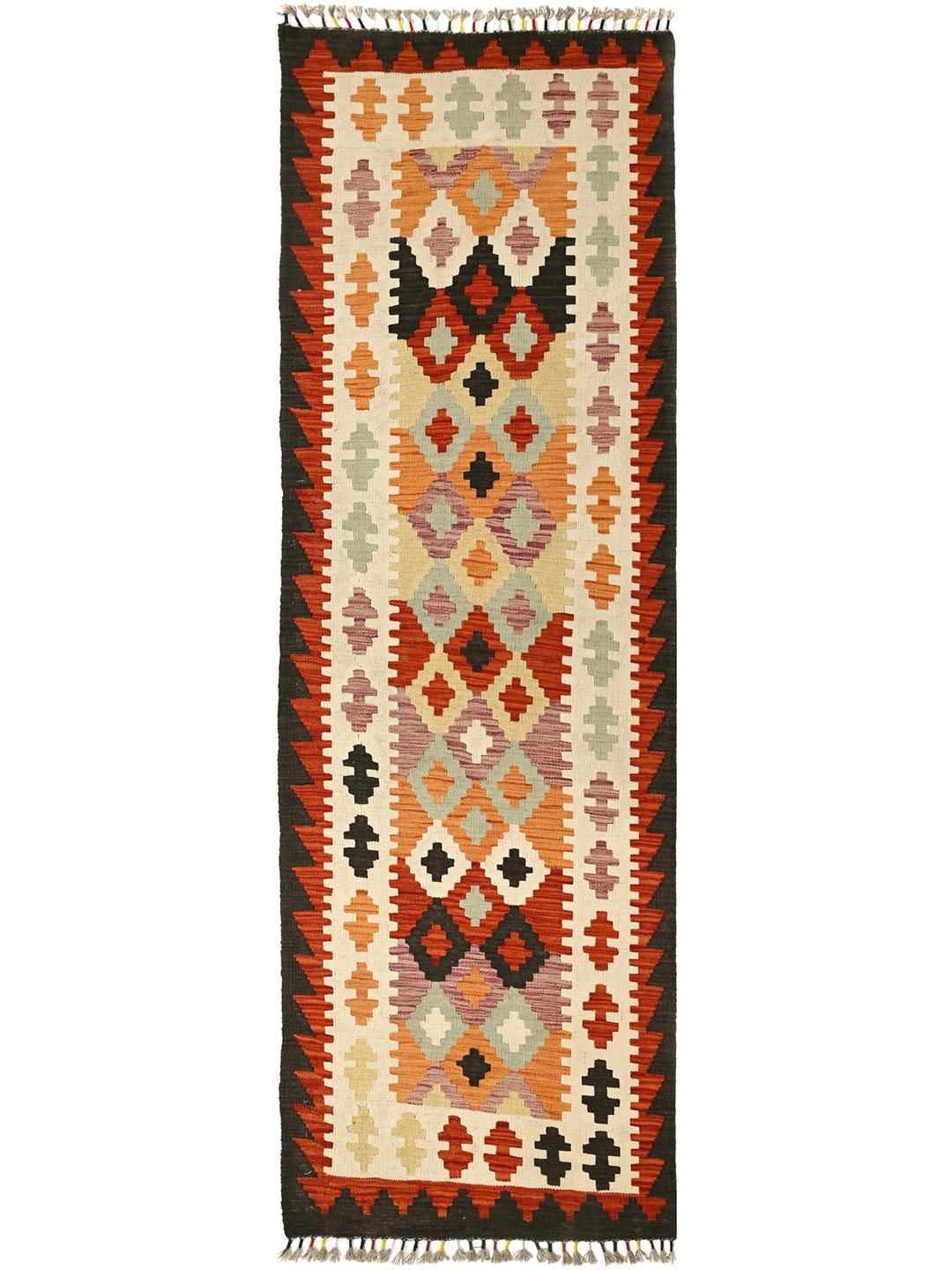
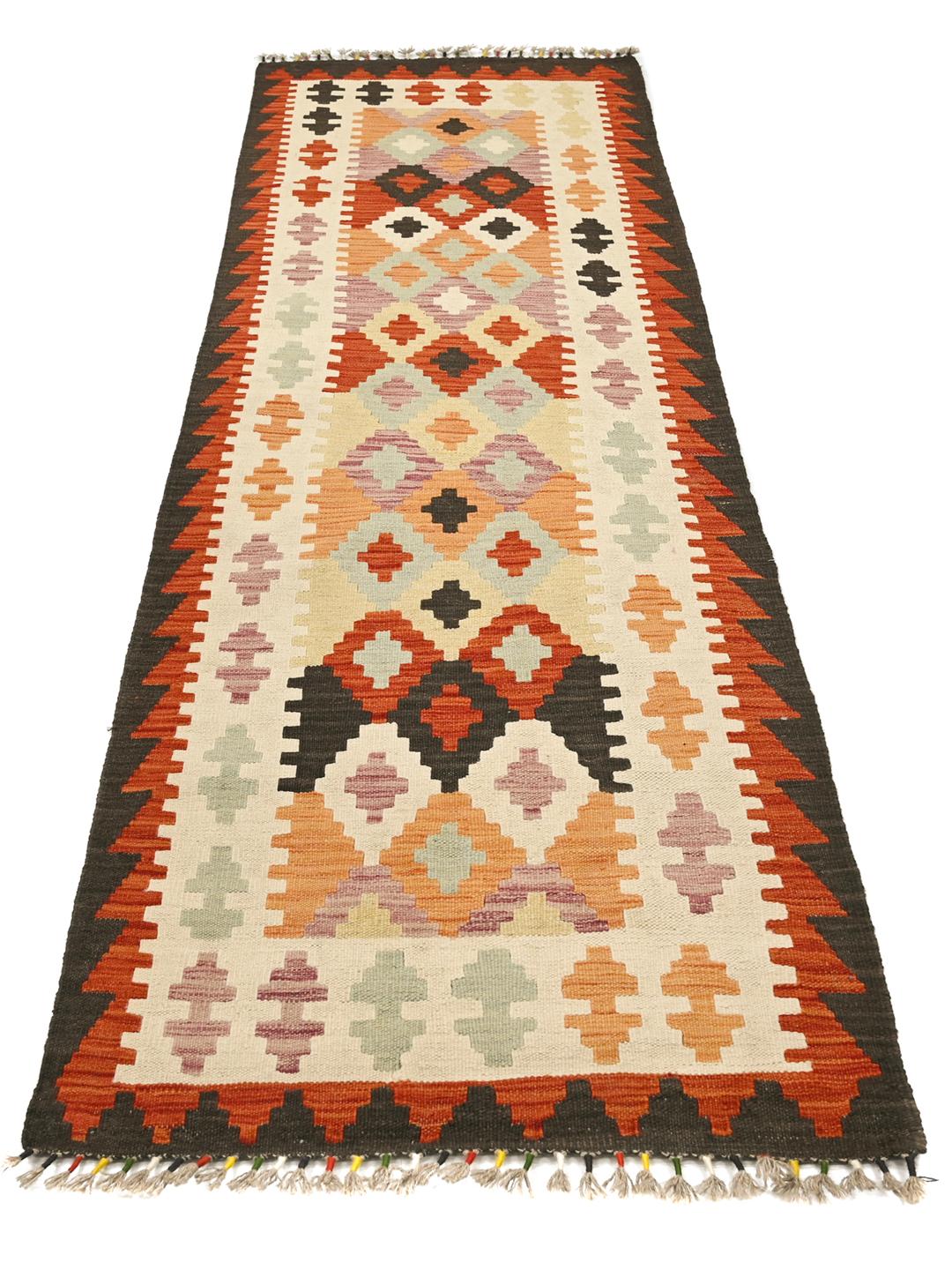
The tradition of weaving Kelim rugs in Afghanistan is deeply rooted in the nomadic and village cultures of the Middle East. These rugs were historically created by tribal women for practical use in their homes, serving as floor coverings, wall hangings, or protective saddlebags, and they remain a vital expression of regional identity.
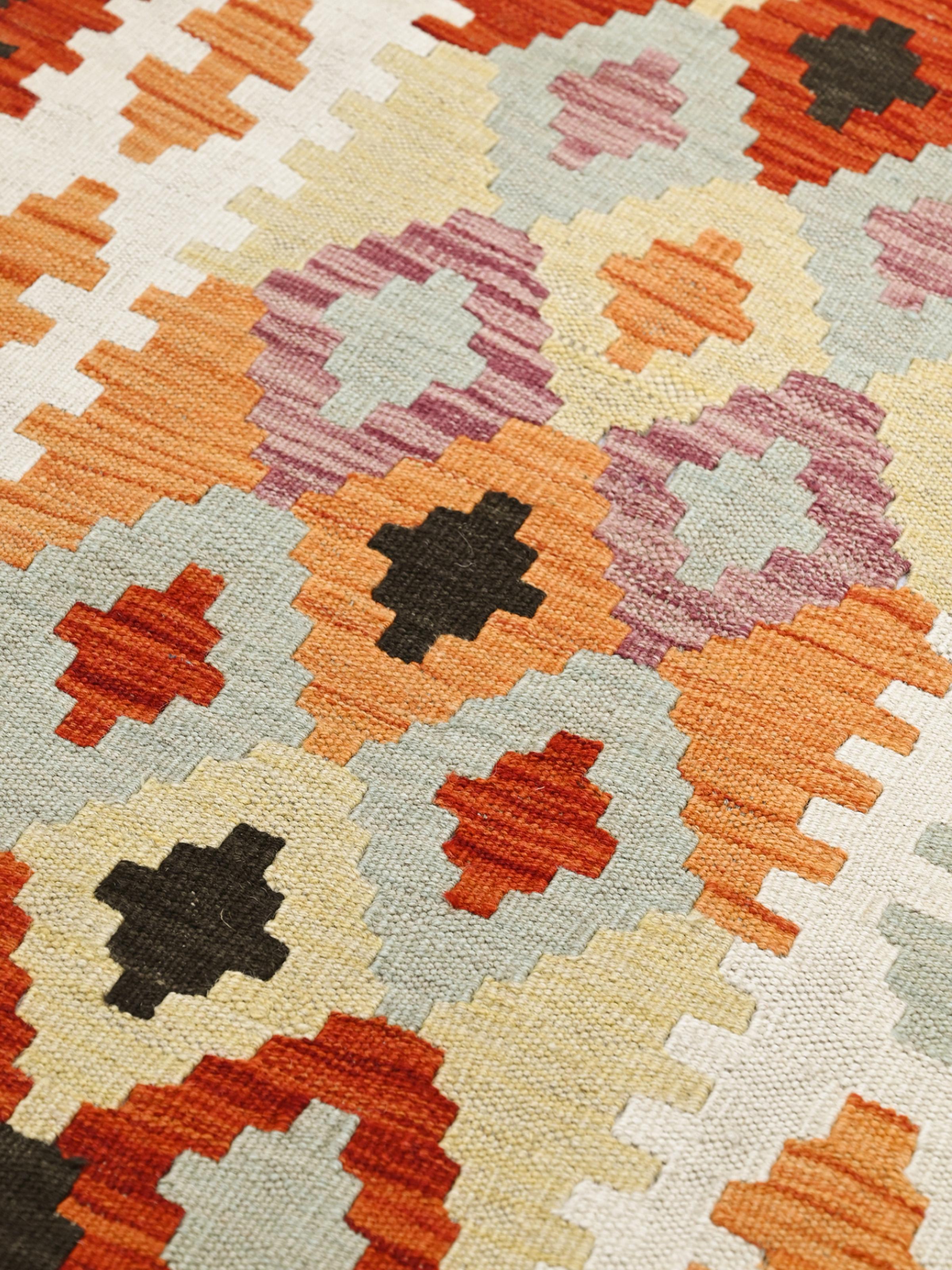
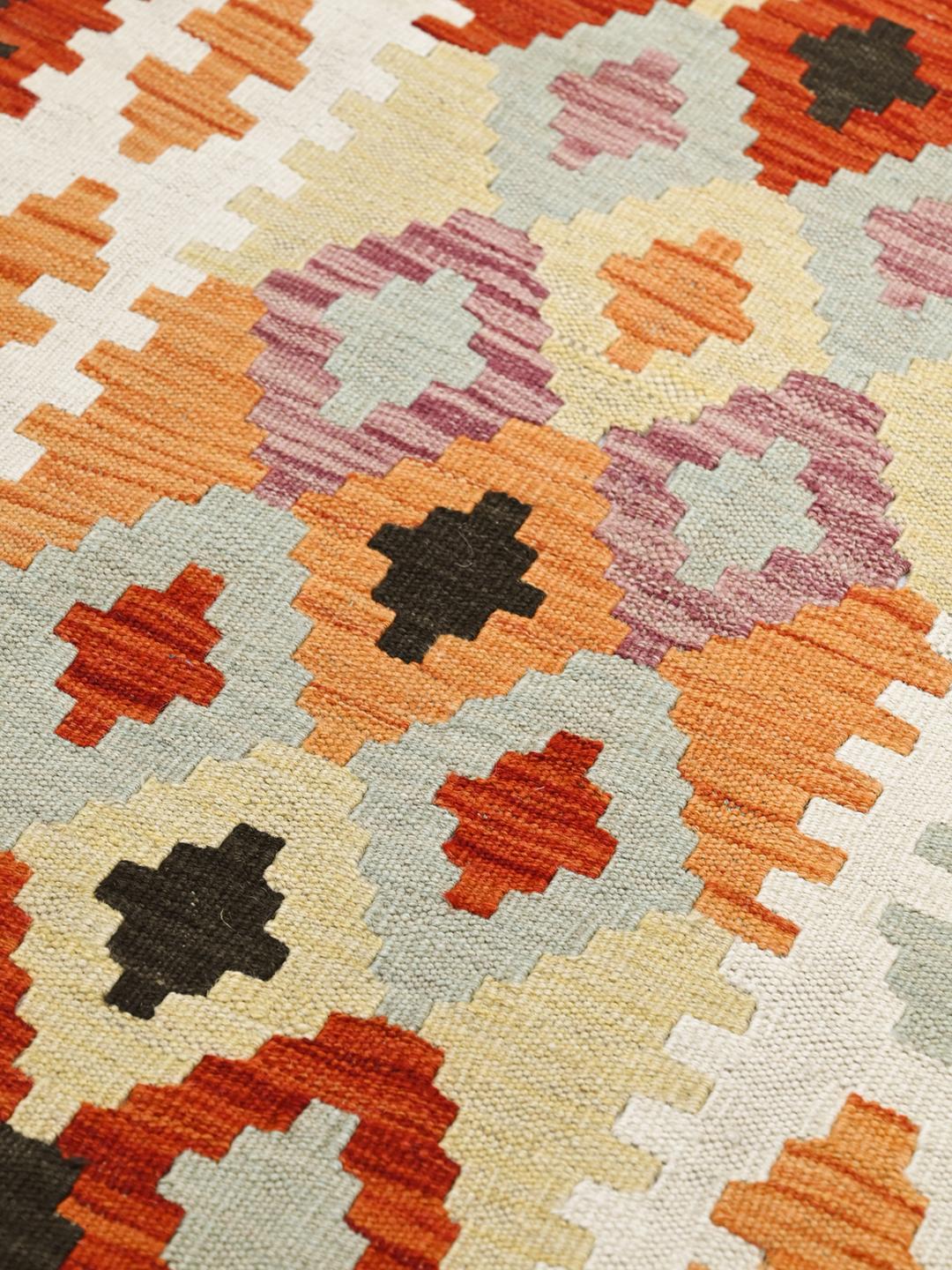
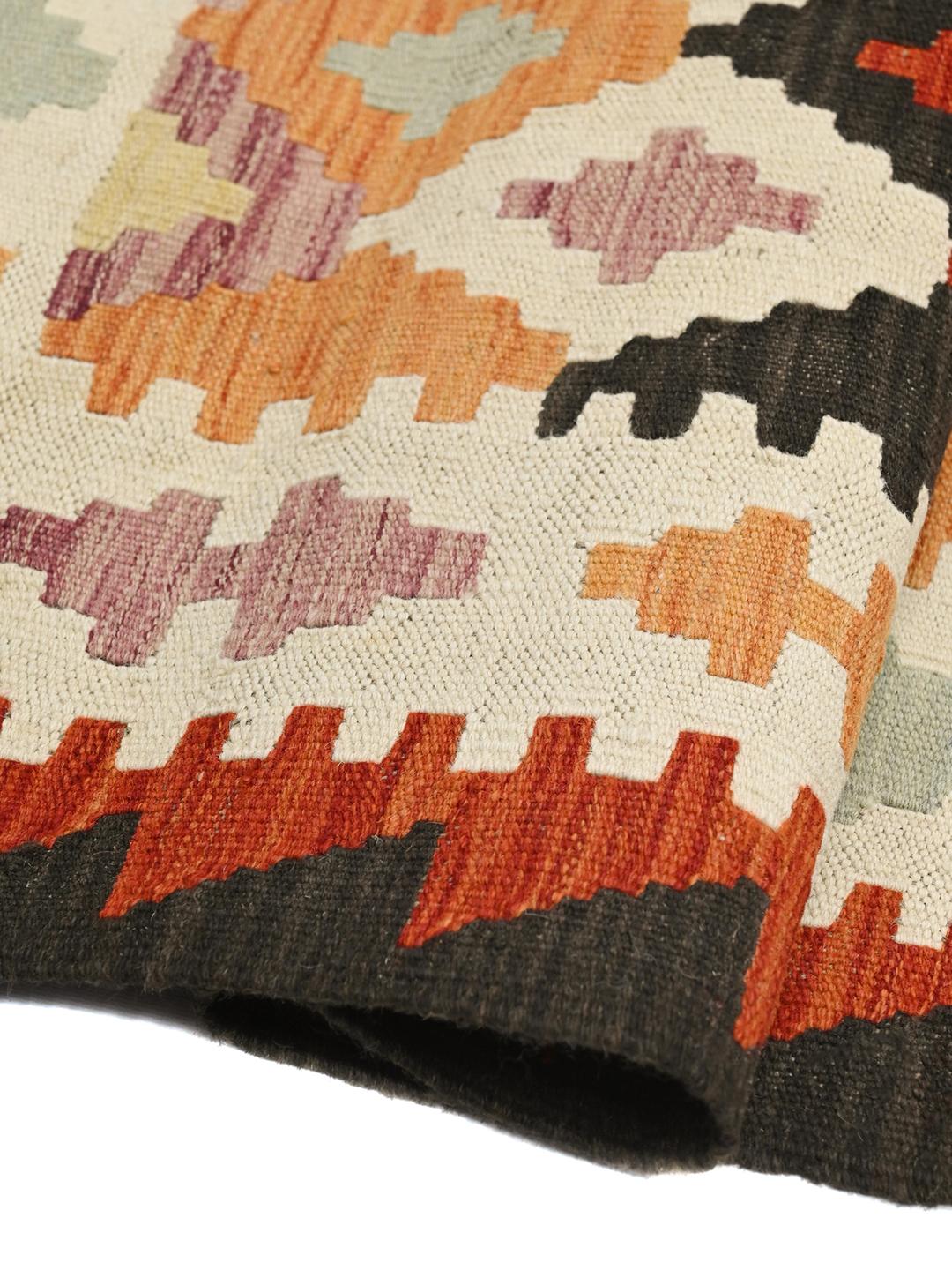
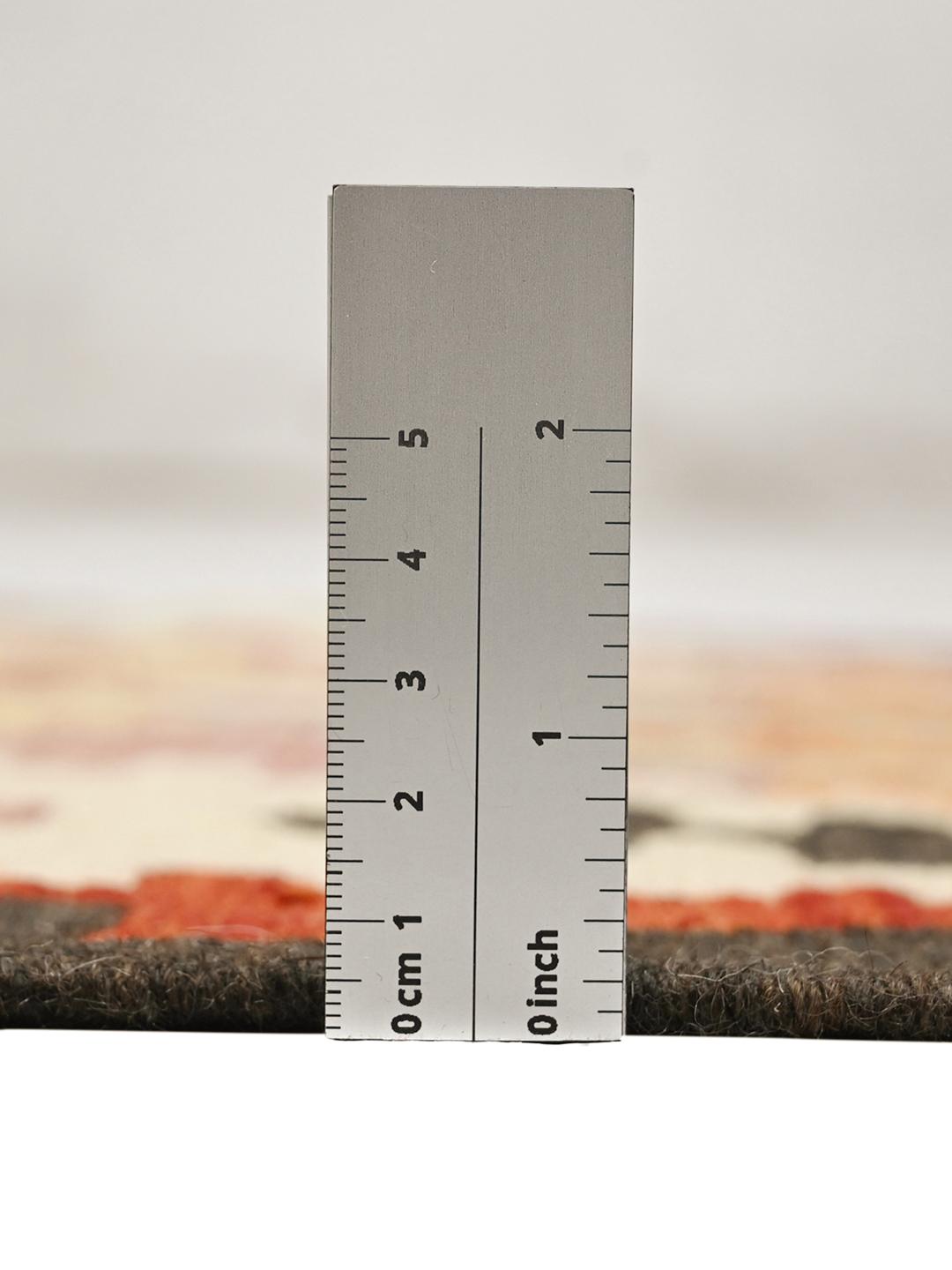
A Kelim is defined by its flat-weave construction, meaning it is made without a pile. This technique involves interweaving the warp and weft strands to create the pattern directly into the foundation. This results in a reversible, lightweight textile that is prized for its clean lines and versatility, distinguishing it from traditional knotted pile rugs.
The visual language of these runners is famously geometric, often featuring diamonds, triangles, and stylized motifs that have been passed down through generations. The vibrant, contrasting colours are typically derived from natural dyes, which give the Wool a rich, organic appearance that matures beautifully over time.
Collecting these rugs is an investment in cultural heritage and human skill. By choosing a hand-woven piece, you are supporting a craft tradition that has survived for centuries, ensuring that the techniques and artistic expressions of Afghan weavers continue to be valued in modern homes today.