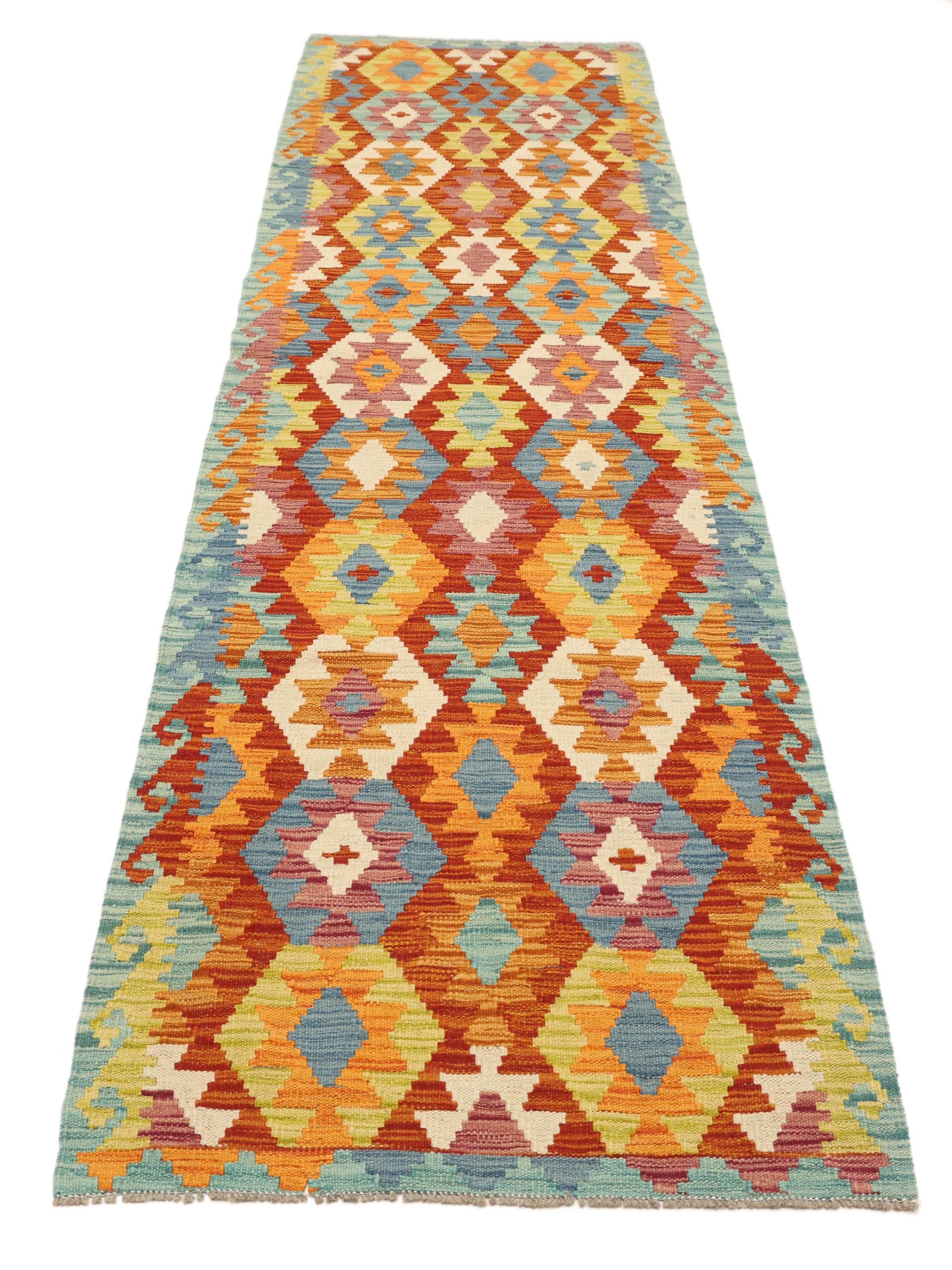
Kelim rugs have long been a cornerstone of Middle Eastern textile traditions, serving as both functional floor coverings and expressions of cultural identity. The Afghan Kelim, in particular, is celebrated for its distinctive flat-weave technique, which distinguishes it from pile-heavy rugs. These textiles have been woven for centuries by nomadic and village communities, who used them for everything from floor mats to storage bags, making them inherently durable and practical.
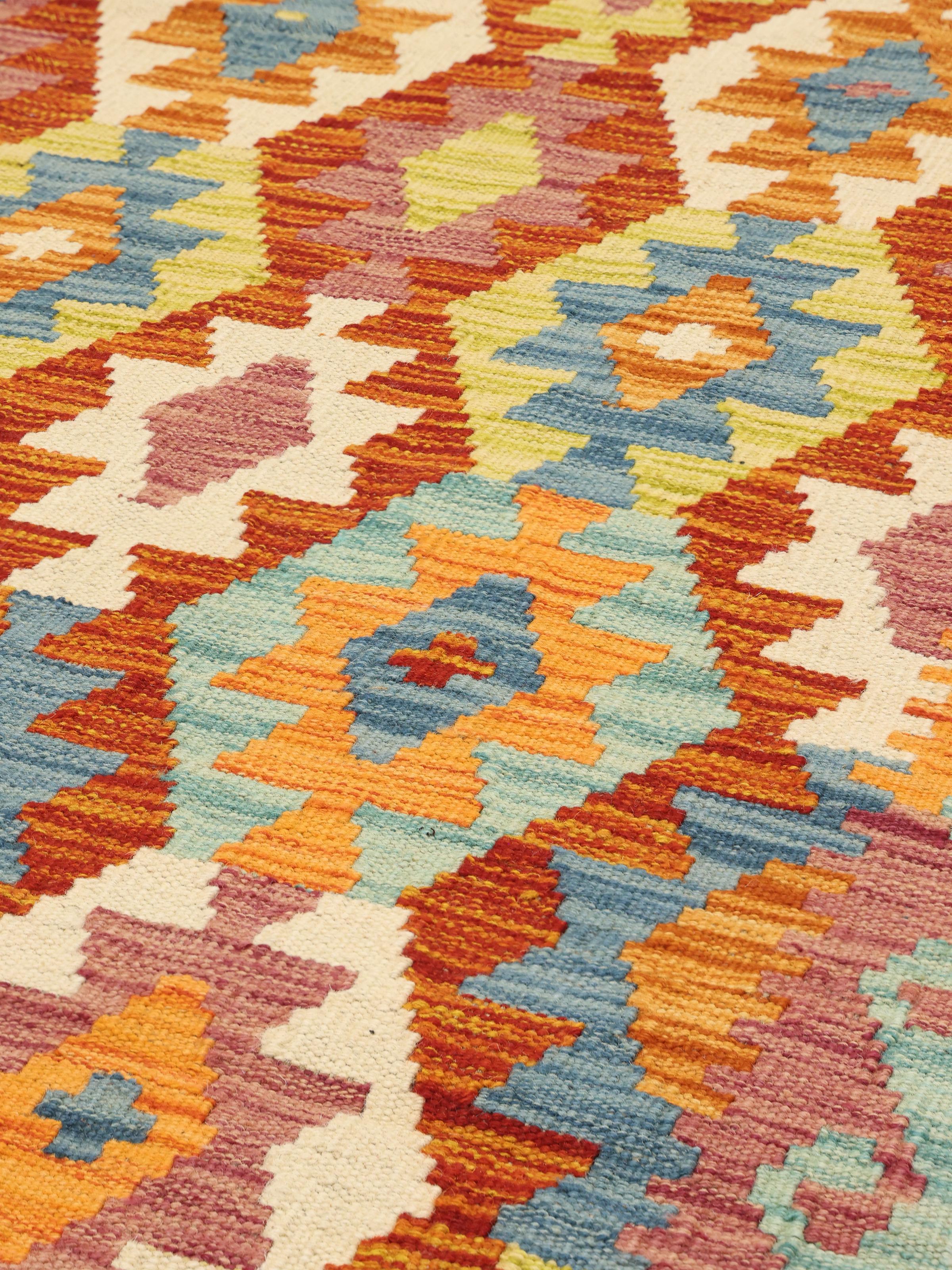
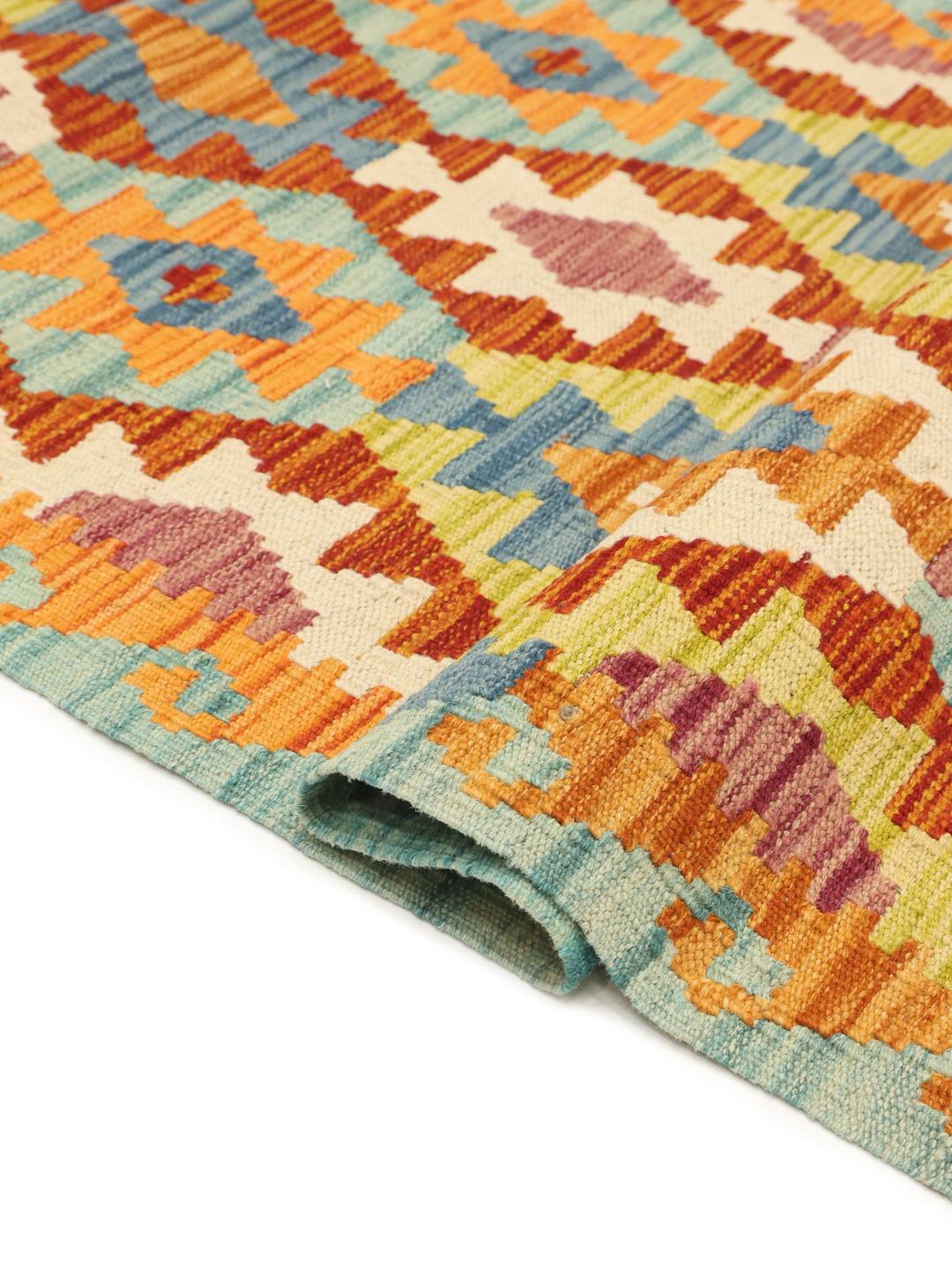
The term 'Kelim' refers to the specific slit-weave technique where the weft threads are pulled tightly to cover the warp, creating a smooth, pattern-rich surface on both sides. This method is incredibly labour-intensive, requiring the weaver to change colours frequently and lock the threads in place without the aid of a pile. This technical precision is what gives these rugs their sharp, clean lines and makes them such a prized example of textile engineering.
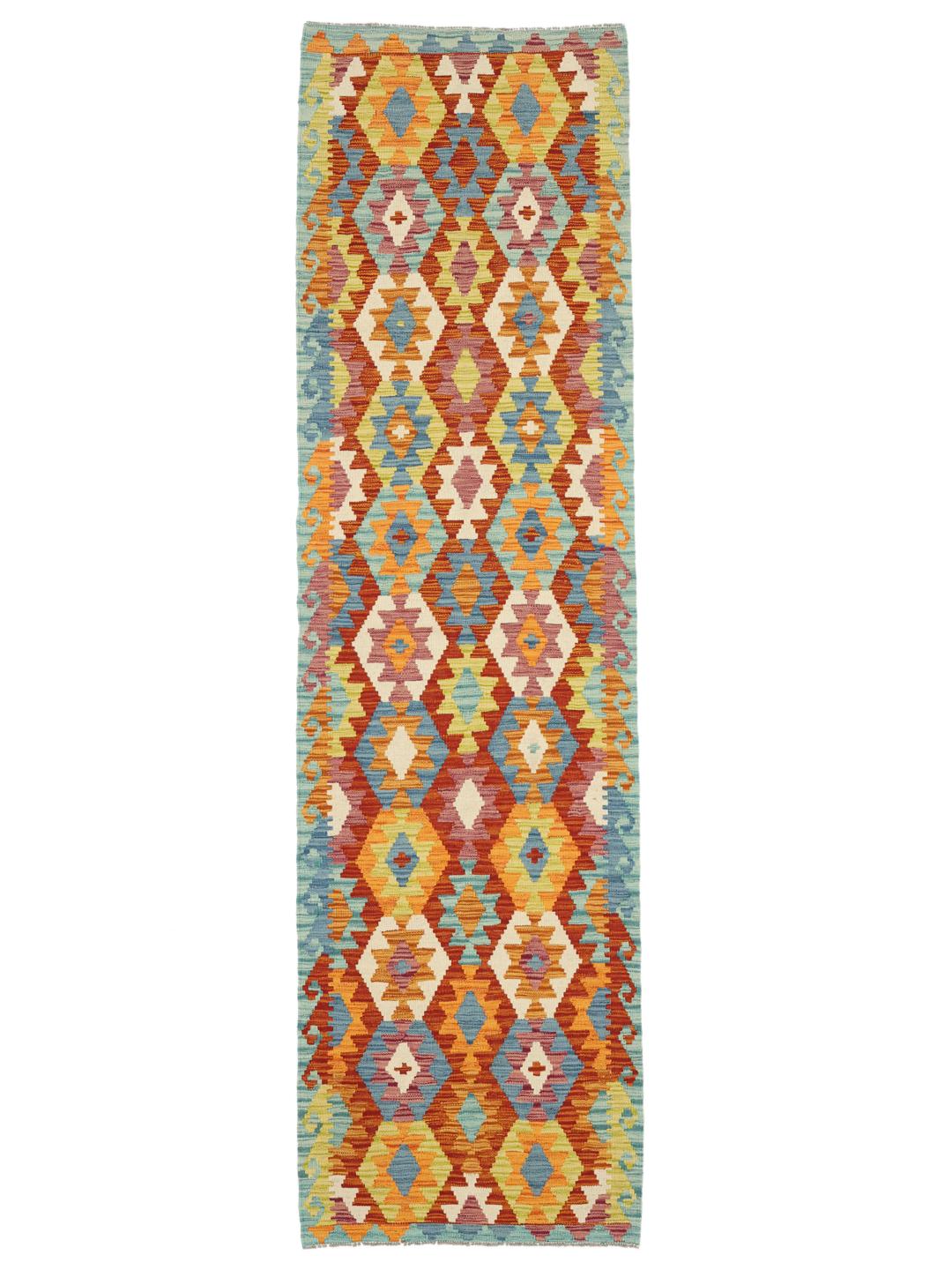
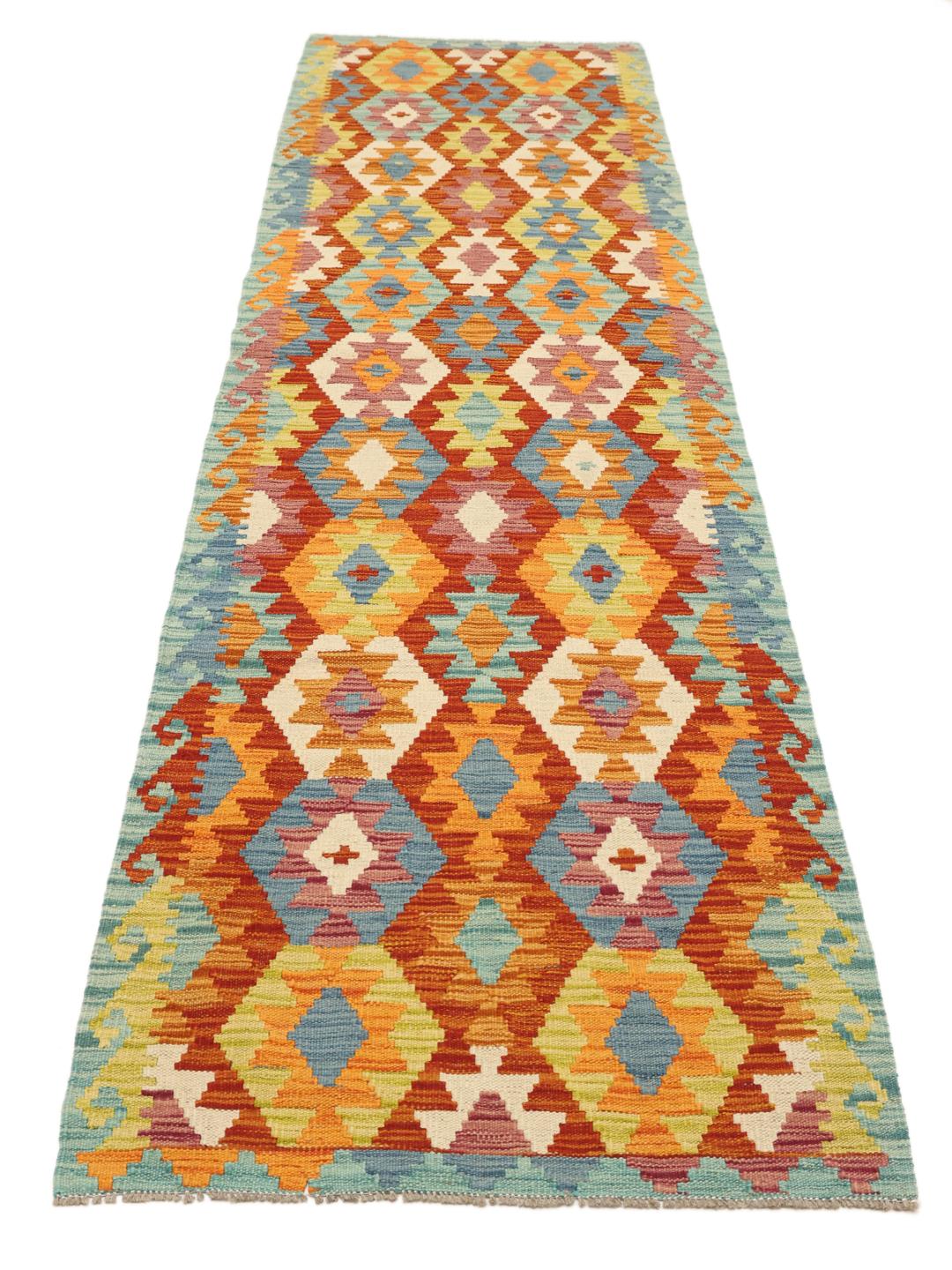
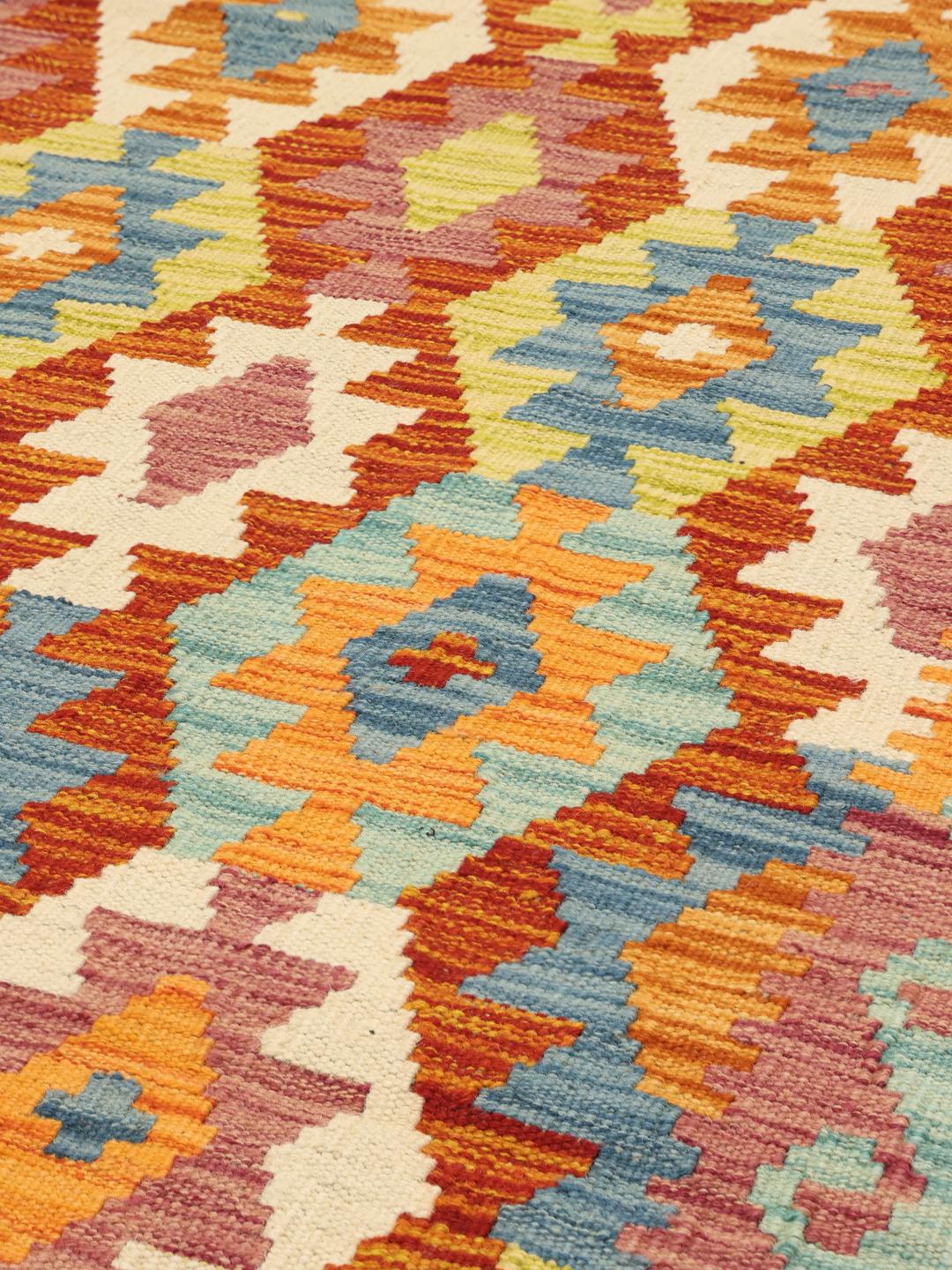
Visually, these runners are defined by their geometric motifs, which often draw on tribal symbolism and local landscape elements. The use of repeating diamonds and serrated edges is common, reflecting a design language that has been passed down through generations of Afghan weavers. The vibrant colour palette is typically achieved through traditional dyeing methods, resulting in deep, saturated hues that develop a beautiful character over time.
Collecting an Afghan Kelim is an investment in a living heritage. These rugs are valued not only for their aesthetic appeal but for the immense patience and cultural history woven into every thread. By adding one to your home, you are participating in a tradition of craft that honours the skill of the weaver and the legacy of the region, ensuring that this art form continues to be appreciated in modern interiors.