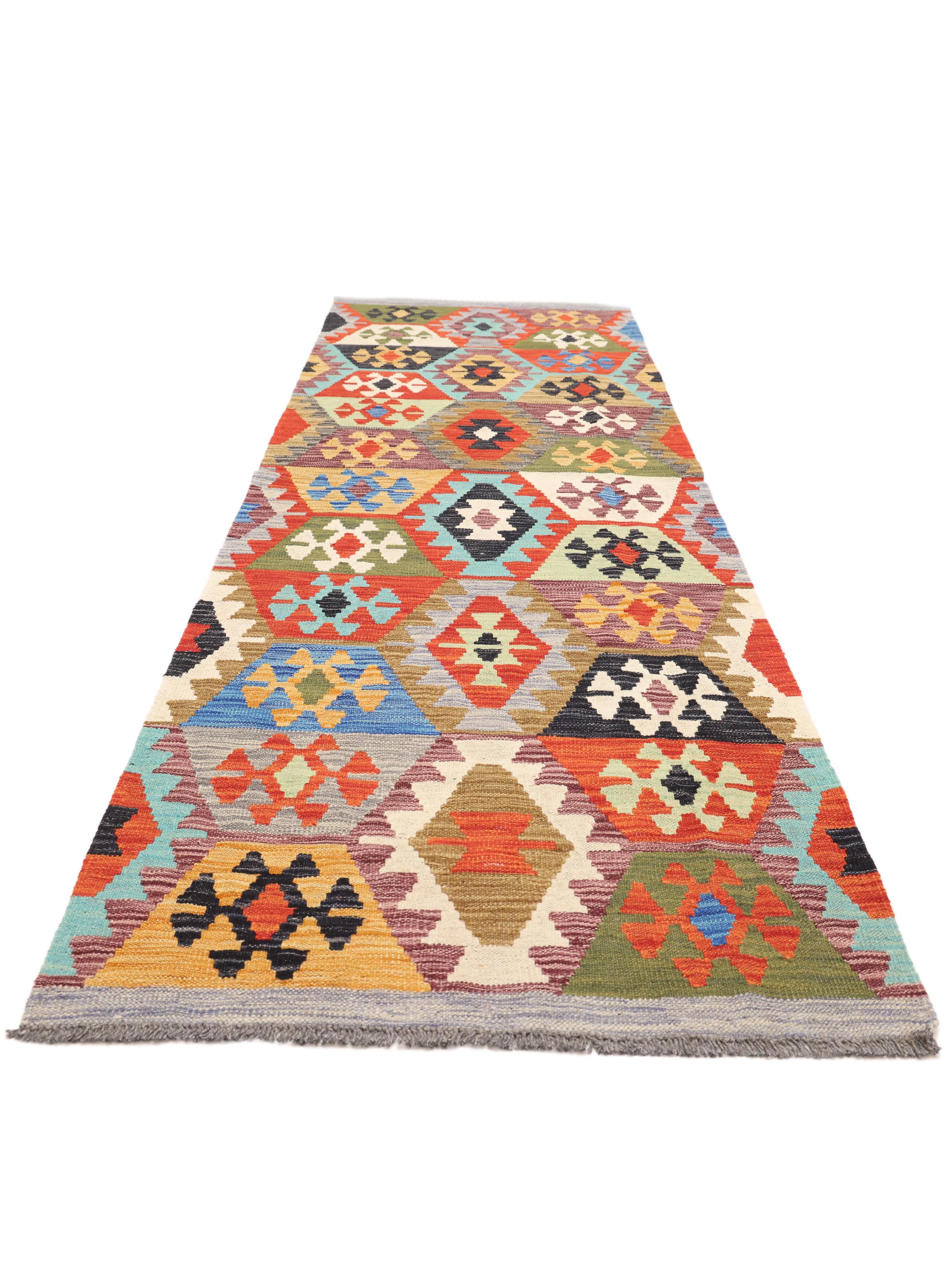
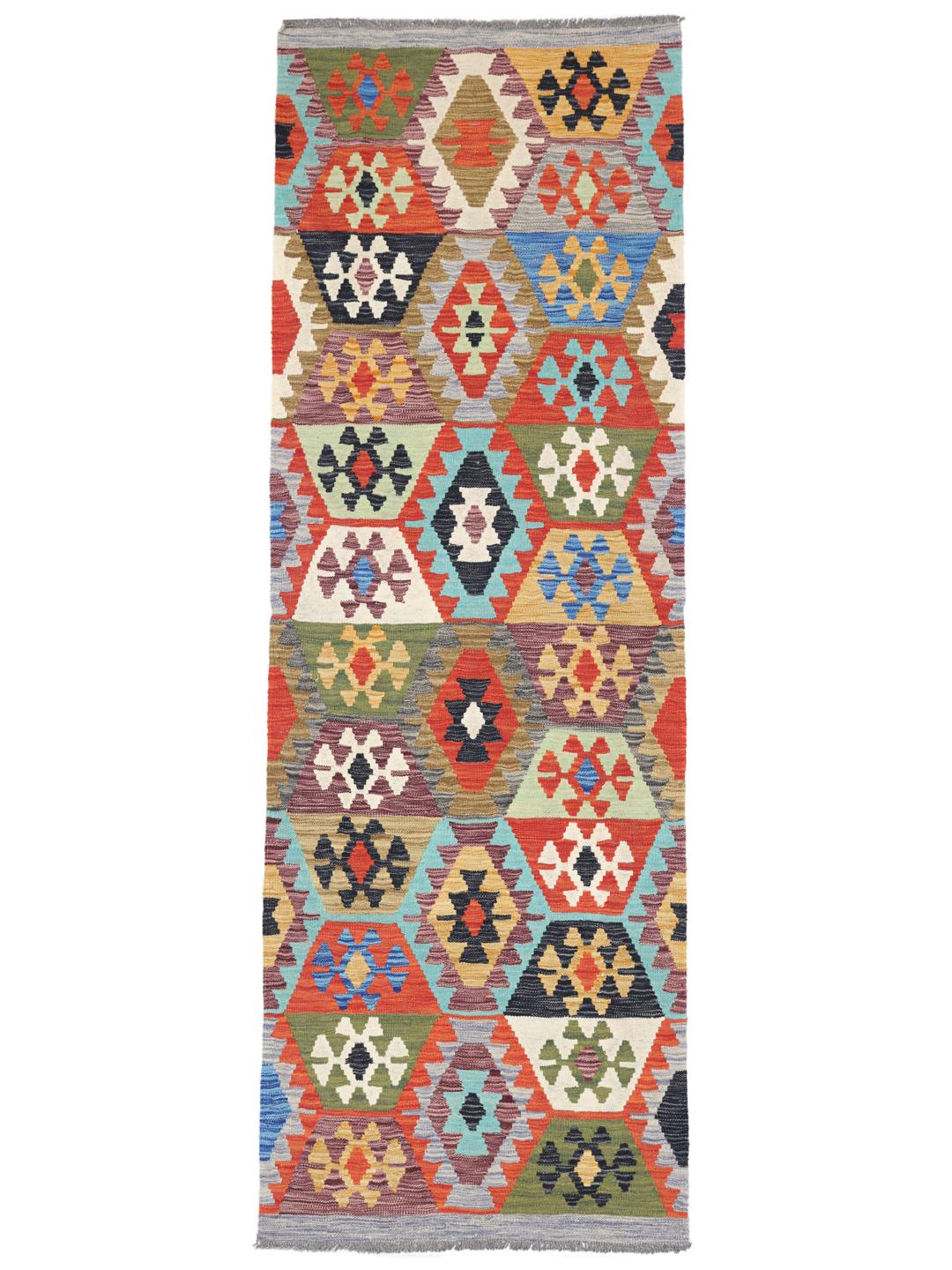
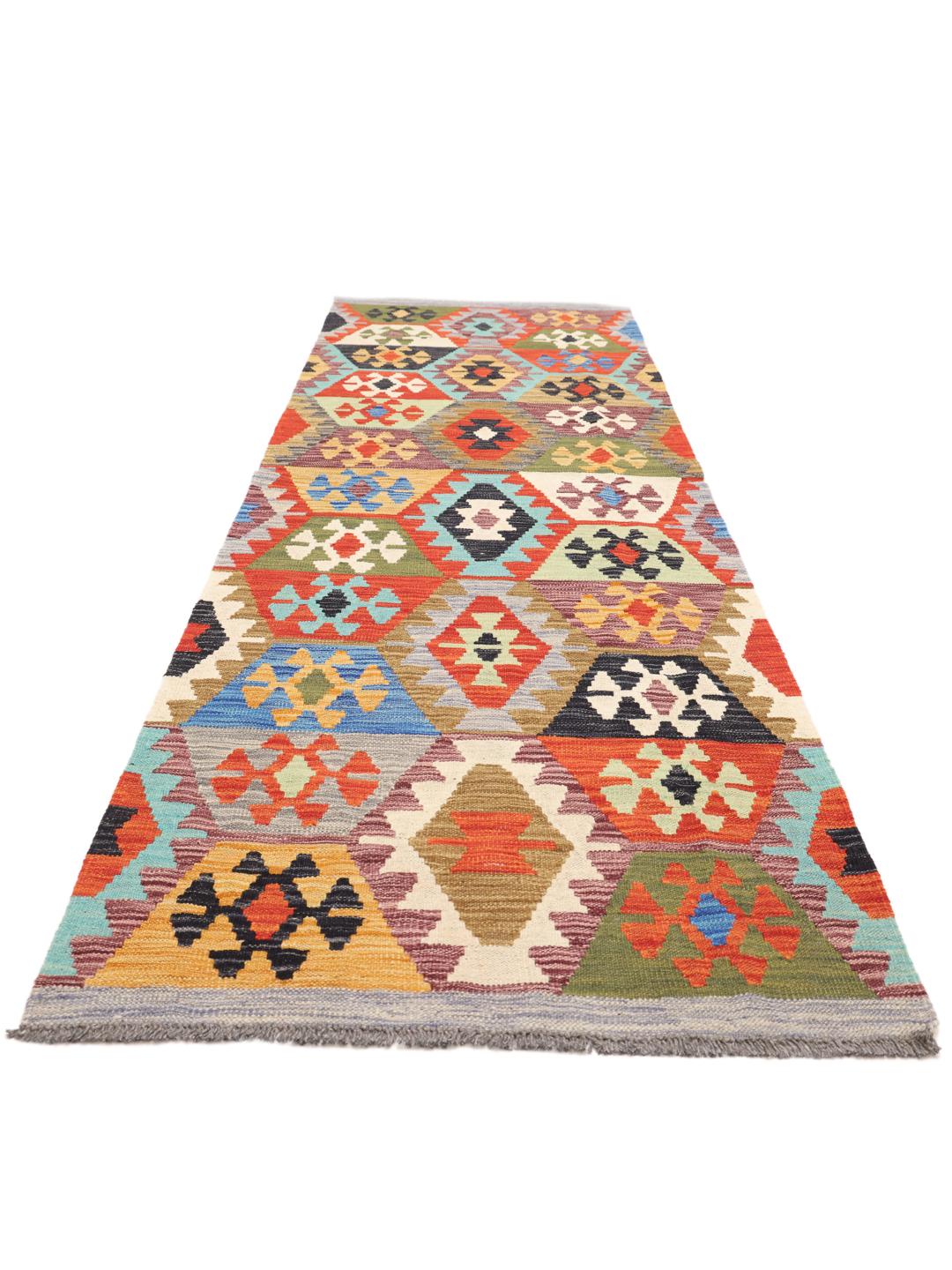
The tradition of weaving flat-weave rugs in Afghanistan is deeply rooted in the nomadic and village cultures of the region. These textiles, known for their lack of pile, have historically served a variety of functional purposes, from floor coverings and room dividers to durable storage bags for travelling tribes across the rugged landscape.
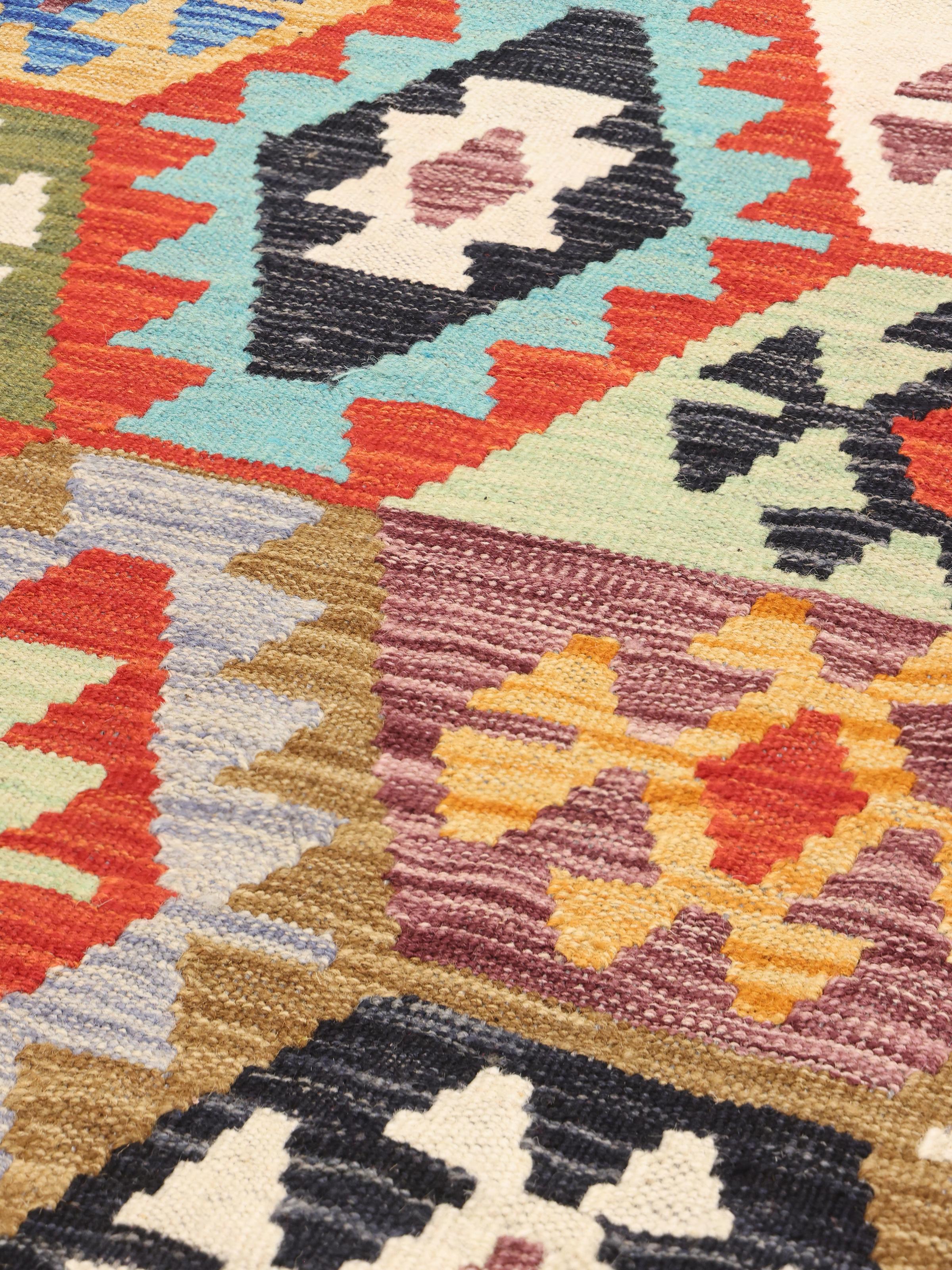
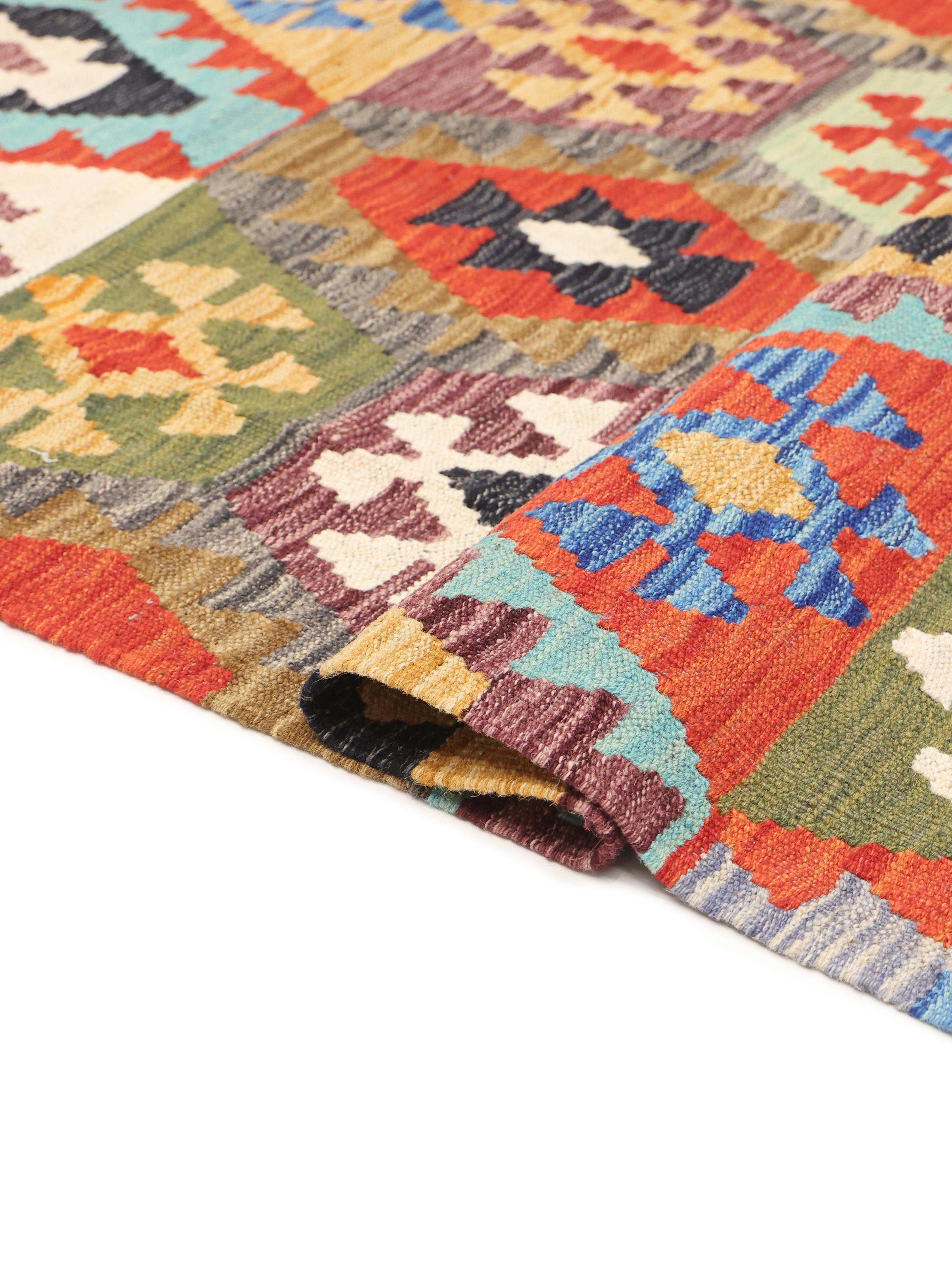
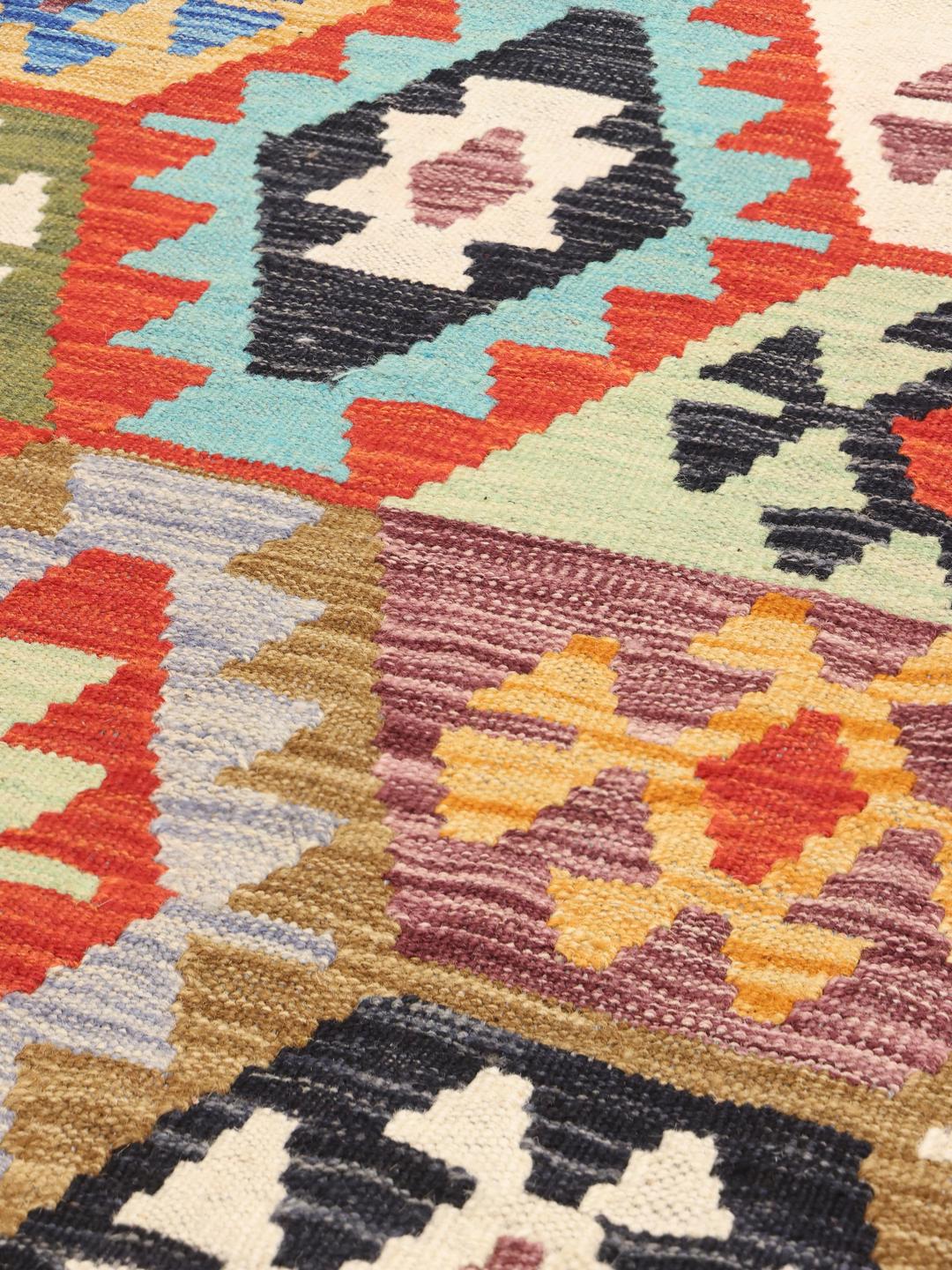
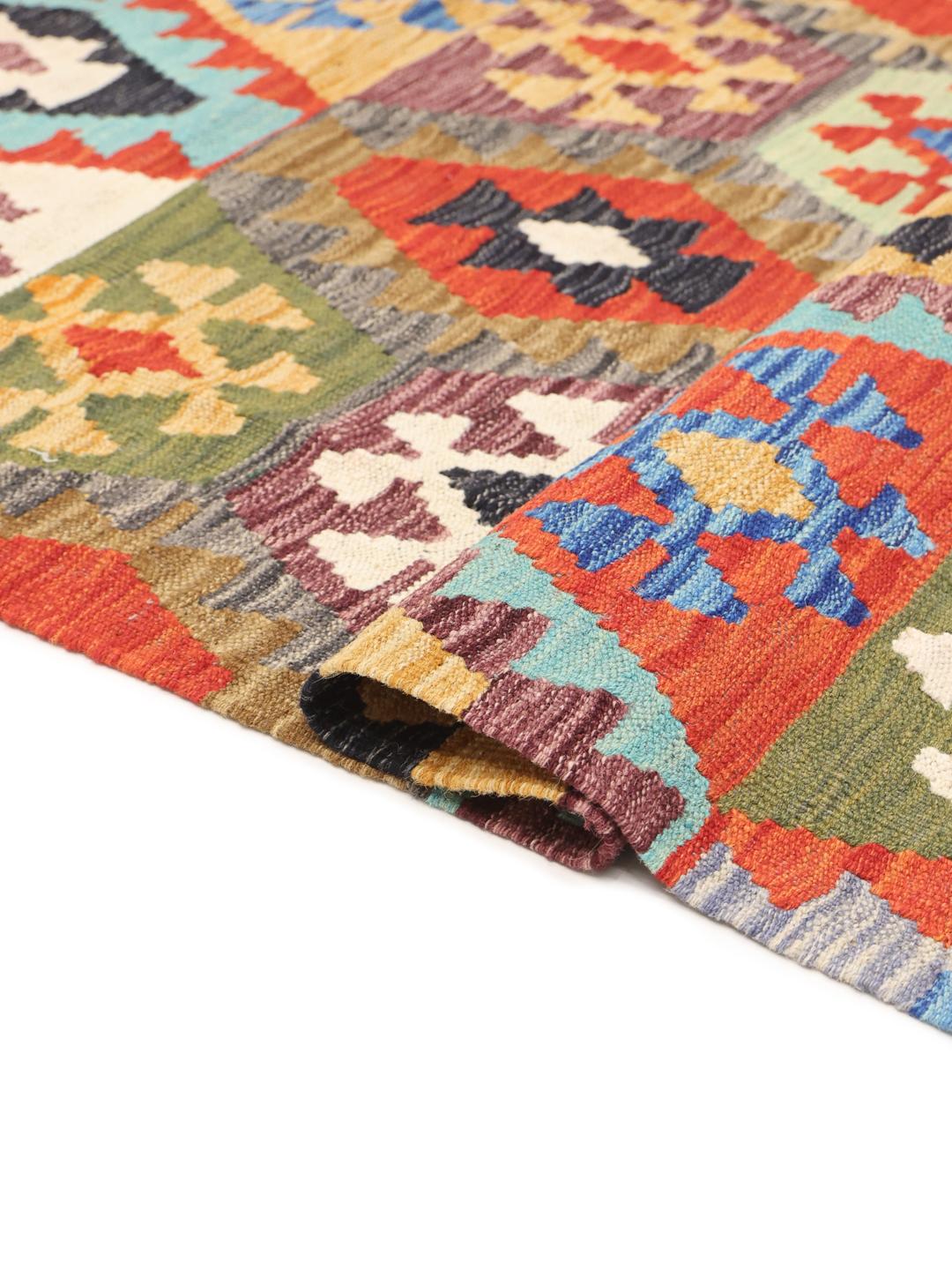
The term 'Kelim' refers to this specific flat-weaving technique, where the weft threads are woven tightly over the warp threads to create a durable, reversible fabric. This style of construction is renowned for its strength and ability to withstand the harsh conditions of daily life, making it a staple of the region's domestic history.
Visually, these pieces are defined by their bold, geometric language. The motifs often include stylised diamonds, triangles, and ancestral symbols that tell a story of the weaver's community and environment. The use of vibrant, contrasting colours is a hallmark of this tradition, designed to bring warmth and energy into the home.
Collectors value these rugs for their authenticity and the human effort preserved within every thread. Owning a piece from this tradition is an opportunity to connect with a long-standing heritage of craft, where every rug serves as a testament to the skill and cultural identity of the people who created it.