Afghan Kelims have a long and storied history, rooted in the nomadic and semi-nomadic weaving traditions of Central Asia and Afghanistan. These flatwoven rugs were originally crafted not just as floor coverings, but as functional art for daily life, serving as warm blankets, storage bags, and protective tent hangings. Over generations, these weaving techniques have been passed down, preserving the cultural heritage of the region.
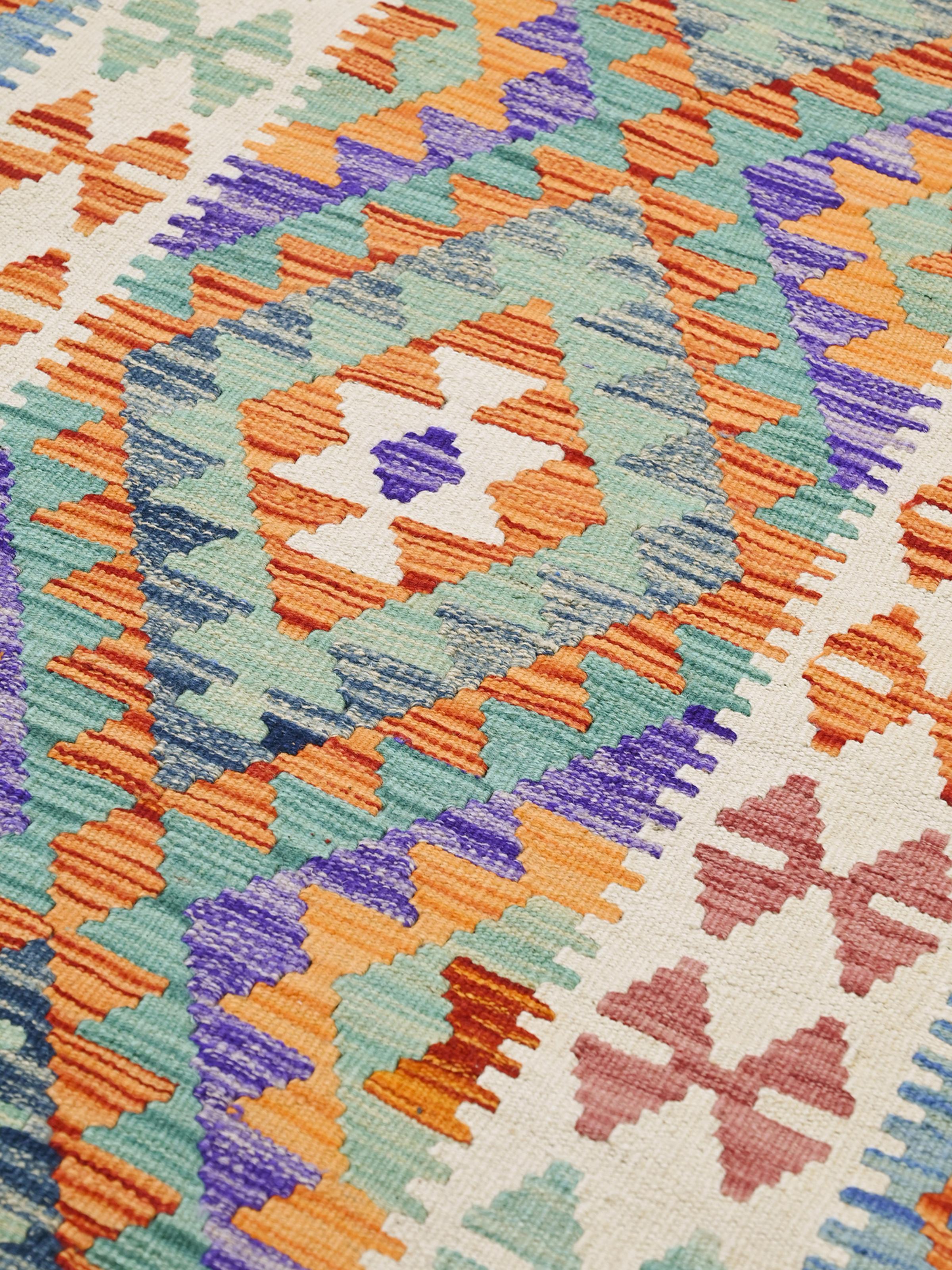
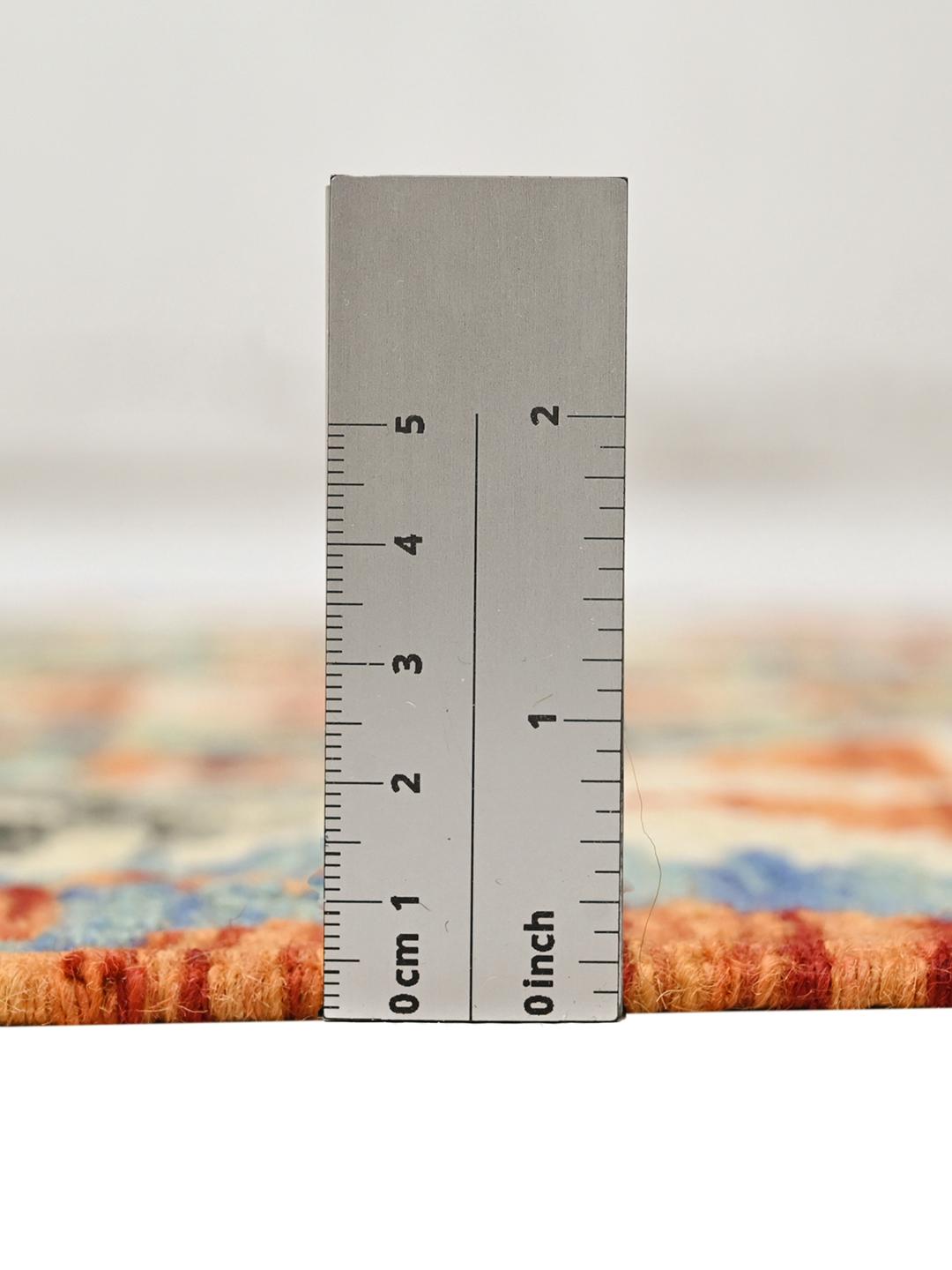
The term Kelim refers to a flatwoven rug made using a tapestry weave technique, where the weft strands are tightly woven through the warp to create a smooth, pile-free surface. This traditional method produces a lightweight yet incredibly strong textile that is reversible and highly durable. Woven entirely from wool, the construction relies on the natural strength and elasticity of the fibre to ensure the rug withstands decades of use.
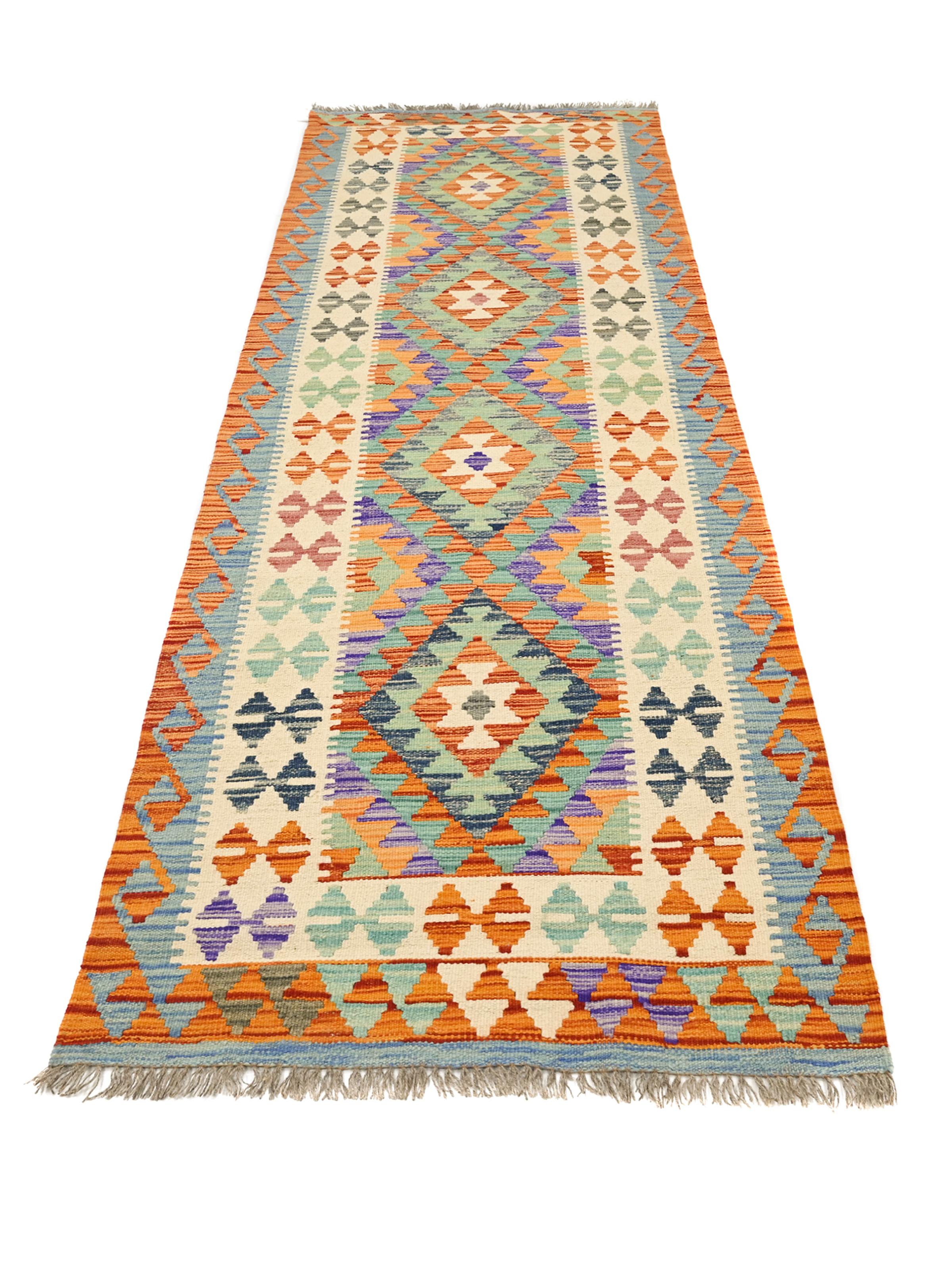
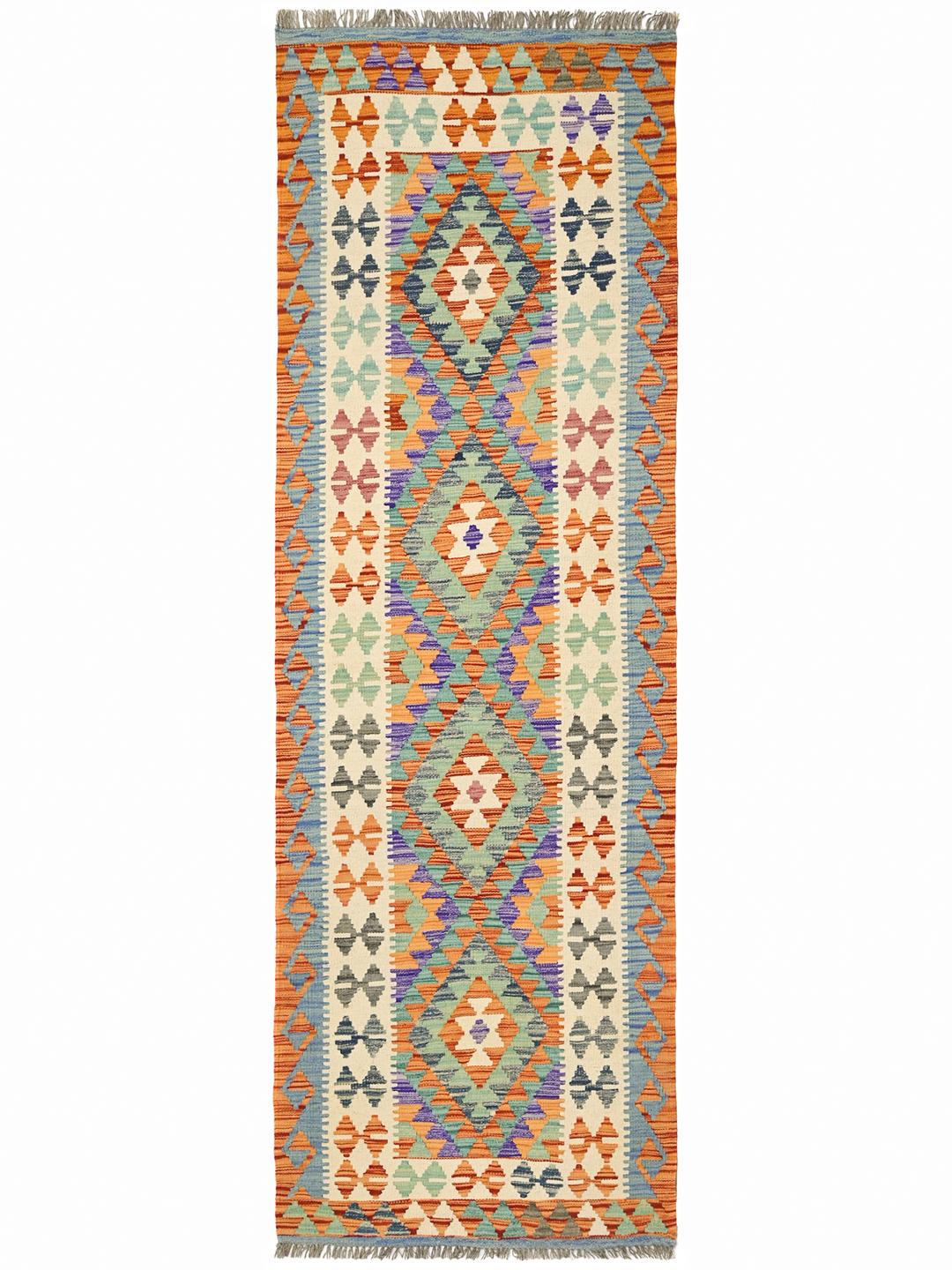
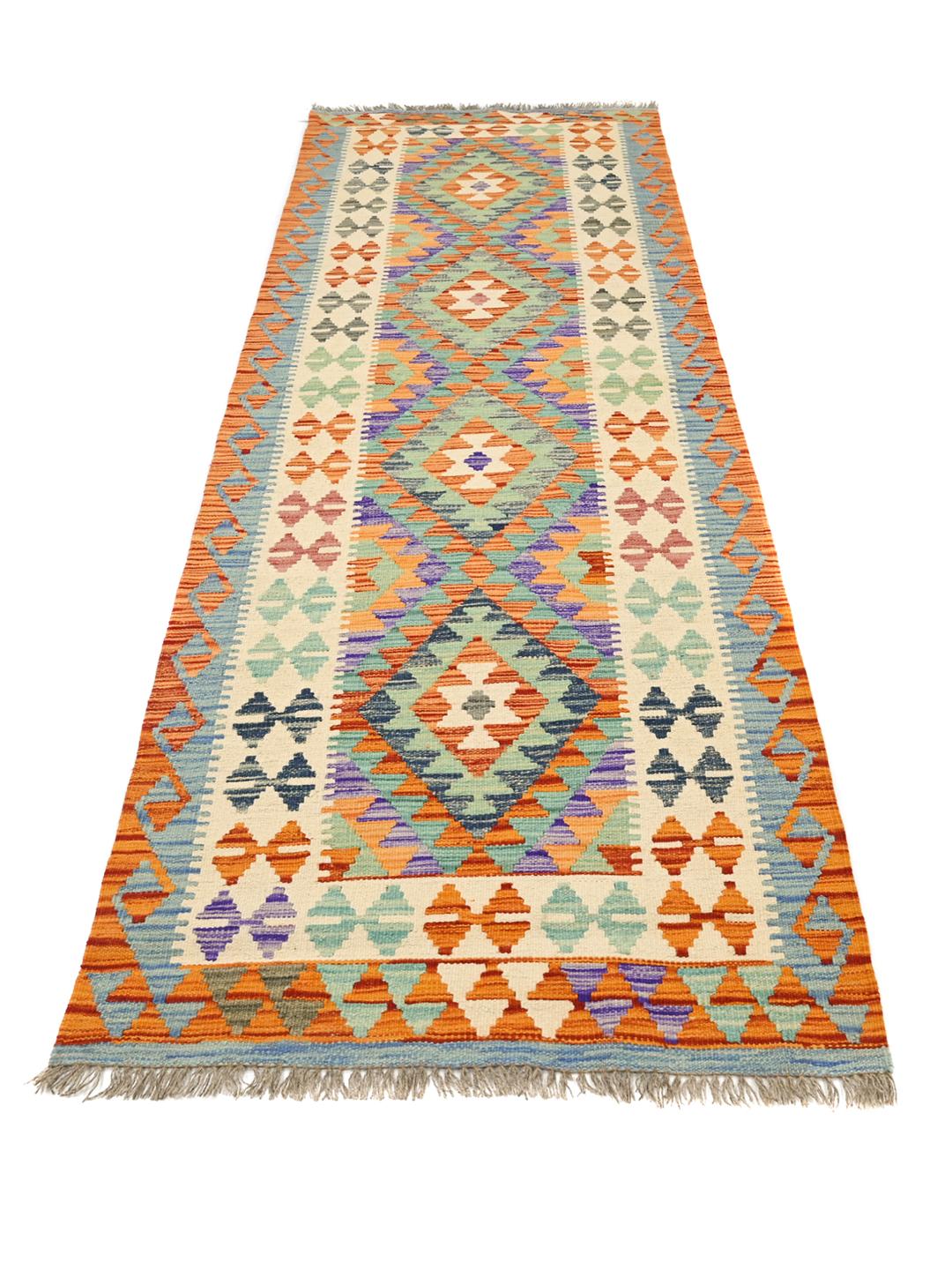
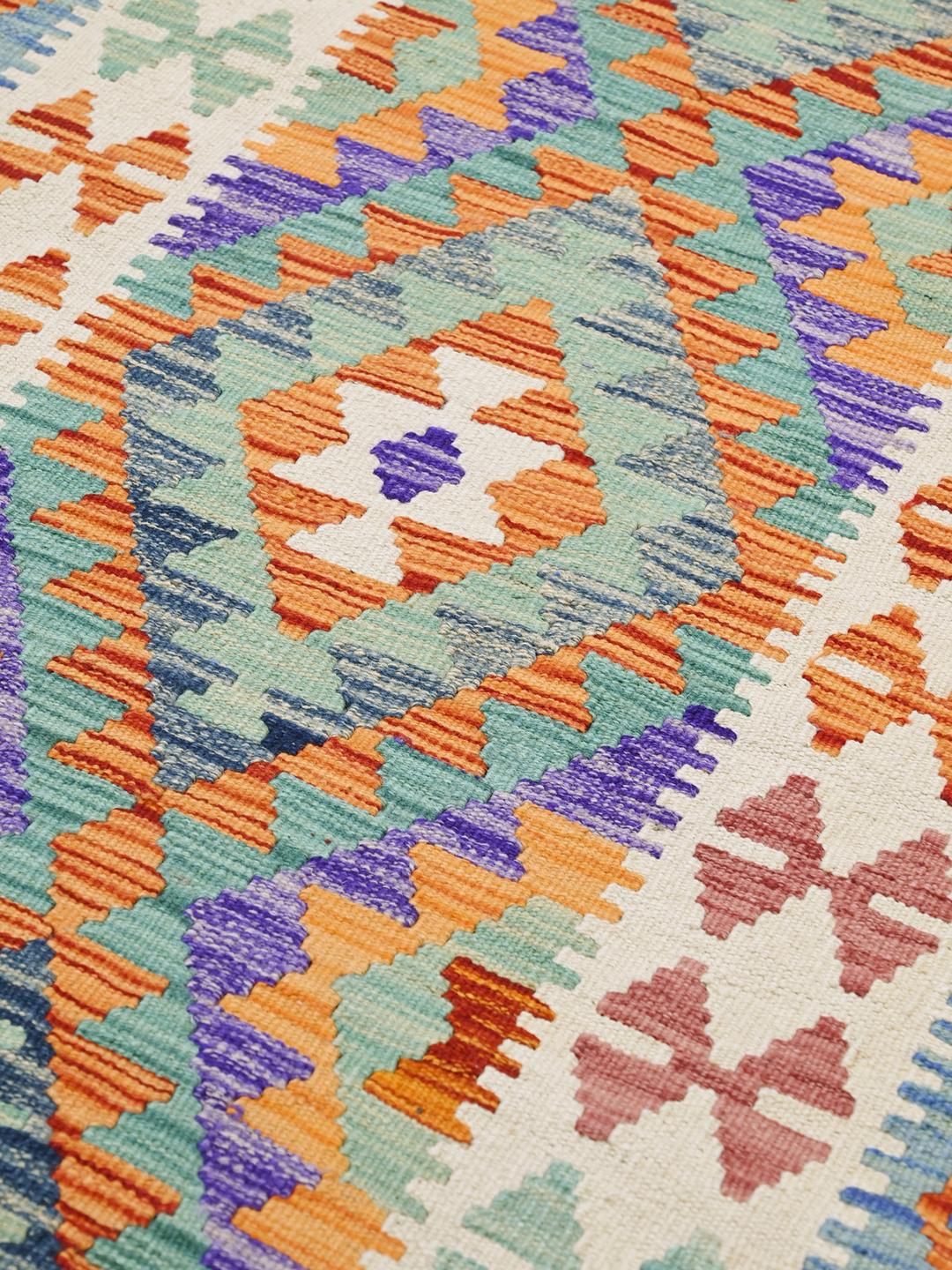
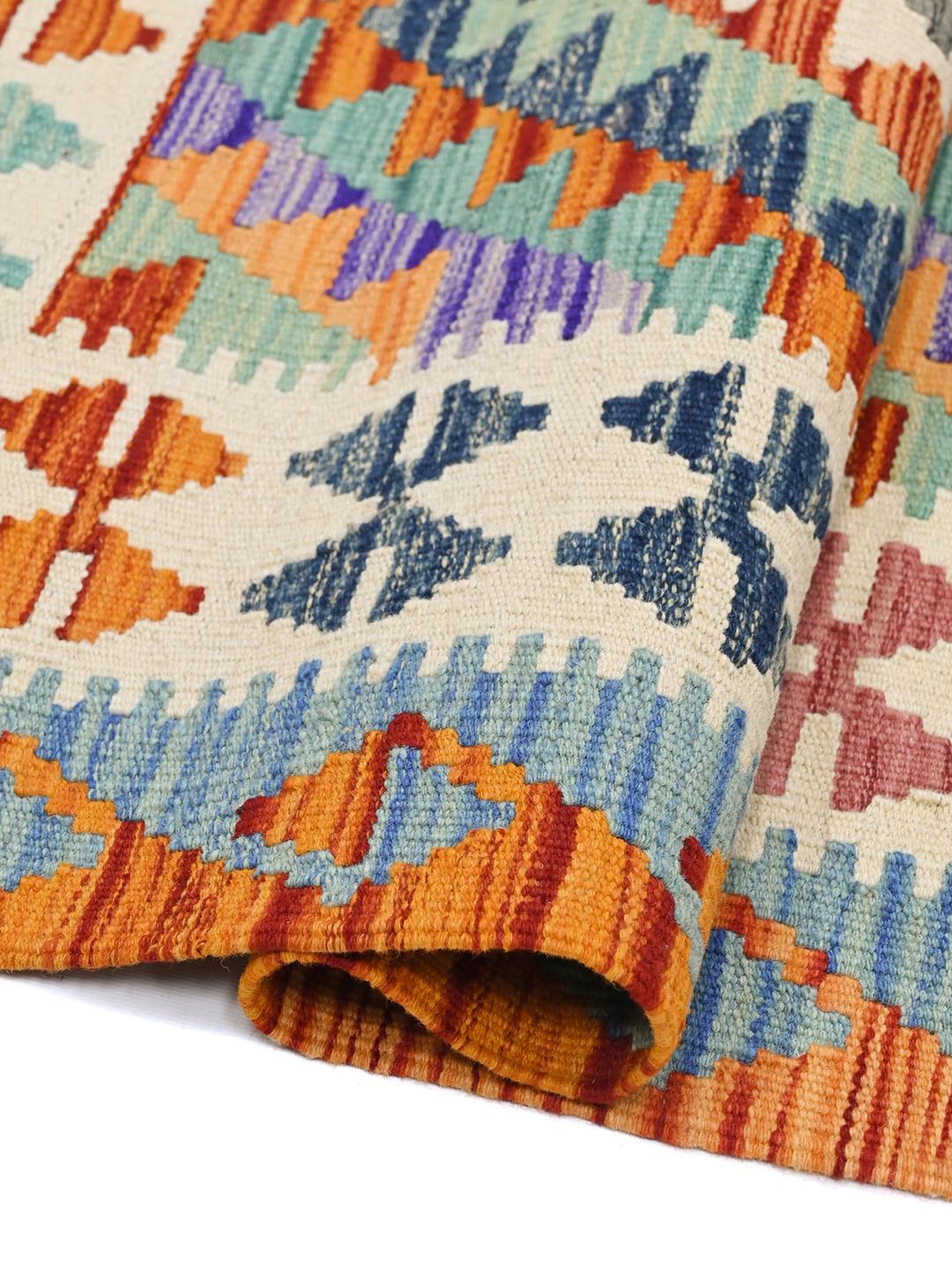
This particular piece features classic diamond medallions and structured geometric borders, which are signature elements of Afghan design. The bold use of orange, blue, and green tones arranged in symmetrical patterns reflects the weaver's personal artistic expression within a traditional framework. Each geometric shape and colour transition tells a silent story of regional identity and tribal symbolism.
Owning an Afghan Kelim is more than a decorative choice; it is an appreciation of authentic human craftsmanship. These rugs are highly valued by collectors and homeowners alike for their graphic appeal and historical depth. They bring a sense of global heritage and grounded warmth into modern homes, bridging the past and the present through honest, hand-woven art.