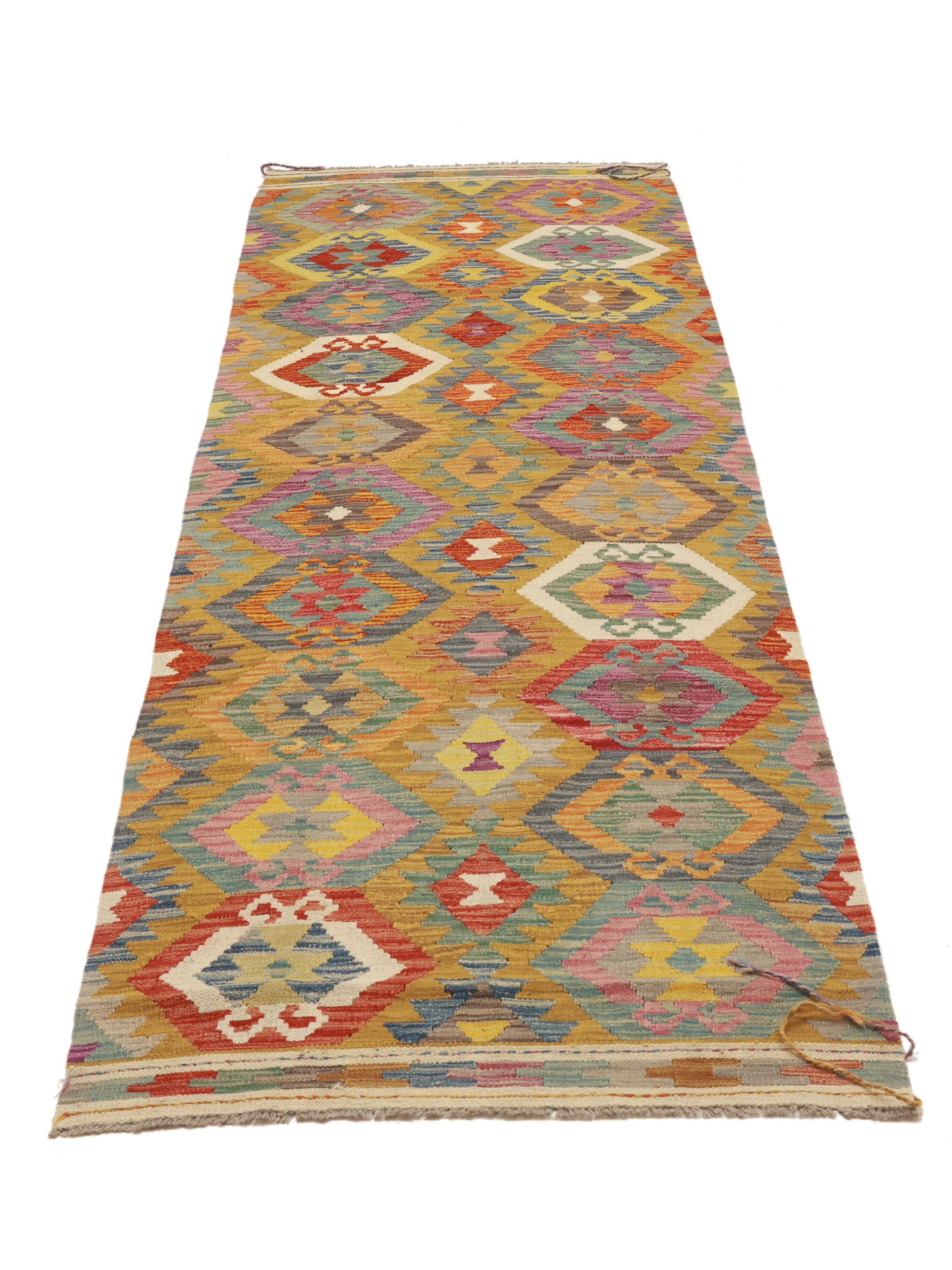
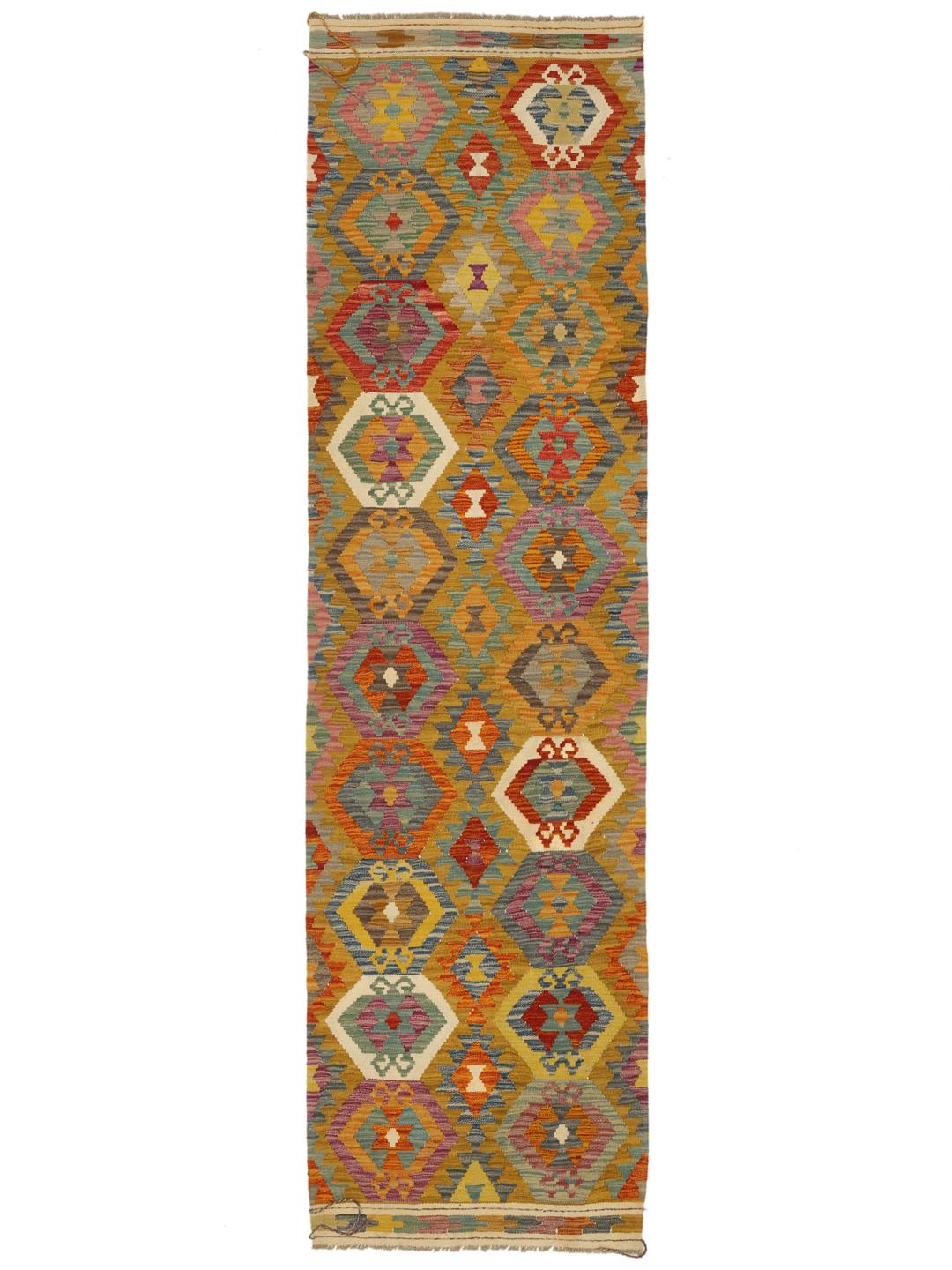
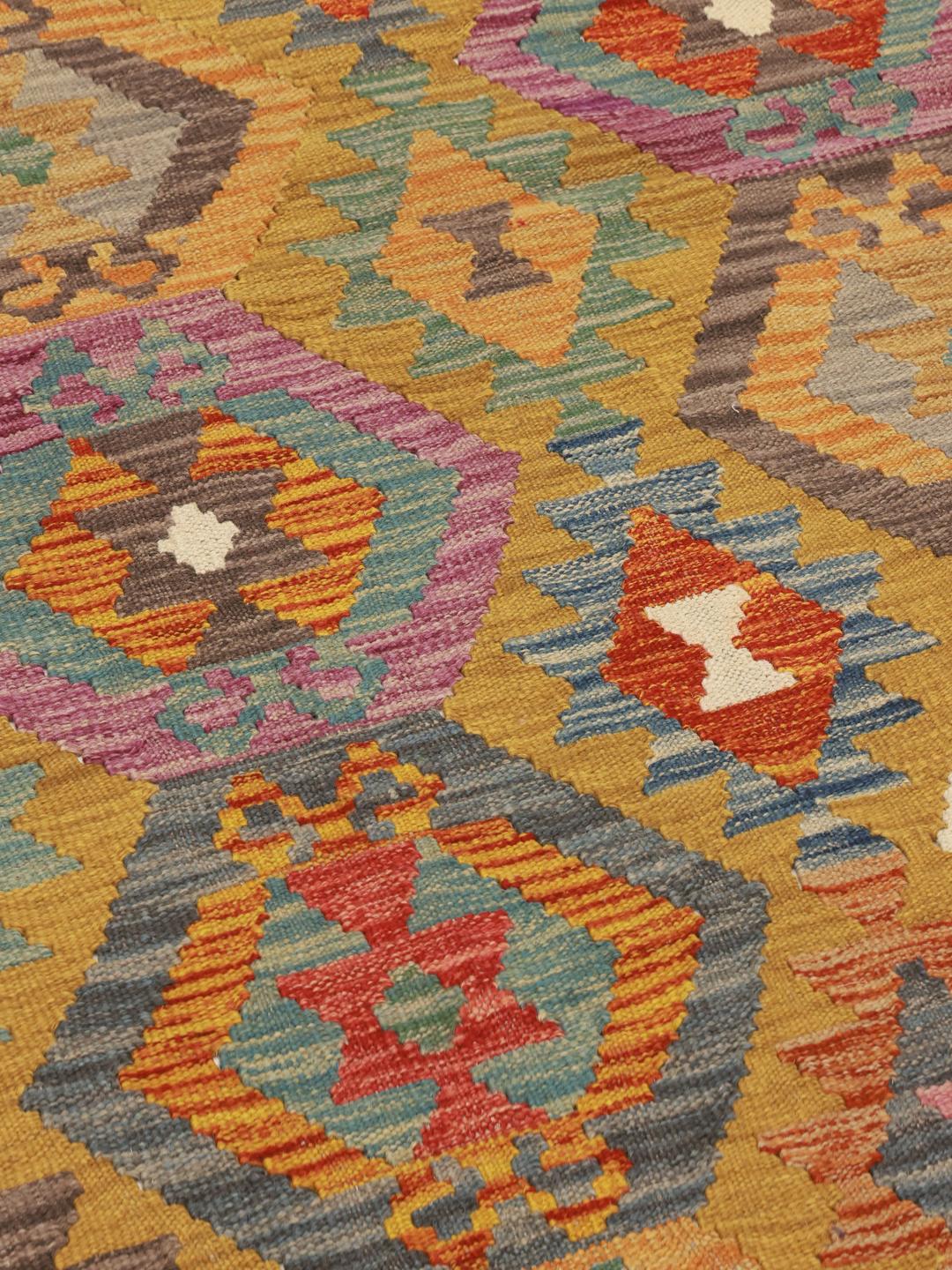
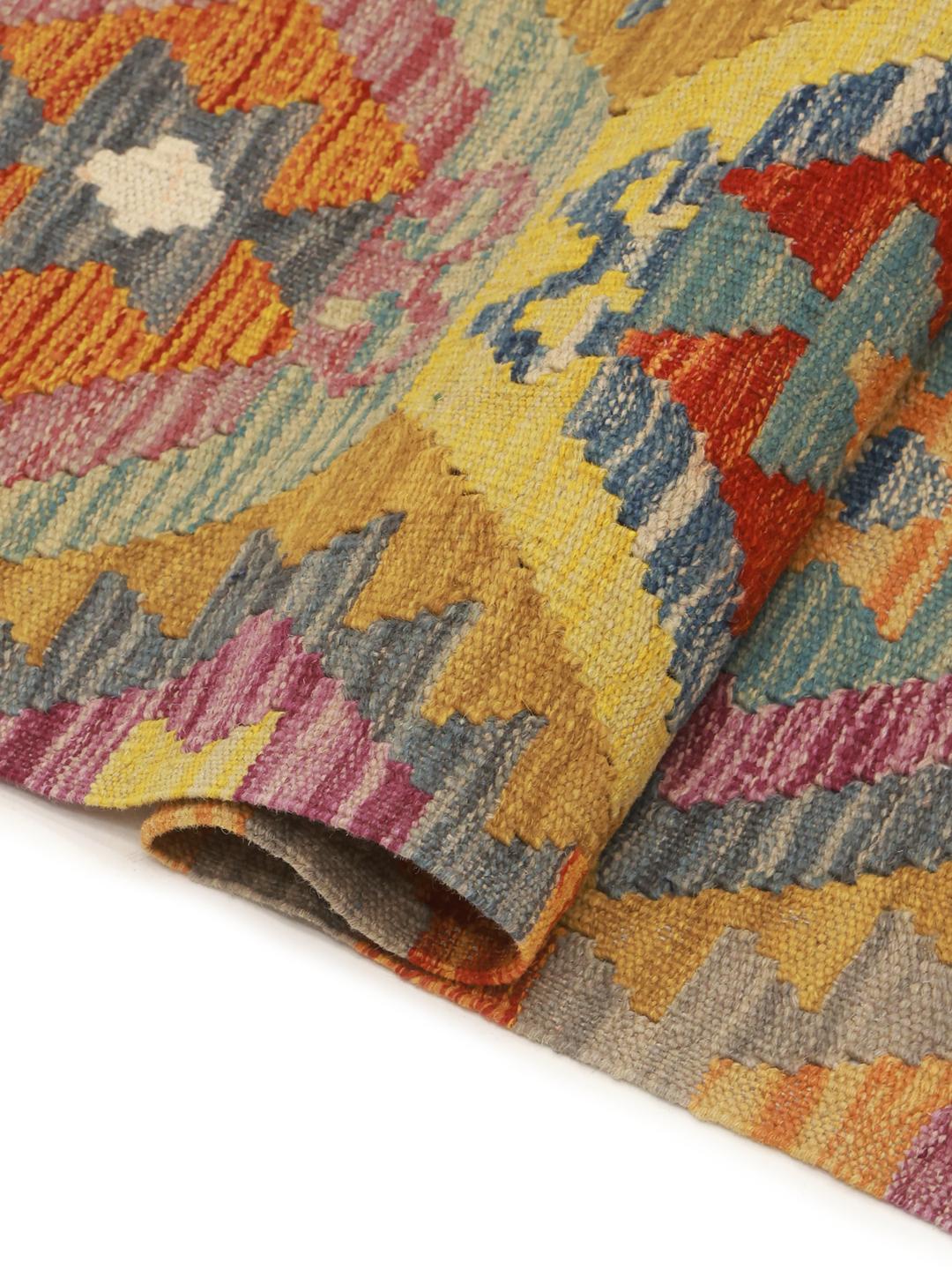
Kelim rugs have a long history rooted in the nomadic cultures of the Middle East and Central Asia. These rugs were traditionally created as functional items for travel, serving as floor coverings, wall hangings, or saddlebags for migrating tribes. The term 'Kelim' refers to the flat-weaving technique, which differs from pile rugs by lacking a knotted surface, resulting in a lighter and more versatile textile.
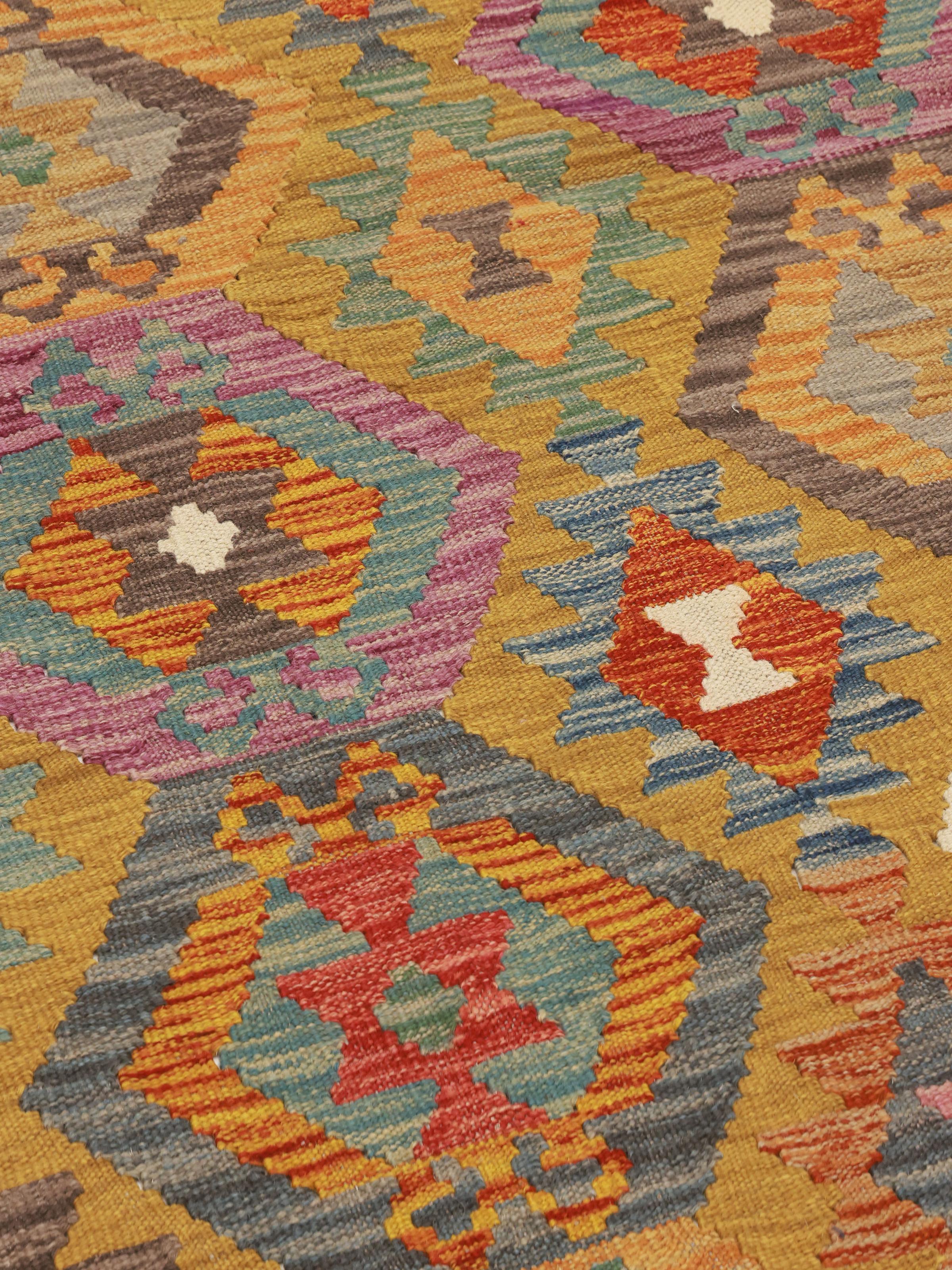
The craft of weaving a Kelim relies on interlocking weft threads to create a smooth, tapestry-like surface. This method allows artisans to produce sharp, clean geometric patterns that are visible on both sides of the rug. Mastering this technique requires significant precision, as the weaver must maintain consistent tension to keep the edges straight and the motifs symmetrical throughout the entire length.
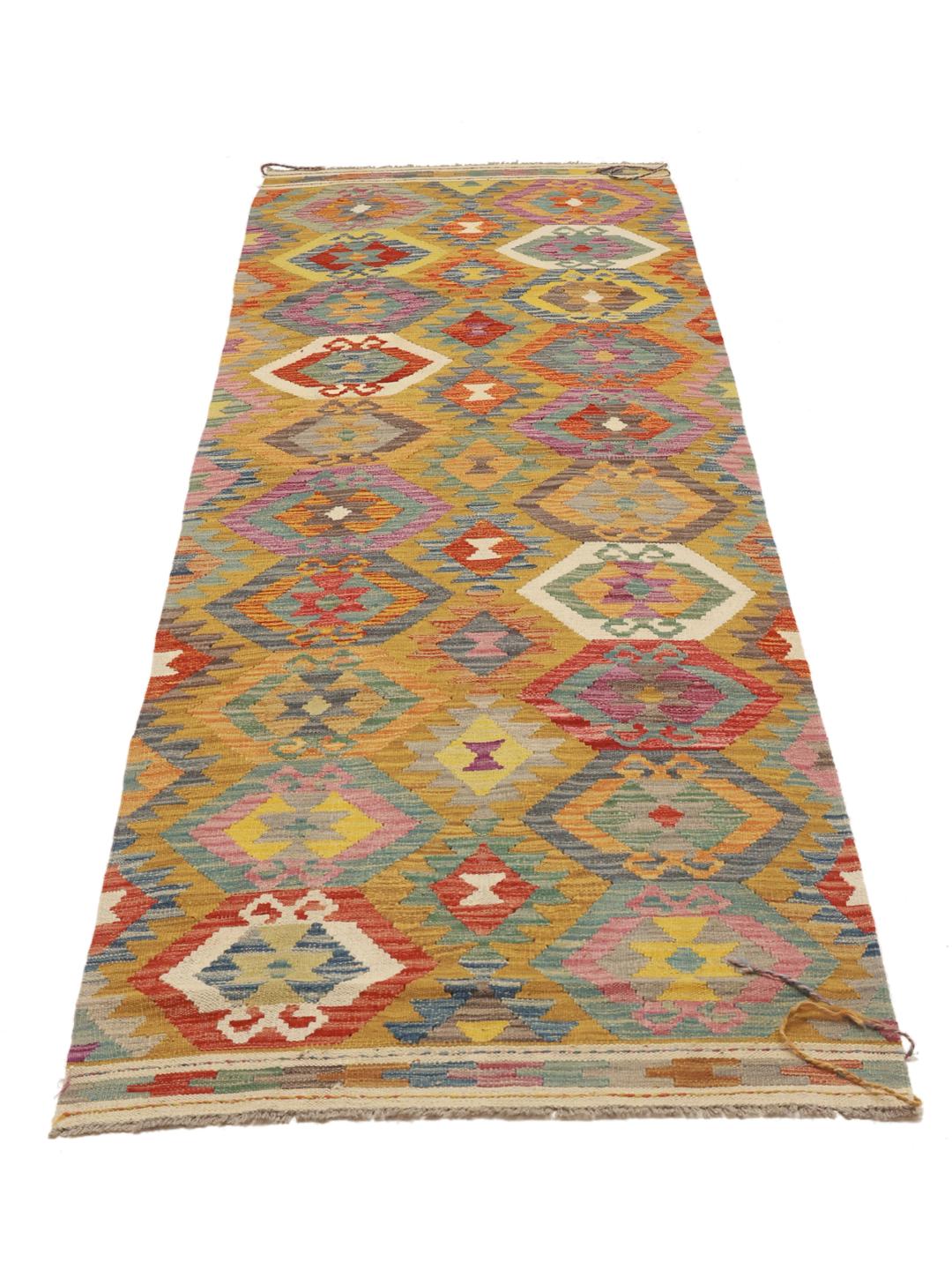
Afghan Kelims are particularly celebrated for their use of bold, earthy tones and repeating geometric motifs. These designs often draw inspiration from the natural surroundings and cultural symbols of the region, featuring octagonal medallions, diamond shapes, and complex borders. The vibrant palette is a signature of the Afghan tradition, which often utilises natural dyes to achieve deep, rich colours that mellow beautifully over time.
Collectors value these pieces for their authenticity and the cultural heritage they represent. By owning a Kelim, you are connecting with an ancient tradition of artistry that prioritises utility and beauty in equal measure. These rugs are highly regarded for their ability to bring a sense of history and human connection into modern homes, serving as a testament to the enduring skill of the artisans who create them.