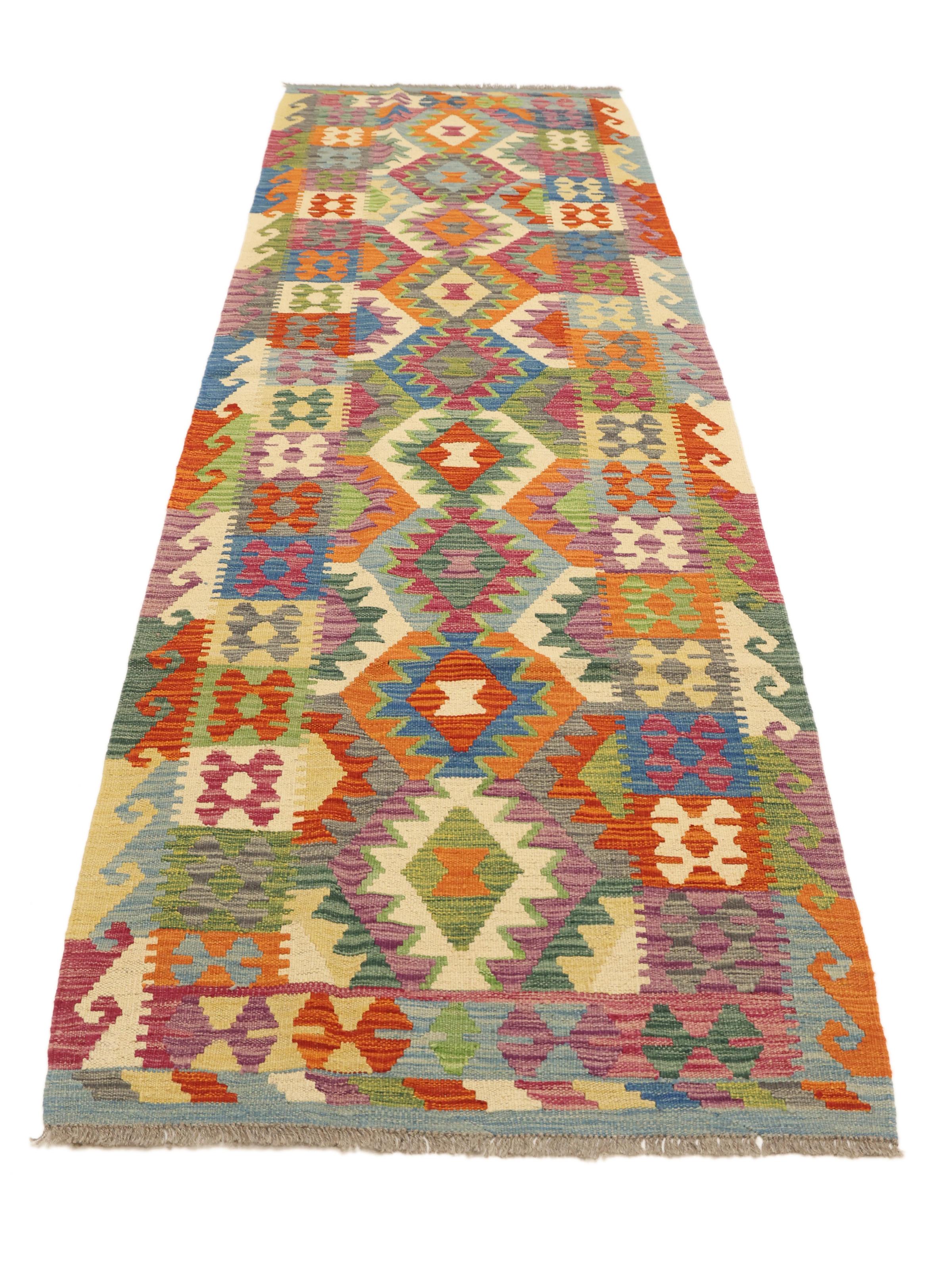
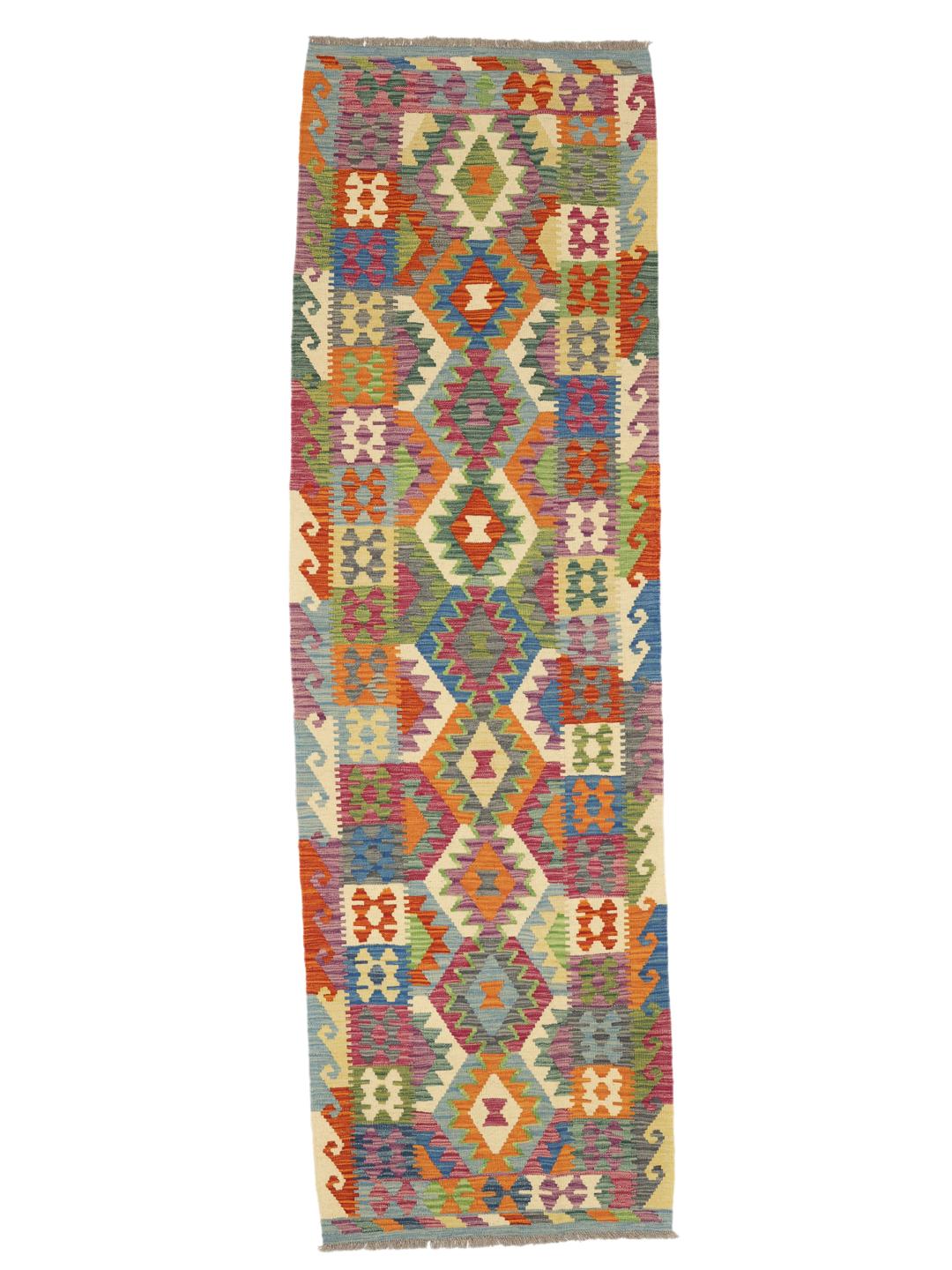
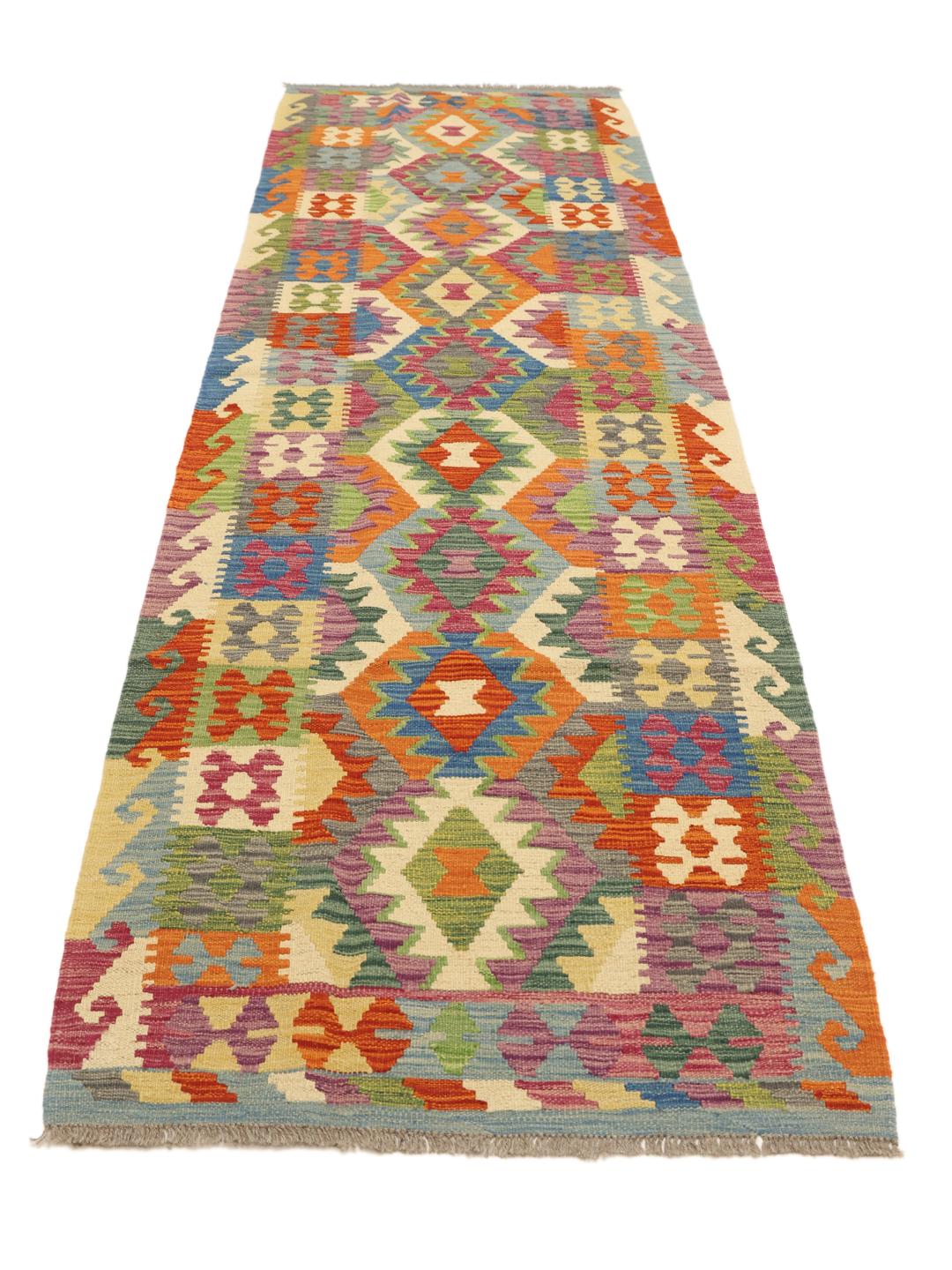
Kelim rugs have a storied history rooted in the nomadic cultures of the Middle East and Central Asia. For centuries, these flat-woven textiles were crafted by tribal groups not just as floor coverings, but as essential, portable items that served as bags, blankets, and wall hangings. The Afghan tradition, in particular, is renowned for its bold use of colour and robust geometric language.
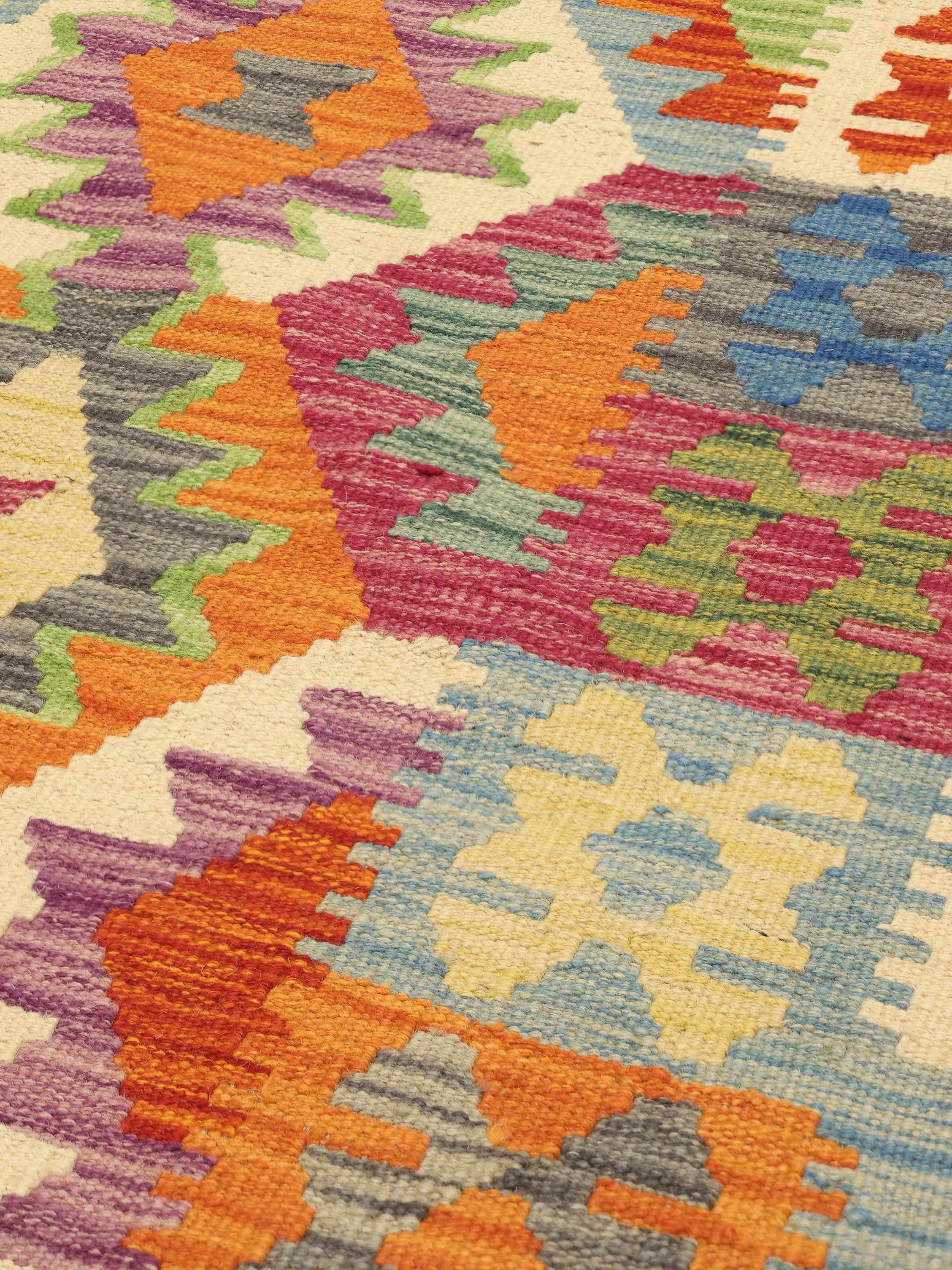
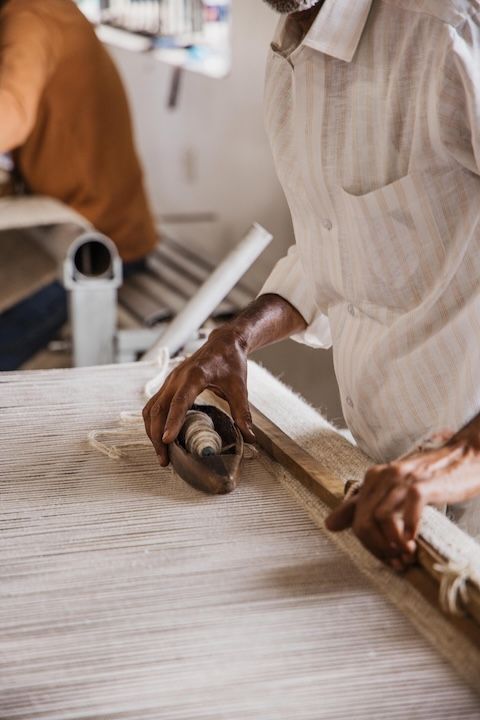
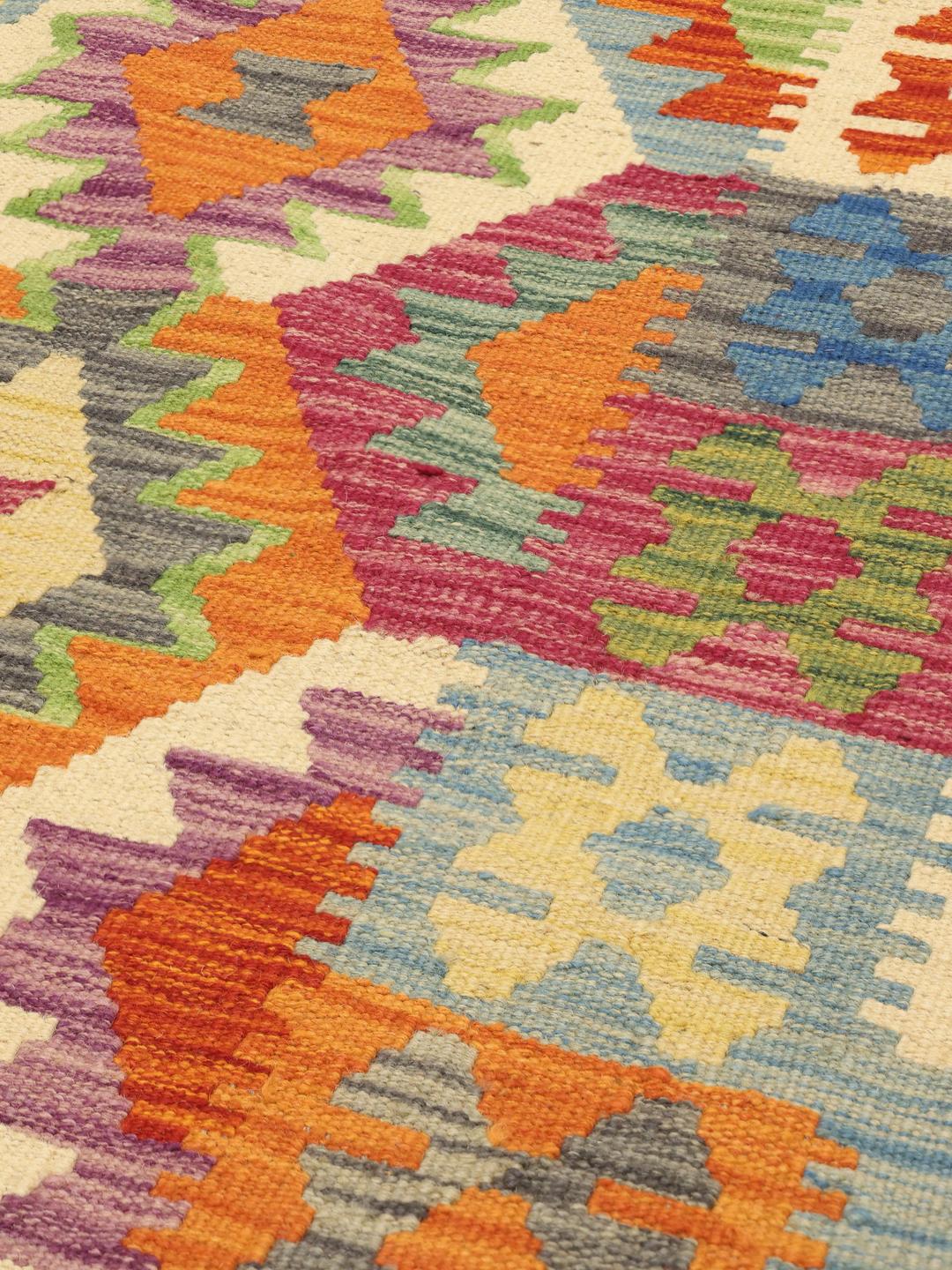
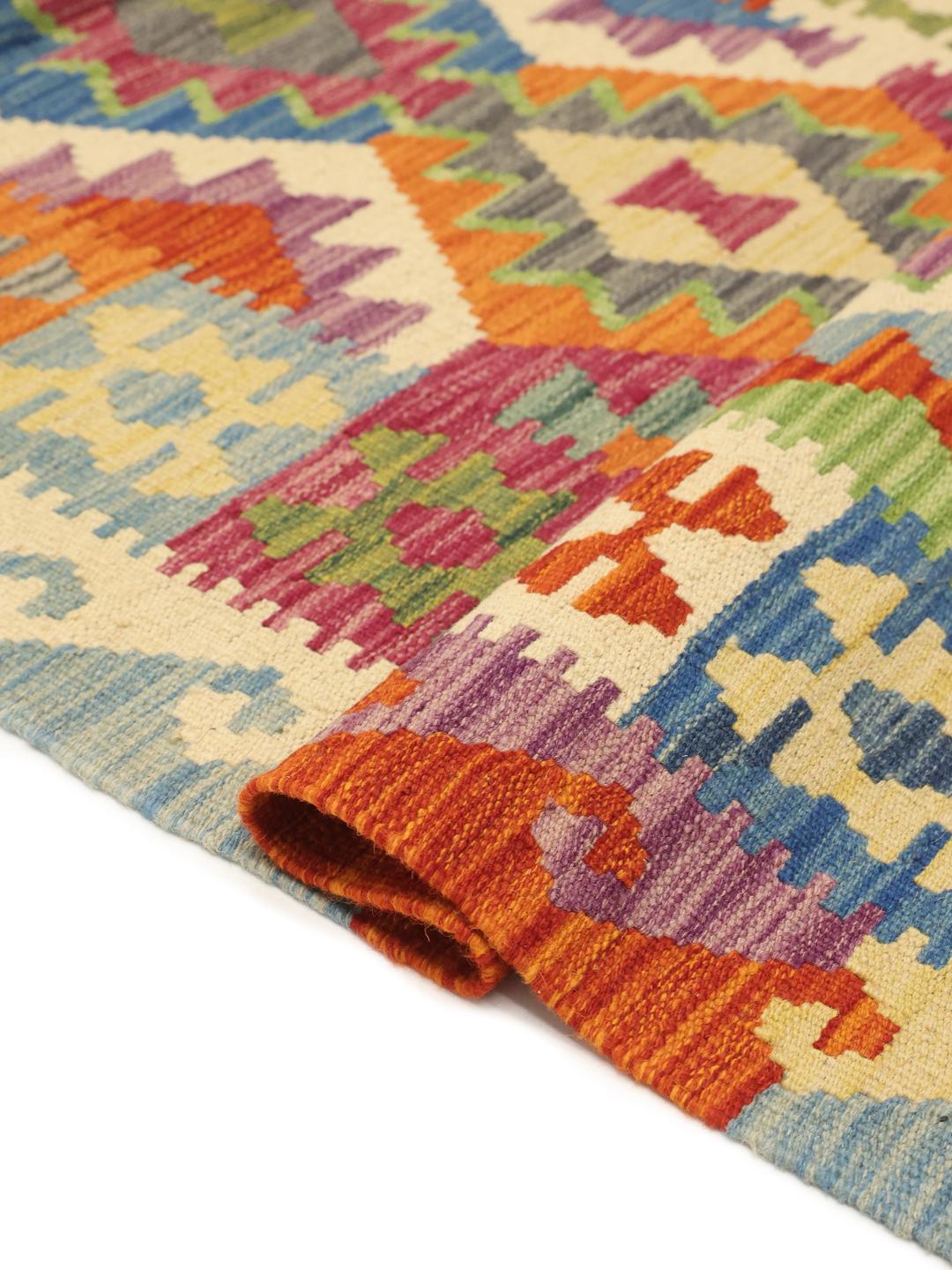
The term 'Kelim' refers to the specific flat-weaving technique where the weft threads are pulled tightly to cover the warp threads completely, creating a smooth, durable surface. This method requires a deep understanding of tension and colour placement, as the pattern is built directly into the structure of the rug rather than being knotted on top of a base.
Signature motifs in these rugs often include diamonds, triangles, and stylised floral or animal elements, which carry symbolic meanings of protection and prosperity within their originating communities. The vibrant colours are traditionally sourced from natural dyes, giving them a rich depth that evolves beautifully as the rug ages.
Collecting these rugs is an investment in cultural heritage and human skill. Each piece acts as a record of the weaver's environment and creative spirit, making them highly valued by those who appreciate authentic, artisan-made objects that bring a sense of history into a contemporary home.