Kelim rugs from Afghanistan are rooted in the ancient traditions of nomadic and semi-nomadic tribes who have traversed the rugged landscapes of Central Asia for millennia. These textiles were historically woven as versatile, portable coverings for tents, floors, and storage, designed to be both functional and expressive of the weaver's tribal identity. Over time, these utilitarian objects have evolved into highly sought-after decorative pieces, prized for their authentic connection to a nomadic way of life.
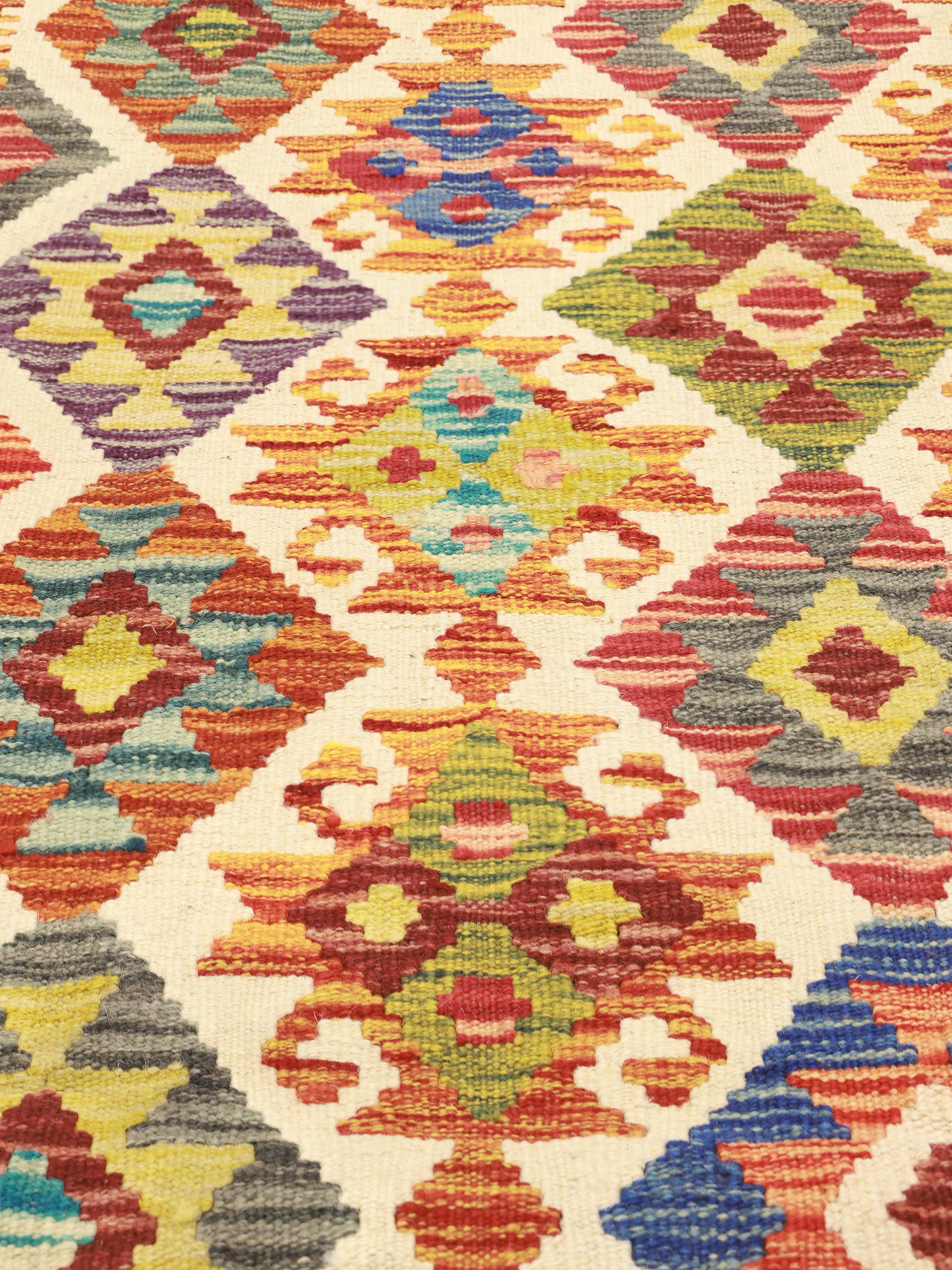
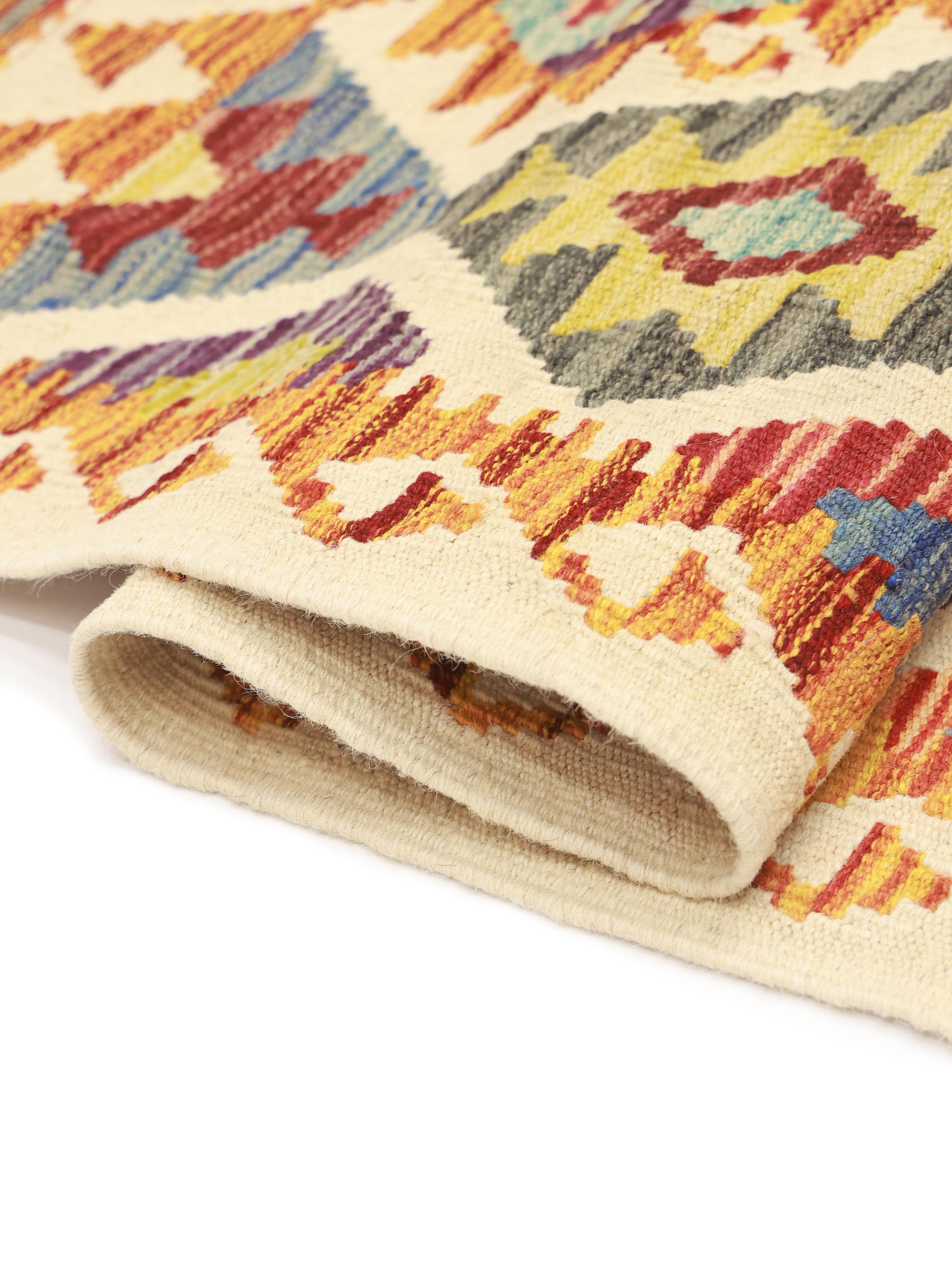
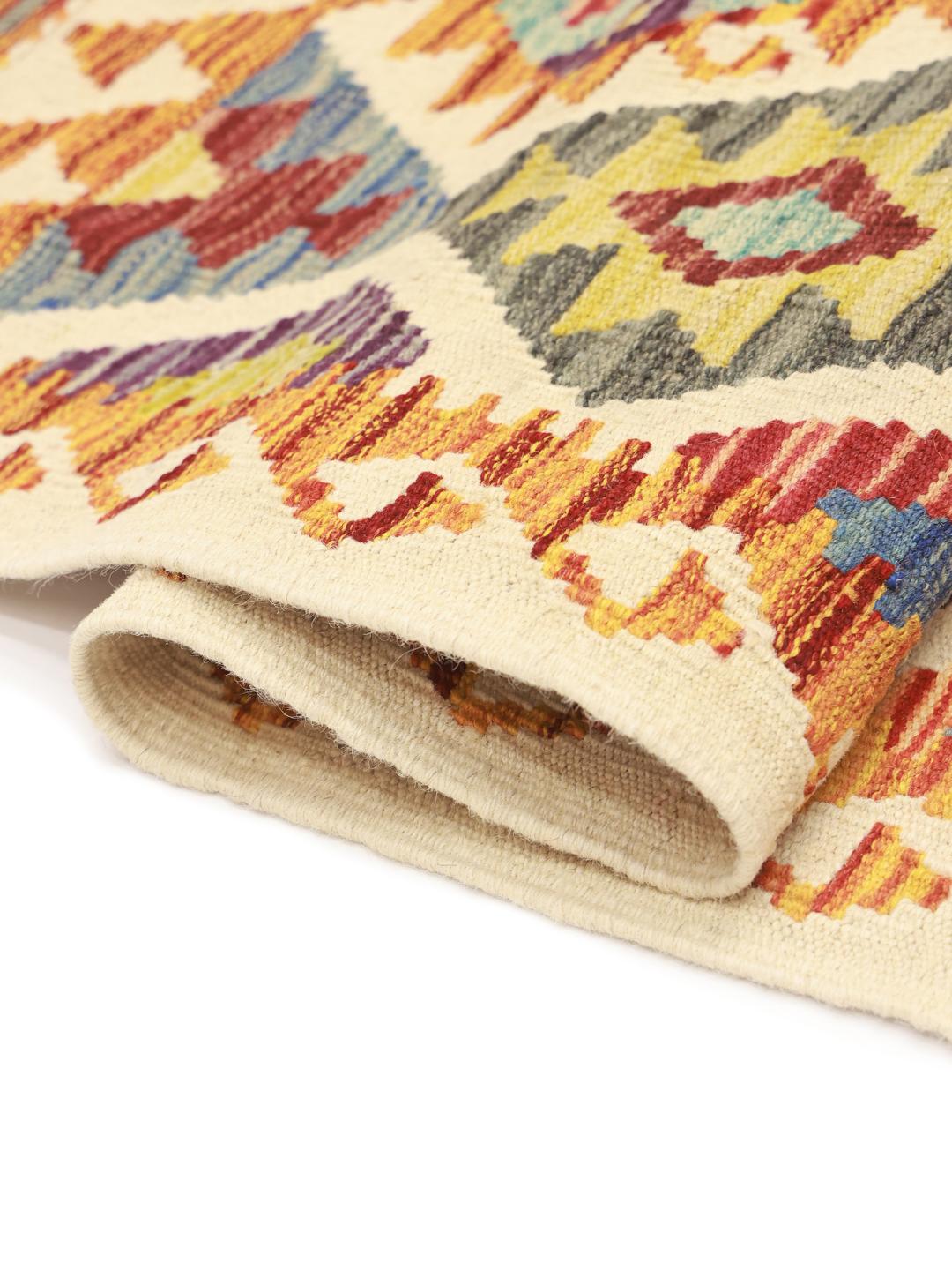
The term 'Kelim' refers to a specific flat-weave technique where the weft threads are passed over and under the warp threads to create the design. Because there is no pile, the pattern is mirrored on both sides, and the resulting textile is remarkably strong and durable. This technique is a hallmark of Middle Eastern textile history, demanding a high level of skill to maintain consistent tension and pattern alignment throughout the entire weaving process.
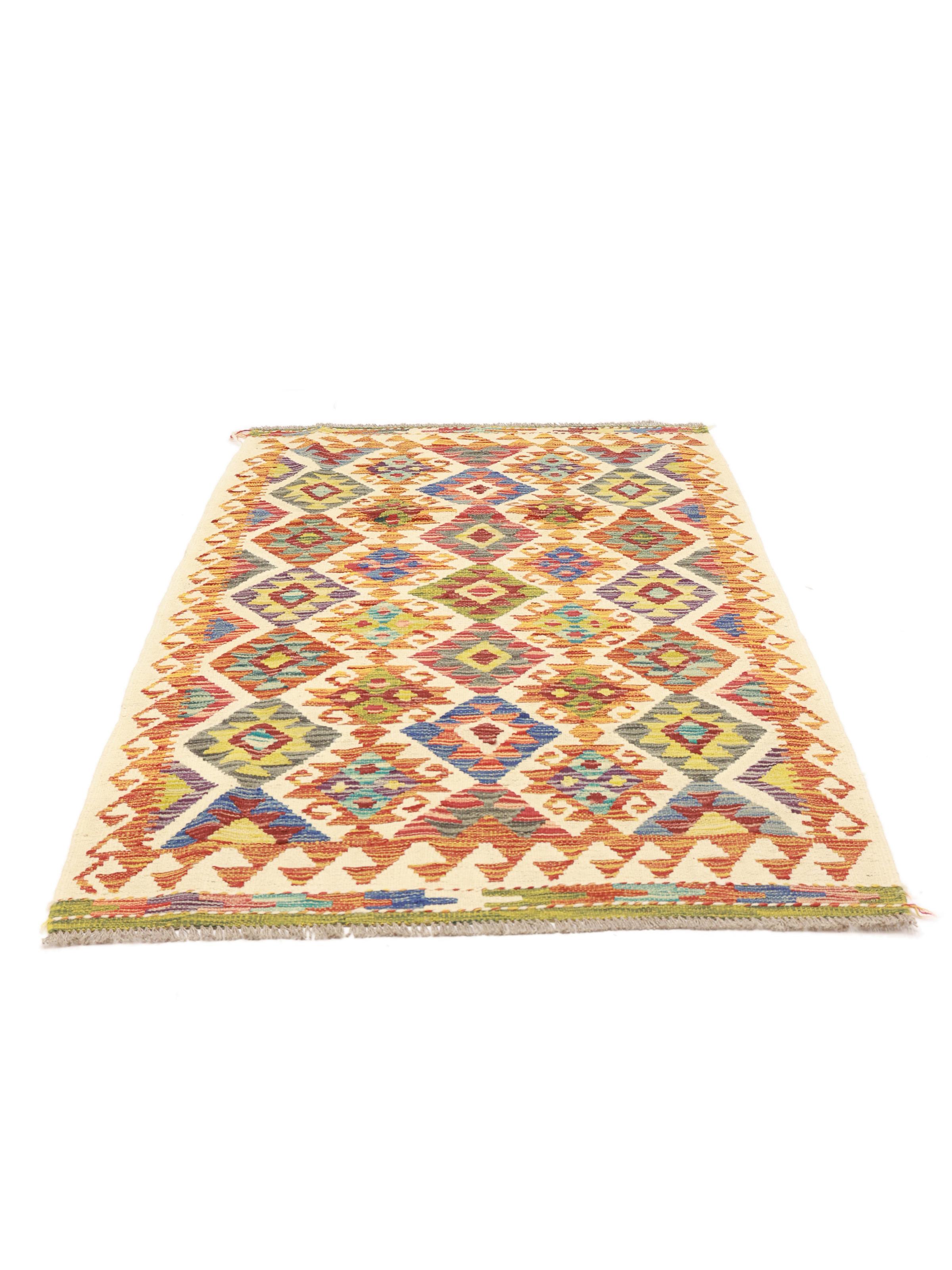
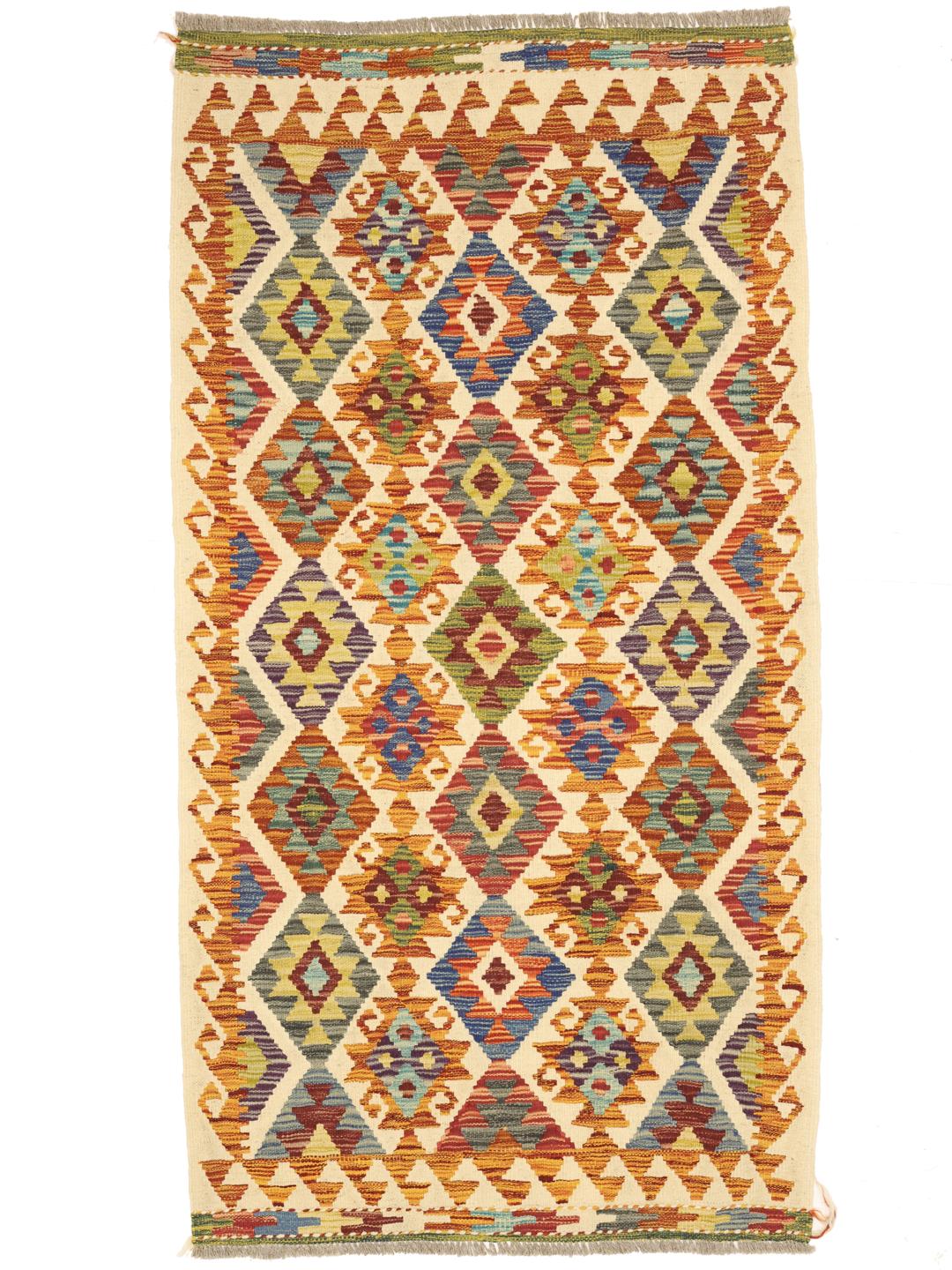
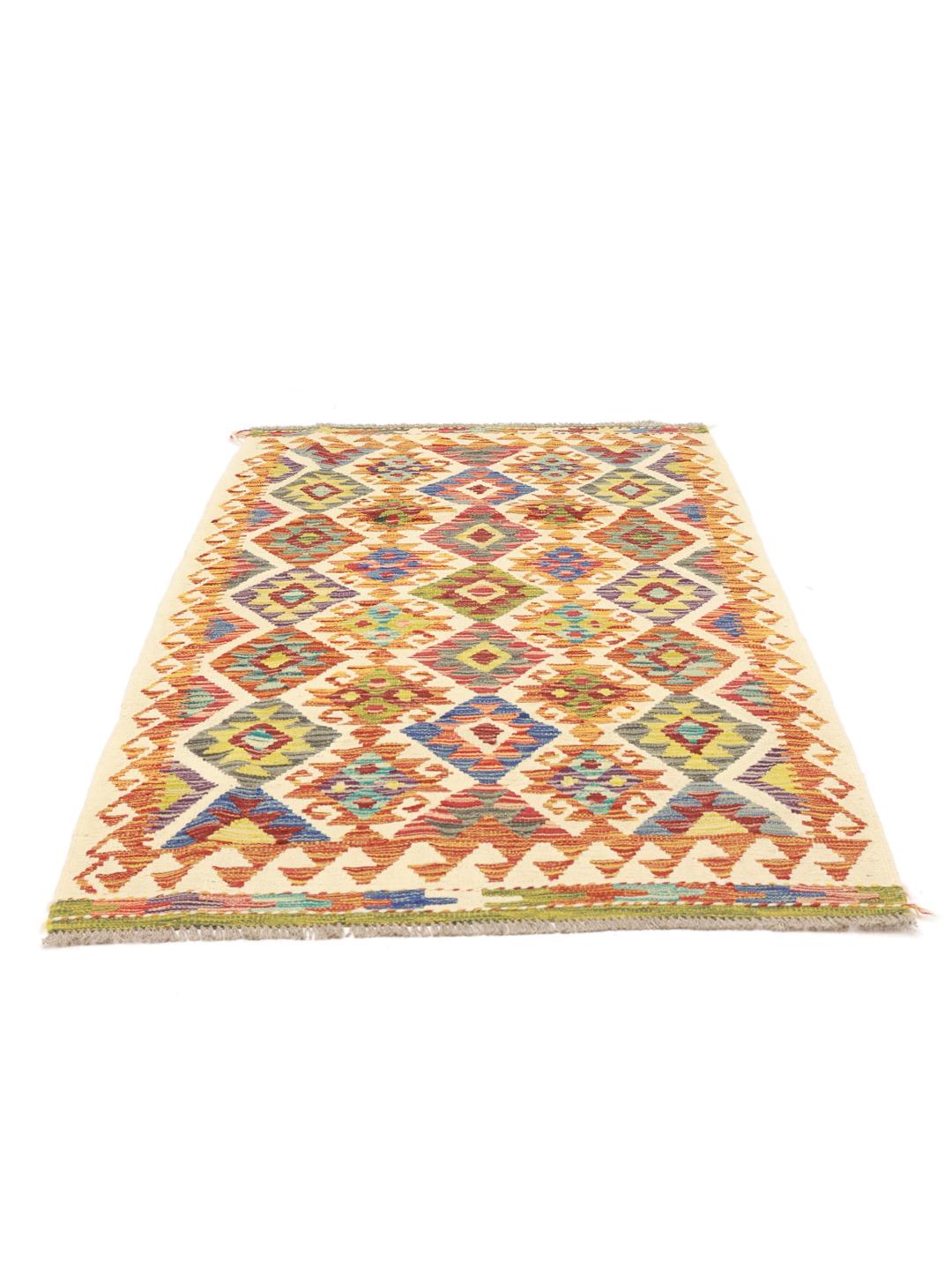
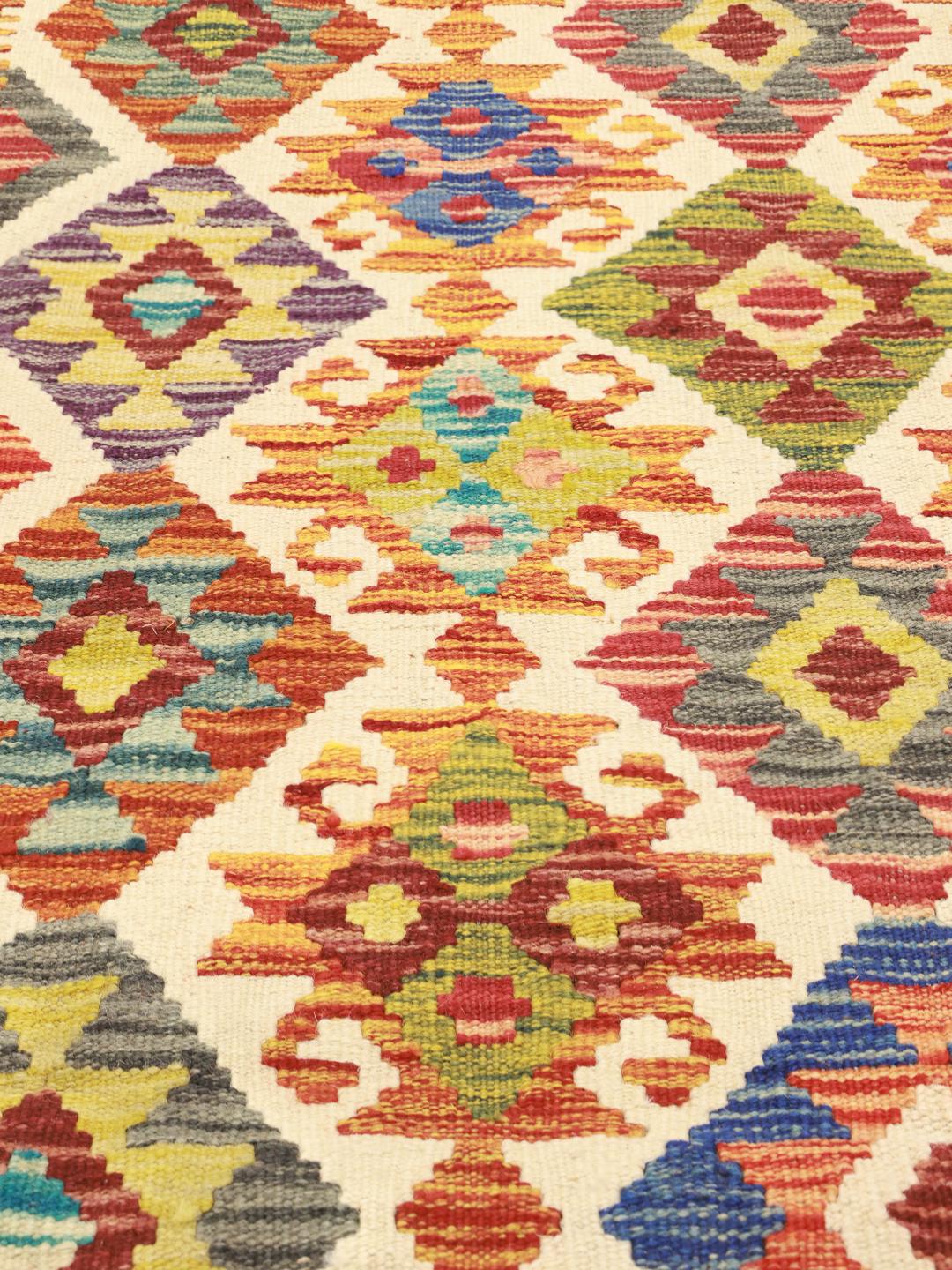
Signature design elements in Afghan Kelims often include bold geometric shapes, such as the repeated diamonds and tribal medallions seen here. These motifs are frequently influenced by the natural environment and local folklore, with colour palettes traditionally sourced from local botanical and mineral dyes. The vibrant, multi-coloured field in this particular rug is a classic expression of this tradition, where contrasting hues are used to create a sense of energy and movement across the surface.
Today, these rugs are collected not only for their aesthetic beauty but for the cultural legacy they represent. Owning an Afghan Kelim is an act of preserving a heritage of craft that remains largely unchanged by modern technology. Collectors value these pieces for their individuality, as no two rugs are ever exactly alike, making each one a unique testament to the skill, patience, and creative vision of the weaver who brought it to life.