Kilim weaving has a long and storied history across Central Asia and Afghanistan, where nomadic and semi-nomadic tribes originally created these flatwoven textiles for practical use. They served as floor coverings, tent hangings, and storage bags, designed to withstand the demands of a mobile lifestyle. Over centuries, these utilitarian objects evolved into highly expressive art forms, with each region developing its own distinct design language.
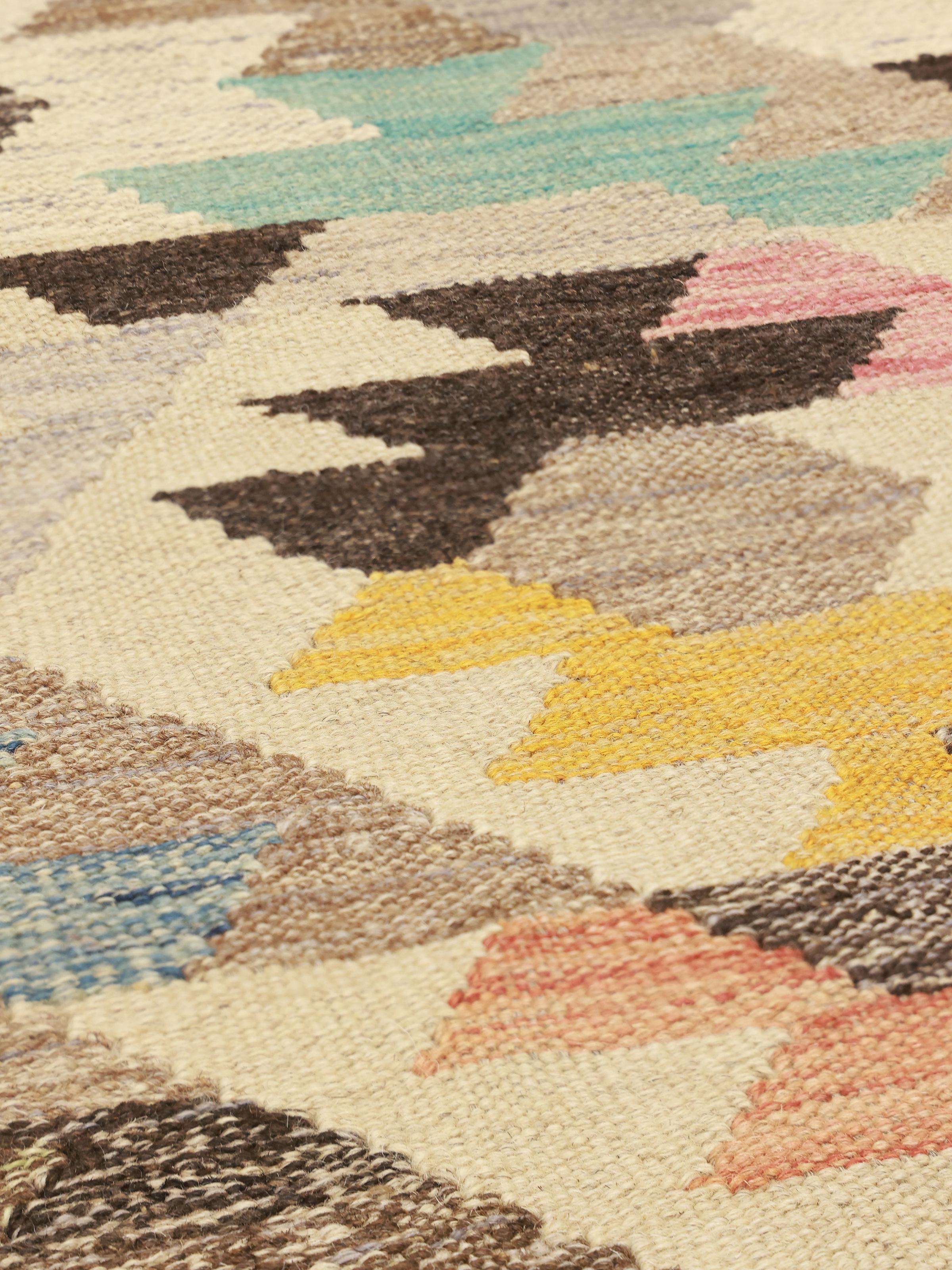
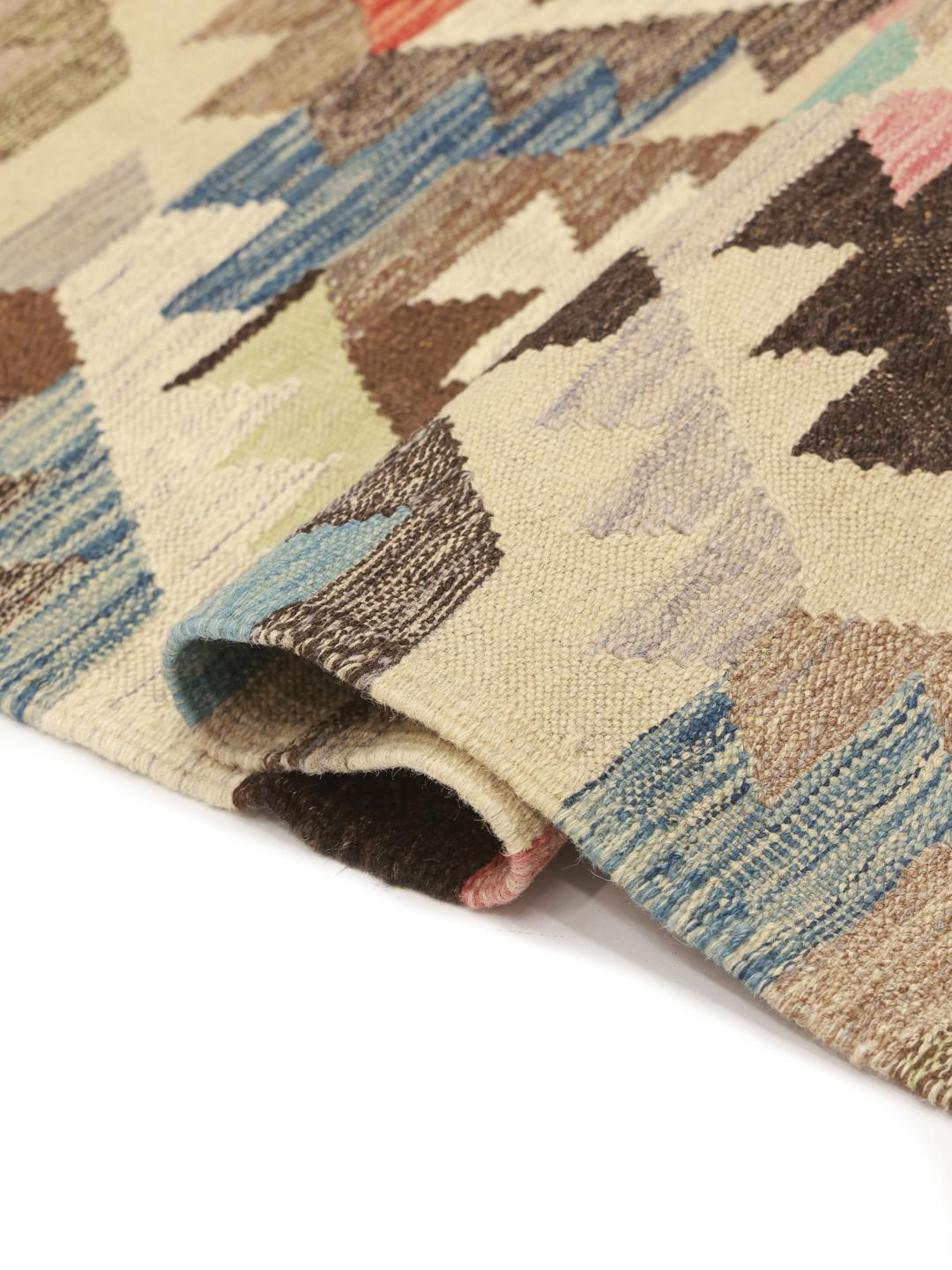
The term Kilim refers to a specific flatweaving technique where the horizontal weft threads are tightly pulled through the vertical warp threads, leaving no pile. This construction results in a lightweight, flexible, and highly durable rug that is reversible. The flatweave method requires immense skill to maintain even tension across the entire surface, ensuring the geometric patterns remain sharp and aligned.
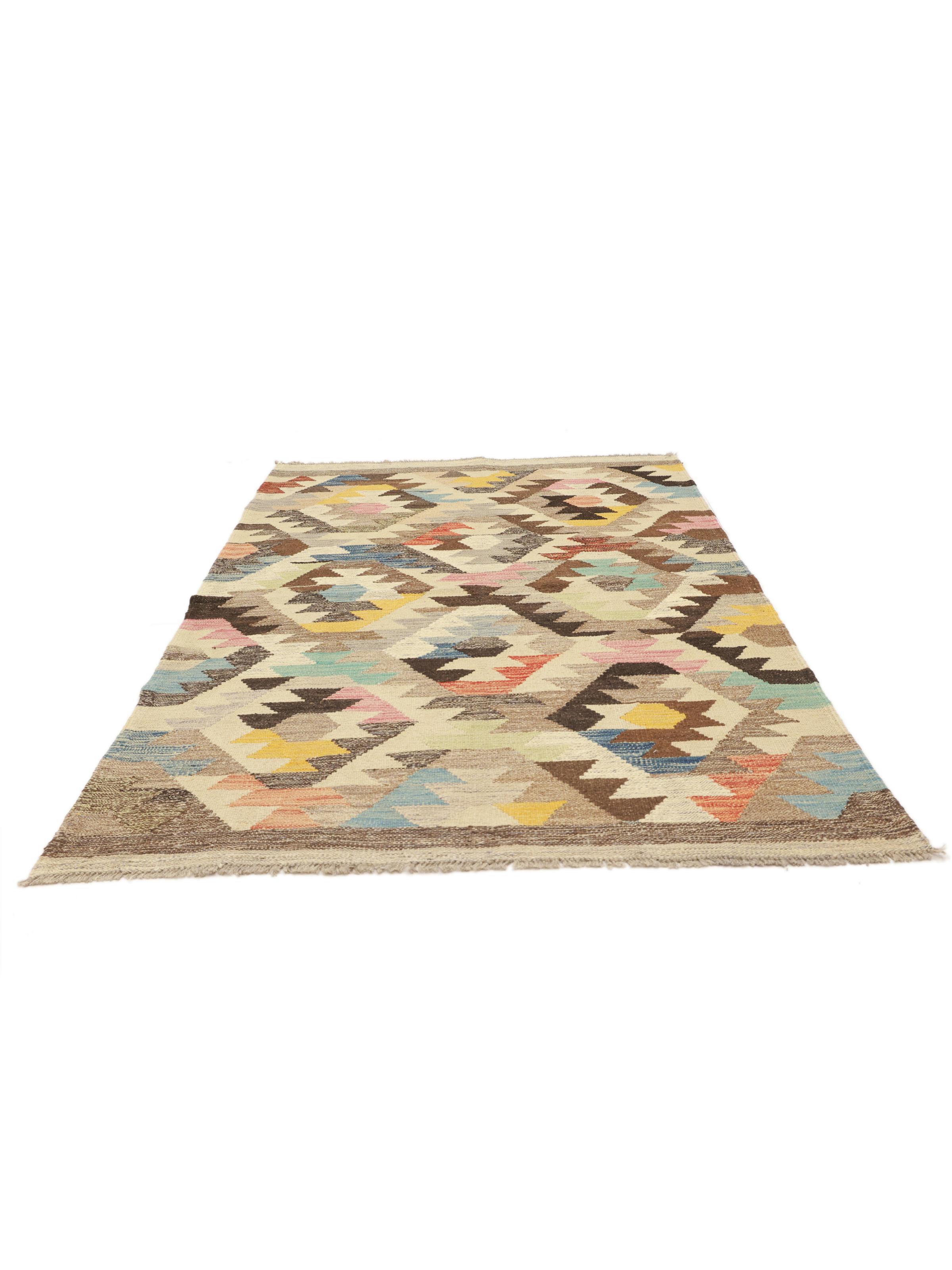
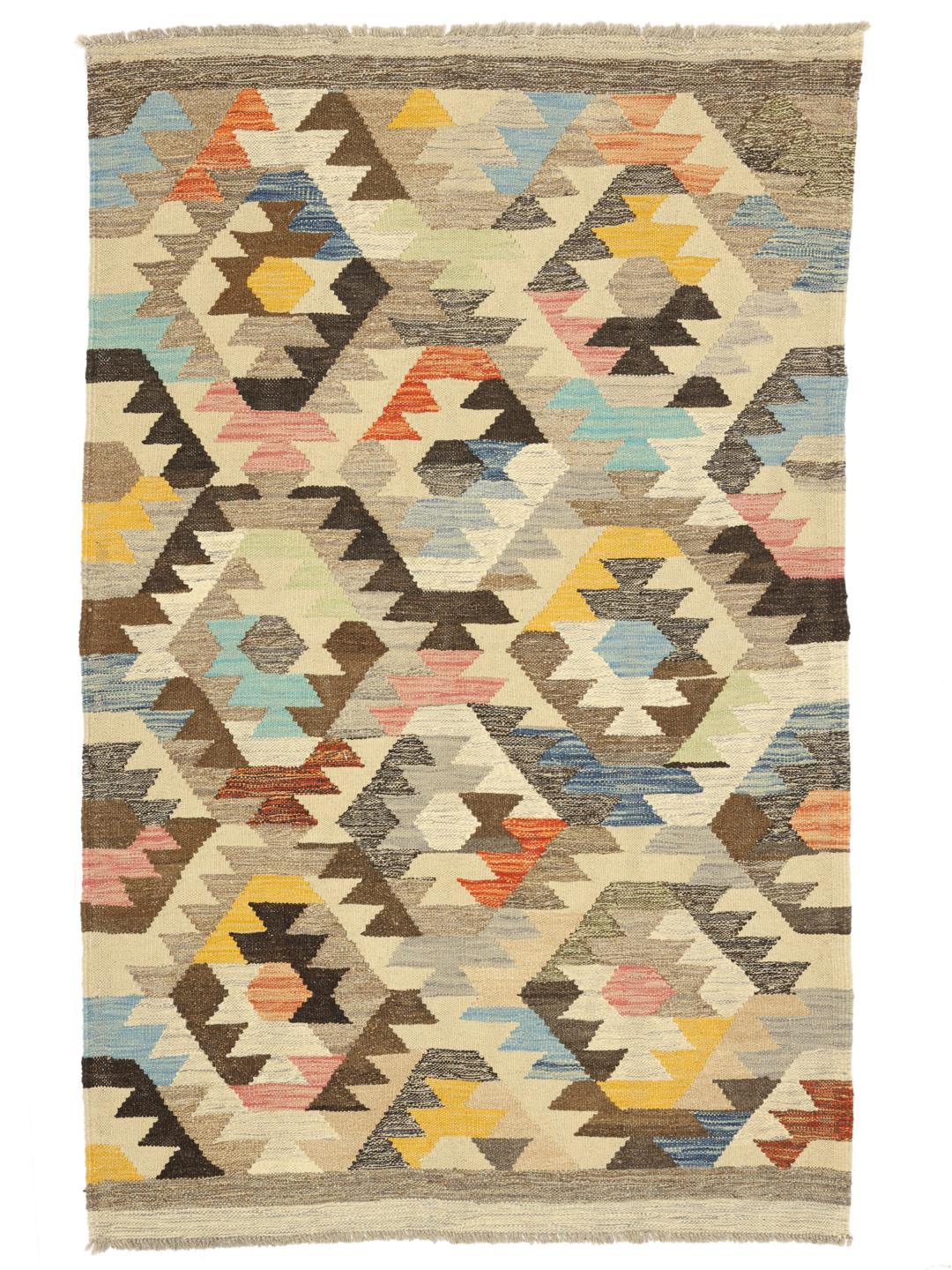
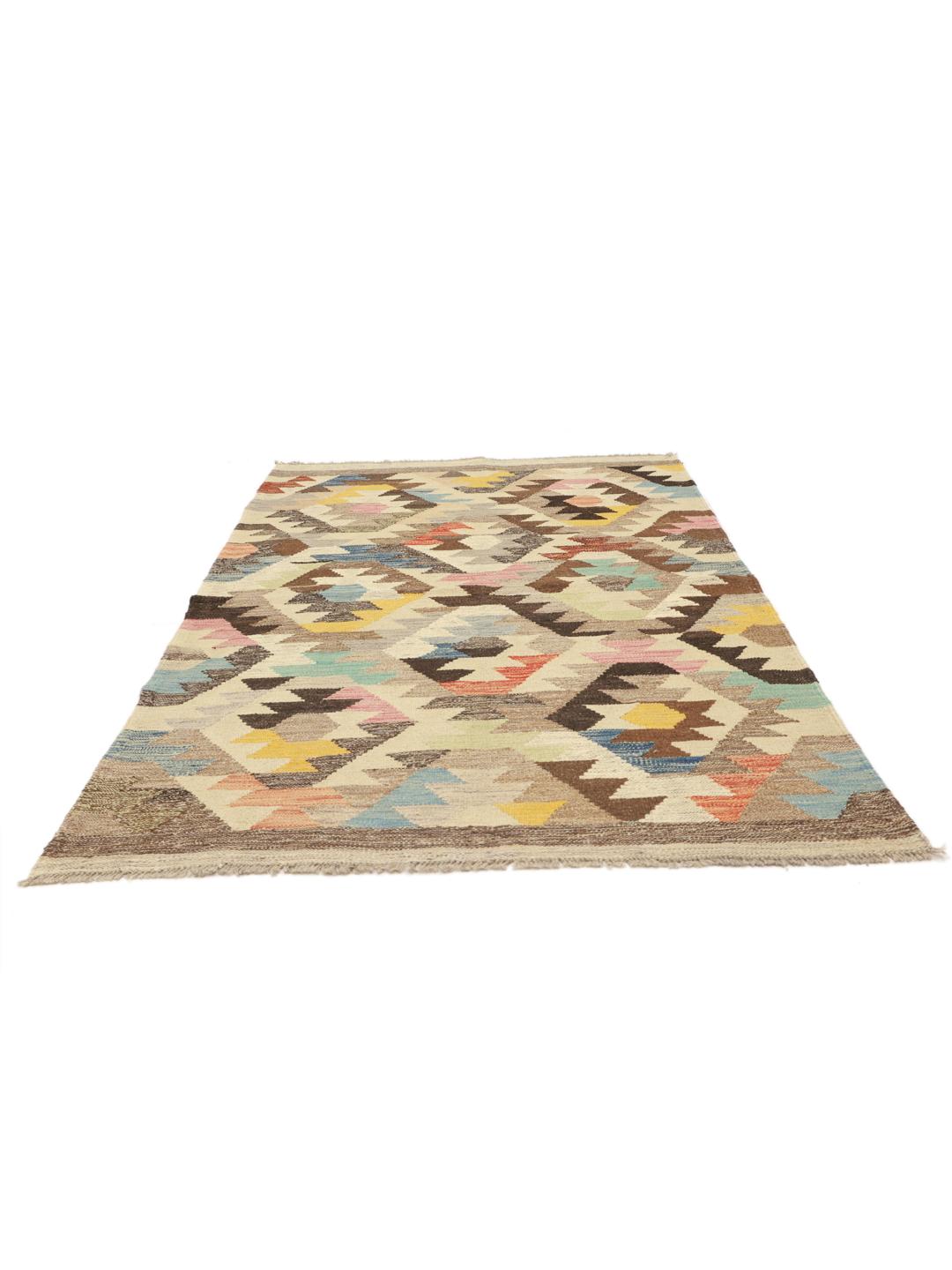
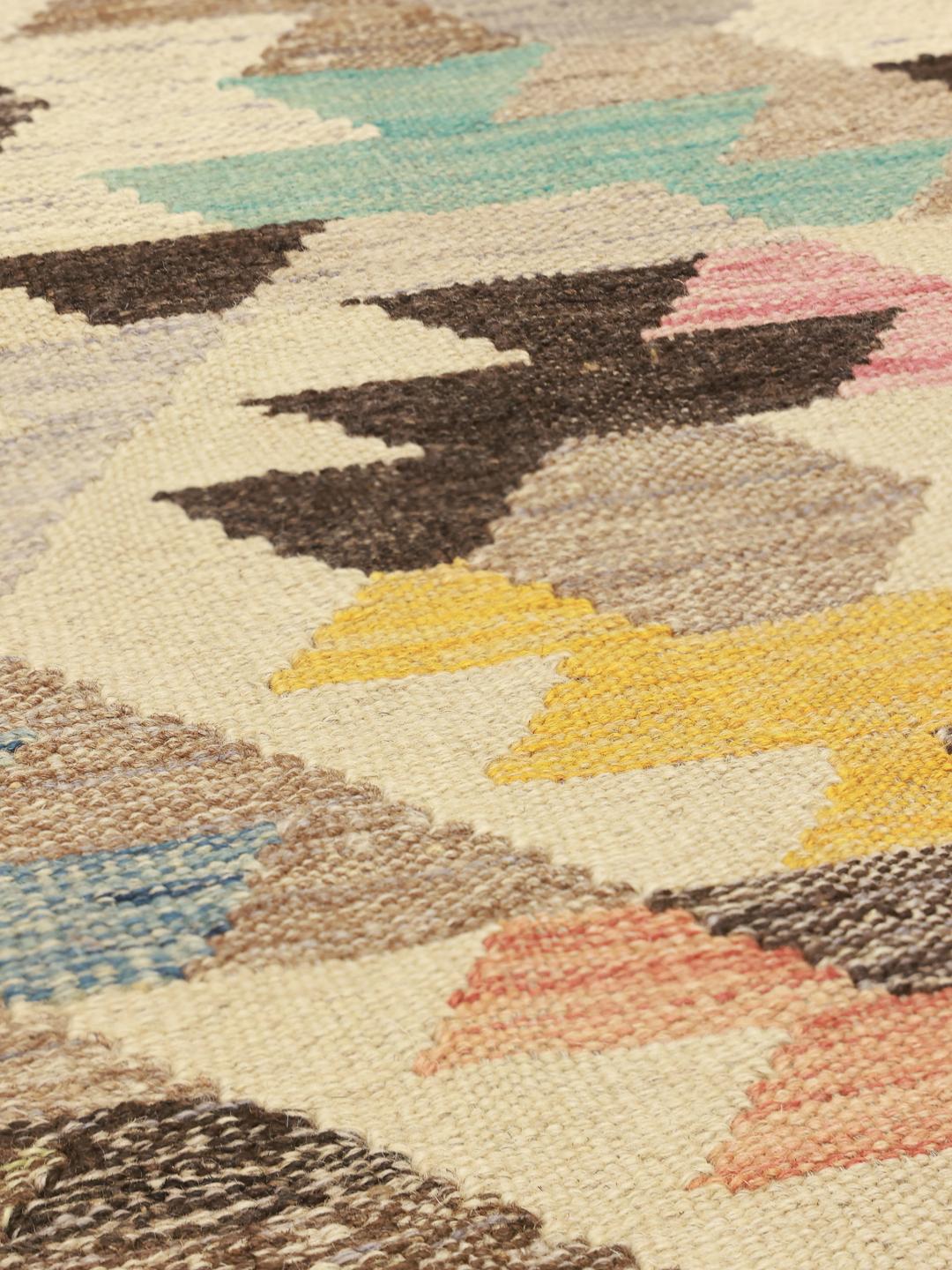
The Ariana design tradition is celebrated for its vibrant geometric patterns, often featuring stepped diamonds, medallions, and decorative borders. Unlike more formal city rugs, these designs are often woven from memory, allowing the weaver to introduce subtle variations in the pattern and color. This particular piece showcases a beautiful array of warm tones and cool accents, creating a balanced visual rhythm that is characteristic of the style.
Today, Afghan Kilims are highly valued by collectors and homeowners alike for their authentic character and cultural depth. They represent a direct link to ancient weaving traditions that have been passed down through generations. Acquiring an Ariana Kilim is not just about finding a floor covering, but about welcoming a piece of living history and human creativity into your home.