Kilim rugs have roots that stretch back centuries across the Middle East and Central Asia. Originally created by nomadic and semi-nomadic tribes, these flat-woven rugs were essential household items, used as floor coverings, wall hangings, and storage bags. The Ariana style represents a modern evolution of these ancient traditions, specifically crafted in Afghanistan to honour historical weaving techniques while meeting contemporary design needs.
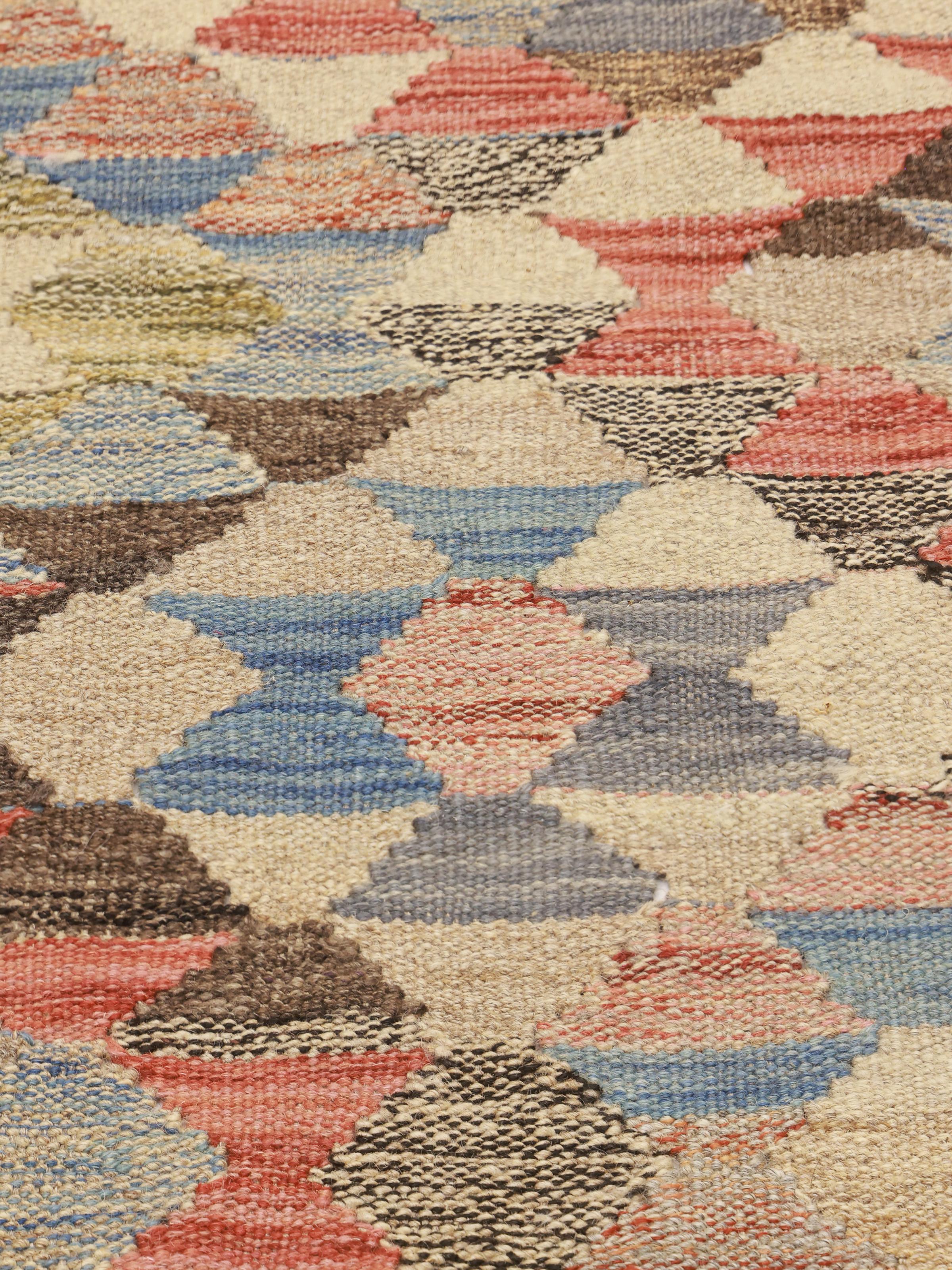
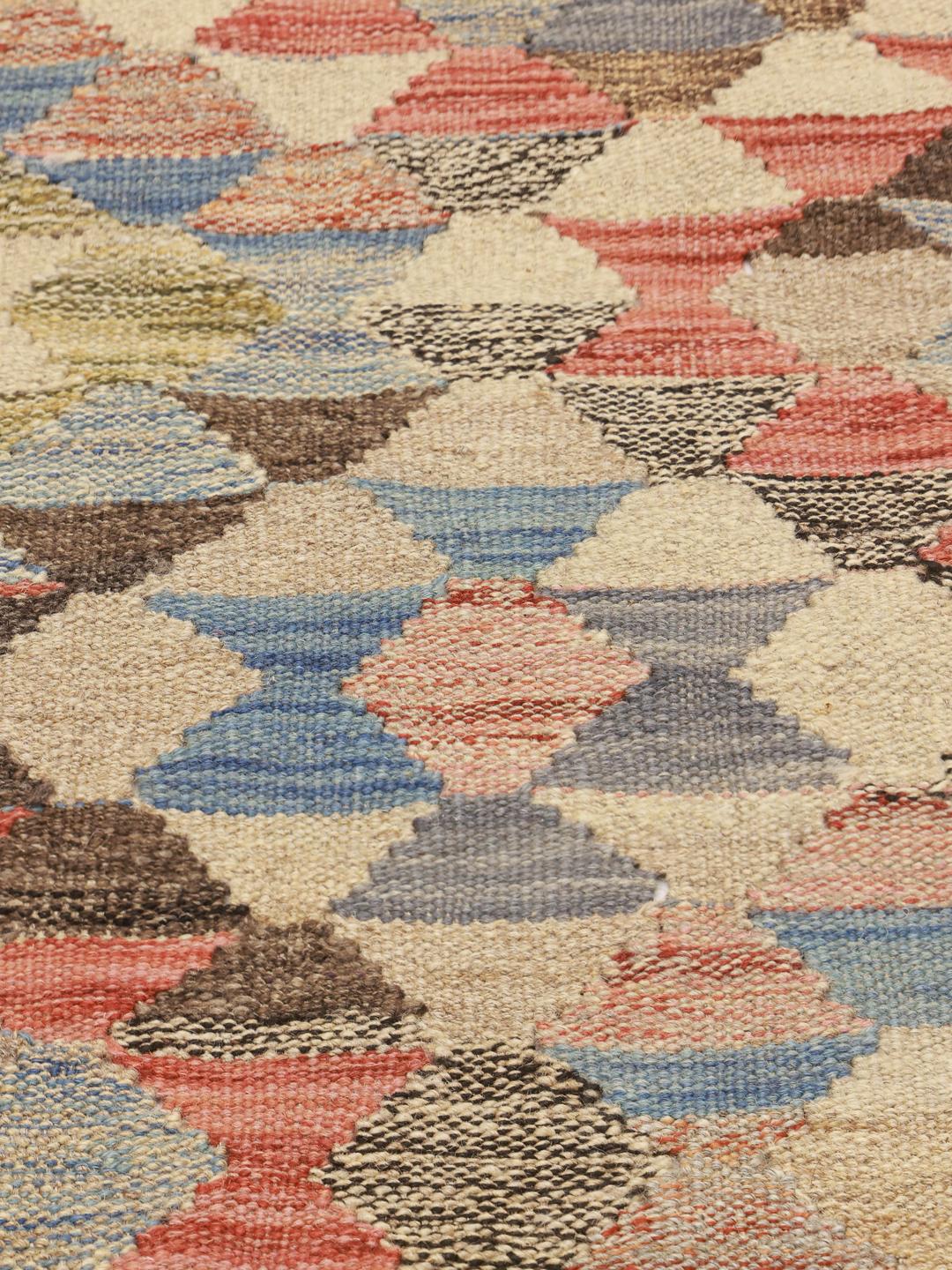
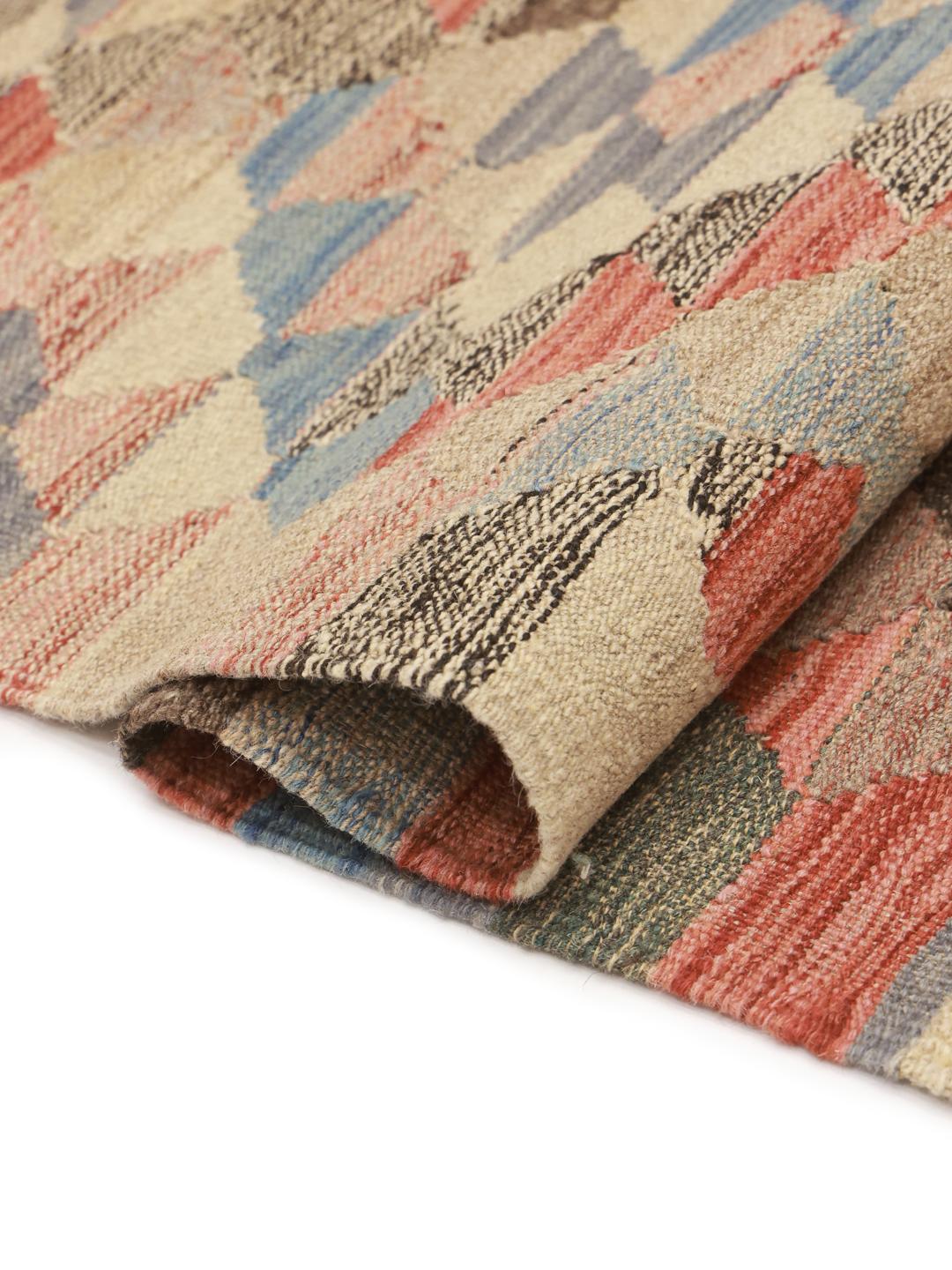
The term 'kilim' refers to a specific technique where there is no pile. Instead, the coloured weft threads are woven tightly through the warp to create a smooth, tapestry-like surface. This method is highly valued for its versatility and the clarity it brings to geometric designs. Because the pattern is created through the weave itself rather than being knotted on, it produces a lightweight yet incredibly strong fabric.
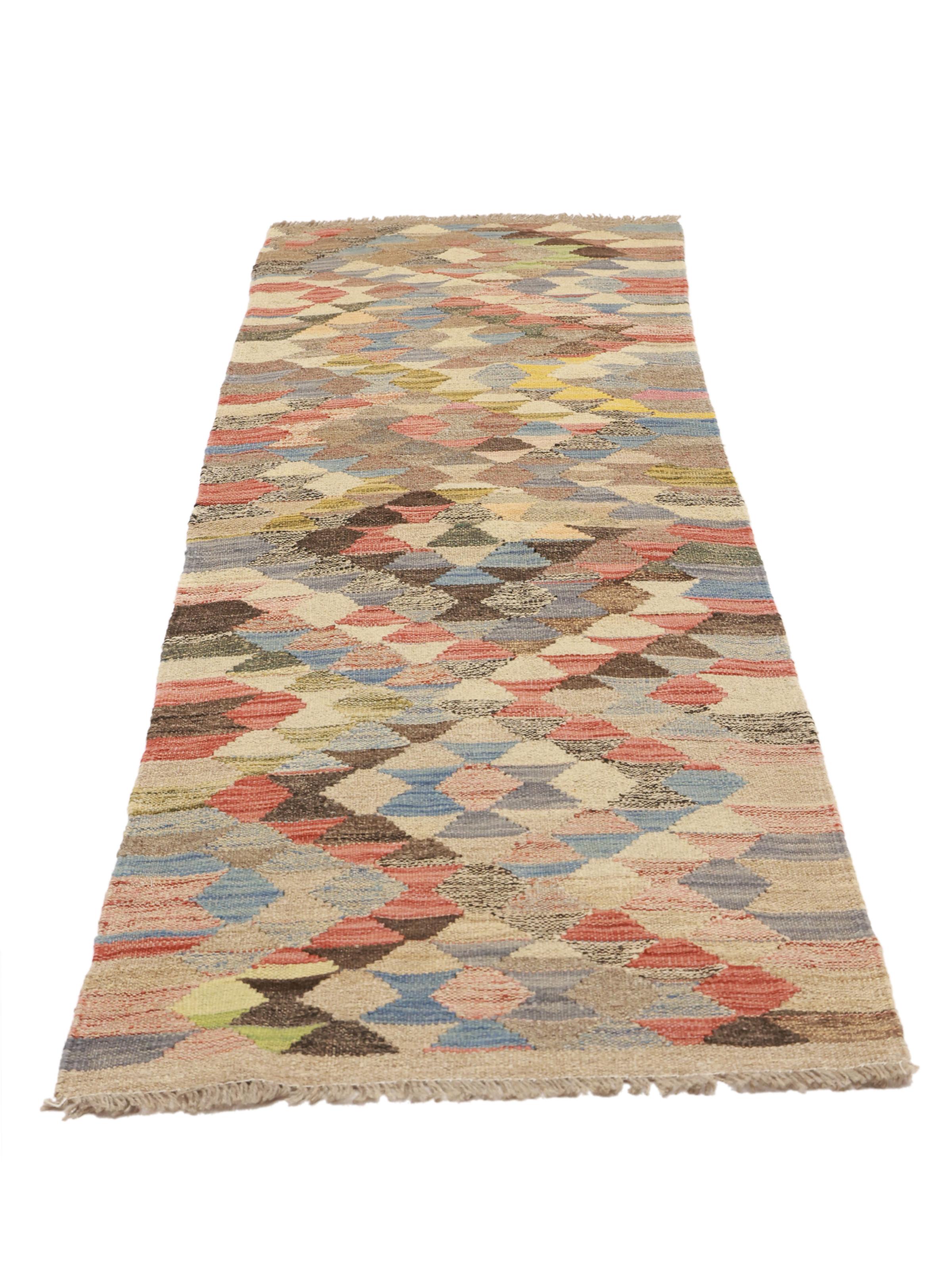
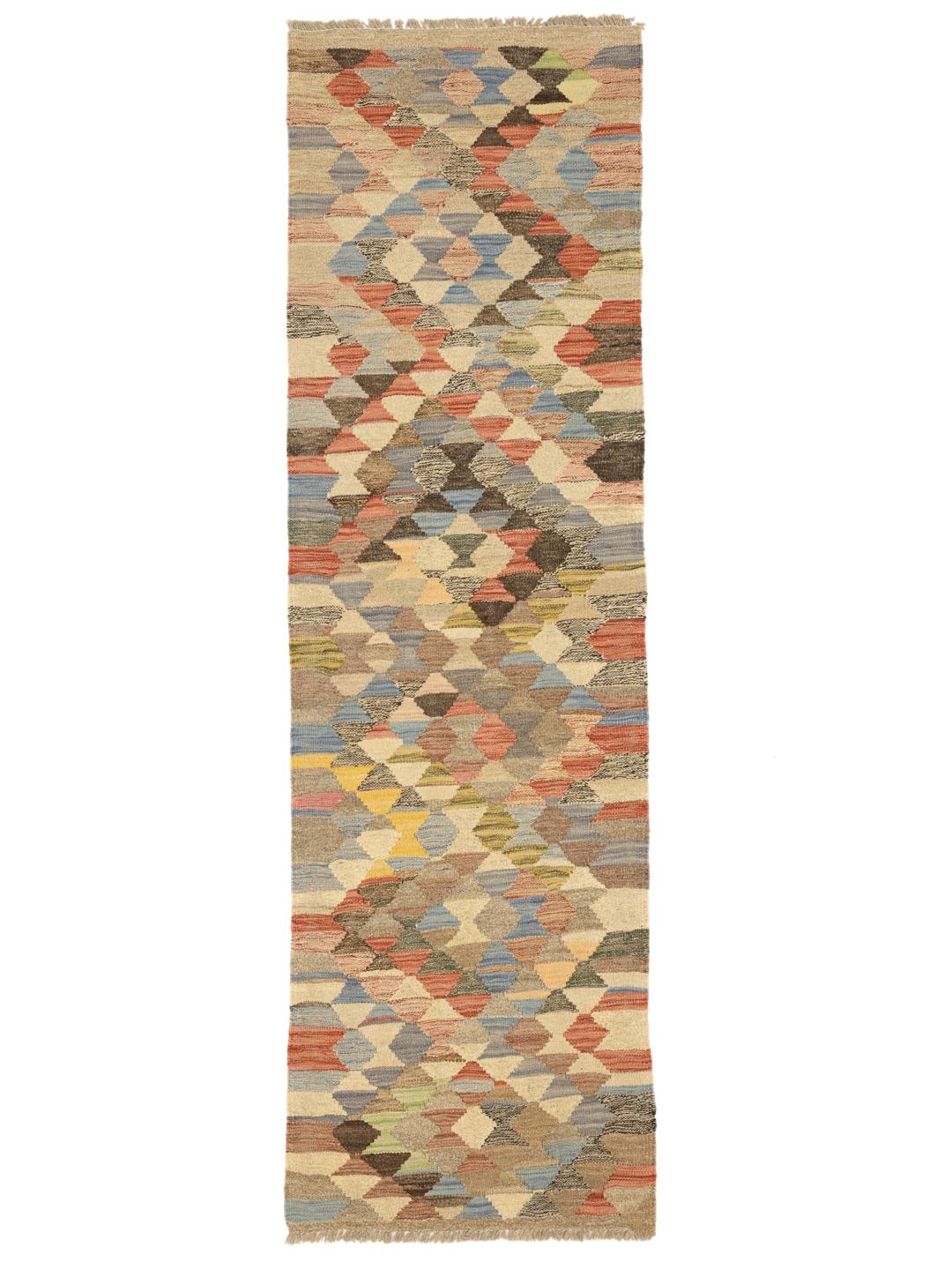
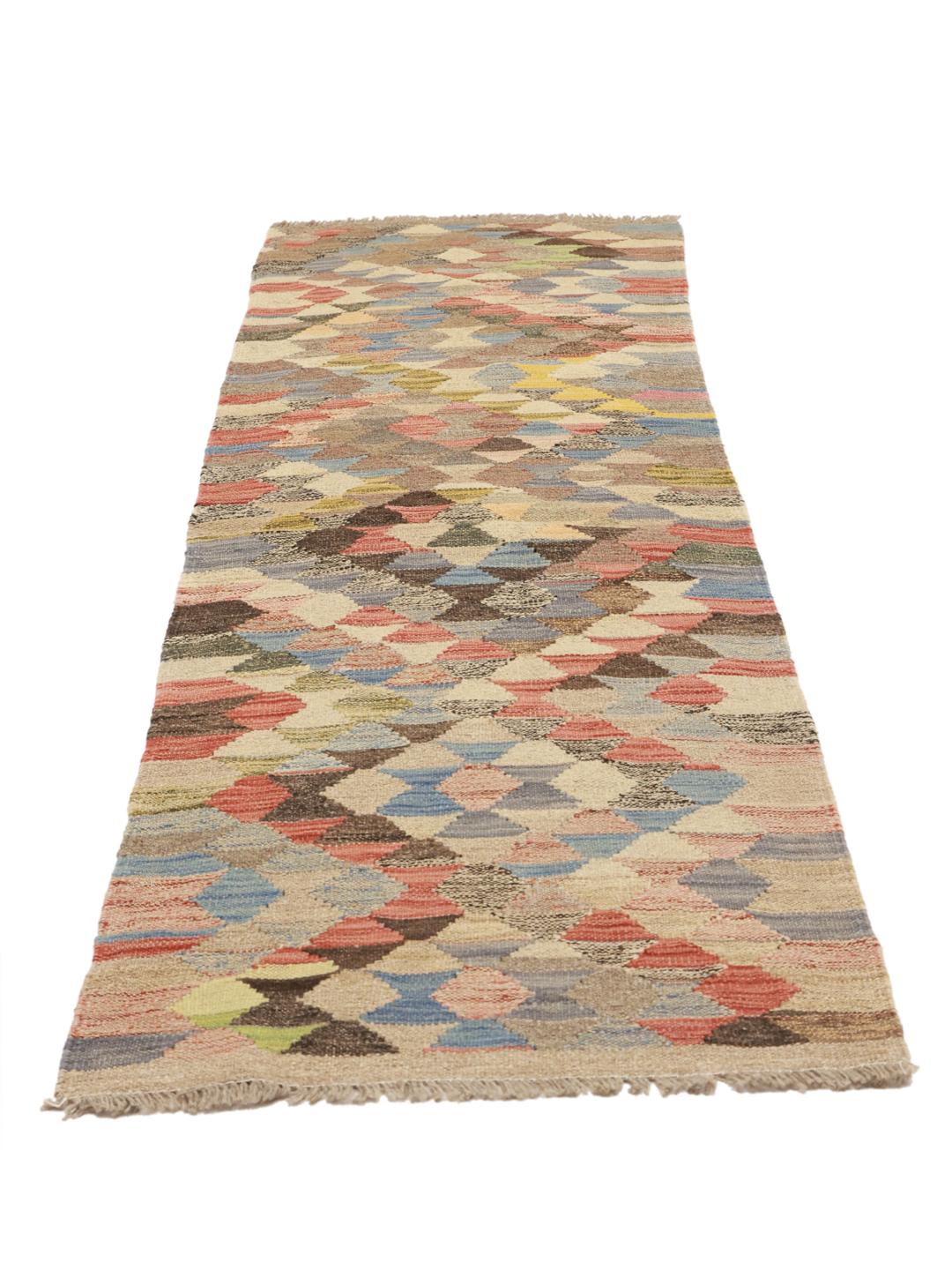
Design-wise, the Ariana tradition is famous for its use of soft, muted palettes and classic geometric motifs. The diamond pattern seen here is a staple of the region, often representing protection or fertility in traditional iconography. While the patterns remain rooted in heritage, the Ariana aesthetic often plays with colour transitions and spacing to create a look that feels fresh and balanced in a variety of home settings.
Owning a hand-woven Kilim is an investment in cultural heritage. These rugs are collected not only for their aesthetic beauty but for the human story embedded in every row of weaving. By bringing an Afghan Kilim into your space, you are connecting your home to a long lineage of craftspeople who have perfected the art of storytelling through thread and loom.