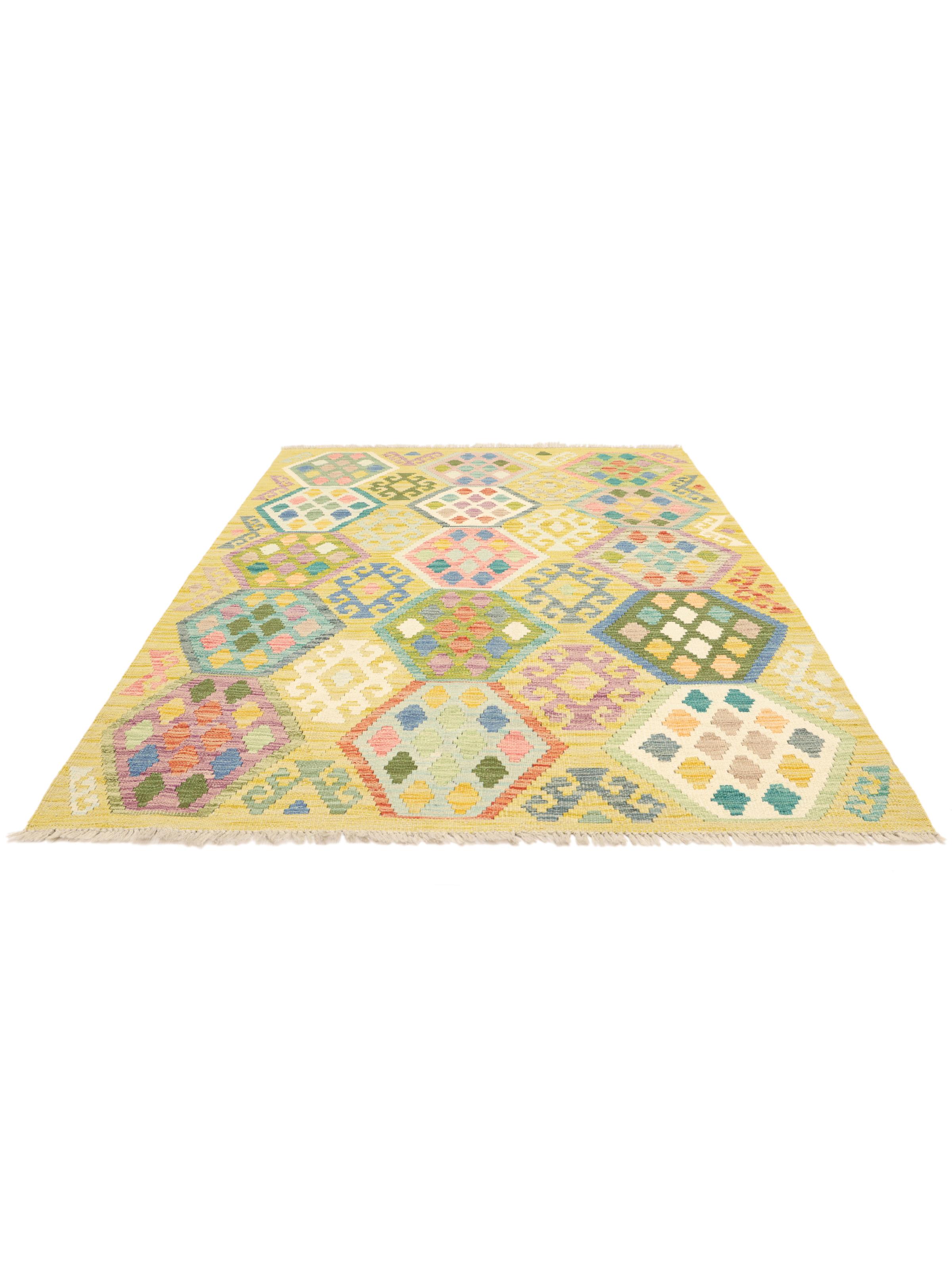
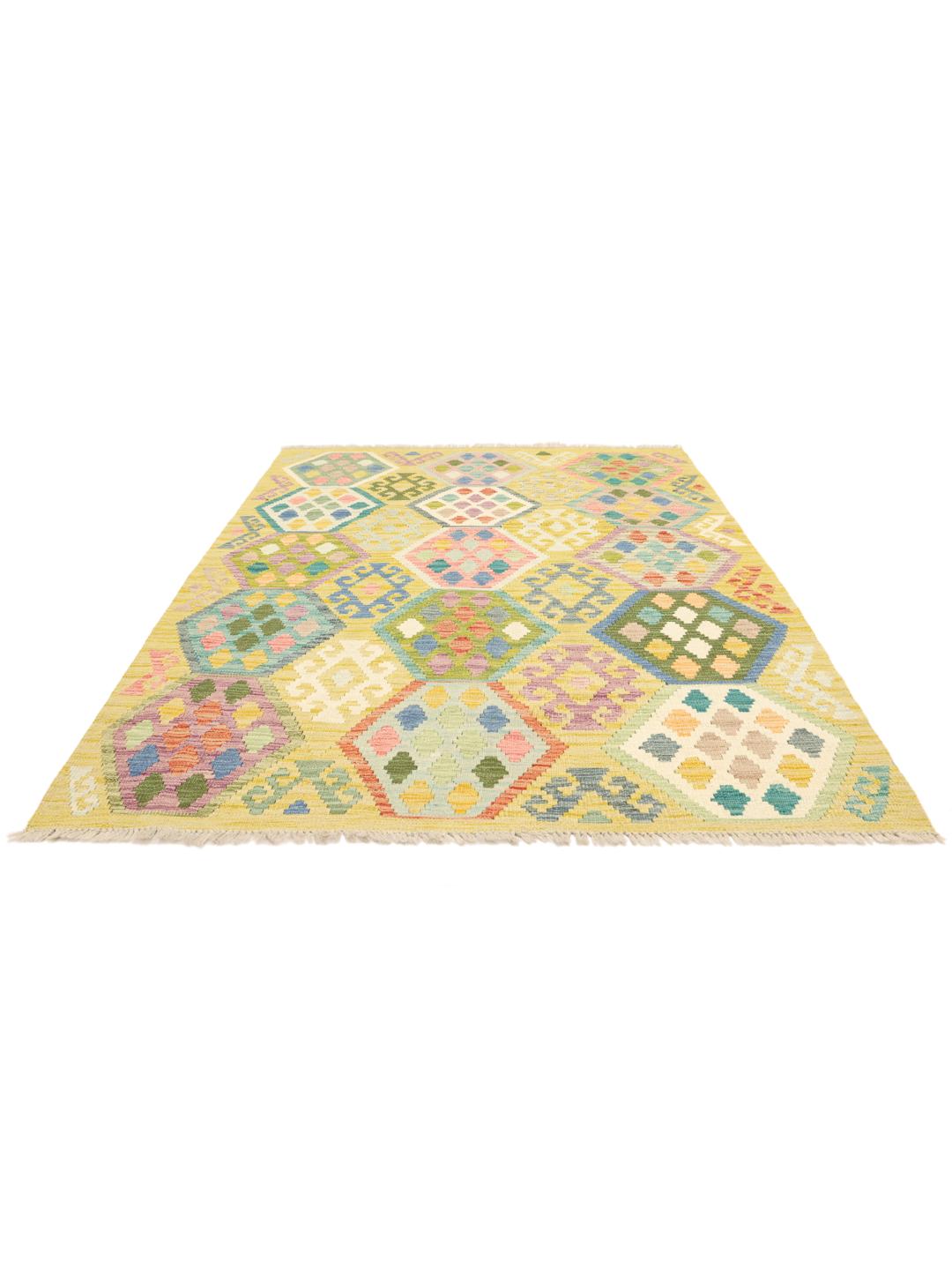
The Kelim tradition in Afghanistan is deeply rooted in the nomadic lifestyle of the region, where flat-weave rugs were essential for their portability and versatility. These rugs have been crafted for centuries, serving as both functional floor coverings and decorative elements within tents and homes. The evolution of these designs reflects a rich cultural history, blending tribal motifs with a vibrant, artistic spirit that has been passed down through generations of skilled weavers.
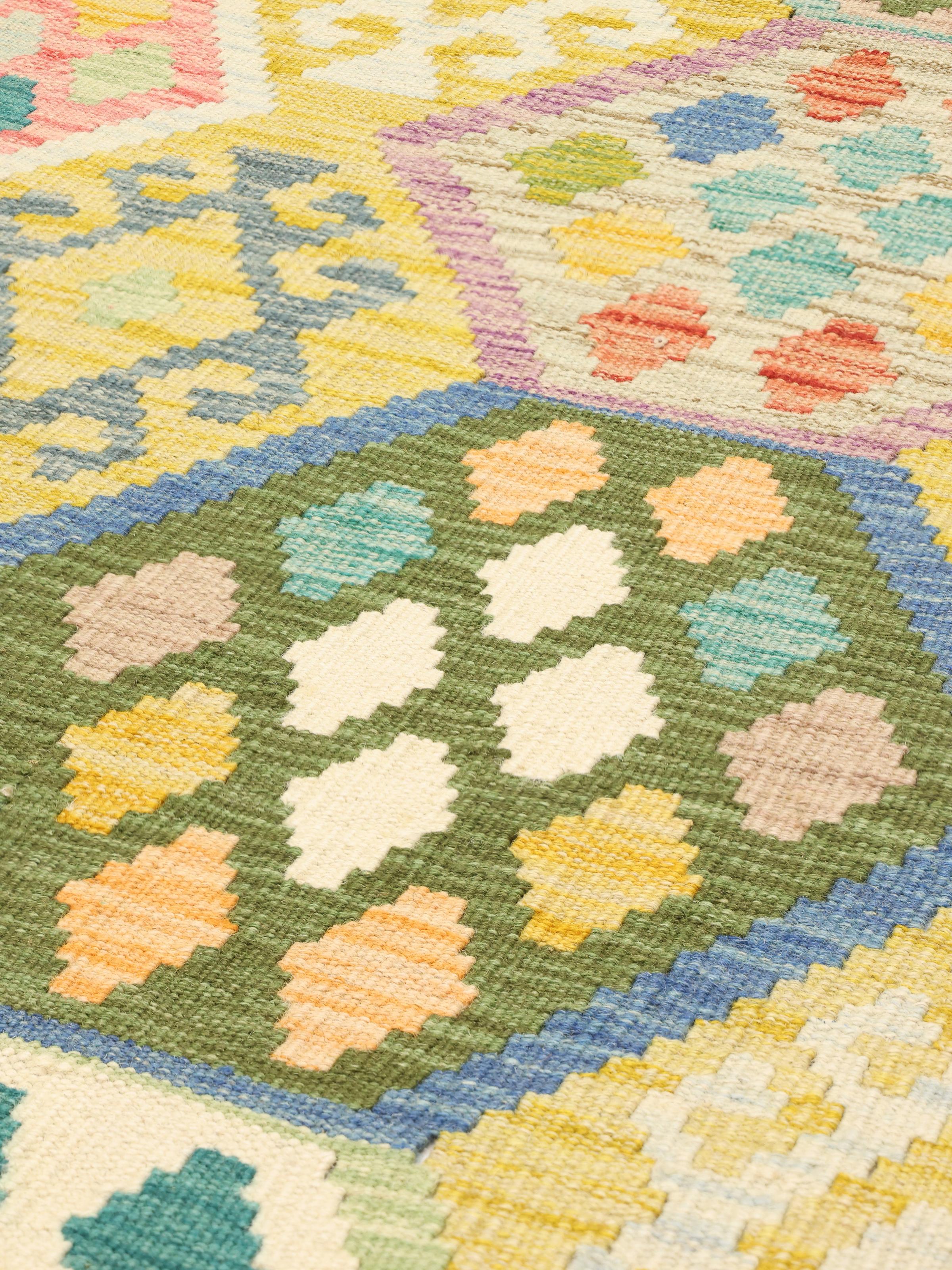
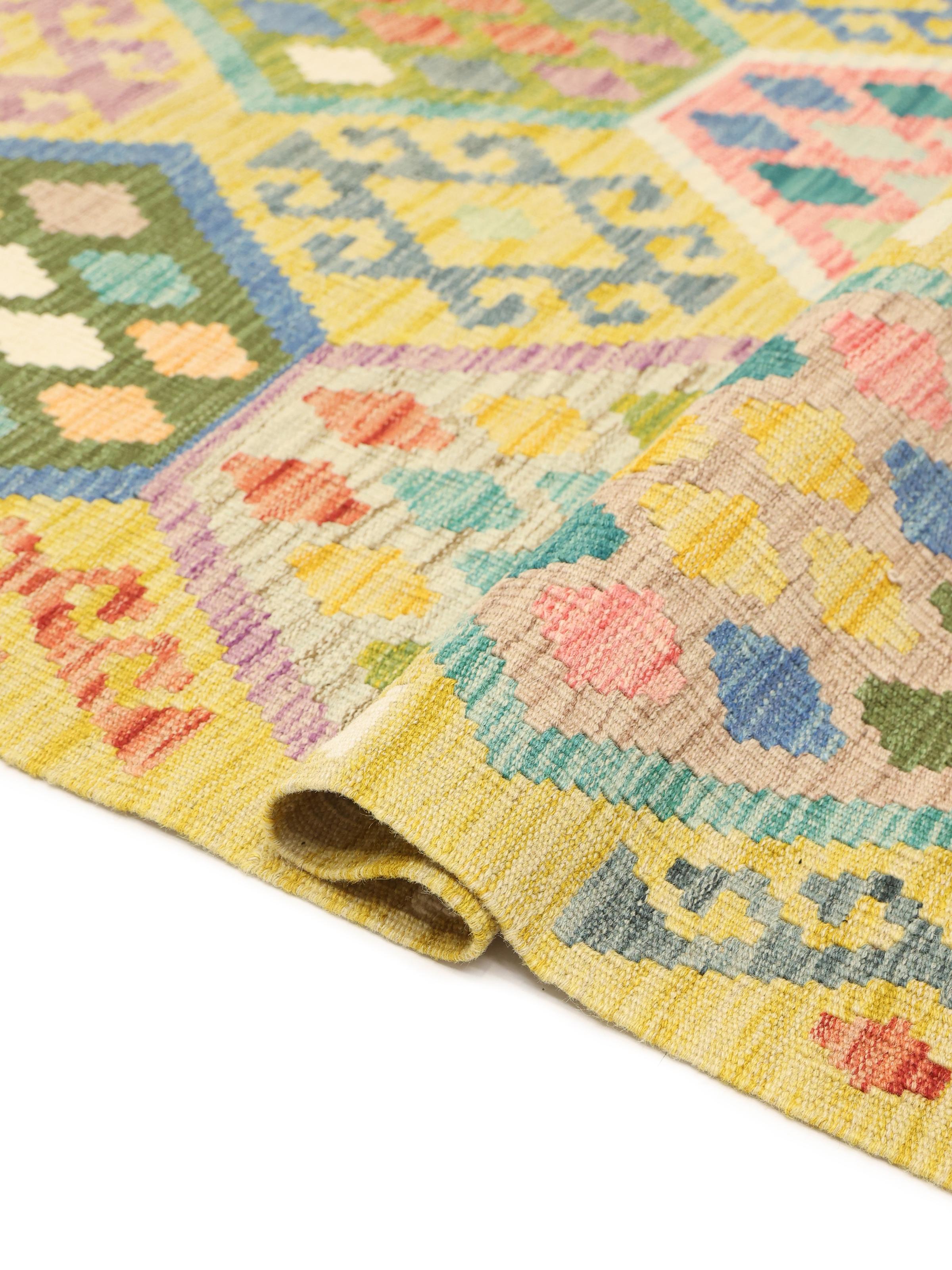
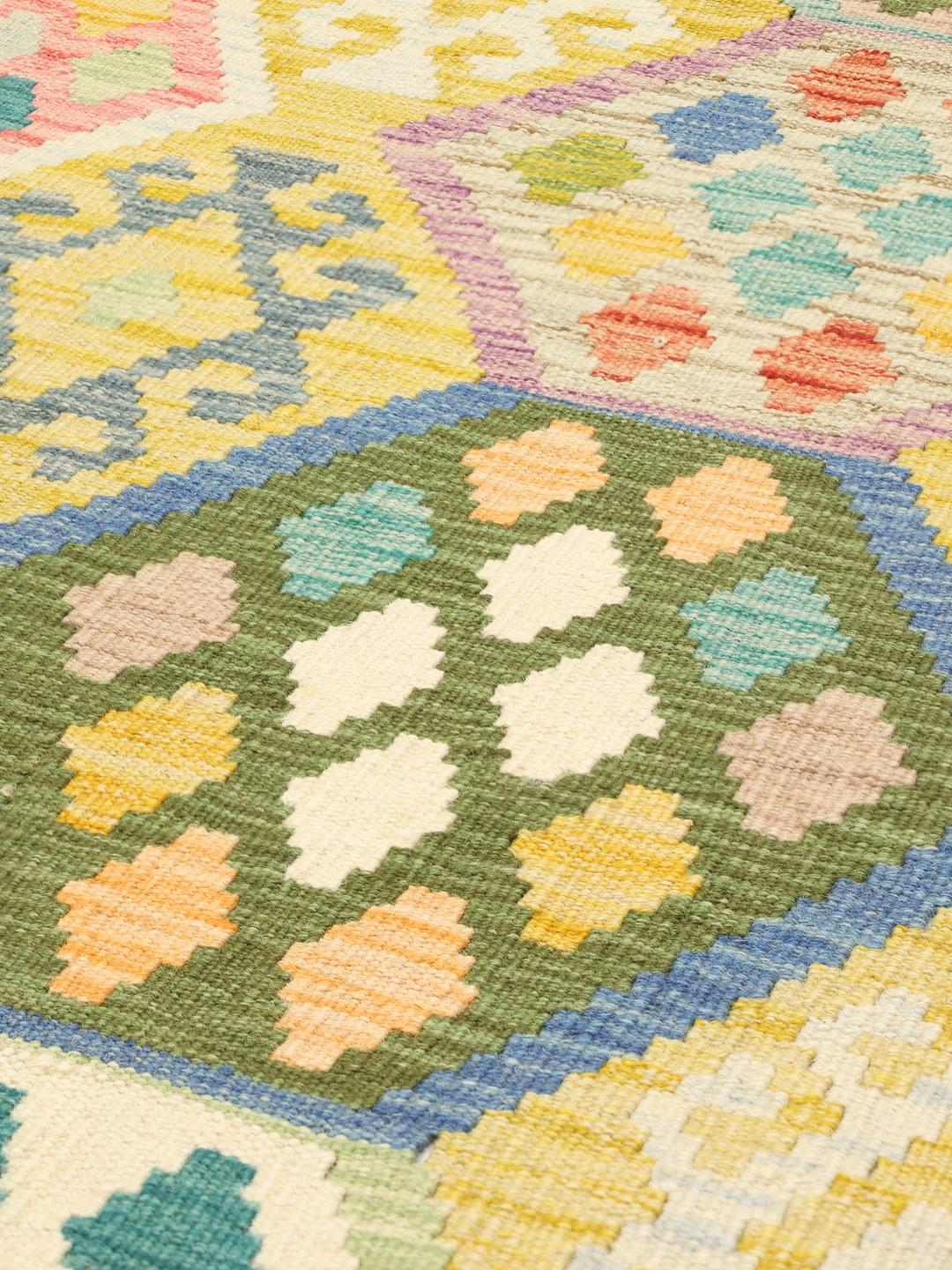
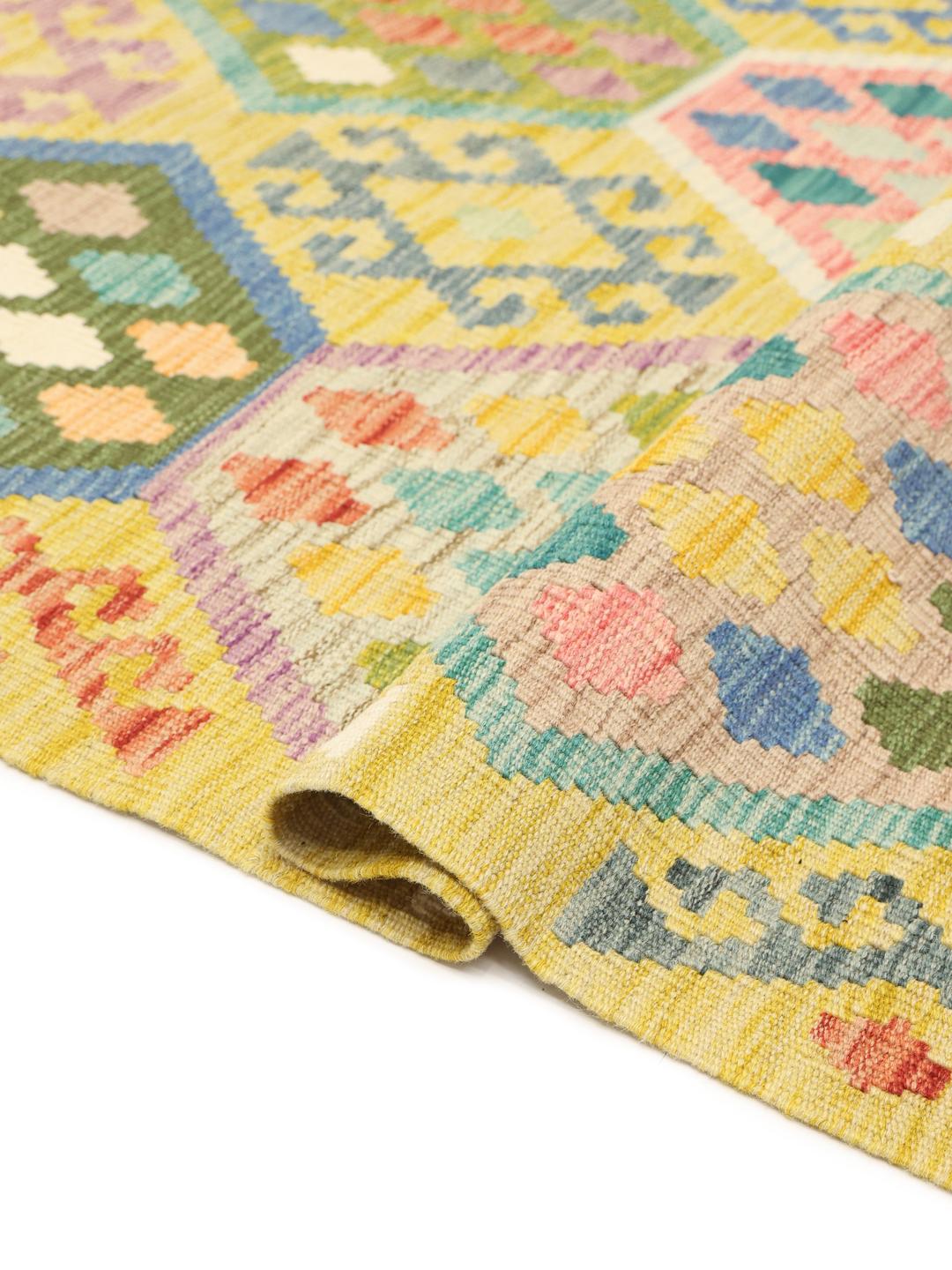
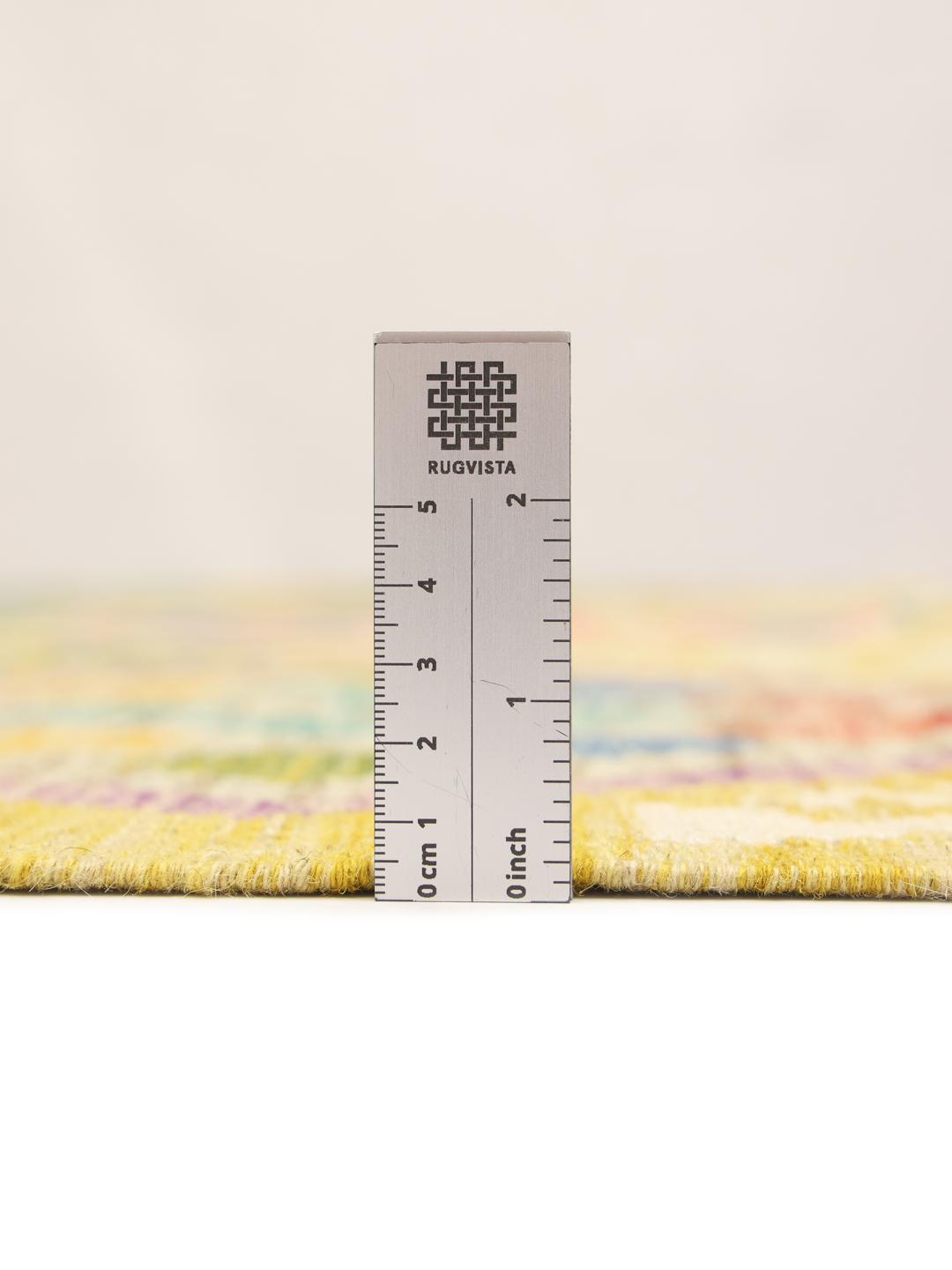
A defining feature of the Kelim is its flat-weave construction, which omits a pile entirely. This technique relies on the interweaving of warp and weft threads to create the pattern, resulting in a lightweight yet incredibly durable textile. This method of construction is significant because it highlights the weaver's precision, as the design must be perfectly aligned during the weaving process without the ability to mask errors with a deep pile.
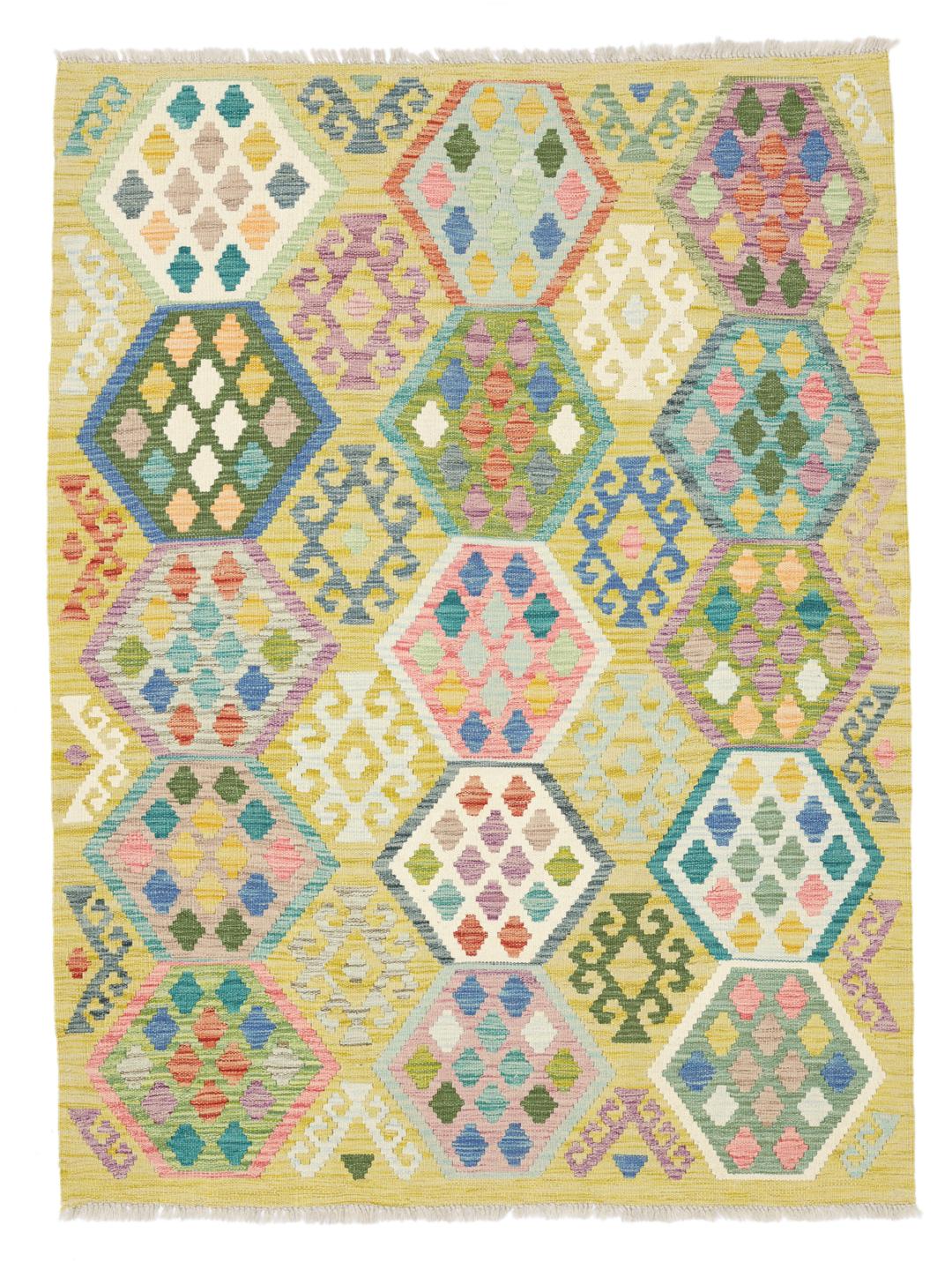
The signature design of this piece is defined by its geometric composition, which often incorporates repeating shapes like hexagons and diamonds. These motifs are not merely decorative; they often carry symbolic meaning, representing elements of nature, protection, or tribal identity. The use of varied colours within these geometric forms is a hallmark of the old-style Afghan tradition, creating a sense of rhythm and balance that is instantly recognisable.
Owning a Kelim from this tradition is an investment in cultural heritage. Collectors value these pieces not only for their aesthetic beauty but also for the human effort and historical continuity they represent. By choosing this rug, you are preserving a craft tradition that values individual expression and lasting quality, ensuring that this piece remains a significant and meaningful addition to your collection for years to come.