The tradition of Kilim weaving in Afghanistan is deeply rooted in nomadic and village cultures, where flatwoven textiles were originally created for practical daily use. Unlike piled rugs, Kilims are flatwoven, making them lighter and easier to transport, which made them essential items for nomadic households. Over generations, these weaving techniques have been preserved and adapted, evolving from purely functional utility into highly expressive art forms.
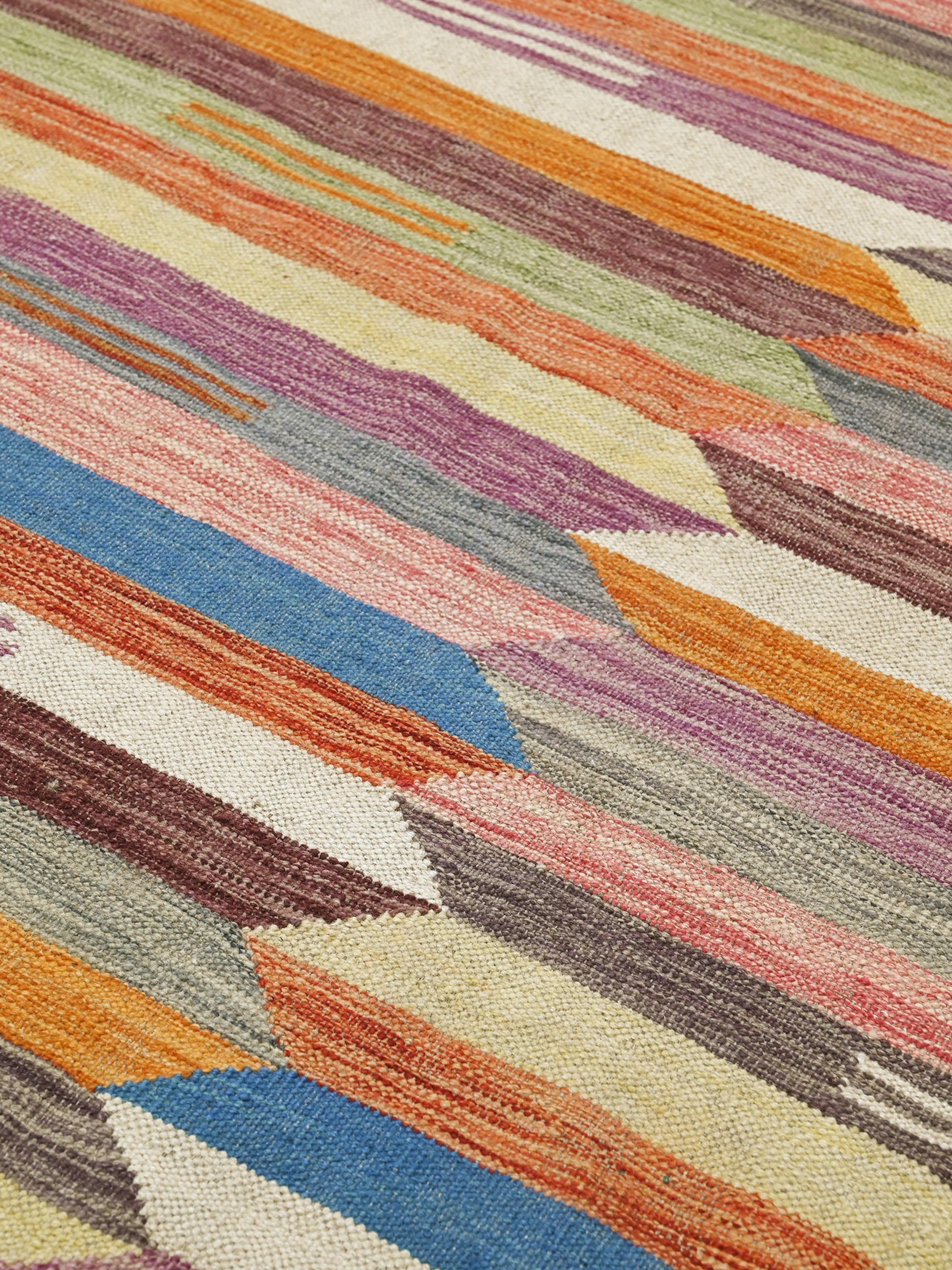
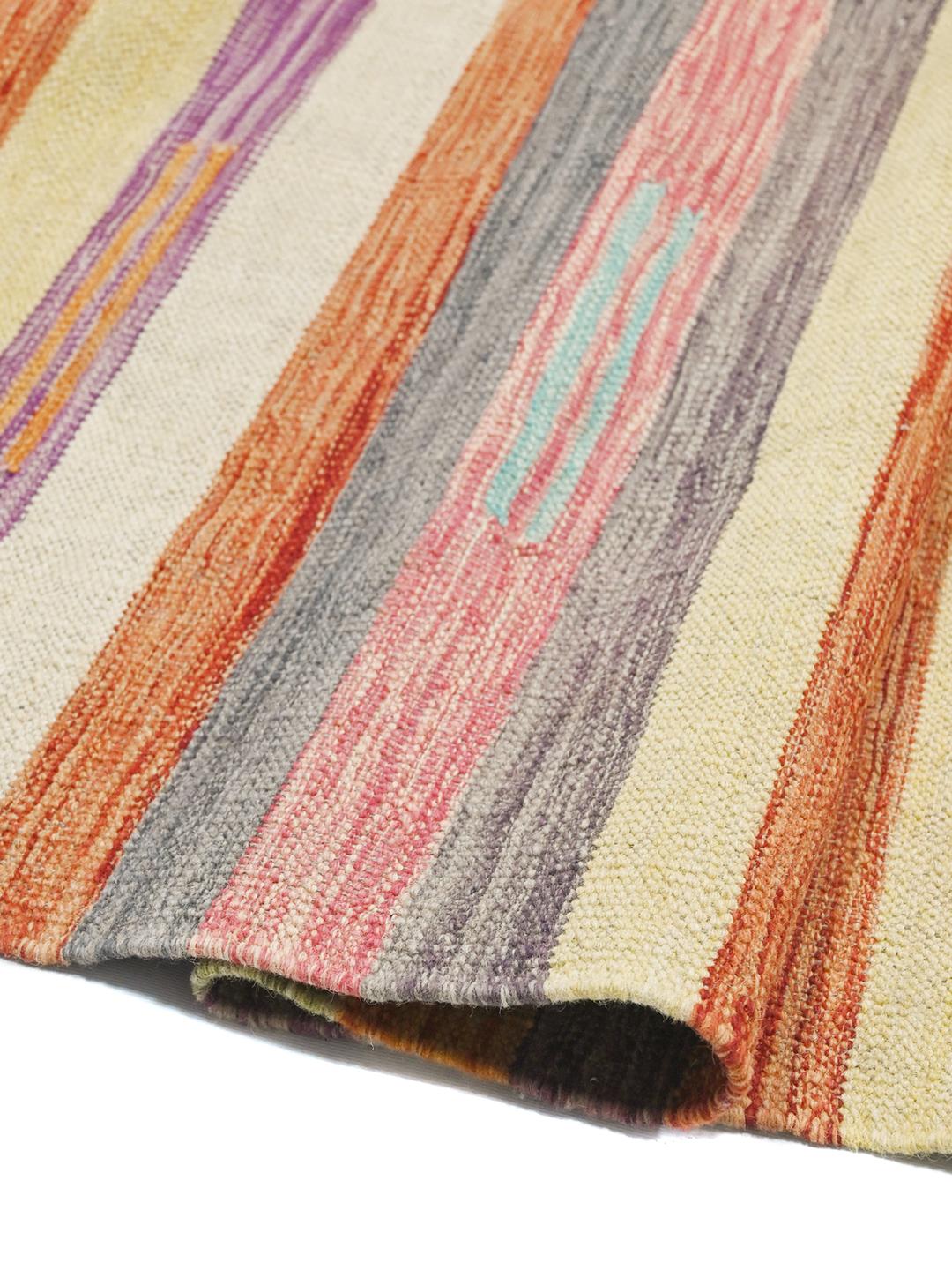
The term Kilim refers to a specific slot-weave technique where the weft threads are tightly packed over the warp to completely cover them, creating a flat, pileless surface. This method produces a reversible textile with clean, sharp edges along the pattern boundaries. By using wool for the weft, weavers ensure the rug remains supple yet incredibly strong, capable of enduring decades of placement in busy homes.
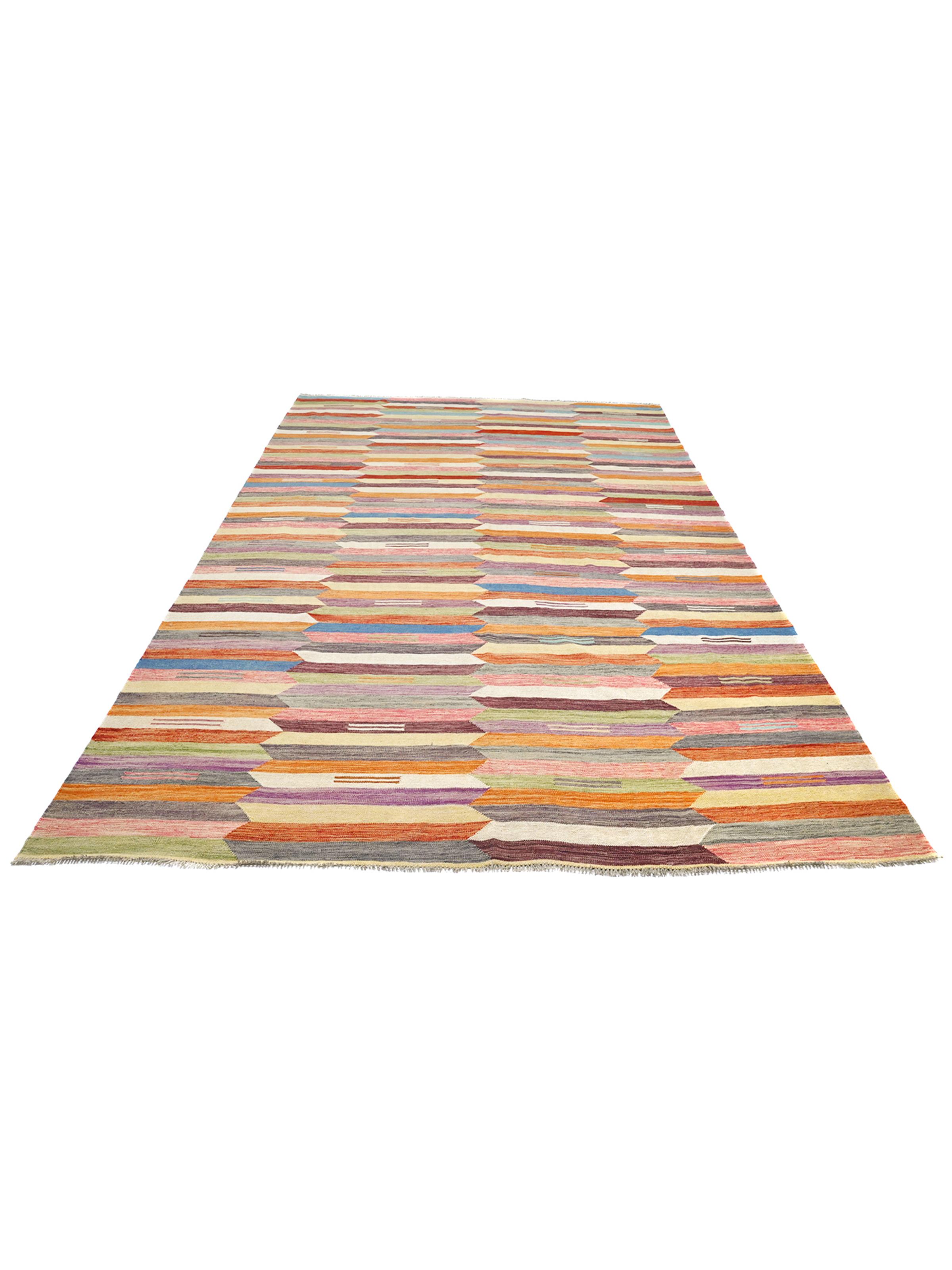
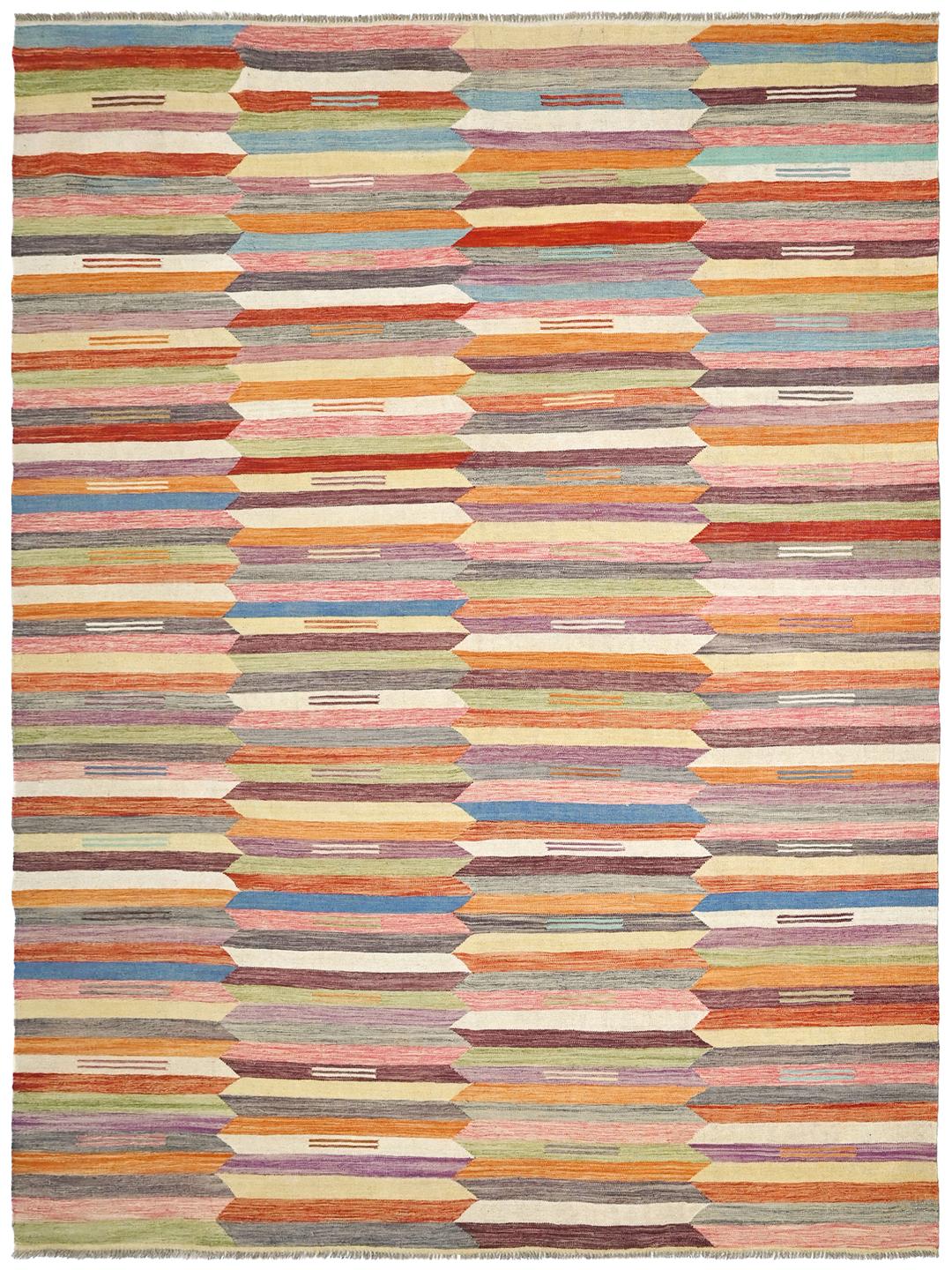
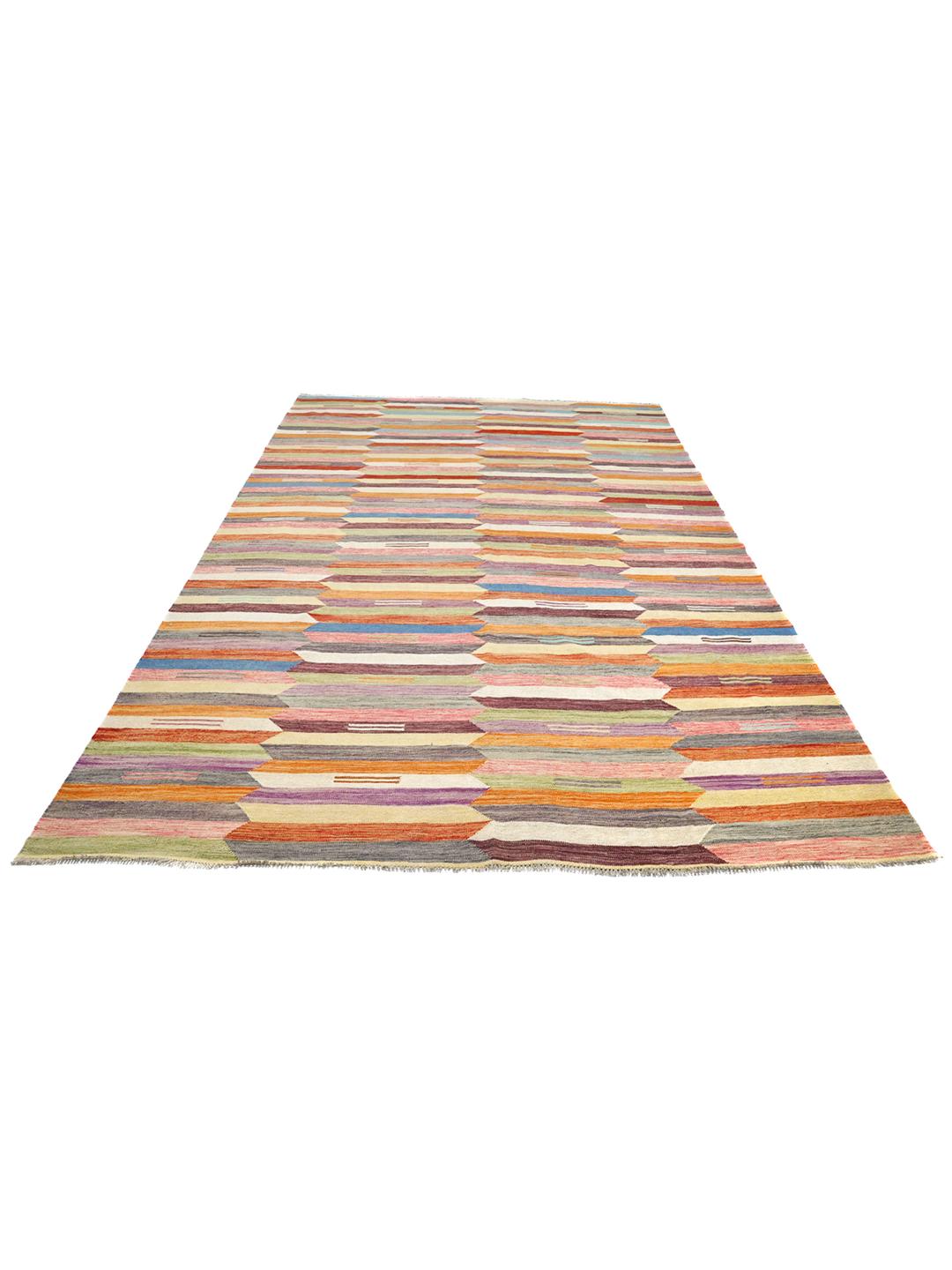
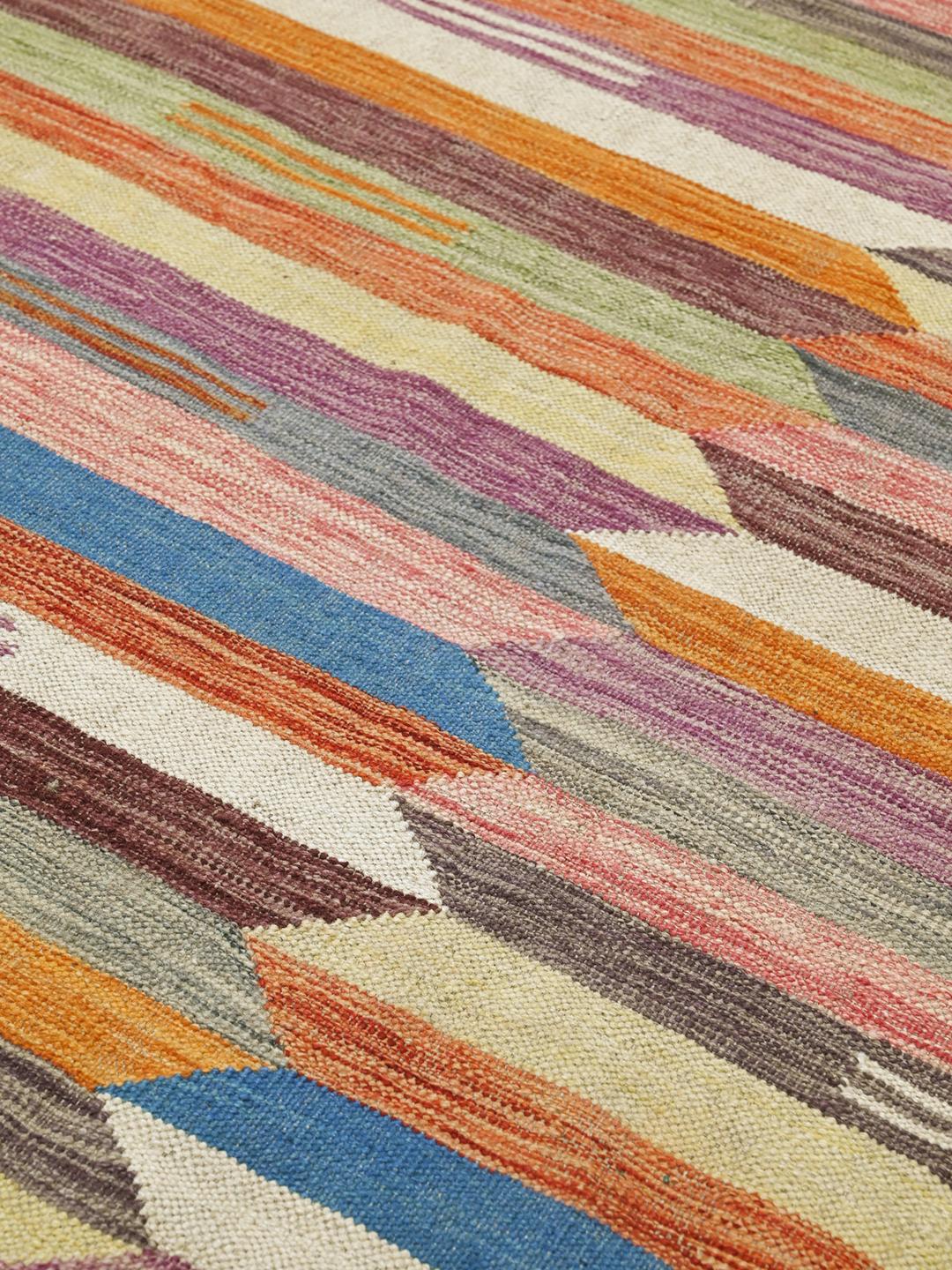
This modern interpretation of the Kilim tradition features repeating geometric zig-zag columns arranged in structured, horizontal bands. While traditional Afghan Kilims often favor deep reds and warm terracotta tones, this contemporary piece embraces a vibrant multicolor palette, blending classic geometric motifs with a fresh, modern aesthetic. The subtle variations in color within each band reflect the natural dye absorption of the wool, adding depth and movement to the design.
Contemporary Afghan Kilims are highly valued by collectors and interior enthusiasts alike for their successful fusion of ancient craft and modern design. Owning a hand-woven piece from this region is not just about acquiring a floor covering, but about preserving a living heritage. Each rug represents a direct link to the cultural history of the weavers, carrying their skill and artistic choices forward into a modern context.