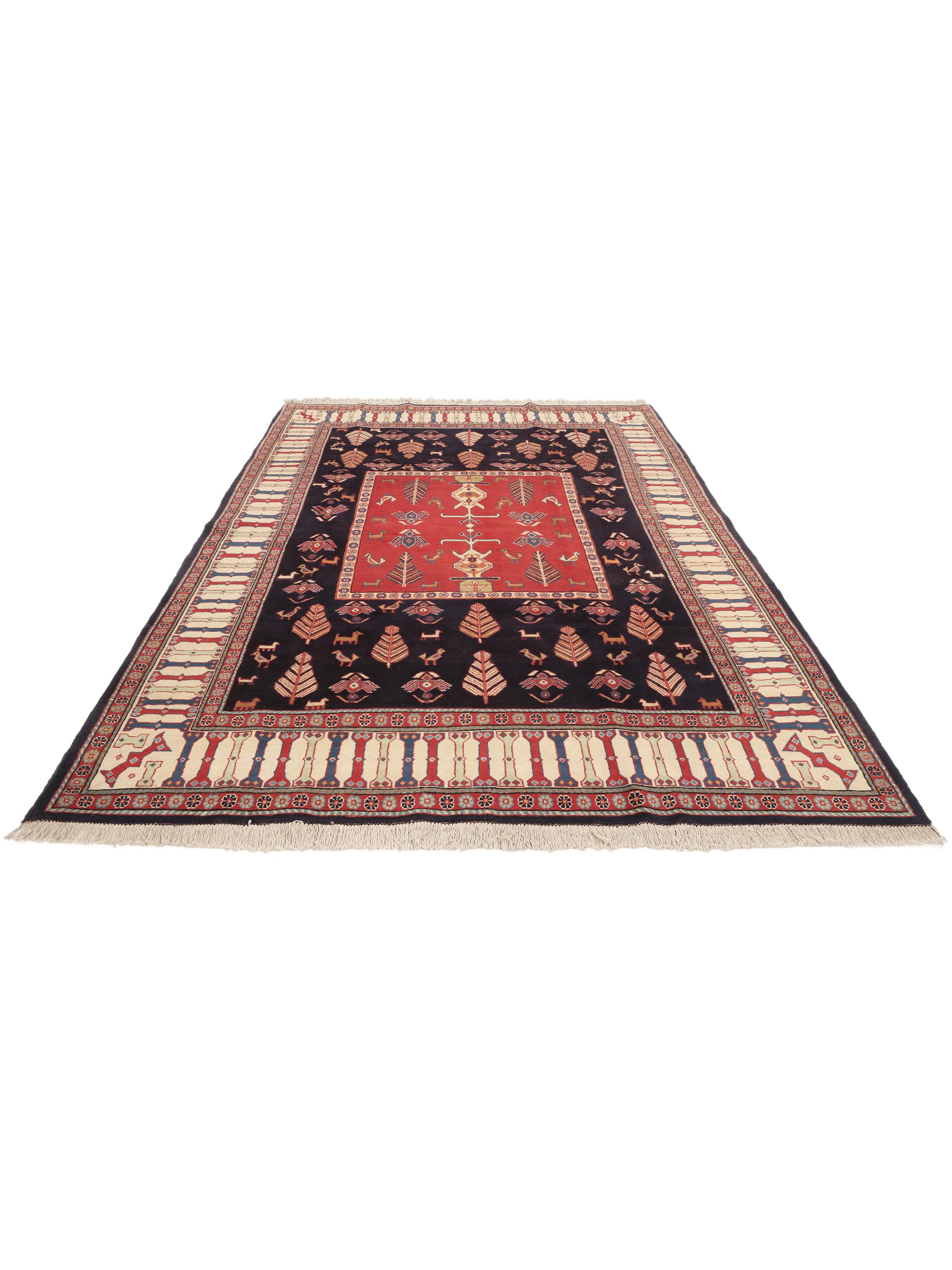
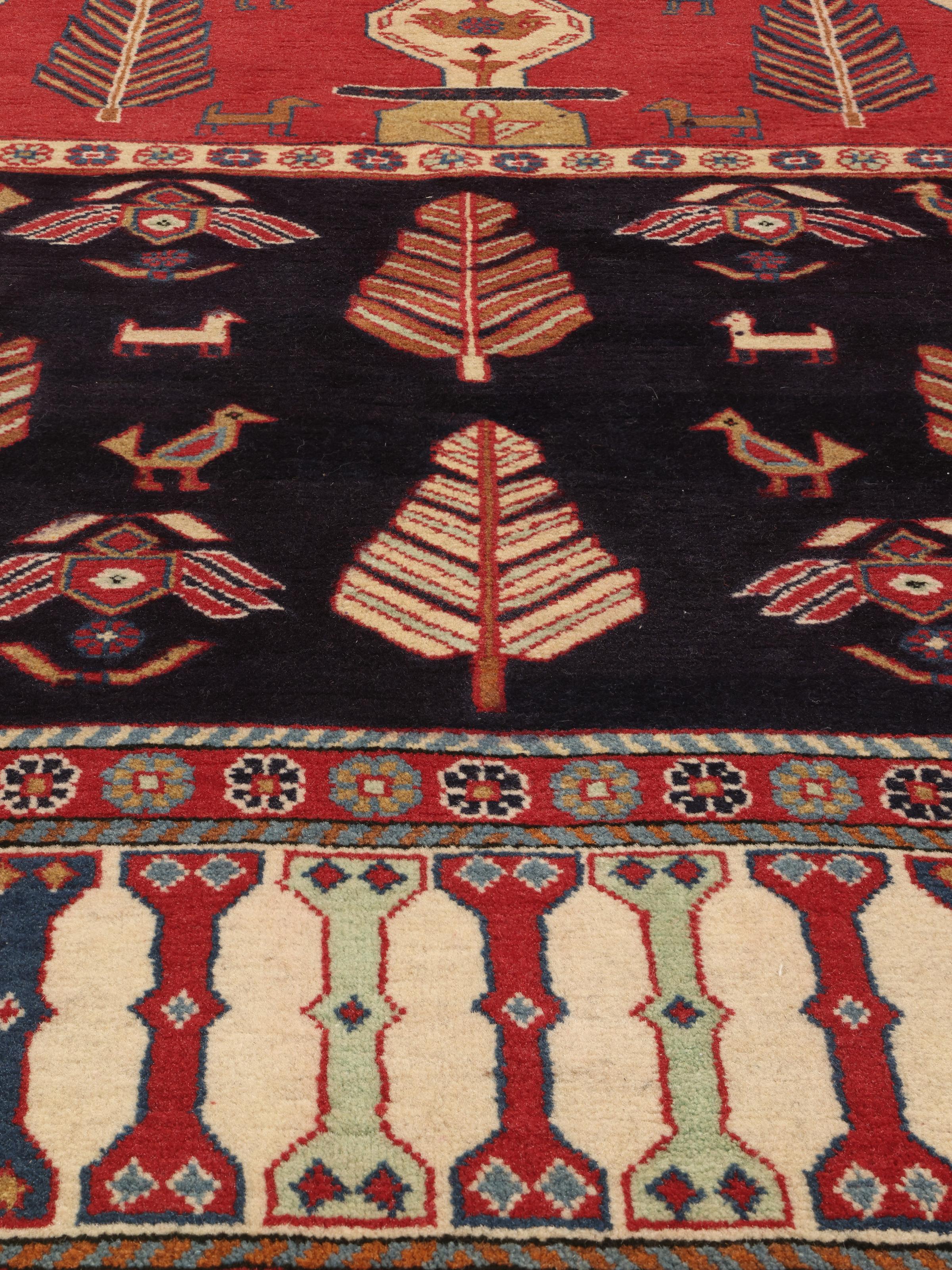
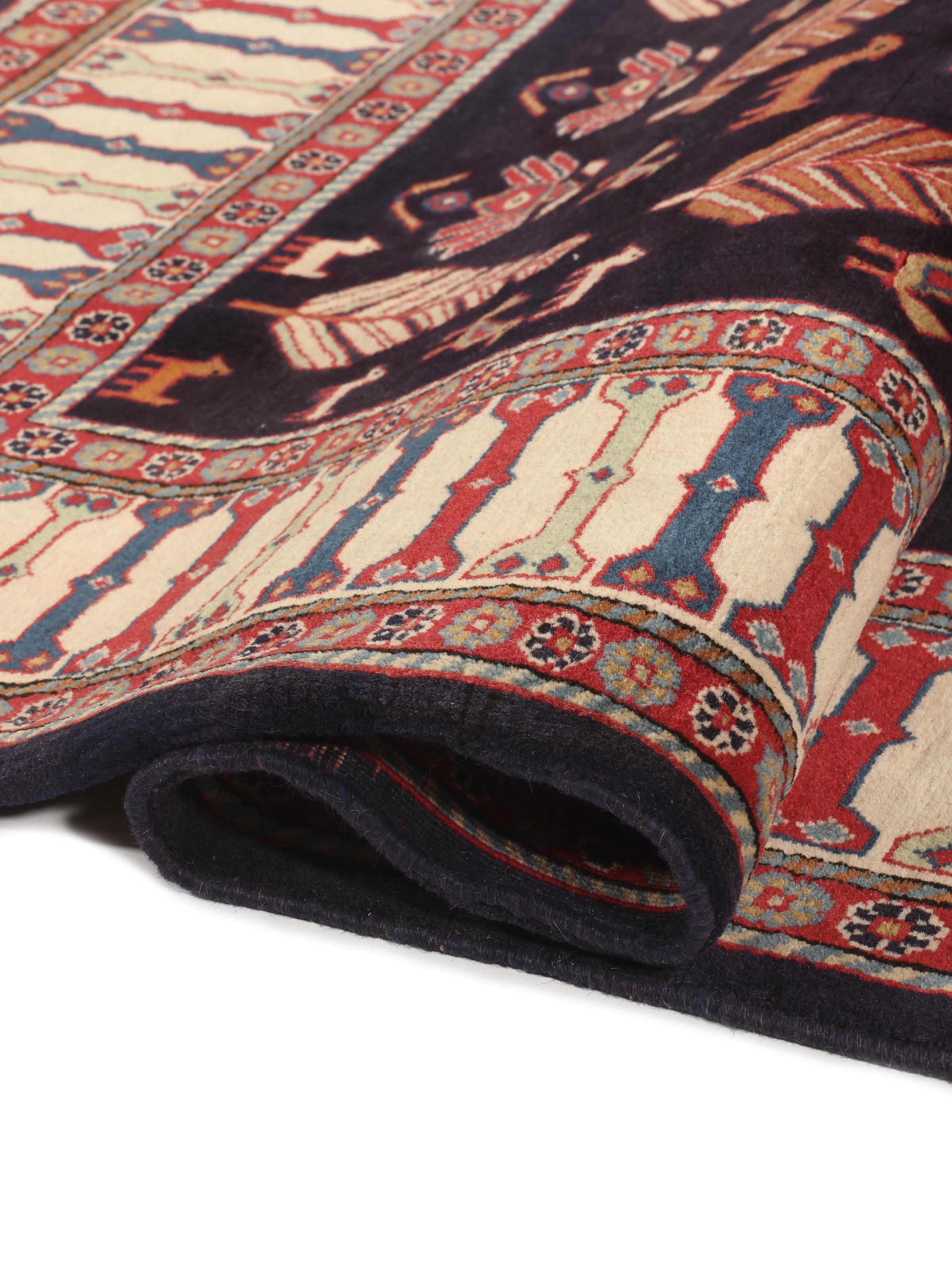
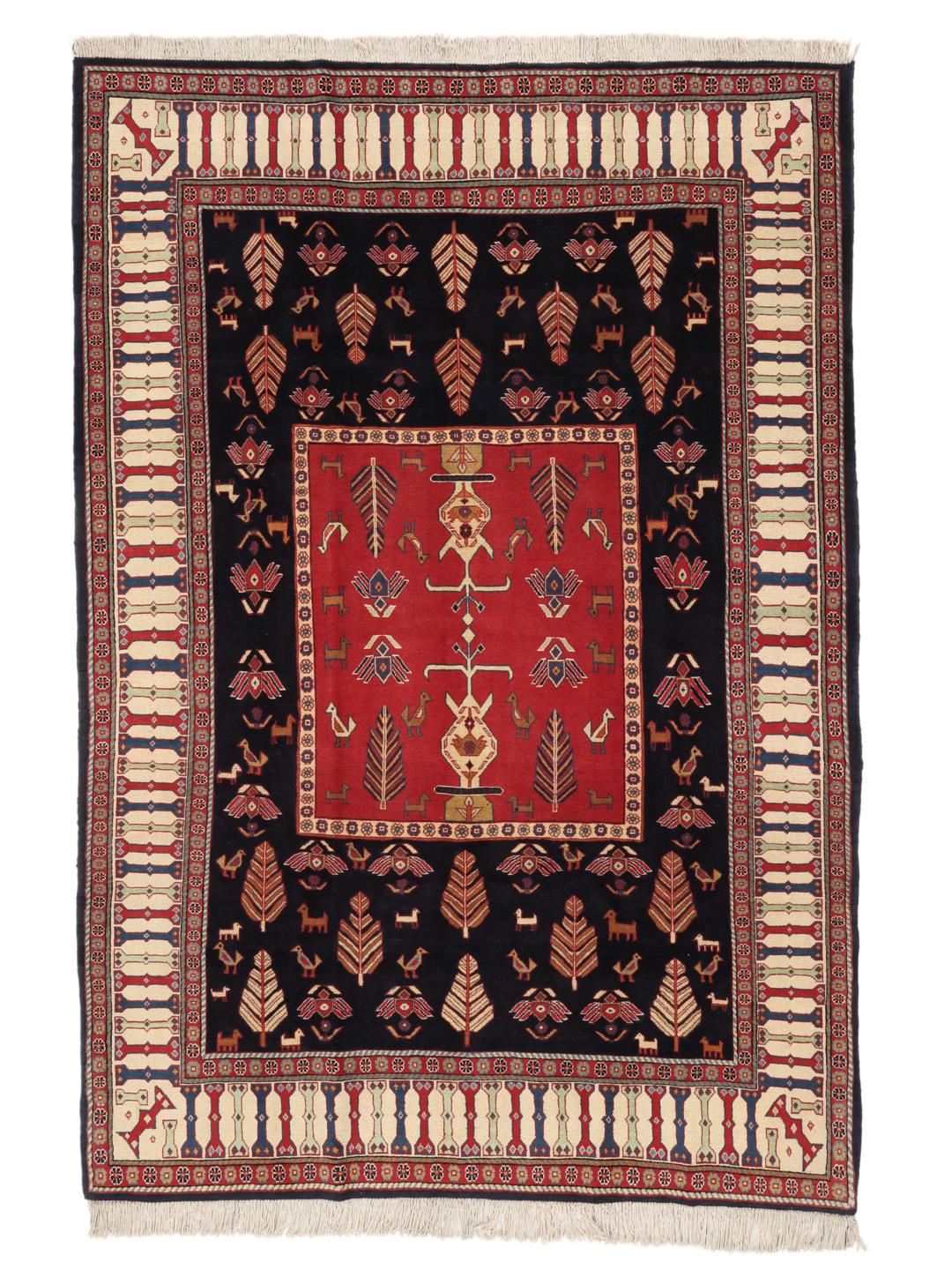
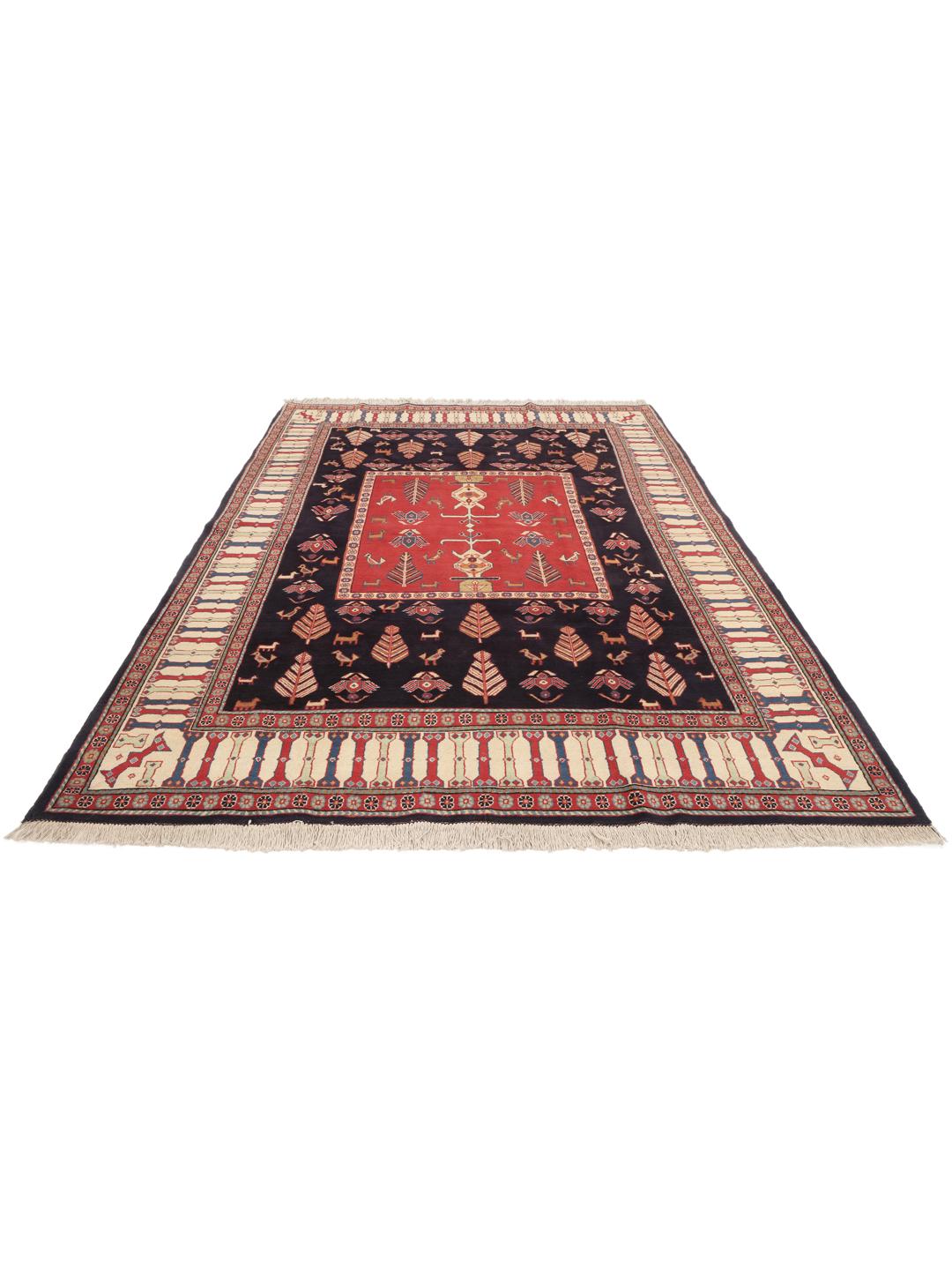
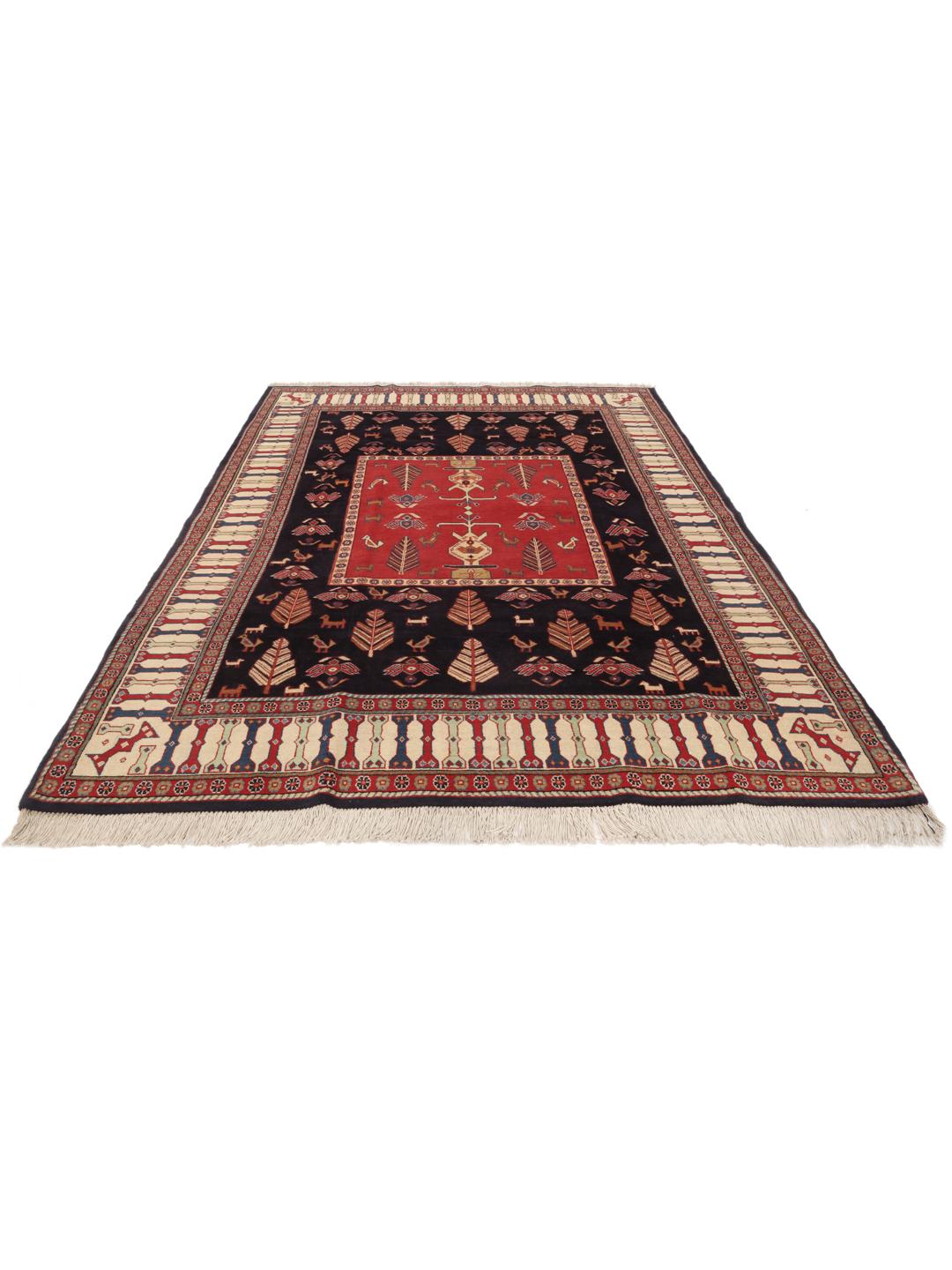
Loribaft rugs are a relatively modern development within the broader tradition of nomadic weaving in the Middle East. They are closely related to the Kashkooli style, which originated with the Qashqai tribes. These weavers are renowned for their ability to translate their natural surroundings and tribal life into bold, expressive designs that feel both spontaneous and deeply rooted in ancestral memory.
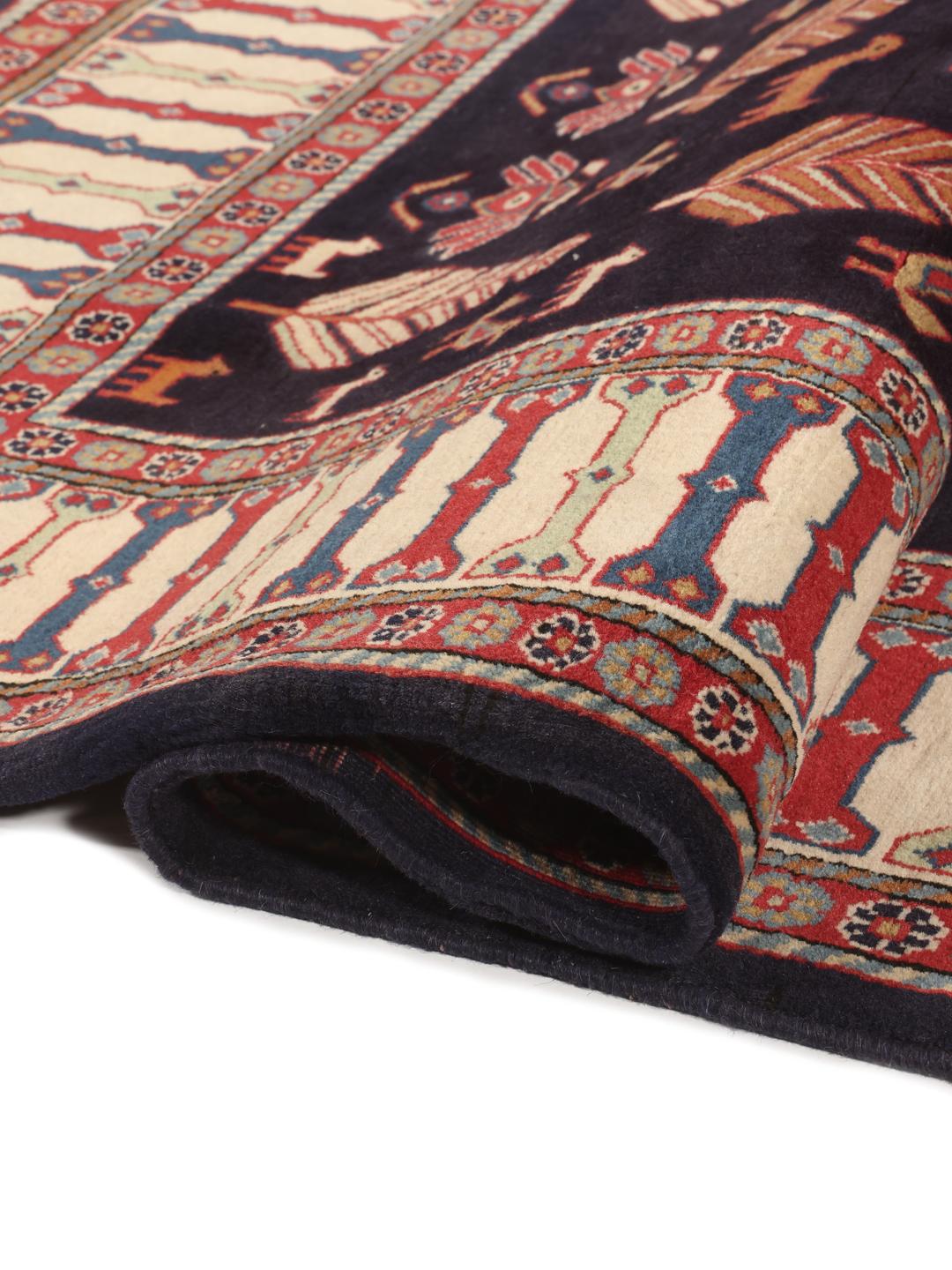
The term 'Loribaft' refers to a specific style of construction that emphasises a thicker, more plush pile compared to traditional flat-woven kilims. This technique was developed to provide greater comfort and warmth in the rugged, high-altitude regions where these weavers live. By using a heavier, double-knotted approach, they created rugs that are incredibly durable and capable of withstanding the harsh conditions of nomadic life.
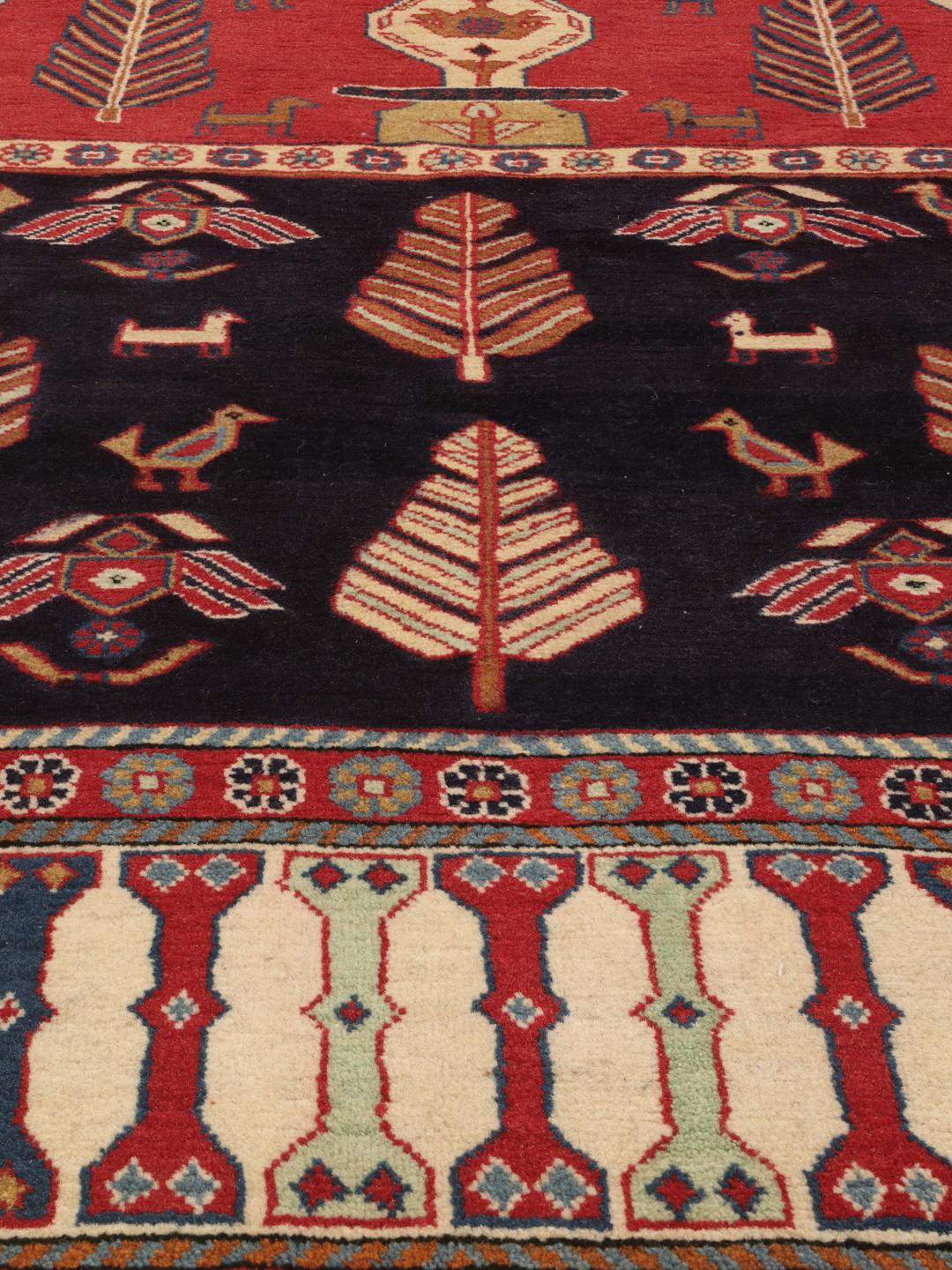
Visually, these rugs are defined by their use of large, open fields and simplified, stylized motifs. While traditional rugs often feature dense, complex patterns, Loribafts frequently utilise a more minimalist approach, allowing the vibrant colours and the natural lustre of the wool to take centre stage. The designs often incorporate symbolic representations of trees, animals, and geometric shapes that hold specific meanings within the tribe.
Collecting a Loribaft means acquiring a piece of living history. These rugs are highly valued for their authenticity and the human story behind each knot. They represent a bridge between the ancient traditions of nomadic life and the contemporary need for warmth and comfort in the home. Owning one is a commitment to preserving a craft that relies entirely on human skill, intuition, and a profound connection to the natural world.