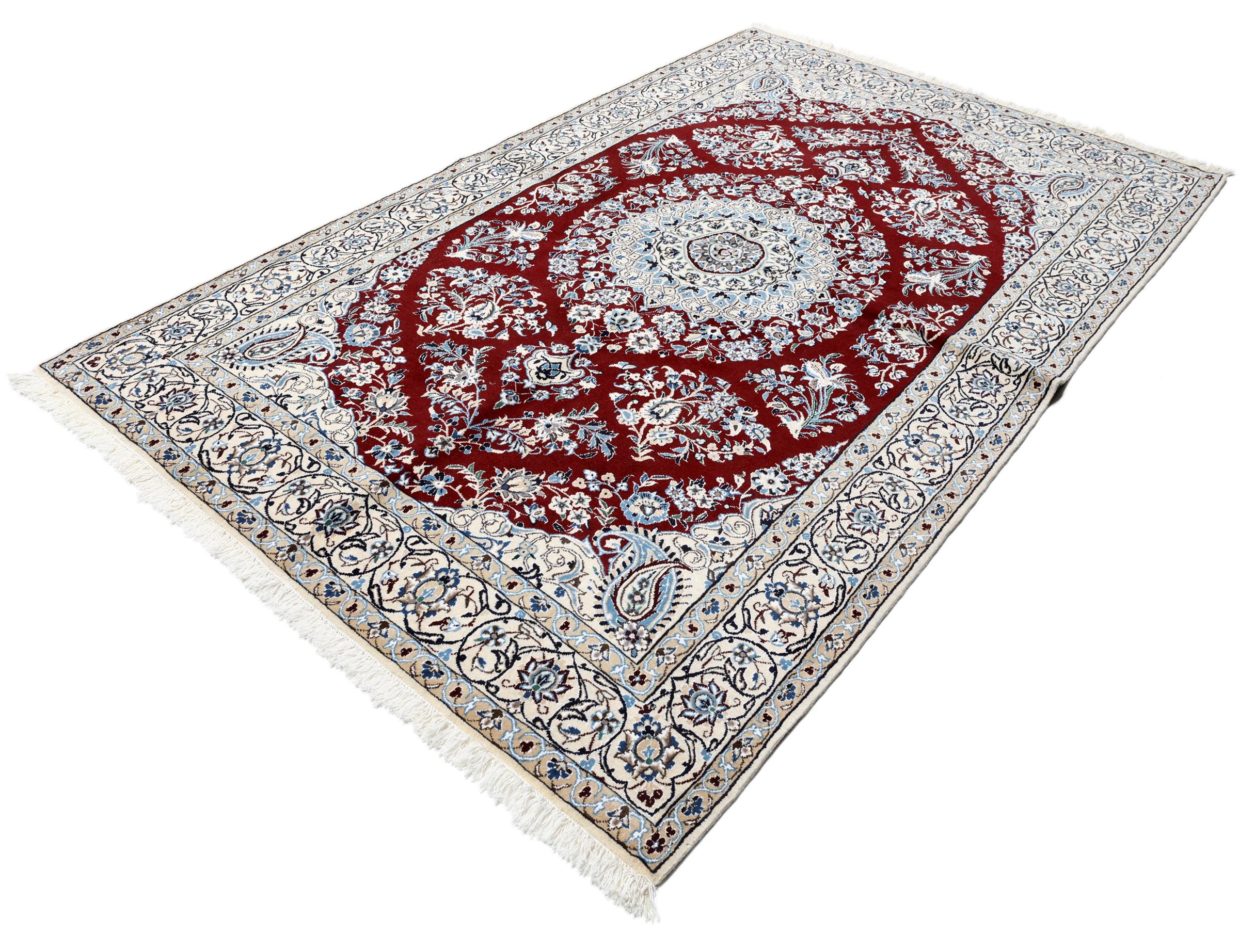
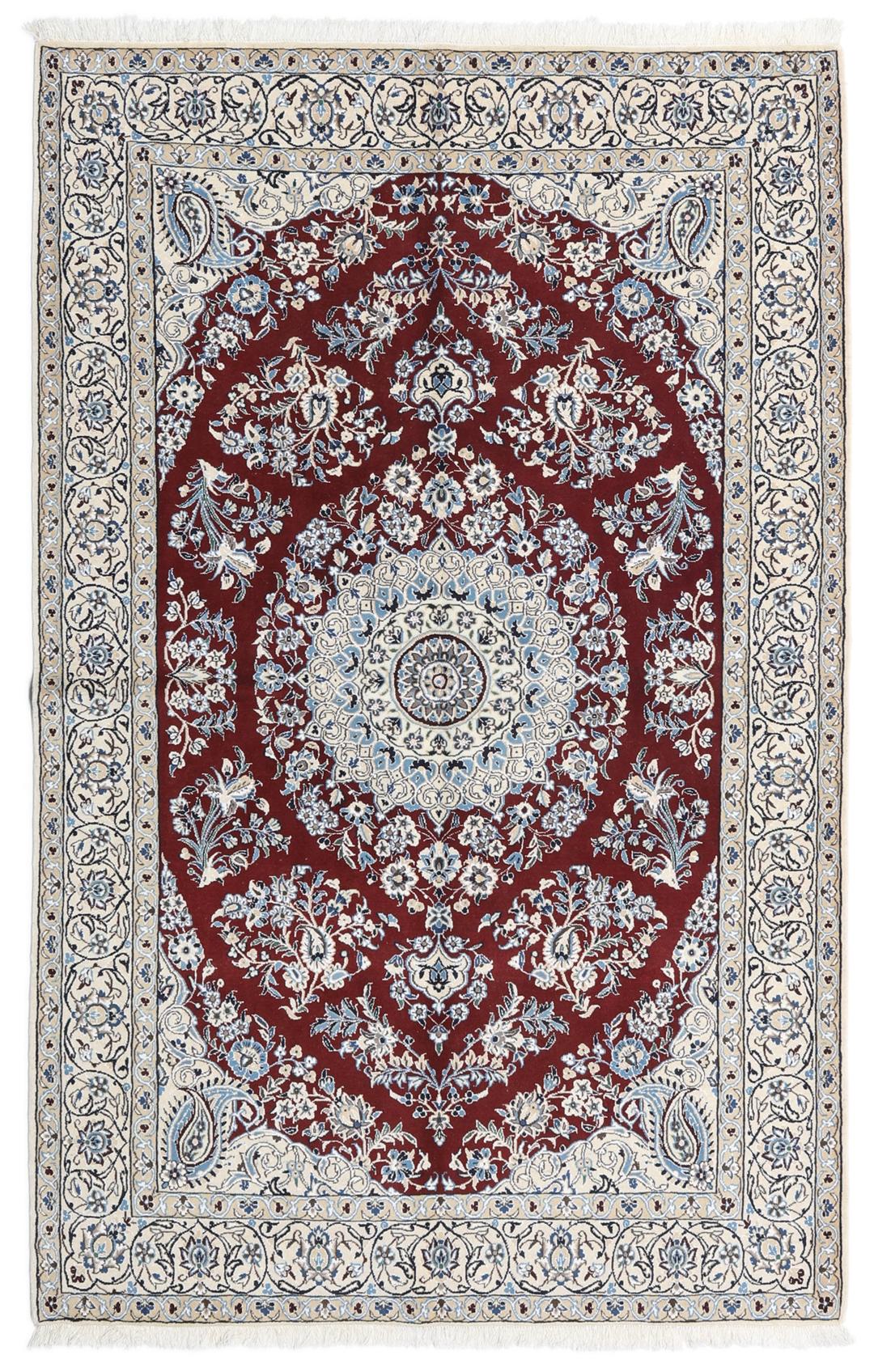
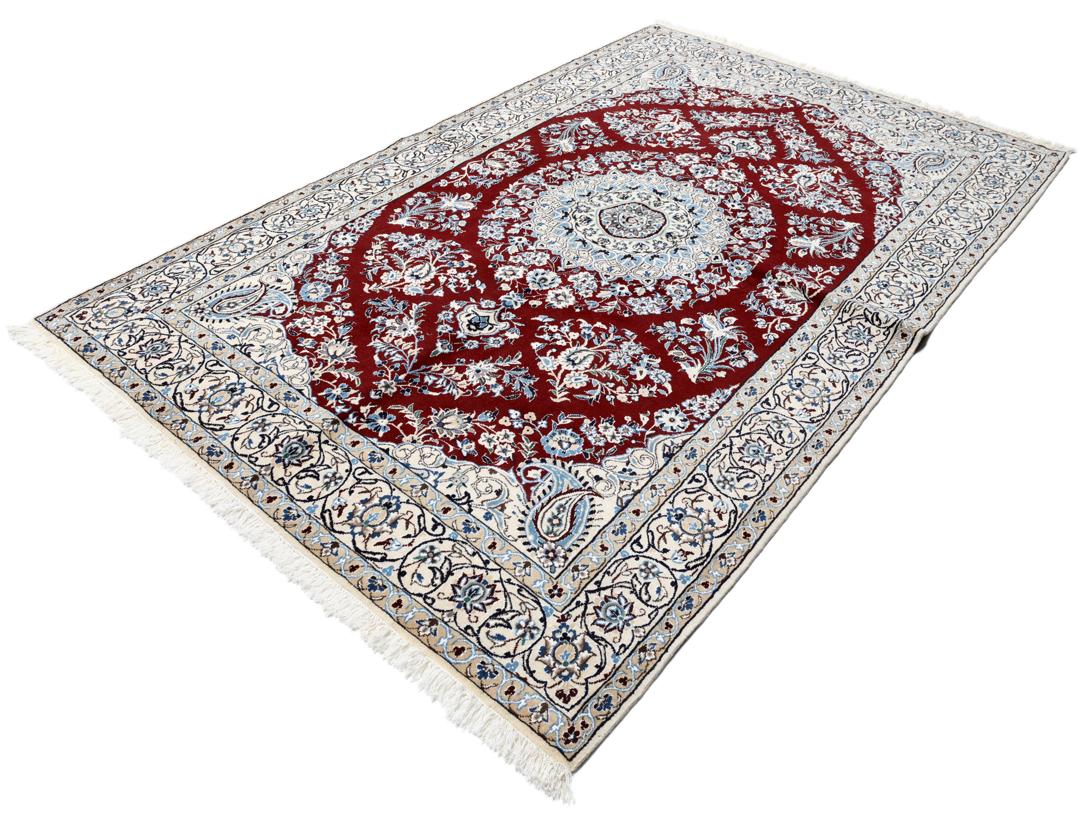
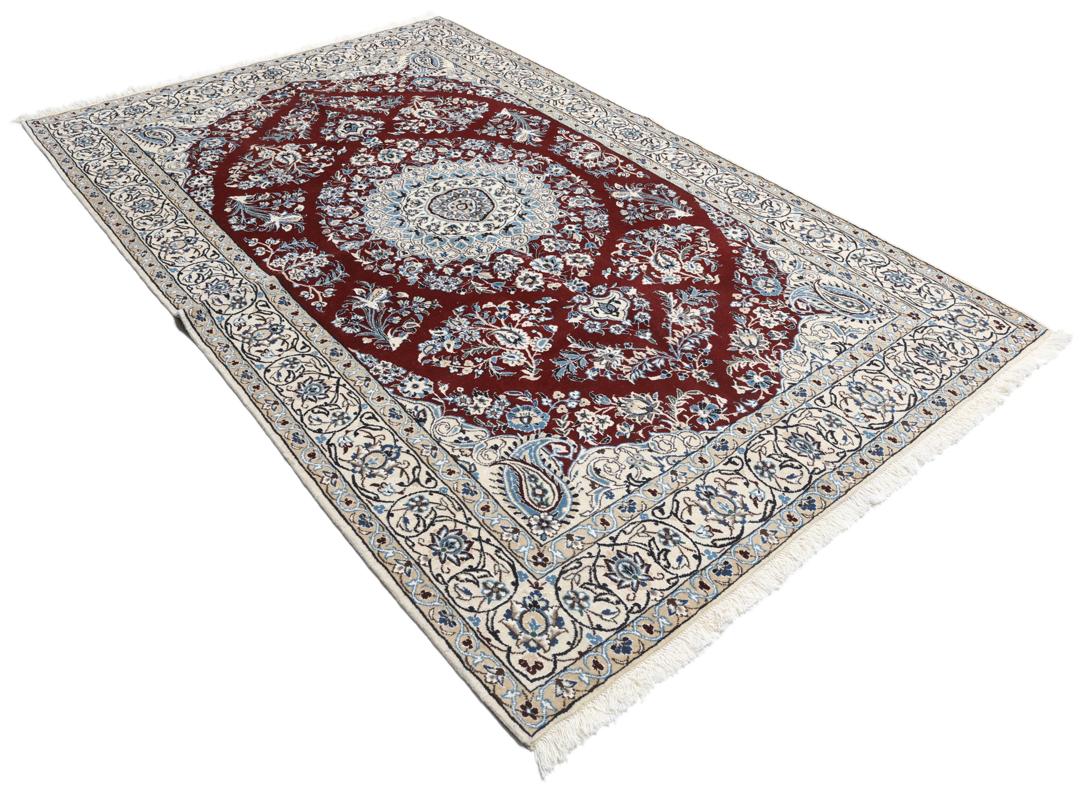
The Nain rug tradition originates from the historic city of Nain, located in the heart of the Middle East. Originally known for producing fine textiles and cloaks, the region transitioned to rug weaving in the early 20th century, quickly establishing a reputation for creating some of the most sophisticated and elegant pieces in the world.
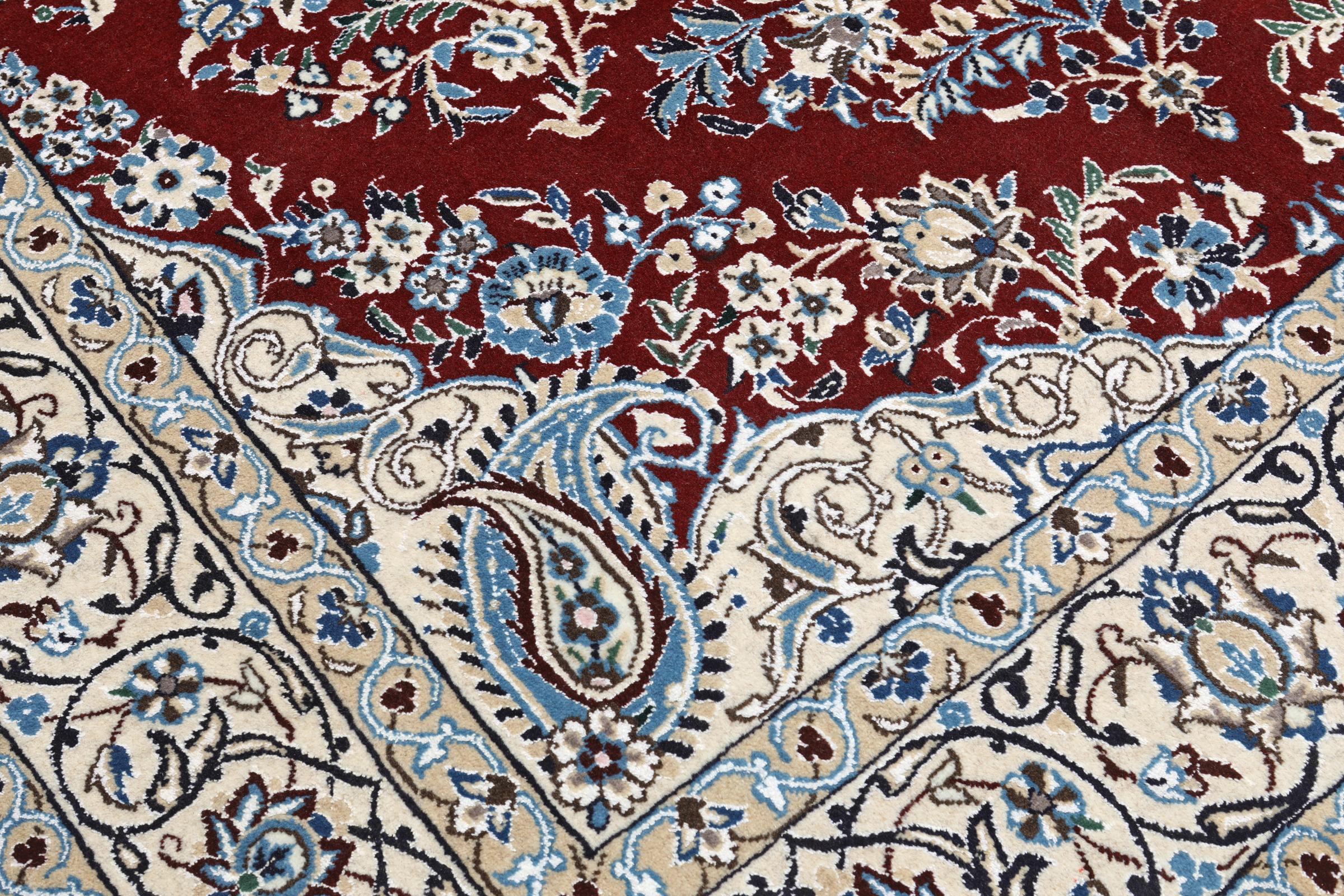
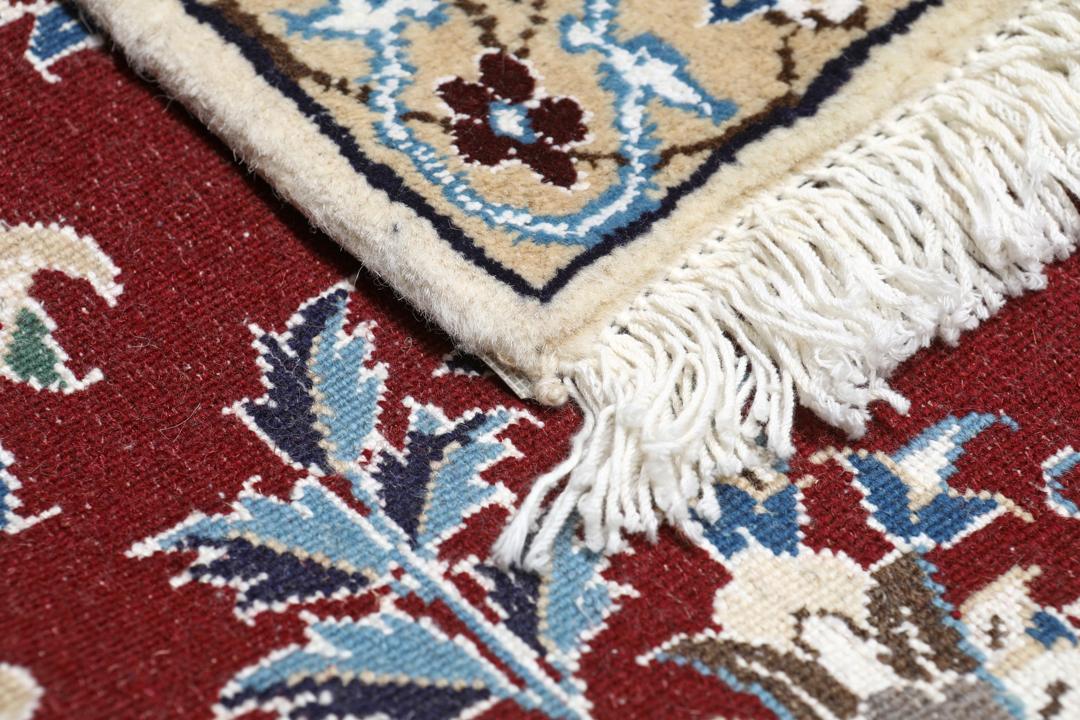
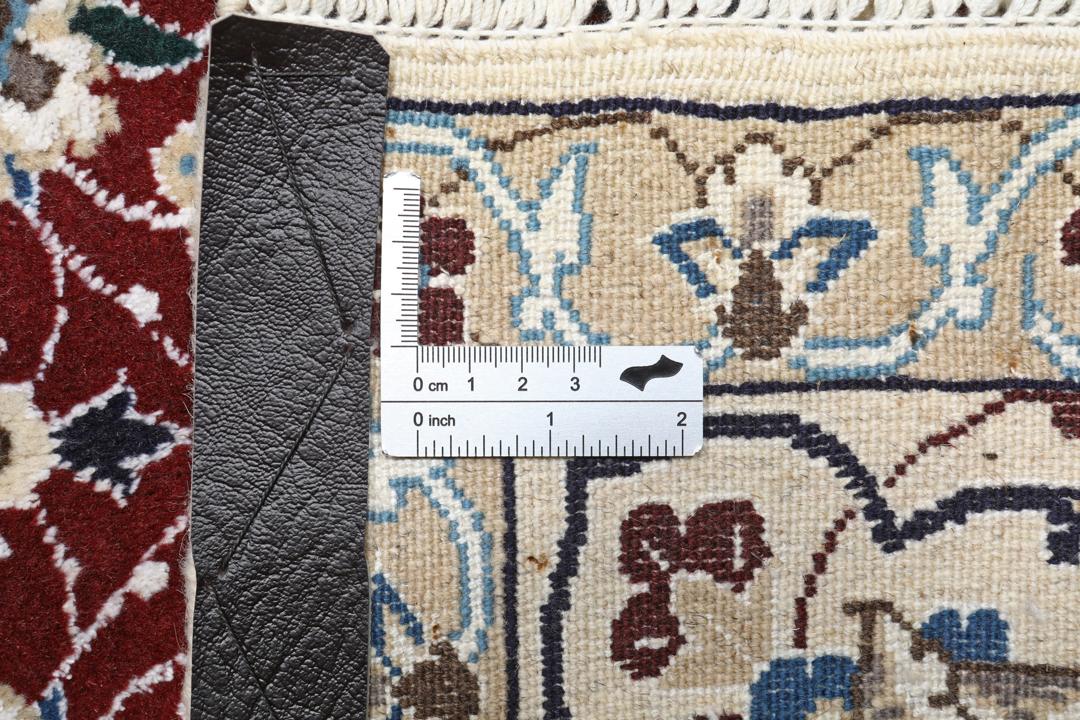
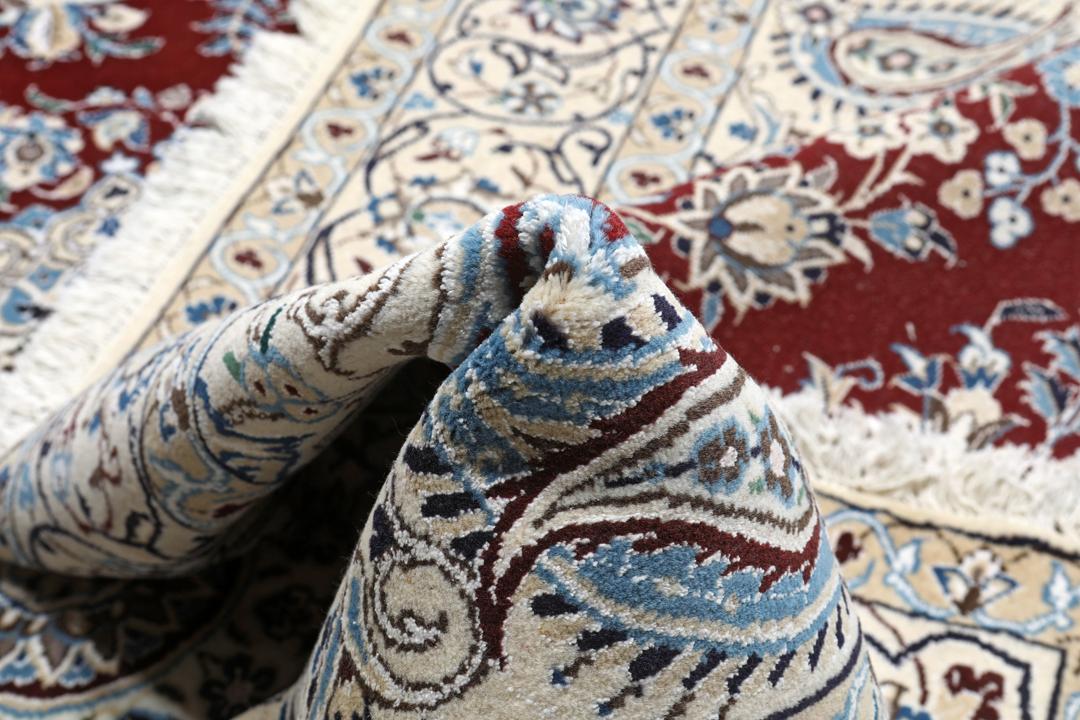
The '9La' designation refers to the number of threads used in the fringe, which serves as a technical indicator of the rug's fineness and quality. A lower number, such as 9, signifies a higher density of knots and more delicate, precise weaving, which translates to a more luxurious pile and a greater level of detail in the finished artwork.
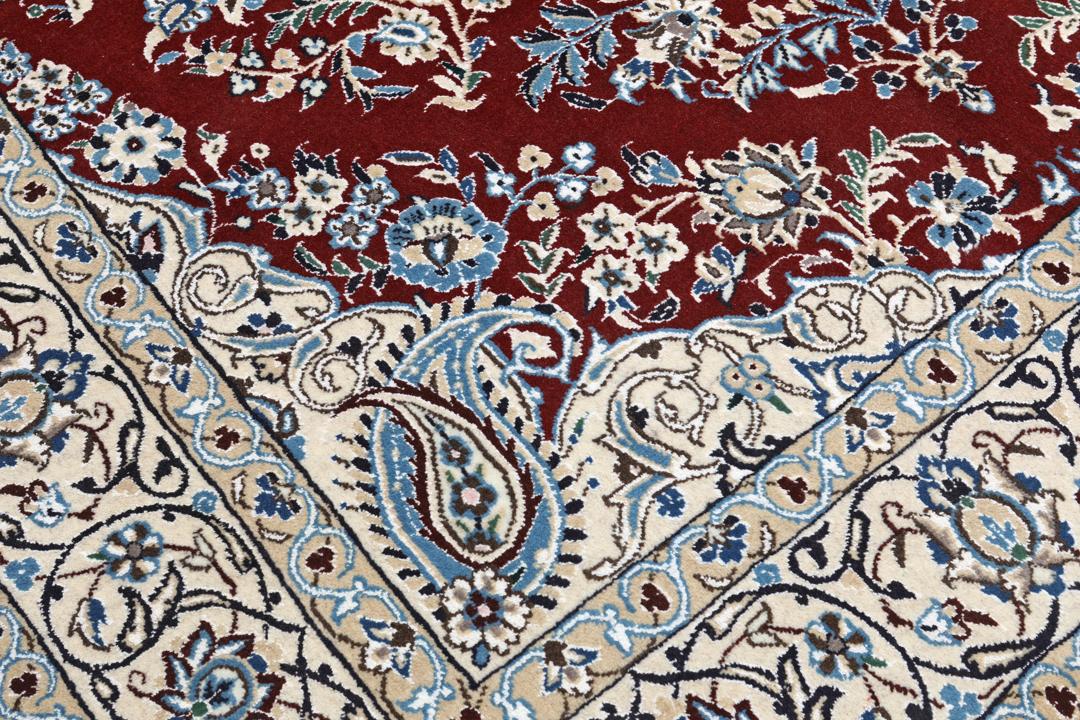
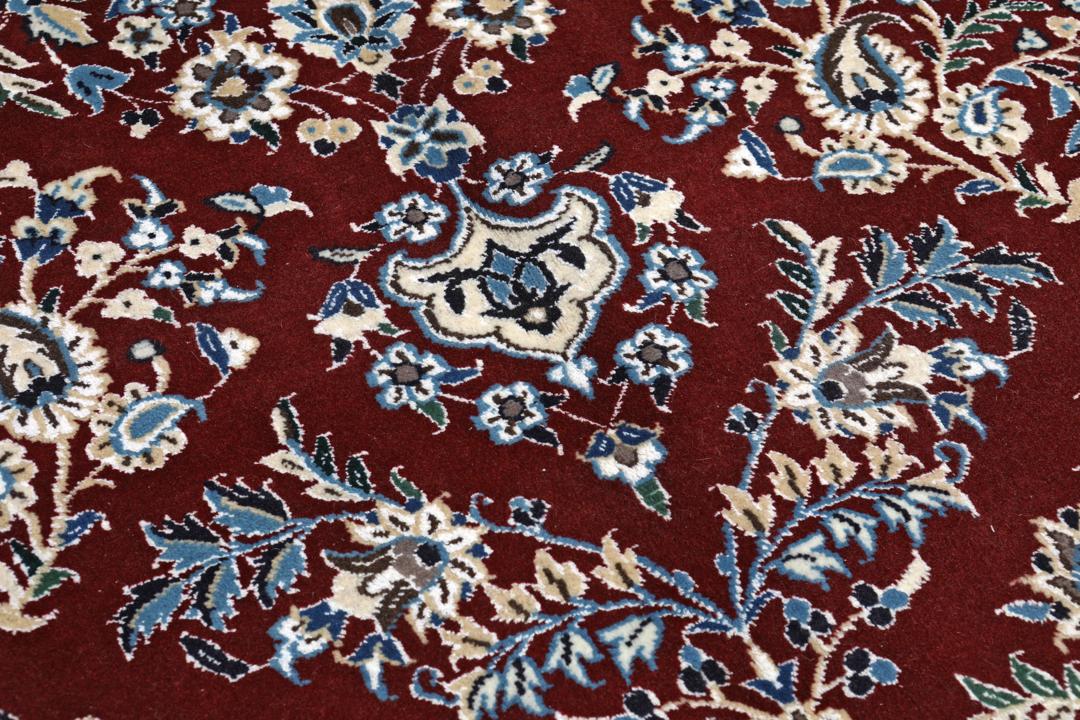
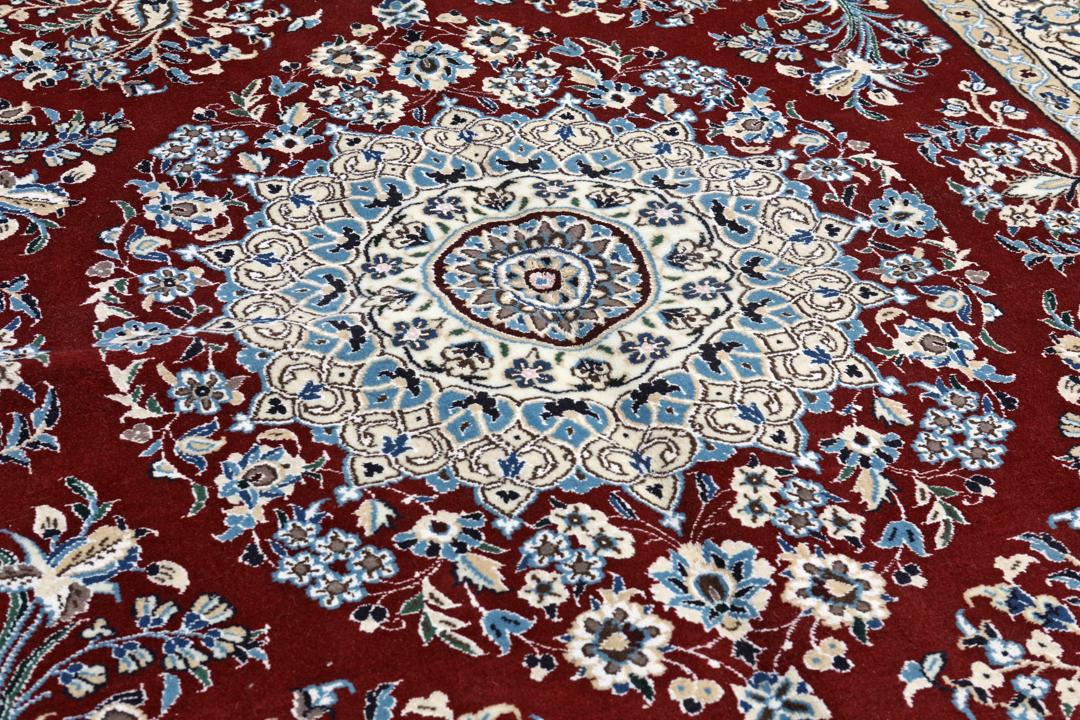
Nain rugs are celebrated for their distinctive aesthetic, which typically features a central medallion set against a field of floral scrolls and arabesques. While often rendered in cream or blue, pieces that incorporate bold colours like deep red are particularly prized for their dramatic contrast and the way they highlight the complexity of the design.
Owning a Nain rug is considered an investment in cultural heritage and exceptional craftsmanship. These pieces are highly sought after by collectors who value the blend of traditional techniques and refined artistry, making each rug not just a functional item, but a testament to a long-standing legacy of beauty and skill.