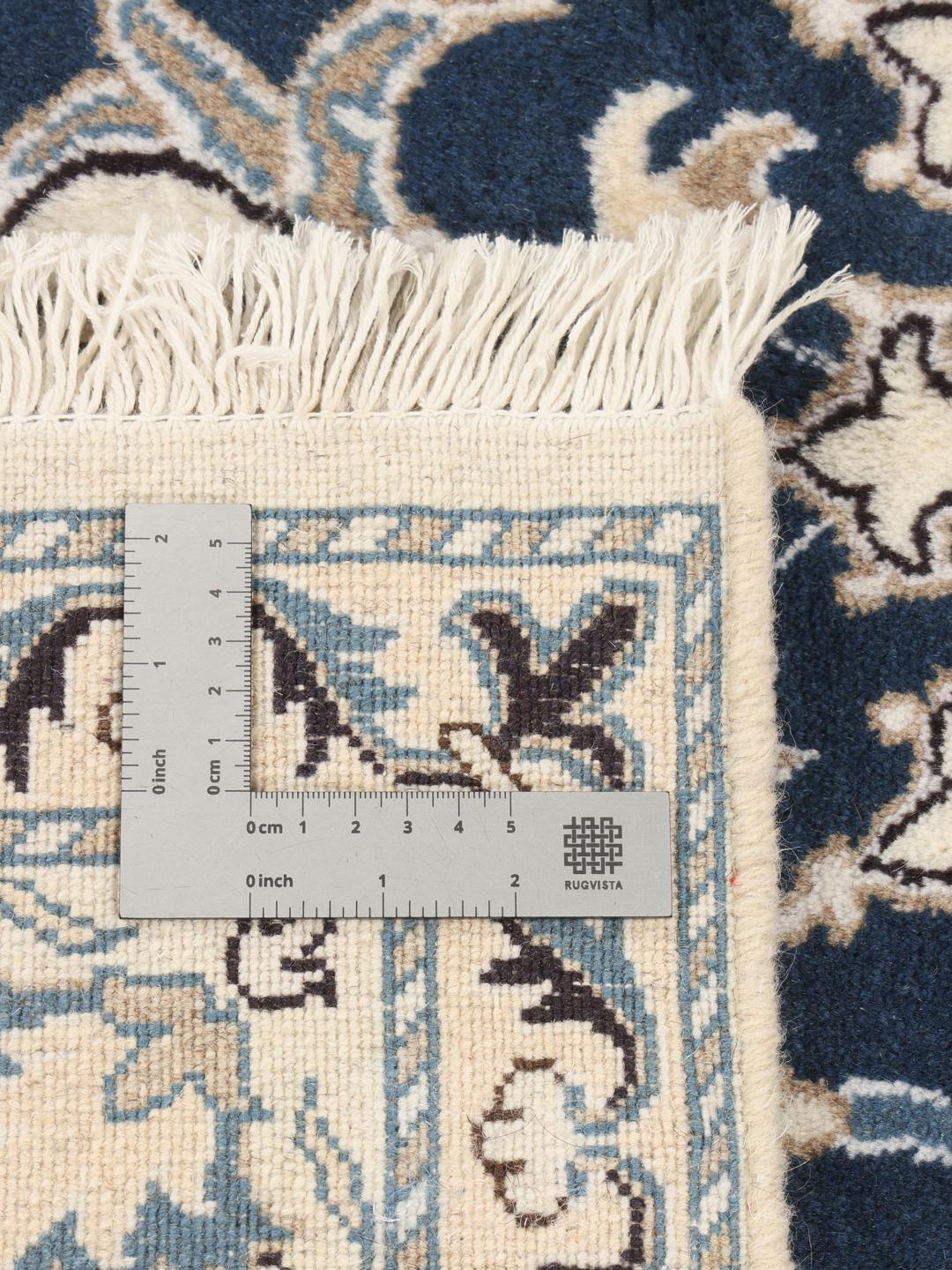
Nain rugs trace their origins to the historic town of Nain in the Middle East, a region with a storied reputation for producing some of the most elegant and refined textiles in the world. Historically famous for its high-quality wool and silk textiles, Nain evolved into a major centre for rug weaving in the early 20th century. The weavers there developed a distinct style that favours light, airy designs and a sophisticated colour palette, setting them apart from the more saturated, bolder styles found in neighbouring regions.
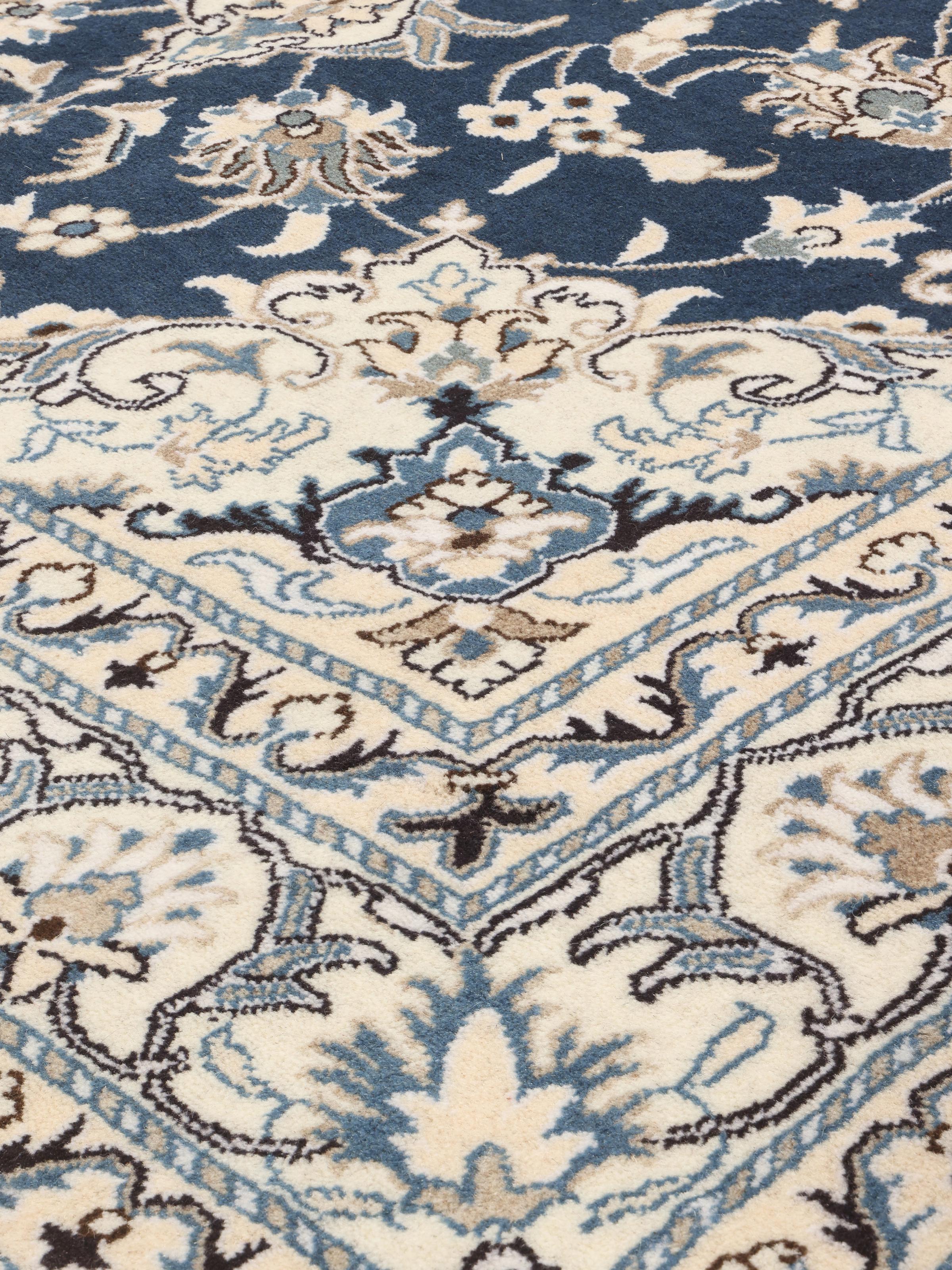
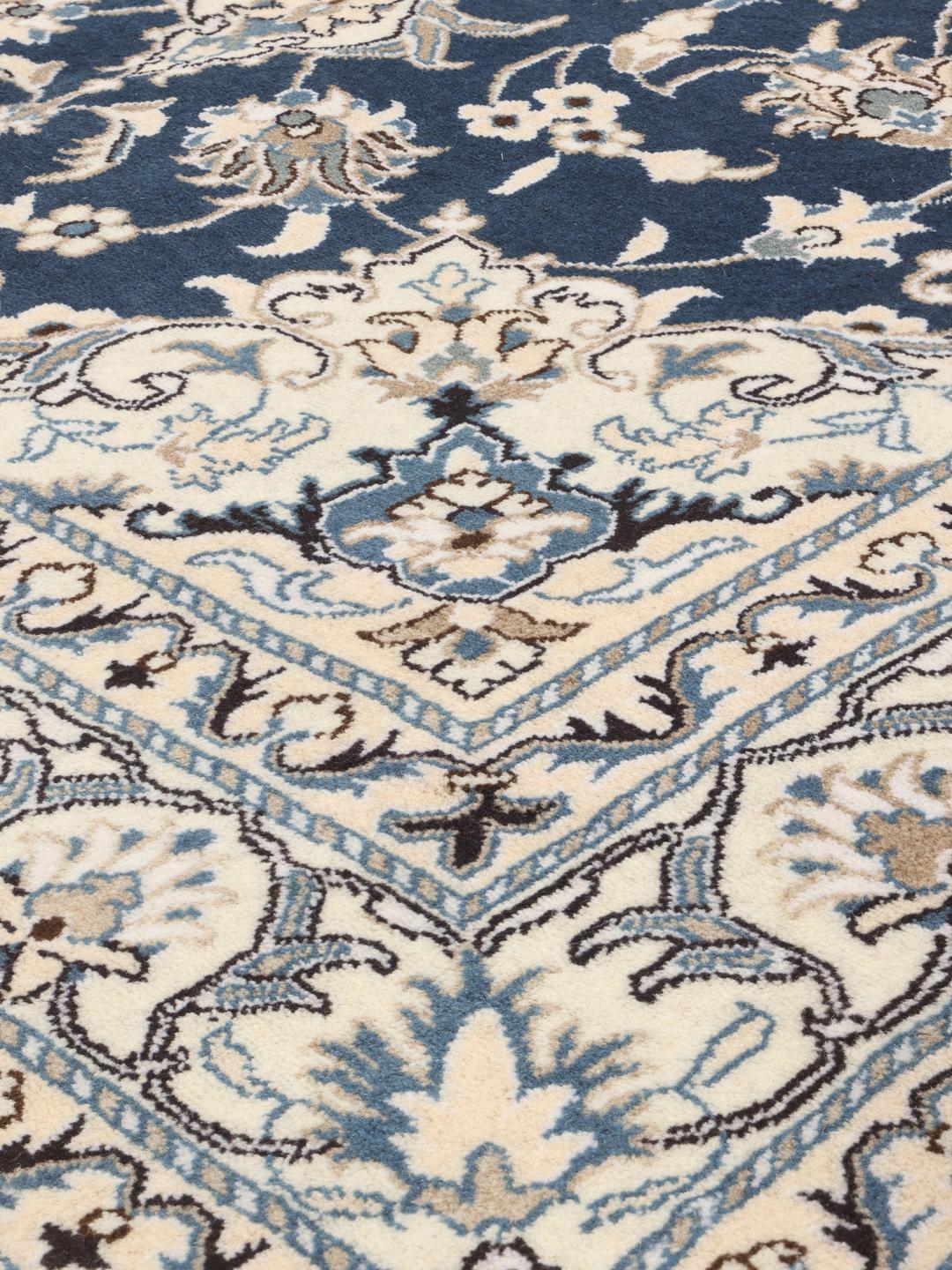
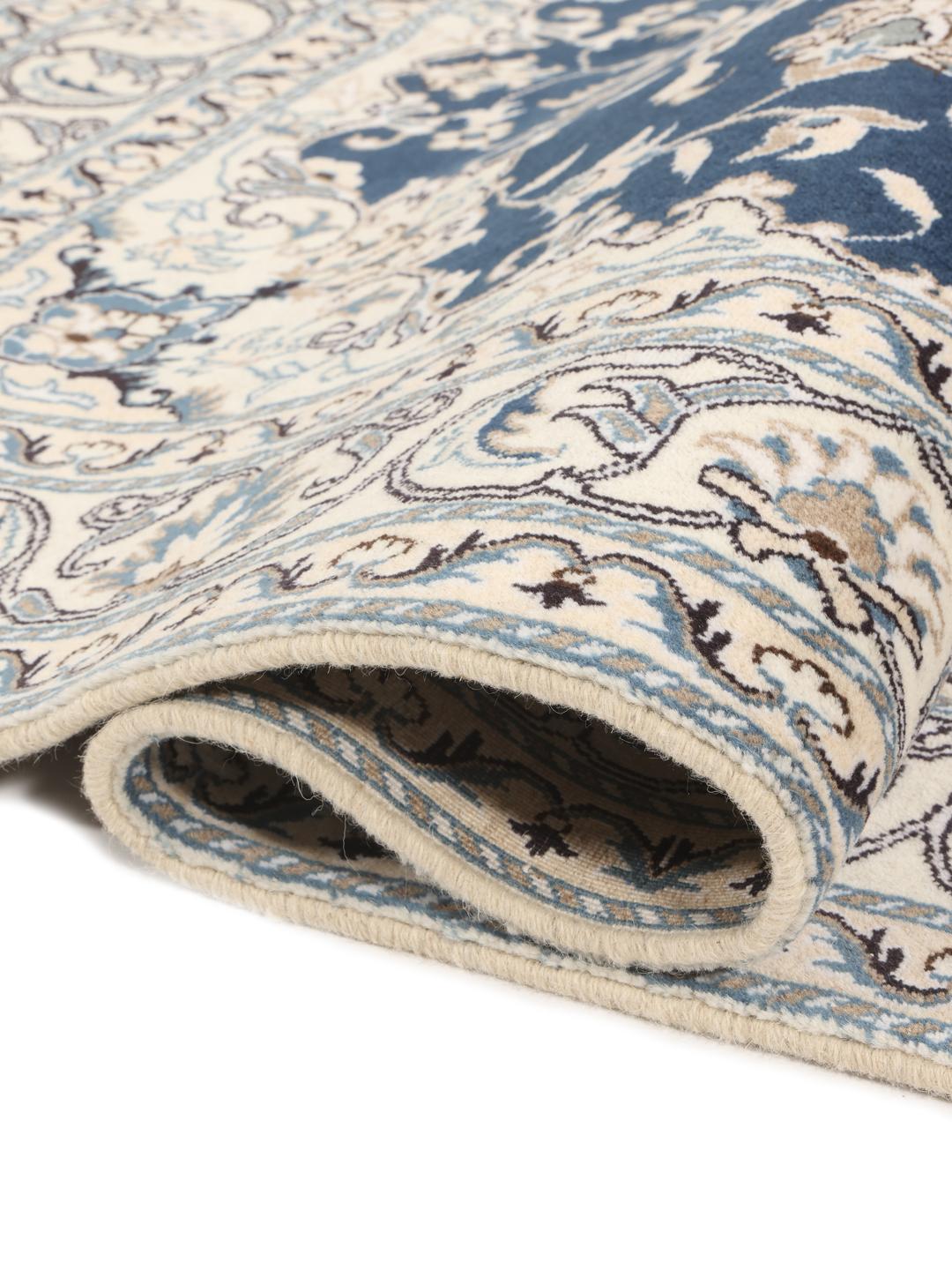
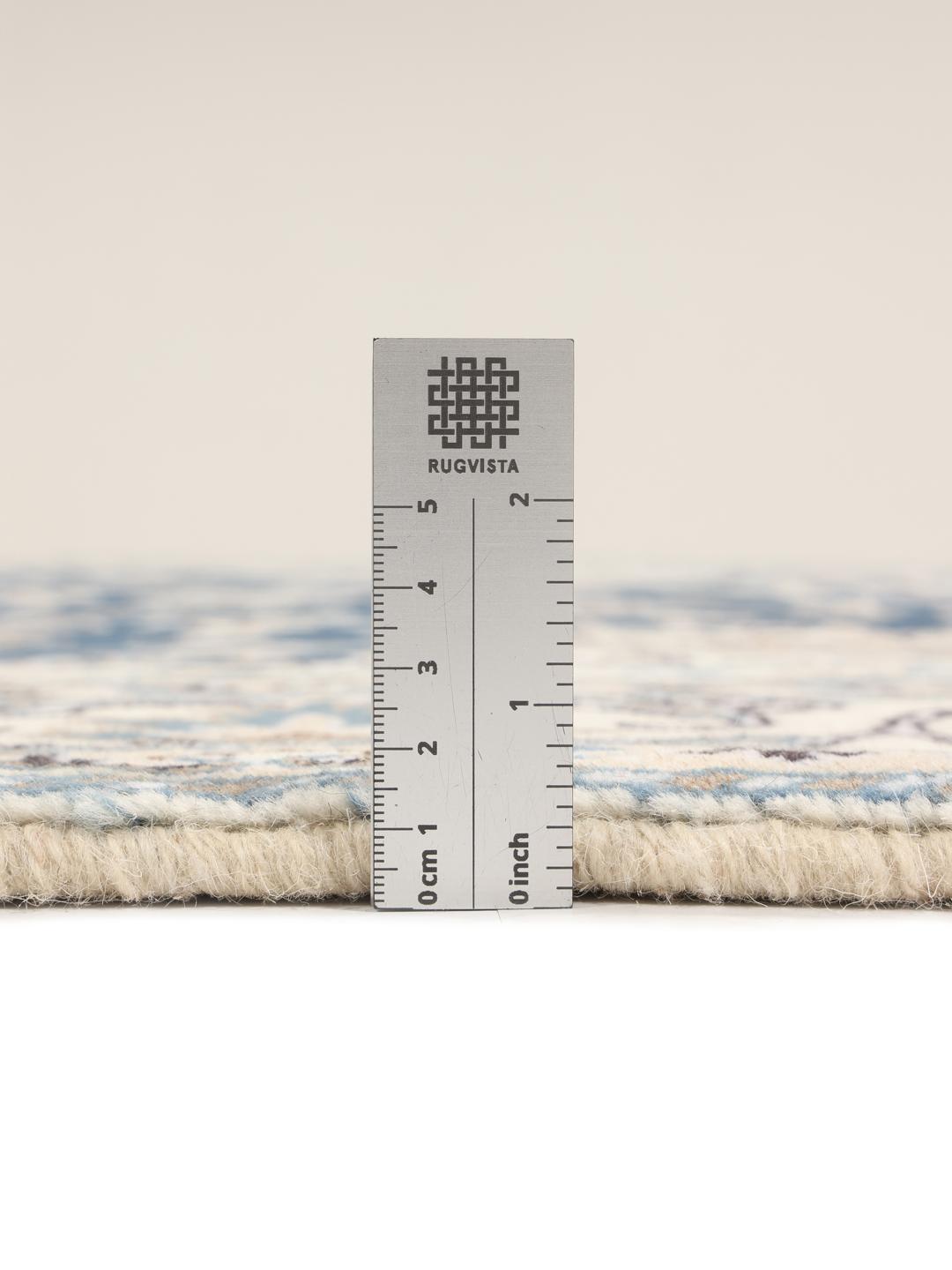
The quality of a Nain rug is often classified by the fineness of its construction, which dictates the level of detail possible in the pattern. These rugs are known for their exceptional density, which allows for the intricate, sweeping floral curves and delicate arabesques that are characteristic of the tradition. By using high-grade wool, the weavers ensure that the pile is not only durable but also capable of holding a subtle lustre that catches the light, adding depth to the complex motifs.
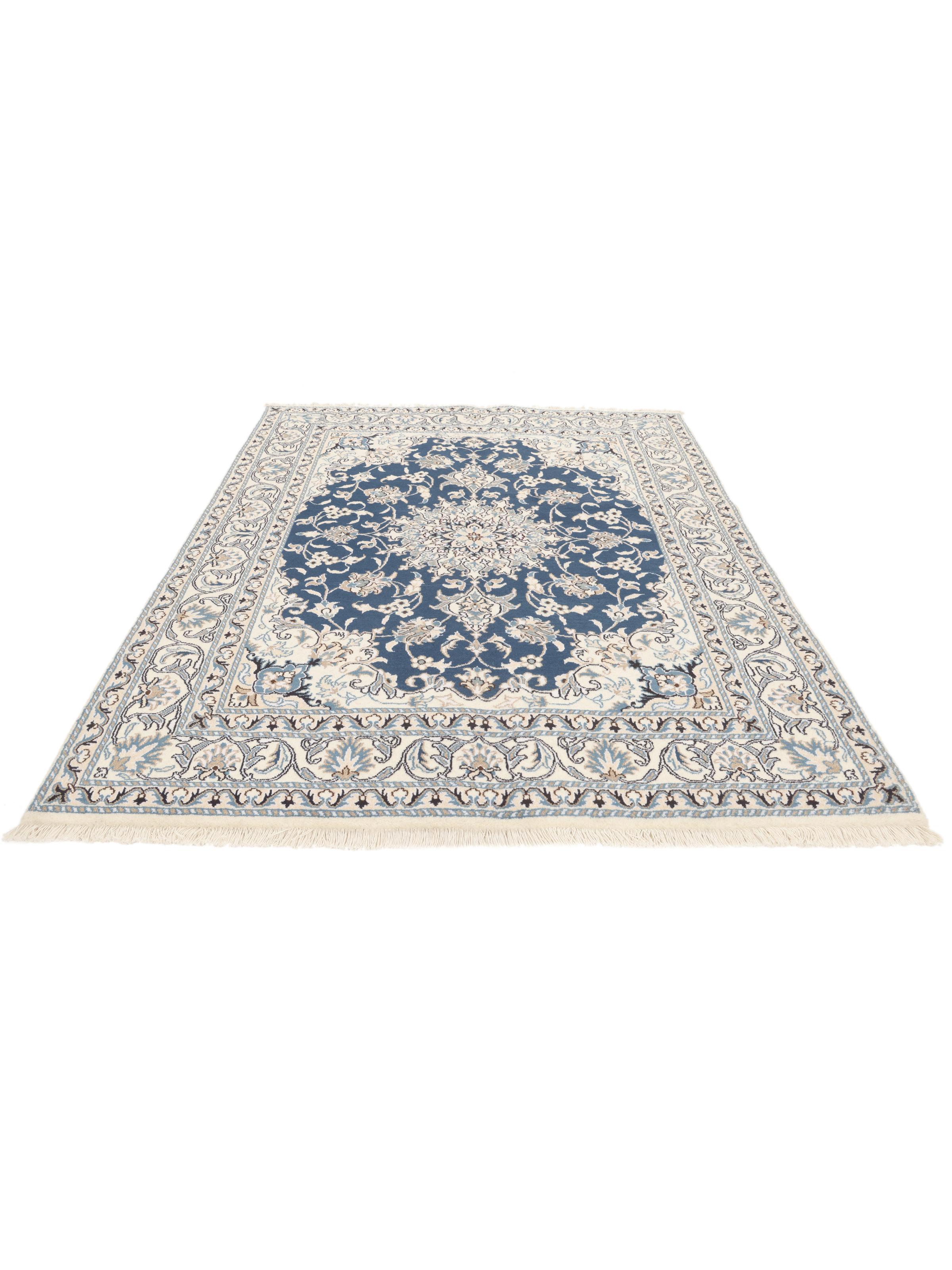
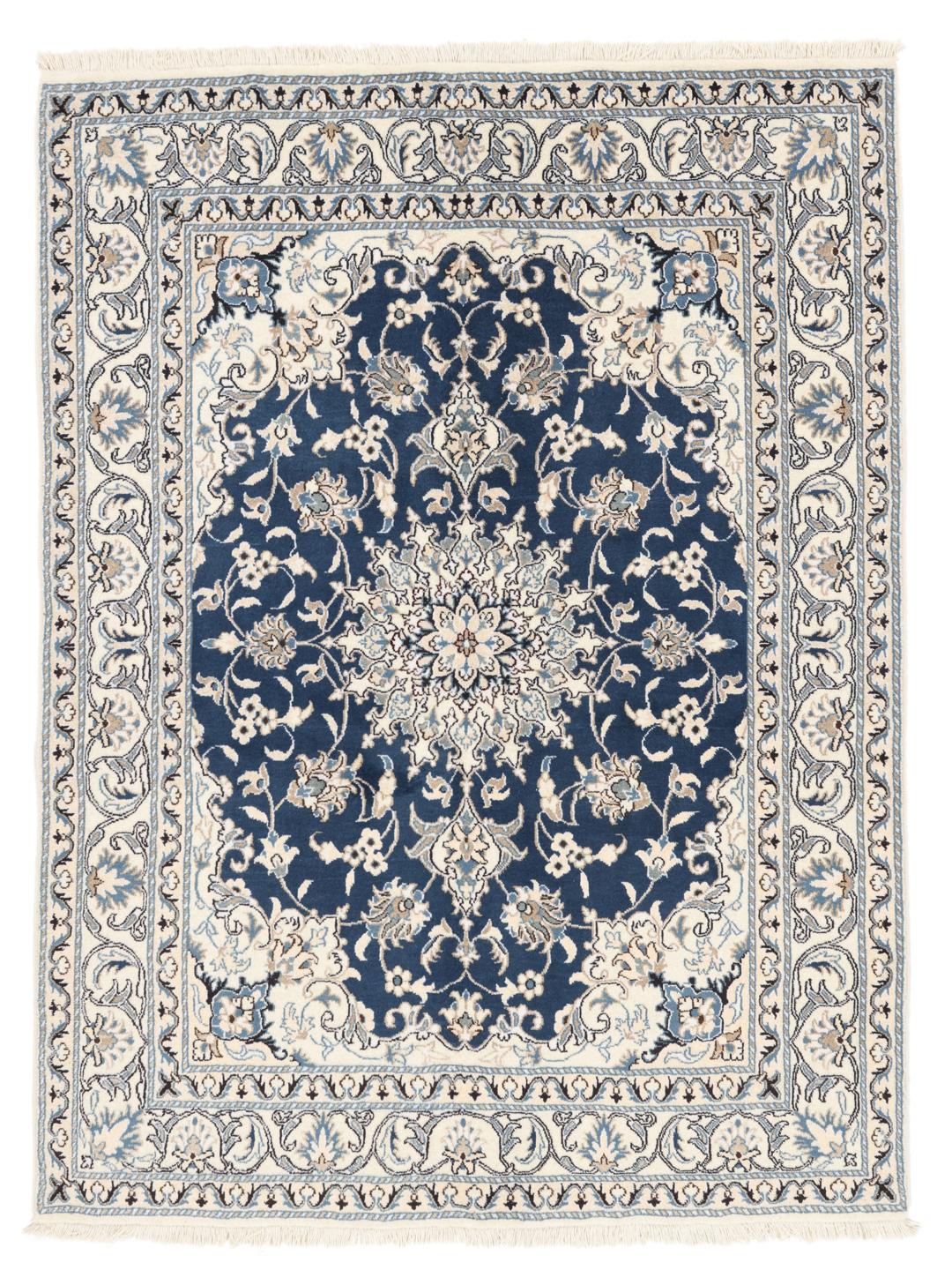
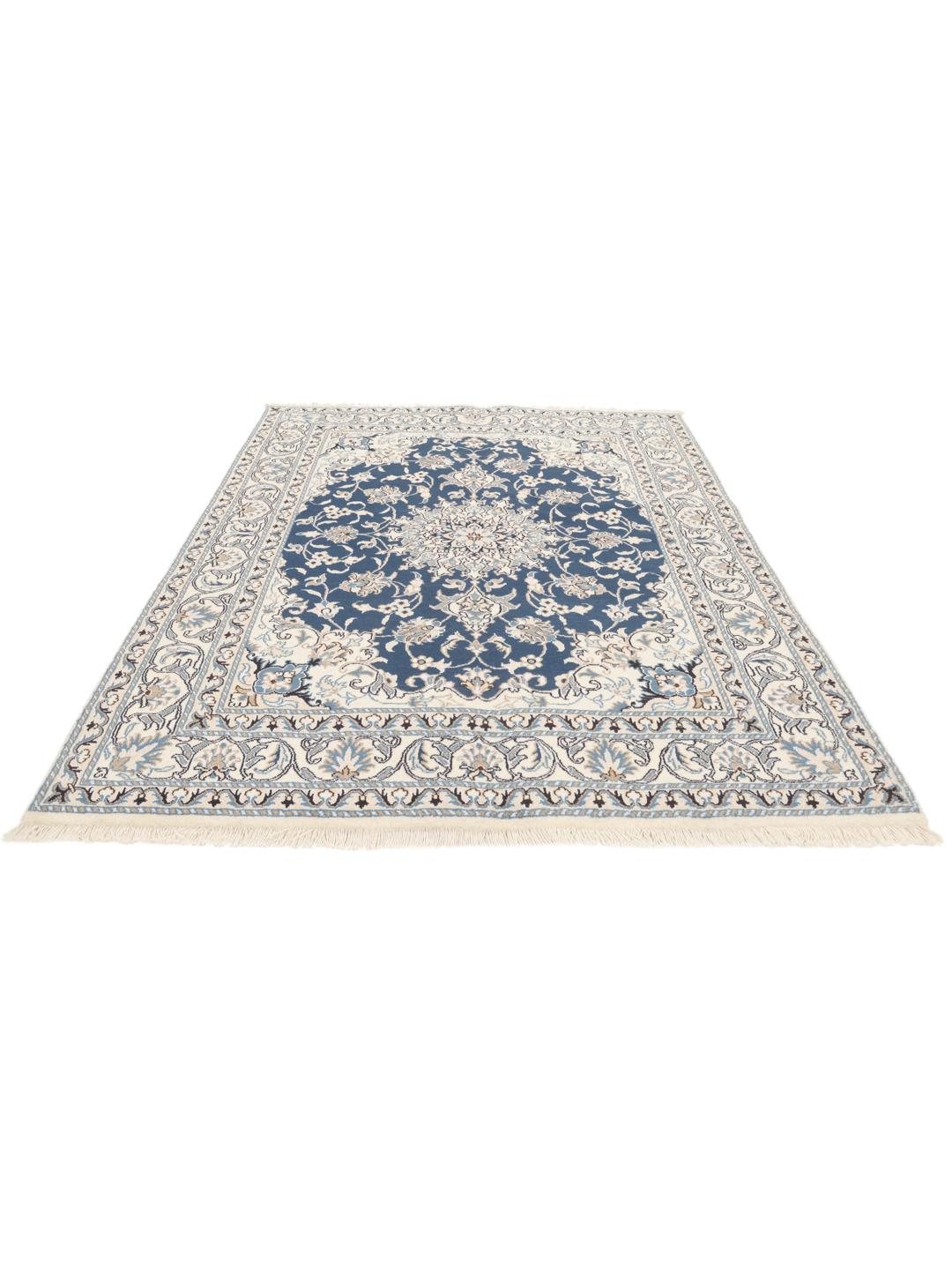
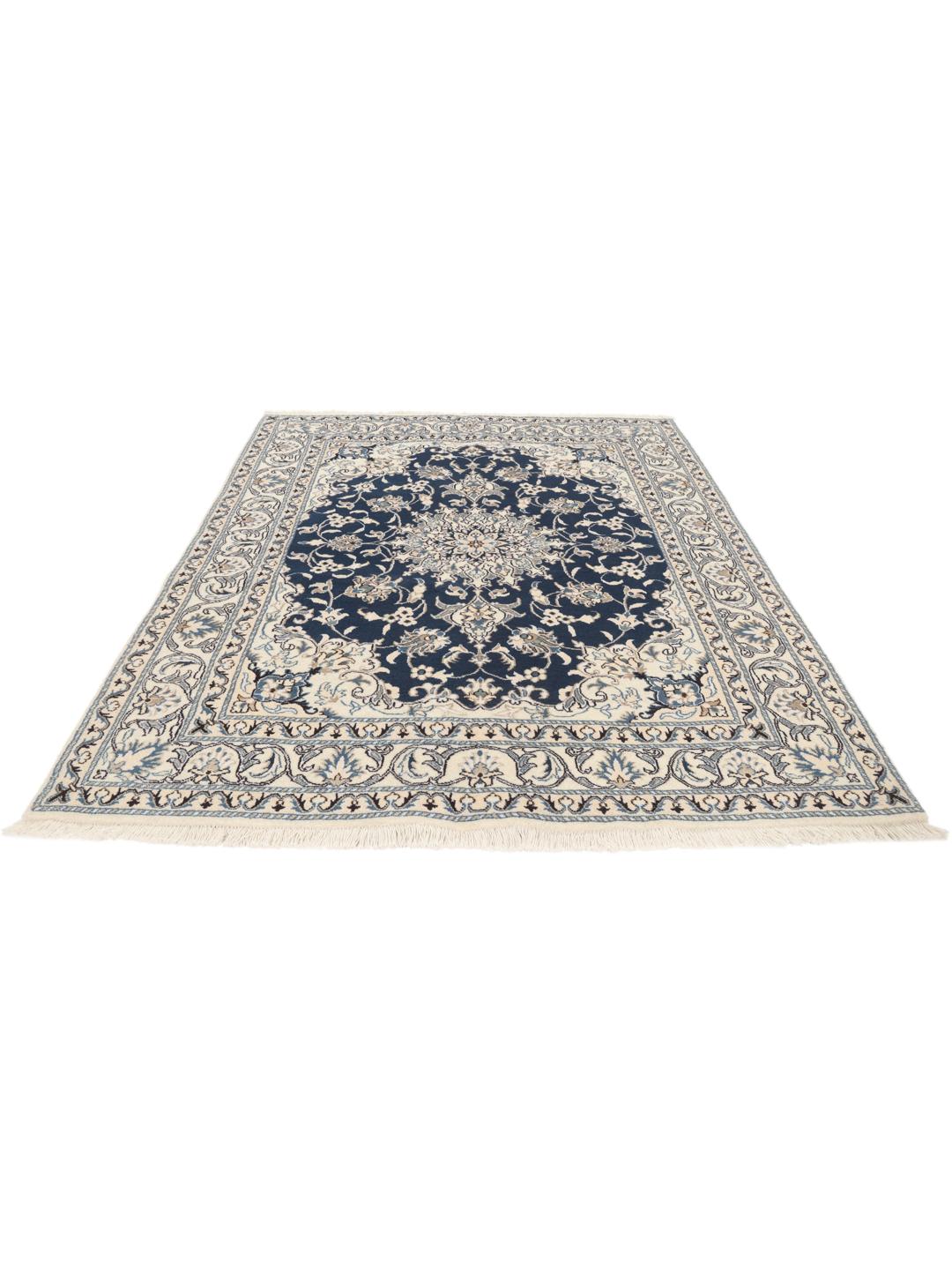
Signature design elements of the Nain tradition typically include a central medallion surrounded by a sea of scrolling vines, palmettes, and leaves. The borders are usually multi-layered and just as detailed as the field, often featuring a repeating pattern that frames the central composition perfectly. The use of ivory, cream, and various shades of blue is a classic hallmark of the Nain style, designed to create a sense of elegance and spaciousness in any room.
Collecting a Nain rug is an entry into a legacy of artistic precision and cultural history. These rugs are highly valued by collectors and homeowners alike for their ability to balance formal, intricate artistry with a sense of quiet grace. Owning one means participating in a tradition that prizes patience, skill, and an uncompromising standard of quality, ensuring that the rug serves as a beautiful, lasting testament to its Middle Eastern heritage.