The Bokhara rug tradition is deeply rooted in the history of the Silk Road, taking its name from the ancient city of Bukhara in Central Asia. While the designs have nomadic origins, the finest modern examples are predominantly woven in Pakistan, where artisans have refined the technique over generations to achieve a consistent, high-quality finish.
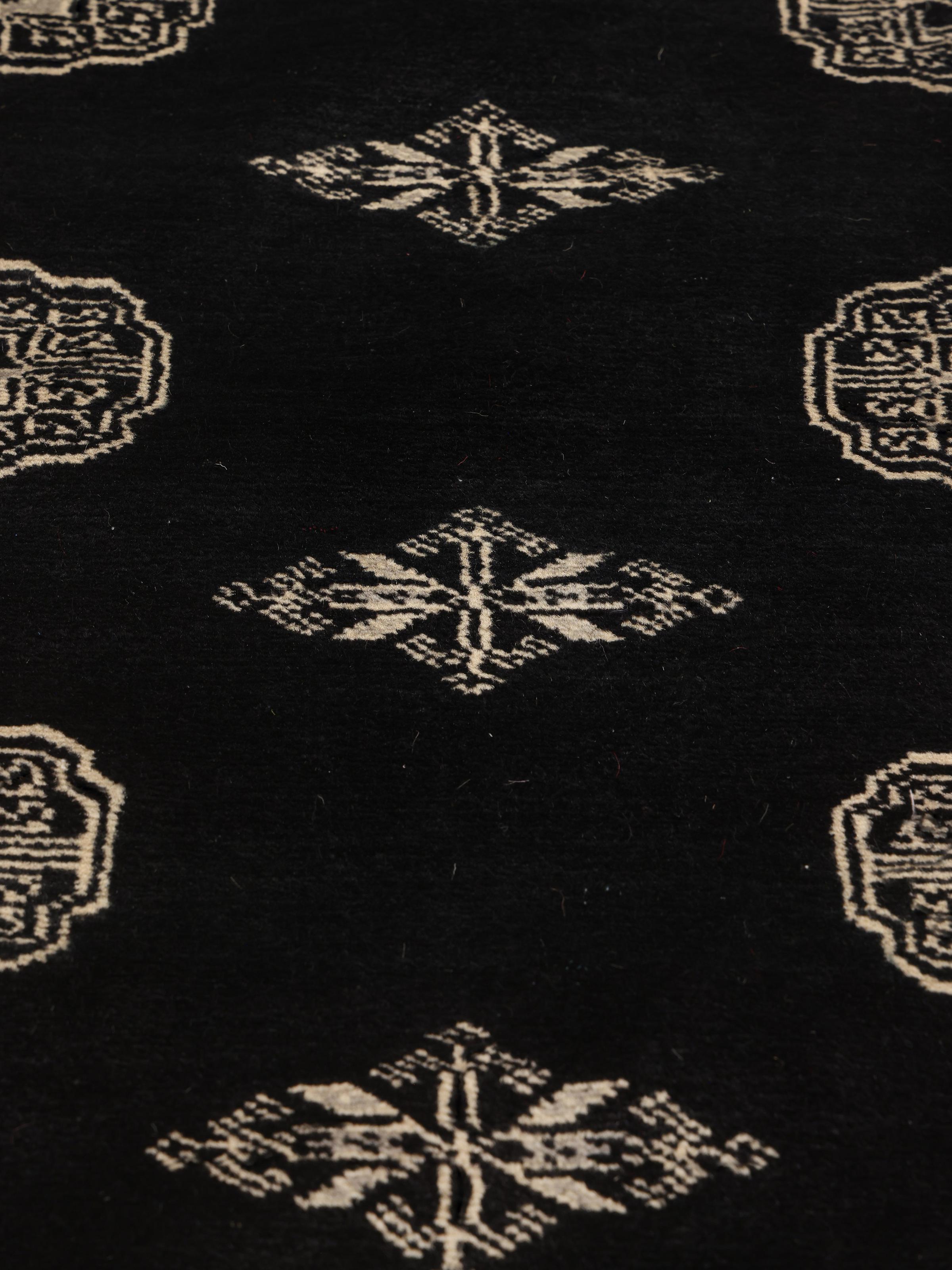
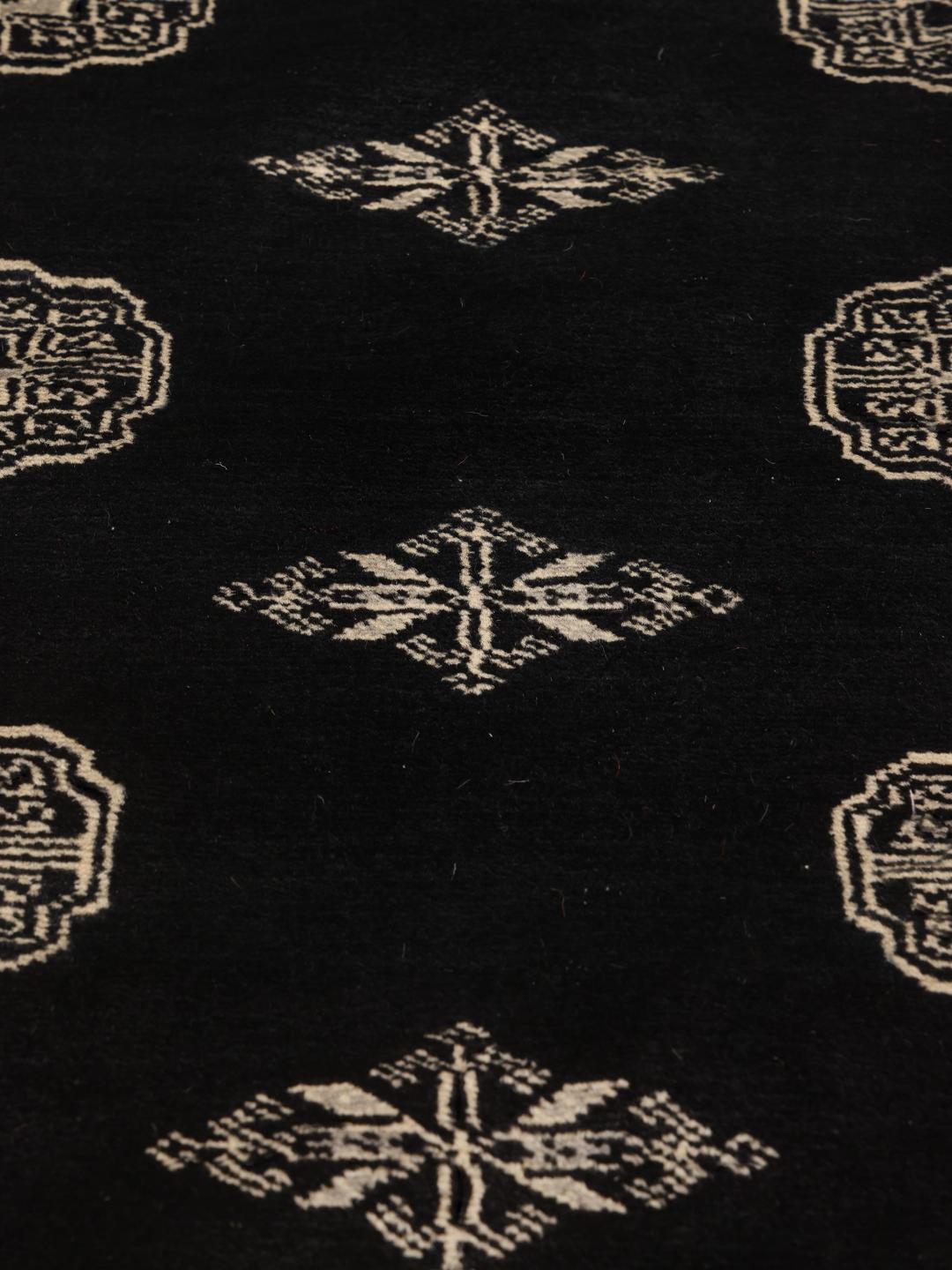
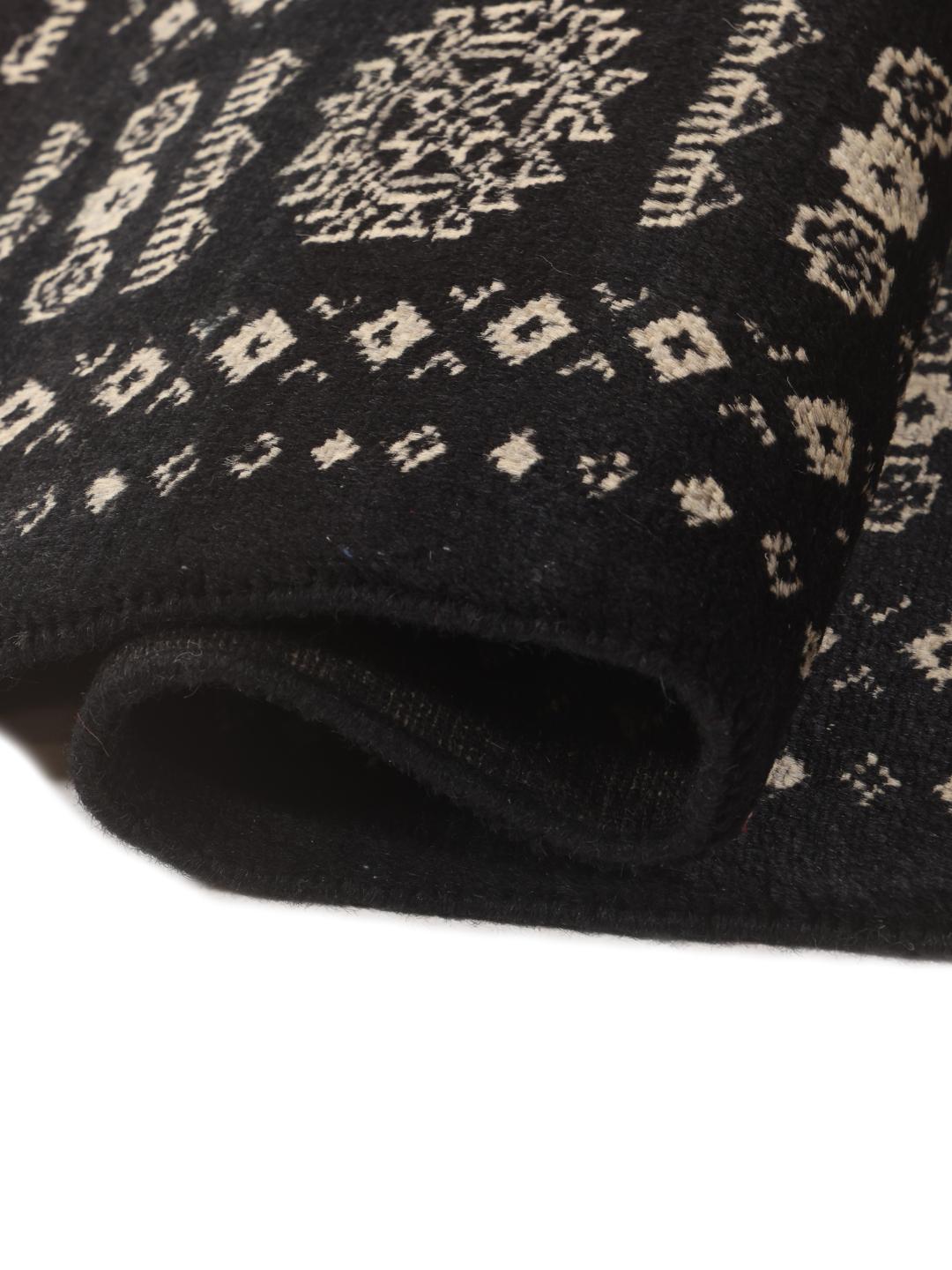
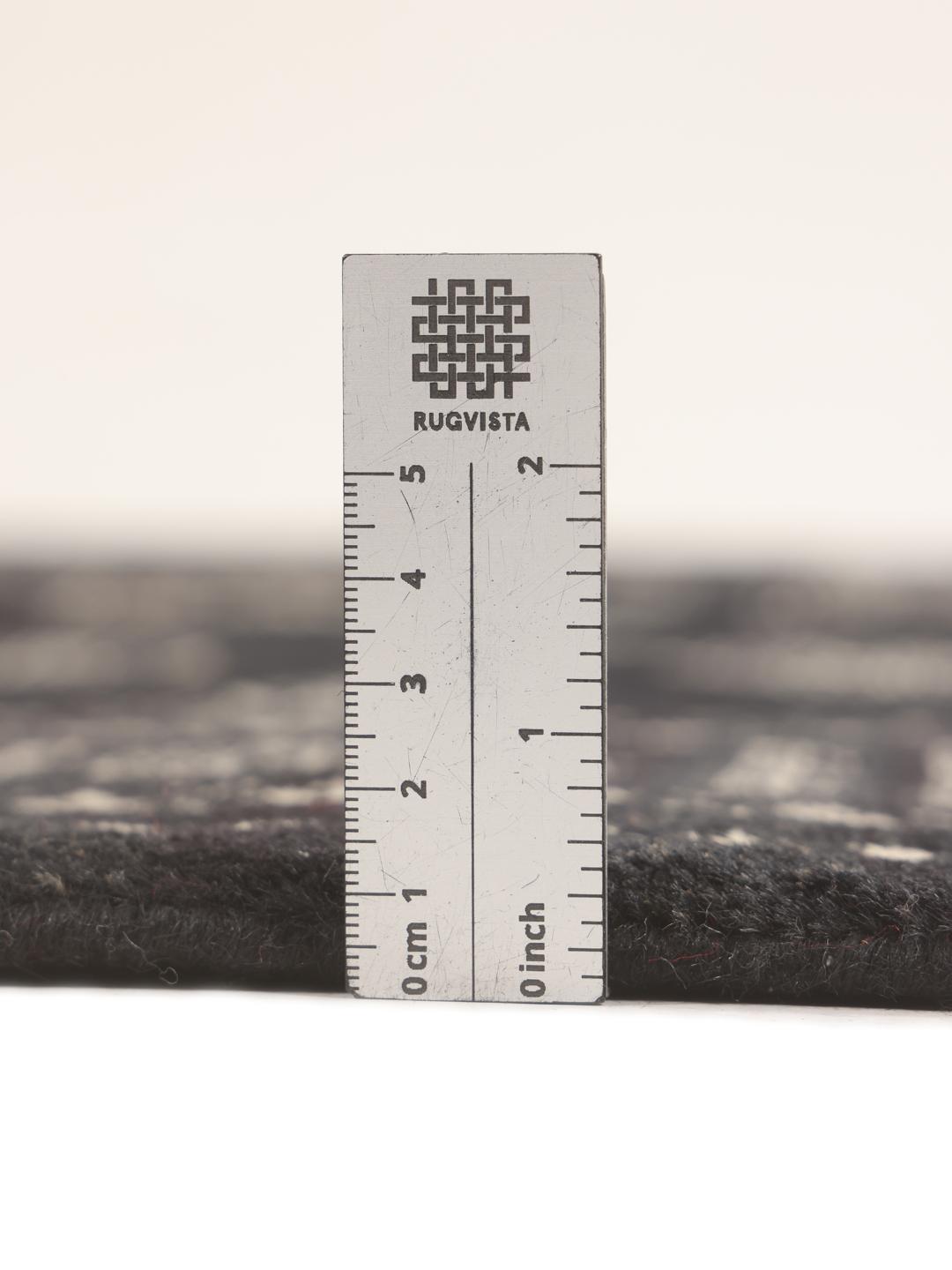
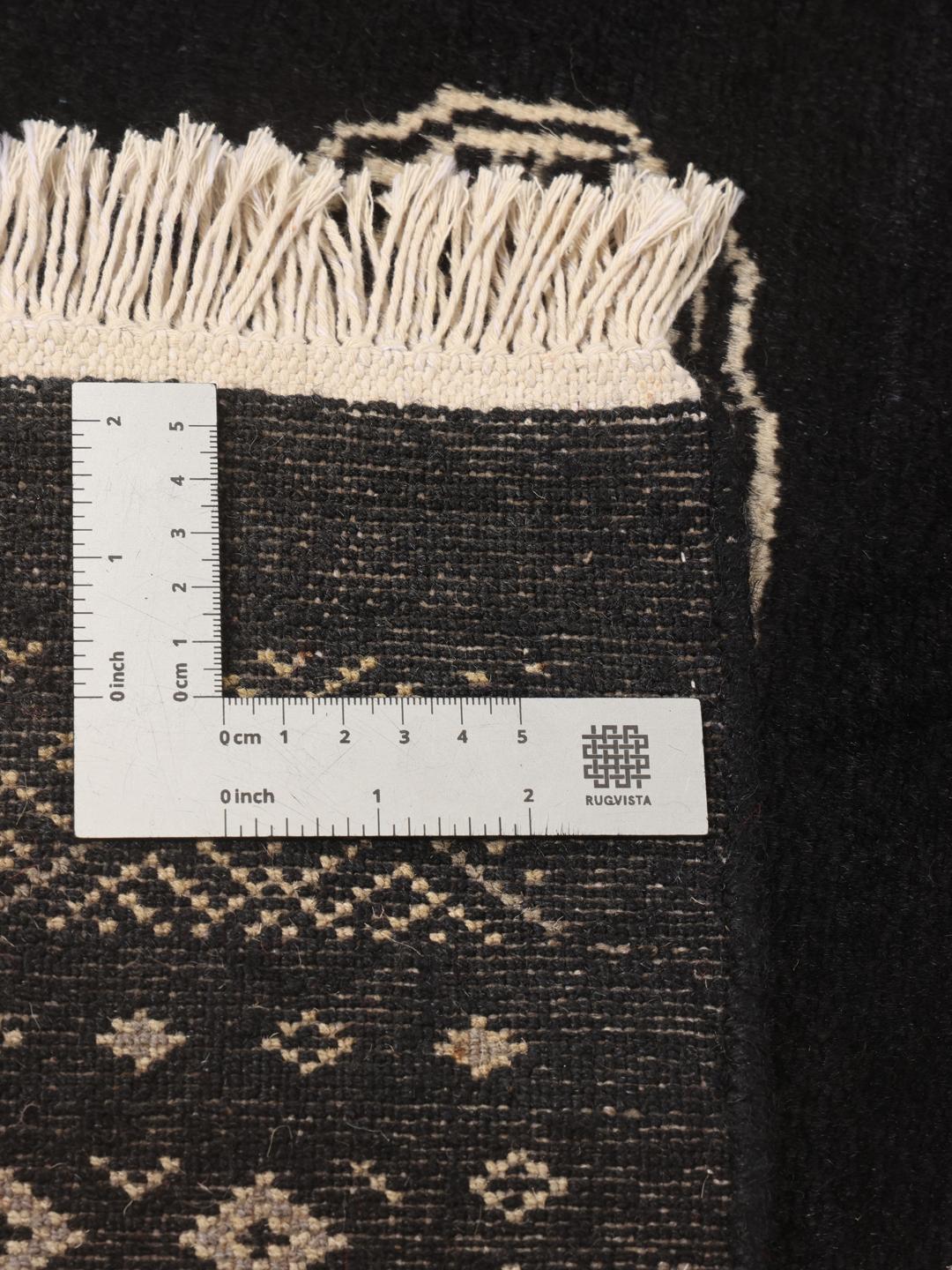
The '2ply' designation refers to the construction of the yarn, where two strands of wool are twisted together before being knotted. This method creates a pile that is noticeably more lustrous and durable than single-ply alternatives, ensuring the rug feels soft while maintaining its shape and texture under regular use.
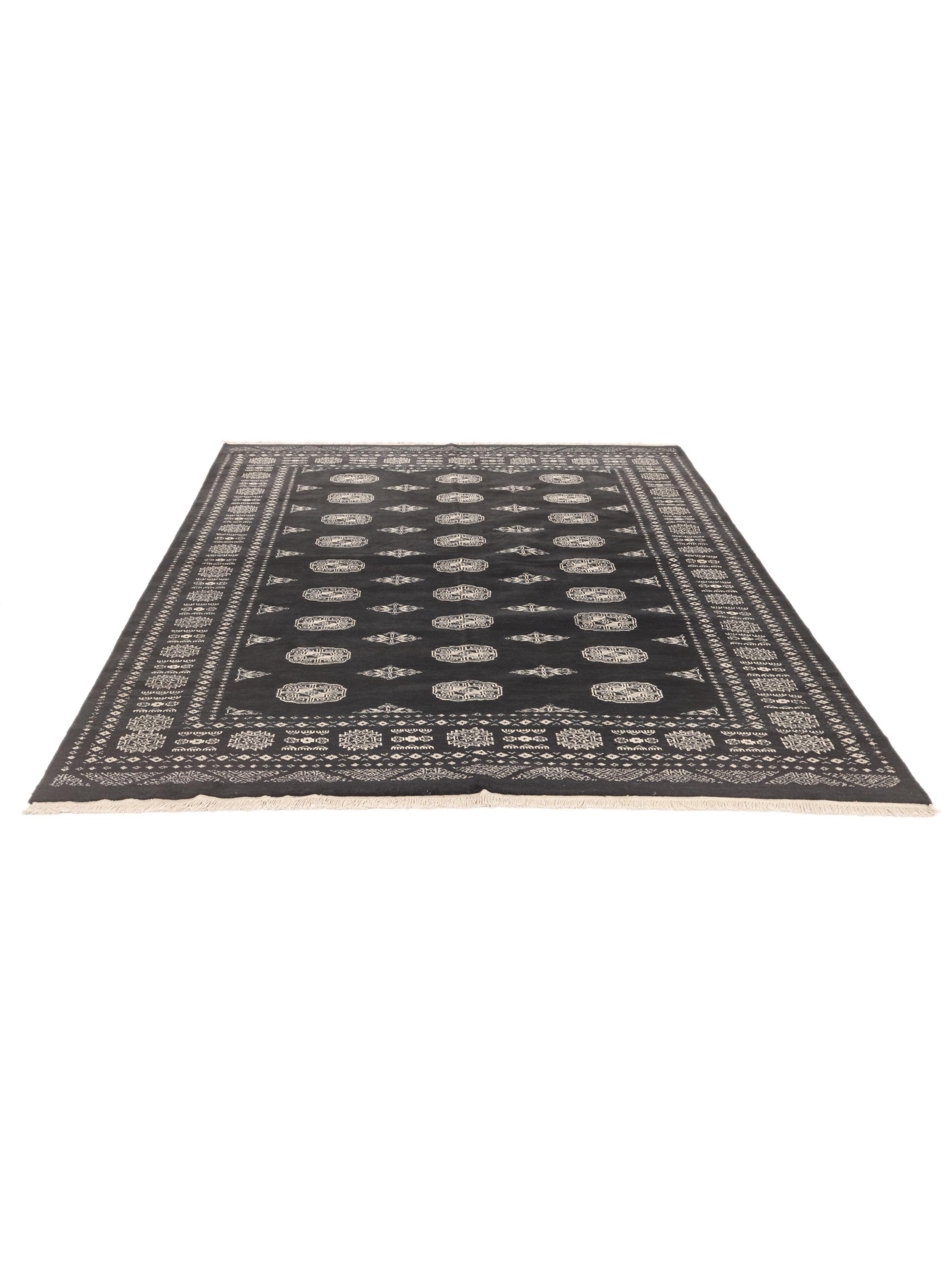
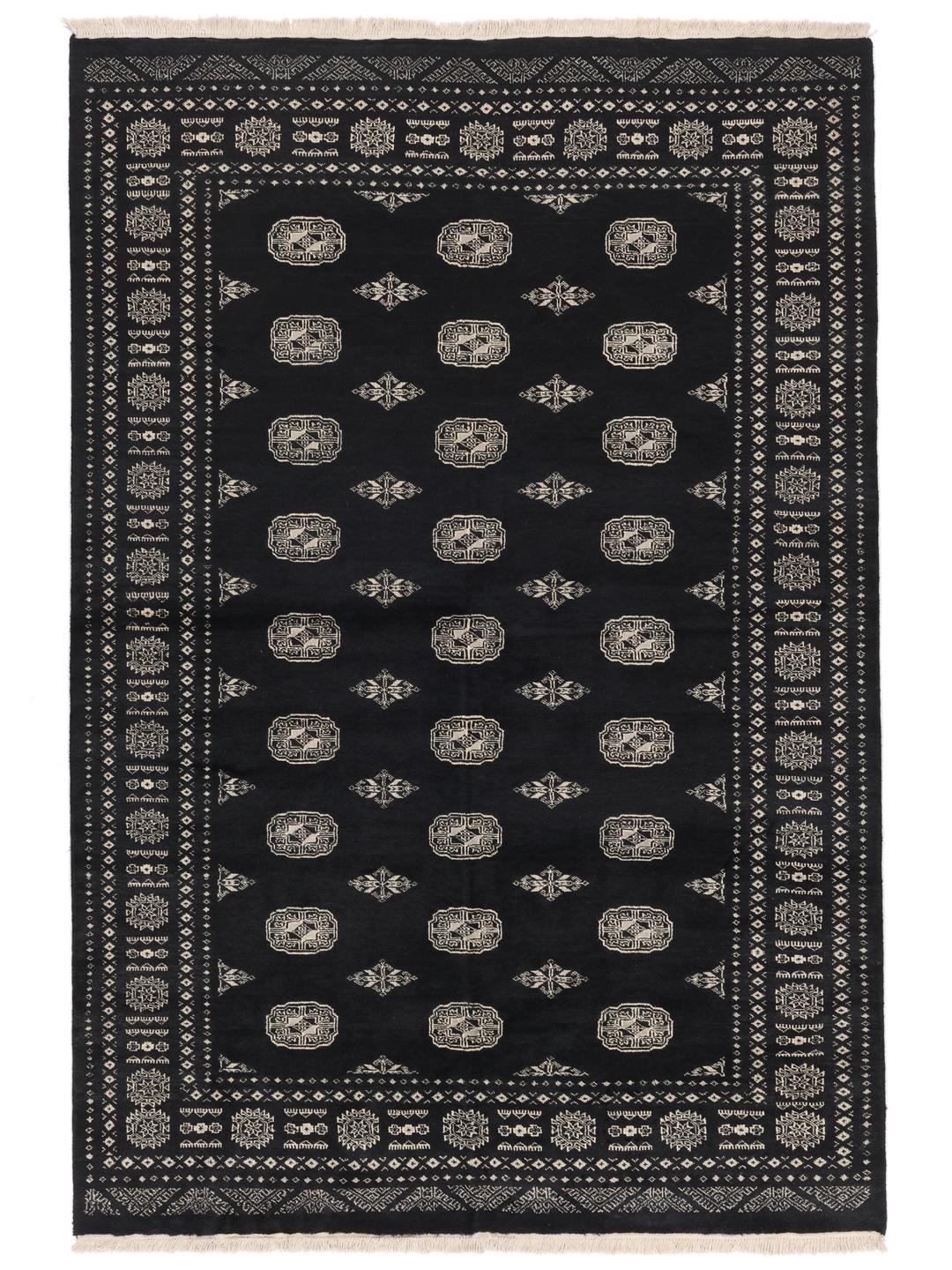
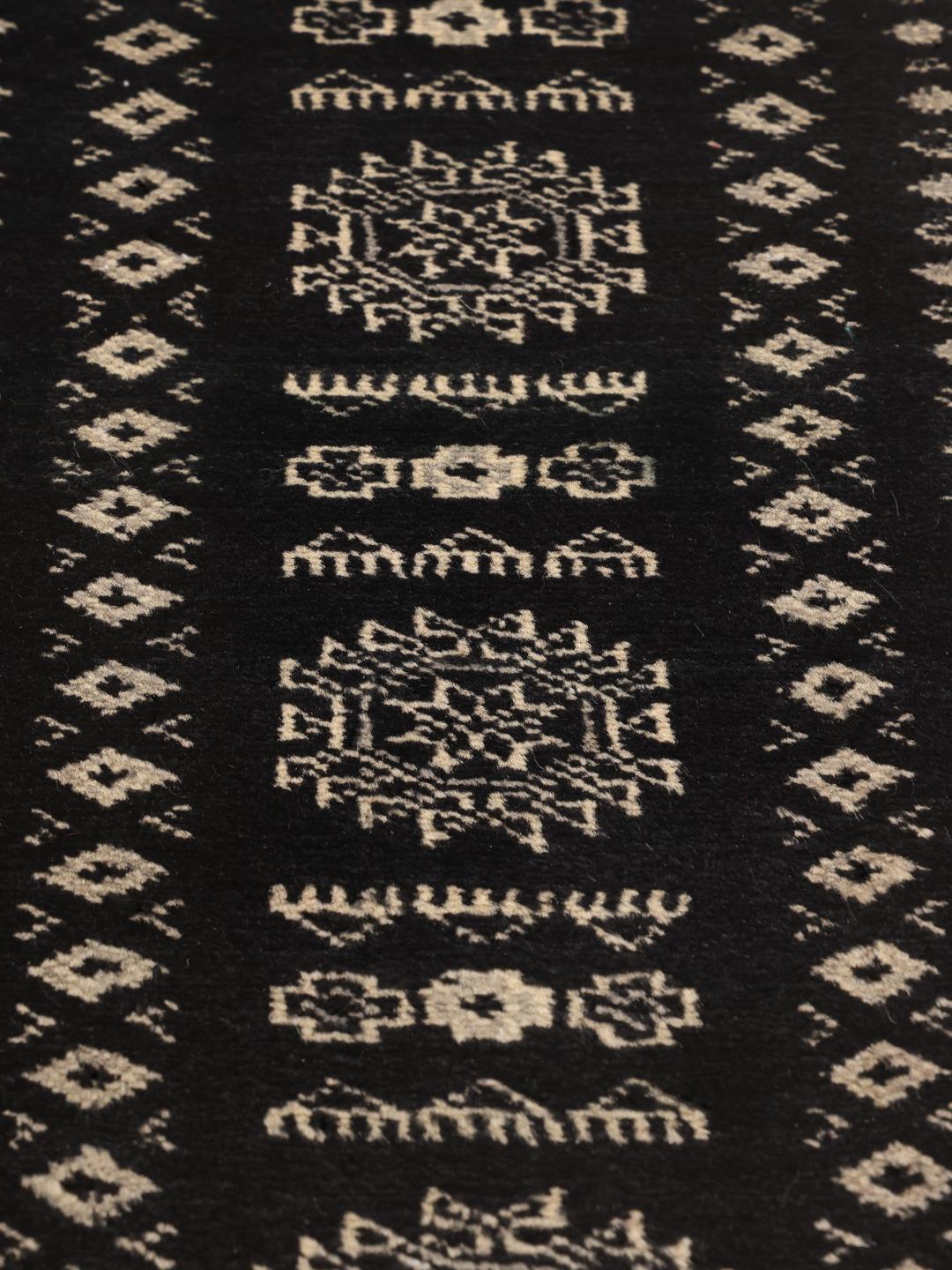
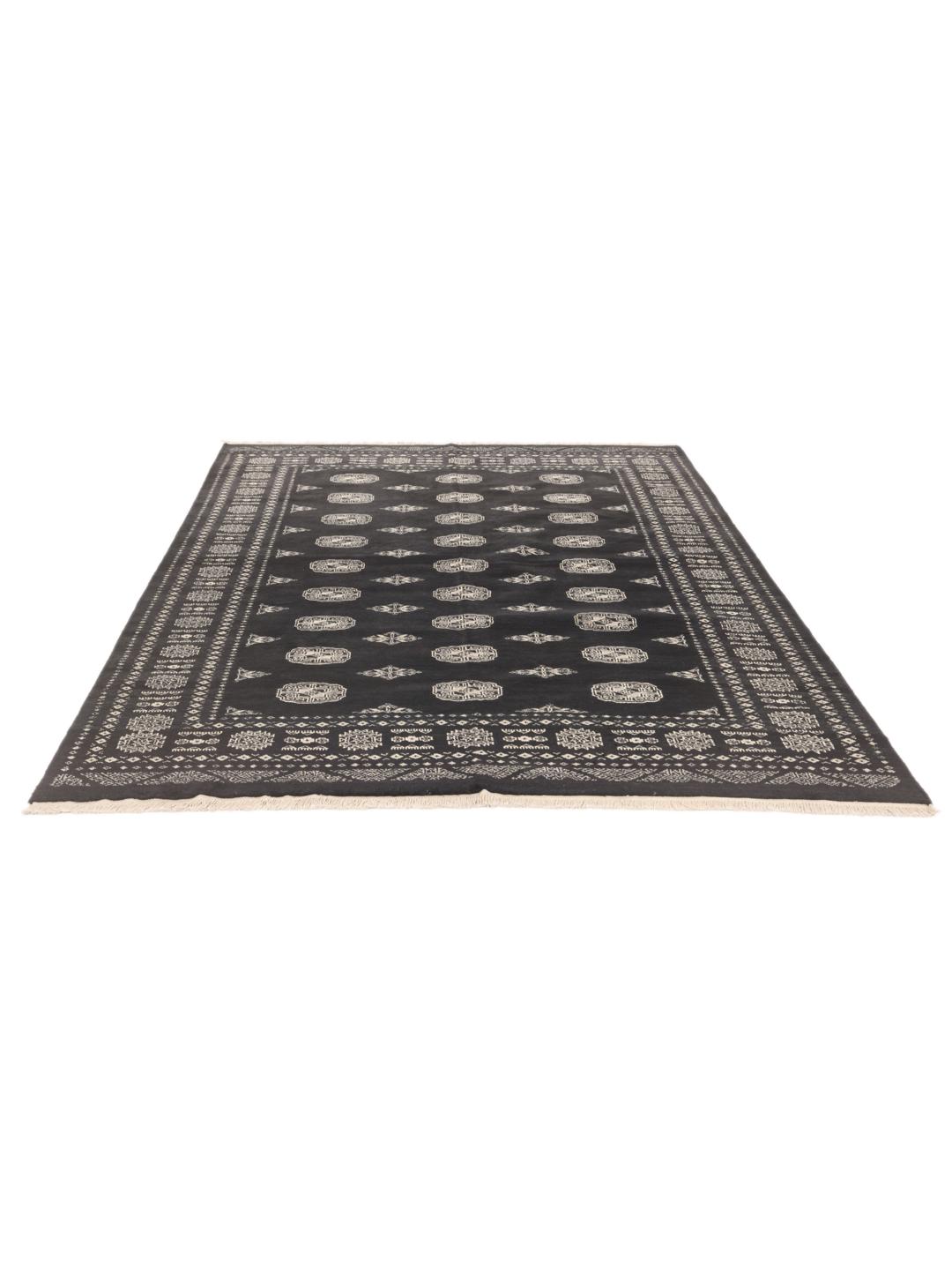
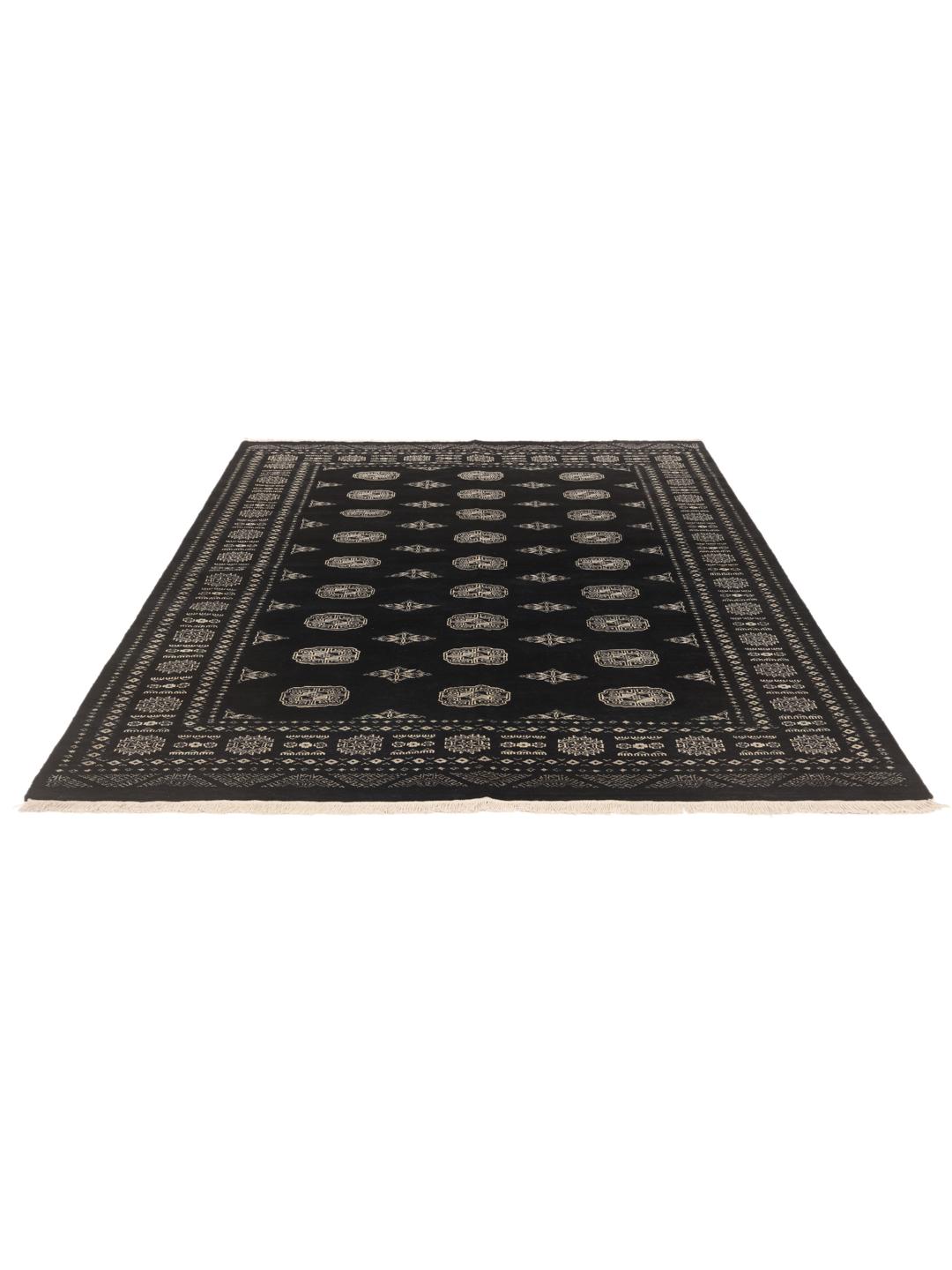
Visually, Bokhara rugs are defined by their repetitive 'gul' motifs, which are often described as elephant-foot medallions. These are typically arranged in clean, structured rows and enclosed by multiple formal borders. The black field on this particular piece is a bold, modern interpretation of a classic design, providing a stark contrast that makes the traditional patterns pop.
Owning a hand-knotted rug from this tradition is an investment in cultural heritage. Collectors value these pieces not only for their visual harmony but for the dedication to skill they represent. By choosing this rug, you are preserving a craft tradition that prioritises patience and expertise over speed, resulting in a floor covering with real personality.