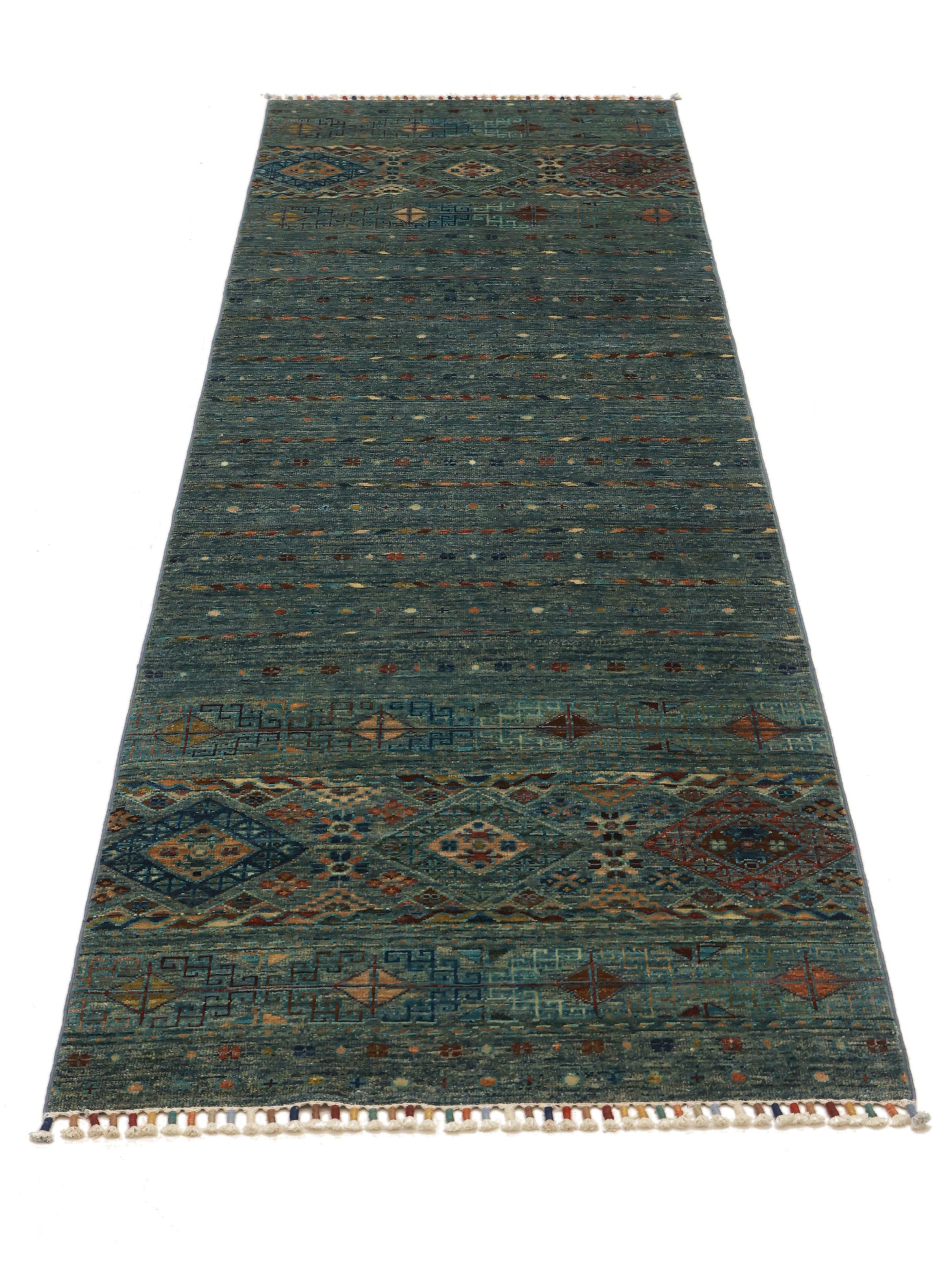
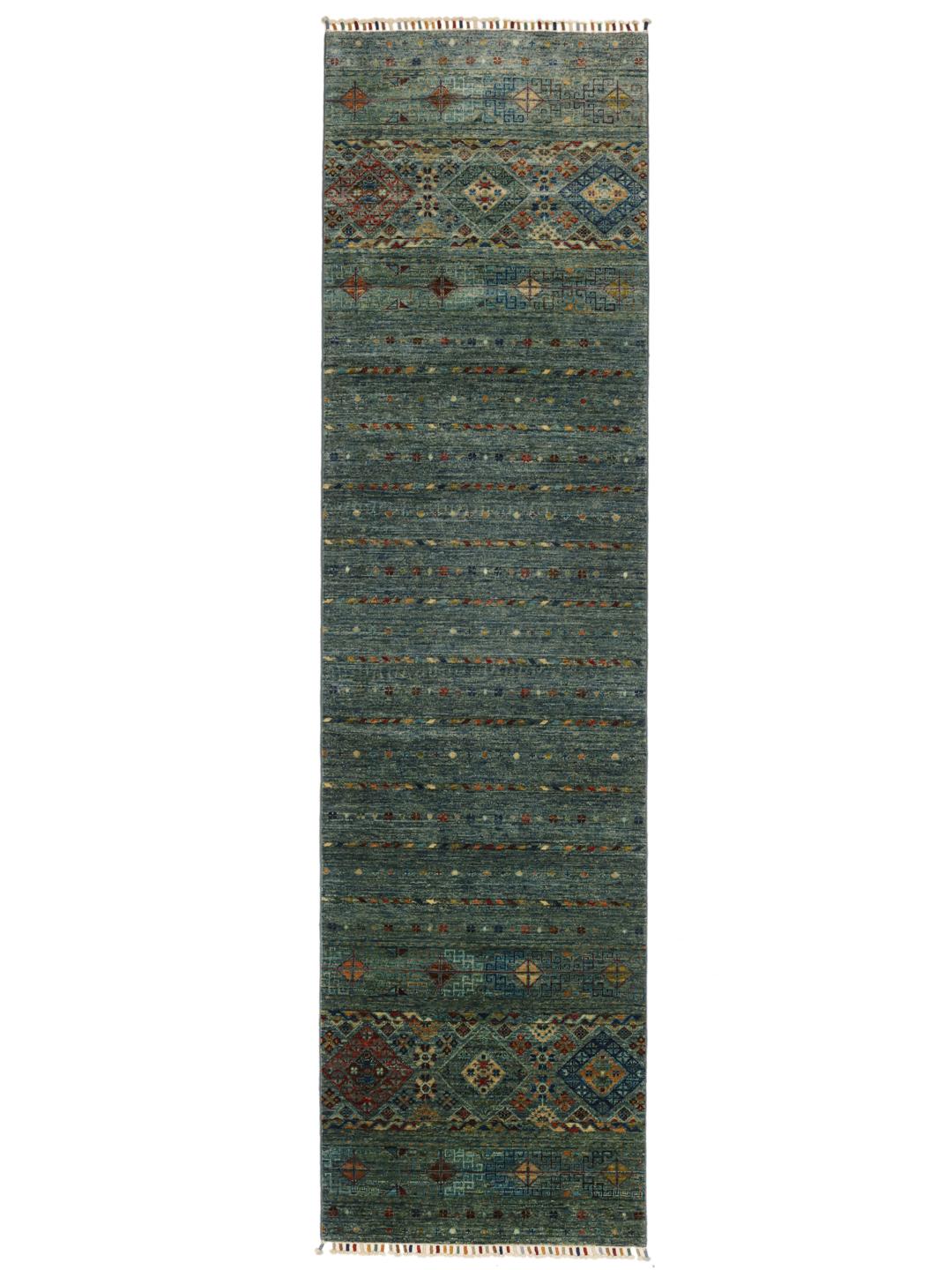
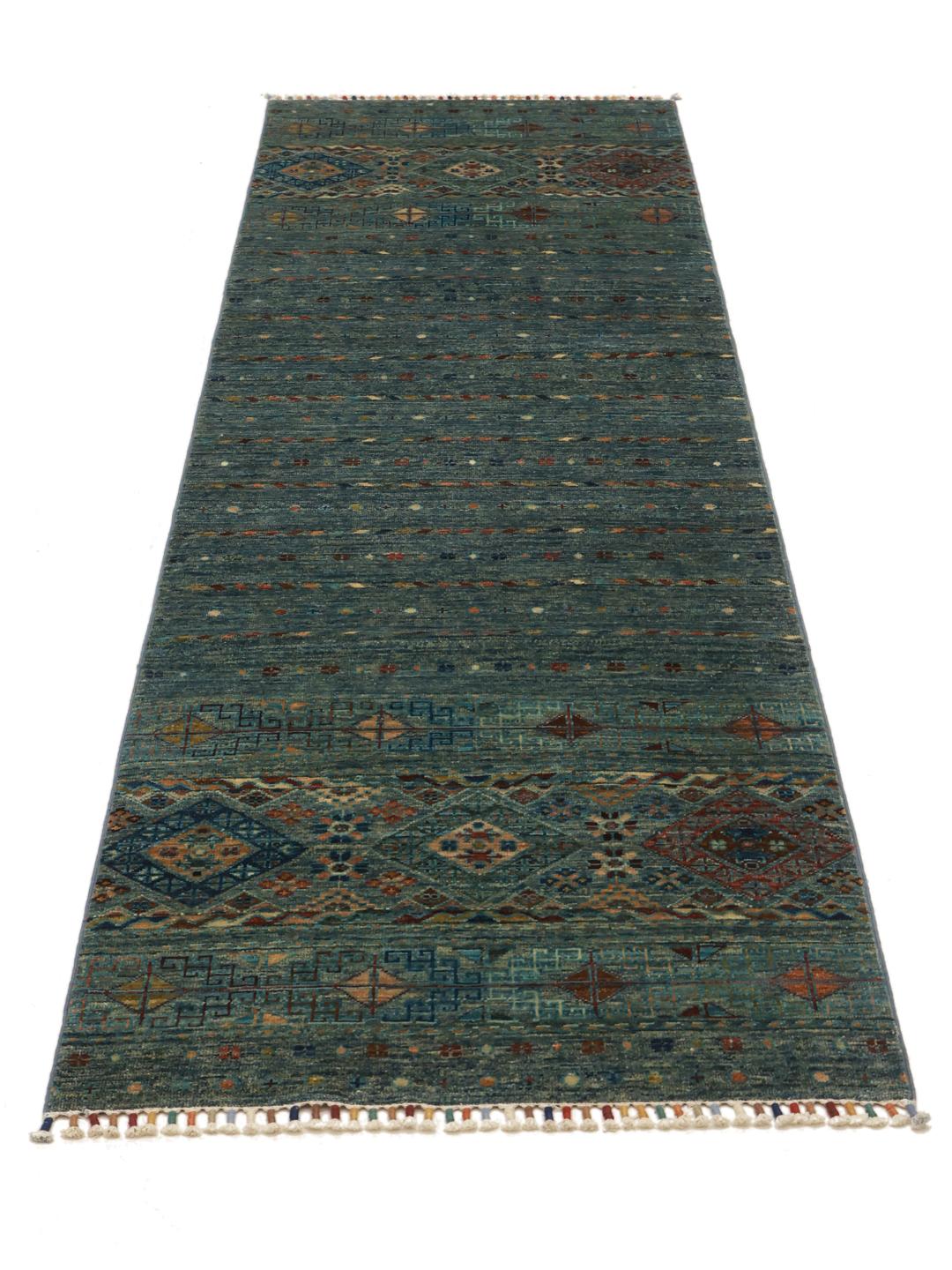
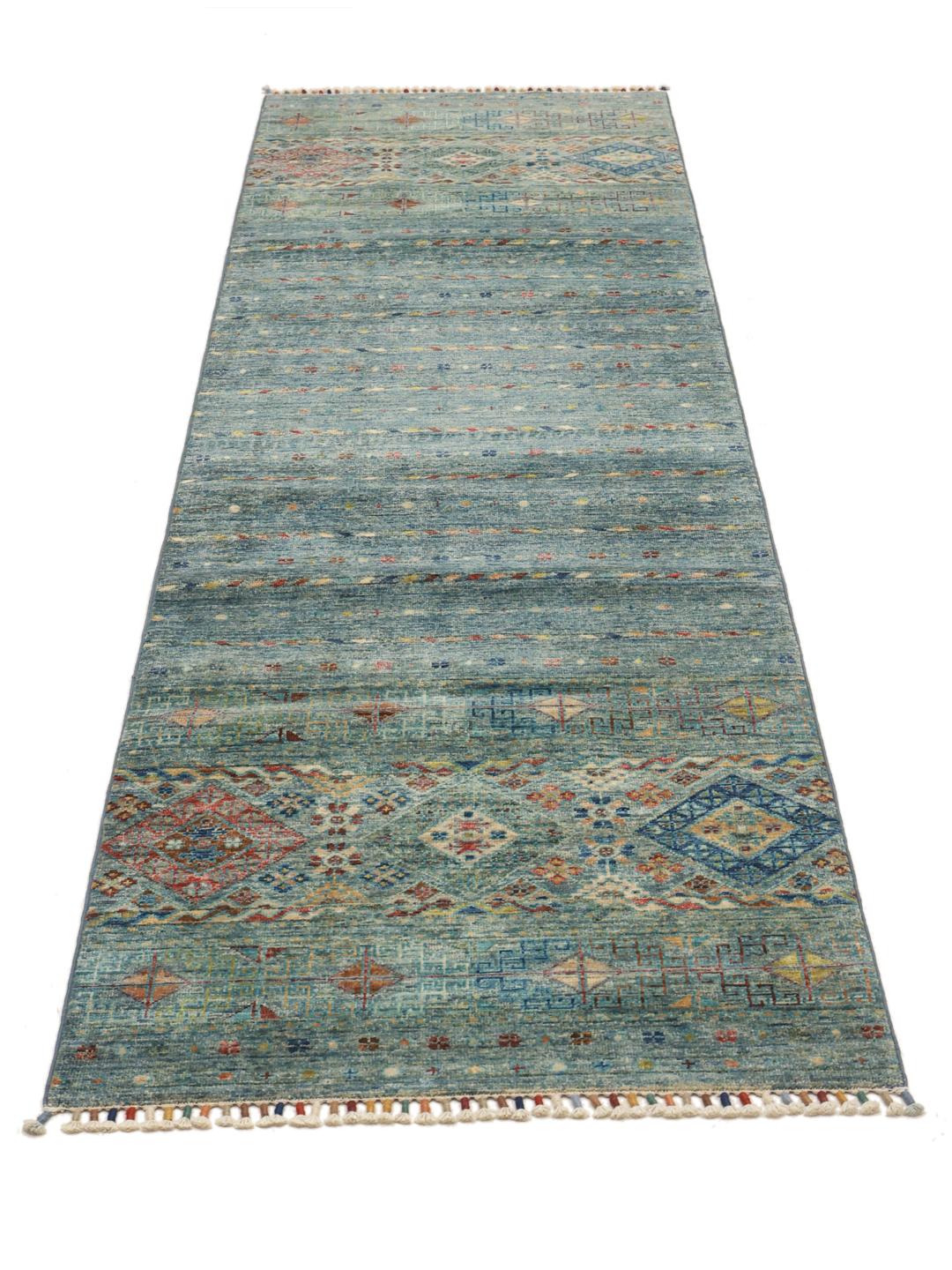
Rugs from northern Afghanistan, such as those inspired by traditional Shabargan styles, carry centuries of nomadic and village weaving heritage. Rooted in the rich cultural crosscurrents of Central Asia, these textiles evolved along ancient trade routes where tribal makers shared techniques, dye recipes, and symbolic motifs.
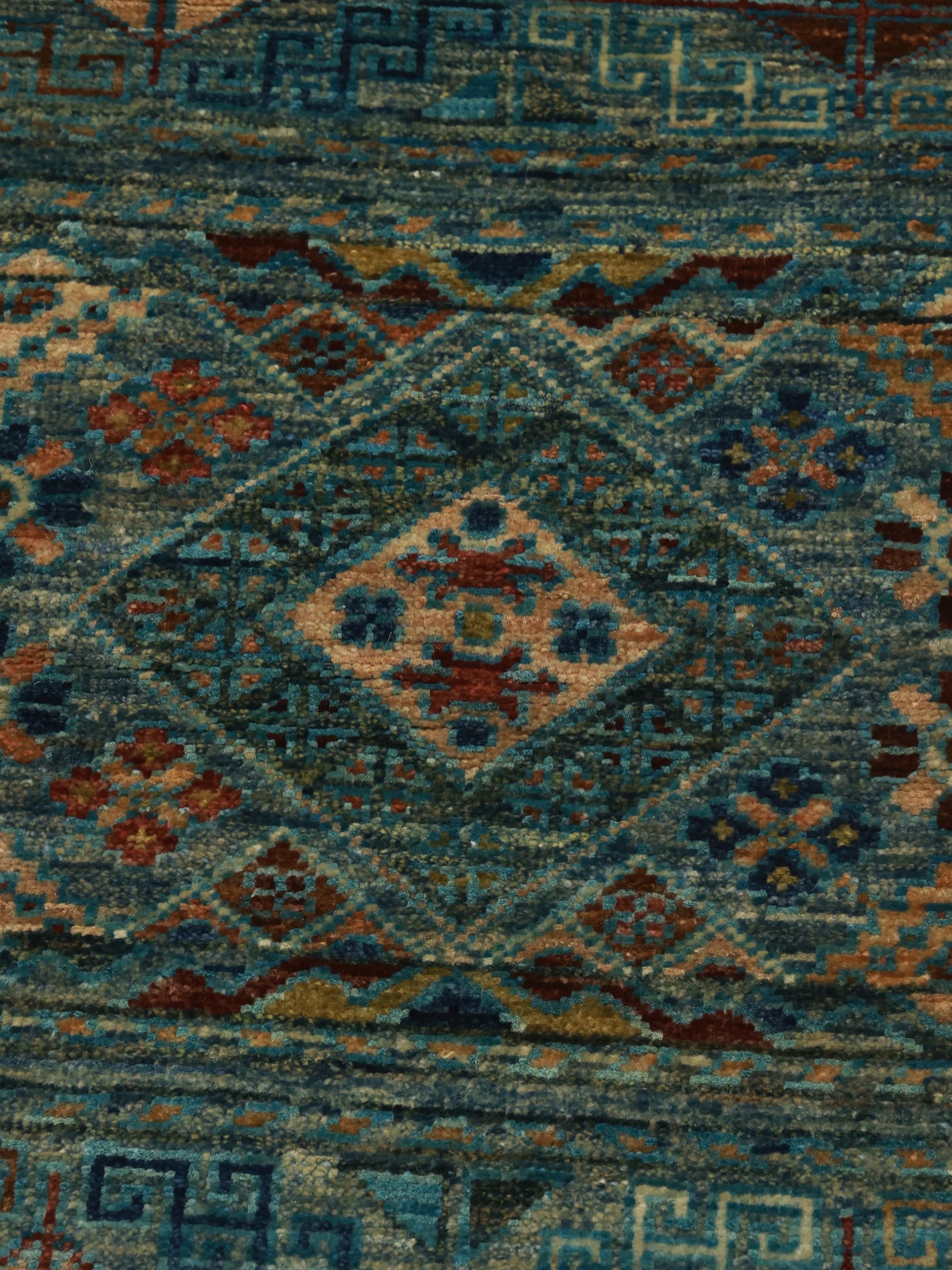
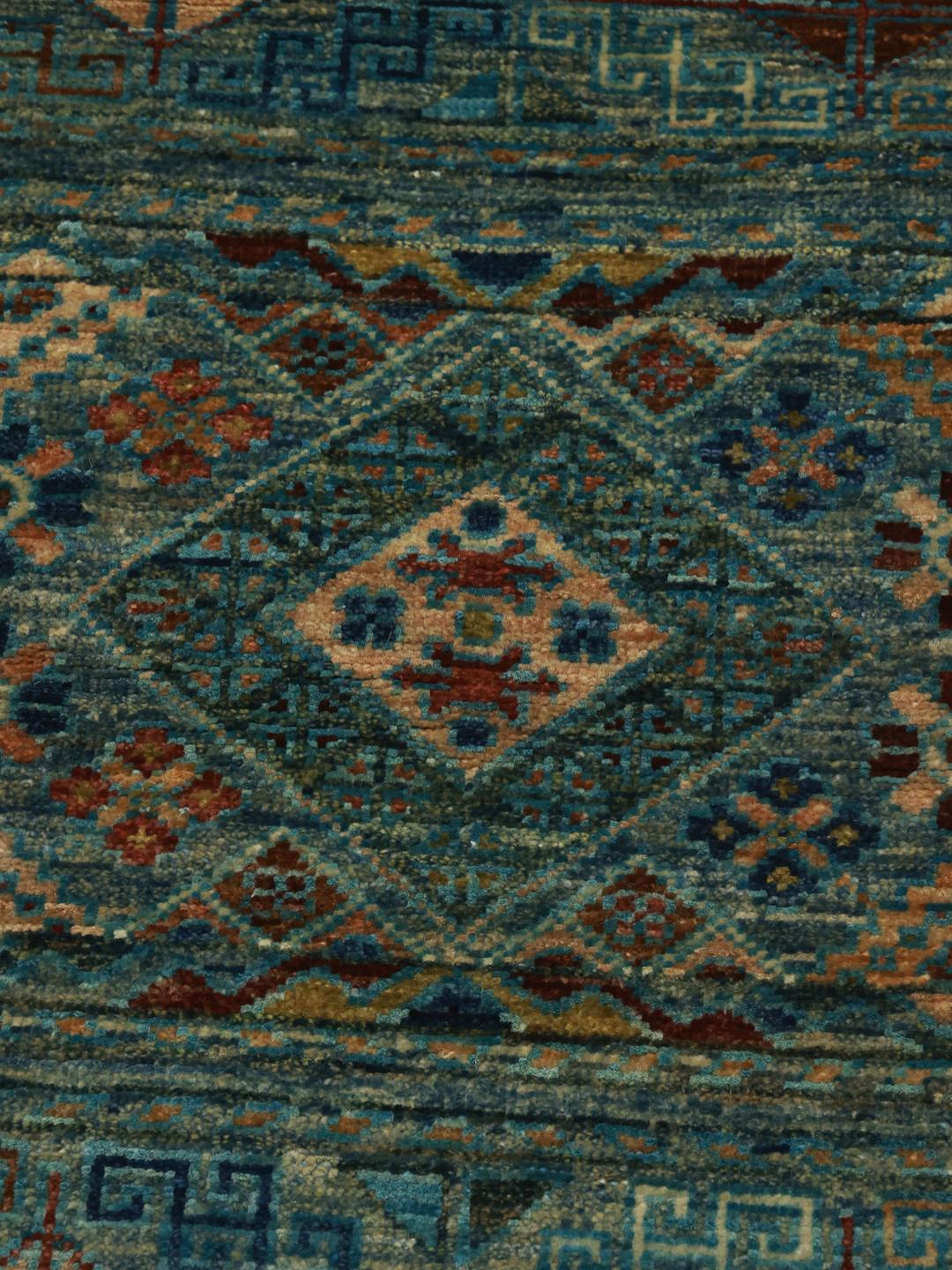
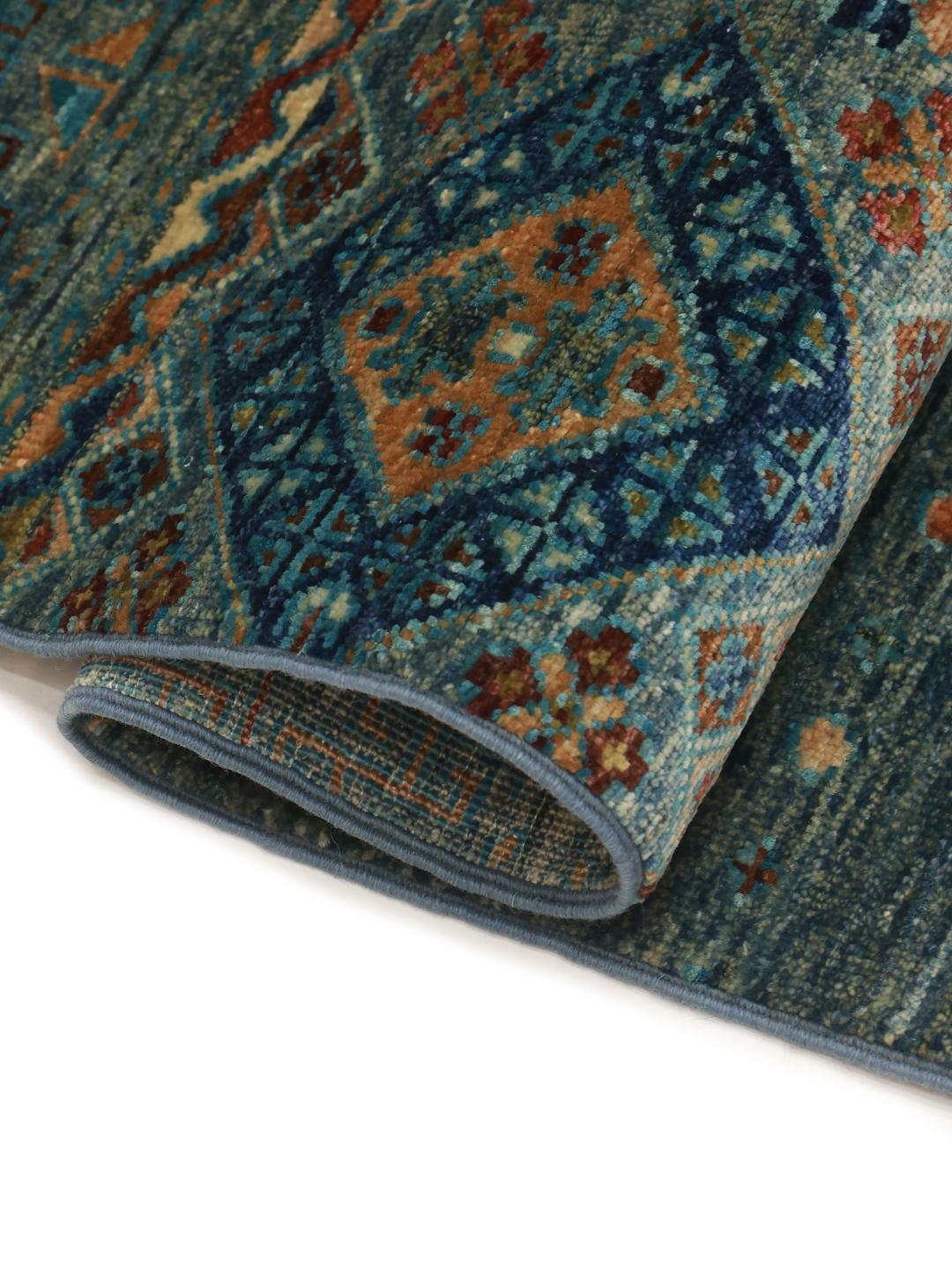
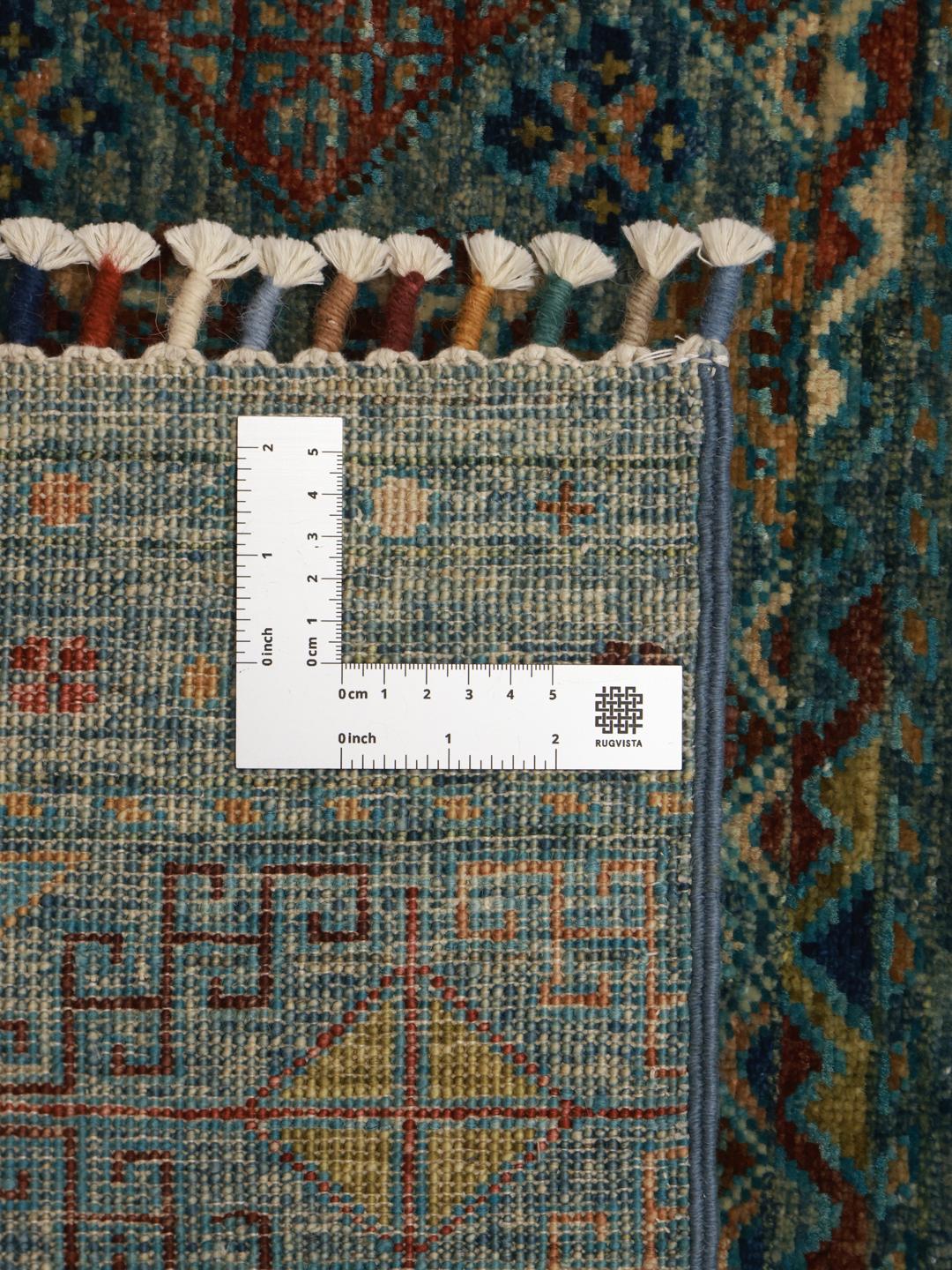
The construction relies on traditional hand-knotting methods passed down through generations, where each wool yarn is looped individually around the foundation warps. This meticulous technique builds a strong, cohesive fabric that naturally resists wear and retains its tactile qualities over decades of daily living.
A defining feature of this tradition is the use of repeating geometric elements, diamond shapes, and symbolic borders arranged with rhythmic balance. The interplay of earthy tones against a dominant blue and teal field reflects both local flora and the natural minerals historically available to dyers in the region.
Owning a hand-knotted runner from this lineage connects your home directly to an enduring craft tradition, celebrating the patience, cultural memory, and artistic expression of the makers who brought it to life.