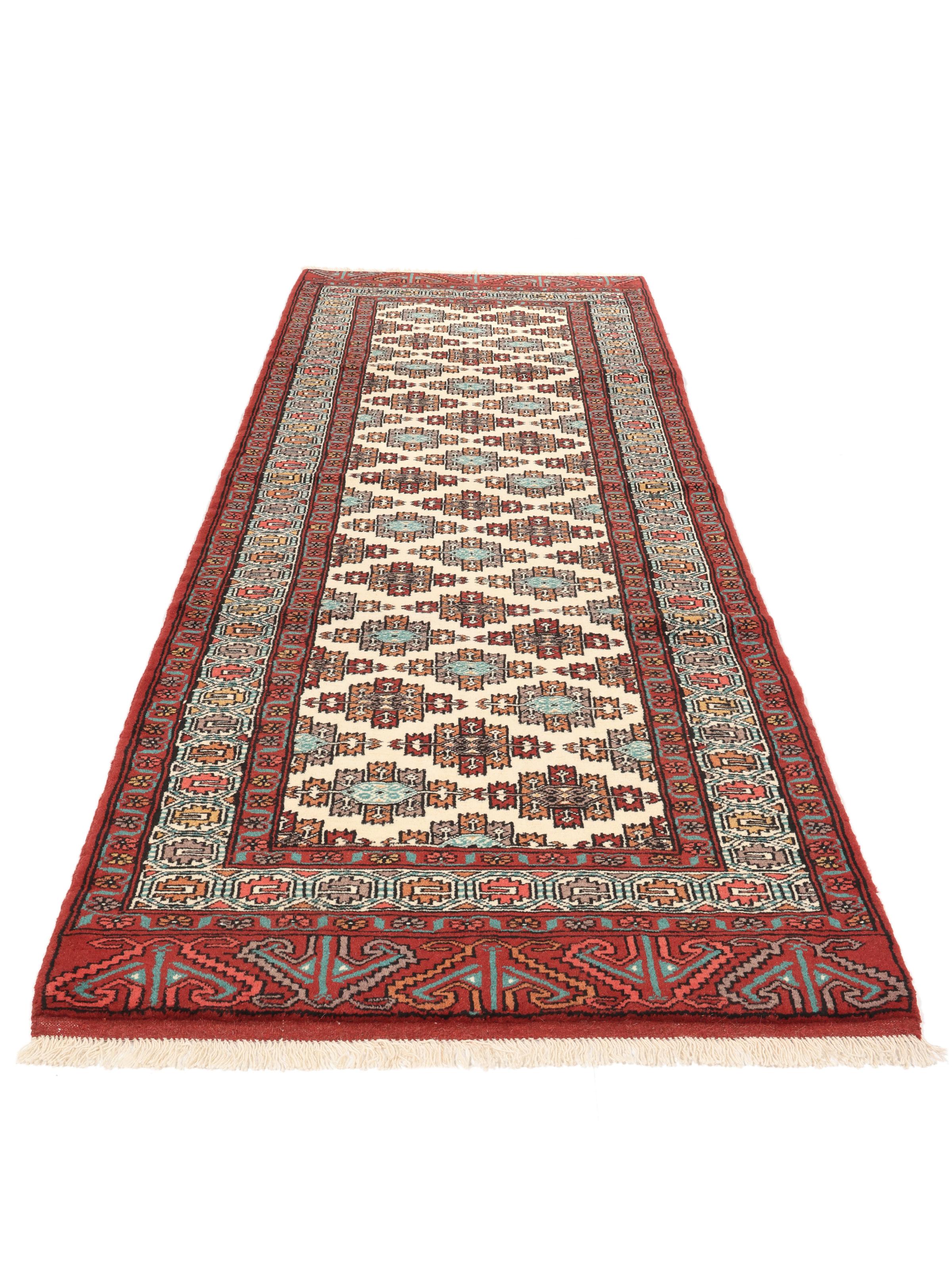
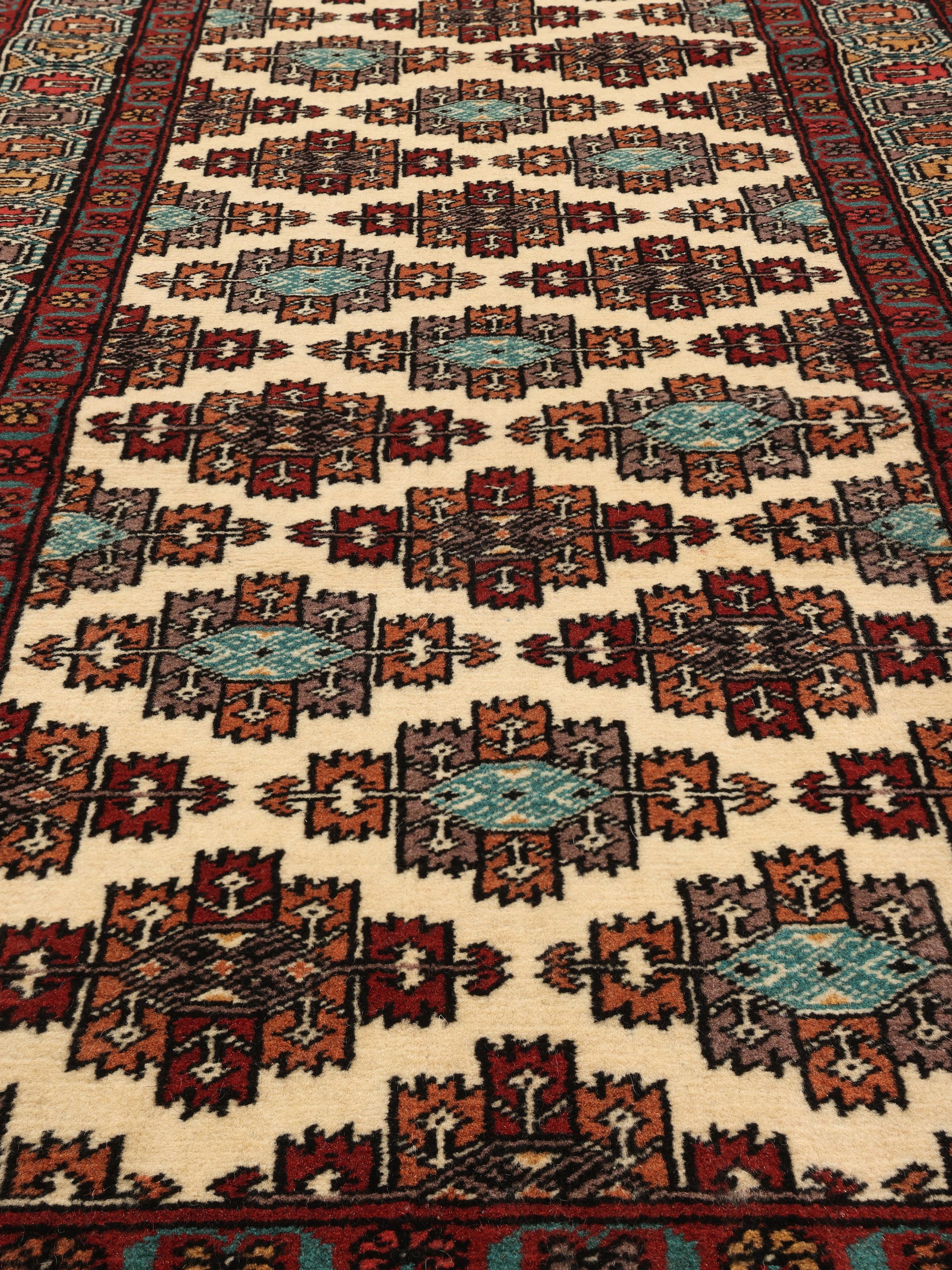
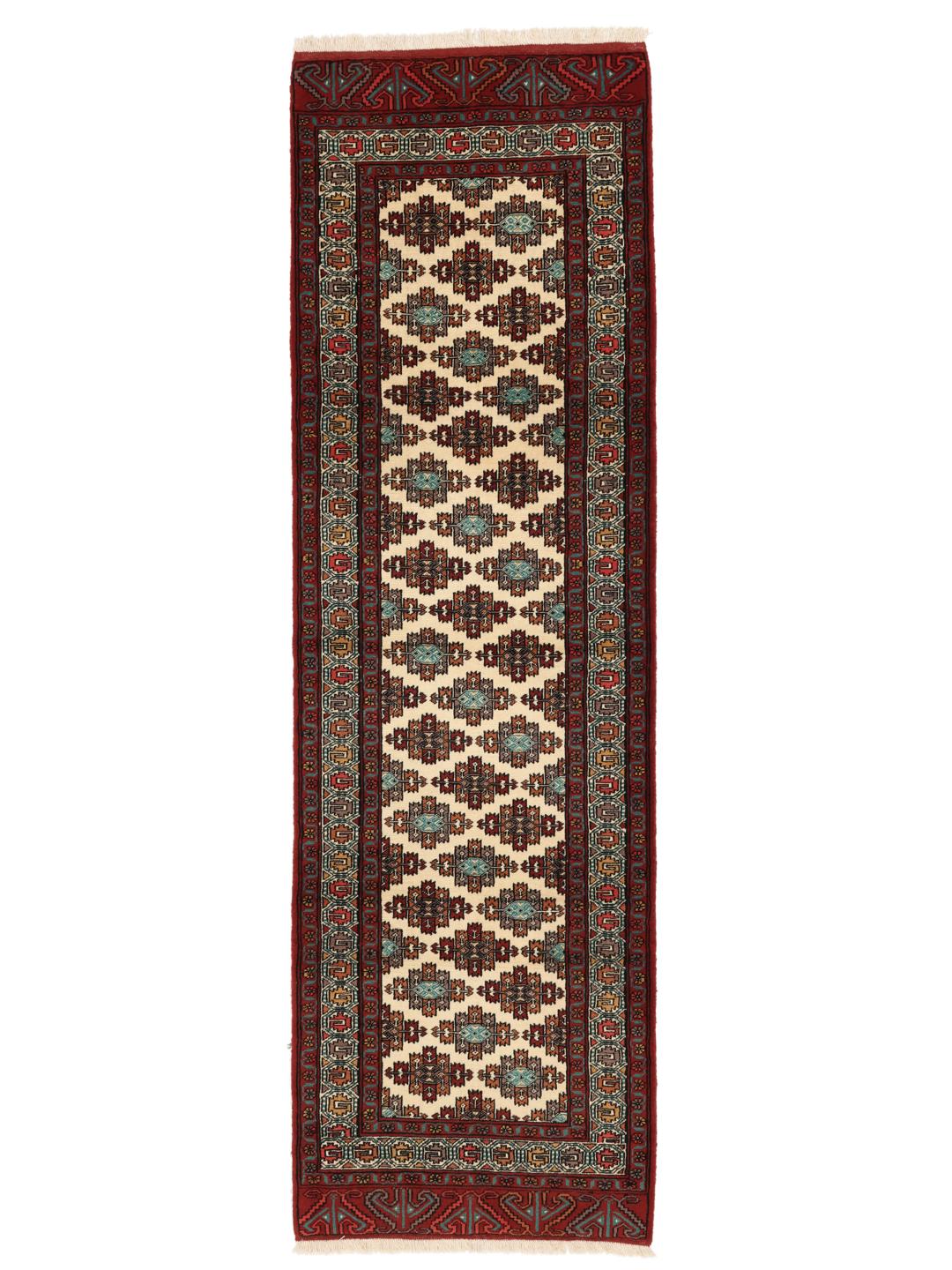
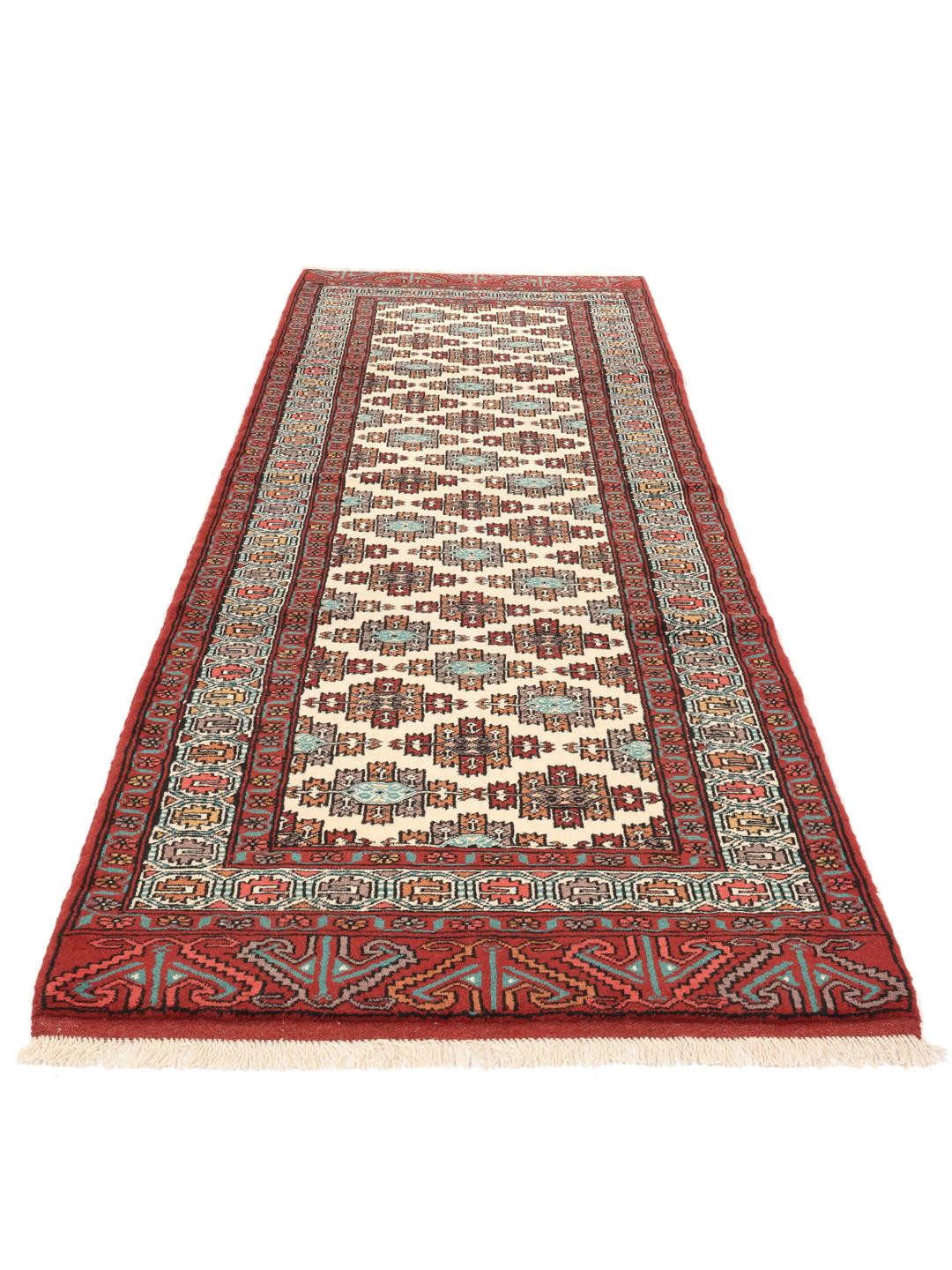
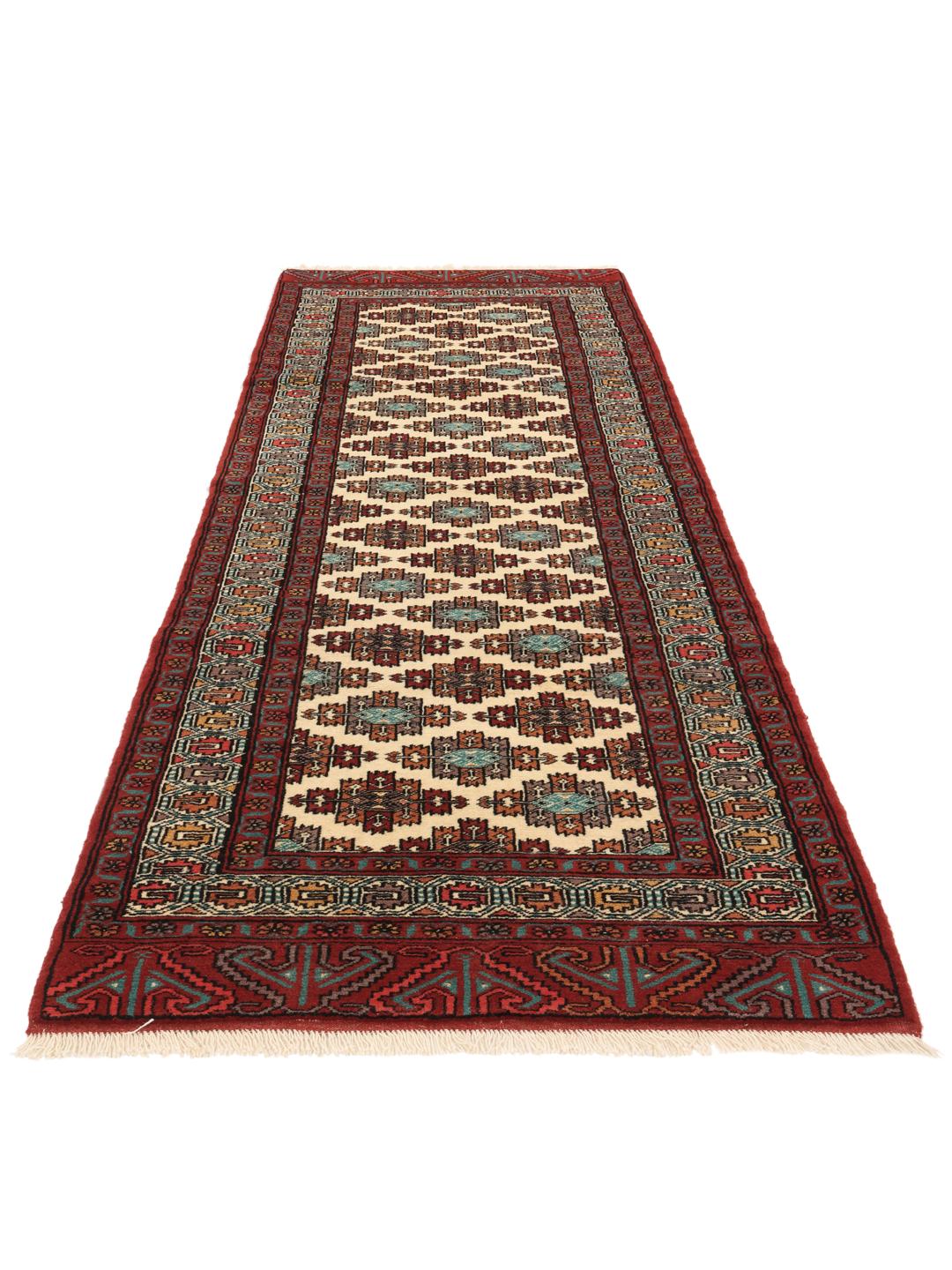
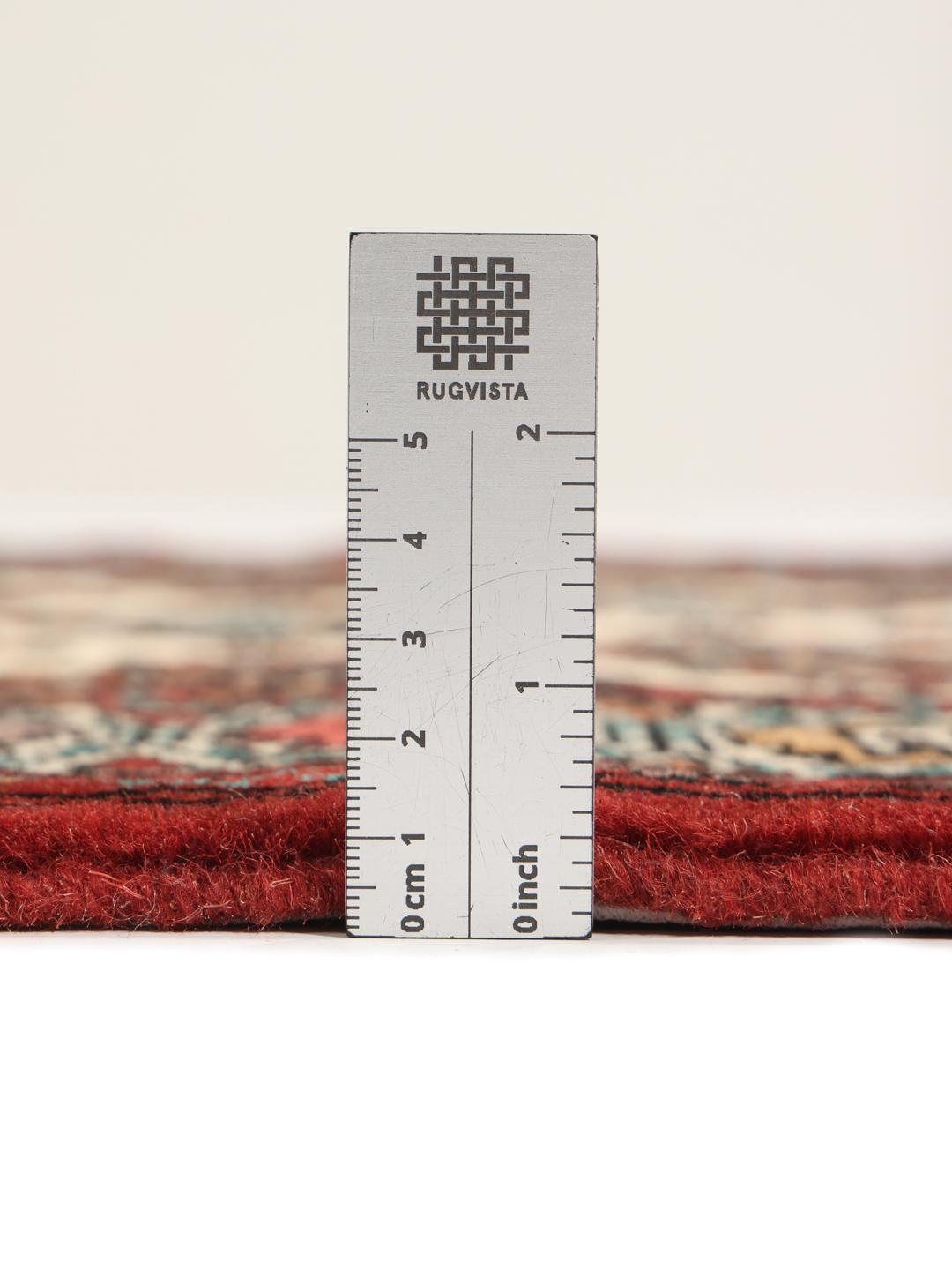
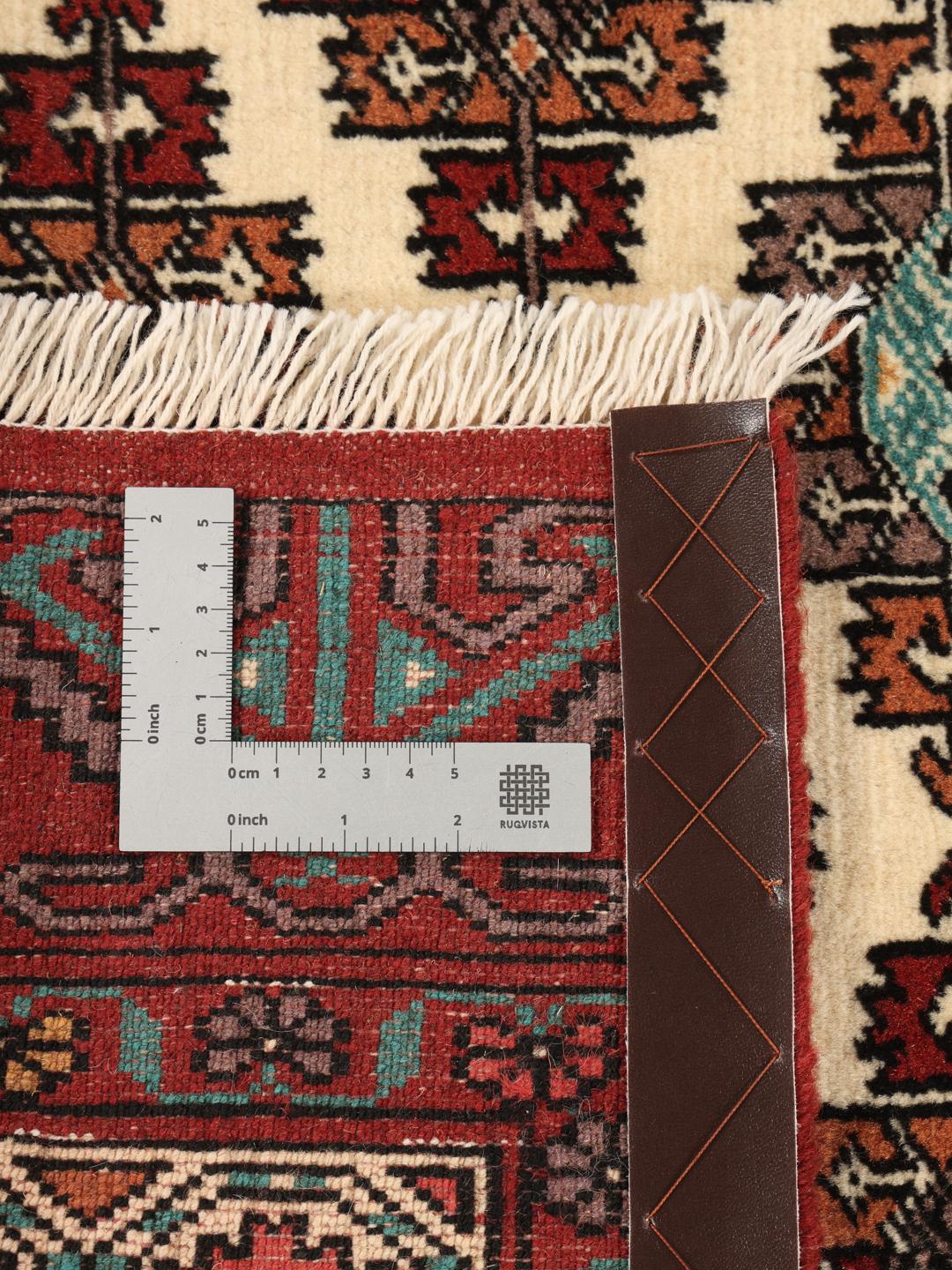
Turkaman rugs originate from the nomadic tribes of Central Asia, a region with a deep-rooted history of weaving that spans centuries. While these designs were historically created by various tribal groups, they have evolved into a distinct style characterised by deep, earthy tones and precise, repeating patterns.
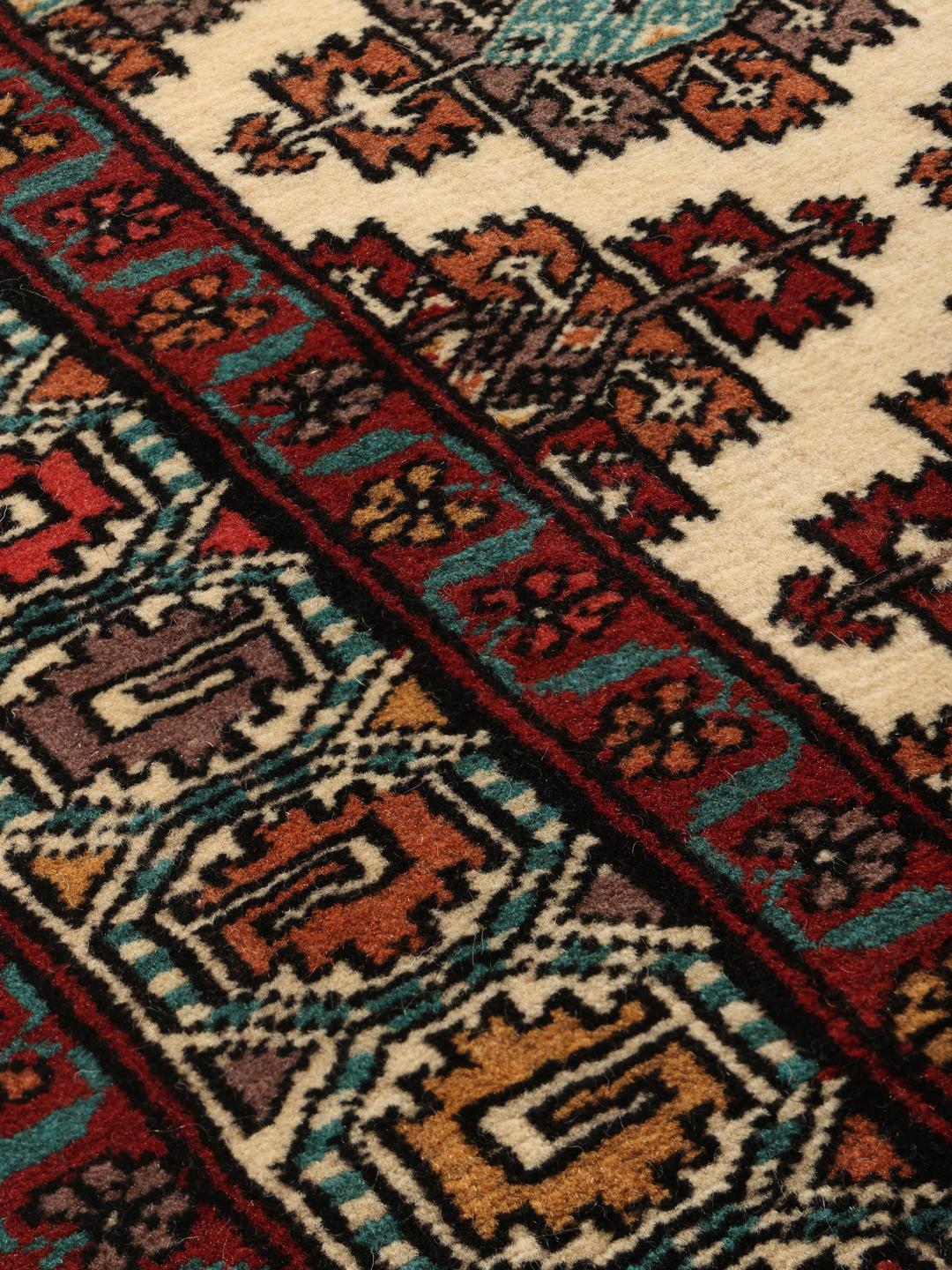
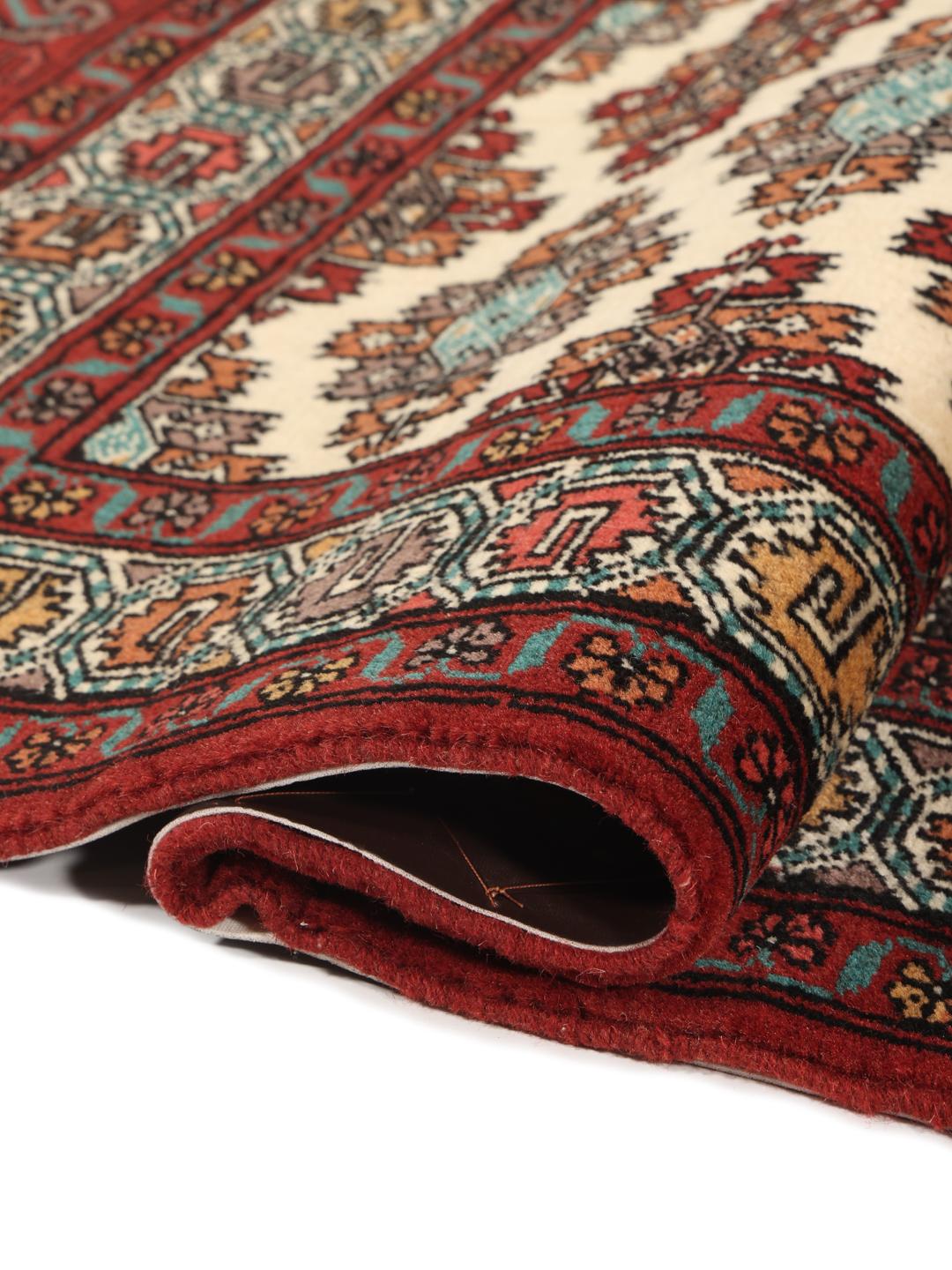
The term Turkaman refers to this specific design tradition, which is renowned for its technical excellence. The use of dense, hand-tied knots is a hallmark of this style, ensuring that the finished product is not only visually beautiful but also incredibly durable, suitable for the nomadic lifestyle from which it emerged.
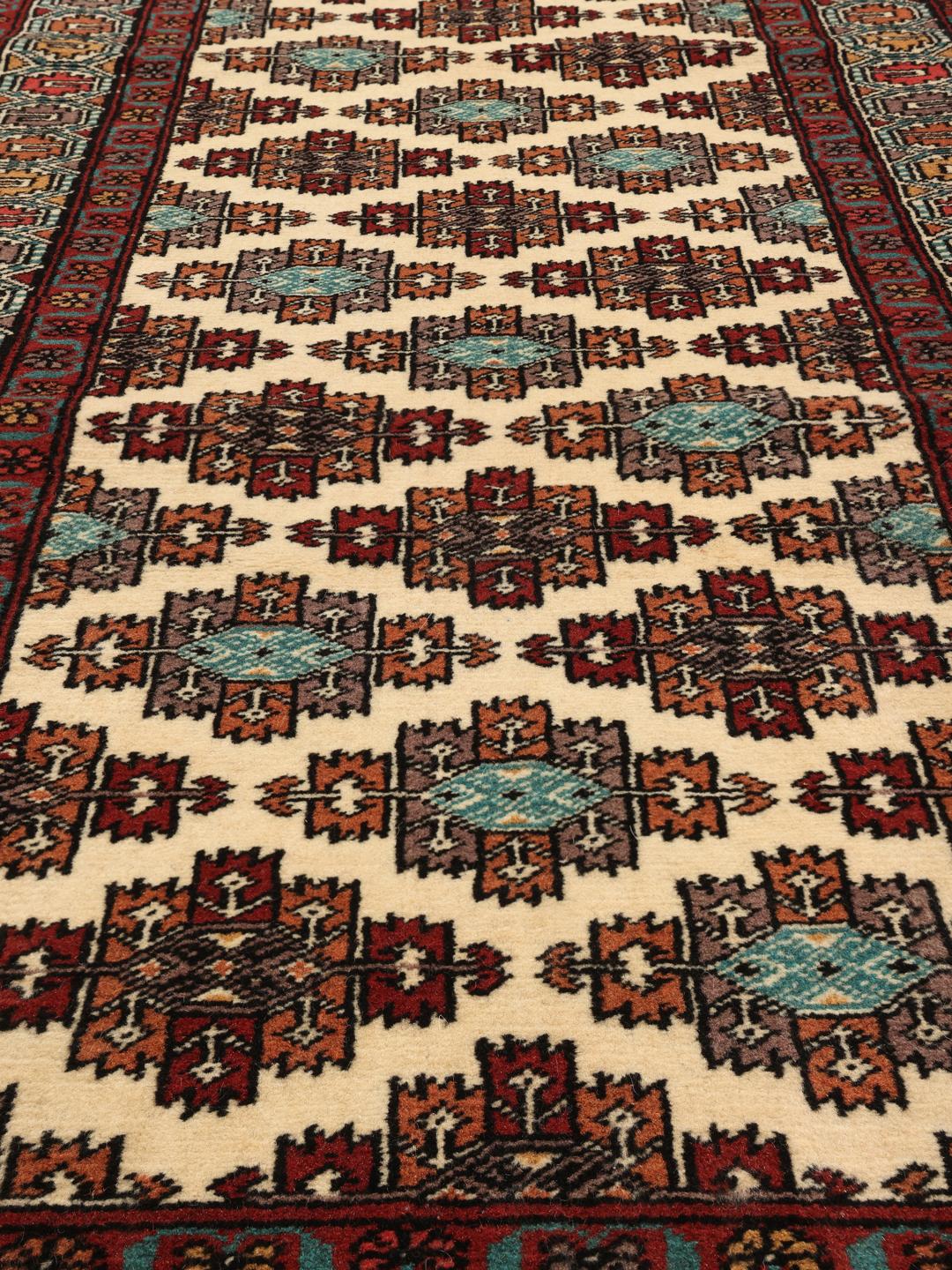
Visually, these rugs are defined by the iconic gul motif, which are repeating, medallion-like shapes that fill the central field. These motifs are often arranged in orderly rows and enclosed by complex, geometric borders. The deep red palette is a traditional signature of the style, representing warmth and vitality.
Collectors value Turkaman rugs for their cultural significance and the high level of skill required to produce them. Owning a piece from this tradition is an investment in heritage and artistry, connecting your home to a long-standing lineage of craft that values both beauty and functional longevity.